

Synopsis
Covers the whole plot, including the ending.
- Difficulty
- Medium
- Pacing
- Moderate
- Mood
- Epic, Poignant, Melancholy, Profound, Visually Rich
- Read it if
- You appreciate epic graphic novels with complex themes, beautiful art, and a deep exploration of love, faith, and storytelling.
- Skip it if
- You are sensitive to explicit sexual content, violence, and themes of child slavery and exploitation.
Habibi Plot Summary
Covers the whole plot, including the ending.
Dodola's Captivity and the Arrival of Zam
The story begins with young Dodola, married to an older scribe named Abu-Husayn, in a land with no rain. Her husband teaches her to read and write, showing her Arabic calligraphy and Quranic stories. Their village is attacked, and Dodola is sold into slavery. She endures harsh conditions and many owners. She eventually escapes and finds shelter in an old boat, a wreck in a vast desert. There, she discovers an abandoned infant boy, names him Zam, and takes him in, becoming his protector and mother.
Life in the Wreckage and Early Education
Dodola and Zam make a simple life in the decaying boat, their home. Dodola uses what she learned from Abu-Husayn to teach Zam. She teaches him to read and write using charcoal on the boat's hull, telling him stories from the Quran, the Bible, and other old tales. These stories, often mixed with her own experiences, become their shared language and a source of comfort and meaning in their isolated life. Their bond grows stronger through their struggle to survive, finding food, and dealing with the harsh desert. Dodola always protects Zam from the worst of their poverty.
Separation and Zam's Journey to the City
As Zam grows up, their isolated life is suddenly interrupted. Slave traders find and capture Dodola, taking her to be sold into a harem. Devastated and alone, Zam, now a young man, is left behind. He needs to find Dodola, his 'Habibi' (my love). He leaves his only home and goes into the large, modern, and often cruel city of Wanatolia. His journey is dangerous, and he experiences culture shock, seeing the difference between his simple desert life and the city's overwhelming complexity, greed, and industrial decay, all while hoping to reunite with Dodola.
Dodola's Life in the Harem
Dodola finds herself in the Sultan's rich but restrictive harem. Her beauty and intelligence get attention, especially from the Eunuch who manages the women. She is forced into servitude and sexual exploitation, but she keeps her spirit and mind. Dodola uses her storytelling skill, learned from Abu-Husayn, to entertain the Sultan and others in the court. She tells detailed tales, often from the Quran and old myths, subtly embedding messages of love, longing, and resistance. These stories help her survive, a way to keep her identity and hope in her captivity, while she longs for Zam.
Zam's Struggles in the City
In the city, Zam faces many challenges. He is naive and vulnerable, often used for his strength and innocence. He takes on hard jobs, from working in a slaughterhouse to cleaning sewers, barely earning enough to live. He sees the big differences in city life, great wealth next to extreme poverty, and the widespread environmental damage from industry. Despite the difficulties, Zam never stops looking for Dodola. His determination is strong, driven by their deep love and connection. He moves through the city's complex streets and corrupt underworld, always asking about a woman who looks like Dodola.
Dodola's Escape and Reunion with Zam
Dodola, through cleverness and a desperate act, escapes the harem. She tricks the Eunuch and takes a chance to flee, driven by her desire for freedom and her lasting love for Zam. Her escape is dangerous as she navigates the city's streets. By chance, and through their deep connection, Dodola and Zam finally find each other in the city's chaos. Their reunion is emotional and sad, marked by the joy of finding each other again but also by the visible scars and changes they both endured during their separation. This solidifies their strong bond.
Life in the Slums and the Birth of a Child
After reuniting, Dodola and Zam try to build a new life together in the city's poor areas, finding shelter in a shantytown. They struggle to make enough money, facing continued hardship and the realities of their environment, including pollution and scarcity. Despite their situation, their love grows, and they find comfort in each other. Dodola becomes pregnant, a sign of hope and continuation in their difficult lives. The birth of their daughter adds a new layer to their relationship, making them a family and giving them a renewed purpose and future, even in their challenging surroundings.
The Eunuch's Pursuit and Dodola's Sacrifice
The Eunuch, still obsessed with Dodola, eventually finds her in the slums. He confronts her, wanting to reclaim her and punish her for escaping. To protect Zam and their child, Dodola makes a heartbreaking sacrifice. She offers herself to the Eunuch, redirecting his attention and keeping her family safe. This echoes her past acts of self-sacrifice for those she loves. This act of love and protection comes at a great personal cost, leaving Zam without Dodola again, but ensuring the survival of their child and continuing their family line in a world of constant threats.
Zam's Grief and the Power of Storytelling
Devastated by Dodola's sacrifice, Zam grieves deeply. He struggles with her loss, but he finds strength and comfort in the stories she taught him. He realizes the power of their shared narratives, seeing them as a way to keep Dodola's memory alive and to pass on their history and wisdom to their daughter. Zam becomes a storyteller, continuing the tradition of weaving tales that mix the sacred with the personal, the ancient with the modern. This act of storytelling helps him honor Dodola, process his pain, and find meaning in a world that has taken so much from him.
The Cycle Continues and the Flow of Water
Zam focuses on raising his daughter, teaching her the same love for stories and knowledge that Dodola shared with him. He continues to live in the harsh reality of their world, but his view is now shaped by the lasting power of love, connection, and the cycle of life and death. The story ends with a return to the theme of water, a resource important throughout. Zam's daughter learns to navigate the world, carrying on her mother's legacy and the stories that connect them. The story shows life's cyclical nature, the connection of all things, and the enduring human spirit.
Principal Figures
Dodola
Protagonist
A resilient woman who endures hardship, becoming a protector and storyteller.
Dodola is the central female protagonist, a woman of immense resilience, intelligence, and compassion. Her life is marked by a series of traumatic events, from being a child bride to enduring slavery and life in a harem. Despite these hardships, she maintains an unwavering spirit and a deep capacity for love, particularly for Zam. She is a natural storyteller, inheriting a love for language and scripture from her first husband, Abu-Husayn, and using it as a tool for survival, education, and connection. Her primary drive is to protect Zam and later their child, often at great personal cost. She embodies the themes of sacrifice, resilience, and the enduring power of human connection.
Relationships: Zam (Surrogate mother, lover, partner); Abu-Husayn (First husband, mentor, educator); The Eunuch (Captor, antagonist, obsessed admirer)
Zam
Protagonist
An innocent boy raised by Dodola, who grows into a devoted lover and inheritor of stories.
Zam is the male protagonist, found as an infant by Dodola and raised in isolation. He is initially innocent and dependent, but grows into a strong, loyal, and deeply devoted young man. His world revolves around Dodola, his 'Habibi,' and his unwavering quest to reunite with her drives much of the narrative. He is a diligent student, absorbing Dodola's lessons in scripture and storytelling. His journey through the harsh city exposes him to the darker aspects of humanity and industrialization, but his core innocence and love remain intact. After Dodola's final sacrifice, he embraces his role as a storyteller and protector of their legacy.
Relationships: Dodola (Surrogate son, lover, partner); Daughter (Father)
Abu-Husayn
Supporting
Dodola's first husband, a scribe who introduces her to the beauty of language and scripture.
Abu-Husayn is Dodola's much older first husband, a kind and scholarly scribe. Though their marriage is arranged, he treats Dodola with respect and intellectual curiosity. He teaches her to read, write, and appreciate the intricacies of Arabic calligraphy and the stories of the Quran. He instills in her a love for language, knowledge, and the art of storytelling, which becomes a crucial survival skill and source of identity for Dodola throughout her life. His influence on Dodola is profound and lasting, shaping her intellect and moral compass, even after his tragic death.
Relationships: Dodola (Husband, mentor)
The Eunuch
Antagonist
The cruel and obsessed overseer of the Sultan's harem, who desires Dodola.
The Eunuch is a significant antagonist, a figure of power and cruelty within the Sultan's harem. He is responsible for managing the women and ensuring their obedience. He becomes obsessed with Dodola, drawn to her beauty, intelligence, and spirited defiance. His desire for her is possessive and manipulative, driving him to track her down after her escape. He represents the oppressive and exploitative forces that Dodola faces, embodying lust, control, and the corrupting influence of power. His actions directly lead to Dodola's ultimate sacrifice.
Relationships: Dodola (Captor, antagonist, obsessed admirer)
The Sultan
Mentioned
The unseen ruler of the city and owner of the harem where Dodola is held.
The Sultan is a powerful, largely unseen figure who owns the harem where Dodola is held captive. He represents the ultimate authority and the luxurious, yet morally corrupt, power structure of the city. While Dodola entertains him with her stories, he remains a distant and somewhat abstract figure, a symbol of the wealth and indulgence that contrasts sharply with the poverty outside his palace walls. His presence underscores the systemic inequality and the vulnerability of those without power in this society.
Relationships: Dodola (Owner (of harem))
Zam and Dodola's Daughter
Supporting
The child of Dodola and Zam, representing hope and the continuation of their legacy.
Born in the slums, Dodola and Zam's daughter is a symbol of hope, continuity, and the enduring power of their love amidst hardship. Her birth gives Dodola and Zam renewed purpose, and her existence becomes a primary motivation for Dodola's final sacrifice. She represents the future and the continuation of the stories and wisdom passed down through generations. Though young, her presence solidifies the family unit and provides a tangible legacy for Zam to nurture after Dodola's death.
The Slave Traders
Mentioned
The individuals responsible for Dodola's initial capture and subsequent sales.
The slave traders are recurring figures who represent the brutal reality of human trafficking and exploitation in this world. They are the instruments of Dodola's initial capture after her village is raided, and they are responsible for her subsequent sales into various forms of servitude, including the Sultan's harem. They embody the callous indifference and greed that drive much of the suffering in the narrative, highlighting the vulnerability of those without protection or status.
Relationships: Dodola (Captors, exploiters)
Themes & Insights
The Power of Storytelling and Language
Throughout Habibi, storytelling and the Arabic language are powerful for survival, education, and connection. Dodola's knowledge of the Quran and other old tales, taught by Abu-Husayn, helps her educate Zam, entertain the Sultan, and keep her identity and hope. The beauty of Arabic calligraphy is shown as a sacred art, connecting spiritual and earthly things. Stories give comfort, meaning, and a shared history for Dodola and Zam. Zam continues this tradition to honor Dodola and teach their daughter, ensuring their legacy. Narratives shape understanding and maintain cultural identity.
“And from that time on, the stories were their shelter. Their food. Their water.”
Love, Sacrifice, and Connection
The lasting love between Dodola and Zam is the emotional center of Habibi. Their bond, first motherly and then romantic, overcomes separation, hardship, and outside corruption. Both characters often make sacrifices for the other's well-being and survival, ending with Dodola's sacrifice to protect Zam and their child. This theme explores love's power to transform and redeem, showing its ability to give meaning, strength, and hope even in great suffering and loss. It is a love that lasts beyond physical presence.
“You are my Habibi... You are my life. My everything.”
Environmental Degradation and Resource Scarcity
The story directly discusses environmental damage and the lack of natural resources, especially water. The opening shows a dry land, forcing Dodola's family to sell her. The vast, dry desert around their boat highlights their desperate need for water. Later, the busy city is shown as polluted and wasteful, with overflowing sewers and industrial decay contrasting with nature's beauty. This theme comments on humanity's relationship with the environment, linking resource use to social inequality and suffering. It also emphasizes how precious life-sustaining elements are.
“Water, the breath of God. Life itself. And we waste it so.”
Interconnectedness of Faiths and Cultures
Habibi mixes elements of Islam, Christianity, and Judaism, showing their shared stories and spiritual heritage. Dodola's storytelling often combines tales from the Quran with biblical stories, illustrating common themes of creation, prophets, and divine love. The graphic novel's visuals use Arabic calligraphy and Islamic art, while also drawing parallels to Western religious art. This theme challenges cultural divisions, suggesting a universal spiritual truth and a common human experience that goes beyond specific religious beliefs, promoting understanding and unity.
“All the stories are one story, if you listen closely.”
Exploitation and Resilience
The characters, especially Dodola, face various forms of exploitation, including slavery, child marriage, and sexual servitude in the harem. The city itself is a place where vulnerable people are often used for labor or pleasure. This theme reveals the harsh realities of power imbalances, greed, and the oppression faced by those at the bottom of society. Despite this exploitation, both Dodola and Zam show great strength, adapting, enduring, and fighting for their freedom and dignity. Their ability to find hope and keep their humanity in such suffering is a main message.
“Our bodies are just vessels, Habibi. Our spirits, they are free.”
Plot Devices & Literary Techniques
Interwoven Religious Narratives
Ancient stories from the Quran, Bible, and other texts are used to parallel and comment on the characters' experiences.
Craig Thompson expertly interweaves stories from the Quran, the Bible, and other ancient myths into the main narrative. These stories are not merely decorative but serve as a profound commentary on the characters' plights, their moral dilemmas, and the universal human condition. Dodola often recounts these tales to Zam, using them to teach, to provide comfort, and to make sense of their own challenging lives. Visually, these religious narratives are often depicted in a distinct, ornate style, contrasting with the grittier reality of Dodola and Zam's world, creating a rich tapestry of meaning and demonstrating the timeless relevance of sacred texts.
Arabic Calligraphy and Visual Symbolism
The art of Arabic calligraphy is used as both a narrative element and a powerful visual motif.
Arabic calligraphy is a central visual and thematic element in Habibi. It is introduced early on as Dodola's first husband teaches her to write, symbolizing knowledge, beauty, and spiritual connection. Throughout the book, specific Arabic words and phrases, often related to the Quran or themes of love ('Habibi'), are integrated into the artwork, sometimes forming intricate patterns or flowing across pages. This device not only grounds the story culturally but also visually reinforces the themes of language, storytelling, and the sacred. The flowing lines and intricate designs convey emotion and meaning beyond literal translation, adding layers of depth to the narrative and characters' inner lives.
Water as a Motif
Water symbolizes life, purity, spirituality, and scarcity throughout the narrative.
Water is a powerful and recurring motif in Habibi, representing life, purity, spiritual cleansing, and also scarcity and environmental crisis. The story begins in a drought, highlighting its vital importance. Dodola and Zam's refuge in a beached boat, a vessel of water stranded in a desert, underscores their isolation and longing. The polluted rivers and scarce resources in the city further emphasize humanity's destructive impact on this essential element. The narrative frequently juxtaposes the spiritual significance of water (e.g., rivers of paradise) with its physical absence or defilement, creating a poignant commentary on humanity's relationship with the natural world and the sacred.
Dualities and Contrasts
The narrative frequently employs stark contrasts to highlight thematic tensions.
Thompson uses numerous dualities and contrasts to enrich the narrative and emphasize thematic tensions. These include the contrast between the pristine, spiritual desert and the polluted, industrial city; the innocence of childhood versus the harsh realities of exploitation; sacred love versus carnal lust; and ancient traditions versus modern decay. Visually, this is often represented through stark black-and-white artwork, with detailed, ornate panels juxtaposed against raw, expressionistic ones. These contrasts highlight the complexities of the world and the characters' experiences, forcing readers to confront the moral and environmental dilemmas presented.
Parallel Journeys
Dodola and Zam's separate journeys mirror and reflect each other's experiences.
After their initial separation, Dodola and Zam embark on parallel journeys, each facing their own unique forms of exploitation, hardship, and challenges in different settings. Dodola endures the gilded cage of the harem, while Zam navigates the brutal and chaotic urban landscape. Despite their physical distance, their experiences often mirror each other, reflecting themes of survival, longing, and resilience. This device emphasizes their profound connection, showing how their lives remain intrinsically linked even when apart, and builds anticipation for their eventual reunion, highlighting the strength of their shared love and destiny.
Habibi Quotes
“Love is not a dream. Love is a doing. Love is a becoming. Love is a being.”
“The world is a book, and those who do not travel read only one page.”
“Every human is a universe within themselves.”
“To truly see, you must close your eyes.”
“Stories are like rivers, they flow into each other, creating a vast ocean of meaning.”
“Even in the desert, there is water to be found, if you know where to look.”
“Silence is not empty, it is full of answers.”
“The greatest prison is a mind without imagination.”
“Our bodies are just vessels for the stories we carry.”
“Fear is a thief that robs us of our present and future.”
“To truly give, you must give of yourself.”
“The desert teaches you humility, for it cares nothing for your desires.”
“Beauty is in the eye of the beholder, but truth is in the heart of the seeker.”
“Every scar tells a story, a testament to what we have survived.”
Quiz
10 questions on the plot and the characters. Each answer comes with a short explanation.
Question 1
What is the initial relationship between Dodola and Zam when they first meet?
- They are siblings separated by war.
- They are master and servant in a wealthy household.
- They are refugee child slaves bound to each other.
- They are childhood sweethearts from the same village.
Show answer
C. They are refugee child slaves bound to each other. The book description explicitly states that Dodola and Zam are 'refugee child slaves bound to each other by chance, by circumstance, and by the love that grows between them.' This sets up their initial, foundational relationship.
Question 2
Which of the following themes is NOT explicitly mentioned in the book's description as being explored in 'Habibi'?
- The magic of storytelling.
- The cultural divide between the first and third worlds.
- The challenges of space exploration and colonization.
- The common heritage of Christianity and Islam.
Show answer
C. The challenges of space exploration and colonization. The description highlights themes such as storytelling, cultural divides, and religious common heritage. Space exploration is not mentioned and is outside the scope of the book's described setting and themes.
Question 3
What kind of landscape does 'Habibi' primarily sprawl across?
- Lush rainforests and ancient temples.
- Urban sprawls and futuristic skyscrapers.
- Deserts, harems, and modern industrial clutter.
- Frozen tundras and remote mountain ranges.
Show answer
C. Deserts, harems, and modern industrial clutter. The book's description sets the scene as 'Sprawling across an epic landscape of deserts, harems, and modern industrial clutter,' indicating a blend of traditional and contemporary elements.
Question 4
How does the narrative describe the world Dodola and Zam struggle to make a place for themselves in?
- A utopian society focused on peace and prosperity.
- A world fueled by fear, lust, and greed.
- A world recovering from a devastating natural disaster.
- A technologically advanced world where basic needs are met.
Show answer
B. A world fueled by fear, lust, and greed. The description states they struggle 'in a world (not unlike our own) fueled by fear, lust, and greed,' highlighting the harsh realities they face.
Question 5
What is the author's previous internationally acclaimed graphic novel mentioned in the description?
- Persepolis
- Maus
- Blankets
- Fun Home
Show answer
C. Blankets The description introduces 'Habibi' as 'From the internationally acclaimed author of Blankets,' clearly identifying his previous work.
Question 6
What aspect of Dodola and Zam's connection is explored as both 'extraordinary' and 'frail'?
- Their shared artistic talents.
- Their telepathic bond.
- Their ability to survive in harsh environments.
- The depth of their connection.
Show answer
D. The depth of their connection. The text states they 'discover the extraordinary depth—and frailty—of their connection,' referring directly to the nature of their bond.
Question 7
The book is described as 'at once contemporary and timeless.' How does the setting contribute to this duality?
- By focusing solely on ancient myths and legends.
- By contrasting 'deserts, harems' with 'modern industrial clutter.'
- By featuring characters who travel through time.
- By presenting a future where past technologies are rediscovered.
Show answer
B. By contrasting 'deserts, harems' with 'modern industrial clutter.' The description mentions 'deserts, harems, and modern industrial clutter' as parts of the landscape. This blend of traditional (deserts, harems) and contemporary (industrial clutter) elements directly illustrates the 'contemporary and timeless' nature of the setting.
Question 8
Beyond a love story, 'Habibi' is also described as a parable about our relationship to what?
- Advanced technology and artificial intelligence.
- Political systems and governmental structures.
- The natural world.
- The concept of absolute freedom.
Show answer
C. The natural world. The description states 'Habibi gives us a love story of astounding resonance: a parable about our relationship to the natural world,' among other themes.
Question 9
The title 'Habibi' is an Arabic term of endearment, meaning 'my love' or 'my darling.' Given the book's description, why is this title particularly fitting?
- It reflects the book's primary focus on military conquest and power struggles in the Middle East.
- It underscores the central love story between Dodola and Zam, and potentially the broader themes of connection and heritage.
- It indicates the story is exclusively set in a modern, Westernized context.
- It suggests a narrative primarily concerned with the history of Arabic calligraphy.
Show answer
B. It underscores the central love story between Dodola and Zam, and potentially the broader themes of connection and heritage. The title 'Habibi' directly relates to the 'love that grows between them' (Dodola and Zam) and the overall description of the book as a 'love story of astounding resonance.' It also subtly connects to the exploration of the 'common heritage of Christianity and Islam' and the Middle Eastern setting implicitly suggested by 'deserts' and 'harems'.
Question 10
How does the book's genre classification as 'Children's, Historical Fiction, Young Adult, Romance' hint at its complex appeal?
- It suggests a simple, lighthearted narrative strictly for young readers, devoid of historical depth.
- It indicates a story that combines a historical setting and romantic elements with themes accessible to younger audiences, while still having depth for adults.
- It implies a story primarily focused on historical events, with romance and child characters being minor subplots.
- It means the book is a purely factual historical account, adapted for children.
Show answer
B. It indicates a story that combines a historical setting and romantic elements with themes accessible to younger audiences, while still having depth for adults. The combination of these genres ('Children's, Historical Fiction, Young Adult, Romance') suggests a narrative that is both accessible and profound. It implies a historical backdrop for a love story, told in a way that resonates with younger readers (YA/Children's) but also tackles complex themes and characters, making it appealing to a broad audience, including adults who appreciate graphic novels.
Habibi FAQ
What is Habibi about?
Habibi tells the story of Dodola and Zam, two refugee child slaves who form an unbreakable bond. Their journey spans an epic landscape from ancient-feeling deserts and harems to modern industrial settings, exploring their struggles for survival and the evolving nature of their love as they are separated and reunited.
Why should I read Habibi?
You should read Habibi for its breathtaking artwork, its profound exploration of love, faith, and storytelling, and its ambitious themes. It delves into complex topics like the cultural divide between East and West, environmentalism, and the shared heritage of Christianity and Islam, all wrapped in a deeply moving narrative.
What is the background/setting of Habibi?
The story is set in a sprawling, anachronistic landscape that blends ancient Middle Eastern aesthetics with modern industrial decay. It features traditional desert environments, opulent harems, and dilapidated urban areas, creating a timeless yet distinctly 'other' world that reflects both historical and contemporary global issues.
What are the most memorable quotes?
While graphic novels primarily convey meaning through art, key themes resonate through the narrative, such as the power of 'the Word' and the interconnectedness of all things. The profound poetic interludes, often drawing from Islamic calligraphy and scripture, serve as visual and textual 'quotes' that define its philosophical core.
What writing style does the author use?
Craig Thompson employs a dense, intricate narrative style that intertwines the central love story with numerous parables, Quranic verses, and calligraphic art. His prose is poetic and often allegorical, complementing the highly detailed and expressive black-and-white ink drawings that are a hallmark of his work.
What minor details add significant meaning?
The recurring motifs of water, calligraphy, and the symbolism of the moon and sun are crucial. The intricate details in the Arabic script and its interpretations, often provided within the panels, serve not just as decoration but as deep textual layers that enrich the narrative's themes of creation, language, and faith.
What are some subtle foreshadowing moments?
Early visual cues, such as the imagery of the desert's harshness and the fleeting nature of water, subtly foreshadow Dodola and Zam's future separations and their constant struggle for sustenance and connection. The parables shared by Dodola also often mirror the challenges they will face later in their lives.
What unexpected character connections exist?
Beyond Dodola and Zam's central bond, there are unexpected connections formed through their individual journeys. Zam's relationship with the eunuch and later with the wealthy merchant, and Dodola's experiences in the harem, reveal how their lives intersect with various societal strata, highlighting the pervasive nature of exploitation and kindness.
What are unspoken character motivations?
Dodola's unspoken motivation often revolves around her deep-seated need to protect Zam, which sometimes leads her to make difficult, self-sacrificing choices without explicit verbalizing her reasoning. Zam's desire for belonging and acceptance, especially after their separation, drives many of his actions, often without a clear understanding of the consequences.
What psychological complexities do characters exhibit?
Dodola exhibits immense resilience and a complex understanding of her own agency in oppressive circumstances, often using her intelligence and storytelling to navigate danger. Zam struggles with his identity and self-worth, grappling with feelings of abandonment and his place in a world that often treats him as an object.
What are the major emotional turning points?
A major turning point is Dodola and Zam's initial separation, which forces them into vastly different and traumatic experiences. Another is their eventual reunion, which is fraught with the emotional baggage of their pasts and the changes they've undergone, testing the very foundation of their bond.
How do relationship dynamics evolve?
Dodola and Zam's relationship evolves from a protective older sister/dependent younger brother dynamic to a complex, passionate, and sometimes fraught romantic love. Their separations and reunions force them to redefine their connection, moving beyond simple affection to a profound, spiritual interdependence that transcends physical presence.
Which parts remain ambiguous or open-ended?
The precise geographical and temporal setting of Habibi remains deliberately ambiguous, blurring lines between historical periods and real-world locations. This ambiguity allows the narrative to function as a universal parable, rather than being tied to a specific time or place, inviting readers to interpret its relevance broadly.
What are controversial scenes or decisions?
Some controversial aspects include the depiction of child slavery, sexual exploitation within the harem, and the complex, sometimes uncomfortable, portrayal of the characters' physical and emotional intimacy. These elements are not gratuitous but serve to highlight the harsh realities and moral dilemmas faced by Dodola and Zam.
Habibi ending explained: how it ends & what it means
The ending of Habibi sees Dodola and Zam finally reuniting and finding a form of peace and spiritual completion, often depicted through symbolic imagery of water and the union of opposites. It signifies that despite immense suffering and separation, their love and connection, rooted in shared storytelling and faith, ultimately triumphs, offering a hopeful message about endurance and the power of human connection.
About the author

Craig Thompson is an acclaimed graphic novelist known for his deeply personal and intricately drawn narratives. His seminal works, "Blankets" and "Habibi," explore themes of love, faith, and identity with remarkable emotional depth and visual artistry. Thompson's unique style has earned him significant critical praise and a devoted readership within the literary and comics communities.
Similar books
- Blankets
Craig Thompson
4.0 (95k) average on GoodreadsSpiritualityExplores themes of childhood, love, and faith with a distinct artistic style and emotional depth.
- Persepolis: The Story of a Childhood
Marjane Satrapi
4.3 (158k) average on GoodreadsBiographyA graphic novel that uses personal narrative to explore historical and cultural themes in the Middle East.
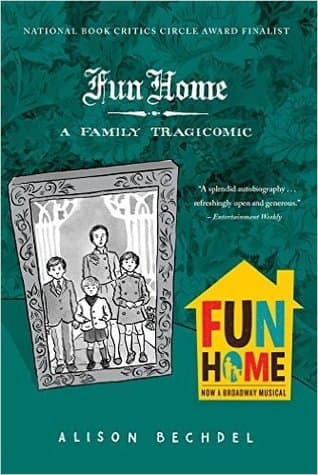
- Fun Home: A Family Tragicomic
Alison Bechdel
4.1 (130k) average on GoodreadsBiographyBoth Habibi and Alison Bechdel's Fun Home are critically acclaimed graphic novels that explore complex family dynamics and sexuality. However, Fun Home is an intensely personal and introspective memoir, focusing on Bechdel's relationship with her closeted gay father and her own emerging lesbian identity, deeply rooted in literary and psychoanalytic references. Habibi, while also exploring intimacy and trauma, does so within a grander, allegorical, and fictionalized narrative framework, drawing on religious texts and environmental themes rather than a direct autobiographical lens. Bechdel's art is precise and detailed, serving her intellectual and emotional excavation, whereas Thompson's is sweeping and calligraphic, supporting his epic spiritual narrative.
- Harry Potter and the Sorcerer's Stone
J.K. Rowling
4.5 (7M) average on GoodreadsFantasyRescued from a miserable life under the stairs, an orphaned boy discovers he's a wizard destined for a magical school, where he uncovers a dangerous secret tied to the dark wizard who murdered his parents.
- The Hobbit, or There and Back Again
J.R.R. Tolkien
4.3 (2.9M) average on GoodreadsFantasyA comfort-loving hobbit named Bilbo Baggins is whisked away by a mischievous wizard and a band of dwarves on an unexpected journey to reclaim stolen treasure from a fearsome dragon, discovering courage and a magical ring along the way.
- Harry Potter and the Goblet of Fire
J.K. Rowling
4.6 (2.6M) average on GoodreadsFantasyA bewildered Harry Potter, underage and thrust into a deadly Triwizard Tournament, must brave dragons, mermaids, and a resurgent dark magic to survive a year that will forever alter the wizarding world.





Enjoyed the summary?
A summary gives you the shape of the book. The book itself has the detail, the examples and the voice.
Find Habibi on AmazonAs an Amazon Associate, BookBrief earns from qualifying purchases. How we're funded