
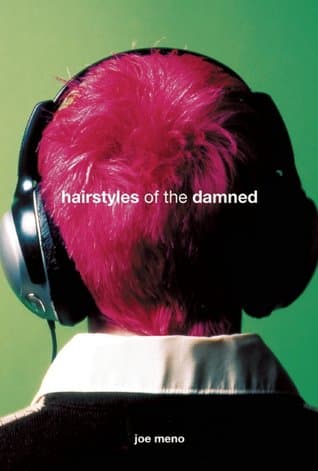
Synopsis
Covers the whole plot, including the ending.
- Difficulty
- Easy
- Pacing
- Moderate
- Mood
- Rebellious, nostalgic, angsty, honest, gritty
Hairstyles of the Damned Plot Summary
Covers the whole plot, including the ending.
The First Day of Senior Year
Brian and Gretchen begin their senior year at St. Jude's, a Catholic high school on Chicago's South Side. Brian is a disillusioned student who often skips classes and gets into trouble. Gretchen is a fiery punk rock girl who frequently brawls and challenges authority. Their friendship is central to their resistance against the conservative, often hypocritical, environment of the school and their working-class neighborhood. They discuss plans for the year, mostly to avoid schoolwork, attend punk shows, and find ways to escape the mundane. Brian feels a growing unease and a desire for more, but he is unsure what that 'more' entails, often resorting to petty acts of rebellion.
Concerts, Fights, and Fading Dreams
Brian and Gretchen spend evenings at local punk rock shows. These concerts are a chaotic mix of music, moshing, and occasional violence. Gretchen thrives in this environment, often starting or joining fights, using her physical prowess as self-expression and defiance. Brian, also drawn to the energy, often observes, grappling with the intensity and fleeting nature of these moments. They dream of leaving Chicago and their suffocating lives, but these dreams feel distant, overshadowed by immediate pressures.
The Weight of Expectations
Brian faces increasing pressure from his parents and teachers to improve his grades and consider his future. His working-class family expects him to find a stable job after graduation, a path Brian resists. He feels trapped by limited options and the perceived futility of academic success in his environment. His disdain for authority, particularly his history teacher, Mr. Miller, leads to frequent clashes. These confrontations highlight his conflict between conforming to expectations and maintaining his rebellious identity. The weight of these expectations contributes to his alienation and his reliance on Gretchen and the punk scene for validation.
Gretchen's Volatile Home Life
Gretchen's aggressive personality is a coping mechanism for her difficult home life. Her parents are often absent or emotionally distant, and her home lacks understanding. This environment fuels her anger and her desire for control, which she often shows through physical altercations and defiant behavior. Brian, despite his own struggles, provides a stable presence for Gretchen, often serving as her confidant and protector. Their shared experiences of feeling misunderstood and marginalized strengthen their bond, making their friendship a source of support in their turbulent lives. Her brawling is a desperate need to feel something and assert her presence.
The Incident at the Party
A party Brian, Gretchen, and their friends attend spirals into a violent incident. A group of rival teenagers, fueled by racial prejudice and territorial animosity, starts a fight. Gretchen is at the forefront of the confrontation, defending herself and Brian with ferocity. Brian, caught in the chaos, witnesses the brutality and senselessness of the violence. This event affects him deeply, reinforcing his belief that the world outside their punk bubble is hostile and unjust. It also highlights the constant threat of violence that permeates their lives on the South Side, making their punk identity both a shield and a target.
Confronting Mr. Miller
Brian's long-standing animosity towards his history teacher, Mr. Miller, culminates in a significant confrontation. Mr. Miller, a conservative figure representing the institutions Brian despises, frequently criticizes Brian's lack of effort and rebellious attitude. During a heated exchange in class, Brian openly challenges Mr. Miller's authority and the curriculum's relevance, accusing him of being out of touch. This act of defiance, while satisfying, also leads to disciplinary action, further isolating Brian within the school system. The confrontation highlights Brian's struggle against conformity and his desire to assert his own worldview, even at the cost of academic repercussions.
The Weight of Racial Intolerance
Racial intolerance is a recurring presence in Brian and Gretchen's lives. They witness and experience prejudice, particularly against the backdrop of their diverse yet segregated Chicago South Side neighborhood. Comments from classmates, subtle biases from teachers, and overt acts of aggression at concerts and parties reveal deep-seated racial tensions. Brian often struggles to articulate his feelings about these injustices, but they contribute to his anger and disillusionment. Gretchen, with her more confrontational nature, is quicker to challenge these prejudices, often leading to arguments and fights that underscore the pervasive nature of bigotry in their world.
A Glimmer of Hope: The College Application
Despite his cynicism about the future and his disdain for traditional paths, Brian is encouraged by a guidance counselor to consider applying to college. He reluctantly begins the application process, seeing it less as a genuine desire for higher education and more as a potential escape route from his current circumstances. This brief foray into a conventional future highlights his internal conflict: the part of him that yearns for something different versus the part that is entrenched in his rebellious, anti-establishment identity. The application becomes a symbol of a possibility, however slim, of breaking free from the cycles he observes around him.
Gretchen's Reckless Behavior Escalates
As the school year progresses, Gretchen's reckless behavior escalates. Her brawls become more frequent and severe, her disregard for authority more pronounced, and her self-destructive tendencies more evident. Brian, despite his own rebellious streak, becomes increasingly concerned for his best friend. He witnesses her pushing boundaries further, seemingly oblivious or uncaring of the consequences. This escalation forces Brian to confront the potential dangers of their lifestyle and the fragility of their dreams. He tries to talk sense into her, but Gretchen's anger and pain are deeply rooted, making her resistant to his advice, leading to tension between them.
The Prom and the Aftermath
Brian and Gretchen, in a gesture that is both ironic and defiant, decide to attend their senior prom. They arrive dressed in their punk attire, starkly contrasting with the other students, making a statement about their refusal to conform. The experience is awkward and unsatisfying, reinforcing their alienation from mainstream high school culture. Afterward, their disillusionment culminates in a significant event or conversation that underscores the futility of their current situation and the need for change. This night pushes them closer to making definitive decisions about their futures, even if those decisions are uncertain and fraught with risk.
The Fight for Survival
Gretchen finds herself in a dangerous situation, a violent confrontation that goes beyond her usual brawls, putting her at significant risk. This event is a stark reminder of the harsh realities of their lives and the constant threats they face. Brian, seeing his best friend in grave danger, is forced to move beyond his usual observational role and actively intervene to protect her. This moment is crucial for Brian's development, as it forces him to confront his own passivity and take decisive action, revealing a deeper layer of courage and loyalty. The incident highlights the strength of their bond and the sacrifices they are willing to make for each other.
Graduation and Unspoken Farewells
Graduation day arrives, marking the end of their time at St. Jude's and the official beginning of their uncertain futures. Brian and Gretchen attend, but the ceremony feels more like a formality than a celebration, devoid of the traditional sense of accomplishment. They exchange unspoken goodbyes, aware that their paths might diverge, and their close friendship could be tested by the realities of adulthood. The future remains a blank slate, filled with both apprehension and a faint hope for something better, something beyond the confines of their South Side lives. The novel concludes with a sense of open-endedness, leaving their specific fates somewhat ambiguous but emphasizing their enduring bond.
Principal Figures
Brian
Protagonist
A disillusioned high school senior yearning for escape.
Brian is a cynical, intelligent, and often passive observer of his own life. He feels trapped by the expectations of his working-class family and the conservative environment of his Catholic high school. While he embraces punk rock as a form of rebellion and identity, he often struggles with taking decisive action, preferring to watch events unfold. He possesses a dry wit and a strong sense of loyalty, particularly towards Gretchen. His internal monologue reveals a deep longing for something more meaningful than the life prescribed for him, even as he grapples with the means to achieve it. He is a thoughtful, if sometimes melancholic, narrator.
Relationships: Gretchen (Best friend, confidante, fellow rebel); Mr. Miller (Antagonistic student-teacher); Parents (Strained, often misunderstood)
Gretchen
Supporting
Brian's fiery, brawling punk rock best friend.
Gretchen is Brian's best friend, a fierce and outspoken punk rock girl who uses her physical prowess and confrontational nature as a shield against a difficult home life and a world she perceives as hostile. She is quick to anger, loyal to a fault, and unafraid to challenge authority or engage in a fight. Her aggressive exterior often masks a deep-seated pain and vulnerability. She embodies the raw, untamed spirit of punk rock, serving as Brian's catalyst for rebellion and his anchor in a confusing world. Despite her wildness, she possesses a keen sense of justice and an unwavering commitment to her friends.
Relationships: Brian (Best friend, protector, emotional anchor); Parents (Neglectful, distant)
Mr. Miller
Supporting
Brian's conservative and traditional history teacher.
Mr. Miller is Brian's history teacher at St. Jude's, a symbol of the institutional authority and traditional values that Brian and Gretchen rebel against. He is depicted as a stern, unyielding figure who adheres strictly to curriculum and discipline. He frequently clashes with Brian over his academic performance and rebellious attitude, viewing Brian's cynicism as laziness or disrespect. While not overtly malicious, he represents the conformist pressures of Catholic school and the wider societal expectations for working-class youth. His interactions with Brian highlight the generational and ideological divide between the students and the establishment.
Relationships: Brian (Antagonistic student-teacher)
Sister Mary
Supporting
A nun at St. Jude's, representing religious authority.
Sister Mary is a nun at St. Jude's, embodying the Catholic school's religious and moral authority. She is often seen enforcing rules, delivering sermons, or offering advice that aligns with traditional Catholic teachings. For Brian and Gretchen, she represents another facet of the oppressive system they are trying to escape. Her presence reinforces the themes of religious conformity and the struggle against established doctrine. While she may genuinely believe in her mission, her interactions often highlight the disconnect between the institution's ideals and the students' lived realities, making her a figure of both reverence and subtle rebellion for the students.
Brian's Parents
Supporting
Working-class parents with traditional expectations.
Brian's parents are working-class individuals who have a strained relationship with their son. They represent the traditional expectations of their community, primarily wanting Brian to secure a stable job and follow a conventional path after high school. They struggle to understand Brian's rebellious nature and his fascination with punk rock, often viewing it as a phase or a source of trouble. Their interactions with Brian highlight the generational gap and the pressure he feels to conform. While they likely wish the best for him, their methods of guidance often feel restrictive and unsupportive from Brian's perspective, contributing to his sense of alienation.
Relationships: Brian (Strained, often misunderstood)
The Guidance Counselor
Supporting
A minor character offering a glimpse of alternative futures.
The guidance counselor is a minor but significant character who offers Brian a brief, unexpected glimpse of a future beyond his immediate circumstances. Unlike most of the authority figures, the counselor seems to genuinely encourage Brian to consider college or other opportunities, suggesting a path that might lead to escape. Their interaction, however brief, plants a seed of possibility in Brian's mind, challenging his ingrained cynicism about the future. This character serves as a foil to the more rigid figures like Mr. Miller, representing a potential avenue for upward mobility or personal growth that Brian had not fully considered.
Relationships: Brian (Brief, advisory)
Themes & Insights
Rebellion and Nonconformity
The novel explores rebellion, particularly through punk rock culture. Brian and Gretchen use their music, fashion, and defiant attitudes to challenge the conformist pressures of Catholic school, the expectations of their working-class families, and the societal norms of their conservative South Side neighborhood. Their rebellion is a search for identity and autonomy in a world that seems determined to pigeonhole them. It is about carving out a space where they can be authentically themselves, even if that space is often chaotic and misunderstood. This theme highlights the struggle of young people to find their voice against oppressive forces.
“We were the static, the noise in the otherwise silent, perfectly tuned machinery of the world.”
Disillusionment and Alienation
A sense of disillusionment and alienation permeates the lives of Brian and Gretchen. They feel disconnected from their peers, teachers, and even their families, struggling to find meaning or purpose in the prescribed paths available to them. Brian observes the world with a cynical eye, questioning the value of education, work, and traditional aspirations. This alienation is made worse by the racial and class tensions present in their Chicago South Side setting, making them feel like outsiders even in their own community. Their punk rock identity, while a source of connection, also isolates them from mainstream society, creating a sense of being perpetually on the fringe.
“The future felt like a locked door, and we didn't have the key, or even know what was on the other side.”
The Search for Identity
Central to the novel is the protagonists' struggle to forge their own identities amidst external pressures. Brian and Gretchen are at a critical age where they are trying to understand who they are and who they want to become, often in direct opposition to what is expected of them. Punk rock is a vehicle for this identity formation, offering a subculture that validates their anger, frustration, and individuality. Their hairstyles, clothing, and musical choices are not merely aesthetic preferences but deliberate statements of self. The journey is messy and often painful, but it is through these acts of self-definition that they begin to understand their place in the world.
“Our hair was a flag, a middle finger, a declaration that we belonged to nothing and everything all at once.”
Class and Social Repression
The novel portrays growing up in a working-class environment on Chicago's South Side, where socio-economic limitations and class repression significantly shape the characters' lives. Brian and Gretchen are aware of the limited opportunities available to them, often feeling that their futures are predetermined by their social standing. The pressure to conform to traditional working-class roles, the struggle for financial stability, and the lack of resources contribute to their disillusionment. This theme highlights how class impacts access to education, cultural capital, and ultimately, the ability to escape one's circumstances, fueling their desire for escape and rebellion.
“They wanted us to be good little cogs, fitting perfectly into the machine they'd built for us.”
The Power of Friendship
At the heart of 'Hairstyles of the Damned' is the strong bond between Brian and Gretchen. Their friendship is a source of support, understanding, and shared rebellion in a world that often feels hostile and indifferent. They are each other's confidantes, protectors, and fellow travelers on a difficult journey. Their loyalty provides stability and comfort, allowing them to navigate the challenges of adolescence, family issues, and societal pressures. This theme highlights how deep, authentic connections can provide resilience and hope, even in the most challenging environments.
“Gretchen was the only one who truly understood the language of my silence.”
Plot Devices & Literary Techniques
First-Person Narration
Brian's cynical and introspective voice.
The novel is told through Brian's first-person perspective, offering an intimate and unfiltered view into his thoughts, observations, and emotional struggles. This device allows the reader to deeply connect with Brian's disillusionment, his dry wit, and his internal conflicts. His voice is often cynical but also deeply introspective, providing a nuanced portrayal of adolescence. The first-person narration emphasizes his sense of alienation and his role as an observer, while also making his eventual acts of defiance more impactful. It's crucial for conveying the subjective experience of growing up punk and marginalized.
Punk Rock as a Microcosm
The punk scene mirrors and amplifies the characters' struggles.
Punk rock culture, with its raw energy, anti-establishment ethos, and sense of community, serves as a powerful microcosm for the larger themes of the novel. The concerts, the music, and the subculture itself are not just background elements but active forces that shape Brian and Gretchen's identities and experiences. The chaos of the mosh pit reflects their internal turmoil, the defiant lyrics echo their rebellion, and the camaraderie among punks provides a temporary escape from their alienation. This device effectively uses a specific cultural movement to explore universal adolescent struggles against conformity, authority, and societal pressures.
Symbolism of Hairstyles
Hair as a visual representation of identity and rebellion.
The 'hairstyles' in the title are a potent symbol throughout the novel. Brian and Gretchen's punk hairstyles – often spiky, dyed, or unconventional – are not merely fashion choices but deliberate statements of their identity and rebellion. They are visible markers of their nonconformity, setting them apart from the 'damned' mainstream society and the conformist environment of their Catholic school. These hairstyles represent their refusal to blend in, their defiance against expectations, and their solidarity with the punk subculture. They are a constant, outward manifestation of their inner struggles and their desire for self-expression.
The South Side Setting
Chicago's South Side as a character and source of conflict.
Chicago's South Side functions as more than just a backdrop; it is a character in itself, deeply influencing the protagonists' lives and the novel's themes. The working-class neighborhoods, the racial tensions, the urban decay, and the limited opportunities all contribute to Brian and Gretchen's sense of entrapment and disillusionment. The specific cultural and socio-economic realities of this setting provide a concrete context for their rebellion against class repression and racial intolerance. The South Side grounds their experiences in a palpable reality, making their struggles feel authentic and deeply rooted in their environment.
Quiz
10 questions on the plot and the characters. Each answer comes with a short explanation.
Question 1
What city is the setting for "Hairstyles of the Damned"?
- New York City
- Los Angeles
- Chicago
- Detroit
Show answer
C. Chicago The book is described as a depiction of growing up punk on Chicago's south side.
Question 2
Which of the following is NOT mentioned as a theme in the book?
- Racial intolerance
- Class repression
- Romantic relationships
- Catholic school conformism
Show answer
C. Romantic relationships The provided synopsis mentions racial intolerance, Catholic school conformism, and class repression as themes, but not romantic relationships.
Question 3
What is the name of the protagonist's best friend?
- Brian
- Gretchen
- Joe
- Meno
Show answer
B. Gretchen The synopsis states it is the story of Brian and his best friend Gretchen.
Question 4
What is Brian described as in high school?
- A star athlete
- A class president
- A valedictorian
- A burnout
Show answer
D. A burnout The synopsis explicitly calls Brian 'a high school burnout'.
Question 5
Gretchen is described as being fond of what activity?
- Reading poetry
- Playing chess
- Brawling
- Gardening
Show answer
C. Brawling The synopsis states Gretchen is 'a punk rock girl fond of brawling'.
Question 6
The book is characterized as an 'honest depiction' of what kind of upbringing?
- Suburban
- Rural
- Punk
- Academic
Show answer
C. Punk The first sentence describes the book as 'an honest depiction of growing up punk'.
Question 7
What aspect of the school environment is highlighted as a source of repression?
- Uniform policies
- Excessive homework
- Catholic school conformism
- Mandatory sports
Show answer
C. Catholic school conformism The synopsis mentions 'Catholic school conformism' as one of the 'demons' the characters face.
Question 8
The 'riotous exploits' primarily involve which two characters?
- Brian and his parents
- Gretchen and her family
- Brian and Gretchen
- Gretchen and another punk girl
Show answer
C. Brian and Gretchen The text states, 'It is the story of the riotous exploits of Brian, a high school burnout, and his best friend Gretchen'.
Question 9
Which of the following is presented as a 'demon' that the characters confront?
- Economic recession
- Technological advancement
- Social media pressure
- Racial intolerance
Show answer
D. Racial intolerance The synopsis lists 'racial intolerance' as one of the 'demons' depicted in the book.
Question 10
The book uses the setting of Chicago's south side to explore the struggles of growing up in a specific subculture and facing societal challenges. What is the primary subculture mentioned?
- Goth
- Hip-hop
- Punk
- Ska
Show answer
C. Punk The book is explicitly described as 'an honest depiction of growing up punk on Chicago’s south side'.
Hairstyles of the Damned FAQ
What is Hairstyles of the Damned about?
Hairstyles of the Damned is a young adult novel that honestly depicts growing up punk on Chicago's south side. It explores themes of racial intolerance, Catholic school conformism, and class repression through the story of Brian, a high school burnout, and his punk rock friend Gretchen.
Who are the main characters in Hairstyles of the Damned?
The main characters are Brian, a high school burnout, and Gretchen, his best friend who is a punk rock girl known for her brawling.
What are the main themes in Hairstyles of the Damned?
The novel delves into themes of racial intolerance, the pressures of Catholic school conformism, and the impact of class repression on young lives. It also captures the spirit of punk culture and adolescent rebellion.
What is the setting of Hairstyles of the Damned?
The story is set in Chicago's south side, focusing on the experiences of teenagers growing up in that environment during the punk era.
Is Hairstyles of the Damned a coming-of-age story?
Yes, Hairstyles of the Damned is a coming-of-age novel that follows the tumultuous experiences of its teenage protagonists as they navigate adolescence, identity, and the social issues of their time.
What kind of tone does Hairstyles of the Damned have?
The book is described as an honest and riotous depiction, suggesting a tone that is raw, energetic, and possibly humorous despite the serious themes it addresses.
What makes Hairstyles of the Damned different from other YA novels?
Its specific focus on the punk subculture, combined with a gritty portrayal of Chicago's south side and the intersection of racial, religious, and class issues, sets it apart. It offers a less sanitized look at teenage life.
What age group is Hairstyles of the Damned suitable for?
Hairstyles of the Damned is categorized as Young Adult fiction, typically suitable for teenagers and older readers who appreciate realistic and mature themes.
Are there any real-life inspirations behind Hairstyles of the Damned?
While the book is fiction, Joe Meno's work often draws from his own experiences and observations of subcultures and urban life, suggesting that the setting and atmosphere are rooted in authentic cultural elements.
How does the book explore the punk rock lifestyle?
The book depicts the punk rock lifestyle through the characters' fashion, music preferences, attitudes, and their engagement with the counterculture. It shows how this identity intersects with their daily struggles and social environment.
About the author

Joe Meno is an American author known for his contributions to contemporary fiction. His notable work, "Hairstyles of the Damned," explores themes of youth and identity. Meno's writing often reflects the complexities of modern life and has garnered attention for its unique voice and perspective.
Similar books
- The Perks of Being a Wallflower
Stephen Chbosky
4.2 (1.3M) average on GoodreadsPsychology"Hairstyles of the Damned" shares "Perks'" intimate, first-person confessional style, exploring the emotional turmoil and social navigation of a sensitive teenager. Both protagonists are outsiders observing the world around them, but Meno's Brian has a more outwardly sarcastic and cynical veneer, while Chbosky's Charlie is more overtly vulnerable and traumatized. "Hairstyles" leans more into comedic observations and the specific cultural touchstones of its era, whereas "Perks" delves deeper into themes of trauma and healing with a more literary, almost poetic, prose style.
- Harry Potter and the Sorcerer's Stone
J.K. Rowling
4.5 (7M) average on GoodreadsFantasyRescued from a miserable life under the stairs, an orphaned boy discovers he's a wizard destined for a magical school, where he uncovers a dangerous secret tied to the dark wizard who murdered his parents.
- The Hunger Games
Suzanne Collins
4.3 (6.4M) average on GoodreadsFantasyIn a future where children fight to the death on live television, Katniss Everdeen volunteers for the arena, turning a death sentence into a fight for survival and a spark of rebellion.
- To Kill a Mockingbird
Harper Lee
4.3 (4.5M) average on GoodreadsHistorical FictionIn the 1930s Jim Crow South, Harper Lee writes about racial injustice, moral growth, and the quiet courage of a lawyer father, Atticus Finch, as seen through his young daughter's eyes.
- The Fault in Our Stars
John Green
4.2 (3.6M) average on GoodreadsYoung AdultA girl with a terminal illness finds her story rewritten when a charming boy with a similar past enters her life at a cancer support group, leading to a star-crossed romance.
- Divergent
Veronica Roth
4.2 (2.9M) average on GoodreadsFantasyIn a society divided by virtues, a sixteen-year-old's difference from the norm starts a rebellion that threatens her world.




Enjoyed the summary?
A summary gives you the shape of the book. The book itself has the detail, the examples and the voice.
Find Hairstyles of the Damned on AmazonAs an Amazon Associate, BookBrief earns from qualifying purchases. How we're funded