
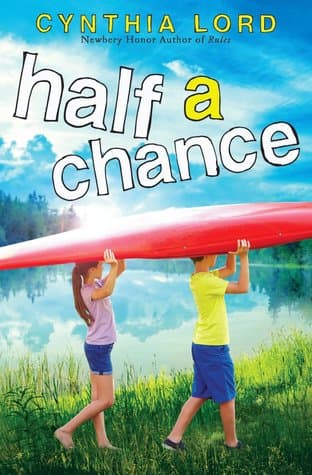
Synopsis
Covers the whole plot, including the ending.
- Difficulty
- Easy
- Pacing
- Moderate
- Mood
- Heartwarming, Reflective, Hopeful, Tender
- Read it if
- You enjoy heartwarming stories about family, friendship, and the power of art, especially with themes of coping with a loved one's illness.
- Skip it if
- You prefer fast-paced, high-stakes adventures or stories without a focus on family drama and emotional growth.
Half a Chance Plot Summary
Covers the whole plot, including the ending.
A New Home and a Secret Contest
Lucy and her family move into an old house on a lake for the summer. Her father, a renowned nature photographer, is away on a long assignment. Lucy feels inspired by his talent but also overshadowed. Lucy, an aspiring photographer, carries her father's old camera everywhere, seeing the world through its lens. She soon learns that her father is judging a photography contest. Wanting to prove her own artistic merit, not just as his daughter, Lucy decides to enter the contest anonymously, hoping her work will be judged only on its quality. This decision sets the stage for her summer of exploration and self-discovery.
Meeting Nate and the Loons
Soon after arriving, Lucy meets Nate, the boy who lives next door. His house has been in his family for generations. Nate is at first reserved but quickly becomes friends with Lucy, sharing his knowledge of the lake and its wildlife. Lucy is particularly drawn to the pair of loons that nest on the lake, watching them through her camera. She learns from Nate that these loons return every year, symbolizing the lasting spirit of the lake. The loons become an important subject for Lucy's photography, representing nature's beauty and the passage of time.
Grandma Lil's Forgetfulness
As Lucy spends more time with Nate, she also gets to know his grandmother, Lil. Initially, Lil seems like a charming, if eccentric, older woman who loves gardening and stories. However, Lucy's keen photographic eye, trained to notice details, starts to pick up on subtle signs that Lil's memory is failing. She observes moments of confusion, forgotten names, and repeated stories that Nate, out of love and denial, often dismisses or explains away. Lucy's camera, in its objective capture of reality, begins to document the painful truth of Lil's cognitive decline, a truth Nate is not yet ready to face.
The Photo Challenge and the Lighthouse
Lucy works to capture compelling images for the photography contest. She explores various subjects around the lake, always keeping her father's high standards in mind. One important place she photographs is an old lighthouse, a local landmark that has sentimental value for Nate and his family. Lucy photographs the lighthouse in different lights and moods, trying to put emotion and story into her images. She carefully selects her best work, including several poignant shots, and submits them anonymously to the contest, feeling both hope and fear about her father's potential judgment.
Nate's Denial and Lucy's Observation
Despite Lucy's growing awareness and occasional gentle suggestions, Nate resists acknowledging his grandmother's deteriorating condition. He cherishes his summer memories with Lil and fears losing the woman he knows. Lucy, however, cannot ignore what her camera and her instincts reveal. She notices Lil planting flowers in strange places, forgetting important family stories, and becoming more disoriented. Lucy's photographs, especially candid shots of Lil, become a quiet, undeniable record of the changes, forcing Lucy to consider the ethical implications of her art.
The Loons' Struggle
A significant event occurs when one of the loon chicks disappears from the nest. Lucy and Nate have been watching the loon family closely, and the loss of the chick deeply affects them. This event mirrors the unfolding situation with Grandma Lil, serving as a metaphor for life's fragility and the inevitability of loss. The missing chick emphasizes the harsh realities of nature and the emotional impact of absence, prompting Lucy to think about how she can capture such feelings in her photography.
The Confrontation and the Truth
The moment of truth arrives when Nate can no longer ignore the evidence. It is often through Lucy's photographs, or through a particularly stark moment of Lil's confusion, that Nate is forced to confront the reality of his grandmother's memory loss. This realization is painful and initially met with anger or sadness. Lucy, through her art and her empathetic presence, helps Nate to see what he has been avoiding. The camera, initially a tool for observation, becomes a catalyst for understanding and acceptance, bridging the gap between denial and truth.
Art as a Way to Cope
As Nate comes to terms with Lil's condition, both he and Lucy find solace and expression in creative outlets. Lucy's photography changes from simply capturing images to telling a story, reflecting the emotional landscape of their summer. Nate, inspired by Lucy and needing a way to hold onto his grandmother, starts sketching or helping Lucy with her photography, using art to process his grief and preserve cherished memories of Lil before her memory completely fades. Their shared artistic endeavors strengthen their bond and provide a healthy way to cope.
The Contest Results and Revelation
The results of the photography contest are announced. Lucy's anonymous submission, likely a poignant image capturing the lake or a moment related to Lil, wins a significant prize. Her father, impressed by the winning photograph, expresses his admiration for the artist's eye and emotional depth. When Lucy reveals herself as the anonymous winner, her father is both surprised and proud. This moment allows for a genuine connection between them, as her father acknowledges her unique talent and artistic voice, separate from his own legacy.
Acceptance and Moving Forward
By the end of the summer, Nate has accepted Grandma Lil's memory loss. While still painful, he understands that their relationship can adapt, and he finds new ways to connect with her, cherishing their moments. Lucy, having proven her talent through the contest and navigated the complexities of her friendship with Nate, gains confidence in her own artistic voice. She learns that photography is not just about capturing beauty but also about revealing truth and fostering empathy, solidifying her path as a photographer with a unique perspective.
Principal Figures
Lucy
Protagonist
An aspiring young photographer seeking to define her artistic identity.
Lucy is a thoughtful and observant young girl, deeply passionate about photography, a skill she inherited from her famous photographer father. She is initially driven by a need to prove her talent independently, separate from her father's shadow. Lucy is empathetic and notices details others might miss, making her a keen observer of the world around her. She carries her camera everywhere, using it as a tool for both exploration and understanding. Her artistic integrity compels her to capture truth, even when it's difficult.
Relationships: Nate (Close friend, confidante, and artistic inspiration.); Lucy's Father (Inspirational figure, but also a source of artistic pressure; later, a proud mentor.); Grandma Lil (Subject of her photography, catalyst for her understanding of loss and truth.)
Nate
Supporting
Lucy's neighbor, struggling to accept his grandmother's declining health.
Nate is a kind and sensitive boy who loves his grandmother, Lil, and cherishes their summers at the lake house. He is initially in denial about Lil's worsening memory, clinging to the familiar and fearing the inevitable changes. Nate is knowledgeable about the lake and its wildlife, sharing his insights with Lucy. He is protective of his family and traditions. His journey involves confronting a painful reality and finding new ways to cope with loss, ultimately embracing a deeper understanding of love and memory.
Relationships: Lucy (Close friend, helps him confront difficult truths.); Grandma Lil (Beloved grandmother, central to his summer experiences and emotional struggle.)
Grandma Lil
Supporting
Nate's loving grandmother whose memory is fading.
Grandma Lil is a warm, spirited woman who has a deep connection to the lake house and its history. She is initially portrayed as charming and full of stories, but her memory is progressively failing due to dementia. Lil represents the beauty of cherished memories and the painful reality of their erosion. Despite her decline, she retains moments of clarity and love, particularly for Nate. Her character highlights the impact of memory loss on individuals and their families, serving as a poignant subject for Lucy's photography and a catalyst for Nate's emotional growth.
Relationships: Nate (Beloved grandson, her memory loss profoundly affects him.); Lucy (Subject of Lucy's empathetic photography.)
Lucy's Father
Supporting
A famous nature photographer, away on assignment.
Lucy's father is a renowned photographer whose work sets a high bar for Lucy. Though mostly absent physically during the summer, his influence is pervasive. He taught Lucy the fundamentals of photography and instilled in her a deep appreciation for observation. He represents the challenge and inspiration of artistic excellence. His role as the anonymous judge of the contest creates the central conflict for Lucy's artistic journey, and his eventual recognition of her talent is a pivotal moment for her self-validation.
Relationships: Lucy (Father-daughter relationship, mentor and mentee, later a peer in art.)
Lucy's Mother
Supporting
Lucy's supportive mother, helping the family adjust to their new home.
Lucy's mother is a grounding presence in the family, providing emotional support and practical assistance as they settle into the lake house. She is understanding of Lucy's artistic pursuits and her father's demanding career. While not as central to the plot as Lucy, Nate, or Lil, she represents the stability and care within Lucy's family unit, offering a calm counterpoint to the emotional intensity of Lucy's artistic quest and Nate's struggles.
Relationships: Lucy (Supportive mother-daughter relationship.); Lucy's Father (Spousal relationship, managing family life during his absence.)
The Loons
Mentioned
A pair of loons on the lake, symbolizing nature's beauty and the cycle of life.
The loons, a pair that nests on the lake, are a recurring motif and subject for Lucy's photography. They represent the wild beauty of nature, the cyclical patterns of life, and the vulnerability of the natural world. Their presence provides a sense of continuity for Nate and becomes a focus of shared observation for Lucy and Nate. The eventual loss of a loon chick serves as a poignant parallel to the theme of loss and fragility within the human story.
Relationships: Lucy (Frequent photographic subjects and source of artistic inspiration.); Nate (Familiar inhabitants of his childhood summers, symbolic of home.)
Themes & Insights
The Power of Art to Reveal Truth
Lucy's photography is not just about capturing pretty pictures; it is a tool for seeing and understanding deeper truths. Her camera objectively records Grandma Lil's memory lapses, forcing Nate to confront what he has been denying. Through her lens, Lucy helps to make the invisible visible, showing that art can be a powerful, sometimes painful, mirror to reality. This is evident when Lucy captures Lil's confused moments, which, though difficult, ultimately help Nate accept his grandmother's condition.
“My father always said a photograph should tell a story, even if it's a story you don't want to hear.”
Coping with Loss and Change
The novel explores various forms of loss: the gradual erosion of Grandma Lil's memory, the disappearance of the loon chick, and the loss of familiar routines as Lucy's family moves. Both Lucy and Nate must learn to navigate these changes. Nate's journey of accepting Lil's dementia is central, showing the difficulty of letting go and finding new ways to connect. Lucy's experience with the loons teaches her about nature's cycles of life and death. The characters learn that coping involves acknowledging grief and finding new forms of beauty and connection.
“Sometimes, the hardest part of losing something isn't the losing itself, but the forgetting.”
Defining One's Artistic Voice
Lucy struggles with establishing her own identity as a photographer, separate from the shadow of her famous father. Entering the contest anonymously is her way of seeking validation for her unique perspective and talent, not just as 'her father's daughter.' Through her summer experiences, especially her empathetic engagement with Nate and Lil's story, Lucy develops a distinct artistic voice that values truth and emotional depth over mere technical perfection. Her winning photo signifies her success in this quest.
“I wanted to know if my eye was special, or only good enough.”
The Fragility and Beauty of Memory
Memory is a central theme, highlighted by Grandma Lil's struggle with dementia. The novel contrasts the preciousness of shared memories, like Nate's summers with Lil, with the painful reality of memory's impermanence. Lucy's photographs become a way to preserve these fleeting moments, showing that while personal memory may fade, art can offer a lasting record. The story suggests that even as direct memories disappear, the love and connection they fostered can endure in new forms.
“Memories are like the lake, always changing, but always there, deep down.”
The Healing Power of Nature
The lake setting plays a significant role in the emotional landscape of the story. The natural world, particularly the loons, provides beauty, wonder, and contemplation for Lucy. For Nate, the lake embodies his childhood memories and a sense of belonging. Observing the cycles of nature, such as the loons nesting and the changing seasons, offers both characters perspective and quiet solace amidst their personal challenges. Nature provides a backdrop for their growth and a metaphor for life's enduring cycles.
“The lake had a way of holding onto everything, even things you thought were gone.”
Plot Devices & Literary Techniques
The Camera/Photography
A tool for observation, truth-telling, and artistic expression.
Lucy's camera is not just a prop; it's an extension of her character and a primary plot device. It functions as a means for her to engage with the world, process her emotions, and develop her artistic eye. More profoundly, it serves as an objective witness, capturing the subtle signs of Grandma Lil's memory loss that Nate initially overlooks. The camera forces characters to confront reality and provides a tangible record of change, ultimately becoming a symbol of art's power to reveal and preserve truth.
The Anonymous Photo Contest
A catalyst for Lucy's artistic journey and self-discovery.
The photography contest, judged by Lucy's father, is the central external motivator for Lucy. By entering anonymously, she creates a challenge for herself to prove her talent based purely on merit, free from the influence of her father's name. This device drives much of her action, pushing her to seek out compelling subjects and refine her skills. It builds suspense around the outcome and ultimately provides a significant moment of validation for Lucy's artistic identity.
The Loons
A recurring symbol of nature's cycles, life, and loss.
The loons on the lake are more than just wildlife; they are a powerful symbol woven throughout the narrative. Their annual return represents continuity and the enduring spirit of nature. The birth of their chicks symbolizes new life and hope, while the disappearance of one chick mirrors the theme of loss and fragility in the human story. The loons provide a natural, cyclical counterpoint to the linear progression of Lil's illness and serve as a consistent subject for Lucy's artistic and emotional exploration.
Grandma Lil's Garden
A symbol of memory, care, and the subtle signs of decline.
Grandma Lil's garden, initially a place of beauty and her careful cultivation, becomes a symbolic indicator of her fading memory. As her dementia progresses, she begins to plant things in unusual places or forget where she put them. The garden, once a testament to her order and creativity, subtly reveals her confusion, serving as a visual metaphor for the disarray in her mind. It's a poignant detail that allows Lucy to observe her decline and helps Nate to eventually see the truth.
Half a Chance Quotes
“Sometimes you have to give up something good to get something better.”
“Every time you pick up your camera, you're telling a story.”
“Loon calls are like the wilderness sighing.”
“It's hard to judge a photo when you don't know the story behind it.”
“Being brave doesn't mean you're not scared. It means you do it anyway.”
“Sometimes the best pictures are the ones you don't plan.”
“You can't always see what's important if you're only looking for what you expect.”
“A photograph can hold a whole summer, if you let it.”
“It's funny how you can live in a place for a while and still not really see it.”
“Every person has a story, and sometimes, if you're lucky, you get to hear a little bit of it.”
“You don't have to be perfect to be good enough.”
“The lake had a way of showing you things, if you were patient enough to look.”
“Sometimes, all it takes is half a chance.”
Quiz
10 questions on the plot and the characters. Each answer comes with a short explanation.
Question 1
What is Lucy's father's profession?
- A painter
- A famous photographer
- A nature guide
- A photo editor
Show answer
B. A famous photographer Lucy's father is a famous photographer who has taught her how to see the world through a camera's lens.
Question 2
Why does Lucy decide to enter the photo contest anonymously?
- She wants to surprise her father with her entry.
- She is shy about her photography skills.
- She wants to know if her photography is truly special, not just good enough because of her father's influence.
- Her father forbade her from entering.
Show answer
C. She wants to know if her photography is truly special, not just good enough because of her father's influence. Lucy enters anonymously to determine if her photography skills are genuinely good, independent of her father's fame or high standards.
Question 3
What significant detail does Lucy's camera reveal about Nate's grandmother?
- She is an excellent painter.
- Her memory is slipping away.
- She is moving away from the lake.
- She has a hidden talent for singing.
Show answer
B. Her memory is slipping away. Through her photography, Lucy starts to notice signs that Nate's grandmother's memory is declining, which Nate initially doesn't want to see.
Question 4
Where does Lucy's family move at the beginning of the story?
- To a new apartment in the city.
- To an old house on a lake.
- To a farm in the countryside.
- To a house in a different state.
Show answer
B. To an old house on a lake. The story begins with Lucy's family moving to an old house situated on a lake.
Question 5
What is one of the main themes Lucy learns by the end of the book?
- The importance of winning competitions.
- How beauty can change lives, including her own.
- That she should always follow in her father's footsteps.
- The difficulty of making new friends.
Show answer
B. How beauty can change lives, including her own. The book's description states that Lucy will learn how beauty can change lives, including her own, highlighting a key thematic development for her character.
Question 6
What does Nate learn about the power of art through his experiences with Lucy?
- Art is a good way to escape reality.
- Art can be used to hide difficult truths.
- Art can show truth, even difficult ones.
- Art is only for professional artists.
Show answer
C. Art can show truth, even difficult ones. Nate learns about the power of art to show truth, particularly concerning his grandmother's memory loss, even when it's difficult to confront.
Question 7
How does Lucy initially try to view her new home?
- With skepticism and longing for her old home.
- Through her camera's lens, as her father taught her.
- By immediately exploring every room and area.
- By focusing on the negative aspects of the move.
Show answer
B. Through her camera's lens, as her father taught her. Lucy uses her photography skills to adjust to her new surroundings, seeing her new home through her camera's lens as her father had instructed.
Question 8
What does Nate initially not want to see about his grandmother?
- Her increasing independence.
- Her growing fondness for Lucy.
- That her memory is slipping away.
- Her plans to sell the house.
Show answer
C. That her memory is slipping away. The camera reveals to Lucy, and eventually forces Nate to confront, the difficult truth that his grandmother's memory is fading, which he initially resisted acknowledging.
Question 9
What is the primary motivation for Lucy to enter the photo contest?
- To win the prize money.
- To make her father proud without his direct influence.
- To compete against Nate.
- To gain fame for herself.
Show answer
B. To make her father proud without his direct influence. Lucy's main motivation is to discover if her 'eye for photography is really special' or merely 'good enough,' seeking validation independent of her famous photographer father's judgment.
Question 10
How does the author describe the impact of Nate's grandmother's memory loss on Nate?
- It makes him want to move away from the lake.
- It causes him to cherish his summers on the lake even more.
- It threatens much of what he cherishes about his summers on the lake.
- It makes him angry at Lucy for pointing it out.
Show answer
C. It threatens much of what he cherishes about his summers on the lake. The description states that with his grandmother's memory slipping away, 'with it much of what he cherishes about his summers on the lake' is also threatened, indicating a significant emotional impact on Nate.
Half a Chance FAQ
What is the central conflict Lucy faces at the beginning of the story?
Lucy is struggling to meet the high photographic standards set by her famous photographer father, who is away on a shoot. She doubts her own talent and whether her photos will ever be good enough to impress him.
How does Lucy try to resolve her self-doubt about her photography skills?
Lucy decides to enter a photo contest that her father is judging, submitting her work anonymously. She hopes this will provide an unbiased assessment of her talent, free from the influence of their relationship.
Who is Nate, and what significant challenge is he facing?
Nate is Lucy's next-door neighbor at the lake house. He is grappling with the painful reality that his beloved grandmother's memory is progressively deteriorating due to Alzheimer's, which deeply impacts his cherished summer traditions.
How does Lucy's photography connect her with Nate and his grandmother?
As Lucy searches for subjects for her contest entries, her camera naturally draws her into Nate's life and the subtle changes occurring with his grandmother. Her photographs inadvertently begin to capture the truth of the grandmother's memory loss.
What does Nate ultimately learn about the power of art by the end of the book?
Nate learns that art, specifically Lucy's photography, possesses the power to reveal difficult truths, even those he initially tries to avoid or deny. He comes to understand its ability to document and acknowledge reality.
How does Lucy's perspective on beauty and life change throughout the novel?
Lucy initially focuses on technical perfection and external validation for her art, but through her experiences with Nate and his grandmother, she learns that beauty can be found in difficult truths and has the power to change lives, including her own.
What specific photographic techniques or styles does Lucy's father emphasize, and how does this influence Lucy's early work?
Lucy's father likely emphasizes precise composition, lighting, and capturing a narrative in a single frame, leading Lucy to initially focus on technical perfection and perhaps a more detached, observational style in her early attempts.
Are there any subtle clues about the grandmother's memory loss that Lucy captures before Nate fully acknowledges it?
Lucy's photographs might subtly capture moments of confusion, vacant stares, or misplaced objects belonging to the grandmother, serving as visual evidence that Nate initially overlooks or dismisses as normal aging.
How does the 'old house on a lake' setting contribute to the themes of memory and change?
The old house and lake setting likely symbolize enduring traditions and cherished memories, making the grandmother's memory loss more poignant as it threatens to erase the history tied to these familiar places for Nate.
Does Lucy's father recognize her work in the contest, and how does he react?
The book implies her father does recognize her unique photographic 'eye' even without knowing it's her, which would validate Lucy's talent independently and perhaps make him proud of her distinct artistic voice.
How does Lucy's anonymity in the photo contest impact her creative process and self-perception?
The anonymity frees Lucy from the pressure of her father's expectations, allowing her to experiment more authentically and develop her own photographic voice, which in turn boosts her intrinsic self-worth as an artist.
What psychological impact does his grandmother's declining memory have on Nate's identity and sense of security?
Nate likely experiences a profound sense of loss and fear, as his grandmother represents a stable link to his past and cherished summers. Her memory loss threatens his sense of security and identity tied to these traditions.
How does Lucy's act of photographing Nate's grandmother serve as a form of empathy and connection?
By photographing the grandmother, Lucy isn't just documenting; she's actively observing and acknowledging the grandmother's presence and condition, offering a form of empathetic witness that helps Nate confront his feelings.
In what ways do Lucy and Nate both experience growth by confronting difficult truths through art?
Lucy grows by accepting that art can capture raw reality, not just idealized beauty, while Nate grows by using art to process painful change rather than avoid it, leading both to deeper emotional maturity.
How does the book challenge the traditional idea of 'perfection' in art and life?
The book challenges perfection by showing that true beauty and meaning often lie in vulnerability, imperfection, and the honest portrayal of difficult realities, rather than in flawless technique or idealized subjects.
Is Lucy's father portrayed as an antagonist, or is his role more nuanced?
His role is nuanced; while his high standards create pressure for Lucy, he isn't an antagonist. He's a catalyst for her journey to find her own artistic voice and independently validate her talent, ultimately fostering her growth.
What message does the book convey about the role of memory in personal and familial identity?
The book profoundly conveys that memory is central to identity, both individual and familial. Its loss highlights the fragility of our personal histories and the importance of preserving and cherishing shared experiences.
How does the title "Half a Chance" relate to the themes of the book for both Lucy and Nate?
The title refers to Lucy's 'half a chance' at winning the contest anonymously and Nate's 'half a chance' at preserving memories or finding peace amidst his grandmother's decline. It speaks to hope and uncertainty.
Similar books
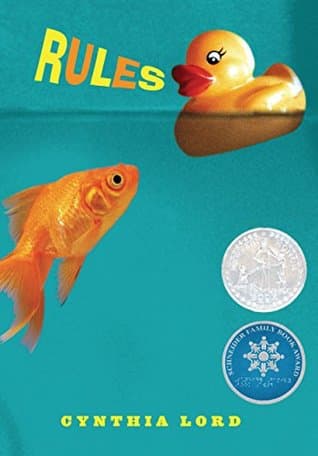
- Rules
Cynthia Lord
4.0 (55k) average on GoodreadsChildren'sShares similar themes of family, empathy, and a child navigating complex family dynamics.
- Bridge to Terabithia
Katherine Paterson
4.0 (445k) average on GoodreadsFantasyExplores deep friendship, the beauty of imagination, and coping with difficult truths.
- Harry Potter and the Sorcerer's Stone
J.K. Rowling
4.5 (7M) average on GoodreadsFantasyRescued from a miserable life under the stairs, an orphaned boy discovers he's a wizard destined for a magical school, where he uncovers a dangerous secret tied to the dark wizard who murdered his parents.
- The Hobbit, or There and Back Again
J.R.R. Tolkien
4.3 (2.9M) average on GoodreadsFantasyA comfort-loving hobbit named Bilbo Baggins is whisked away by a mischievous wizard and a band of dwarves on an unexpected journey to reclaim stolen treasure from a fearsome dragon, discovering courage and a magical ring along the way.
- Harry Potter and the Goblet of Fire
J.K. Rowling
4.6 (2.6M) average on GoodreadsFantasyA bewildered Harry Potter, underage and thrust into a deadly Triwizard Tournament, must brave dragons, mermaids, and a resurgent dark magic to survive a year that will forever alter the wizarding world.
- Harry Potter and the Order of the Phoenix
J.K. Rowling
4.5 (2.5M) average on GoodreadsFantasyIn a year of oppressive secrets and the threat of Voldemort, Harry Potter and Dumbledore's Army secretly train for war, shown through Jim Kay and Neil Packer's dark illustrations.





Enjoyed the summary?
A summary gives you the shape of the book. The book itself has the detail, the examples and the voice.
Find Half a Chance on AmazonAs an Amazon Associate, BookBrief earns from qualifying purchases. How we're funded