
Core Idea
- Difficulty
- Easy
- Read it if
- You're interested in stories about identity, overcoming external pressure, and the challenges of living up to a family legacy, especially in a sports context.
- Skip it if
- You're looking for a deep dive into football strategy or a purely action-driven sports narrative without much introspection.
Key Takeaways from Halfback Tough
The Weight of Expectations
How external pressures can shape, and sometimes warp, an individual's identity and choices.
Mike Hammer's journey shows how the expectations of others—parents, coaches, and a whole community—can greatly affect a young person's sense of self and future. At first, Mike's football skill seems to define him, a role he was prepared for. But this outside approval creates an inner conflict, as he struggles to tell his own desires apart from the hopes of those around him. The book explores the psychological burden of being seen mainly as a means to an end (a winning season, a proud legacy), rather than as a complex individual with growing personal goals. This constant pressure can make someone feel trapped, where the easiest path is to fit in, even if it means giving up who they really are.
“Mike could feel the weight of all those eyes on him, not just the coach's, but his father's, the whole town's. It was a weight he sometimes felt he couldn't carry.”
In the book: Mike's internal monologues frequently highlight his struggle with his father's unwavering belief in his football future, often contrasting it with his own unarticulated desires or doubts. The town's collective enthusiasm for their 'star' player further reinforces this burden.
Try this: Reflect on the external pressures in your own life. Are you pursuing goals that genuinely align with your values, or are you fulfilling others' expectations? Take time to differentiate between your intrinsic motivations and extrinsic demands. Practice setting boundaries to protect your personal aspirations.
Related ideas: identity-formation, external-validation, psychological-burden
Beyond the Gridiron
Discovering a sense of purpose and self-worth outside of a narrowly defined talent.
One of the most interesting parts of 'Halfback Tough' is Mike Hammer's search for an identity beyond his athletic skills. While his talent on the football field is clear and brings him much praise, the story looks at his growing understanding that being 'halfback tough' does not fully define who he is or wants to be. This struggle is especially relevant for people who excel early in one area, often finding their whole identity tied to that talent. The book shows the inner conflict of wanting to honor one's gifts while also wanting a broader, more varied sense of self. It supports the idea that true fulfillment comes from exploring different interests and finding new parts of one's personality, rather than just relying on one celebrated skill.
“He knew he was good at football, maybe even great, but was that all there was to Mike Hammer? He had to find out.”
In the book: Mike's increasing unease with the sole focus on football, despite his success, and his eventual decision to explore other possibilities or reconsider his future, rather than blindly following the expected path to college football.
Try this: Actively explore hobbies or interests outside of your primary skill or profession. Volunteer, learn a new language, or pick up an artistic pursuit. This diversification helps build a more robust sense of self and resilience, independent of any single achievement.
Related ideas: self-discovery, identity-crisis, purpose-finding
The True Meaning of Toughness
Redefining resilience from physical prowess to moral courage and self-advocacy.
Dygard's novel redefines 'toughness.' At first, Mike Hammer shows the physical toughness expected of a star halfback: the ability to take hits, play through pain, and push his body hard. However, the story gradually changes this definition to include a much deeper form of strength: moral courage. This means having the strength to question old ways, challenge expectations, and finally, stand up for one's own truth, even if it means disappointing others or facing an uncertain future. This inner fight needs a different kind of strength, one less about brute force and more about conviction and honesty. The book argues that true toughness is not just physical endurance, but a steady commitment to one's real self, even when facing great pressure.
“Being tough wasn't just about taking a hit on the field. It was about standing up for what you believed in, even when it was hard.”
In the book: Mike's internal struggle and eventual decision to confront his father and coach about his feelings regarding his future, despite the anticipated backlash and the potential for losing his celebrated status.
Try this: Identify an area in your life where you're conforming against your better judgment. Practice expressing your true feelings or desires, even if it's uncomfortable. Start with small, low-stakes situations to build your 'moral courage' muscle.
Related ideas: moral-courage, resilience, authenticity
The Coach-Player Dynamic
Exploring the complex and often manipulative relationship between authority and aspiration.
The relationship between Mike Hammer and Coach Barbour represents the power dynamics common in many mentor-mentee or authority-subordinate relationships, especially in competitive settings. Coach Barbour, while perhaps genuinely caring for Mike, mainly sees him for his athletic use. This view, though common, shows how people in power can accidentally, or sometimes on purpose, project their own ambitions onto those they lead. This can potentially stop the mentee's personal growth and independence. The book does not make Coach Barbour a villain, but rather a product of a system that puts team success over individual self-determination. It asks readers to think critically about how leaders can both inspire and unintentionally limit those under their influence.
“Coach Barbour saw a winning season, maybe even a state championship, every time he looked at Mike. He didn't see a boy with a choice to make.”
In the book: Coach Barbour's consistent pressure on Mike to focus solely on football, his dismissive attitude towards Mike's burgeoning doubts, and his strategic use of motivational tactics to keep Mike committed to the team's goals.
Try this: If you are in a leadership position, regularly check in with your team members about their personal goals and aspirations, separate from their work roles. If you are a mentee, practice articulating your own needs and boundaries, even with respected authority figures.
Related ideas: power-dynamics, mentorship, autonomy
The Illusion of a Single Path
Challenging the societal pressure to commit to a predefined future early in life.
'Halfback Tough' strongly critiques society's tendency to push young people into narrow, predetermined life paths, especially when a talent is found early. Mike Hammer's story shows the pressure to commit to one future—in his case, a football career—often at the cost of exploring other interests or possibilities. This story challenges the idea that early specialization is always good, suggesting instead that it can limit personal growth and lead to unfulfilled lives. The book supports the freedom to explore, change direction, and redefine one's future, rather than being tied down by expectations set by others or by past achievements. It is a reminder that life is a journey of constant discovery, not a fixed path.
“Everyone just assumed he'd go to college for football, then maybe even the pros. But what if he didn't want that? What if there was something else?”
In the book: The entire premise of Mike's internal conflict revolves around the 'inevitability' of his football career, which is constantly reinforced by his family, coach, and community, despite his own growing reservations.
Try this: Regularly reassess your long-term goals. Are they still aligned with your current self and values? Don't be afraid to explore new avenues or change directions, even if it means deviating from a previously established path. Embrace the concept of a 'portfolio career' or diverse life experiences.
Related ideas: career-pathing, exploratory-learning, life-choices
Parental Influence and Legacy
The complex interplay between parental aspirations and a child's individual desires.
The relationship between Mike and his father is a main part of 'Halfback Tough,' showing how much parents influence children, especially when a parent's hopes become tied to a child's achievements. Mike's father, a former athlete himself, projects his own unfulfilled dreams and pride onto Mike. This creates an unspoken expectation that Mike must continue the family legacy on the football field. This dynamic, while based on love and pride, unintentionally creates a cage of expectations for Mike. The book sensitively explores the guilt and emotional burden a child can feel when thinking about leaving a path that brings their parent so much joy and validation. It is a touching look at the delicate balance between honoring family and building one's own destiny.
“His father had always been so proud, living every game through Mike. How could he tell him he wasn't sure he wanted it anymore?”
In the book: Mike's father's constant presence at games, his enthusiastic recounting of Mike's plays, and Mike's internal struggle with the fear of disappointing his father are all clear indicators of this dynamic.
Try this: If you are a parent, regularly check in with your children about their true passions, independent of your own. Create an environment where their individual interests are celebrated, even if they differ from yours. If you are an adult, reflect on how parental expectations have shaped your choices and identify areas where you might be living out someone else's dream.
Related ideas: parental-expectations, family-legacy, intergenerational-dynamics
The Power of Silence and Reflection
Embracing solitude as a tool for self-discovery and clarity amidst external noise.
In a world often full of outside stimuli and demands, 'Halfback Tough' quietly champions the power of silence and reflection. Mike Hammer's most important moments of thinking and making decisions often happen when he steps away from the noise of the football field, his family's expectations, and the town's buzz. These solitary moments let him disconnect from outside pressures and connect with his inner voice. This helps him process his emotions, question his path, and finally, gain clarity on what he truly wants. The book suggests that real self-awareness and meaningful choices are often found in quiet thought, away from the distracting noise of the world.
“It was only when he was alone, away from the cheers and the shouts, that he could truly hear his own thoughts.”
In the book: Mike's frequent retreats to quiet spaces, like his room or isolated spots, where he engages in deep internal monologues and debates with himself about his future.
Try this: Integrate regular periods of silence and reflection into your routine. This could be through meditation, journaling, or simply taking a walk without distractions. Use this time to check in with your inner self and assess your alignment with your current path.
Related ideas: introspection, mindfulness, self-awareness
The Courage to Choose Differently
Embracing the difficult, yet ultimately liberating, act of forging one's own path.
The end of Mike Hammer's journey shows the great courage needed to choose a path different from what society expects, even when that path is less celebrated or understood by others. His final decision, whatever it is, is a strong act of self-determination. This is not a story about rejecting success, but about redefining what success means for an individual. The story emphasizes that true freedom comes from aligning one's actions with one's true self, even if it means disappointing loved ones or facing uncertainty. It is a strong message that the 'right' choice is not always the easiest or most obvious one, but rather the one that deeply connects with one's inner truth.
“It was the hardest decision he'd ever had to make, but somehow, he knew it was the right one, for him.”
In the book: Mike's final, climactic conversation or internal resolution where he commits to a decision that is uniquely his, despite the emotional cost and uncertainty.
Try this: Identify a significant life decision you're currently facing. Evaluate it not just by external factors (money, prestige, approval) but by how deeply it aligns with your personal values and long-term well-being. Be prepared to defend your authentic choice, even if it's unpopular.
Related ideas: self-determination, personal-agency, courage-to-change
Halfback Tough Quotes
“He knew it was the right decision, even if it hurt. Some things were more important than personal glory.”
“Football wasn't just a game; it was a test of character, a proving ground for life.”
“The roar of the crowd was a symphony, and he was the conductor, even if only for a moment.”
“You can't win if you don't believe you can win. It starts in your head, long before it ever reaches the field.”
“Every yard gained, every tackle made, every play was a story written in sweat and determination.”
“Sometimes the toughest plays weren't the ones you made, but the ones you chose not to make.”
“He learned that courage wasn't the absence of fear, but the ability to act in spite of it.”
“A team wasn't just a collection of individuals; it was a single, breathing entity, with a shared purpose.”
“The weight of expectation could either crush you or lift you to new heights. It was all in how you carried it.”
“There was a quiet dignity in giving your all, even when the odds were stacked against you.”
“He understood then that true strength wasn't just physical, but mental, emotional, and spiritual.”
“The pain of defeat was sharp, but the lessons learned from it were invaluable.”
“Every snap, every play, every game was a chance to prove yourself, not to others, but to yourself.”
Quiz
10 questions on the main ideas. Each answer comes with a short explanation.
Question 1
What is the name of the main character in 'Halfback Tough'?
- Mike Williams
- Ken Barret
- Steve Miller
- Tom Jenkins
Show answer
B. Ken Barret The main character, a troubled young halfback, is Ken Barret, who struggles with his past and future choices.
Question 2
What is Ken Barret's primary sport in the story?
- Basketball
- Baseball
- Football
- Track and Field
Show answer
C. Football The title 'Halfback Tough' directly refers to Ken's position as a football player.
Question 3
What is the central conflict Ken Barret faces regarding his football future?
- Whether to play for a rival high school team or his current school.
- Whether to accept a college scholarship or pursue a professional career immediately.
- Whether to stay in school and play football, or drop out and pursue a less legitimate path.
- Whether to switch positions from halfback to quarterback.
Show answer
C. Whether to stay in school and play football, or drop out and pursue a less legitimate path. Ken's major life choice revolves around staying in school and on the team, or succumbing to the allure of his troubled past and friends outside of school.
Question 4
Who is the football coach who plays a significant role in guiding Ken?
- Coach Hayes
- Coach Nelson
- Coach Peterson
- Coach Armstrong
Show answer
B. Coach Nelson Coach Nelson is the mentor figure who believes in Ken and pushes him to make better life choices, often using football as a metaphor for discipline and commitment.
Question 5
What specific challenge does Ken's past group of friends present to his commitment to the football team and school?
- They encourage him to play a different sport.
- They try to convince him to participate in illegal activities and drop out of school.
- They constantly distract him with social events that conflict with practice.
- They spread rumors about him to undermine his reputation.
Show answer
B. They try to convince him to participate in illegal activities and drop out of school. Ken's former friends represent the 'tough' street life, often pressuring him towards petty crime and away from the responsibilities of school and football.
Question 6
What does the phrase 'halfback tough' ultimately come to mean for Ken Barret by the end of the story?
- Being physically strong enough to break tackles.
- Having the mental fortitude to make difficult, morally sound choices and stick with them.
- The ability to run fast and score touchdowns consistently.
- The willingness to play through injuries for the team.
Show answer
B. Having the mental fortitude to make difficult, morally sound choices and stick with them. Beyond physical toughness on the field, 'halfback tough' evolves to signify Ken's inner strength to resist negative influences and commit to a more positive future.
Question 7
How does Ken's performance on the football field mirror his struggles and growth off the field?
- He consistently performs well, showing his inherent talent despite his personal issues.
- His inconsistent play, marked by moments of brilliance and moments of distraction, reflects his internal conflict between two paths.
- He deliberately underperforms to avoid attention from college scouts.
- He only performs well when his troubled friends are watching him play.
Show answer
B. His inconsistent play, marked by moments of brilliance and moments of distraction, reflects his internal conflict between two paths. Ken's on-field performance is often a direct reflection of his mental state and commitment, with his focus improving as he makes better choices in his personal life.
Question 8
What is the primary motivation for Ken to consider dropping out of school and football?
- He believes he can earn more money quickly through illegal activities with his friends.
- He feels he is not good enough to play football at a high level.
- He wants to pursue a career in music instead.
- He is tired of the academic demands of school.
Show answer
A. He believes he can earn more money quickly through illegal activities with his friends. The allure of easy money and a 'tough' identity with his old friends is a significant temptation for Ken, contrasting with the delayed gratification of education and sports.
Question 9
How does Coach Nelson specifically try to instill discipline and responsibility in Ken, beyond just football skills?
- By offering him money for good grades.
- By making him team captain despite his initial struggles.
- By holding him accountable for his actions, both on and off the field, and emphasizing the importance of choices and consequences.
- By isolating him from the rest of the team to focus solely on his individual performance.
Show answer
C. By holding him accountable for his actions, both on and off the field, and emphasizing the importance of choices and consequences. Coach Nelson acts as a moral compass, constantly reminding Ken that his choices have consequences and that true strength comes from making responsible decisions.
Question 10
What is the ultimate resolution for Ken Barret's internal conflict by the end of the story?
- He leaves town with his old friends to start a new life.
- He fully commits to his future in football and education, embracing the 'halfback tough' mentality of inner strength.
- He decides to give up football entirely and focus solely on academics.
- He convinces his old friends to join the football team with him.
Show answer
B. He fully commits to his future in football and education, embracing the 'halfback tough' mentality of inner strength. Ken ultimately chooses the path of responsibility, discipline, and commitment to his potential, signifying his growth and the successful navigation of his critical life choice.
Halfback Tough FAQ
What is 'Halfback Tough' about?
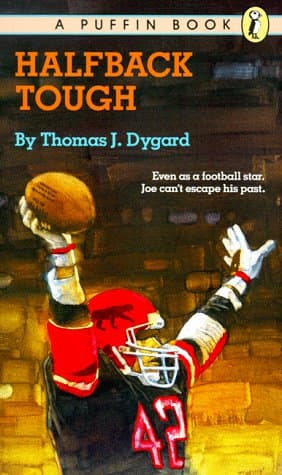
'Halfback Tough' tells the story of Joe Rehnquist, a talented but troubled high school football player facing a crucial decision about his future. It explores themes of sportsmanship, personal responsibility, and the choices that define a young man's path.
Who is Joe Rehnquist in 'Halfback Tough'?
Joe Rehnquist is the protagonist of the book, a gifted halfback with a history of disciplinary issues. His struggle to balance his athletic potential with his personal challenges forms the core conflict of the narrative.
Does 'Halfback Tough' offer insights into real-life football strategies?
While the book is a fictional sports story, it provides an authentic portrayal of high school football dynamics, including team play, coaching decisions, and the physical and mental demands placed on players. It focuses more on character development within a sports setting than on detailed strategic breakdowns.
What kind of life choices does Joe Rehnquist face in the book?
Joe faces critical decisions regarding his behavior, his commitment to the team, his academic future, and ultimately, whether he will succumb to his past troubles or rise to meet his potential both on and off the field.
Is 'Halfback Tough' suitable for all ages?
The book is generally suitable for young adult readers and up, particularly those interested in sports stories or tales of personal growth and overcoming challenges. Its themes are universal and its content is appropriate for a broad audience.
How does 'Halfback Tough' differ from other typical high school sports novels?
'Halfback Tough' distinguishes itself by deeply exploring the psychological struggles of its protagonist, moving beyond simple game narratives to delve into the complex personal choices that define a young athlete's life. It emphasizes character development and moral dilemmas as much as, if not more than, on-field action.
What role does the coach play in Joe Rehnquist's journey?
The coach plays a pivotal role as both a mentor and a disciplinarian, challenging Joe to take responsibility for his actions while also recognizing his potential. Their relationship is key to Joe's development and the unfolding drama.
Does 'Halfback Tough' have a happy ending?
The book concludes with a resolution that reflects Joe's growth and the consequences of his choices, offering a thoughtful and realistic portrayal of personal transformation rather than a simplistic 'happily ever after.' It provides a satisfying end to his journey.
Similar books
- The Diary of a Young Girl
Anne Frank
4.2 (2.7M) average on GoodreadsBiographyDuring the Nazi occupation, a teenage girl's diary, written from a secret annex, shares observations on humanity, hope, and the wait for freedom.
- Twisted 1. Twisted love
Ana Huang
3.7 (1.7M) average on GoodreadsA quiet billionaire with a difficult past finds his guarded heart opening to the woman he must protect, but their growing passion uncovers dangerous secrets and a shared, traumatic history.
- Eat, Pray, Love
Elizabeth Gilbert
3.6 (1.5M) average on GoodreadsLifestyleA heartbroken writer leaves her conventional life for a year-long global search for pleasure in Italy, spiritual devotion in India, and unexpected love and balance in Bali.
- Night
Elie Wiesel
4.3 (970k) average on GoodreadsBiographyIn the darkness of Auschwitz and Buchenwald, a teenage Elie Wiesel faces the extermination of his family, the loss of his faith, and the lasting scars of humanity's deepest cruelty.
- Steve Jobs
Walter Isaacson
4.1 (957k) average on GoodreadsBusinessSteve Jobs was a visionary who fused creativity and technology to revolutionize six industries and shape our digital world.
- The Glass Castle
Jeannette Walls
4.3 (903k) average on GoodreadsBiographyJeannette Walls's memoir describes her unusual childhood with brilliant, free-spirited parents whose poverty-stricken life shaped her independence and love despite family problems.






Enjoyed the summary?
A summary gives you the shape of the book. The book itself has the detail, the examples and the voice.
Find Halfback Tough on AmazonAs an Amazon Associate, BookBrief earns from qualifying purchases. How we're funded