
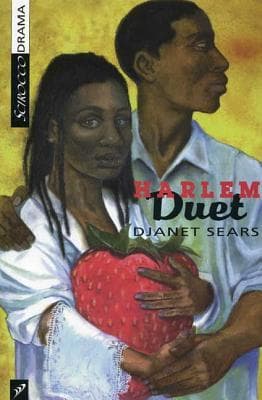
Synopsis
Covers the whole plot, including the ending.
- Difficulty
- Medium
- Pacing
- Moderate
- Mood
- Tragic, Intense, Reflective, Passionate
- Read it if
- You enjoy powerful, character-driven dramas that explore themes of race, gender, and betrayal through a unique historical lens, especially if you're familiar with Shakespeare's Othello.
- Skip it if
- You prefer lighthearted stories or are uncomfortable with intense emotional conflict and tragic endings.
Harlem Duet Plot Summary
Covers the whole plot, including the ending.
A Painful Anniversary and Othello's Betrayal
The play starts in Harlem in 1997, on the corner of Martin Luther King and Malcolm X boulevards. Billie, a Black woman, prepares a meal for her husband, Othello, for their tenth wedding anniversary. The mood is tense. Othello arrives and says he is leaving Billie for a white woman named Mona. Billie, upset and angry, tries to understand why. Othello is firm, saying he needs a new start and wants to reject the 'sickness' he links to their past and racial identity. He says Mona offers him a fresh beginning, free from the historical burdens he feels with Billie. Billie's anger grows, leading to a fight where she bites him. This is a symbolic act of defiance and pain.
Flashback to the 1860s: Emancipation and Betrayal's Echo
The scene changes to 1860, in the American South. This historical parallel shows a different Othello and Billie, who are newly freed slaves. This Othello, like his 1997 counterpart, is also leaving Billie. He wants to leave the past behind and take on a new identity, free from the scars of slavery. He plans to go North, leaving Billie despite her pleas and declarations of love. This historical echo shows a recurring pattern of Othello trying to escape his past and, in doing so, abandoning Billie. Themes of freedom, identity, and the lasting pain of oppression begin to connect across the timelines.
Billie's Despair and the Arrival of Allies
Back in 1997, Billie is recovering from Othello's departure. She finds some comfort in her sister, Amah, and her friend, Magi. Amah, practical and a bit cynical, advises Billie to move on. Magi, who is more spiritual and understanding, tries to comfort Billie and help her deal with her deep grief and betrayal. Billie struggles to understand Othello's rejection, especially his claim that she represents a 'sickness' he needs to escape. She holds onto memories of their past love, agonizing over how their relationship broke down and how Othello could easily dismiss their shared history and identity.
Magi's Ritual and Billie's Obsession
Magi, worried about Billie's mental state, performs a cleansing ritual to help her release her pain and anger. She uses herbs and chants, trying to guide Billie toward healing. But Billie remains focused on Othello. She starts watching his movements and interactions with Mona from her window. Her obsession grows, driven by a desperate need to understand his reasons and maybe win him back. She starts imagining scenes, replaying talks, and becoming more isolated in her grief and anger, despite Amah and Magi's efforts to support her.
Another Flashback: 1928 Harlem and the Weight of Identity
The play shifts again, this time to Harlem in 1928, during the Harlem Renaissance. This Othello, a well-known Black intellectual, is also leaving a Billie, who in this timeline, is of mixed race. He feels her lighter skin and mixed heritage hinder his racial goals and his desire to fully embrace his Black identity in the growing cultural movement. He sees her as a reminder of a racial ambiguity he wants to move past. This scene further shows Othello's pattern of abandonment, always tied to his changing sense of self and his rejection of parts of Billie's identity or their shared past.
Mona's Visit and Billie's Confrontation
Mona, Othello's new fiancée, visits Billie. She tries to explain her side, expressing her love for Othello and her wish for peace. Billie, however, is full of jealousy and anger. She confronts Mona, questioning her understanding of Othello and his character, especially his complex relationship with his Black identity. Billie tries to make Mona see Othello's flaws and the pain he causes. The meeting is tense. Billie struggles to accept her love for Othello alongside his betrayal, and Mona tries to handle the situation, unable to fully grasp the historical and emotional weight of Billie's pain.
Billie's Plan for Revenge
Consumed by her obsession and a wish for Othello to feel the same deep loss and betrayal she does, Billie plans something terrible. She decides to poison him, believing only such an extreme act can make him understand her suffering. She tells Amah, who is horrified and tries to stop her. Magi, though she understands Billie's pain, also worries about her soul. Billie, however, is determined, convinced this is the only way to regain her dignity and make Othello acknowledge the destruction he has caused.
Othello's Return and Billie's Final Act
Othello returns to the apartment to get his remaining things. Billie, with a poisoned apple ready, confronts him one last time. She tries to talk to him, to make him understand the deep impact of his actions. Othello, however, stays distant and dismissive, further fueling Billie's rage and despair. She offers him the apple. This is a symbolic act filled with their shared history and her desperate wish for revenge. The scene is filled with a tragic feeling, as Billie's pain, increased by historical echoes, ends in this desperate act.
The Aftermath and Billie's Despair
The play's ending leaves the exact result of Billie's poisoning unclear, but her actions have lasting consequences. The contemporary Billie is left in deep despair and possibly madness, haunted by her past and the unfulfilled promise of love. The historical Billies are also left abandoned and suffering, showing the repeating nature of their pain. The play ends with Billie, consumed by her grief and the weight of her history, facing the aftermath of Othello's betrayal and her own desperate attempts to regain control and identity.
Harlem Duet Characters
Billie (1997)
Protagonist
A woman grappling with abandonment and a fractured sense of identity
Billie is the central figure of the play, a Black woman living in contemporary Harlem whose life is shattered when her husband, Othello, leaves her for a white woman. She is intelligent, passionate, and deeply wounded, struggling to reconcile her love for Othello with his cruel betrayal. Billie is haunted by the historical echoes of Othello's abandonment, feeling that his rejection is not just personal but also a betrayal of their shared racial heritage. Her journey is one of profound grief, anger, and a desperate search for understanding, ultimately leading her to contemplate extreme measures for retribution. Her love for Othello is intertwined with her identity.
Relationships: Othello (1997) (Husband, then betrayer; a deeply complex and painful love); Amah (Sister and confidante; offers pragmatic but sometimes unfeeling advice); Magi (Friend and spiritual guide; offers comfort and attempts healing); Mona (Othello's new fiancée; an object of Billie's jealousy and anger)
Othello (1997)
Antagonist
A man seeking to shed his past and racial identity for a new beginning
Othello is Billie's husband, who abandons her for a white woman, Mona. He is portrayed as a man deeply conflicted by his racial identity and the historical burdens he associates with it. He views his relationship with Billie as a 'sickness' and seeks a 'clean slate' with Mona, believing she offers him an escape from the complexities of his Blackness. He is dismissive of Billie's pain and their shared history, appearing emotionally detached and self-serving. His actions in 1997 mirror those of his historical counterparts, suggesting a recurring pattern of a Black man attempting to redefine himself by leaving behind a Black woman.
Relationships: Billie (1997) (Wife, then abandoned; he views her as a symbol of his past); Mona (Fiancée; he sees her as a symbol of a new, unburdened future)
Billie (1860)
Supporting
An emancipated slave abandoned by Othello in the American South
This version of Billie is an emancipated slave in 1860, in the woods of the American South. Like her 1997 counterpart, she is deeply in love with Othello and is devastated when he chooses to leave her to seek a new life in the North. Her pleas highlight the vulnerability and profound emotional ties of newly freed individuals, and her abandonment underscores the historical trauma of Black women left behind in the pursuit of individual freedom. She embodies the enduring pain of betrayal that echoes through generations.
Relationships: Othello (1860) (Lover, then abandoner; she represents his past and the pain of slavery)
Othello (1860)
Supporting
An emancipated slave seeking a new identity away from his past
This Othello, also an emancipated slave in 1860, chooses to leave Billie behind to forge a new identity, free from the shackles of his past. He is driven by a desire for self-reinvention and a rejection of the pain associated with slavery. His departure symbolizes the difficult choices and sometimes harsh realities faced by newly freed people, but also establishes a pattern of Othello's character choosing personal advancement over his relationship with Billie, setting a historical precedent for the 1997 Othello's actions.
Relationships: Billie (1860) (Lover, then abandoned; she represents the past he wishes to escape)
Billie (1928)
Supporting
A mixed-race woman abandoned by Othello during the Harlem Renaissance
In 1928 Harlem, this Billie is a mixed-race woman whose Othello, a prominent Black intellectual, leaves her because her lighter skin and mixed heritage do not align with his vision of a purely Black identity during the Harlem Renaissance. She represents the nuanced and sometimes painful experiences of mixed-race individuals within the Black community, and her abandonment by Othello highlights the internal racial politics and identity struggles of the era. Her story adds another layer to the recurring theme of Othello's rejection being tied to aspects of racial identity.
Relationships: Othello (1928) (Lover, then abandoner; she is seen as a hindrance to his racial aspirations)
Othello (1928)
Supporting
A Black intellectual who abandons Billie due to her mixed-race identity
This Othello is a Black intellectual during the Harlem Renaissance. He chooses to leave Billie because her mixed-race identity complicates his desire to fully embrace and champion a unified Black identity. He is a figure driven by racial pride and a vision for the future of Black people, but his actions reveal a narrow and exclusionary perspective, sacrificing personal relationships for ideological purity. His abandonment of Billie underscores the internal conflicts and pressures within the Black community regarding identity during this pivotal period.
Relationships: Billie (1928) (Lover, then abandoner; he rejects her mixed heritage)
Amah
Supporting
Billie's pragmatic and sometimes cynical sister
Amah is Billie's sister, offering a grounded and often cynical perspective on Billie's situation. She tries to be practical, urging Billie to move on and accept Othello's decision. While she cares for Billie, her advice can sometimes come across as harsh or unfeeling, lacking the empathy that Magi provides. She is a voice of reason, though her reason often clashes with Billie's emotional turmoil. Amah represents the more conventional societal response to a breakup, contrasting sharply with Billie's profound grief and desire for retribution.
Relationships: Billie (1997) (Sister; offers pragmatic advice and concern); Magi (Friend of Billie; their approaches to Billie's healing differ)
Magi
Supporting
Billie's spiritual and empathetic friend
Magi is Billie's friend, a more spiritual and empathetic character who attempts to comfort Billie and help her heal through rituals and understanding. She is a source of emotional support and wisdom, offering a gentler approach than Amah. Magi represents a connection to ancestral traditions and a deeper understanding of the spiritual and historical dimensions of Billie's pain. She tries to guide Billie away from destructive paths, but her influence ultimately cannot overcome Billie's overwhelming grief and desire for retribution.
Relationships: Billie (1997) (Friend and spiritual guide; offers comfort and healing rituals); Amah (Friend of Billie; their approaches to Billie's healing differ)
Mona
Supporting
Othello's new white fiancée
Mona is the white woman Othello leaves Billie for. She is portrayed as genuinely loving Othello and attempting to understand the complex situation, even visiting Billie to explain her perspective. However, she is largely oblivious to the deep historical and racial context of Billie's pain and Othello's motivations. She represents the 'new beginning' Othello seeks, free from the racial burdens he associates with Billie, and serves as a catalyst for Billie's ultimate despair and rage. Her presence highlights the racial dynamics at play in Othello's choice.
Relationships: Othello (1997) (Fiancée; he sees her as his future); Billie (1997) (Rival; object of Billie's jealousy and anger)
Harlem Duet Themes
Identity and Self-Discovery
The play explores how identity, especially Black identity, is shaped and broken. Othello, in all timelines, tries to redefine himself by shedding parts of his past and, importantly, by leaving Billie, who represents that past. He thinks a new partner (Mona) or a new place (the North in 1860, a 'pure' Black identity in 1928) will let him escape the 'sickness' he links to his racial heritage and shared history with Billie. Billie, on the other hand, sees her identity tied to her history and her relationship with Othello, making his betrayal a harsh attack on her very self. The play questions the cost of changing oneself and if it is possible to truly escape one's origins.
“You are my sickness, Billie. You are my past.”
The Cyclical Nature of Betrayal and Trauma
A main theme is that history repeats itself, especially regarding Black women being betrayed by Black men seeking advancement or a new identity. The play uses three timelines (1860, 1928, 1997) to show how Othello's abandonment of Billie is not a single event but a recurring pattern, a historical hurt that keeps appearing. Each Othello, wanting a 'new start,' leaves a Billie behind. This suggests that past wounds—slavery, racial politics, personal ambition—continue to echo and cause pain across generations. This repeating nature points to a deep, unresolved historical conflict.
“Same story. Different decade. Same story.”
Race and Relationships
The play examines how race, gender, and personal relationships within the Black community connect. Othello's choice to leave Billie (a Black woman) for Mona (a white woman) in 1997 is not just a breakup. It has deep racial meaning. It relates to historical stories of Black men seeking perceived progress or freedom by aligning with whiteness, often at the cost of Black women. The 1928 story adds to this, showing Othello leaving a mixed-race Billie for a 'purer' Black identity. The play forces a look at internal racial politics and how systemic racism affects close relationships.
“He wants to be white. He's always wanted to be white.”
Love, Loss, and Revenge
At its core, *Harlem Duet* is a tragedy of love and loss that turns into a wish for revenge. Billie's deep love for Othello becomes painful grief and, later, a strong need for retribution after his betrayal. Her attempts to make him understand her pain turn into a desperate plan for him to feel a similar loss. The play shows the destructive power of unresolved grief and anger. It shows how the desire for justice can become a desire for vengeance, consuming the main character and leading to tragic results. Billie's actions come from a deep need to regain control after total devastation.
“I want him to feel it. Just for a moment. Just for a moment, I want him to feel it.”
The Burden of History
History is not just background but an active force in the characters' lives. The play directly links the current struggles of Billie and Othello to historical events like emancipation (1860) and the Harlem Renaissance (1928). The characters live with the inherited trauma and unresolved conflicts of their ancestors. Othello's desire to shed his 'sickness' is a desire to escape the burden of Black history, while Billie is completely tied to it. The play argues that the past deeply shapes the present, and that escaping it is perhaps an impossible, and harmful, goal.
“We are all walking dead. We all carry the past inside us.”
Plot Devices & Literary Techniques
Multiple Timelines/Parallel Narratives
Three distinct time periods woven together to show historical echoes
The play employs a multi-timeline structure, shifting between 1997, 1860, and 1928. This device is crucial for demonstrating the cyclical nature of Othello's betrayal and Billie's suffering. By presenting three different versions of Billie and Othello experiencing similar abandonment scenarios, the play argues that their contemporary struggles are not isolated but are deeply rooted in historical patterns of race, identity, and gender. This allows Sears to explore how past traumas and societal pressures continue to manifest in present-day relationships, giving the personal story a broader historical and sociological significance.
Symbolism of the Corner of Martin Luther King and Malcolm X Boulevards
A geographical location symbolizing racial identity and internal conflict
The setting of the 1997 scenes at the intersection of Martin Luther King Jr. and Malcolm X Boulevards is highly symbolic. These two figures represent different, often conflicting, approaches to Black liberation and identity within the African American community. This intersection embodies the internal ideological struggles and choices faced by Othello and Billie regarding their racial identity, their past, and their future. It highlights the tension between integrationist and separatist ideals, reflecting the deeper conflicts within Othello's psyche and the broader Black experience that the play explores.
The Apple
A biblical symbol of temptation, knowledge, and ultimately, poison
The apple, particularly the poisoned apple Billie prepares for Othello, is a potent symbol. It carries biblical connotations of temptation, forbidden knowledge, and the fall from innocence (referencing Eve and the Garden of Eden). In 'Harlem Duet,' it symbolizes Billie's desperate attempt to inflict a 'fall' upon Othello, to make him 'know' her pain and the poison of his betrayal. It transforms from a symbol of potential nourishment and love (as she prepares a meal for their anniversary) into an instrument of retribution, signifying the corruption of their love and Billie's ultimate, tragic choice.
The Blues Aesthetic
A narrative and emotional structure infused with the spirit of the blues
Djanet Sears describes 'Harlem Duet' as a 'rhapsodic blues tragedy,' and this aesthetic permeates the play. The blues tradition is characterized by themes of hardship, lost love, resilience, and a cyclical expression of pain and longing. The play's repetitive narrative (the Othello/Billie dynamic across timelines), its focus on individual suffering within a larger historical context, and its raw emotional intensity all echo the structure and spirit of the blues. This aesthetic provides a cultural framework for understanding Billie's profound sorrow and her attempts to articulate and cope with her pain, much like a blues singer expresses their deepest woes.
Harlem Duet Quotes
“I am not a footnote in someone else's history.”
“Harlem is a state of mind.”
“Love is a battlefield, and I'm tired of fighting.”
“We wear our history like a second skin.”
“Sometimes the silence between us speaks louder than words.”
“In this duet, I sing the blues alone.”
“The past is a ghost that haunts our present.”
“You can't escape who you are, no matter how far you run.”
“Every love story is a tragedy waiting to happen.”
“We are all actors in someone else's play.”
“The heart has its own memory, and it never forgets.”
“In Harlem, dreams are born and buried every day.”
“Sometimes the only way to heal is to bleed.”
“We are all echoes of a forgotten song.”
Quiz
10 questions on the plot and the characters. Each answer comes with a short explanation.
Question 1
What is the primary setting of 'Harlem Duet'?
- Elizabethan England
- Contemporary Harlem at the corner of Martin Luther King and Malcolm X boulevards
- Ancient Venice
- 1960s Civil Rights-era America
Show answer
B. Contemporary Harlem at the corner of Martin Luther King and Malcolm X boulevards The play is set in contemporary Harlem at the intersection of Martin Luther King and Malcolm X boulevards, symbolizing the tension between different approaches to racial identity and activism.
Question 2
Who is Billie in relation to Othello in 'Harlem Duet'?
- His sister
- His mother
- His first wife before Desdemona
- His daughter
Show answer
C. His first wife before Desdemona Billie is portrayed as Othello's first wife, whose story precedes Shakespeare's 'Othello', making this play a prelude that explores her perspective and experiences.
Question 3
What major award did 'Harlem Duet' win?
- Pulitzer Prize for Drama
- Tony Award for Best Play
- Governor General's Award for Drama
- Nobel Prize in Literature
Show answer
C. Governor General's Award for Drama The play won the Governor General's Award for Drama, a prestigious Canadian literary award, highlighting its critical acclaim and cultural significance.
Question 4
How does 'Harlem Duet' primarily explore its themes?
- Through a focus on economic inequality
- By examining the intersection of race and sex
- Through a critique of political systems
- By depicting historical battles
Show answer
B. By examining the intersection of race and sex The play delves into the complex space where race and sex intersect, particularly through Billie's experiences as a Black woman dealing with love, betrayal, and identity.
Question 5
What literary form is 'Harlem Duet' described as?
- A comedy
- A rhapsodic blues tragedy
- A historical epic
- A romantic farce
Show answer
B. A rhapsodic blues tragedy It is termed a 'rhapsodic blues tragedy', blending musical and poetic elements with tragic themes to convey the emotional depth of Billie's story.
Question 6
Why is the setting at the corner of Martin Luther King and Malcolm X boulevards significant?
- It represents a literal battle between the two leaders
- It symbolizes the clash between integrationist and separatist ideologies in Black identity
- It marks the location of a key historical event in the play
- It is where Billie and Othello first met
Show answer
B. It symbolizes the clash between integrationist and separatist ideologies in Black identity This intersection metaphorically explores tensions in Black activism and personal identity, mirroring the play's themes of conflict and choice in racial and gender dynamics.
Question 7
What is the relationship between 'Harlem Duet' and Shakespeare's 'Othello'?
- It is a direct adaptation set in the same time period
- It serves as a prelude, focusing on Othello's life before the events of 'Othello'
- It is a sequel that continues Desdemona's story
- It parodies 'Othello' in a modern context
Show answer
B. It serves as a prelude, focusing on Othello's life before the events of 'Othello' The play acts as a prelude to 'Othello', reimagining Othello's backstory with Billie as his first wife, thus providing a new perspective on his character and relationships.
Question 8
Which character's perspective is central to 'Harlem Duet'?
- Othello's
- Desdemona's
- Billie's
- Iago's
Show answer
C. Billie's The play is explicitly Billie's story, centering on her experiences, emotions, and struggles as Othello's first wife, offering a voice often marginalized in traditional tellings of 'Othello'.
Question 9
What additional award did 'Harlem Duet' win besides the Governor General's Award?
- The Chalmers Play Award
- The Obie Award
- The Drama Desk Award
- The Lambda Literary Award
Show answer
A. The Chalmers Play Award In addition to the Governor General's Award, it won the Chalmers Play Award, recognizing outstanding plays in Ontario, further cementing its status as a critically acclaimed work.
Question 10
How does the play's genre as 'Historical Fiction' manifest in its content?
- It accurately documents specific historical events in Harlem
- It reimagines a Shakespearean character in a modern, historically resonant setting to explore ongoing social issues
- It focuses on the biography of Martin Luther King Jr. and Malcolm X
- It is set entirely in the past with no contemporary relevance
Show answer
B. It reimagines a Shakespearean character in a modern, historically resonant setting to explore ongoing social issues As historical fiction, it blends the fictional prelude to 'Othello' with the real-world historical context of Harlem and its symbolic streets, using this to comment on enduring themes of race and gender.
Harlem Duet FAQ
What is 'Harlem Duet' about?
'Harlem Duet' is a prelude to Shakespeare's 'Othello', reimagining Othello's life before Desdemona. It centers on Billie, Othello's first wife, as she grapples with his abandonment for a white colleague, Mona. Set in contemporary Harlem at the intersection of Martin Luther King and Malcolm X boulevards, the play explores themes of race, gender, and betrayal through a blues-infused narrative.
Why should I read 'Harlem Duet'?
You should read 'Harlem Duet' for its powerful exploration of intersectional identity, blending Shakespearean tragedy with African-American history. Awarded the Governor General's Award for Drama and the Chalmers Play Award, it offers a unique perspective on race and gender through poetic dialogue and a non-linear structure that spans different historical eras in Harlem.
What is the background/setting of 'Harlem Duet'?
The play is set in contemporary Harlem, specifically at the symbolic corner of Martin Luther King and Malcolm X boulevards, representing conflicting ideologies of racial justice. It also incorporates flashbacks to the 1860s and 1920s, connecting Billie's personal tragedy to broader historical struggles of Black women in America.
What are the most memorable quotes?
Memorable quotes include Billie's lament, 'I am a woman. Coloured. Alone.' and Othello's conflicted line, 'I want to be more than my blackness.' These lines encapsulate the play's themes of identity and isolation. Another key quote is, 'Harlem is a state of mind,' highlighting the setting's psychological depth.
What writing style does the author use?
Djanet Sears employs a poetic, blues-infused writing style with rhythmic dialogue and non-linear storytelling. The play blends realism with surreal elements, using music and historical vignettes to create a 'rhapsodic blues tragedy' that mirrors the emotional cadences of Billie's experience.
What minor details add significant meaning?
Minor details like Billie's collection of handkerchiefs, which reference Othello's iconic prop, symbolize her attempts to hold onto their relationship. The recurring sound of a train represents both historical trauma (the Underground Railroad) and Othello's departure, adding layers of meaning to the setting.
What are some subtle foreshadowing moments?
Early scenes foreshadow Othello's betrayal through his increasing discomfort with Black identity, such as when he criticizes Billie's natural hair. Billie's nightmares about drowning hint at her emotional descent and allude to Desdemona's fate in 'Othello', subtly connecting the plays.
What unexpected character connections exist?
Unexpected connections include the character of Magi, Billie's landlady, who serves as a maternal figure and links to Harlem's historical matriarchs. Othello's colleague Mona, though mostly offstage, connects to broader themes of interracial dynamics and internalized racism through her influence on Othello.
What are unspoken character motivations?
Othello's unspoken motivation is his desire for professional acceptance in a white-dominated world, which drives him to distance himself from Blackness and Billie. Billie is motivated by a deep-seated fear of abandonment rooted in historical trauma, though she rarely voices this directly.
What psychological complexities do characters exhibit?
Billie exhibits complexity through her blend of strength and fragility, grappling with depression and identity crisis after Othello leaves. Othello shows internal conflict between his love for Billie and his aspiration for assimilation, revealing the psychological toll of racism on personal relationships.
What are the major emotional turning points?
Major emotional turning points include Othello's announcement of his relationship with Mona, which shatters Billie's world. Another is Billie's breakdown in the bathtub scene, where she confronts her loneliness. The climax occurs when Billie symbolically 'poisons' Othello's handkerchief, representing her final release from their bond.
How do relationship dynamics evolve?
The relationship evolves from intimate partnership to bitter estrangement as Othello prioritizes career advancement over Billie. Billie's dynamic with her friend Amah shifts from supportive to strained as Amah tries to intervene in her decline, reflecting how betrayal isolates her from all connections.
Which parts remain ambiguous or open-ended?
The ending is ambiguous regarding Billie's fate—it's unclear if she finds healing or remains trapped in her despair. Othello's ultimate feelings about his choices are left open, inviting debate on whether he regrets leaving Billie or is resigned to his new path.
What are controversial scenes or decisions?
Controversial scenes include Billie's attempted 'poisoning' of the handkerchief, which some interpret as metaphorical while others see as a literal act of madness. Othello's decision to leave Billie for a white woman sparks debate on whether it represents personal betrayal or a broader commentary on racial self-hatred.
'Harlem Duet' ending explained: how it ends & what it means
The play ends with Billie alone in her apartment, symbolically cutting the cord of her phone and Othello departing for a new life. This ambiguous conclusion suggests Billie's liberation from Othello but also her enduring isolation. It implies that her story is a prelude to 'Othello', with her tragedy foreshadowing the cycles of racial and gender violence.
Similar books
- Othello
William Shakespeare
3.9 (315k) average on GoodreadsFictionExplores the original story of Othello's jealousy and betrayal, providing context for 'Harlem Duet'.
- The Bluest Eye
Toni Morrison
4.1 (173k) average on GoodreadsLiterary FictionExamines the damaging effects of societal beauty standards and racial identity on Black women in America.
- Fences
August Wilson
3.9 (18k) average on GoodreadsHistorical FictionA powerful play set in a similar historical context, dealing with family conflict, race, and unfulfilled dreams.
- To Kill a Mockingbird
Harper Lee
4.3 (4.5M) average on GoodreadsHistorical FictionIn the 1930s Jim Crow South, Harper Lee writes about racial injustice, moral growth, and the quiet courage of a lawyer father, Atticus Finch, as seen through his young daughter's eyes.
- The Great Gatsby
F. Scott Fitzgerald
3.9 (3.8M) average on GoodreadsHistorical FictionIn the opulent Roaring Twenties, a mysterious millionaire's lavish parties hide his desperate, tragic pursuit of a lost love, exposing the emptiness within the American Dream.
- Pride and Prejudice
Jane Austen
4.3 (3M) average on GoodreadsHistorical FictionIn a society focused on status and money, Elizabeth Bennet navigates love and pride, challenging Mr. Darcy and social expectations to find true affection.



Enjoyed the summary?
A summary gives you the shape of the book. The book itself has the detail, the examples and the voice.
Find Harlem Duet on AmazonAs an Amazon Associate, BookBrief earns from qualifying purchases. How we're funded