

Synopsis
Covers the whole plot, including the ending.
- Difficulty
- Easy
- Pacing
- Moderate
- Mood
- Quirky, Whimsical, Darkly Humorous, Heartwarming
- Read it if
- You enjoy quirky, dark romantic comedies with a philosophical bent and unconventional characters.
- Skip it if
- You are uncomfortable with large age-gap romances or themes of mortality and suicide.
Harold and Maude Plot Summary
Covers the whole plot, including the ending.
A Life of Simulated Demise
Nineteen-year-old Harold Chasen is introduced as a young man with a morbid interest in death. He lives in a grand, but emotionally cold, mansion with his detached mother. He tries to get attention through elaborate, staged suicide attempts, from hanging himself to self-immolation. His mother, Mrs. Chasen, reacts with exasperation and mild annoyance, often more concerned with the inconvenience than her son's well-being. Harold's other hobby is attending strangers' funerals, driving his custom-built Jaguar hearse. At one such funeral, he first sees Maude, an elderly woman with an unmistakable love for life, who also seems to attend these somber events regularly.
The First Encounter and Growing Fascination
Harold and Maude continue to meet at various funerals. Harold is intrigued by Maude's unusual behavior, which contrasts sharply with the somber atmosphere. He watches her from a distance, fascinated by her free spirit and disregard for social norms. Maude, aware of Harold's presence, eventually starts a conversation, unfazed by his reserved and melancholic nature. Their first interactions are brief but memorable, with Maude offering cryptic yet insightful comments about life and death. Harold, used to his mother's emotional distance, finds himself drawn to Maude's energy and genuine interest in him, a new experience in his isolated life.
Maude's Unconventional Wisdom
Maude begins to include Harold in her daily adventures. She "borrows" cars, often from strangers, to experience the thrill of the moment, explaining that property is only temporary. She shows Harold her art studio, a bright space filled with sculptures and paintings that reflect her joyful outlook. In one event, Maude steals a tree from a city sidewalk, explaining her goal to free it and plant it back in nature, a symbol of her belief in life's freedom and resilience. Through these experiences, Harold, initially a passive observer, starts to see life from Maude's perspective, slowly breaking down his ingrained nihilism.
The Blind Dates and Mother's Frustration
Harold's mother, increasingly worried about his morbid interests and lack of a conventional social life, enrolls him in a computer dating service. She arranges a series of dates with seemingly 'suitable' young women. However, Harold's attempts to impress or interact with these women are disastrous. He performs his fake suicide stunts for them, takes them to scrapyards, or discusses his morbid interests, effectively scaring them away. These dates highlight the gap between Harold's inner world and societal expectations, further isolating him and reinforcing his mother's exasperation, while also pushing him closer to Maude, who understands his unique sensibilities.
A Shared Journey of Discovery
Harold and Maude spend more and more time together, deepening their unusual bond. Maude takes Harold to a fair, where she performs acrobatics and encourages him to be spontaneous. She teaches him to appreciate the beauty in everyday things, from the smell of flowers to the sound of music. She shares parts of her past, hinting at a life lived fully, including her experience as a political prisoner and a survivor of hardship, which has only increased her appreciation for life. Harold, influenced by Maude, begins to shed his death-obsessed shell, showing glimpses of genuine emotion and even joy, especially when he learns to play the banjo and share music with Maude.
The Proposal and Societal Outcry
As their relationship deepens, Harold realizes he is in love with Maude. He proposes marriage to her, an act that is both genuine and shocking to his conventional family. Mrs. Chasen is appalled, believing Maude to be a gold-digger or mentally unstable. She tries to have Maude committed and seeks the help of Harold's uncle, a military man, and a priest. All of them are bewildered by the unconventional romance. This societal disapproval only strengthens Harold's resolve, as he finds in Maude the only person who truly understands and accepts him, a stark contrast to the judgment he receives from others.
Maude's Seventy-Ninth Birthday
Harold arranges a surprise party for Maude's seventy-ninth birthday, a joyous occasion filled with music, dancing, and heartfelt connection. Maude, radiant and full of life, celebrates with Harold, surrounded by the quirky friends she has gathered over the years. During the celebration, Maude tells Harold that she will turn eighty at midnight, and that this will be her last birthday. She calmly tells him that she has taken a lethal dose of pills, explaining her belief in choosing the time of her own death, stating that eighty is the perfect age to leave the world gracefully, having lived a full and meaningful life.
A Final Farewell and a New Beginning
Distraught but understanding, Harold rushes Maude to the hospital. Despite his desperate pleas, Maude remains firm in her decision, comforting Harold with her calm acceptance of death. She explains that she chose to die at her peak, rather than decline. Maude passes away peacefully, leaving Harold heartbroken but deeply changed. He leaves the hospital, initially appearing to return to his old ways by driving his hearse toward a cliff. However, in a key moment, he abandons the hearse just before it plunges, instead walking away with Maude's banjo, playing a joyful tune, showing his embrace of life and Maude's lasting impact.
The Legacy of Joy
After Maude's death, Harold has truly changed. He no longer stages suicides or attends strangers' funerals out of morbid interest. Instead, he carries Maude's banjo, playing its melodies as he walks away from the cliff, embodying the joyful spirit she gave him. He has learned to appreciate life's preciousness, the beauty in everyday things, and the importance of living authentically. Maude's influence has freed him from his family's expectations and his own emotional prison. Harold's journey ends not with a return to his old self, but with a strong commitment to living life fully, just as Maude taught him.
Principal Figures
Harold Chasen
Protagonist
A death-obsessed young man who finds life through an unlikely romance
Harold is a nineteen-year-old heir to a fortune, deeply alienated from his emotionally distant mother and the conventional world. He expresses his inner turmoil through elaborate fake suicide attempts and a morbid fascination with funerals and hearses. He is initially withdrawn, melancholic, and incapable of genuine connection, viewing life as a bleak and meaningless existence. His detached demeanor is a shield against a world he doesn't understand and that doesn't understand him.
Relationships: Maude Chardin (Romantic partner and mentor); Mrs. Chasen (Emotionally distant mother); Uncle Victor (Disapproving military uncle)
Maude Chardin
Deuteragonist/Mentor
A seventy-nine-year-old woman with an infectious zest for life
Maude is a seventy-nine-year-old woman who embodies an unbridled passion for life. She is eccentric, rebellious, and lives by her own rules, often breaking laws for what she considers higher moral purposes, such as liberating trees or 'borrowing' cars. Her past includes experiences as a political prisoner, which has deepened her appreciation for freedom and the preciousness of existence. She sees beauty and joy everywhere, radiating a life-affirming energy that draws Harold in.
Relationships: Harold Chasen (Romantic partner and mentee)
Mrs. Chasen
Antagonist/Supporting
Harold's wealthy, self-absorbed, and conventional mother
Mrs. Chasen is Harold's mother, a quintessential member of the upper class, more concerned with appearances and social propriety than her son's emotional well-being. She views Harold's morbid behavior as an embarrassment and an inconvenience, attempting to 'fix' him through psychiatrists, dating services, and military school. She is emotionally detached and unable to connect with Harold on a meaningful level, representing the societal norms and expectations that Harold rejects.
Relationships: Harold Chasen (Son, whom she struggles to understand); Uncle Victor (Brother, whom she seeks help from)
Uncle Victor
Supporting
Harold's rigid, military-minded uncle
Uncle Victor is Harold's military-obsessed uncle, a stern and humorless man who believes discipline and structure are the solutions to Harold's issues. He attempts to instill 'manliness' in Harold by suggesting military school and discussing his war experiences. He is utterly bewildered by Harold's relationship with Maude and represents the rigid, patriarchal expectations that Harold's unconventional romance defies.
Relationships: Harold Chasen (Nephew, whom he tries to reform); Mrs. Chasen (Sister, who seeks his advice)
The Psychiatrist
Supporting
An ineffectual professional attempting to analyze Harold
The Psychiatrist is a well-meaning but utterly ineffective professional employed by Mrs. Chasen to 'cure' Harold. He attempts to analyze Harold's behavior using conventional psychiatric methods, but Harold's elaborate staged suicides and cryptic responses consistently baffle him. He represents the limitations of traditional approaches in understanding and helping individuals who defy societal norms.
Relationships: Harold Chasen (Patient, whom he fails to understand); Mrs. Chasen (Client)
Father Finnegan
Supporting
A priest consulted by Mrs. Chasen regarding Harold's romance
Father Finnegan is a priest brought in by Mrs. Chasen to counsel Harold regarding his relationship with Maude. He attempts to apply religious doctrine to the situation, but like the other authority figures, he is utterly flummoxed by the age difference and unconventional nature of Harold and Maude's love. His discomfort highlights the clash between traditional morality and the freedom of Maude and Harold's relationship.
Relationships: Harold Chasen (Parishioner, whom he tries to advise); Mrs. Chasen (Parishioner, who seeks his counsel)
The Dates
Mentioned
A series of young women set up by Mrs. Chasen for Harold
These are the various young women Mrs. Chasen arranges for Harold to meet through a dating service. Each date is a disaster, as Harold's morbid fascinations and fake suicide attempts inevitably scare them away. They are largely interchangeable, serving as a collective representation of the conventional partners Harold's mother desires for him, and the stark contrast between Harold's true self and societal expectations.
Relationships: Harold Chasen (Unsuccessful romantic prospects)
Themes & Insights
The Celebration of Life and Individuality
The main theme is about embracing life fully, even when faced with death. Maude shows this by living each moment with joy and spontaneity, openly defying societal norms. Her philosophy of 'living, really living' is infectious, as seen when she frees the tree or 'borrows' cars. Harold, initially obsessed with death, slowly learns to appreciate life's beauty through Maude's teachings and example, leading to his decision to choose life after her passing.
“A lot of people don't seem to get it. They're just going through the motions. You gotta really live, Harold. Really live!”
Death as a Part of Life
While Harold initially focuses on death in a morbid, self-destructive way, Maude offers a more integrated view of death as a natural part of life's cycle. Her calm acceptance of her own death, and her choice to die on her terms, changes death from a terrifying end into a conscious act of completion. She teaches Harold that acknowledging mortality can increase, not lessen, the appreciation for life. Harold's journey shifts from performing death to understanding its place in the larger scheme of existence, finally choosing life as a tribute to Maude's philosophy.
“I should like to change my will. I should like to leave my body to science fiction.”
Rebellion Against Societal Norms
Both Harold and Maude, from different generations, go against society's strict rules. Harold's fake suicides and choice of a hearse mock his mother's expectations of a 'normal' son. Maude, with her car 'borrowing,' tree liberation, and self-chosen death, challenges ideas of property, law, and morality. Their unusual romance is the ultimate act of defiance against ageism and societal judgment. The film shows the absurdity of these norms through the reactions of Mrs. Chasen, Uncle Victor, the psychiatrist, and the priest, all of whom fail to understand Harold and Maude's real connection.
“Vice, crime, and all that, you know. I'm against it. But I'm for it, too. I'm for anything that gets you out of the rut.”
The Power of Unconventional Love and Connection
The story's core is the deep and transformative love between Harold and Maude. This relationship goes beyond age, social expectations, and personal trauma, showing that true connection can grow in unexpected places. Maude offers Harold unconditional acceptance and understanding that his own family cannot provide, allowing him to shed his morbid facade. Their love is not about physical attraction but about shared spirit, intellectual stimulation, and mutual growth. It shows that love, in its purest form, has no boundaries and is a strong force for personal freedom.
“Well, a lot of people are like that. They’re just going through the motions. But you… you’re different. You feel things deeply.”
Plot Devices & Literary Techniques
Fake Suicides
Harold's attention-seeking, morbid performance art
Harold's elaborate fake suicides serve as a primary plot device. Initially, they are a desperate cry for attention from his emotionally detached mother and a morbid fascination with death. They also function as a comedic element, highlighting the absurdity of his life and his mother's reactions. As the story progresses, these stunts become a measure of his transformation; their eventual cessation signifies his shift from a death-obsessed individual to one who embraces life, making the final 'suicide' of the hearse a symbolic act of leaving his old self behind.
The Jaguar Hearse
Harold's custom vehicle, symbolizing his obsession with death
The customized Jaguar hearse is a powerful visual symbol of Harold's morbid fixation. It represents his isolation, his rejection of conventional life, and his comfort in the realm of death. Its presence in various scenes, from funerals to dates, constantly reinforces his macabre personality. The hearse's ultimate destruction at the end, as Harold walks away playing Maude's banjo, is a pivotal moment, symbolizing his final break from his past and his embrace of life and Maude's legacy, having literally driven his death obsession off a cliff.
Maude's "Borrowing" of Cars
A recurring act of rebellion and seizing the moment
Maude's habit of 'borrowing' cars, usually without permission, is a recurring plot device that showcases her rebellious spirit and her philosophy of living in the moment. It challenges societal notions of ownership and law, emphasizing that life is fleeting and experiences are more valuable than possessions. Each instance serves to pull Harold further out of his comfort zone, exposing him to Maude's carefree and adventurous nature, and demonstrating that rules can be bent in the service of joy and freedom, ultimately inspiring him to loosen his own rigid grip on life.
The Banjo
A symbol of joy, connection, and Maude's enduring spirit
The banjo, initially Maude's instrument, becomes a significant symbol of joy, creativity, and the life-affirming spirit she embodies. It represents a form of communication and expression beyond words, particularly for Harold, who learns to play it. The music they share together deepens their bond. Its final appearance, with Harold walking away from the cliff playing it after Maude's death, signifies his complete transformation. The banjo is a tangible representation of Maude's legacy, an enduring reminder for Harold to embrace life's melodies and carry her joyful spirit forward.
Harold and Maude Quotes
“Oh, Harold, that's wonderful! You're going to have a party! Just think of it, a whole party just for you!”
“I should like to change my form of life. I should like to be a tree.”
“A lot of people enjoy being dead. But they don't know it.”
“The earth is my friend. The wind is my friend. The sun is my friend. The rain is my friend. The birds are my friends. I am friends with everything.”
“I don't think much of it. It's a waste of time.”
“What do you want to be when you grow up?”
“I like to make things bloom.”
“You know, at first, I didn't think I'd like you. But now I think you're rather sweet.”
“Go and love some more. It's the only thing that makes sense.”
“I never felt so alive!”
“I don't believe in rules. I believe in life.”
“I like to be with you. You're different.”
“It's not polite to stare.”
“I shall be eighty. And you shall be nineteen. And we shall be married.”
Quiz
10 questions on the plot and the characters. Each answer comes with a short explanation.
Question 1
What kind of vehicle does Harold Chasen drive that is customized to his unique interests?
- A vintage Cadillac convertible
- A refurbished ambulance
- A customized Jaguar hearse
- A modified motorcycle with a sidecar
Show answer
C. A customized Jaguar hearse Harold, obsessed with death, drives a customized Jaguar hearse, reflecting his morbid interests.
Question 2
What is Maude's approximate age when she first meets Harold?
- Fifty-nine
- Seventy-nine
- Sixty-nine
- Eighty-nine
Show answer
B. Seventy-nine The book description states that Maude Chardin is seventy-nine years old.
Question 3
What is Harold's primary obsession at the beginning of the story?
- Collecting rare stamps
- Faking illnesses to get attention
- Death and attending funerals
- Building miniature model trains
Show answer
C. Death and attending funerals Harold Chasen is described as being obsessed with death, faking suicides, and attending strangers' funerals.
Question 4
What is one of Maude's characteristic activities that demonstrates her love for life?
- Collecting exotic insects
- Liberating trees from city sidewalks and transplanting them
- Volunteering at a local morgue
- Attending protest rallies for animal rights
Show answer
B. Liberating trees from city sidewalks and transplanting them Maude's adoration for life is shown through actions like liberating trees from city sidewalks and transplanting them to the forest.
Question 5
How does Harold attempt to get attention from his self-obsessed mother?
- By excelling in academics
- By faking suicides
- By running away from home
- By getting a prestigious job
Show answer
B. By faking suicides Harold fakes suicides to shock his self-obsessed mother, a key plot detail highlighting his character and family dynamic.
Question 6
What specific action does Maude take with church statues to express her zest for life?
- She dresses them in colorful scarves.
- She rearranges them into humorous poses.
- She paints smiles on their faces.
- She cleans them meticulously.
Show answer
C. She paints smiles on their faces. Maude's playful and life-affirming nature is demonstrated by her act of painting smiles on the faces of church statues.
Question 7
What is the primary theme that Harold learns from Maude throughout their relationship?
- The importance of financial security
- That life is worth living
- The value of solitude
- The fleeting nature of romance
Show answer
B. That life is worth living The core theme of their relationship is Harold learning that 'life is worth living' from Maude.
Question 8
The novelization of 'Harold and Maude' was written by whom?
- Hal Ashby
- A ghostwriter hired by Paramount
- Colin Higgins
- A popular romance novelist
Show answer
C. Colin Higgins The book description explicitly states that the novelization was written by Colin Higgins, the original writer of the script.
Question 9
What was the initial reception of the 'Harold and Maude' film upon its release in 1971?
- It was an immediate box office success.
- It received critical acclaim and numerous awards.
- It bombed, but later gained a cult following.
- It was banned in several countries for its controversial themes.
Show answer
C. It bombed, but later gained a cult following. The film 'bombed' upon its initial release, but later gained a loyal cult following, particularly on college campuses and at midnight-movie theaters.
Question 10
Maude 'borrows' cars from strangers. What is her stated reason for this action?
- To sell them for profit.
- To use them for joyrides.
- To remind their owners that life is fleeting.
- To escape from the authorities.
Show answer
C. To remind their owners that life is fleeting. Maude 'borrows' cars to remind their owners that 'life is fleeting—here today, gone tomorrow!', aligning with her philosophy.
Harold and Maude FAQ
What initially draws Harold, with his morbid fascinations, to Maude, who is so full of life?
Harold is initially drawn to Maude by their shared presence at funerals, a space where he feels comfortable and she finds a unique form of engagement. He observes her unconventional behavior and free spirit, which contrasts sharply with his own restricted existence and the predictable reactions of his mother, sparking his curiosity about someone so radically different.
What are some of Harold's signature 'suicide attempts' and what is their primary purpose?
Harold's signature 'suicide attempts' include hanging himself, drowning in the bathtub, and self-immolation, all staged dramatically for his mother. Their primary purpose is to elicit a reaction from his emotionally distant and self-absorbed mother, a desperate plea for attention and an attempt to shock her out of her complacency, though they rarely achieve more than a mild, exasperated response.
How does Maude's philosophy of life manifest in her daily activities, beyond just attending funerals?
Maude's philosophy of embracing life fully manifests in her daily activities through actions like liberating trees from city sidewalks to replant them in the forest, painting smiles on somber church statues, and 'borrowing' cars to experience the thrill of the present moment. She lives without attachment to material possessions or societal norms, constantly engaging with the world in unconventional, life-affirming ways.
What is the significance of Harold's customized Jaguar hearse?
Harold's customized Jaguar hearse is a profound symbol of his obsession with death and his alienation from typical teenage pursuits. It represents his comfort in the macabre and serves as a physical manifestation of his internal state, allowing him to embody his fascination with mortality and set himself apart from the living world.
How does Harold's mother attempt to 'normalize' him, and what are the outcomes of her efforts?
Harold's mother attempts to 'normalize' him by arranging dates with various young women from a computer dating service, hoping to steer him towards conventional romance and away from his morbid interests. However, her efforts consistently fail, as Harold's bizarre behavior and staged suicides terrify his dates, highlighting the profound disconnect between his world and conventional society.
What specific details does the novelization provide about Maude's past that the film leaves ambiguous?
The novelization provides specific details about Maude's past, including hints of her having been a survivor of a concentration camp, evidenced by a tattooed number on her arm. This detail, often only glimpsed in the film, is more explicitly explored in the book, providing a powerful backstory that explains her profound appreciation for life and freedom.
Are there any explicit connections between Maude's 'borrowing' cars and her past experiences?
Yes, there are explicit connections between Maude's 'borrowing' cars and her past experiences, particularly her time in a concentration camp. Her actions are not merely mischievous; they are a symbolic reclamation of freedom and a rejection of confinement. The act of taking what she needs and experiencing the open road represents her liberation from past suffering and her assertion of personal agency.
Does the novelization clarify the fate of Maude's previous lovers or significant relationships?
The novelization doesn't explicitly clarify the fate of Maude's previous lovers or significant relationships in great detail. Instead, it focuses more on her independent spirit and her philosophy of living fully in the present. While her past is hinted at, the narrative prioritizes her current impact on Harold rather than dwelling on past romantic entanglements.
What psychological factors contribute to Harold's obsession with death and his detachment from conventional life?
Harold's obsession with death and detachment from conventional life are rooted in a combination of factors, including a lack of genuine connection with his mother, who is emotionally distant and self-absorbed. This neglect, coupled with his search for control and meaning in a world that feels unresponsive, leads him to find solace and a sense of identity in the dramatic and morbid.
How does Maude's character serve as a psychological foil to Harold, and what specific needs does she fulfill for him?
Maude's character serves as a psychological foil to Harold by embodying radical acceptance and a zest for life, directly contrasting his morbid fascinations. She fulfills his needs for unconditional love, genuine attention, and a mentor who can show him how to truly live. Her presence allows him to confront his anxieties and embrace joy, providing the emotional and intellectual stimulation his upbringing lacked.
What is the psychological impact of Harold's mother's repeated attempts to pair him with unsuitable women?
Harold's mother's repeated attempts to pair him with unsuitable women reinforce his feelings of alienation and misunderstanding. These encounters, often ending in disaster, deepen his conviction that he doesn't fit into conventional society and highlight his mother's inability to truly see or understand his unique psychological needs, further isolating him.
How does the age difference between Harold and Maude contribute to their unique psychological dynamic?
The significant age difference between Harold and Maude contributes to a unique psychological dynamic where Maude acts as a sage mentor, offering life lessons without judgment, rather than a conventional romantic partner. Harold, in turn, provides Maude with companionship and a renewed sense of purpose in her later years, fulfilling a mutual need for connection outside societal norms.
Is Maude's decision to end her life an act of profound selfishness or a final act of self-determination?
Maude's decision to end her life is open to interpretation, often viewed as a final act of profound self-determination rather than selfishness. Having lived fully and without regret, she chooses to exit on her own terms, before physical decline could diminish her spirit. It aligns with her philosophy of embracing life's fleeting nature and maintaining control over her existence, even in death.
How does the ending, with Maude's death, align with or contradict her overall philosophy of embracing life?
The ending, with Maude's death, aligns with her overall philosophy of embracing life by illustrating her belief in living fully and leaving on one's own terms. Her self-chosen departure at the peak of her vitality, rather than succumbing to decline, is a final affirmation of her agency and a poetic conclusion to a life lived without compromise, demonstrating that even death can be an act of self-expression.
What is the symbolic meaning of Harold eventually driving away in his modified hearse, now a lively, ordinary car?
Harold driving away in his modified hearse, now a lively, ordinary car, symbolizes his profound transformation and his embrace of life. The hearse, stripped of its morbid trappings and imbued with a new sense of purpose, represents his shedding of past obsessions and his willingness to engage with the world on its own terms, carrying Maude's lessons of vitality forward.
Does the novelization offer any alternative interpretations of Harold and Maude's relationship beyond a simple romance?
The novelization strongly supports alternative interpretations of Harold and Maude's relationship beyond a simple romance, emphasizing its profound mentorship and philosophical connection. While love is present, Maude primarily serves as a life guide and spiritual catalyst for Harold, teaching him about joy, freedom, and the beauty of existence, making their bond more akin to a deep, transformative friendship.
How does the book's extended narrative enhance the understanding of Harold's transformation compared to the film?
The book's extended narrative provides deeper insights into Harold's internal monologue and the gradual evolution of his perspective, offering a more nuanced understanding of his transformation. It allows for more detailed exploration of his thoughts and feelings as he processes Maude's lessons, making his eventual embrace of life feel more earned and profound than the film's more visual portrayal.
What is the lasting message of 'Harold and Maude' regarding societal norms and individual freedom?
The lasting message of 'Harold and Maude' is a powerful endorsement of individual freedom and a critique of rigid societal norms. It champions the idea that true happiness comes from living authentically, embracing one's unique spirit, and finding joy in unconventional ways, even if it means defying the expectations and judgments of society.
About the author

Colin Higgins was an American screenwriter, director, and producer. He is best known for writing and directing the cult classic film 'Harold and Maude' (1971). Higgins also wrote the screenplay for the hit film 'Silver Streak' (1976). His work often blended dark humor with poignant themes.
Similar books
- A Man Called Ove
Fredrik Backman
4.4 (569k) average on GoodreadsFictionFeatures an unlikely friendship between a curmudgeonly older person and a vibrant younger individual, leading to life lessons.
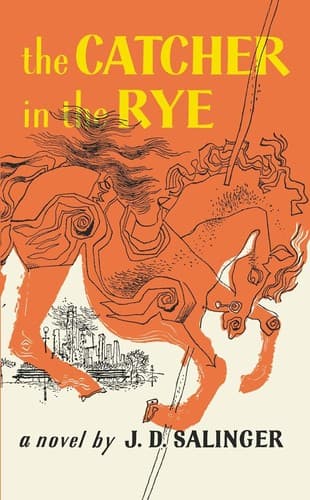
- The Catcher in the Rye
J.D. Salinger
3.8 (2.7M) average on GoodreadsYoung AdultExplores themes of youthful alienation and disillusionment with society.
- Eleanor Oliphant Is Completely Fine
Gail Honeyman
4.3 (708k) average on GoodreadsLiterary FictionFollows an eccentric protagonist who learns to connect with others and finds joy in unexpected places.
- The Hunger Games
Suzanne Collins
4.3 (6.4M) average on GoodreadsFantasyIn a future where children fight to the death on live television, Katniss Everdeen volunteers for the arena, turning a death sentence into a fight for survival and a spark of rebellion.
- The Great Gatsby
F. Scott Fitzgerald
3.9 (3.8M) average on GoodreadsHistorical FictionIn the opulent Roaring Twenties, a mysterious millionaire's lavish parties hide his desperate, tragic pursuit of a lost love, exposing the emptiness within the American Dream.
- The Fault in Our Stars
John Green
4.2 (3.6M) average on GoodreadsYoung AdultA girl with a terminal illness finds her story rewritten when a charming boy with a similar past enters her life at a cancer support group, leading to a star-crossed romance.





Enjoyed the summary?
A summary gives you the shape of the book. The book itself has the detail, the examples and the voice.
Find Harold and Maude on AmazonAs an Amazon Associate, BookBrief earns from qualifying purchases. How we're funded