

Synopsis
Covers the whole plot, including the ending.
- Difficulty
- Easy
- Pacing
- Moderate
- Mood
- Whimsical, Inventive, Gentle, Dreamlike
- Read it if
- You enjoy whimsical tales about the power of imagination and simple, profound adventures.
- Skip it if
- You prefer complex narratives with deep character development and intricate plots.
Harold and the Purple Crayon Plot Summary
Covers the whole plot, including the ending.
Harold's Moonlit Walk Begins
One evening, Harold decides to go for a walk. Finding no moon to light his way, he takes out his purple crayon and draws a large moon in the sky. He then draws a long, straight path for himself to walk on. His journey begins with purpose and the immediate use of his creative power, showing that his drawings become real, letting him control his environment and adventure.
The Forest of Troubles
As Harold walks, he decides the path is too straight and draws a thick forest around it. The forest, however, quickly becomes too big and dark, causing Harold to get lost. To escape, he draws a single, tall mountain and climbs it. From the top of the mountain, he can see over the forest, but then realizes he needs a way down. This part shows Harold's problem-solving skills and his ability to fix his own creative mistakes, mixing imagination and practicality.
The Perilous Sea
Harold tries to draw a path down the other side of the mountain but accidentally slips and falls into a large sea he hadn't meant to draw. Resourceful, he quickly draws a small boat and sails away from the mountain. This moment shows the surprising nature of his creative world, where even accidental drawings can become real. His quick response to danger, by drawing a solution, shows his calm and quick thinking.
Dragon Encounter and Apple Tree
After sailing for a while, Harold draws an island to land on. On the island, he sees a scary dragon. To distract the dragon, he draws an apple tree with nine apples. The dragon, interested in the apples, becomes less threatening. Harold, now hungry, picks an apple for himself, showing his ability to handle threats and meet his own needs through drawing.
The Picnic and the House
Harold, still hungry after the apple, draws a big picnic with nine kinds of pie. After eating, he realizes he is getting sleepy and decides it is time to go home. He draws a house, but realizes it is not his own house. This moment shows a bit of feeling lost and wanting familiar things, as his creations, while useful, do not always provide the comfort of home.
Searching for Home
Determined to find his own house, Harold draws a big city with many windows, hoping to see his own. He walks through the busy city, drawing streets and lampposts, but none of the windows he sees belong to him. This part of his journey shows a change from creating new adventures to actively looking for something specific and already existing, meaning he wants the familiar comforts of home more.
The Window of Recognition
Lost and a little annoyed, Harold draws a friendly policeman to ask for directions home. The policeman, however, only points in the direction Harold is already going. Continuing his search, Harold then remembers that his window always has the moon outside it. He draws a window with the moon perfectly framed. This moment of remembering is a breakthrough, connecting his memory with his creative power to finally find his way.
Home at Last
Having found his window, Harold quickly draws his bed right under it. He climbs into bed, places his purple crayon on the nightstand, and goes to sleep. His adventure ends with a return to the safety and comfort of his own room, showing that even imaginative journeys can end with a peaceful homecoming. The purple crayon, his tool for creation, is put away until his next adventure.
Harold and the Purple Crayon Characters
Harold
Protagonist
A young, imaginative boy who creates his world with a purple crayon.
Harold is a curious, calm, and highly imaginative young boy. He is the sole character in the story, and his actions drive the entire plot. Armed with his purple crayon, he navigates a world of his own making, demonstrating remarkable resourcefulness and problem-solving skills. Despite creating fantastical scenarios, he remains grounded and practical, always finding a way out of predicaments he creates, such as drawing a boat when he falls into the sea or a mountain to escape a forest. His primary motivation is to explore and eventually to return home.
Harold and the Purple Crayon Themes
Imagination and Creativity
The main idea of the book is the great power of imagination. Harold literally creates his entire world and solves every problem he meets using his purple crayon. From drawing a moon to light his path, to creating a boat to sail, or a picnic to eat, his creativity drives the story. The story celebrates the idea that with imagination, one can overcome any problem and make their own reality, for both adventure and comfort.
“He wanted to go for a walk in the moonlight. But there wasn't any moon.”
Problem-Solving and Resourcefulness
Harold often shows good problem-solving skills. When he gets lost in the forest he drew, he draws a mountain to see over it. When he falls into the sea, he draws a boat. When he is hungry, he draws a picnic. This idea shows how cleverness and quick thinking, combined with creative tools, can handle challenges. Harold's calm way when facing problems he created shows that difficulties are chances for creative solutions.
“He didn't want to get lost. So he drew a very straight path.”
Autonomy and Control
Harold controls his own experiences throughout the story. He decides where to go, what to create, and how to fix problems. The purple crayon shows his full control over his surroundings and experiences. Even when his drawings lead to unexpected things, like falling into the sea, he immediately takes control again by drawing a solution. This idea gives the reader the thought that people can shape their own experiences and worlds.
“He put all his things in a boat and sailed off.”
The Comfort of Home
Despite the exciting adventures Harold creates, an important idea is his eventual wish for home. After drawing a house that is not his own, he actively looks for his specific window, which he remembers always has the moon outside it. This means that even with endless creative power, there is a human need for the familiar, safe, and comfortable space of home. The journey ends not just with adventure, but with a return to safety.
“He realized that it wasn't his window. It wasn't his house.”
Plot Devices & Literary Techniques
The Purple Crayon
The magical tool that brings Harold's drawings to life.
The purple crayon is the central and most significant plot device. It is Harold's instrument of creation, allowing him to materialize anything he draws, from moons and paths to forests, boats, and houses. It functions as a literal representation of imagination and creativity, enabling the entire fantastical narrative. Without the crayon, Harold's adventures would not exist, and all his problem-solving would be impossible. It embodies the theme that creativity has the power to shape reality.
Circular Narrative Structure
The story begins and ends with Harold in his room.
The narrative begins with Harold in his room, deciding to go for a walk, and concludes with him back in his bed, having found his way home. This circular structure provides a sense of completeness and safety. It reinforces the idea that even the wildest imaginative journeys can have a comforting return to familiarity, grounding the fantastical adventure within a secure framework. It also suggests that imagination is a journey that can be undertaken from anywhere, even one's own bedroom.
Minimalist Art Style
Simple line drawings that emphasize the act of creation.
The book's art style, characterized by simple purple lines on a blank background, directly reflects Harold's act of drawing. It makes the reader feel as if they are watching Harold create his world in real-time. This minimalist approach focuses attention on the lines themselves, reinforcing the power of the crayon and Harold's imagination. The blank spaces emphasize that Harold is literally filling an empty canvas with his thoughts and ideas, making the creative process highly visible and central to the storytelling.
Harold and the Purple Crayon Quotes
“One evening, Harold wanted to go for a walk in the moonlight.”
“He didn't want to get lost, so he drew a very straight path.”
“And he didn't want to get lost, so he drew a very straight path.”
“But he didn't have any place to put them.”
“He made a house, with a window and one door.”
“And he drew a tree, because he liked trees.”
“He was surprised to see a very tiny mouse.”
“He was getting sleepy, and he wanted to be in his bed.”
“The moon was a good guide.”
“He drew a big, purple blanket and a pillow.”
“And the purple crayon dropped to the floor.”
“He was very tired, and he was very happy.”
“With a purple crayon, Harold can draw his own world.”
Quiz
10 questions on the plot and the characters. Each answer comes with a short explanation.
Question 1
What primary tool does Harold use to create his world?
- A blue paintbrush
- A green marker
- An oversized purple crayon
- A red pencil
Show answer
C. An oversized purple crayon The story explicitly states that Harold is 'armed only with an oversized purple crayon,' which he uses to draw everything in his adventure.
Question 2
What time of day does Harold decide to go for a walk?
- In the early morning
- At sunset
- In the moonlight
- During a sunny afternoon
Show answer
C. In the moonlight The book begins with the line, 'One night, after thinking it over for some time, Harold decided to go for a walk in the moonlight,' setting the nocturnal scene.
Question 3
When Harold finds himself in deep water, what does he draw to help himself?
- A bridge
- A boat
- A pair of swimming fins
- A giant hand to pull him out
Show answer
B. A boat The description states that Harold sketches 'a boat when he finds himself in deep water,' demonstrating his practical use of imagination.
Question 4
What characteristic describes Harold's approach to his imaginative adventure?
- Reckless and impulsive
- Hesitant and fearful
- Prudent and witty
- Careless and forgetful
Show answer
C. Prudent and witty The text notes, 'Cherubic, round-headed Harold conducts his adventure with the utmost prudence, letting his imagination run free, but keeping his wits about him all the while.'
Question 5
What is one of the 'purple-crayon precautions' Harold takes to prevent getting lost?
- He draws a map of the entire world beforehand.
- He asks for directions from imaginary characters.
- He draws landmarks to ensure he won't get lost.
- He creates a magical compass.
Show answer
C. He draws landmarks to ensure he won't get lost. Harold's prudence is shown as he takes 'the necessary purple-crayon precautions: drawing landmarks to ensure he won't get lost.'
Question 6
What does Harold create when he feels hungry?
- A giant sandwich
- A purple pie picnic
- A fruit tree
- A restaurant
Show answer
B. A purple pie picnic When 'he feels the first pangs of hunger,' Harold uses his crayon to create 'a purple pie picnic,' fitting the theme of his world.
Question 7
What is the overarching theme of 'Harold and the Purple Crayon'?
- The importance of following rules.
- The power and freedom of imagination.
- The dangers of wandering off alone.
- The necessity of planning every detail in advance.
Show answer
B. The power and freedom of imagination. The story's core message is about 'just how far your imagination can take you,' emphasizing creativity and its boundless possibilities.
Question 8
How does Harold's character, described as 'cherubic, round-headed,' contribute to the book's tone?
- It suggests he is mischievous and prone to trouble.
- It implies a sense of innocence and gentle wonder suitable for a children's fantasy.
- It indicates a serious and scholarly approach to his adventure.
- It highlights a character who is easily confused and needs guidance.
Show answer
B. It implies a sense of innocence and gentle wonder suitable for a children's fantasy. Describing Harold as 'cherubic' reinforces the gentle, innocent, and imaginative nature of the story, making him an endearing and relatable protagonist for young readers.
Question 9
The book states Harold's adventure is 'no hare-brained, impulsive flight of fantasy.' What does this reveal about the nature of imagination portrayed in the story?
- Imagination is only valuable when it leads to tangible, real-world results.
- Even within a fantastical setting, imagination can be guided by logic and practicality.
- True imagination is chaotic and unpredictable, defying all planning.
- The story criticizes impulsive acts, even in play.
Show answer
B. Even within a fantastical setting, imagination can be guided by logic and practicality. The text explicitly states Harold's adventure is not 'hare-brained' and that he acts with 'prudence,' showing that imagination, while free, can still be guided by a thoughtful approach to problem-solving within its own created reality.
Question 10
What is the significance of the crayon being 'oversized' in Harold's story?
- It symbolizes the overwhelming challenges Harold faces.
- It suggests the vast potential and power of a child's imagination.
- It is a practical detail to ensure Harold doesn't run out of drawing material.
- It highlights the fact that Harold is a very small child.
Show answer
B. It suggests the vast potential and power of a child's imagination. The 'oversized' crayon visually represents the immense power and limitless scope of Harold's imagination, allowing him to create an entire world without constraints. It's a symbolic detail rather than a purely practical one.
Harold and the Purple Crayon FAQ
What is 'Harold and the Purple Crayon' about?
'Harold and the Purple Crayon' is about a young boy named Harold who, armed with only a purple crayon, draws his own world and adventure. He meticulously creates his environment, from the moon and path to forests, mountains, and even a dragon, all while navigating the challenges he draws into existence.
Why should I read 'Harold and the Purple Crayon'?
You should read 'Harold and the Purple Crayon' for its celebration of imagination, problem-solving, and self-reliance. It's a gentle yet profound story that encourages readers of all ages to see the power of creativity and how one can navigate life's challenges by actively shaping their own reality.
What is the background/setting of 'Harold and the Purple Crayon'?
The story begins in Harold's bedroom, where he decides to go for a walk in the moonlight. The setting then becomes entirely dictated by Harold's purple crayon, transforming from a simple path under a drawn moon to forests, oceans, mountains, and ultimately back to his bedroom window, all conjured from his imagination.
What are the most memorable quotes?
The book is more known for its visual storytelling and narrative flow than specific quotes, but the opening, 'One night, after thinking it over for some time, Harold decided to go for a walk in the moonlight,' sets the tone. Another memorable aspect is Harold's consistent, calm self-talk as he draws solutions to his predicaments.
What writing style does the author use?
Crockett Johnson uses a minimalist, direct, and matter-of-fact writing style, perfectly complementing the simple line drawings. The prose is concise, often describing Harold's actions and thoughts without overly embellishing, allowing the reader's imagination to fill in the gaps alongside Harold's.
What minor details add significant meaning?
Harold's 'oversized purple crayon' is a key detail, symbolizing the immense power of a child's imagination. The fact that he draws the moon and then a path directly from it emphasizes his complete control and creation of his entire world, starting from the very source of light.
What are some subtle foreshadowing moments?
The initial drawing of the path under the moon subtly foreshadows Harold's subsequent need to draw himself out of every predicament. Every solution he creates, like the boat or the hot air balloon, is a direct consequence of a problem he drew or encountered, hinting at the continuous cycle of creation and resolution.
What unexpected character connections exist?
While there are no other human characters, Harold's interactions with the dragon he draws are notable. He creates a 'frightening dragon' but then immediately draws an apple tree to distract it, showing a connection where he proactively manages the consequences of his own creations rather than being purely reactive.
What are unspoken character motivations?
Harold's unspoken motivation seems to be a desire for exploration, control, and perhaps a touch of loneliness, prompting him to create his own companionable adventure. He doesn't seek external validation but rather a journey of self-discovery and problem-solving within his self-made world.
What psychological complexities do characters exhibit?
Harold exhibits remarkable self-possession and logical thinking for a child. Despite creating potentially scary situations like falling off a mountain or encountering a dragon, he never panics. His calm, methodical approach to problem-solving through drawing shows a mature grasp of cause and effect and resilience.
What are the major emotional turning points?
A major emotional turning point occurs when Harold realizes he is lost and cannot find his way back. This moment of uncertainty introduces a hint of vulnerability, making his eventual success in drawing his way home feel like a triumph of ingenuity and perseverance.
How do relationship dynamics evolve?
The primary relationship is Harold's dynamic with his own imagination and the world he creates. Initially, he's in control, but as he draws more complex scenarios, the world presents challenges he must actively overcome, evolving into a dance between creator and creation, where he must adapt to his own designs.
Which parts remain ambiguous or open-ended?
The most ambiguous aspect is whether Harold's adventure is a dream, a true magical journey, or simply a metaphor for imaginative play. The book never explicitly states the nature of his 'walk,' leaving it open to interpretation as either literal or symbolic of the boundless nature of a child's mind.
What are controversial scenes or decisions?
There are no overtly controversial scenes in 'Harold and the Purple Crayon,' given its gentle nature. However, some might debate Harold's decision to draw a 'frightening dragon' before immediately drawing apples for it, questioning why he would introduce a threat only to resolve it, perhaps as a way to practice problem-solving.
'Harold and the Purple Crayon' ending explained: how it ends & what it means
Harold eventually realizes he can't find his way home until he remembers that his own window always contained the moon. He draws his window and bed, climbs in, and falls asleep, still holding his purple crayon. The ending signifies that true comfort and home are found through self-awareness and the power of one's own imagination to create security.
About the author

Crockett Johnson was an American cartoonist and children's book author best known for the "Harold" series, beginning with Harold and the Purple Crayon. His minimalist, imaginative style and focus on a child's creative power resonated with readers, making the series a classic of children's literature.
Similar books
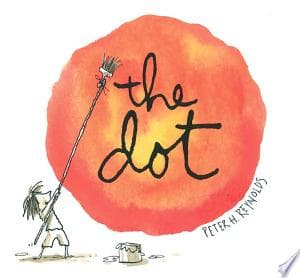
- The Dot
Peter Reynolds
4.3 (35k) average on GoodreadsCelebrates creativity and the journey of artistic expression.
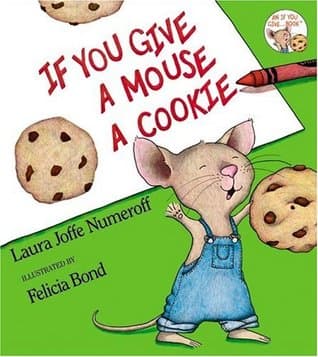
- If You Give a Mouse a Cookie
Laura Joffe Numeroff
4.3 (251k) average on GoodreadsFantasyFeatures a circular, cause-and-effect narrative driven by simple actions.
- The Cat in the Hat
Dr. Seuss
4.2 (428k) average on GoodreadsFantasyBoth books celebrate imaginative play. However, 'The Cat in the Hat' introduces an external, chaotic force (the Cat) and ends with a return to order and cleanliness. Harold's adventure is entirely self-initiated and self-sustained, with no external interference or need for 'cleanup,' emphasizing autonomous creation rather than managing external chaos.
- Harry Potter and the Sorcerer's Stone
J.K. Rowling
4.5 (7M) average on GoodreadsFantasyRescued from a miserable life under the stairs, an orphaned boy discovers he's a wizard destined for a magical school, where he uncovers a dangerous secret tied to the dark wizard who murdered his parents.
- The Hunger Games
Suzanne Collins
4.3 (6.4M) average on GoodreadsFantasyIn a future where children fight to the death on live television, Katniss Everdeen volunteers for the arena, turning a death sentence into a fight for survival and a spark of rebellion.
- 1984
George Orwell
4.2 (3.1M) average on GoodreadsPoliticsIn a future where surveillance and thought control are absolute, a man's search for truth clashes with the Party, showing that hope can be a form of rebellion.




Enjoyed the summary?
A summary gives you the shape of the book. The book itself has the detail, the examples and the voice.
Find Harold and the Purple Crayon on AmazonAs an Amazon Associate, BookBrief earns from qualifying purchases. How we're funded