
Synopsis
Covers the whole plot, including the ending.
- Difficulty
- Hard
- Pacing
- Variable
- Mood
- Intellectual, Philosophical, Thought-Provoking, Darkly Humorous, Strategic
- Read it if
- You enjoy thought experiments, philosophical debates, and seeing familiar fantasy tropes deconstructed with scientific rigor and rational analysis.
- Skip it if
- You prefer traditional fantasy narratives, simple character motivations, or find extensive philosophical discourse and scientific explanations disruptive to storytelling.
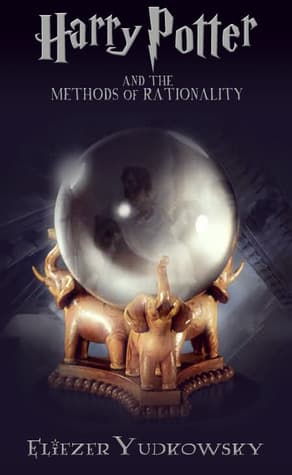
Harry Potter and the Methods of Rationality Plot Summary
Covers the whole plot, including the ending.
The Boy-Who-Lived, Reimagined
Harry James Potter-Evans-Verres, an intellectually precocious and scientifically-minded ten-year-old, lives with his adoptive parents, Professor Michael Verres (an Oxford biochemist) and Petunia Evans-Verres. He has been home-schooled and educated in scientific reasoning and critical thinking, which has shaped his worldview. On his eleventh birthday, Professor Quirrell, the new Defense Against the Dark Arts teacher at Hogwarts, visits him and reveals the existence of magic and Harry's true identity as the Boy-Who-Lived. Harry, initially skeptical, applies his scientific methodology to test Quirrell's claims, eventually accepting the reality of magic but determined to understand its underlying principles through rational inquiry. He is particularly interested in the concept of 'magic' as a new field of physics.
Arrival at Hogwarts and Initial Investigations
Upon his arrival at Hogwarts, Harry is sorted into Ravenclaw, much to his own satisfaction as he values intelligence above all else. He quickly befriends Hermione Granger, a bright student, and later Draco Malfoy, whom he attempts to 'reform' from his pure-blood supremacist upbringing through rational debate and exposure to scientific thought. Harry's scientific approach to magic immediately clashes with the traditional, rote-learning methods of Hogwarts. He experiments with spells, questions fundamental magical laws, and tries to derive the 'rules' of magic, often to the consternation of his professors and the bewilderment of his peers. His first major investigation involves the transfiguration of inanimate objects, seeking to understand the limits and possibilities.
The Mystery of the Stone and the Troll
Harry, Hermione, and Draco soon uncover hints about a powerful magical artifact, the Philosopher's Stone, being hidden within Hogwarts. They deduce it is in the forbidden third-floor corridor, guarded by various enchantments. During Halloween, a troll is unleashed in the dungeons, seemingly a distraction. Harry, using his quick wit and understanding of human psychology (and a touch of magic), manages to save Hermione from the troll, solidifying their friendship. He suspects that the troll incident was orchestrated, and begins to view the entire situation, including the Stone, as a complex puzzle or a 'game' designed by a powerful intelligence, possibly Dumbledore or Quirrell, to test him.
The Quirrell-Harry Dynamic and the Dark Lord
Harry develops a complex and influential mentor-mentee relationship with Professor Quirrell. Quirrell, a brilliant but enigmatic figure, encourages Harry's rationalist tendencies and pushes him to think critically about magic, power, and morality. He teaches Harry advanced magical theory, dueling techniques, and the darker aspects of magical history, often framing these lessons as 'games' or 'strategic challenges'. Unbeknownst to Harry, Quirrell is secretly Lord Voldemort, having survived his defeat by possessing Quirrell's body. Voldemort manipulates Harry, subtly guiding him towards a path of power and strategic thinking, testing his potential as a successor or a formidable opponent, all while feigning a persona of a wise, cynical, and somewhat amoral professor.
The Time-Turner and Strategic Thinking
Harry discovers the existence of a Time-Turner, initially given to Hermione for her demanding class schedule. He quickly realizes its immense potential for learning and manipulating events. With Quirrell's subtle encouragement and guidance, Harry uses the Time-Turner to gain extra hours for study, practice magic, and even observe past events, often with the goal of improving his strategic decision-making and understanding of complex systems. This device becomes a crucial tool in his arsenal, allowing him to outmaneuver opponents and achieve seemingly impossible feats, further cementing his belief in the power of applied intelligence and careful planning over raw magical might.
The Trial of Draco Malfoy and the Rise of the Chaos Legion
Draco Malfoy faces expulsion after a misguided attempt to frame Hermione leads to a public duel and an accusation of attacking a professor. Harry, applying legal and logical reasoning, defends Draco during a mock trial, successfully arguing for a lesser punishment. This event highlights Harry's commitment to justice and his ability to influence others through persuasive argumentation. Following this, Harry establishes the 'Chaos Legion,' a student organization dedicated to rational thought, scientific inquiry, and strategic thinking. This group, initially composed of Ravenclaws and Slytherins, is a vehicle for Harry to implement his ideas, conduct experiments, and challenge the status quo within Hogwarts, further solidifying his influence among his peers.
The Confrontation at the Mirror of Erised
Harry, believing he is playing Dumbledore's game, navigates the final challenges protecting the Philosopher's Stone, using his intellect and strategic skills rather than brute force. He reaches the Mirror of Erised, which reveals the Stone only to those who wish to find it but not use it. There, he confronts Professor Quirrell, who reveals himself to be Lord Voldemort. Voldemort, having been possessing Quirrell, attempts to manipulate Harry into helping him retrieve the Stone. Harry, though initially shocked, engages Voldemort in a battle of wits and magic, ultimately outsmarting him by understanding the Mirror's true mechanism and preventing Voldemort from gaining the Stone. This confrontation is a turning point in Harry's understanding of good, evil, and the true nature of power.
The Death of Quirrell and the Horcrux Revelation
During the confrontation, Harry inadvertently destroys the Horcrux containing a fragment of Voldemort's soul that resides within Quirrell. This act results in Quirrell's death, though not before Harry experiences a traumatic memory of Voldemort's past. Dumbledore arrives shortly after, and in the aftermath, reveals the existence of Horcruxes to Harry. Dumbledore explains that Voldemort split his soul into multiple pieces to achieve immortality, and that Harry himself is an accidental Horcrux, containing a fragment of Voldemort's soul from the night his parents died. This revelation impacts Harry, forcing him to grapple with his own identity and connection to the Dark Lord, and setting him on a new path to understand and combat Voldemort's influence.
The Prophecy and the End of First Year
Following the events with Quirrell and the Horcrux, Dumbledore reveals the full prophecy regarding Harry and Lord Voldemort. Harry, initially skeptical of prophecies, processes this information through his rational lens, seeking to understand its implications and how it might be manipulated. He grapples with the weight of his destiny and the immense power of Voldemort. The first year concludes with Harry having undergone significant personal growth, his rationalist worldview both challenged and strengthened by his magical experiences. He is now aware of the dangers he faces and the complex moral landscape of the wizarding world, preparing himself for a long-term strategic conflict against Voldemort.
Building Alliances and Strategic Planning
As his first year ends, Harry begins to proactively build alliances and plan for the future. He strengthens his bonds with Hermione and Draco, transforming their initial friendships into strategic partnerships. He also starts to consider how to reform the wizarding world, seeing its inefficiencies and dogmatism as major weaknesses. He outlines a long-term strategy to combat Voldemort, not just through direct confrontation but also by dismantling the societal structures that allow dark magic to thrive. This involves gathering information, developing new magical theories, and preparing himself and his allies for the inevitable return of the Dark Lord, signaling a shift from reactive problem-solving to proactive, strategic engagement.
Principal Figures
Harry James Potter-Evans-Verres
Protagonist
A scientifically-minded, hyper-rational genius wizard.
Harry is an eleven-year-old prodigy, raised by a rationalist biochemist and his wife. He approaches magic with scientific rigor, seeking to understand its underlying laws rather than simply memorizing spells. He is intensely curious, values logic and evidence above all else, and possesses a strong moral compass that drives him to minimize suffering and improve the world. His intelligence is his greatest weapon, often leading him to unconventional solutions and challenging established norms. He is also somewhat socially awkward and prone to overthinking, but learns to navigate the complexities of human interaction.
Relationships: Professor Quirrell/Lord Voldemort (mentor/antagonist, complex, manipulative); Hermione Granger (best friend, intellectual peer, moral compass); Draco Malfoy (initially rival, then strategic ally and friend); Albus Dumbledore (puzzling authority figure, mentor, occasional opponent); Michael Verres (adoptive father, rationalist role model)
Professor Quirrell / Lord Voldemort
Antagonist
Harry's manipulative Defense Against the Dark Arts professor, secretly the Dark Lord.
Professor Quirrell is initially presented as a brilliant, cynical, and somewhat amoral Defense Against the Dark Arts teacher. He acts as Harry's primary mentor, encouraging his rationalist tendencies and teaching him advanced magical theory and strategic thinking. However, he is secretly Lord Voldemort, having survived his defeat by possessing Quirrell's body. Voldemort is a master manipulator, highly intelligent, and driven by a desire for immortality and power. He uses his interactions with Harry to test, teach, and subtly influence him, seeing Harry as a potential successor or a formidable opponent to be understood.
Relationships: Harry Potter-Evans-Verres (mentor/mentee, manipulator/manipulated, eventual adversary); Albus Dumbledore (long-standing rival, strategic opponent)
Hermione Granger
Supporting
Harry's intelligent and loyal best friend, a more traditional but still brilliant student.
Hermione is an exceptionally bright and diligent student, initially adhering strictly to rules and traditional magical education. She is deeply moral, values justice, and is fiercely loyal to her friends. While not as overtly rationalist as Harry, she possesses a strong intellect and a capacity for logical thought, often serving as a grounding force for Harry's more extreme ideas. She struggles with her identity as a Muggle-born in the prejudiced wizarding world but finds strength in her academic prowess and friendships.
Relationships: Harry Potter-Evans-Verres (best friend, intellectual peer, moral guide); Draco Malfoy (initially antagonist, later uneasy ally and friend)
Draco Malfoy
Supporting
A pure-blood Slytherin whose worldview is challenged by Harry's rationalism.
Draco Malfoy is introduced as a proud pure-blood Slytherin, initially arrogant and prejudiced, steeped in the traditions of his powerful magical family. He views Harry as a rival but is intrigued by Harry's intellect and unconventional approach. Harry attempts to 'reform' Draco through rational debate and exposure to scientific principles, gradually eroding Draco's inherited prejudices. Draco is intelligent and ambitious, capable of strategic thought, and eventually becomes a valuable, albeit complex, ally to Harry, demonstrating a capacity for change and loyalty beyond his family's expectations.
Relationships: Harry Potter-Evans-Verres (initially rival, then strategic ally and friend); Hermione Granger (initially antagonist, later uneasy ally and friend)
Albus Dumbledore
Supporting
The enigmatic and powerful Headmaster of Hogwarts, a master manipulator.
Albus Dumbledore is the Headmaster of Hogwarts, widely considered the greatest wizard of his age. He is incredibly powerful, wise, and profoundly manipulative, with a tendency to operate through complex, multi-layered plans that often leave others confused. He possesses deep knowledge of dark magic and Voldemort's history. Dumbledore observes Harry with keen interest, often setting up 'tests' and situations to guide Harry's development, though his methods are opaque and sometimes morally ambiguous. He represents the traditional, powerful magic user, a stark contrast to Harry's scientific approach.
Relationships: Harry Potter-Evans-Verres (guardian, distant mentor, occasional adversary of wills); Professor Quirrell/Lord Voldemort (long-standing rival, strategic opponent)
Petunia Evans-Verres
Supporting
Harry's adoptive mother, a former squib who deeply resents magic.
Petunia is Harry's adoptive mother and the biological sister of Lily Potter. Having married a rationalist biochemist, she has embraced a scientific worldview. She deeply resents magic, feeling abandoned and inferior due to her own lack of magical ability (a 'squib'). Her bitterness and past trauma surrounding magic significantly influence her interactions, particularly her initial reluctance to allow Harry to attend Hogwarts. She is fiercely protective of Harry and values his scientific education, providing a strong Muggle counterpoint to the magical world.
Relationships: Harry Potter-Evans-Verres (adoptive mother, protective, conflicted about magic); Michael Verres (husband, intellectual partner)
Michael Verres
Supporting
Harry's adoptive father, an Oxford biochemistry professor and rationalist.
Michael Verres is Harry's adoptive father, an Oxford biochemistry professor who has instilled in Harry a profound respect for the scientific method, critical thinking, and rational inquiry. He is intelligent, logical, and approaches problems with a detached, analytical mindset. He provides the foundational rationalist framework that defines Harry's character, encouraging independent thought and the pursuit of knowledge. His influence is primarily seen through Harry's internal monologue and problem-solving approach.
Relationships: Harry Potter-Evans-Verres (adoptive father, intellectual mentor); Petunia Evans-Verres (wife, intellectual partner)
Minerva McGonagall
Supporting
The strict but fair Head of Gryffindor and Transfiguration professor.
Professor McGonagall is the Head of Gryffindor and the Transfiguration professor at Hogwarts. She is strict, highly competent, and a formidable witch, but also possesses a deep sense of fairness and concern for her students. She is often exasperated by Harry's unconventional methods and rule-breaking but recognizes his extraordinary talent and intelligence. She represents the traditional, disciplined aspect of Hogwarts education, often clashing with Harry's more experimental approach.
Relationships: Harry Potter-Evans-Verres (professor, stern but fair authority figure); Albus Dumbledore (colleague, confidante)
Themes & Insights
Rationality vs. Tradition
The central theme explores the clash between Harry's scientific, evidence-based approach to the world and the magical community's reliance on tradition, dogma, and intuition. Harry constantly questions why magic works the way it does, seeking to derive underlying laws rather than simply accepting spells. This is evident in his experiments with transfiguration, his logical deductions about the Philosopher's Stone, and his attempts to 'reform' Draco through rational debate. The narrative argues for the power of rational thought and the scientific method to understand and master even the most fantastical phenomena.
“What is magic, anyway? Just a set of rules nobody's bothered to write down yet. Or rather, a set of rules that haven't been discovered yet.”
The Nature of Power and Morality
The story explores different forms of power—magical, intellectual, and social—and their ethical implications. Harry grapples with the responsibility that comes with his immense magical potential and his superior intellect. His interactions with Professor Quirrell/Voldemort force him to confront the darker aspects of power, self-interest, and the choices between good and evil. The narrative questions whether 'good' can be achieved through 'dark' means, and explores the idea that true power lies not just in magical ability but in strategic thinking, influence, and the ability to minimize suffering. Harry's internal struggle to define his own moral code is central.
“The world is not split into good people and Death Eaters. We've all got both light and dark inside us. What matters is the part we choose to act on. That's who we really are.”
Learning and Education
The novel critically examines different teaching approaches. Hogwarts represents a traditional, rote-learning system, while Harry champions active experimentation, critical thinking, and self-directed learning. Harry's use of the Time-Turner to maximize his study time and his establishment of the Chaos Legion to encourage rational inquiry among his peers highlight his belief in superior learning methods. The theme emphasizes that true understanding comes from questioning, testing hypotheses, and continually refining one's knowledge, rather than passively accepting information from authority figures. It also explores the importance of teaching others to think, not just what to think.
“Intelligence is not enough. You must also be rational. You must know how to win.”
Identity and Self-Discovery
Harry's journey is one of self-discovery as he grapples with his identity as the Boy-Who-Lived, an accidental Horcrux, and a rationalist in a magical world. He questions what makes him 'Harry Potter' versus the fragment of Voldemort's soul within him. His interactions with his adoptive parents, his friends, and especially Quirrell, force him to define his own values, goals, and sense of self, separate from prophecies or societal expectations. This theme explores the idea that identity is not predetermined but actively constructed through choices and actions.
“I will not be a pawn in anyone's game. I am Harry Potter-Evans-Verres, and I will choose my own path.”
Plot Devices & Literary Techniques
The Time-Turner
A magical device allowing its user to travel back in time for short periods.
The Time-Turner is initially introduced as a tool for Hermione to attend multiple classes. However, Harry quickly repurposes it as a crucial strategic asset. It allows him to gain extra hours for intense study, practice magic, conduct experiments, and gather information without sacrificing sleep or other activities. This device significantly accelerates Harry's learning curve and problem-solving abilities, enabling him to achieve feats that would be impossible within normal temporal constraints, thereby amplifying his rationalist advantage and highlighting the power of optimized time management.
The Mirror of Erised
A magical mirror that shows the viewer their deepest desire.
In HPMOR, the Mirror of Erised functions as a crucial plot device in the climax. While it still shows the viewer their deepest desire, its specific mechanism for revealing the Philosopher's Stone is reinterpreted. It requires a specific, non-selfish intention to retrieve the Stone, essentially acting as a moral and logical puzzle. Harry's ability to deduce and exploit this mechanism, rather than being tempted by the mirror's illusion, demonstrates his superior rational thinking and strategic insight compared to Voldemort, who is consumed by his desire for the Stone, thus preventing him from obtaining it.
The Horcrux
A magical object containing a fragment of a wizard's soul, granting immortality.
The concept of the Horcrux is central to Voldemort's immortality and, significantly, to Harry's own identity. The revelation that Harry himself is an accidental Horcrux provides a deep personal connection between him and Voldemort, forcing Harry to confront the nature of his own being and the Dark Lord's influence. It elevates the conflict beyond a simple hero vs. villain dynamic, introducing a complex internal struggle for Harry and giving him unique insights into Voldemort's mind and motives. The destruction of Quirrell's Horcrux is a pivotal moment, shaping Harry's understanding of dark magic.
Prophecy
A foretelling of future events, often ambiguous and self-fulfilling.
The prophecy concerning Harry and Voldemort serves as a narrative framework, but in HPMOR, it is treated with a rationalist skepticism. Harry initially dismisses it as a 'self-fulfilling prophecy' or a social construct. However, as the story progresses, he learns to analyze its components, considering how it might be interpreted, manipulated, or even defied. The prophecy acts as a motivating factor and a source of information, but the characters, especially Harry, actively try to understand its mechanics and implications rather than passively accepting their fate, emphasizing agency over destiny.
Harry Potter and the Methods of Rationality Quotes
“The world is not a safe place, and you are not a special snowflake. You are a child, and you are going to be in danger. But you are also a witch, and you are going to be powerful. And you are going to be needed.”
“There is no justice, there is just us.”
“If you are not trying to get to the bottom of things, you are not doing science.”
“The greatest enemy of knowledge is not ignorance, it is the illusion of knowledge.”
“Every problem is a science problem.”
“What do you do when you're faced with an impossible problem? You break it down into smaller, possible problems.”
“The universe doesn't care about your feelings, it cares about what you do.”
“If you can't imagine a way that you might be wrong, you're not thinking hard enough.”
“No plan survives contact with the enemy. But that doesn't mean you don't make a plan.”
“The fundamental problem with magic is that it doesn't have a source code.”
“If you don't know what you're doing, you're doing it wrong.”
“The true meaning of 'impossible' is 'I haven't figured it out yet'.”
“The greatest power is the power to choose.”
Quiz
10 questions on the plot and the characters. Each answer comes with a short explanation.
Question 1
What is the name of the biochemistry professor Petunia Evans marries in HPMOR?
- Professor Quirrell
- Professor Michael Verres-Evans
- Professor Severus Snape
- Professor Albus Dumbledore
Show answer
B. Professor Michael Verres-Evans Petunia Evans marries Professor Michael Verres-Evans, an Oxford biochemistry professor, who significantly influences Harry's scientific upbringing.
Question 2
What scientific concept does Harry initially use to try and understand the sorting process?
- Quantum mechanics
- Cognitive biases and decision theory
- Chaos theory
- Evolutionary biology
Show answer
B. Cognitive biases and decision theory Harry approaches the Sorting Hat's decision-making process by considering cognitive biases and how to 'hack' the system, demonstrating his rational approach.
Question 3
What is Harry's primary motivation for trying to resurrect his parents?
- To prove the superiority of science over magic
- To correct the injustice of their deaths and explore the limits of magic
- To gain political power within the wizarding world
- To impress Professor Quirrell
Show answer
B. To correct the injustice of their deaths and explore the limits of magic Harry is deeply driven by the idea of 'fixing' death and correcting what he sees as an error, applying his rational and problem-solving mindset to a deeply personal quest.
Question 4
What is Professor Quirrell's true identity?
- An ancient powerful spirit
- Albus Dumbledore in disguise
- Lord Voldemort
- A time-traveling Harry Potter
Show answer
C. Lord Voldemort Professor Quirrell is revealed to be a highly intelligent and manipulative Lord Voldemort, possessing a deeper understanding of magic and strategy than anyone else.
Question 5
Which House does Hermione Granger get sorted into in HPMOR?
- Gryffindor
- Ravenclaw
- Hufflepuff
- Slytherin
Show answer
B. Ravenclaw Hermione Granger, with her immense thirst for knowledge and academic prowess, is sorted into Ravenclaw House in HPMOR, a fitting placement for her character.
Question 6
What unusual method does Harry use to try and 'test' the concept of magic being a simulation?
- Attempting to cast a Patronus Charm without emotion
- Trying to summon a specific object that shouldn't exist in the wizarding world
- Repeatedly attempting to 'break' the universe by trying to divide by zero with magic or cause logical paradoxes
- Observing the behavior of house-elves for statistical anomalies
Show answer
C. Repeatedly attempting to 'break' the universe by trying to divide by zero with magic or cause logical paradoxes Harry, ever the rationalist, tries to find glitches in the 'simulation' of magic by attempting to create logical paradoxes or divide by zero with magical operations, characteristic of his scientific approach.
Question 7
What is the 'mega-auger' that Harry invents to solve a problem in one of his classes?
- A device to rapidly brew potions
- A magically enhanced digging tool for Herbology
- A method to quickly and efficiently sort a large number of items into categories
- A spell to instantly clean entire rooms
Show answer
C. A method to quickly and efficiently sort a large number of items into categories The 'mega-auger' is Harry's rational solution to a Transfiguration task involving sorting complex objects, demonstrating his ability to apply scientific principles to magical problems.
Question 8
What fundamental flaw does Harry identify in the traditional wizarding education system?
- Lack of practical application of spells
- Over-reliance on ancient texts and dogma without experimental verification
- Insufficient focus on defensive magic
- The segregation of students into Houses
Show answer
B. Over-reliance on ancient texts and dogma without experimental verification Harry consistently critiques the wizarding world's lack of scientific method, arguing that magic is taught as dogma rather than through experimentation and logical deduction, hindering its progress.
Question 9
What is the significance of the 'Mirror of Erised' in HPMOR, and what does Harry see in it?
- It shows his deepest desire to be famous, and he sees himself as a celebrated hero.
- It shows his deepest desire to have his parents back, and he sees his family alive and well.
- It shows his deepest desire to understand the universe, and he sees himself surrounded by scientific instruments and universal laws.
- It shows his deepest desire to become an ultimate protector of humanity, and he sees himself as an omniscient, omnipotent guardian.
Show answer
D. It shows his deepest desire to become an ultimate protector of humanity, and he sees himself as an omniscient, omnipotent guardian. Harry's deepest desire, as revealed by the Mirror of Erised, is not personal happiness but to become a god-like figure capable of protecting all of humanity, reflecting his profound utilitarian and rationalist drive.
Question 10
How does Harry ultimately defeat the Basilisk in the Chamber of Secrets?
- By using the Sword of Gryffindor to stab it through the head.
- By commanding it to attack itself, exploiting its obedience to Parseltongue.
- By blinding it with a powerful light spell and then killing it with a cutting curse.
- By turning its own petrifying gaze back on itself using a reflective shield.
Show answer
B. By commanding it to attack itself, exploiting its obedience to Parseltongue. Harry, realizing the Basilisk's obedience to Parseltongue, commands it to attack and kill itself, a clever and rational solution to a seemingly insurmountable problem.
Harry Potter and the Methods of Rationality FAQ
What is the core premise of 'Harry Potter and the Methods of Rationality' and how does it differ from the original series?
The core premise reimagines Harry Potter as a scientific prodigy raised by Petunia Evans and an Oxford biochemistry professor. This upbringing instills in him a deep understanding of scientific methods and cognitive biases, which he rigorously applies to the magical world, leading to drastically different interpretations of spells, magical creatures, and the societal structure of wizards compared to J.K. Rowling's original series.
How does Harry's scientific background influence his initial interactions with the wizarding world, particularly with figures like Hagrid and Professor McGonagall?
Harry's scientific background makes him highly skeptical and analytical from the outset. He questions every claim, demands empirical evidence, and tries to categorize magic within a rational framework, often frustrating Hagrid with his relentless inquiries about biological impossibilities and challenging Professor McGonagall's authority by pointing out logical inconsistencies or inefficient magical practices, rather than simply accepting them.
What role does Hermione Granger play in this alternate universe, and how does her character arc compare to the original?
Hermione Granger initially serves as Harry's intellectual foil, a fellow brilliant student who, while intelligent, is more prone to accepting authority and traditional learning. However, Harry's persistent rational arguments and demonstrations gradually influence her, leading her to adopt more critical thinking skills and even assist him in his scientific investigations, evolving into a more independent and methodologically rigorous thinker than in the original series.
How is Lord Voldemort (Quirrellmort) portrayed in this story, and what makes him a unique antagonist compared to the original series' Voldemort?
Lord Voldemort, masquerading as Professor Quirrell, is depicted as an extraordinarily intelligent, manipulative, and deeply cynical individual who shares Harry's rationalist tendencies, albeit applied to dark ends. His uniqueness lies in his intellectual sparring with Harry, his strategic brilliance, and his nuanced motivations, which go beyond simple power hunger to encompass a sophisticated understanding of human nature and political maneuvering, making him a more formidable and philosophically complex adversary.
What is the significance of the 'House of Light' and 'House of Dark' in this narrative, and how do they impact the wizarding political landscape?
The 'House of Light' and 'House of Dark' are political factions Harry attempts to establish, based on his understanding of game theory and political science, aiming to create a stable, non-escalatory conflict dynamic. These Houses are meant to formalize and rationalize the inherent good/evil dichotomy within the wizarding world, providing a framework for strategic interaction and preventing total war, fundamentally reshaping the traditional power struggles between 'good' and 'evil' factions.
What is the 'Time-Turner theory' that Harry develops, and how does it challenge traditional magical understanding?
Harry develops a complex 'Time-Turner theory' based on the idea of a 'fixed timeline' and the grandfather paradox. He hypothesizes that Time-Turners don't allow for true free will to alter the past but rather ensure that any actions taken in the past were always part of the original timeline, operating under a form of pre-determinism that profoundly challenges the wizarding world's simplistic view of time travel and free will.
How does Harry's understanding of 'magic' evolve throughout the story, moving beyond simple spellcasting to a more fundamental theory?
Harry's understanding of magic evolves from viewing it as mere 'spellcasting' to a more fundamental theory of 'reality warping' or 'physics hacking.' He attempts to categorize and deduce underlying principles, such as conservation laws for magical energy or the precise conditions under which magic can override physical laws, constantly seeking a unified theory that explains magical phenomena rather than just accepting them as arbitrary.
What is the significance of the 'Deluminator' in this story, and how is its function interpreted differently?
The Deluminator, a device from the original series, is interpreted by Harry as a highly advanced piece of magical technology or an artifact that manipulates fundamental concepts like 'light' or 'information.' Its significance goes beyond simply turning lights on or off; Harry speculates about its ability to store and retrieve abstract concepts or even manipulate causality, highlighting the hidden depths of magical artifacts through a scientific lens.
How does the author integrate real-world scientific and philosophical concepts, such as cognitive biases and Bayesian probability, into the narrative?
The author seamlessly integrates real-world scientific and philosophical concepts by having Harry explicitly articulate and apply them to magical problems. Cognitive biases like confirmation bias or availability heuristic are discussed when characters make poor decisions, and Bayesian probability is used by Harry to update his beliefs about magical phenomena based on new evidence, making these concepts active tools within the plot rather than mere exposition.
How does Harry's 'rationality' manifest as both a strength and a potential weakness in his character?
Harry's rationality is his greatest strength, allowing him to solve complex magical problems, see through deceptions, and develop innovative solutions. However, it can also be a weakness, leading him to sometimes overlook emotional nuances, struggle with social interactions, or become overly reliant on logic when empathy or intuition might be more appropriate, creating a fascinating internal conflict.
Discuss the psychological impact of Harry's early trauma and his 'death wish' on his rational decision-making.
Harry's early trauma and his 'death wish' (a subconscious desire to die to truly 'understand' death) profoundly influence his rational decision-making by making him unusually fearless and willing to take risks. While he logically analyzes dangers, this underlying impulse can lead him to push boundaries further than a purely rational agent might, adding a layer of psychological complexity to his otherwise logical choices.
How does the concept of 'mind-magic' (Legilimency, Occlumency) become a central psychological battleground in the story?
'Mind-magic' becomes a central psychological battleground as Harry views it through a scientific lens, attempting to understand the brain's vulnerabilities and defenses. The battles of Legilimency and Occlumency are not just magical duels but clashes of psychological strategy, where understanding cognitive biases, memetics, and information theory becomes crucial for both offense and defense, highlighting the fragility and power of the human mind.
Analyze the psychological motivations behind Professor Quirrell's actions and his fascination with Harry.
Professor Quirrell's (Voldemort's) actions are driven by a complex mix of intellectual curiosity, a desire for ultimate power through understanding, and a profound weariness with the irrationality of the magical world. His fascination with Harry stems from seeing a kindred spirit, a mind capable of true rational thought, which he hopes to either corrupt, learn from, or ultimately control to achieve his own ends, making their relationship a deeply psychological one.
To what extent does the narrative argue for the superiority of 'rationality' over traditional 'magic' or 'faith'?
The narrative strongly argues for the superiority of 'rationality' in understanding, manipulating, and improving the world, including magic. It consistently shows Harry's rational approach yielding better results, revealing hidden truths, and overcoming obstacles that traditional magical thinking or blind faith cannot. However, it also subtly acknowledges the limits of pure rationality in human emotional contexts, suggesting a nuanced rather than absolute superiority.
Is the ending of the story a triumph of rationality or a tragic demonstration of its limits?
The ending can be interpreted as both a triumph and a tragic demonstration. It's a triumph of rationality in that Harry achieves his ultimate goal through meticulous planning and intellectual prowess. Yet, it can also be seen as tragic, as the immense personal cost, the manipulation involved, and the implications for free will raise questions about the ethical boundaries and emotional toll of such extreme rationalism, leaving room for debate.
How does the story challenge or reinforce common tropes found in traditional fantasy literature?
The story challenges common fantasy tropes by deconstructing magic through a scientific lens, questioning the arbitrary nature of spells, and providing rational explanations for magical phenomena. It reinforces tropes by ultimately still featuring powerful wizards, epic battles, and a clear good-vs-evil conflict, but recontextualizes them within a framework of scientific inquiry and strategic thinking, offering a fresh take on the genre.
What is the ultimate message about human nature and the pursuit of knowledge that the book conveys?
The book conveys a message about the boundless potential and inherent dangers of the human mind's pursuit of knowledge. It suggests that while rationality is a powerful tool for understanding and controlling the world, human nature is complex, susceptible to biases, and capable of both immense good and profound evil, even when guided by logic, ultimately emphasizing responsibility alongside intellect.
How does the relationship between Harry and Draco Malfoy evolve, and what does it say about the potential for cooperation across traditional divides?
The relationship between Harry and Draco Malfoy evolves from initial rivalry to a complex, often antagonistic, but ultimately cooperative alliance built on mutual respect for intellect and strategic thinking. It suggests that even deeply ingrained social and ideological divides can be overcome for pragmatic reasons or shared intellectual interests, demonstrating the potential for cooperation when individuals prioritize rational outcomes over tribal loyalties, albeit with constant tension.
About the author
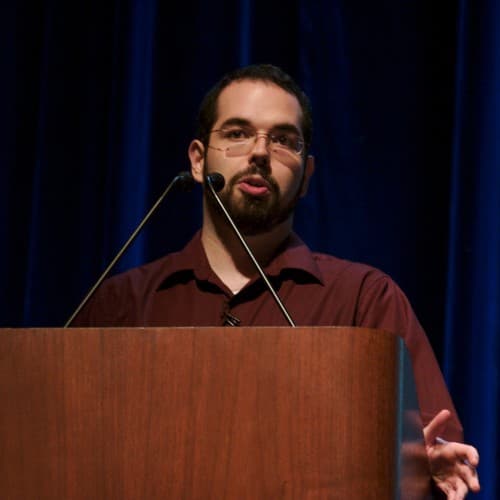
Eliezer Yudkowsky is an author and researcher known for his work in rationality and artificial intelligence. He is best known for "Harry Potter and the Methods of Rationality," a fan fiction that reimagines the Harry Potter universe through a lens of scientific reasoning and critical thinking. His writings often explore themes of rationality, decision-making, and the implications of advanced technology.
Similar books
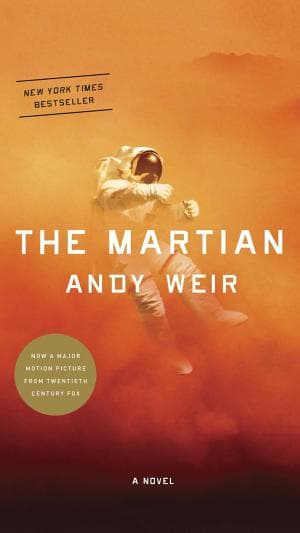
- The Martian
Andy Weir
4.4 (817k) average on GoodreadsThrillerShowcases a protagonist who relies heavily on scientific knowledge, rational problem-solving, and ingenuity to survive an impossible situation.
- Harry Potter and the Sorcerer's Stone
J.K. Rowling
4.5 (7M) average on GoodreadsFantasyRescued from a miserable life under the stairs, an orphaned boy discovers he's a wizard destined for a magical school, where he uncovers a dangerous secret tied to the dark wizard who murdered his parents.
- The Hunger Games
Suzanne Collins
4.3 (6.4M) average on GoodreadsFantasyIn a future where children fight to the death on live television, Katniss Everdeen volunteers for the arena, turning a death sentence into a fight for survival and a spark of rebellion.
- 1984
George Orwell
4.2 (3.1M) average on GoodreadsPoliticsIn a future where surveillance and thought control are absolute, a man's search for truth clashes with the Party, showing that hope can be a form of rebellion.
- Divergent
Veronica Roth
4.2 (2.9M) average on GoodreadsFantasyIn a society divided by virtues, a sixteen-year-old's difference from the norm starts a rebellion that threatens her world.
- The Hobbit, or There and Back Again
J.R.R. Tolkien
4.3 (2.9M) average on GoodreadsFantasyA comfort-loving hobbit named Bilbo Baggins is whisked away by a mischievous wizard and a band of dwarves on an unexpected journey to reclaim stolen treasure from a fearsome dragon, discovering courage and a magical ring along the way.





Enjoyed the summary?
A summary gives you the shape of the book. The book itself has the detail, the examples and the voice.
Find Harry Potter and the Methods of Rationality on AmazonAs an Amazon Associate, BookBrief earns from qualifying purchases. How we're funded