
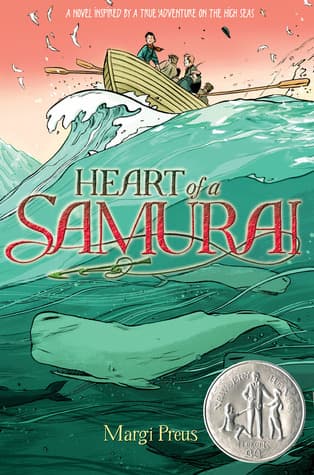
Synopsis
Covers the whole plot, including the ending.
- Difficulty
- Easy
- Pacing
- Moderate
- Mood
- Inspiring, Adventurous, Educational, Hopeful
- Read it if
- You enjoy historical fiction based on real-life adventures, stories of cultural immersion and overcoming adversity, or books featuring brave young protagonists.
- Skip it if
- You prefer fast-paced action thrillers or stories with minimal historical detail.
Heart of a Samurai Plot Summary
Covers the whole plot, including the ending.
The Shipwreck and Survival
In 1841, fourteen-year-old Manjiro, a poor fisherman's son, goes on his first fishing trip with four other men: the experienced captain, Denzo, and three older fishermen, Goemon, Toraemon, and Jusuke. A sudden, violent storm capsizes their boat far from shore. After days adrift, clinging to the wreckage, they wash ashore on a tiny, barren volcanic island, which they later learn is Torishima. Without fresh water and little food, the men face starvation and despair. Manjiro, though the youngest, shows resilience and an observant nature. He finds ways to catch birds and collect rainwater, which helps keep the group alive as they hope for rescue that seems unlikely.
Rescue by the Whaling Ship
After 143 days of survival on Torishima, the five Japanese fishermen see a ship on the horizon. It is the American whaling ship *John Howland*, captained by William Whitfield. Despite initial fear and suspicion due to Japan's strict isolationist policies, the Americans rescue the men. Captain Whitfield, a kind man, takes them aboard, giving them food, water, and medical care. The language barrier is huge, but Manjiro, with his curiosity and quick mind, begins to observe and copy the English words and phrases he hears. This sets the stage for his future in American culture, much to the worry of his older companions.
Journey to America and New Beginnings
The *John Howland* sails to Honolulu, Hawaii, where Captain Whitfield offers the Japanese men a choice: stay in Hawaii or continue to America with him. Japan's sakoku laws mean returning home is impossible without severe punishment. Goemon, Toraemon, and Jusuke, deeply connected to their Japanese identity and afraid of the unknown, decide to stay in Hawaii. Denzo, the captain, also chooses Hawaii, hoping to find a way back to Japan from there. Manjiro, however, driven by curiosity and a desire for knowledge, bravely decides to go with Captain Whitfield to Fairhaven, Massachusetts. He embraces the chance to learn about the mysterious Western world, a decision that puzzles his former shipmates.
Life in Fairhaven
In Fairhaven, Massachusetts, Manjiro is welcomed into Captain Whitfield's home and family. He is given the name John Mung and starts a new life. He attends school, learning English, mathematics, and navigation, proving to be a bright and diligent student. He faces challenges, including prejudice and cultural misunderstandings, but also finds friendship, especially with the Captain's son, William, and overcomes them with resilience. Manjiro is fascinated by American customs, technology, and democratic ideas, often comparing them to Japan's rigid class structure. He develops a deep bond with Captain Whitfield, who becomes a father figure, nurturing Manjiro's intellectual growth and independent spirit.
The Whaling Life
After several years in Fairhaven, Manjiro, now a young man, feels the call of the sea and adventure. He decides to join a whaling voyage, following Captain Whitfield's path. He ships out on the *Franklin*, first as a steward, but quickly proves his skill, rising through the ranks. The whaling life is harsh and dangerous, filled with the thrill of the chase and the constant threat of the ocean. Manjiro shows courage, competence, and leadership, earning the respect of his fellow crewmen. His experiences on the *Franklin* further broaden his understanding of the world and prepare him for future challenges.
The California Gold Rush
Returning from a whaling voyage, Manjiro learns about the California Gold Rush. Wanting to earn enough money to fund his return to Japan, he decides to try his luck in the gold fields. He travels to San Francisco, a chaotic and booming town, and then to the Sierra Nevada mountains. The experience is difficult and often fruitless, as he faces the harsh realities of prospecting, including tough living conditions, competition, and the constant threat of theft. Despite the setbacks, Manjiro's determination remains strong. He eventually gathers a small amount of gold, enough to start planning his long-desired journey back to his homeland.
The Return Journey
With his gold, Manjiro begins to plan his return to Japan. He gets help from several American friends and buys a small boat, the *Adventure*. He and two of the original shipwrecked Japanese men, Denzo and Goemon, whom he found in Honolulu, embark on a perilous voyage across the Pacific. Their goal is to reach the Ryukyu Islands (modern-day Okinawa), then controlled by the Satsuma domain, as a secret entry point to avoid direct conflict with the Shogunate's strict anti-foreign laws. The journey is full of danger, including storms and the constant fear of discovery by Japanese authorities, but Manjiro's navigational skills and resolve guide them.
Imprisonment and Interrogation
Manjiro, Denzo, and Goemon successfully reach the Ryukyu Islands and land. However, local officials quickly detect their arrival. They are immediately arrested and subjected to a long and strict series of interrogations. The Japanese authorities, suspicious of their foreign clothes, English knowledge, and tales of America, question them extensively about their time abroad, their intentions, and any potential threat they pose to Japan's isolationist policy. Manjiro, despite the harsh conditions and the constant threat of execution, stays calm, carefully recounting his experiences and emphasizing his loyalty to Japan, while subtly sharing the knowledge he has gained.
Meeting the Shogunate Officials
Manjiro's detailed accounts of America, its technology, and its culture eventually reach higher-ranking officials within the Shogunate. He is brought to various lords and scholars, including the powerful Shimazu Nariakira, Lord of Satsuma. Manjiro describes American democracy, industry, and military power, especially the steamship, a technology far superior to anything in Japan. His unique perspective and accurate information are invaluable at a time when Western powers, particularly the Americans under Commodore Perry, are increasingly pressuring Japan to open its borders. He becomes an unofficial advisor, translating documents and explaining Western concepts, showing the potential benefits of engaging with the outside world.
Becoming a Samurai and Advisor
Recognizing the immense value of his knowledge, Manjiro is eventually granted samurai status, a remarkable achievement for a man of his humble birth. He is appointed a hatamoto, a direct retainer of the Shogun, and given the name Nakahama Manjiro. He is an essential interpreter and advisor, especially during the arrival of Commodore Perry's Black Ships. Manjiro's understanding of both Japanese and American cultures allows him to bridge the communication gap, helping Japan navigate the complex diplomatic challenges of opening its borders. He translates treaties, teaches navigation, and contributes to Japan's modernization, fulfilling his unlikely dream and leaving a lasting legacy.
Heart of a Samurai Characters
Manjiro (John Mung)
Protagonist
A curious and intelligent Japanese boy who becomes the first Japanese to live in America.
Manjiro is a fourteen-year-old fisherman's son who embodies curiosity, resilience, and an open mind. Despite his humble origins, he possesses an insatiable desire for knowledge and adventure. He is quick to learn, adaptable, and remarkably brave, facing cultural shock, prejudice, and physical danger with an unwavering spirit. His strong moral compass and loyalty to his homeland are evident throughout his journey, even as he embraces foreign cultures. He is driven by a deep sense of honor and a desire to prove his worth, ultimately aiming to use his unique experiences to benefit Japan.
Relationships: Captain William Whitfield (Adoptive father and mentor); Denzo (Shipwrecked companion, fellow fisherman, and friend); Goemon (Shipwrecked companion and friend); Shimazu Nariakira (Powerful lord who recognizes Manjiro's value and becomes his patron)
Captain William Whitfield
Supporting
The compassionate American whaling captain who rescues and adopts Manjiro.
Captain Whitfield is a kind, devout, and open-minded American whaling captain from Fairhaven, Massachusetts. He is deeply empathetic, taking pity on the shipwrecked Japanese fishermen despite the cultural divide. He sees potential in Manjiro and, defying societal norms, adopts him into his family, providing him with an education and a loving home. He acts as a surrogate father and mentor, guiding Manjiro through his new life in America and instilling in him values of hard work, learning, and compassion. His actions demonstrate a progressive worldview for his time.
Relationships: Manjiro (Adoptive son and protégé); Mrs. Whitfield (Wife); William Whitfield Jr. (Son)
Denzo
Supporting
The experienced captain of Manjiro's Japanese fishing boat.
Denzo is the captain of the Japanese fishing boat that is shipwrecked. He is an older, experienced fisherman, initially responsible for the lives of his crew. While he cares for the men, he is more traditional and cautious than Manjiro, struggling with the decision to embrace Western culture. He initially stays in Hawaii, deeply conflicted about abandoning his Japanese identity, but eventually reunites with Manjiro to attempt a return to Japan. He represents the older generation's struggle with change and loyalty to tradition.
Relationships: Manjiro (Shipwrecked companion and fellow fisherman); Goemon (Shipwrecked companion)
Goemon
Supporting
One of the older Japanese fishermen shipwrecked with Manjiro.
Goemon is one of the original shipwrecked Japanese fishermen. He is portrayed as more fearful and resistant to American culture than Manjiro. He initially chooses to stay in Hawaii due to his profound discomfort with Western ways and his loyalty to Japanese customs. Despite his reservations, he is ultimately persuaded by Manjiro to join the perilous journey back to Japan, driven by a longing for his homeland. He serves as a foil to Manjiro's adventurous spirit, representing the deep-seated fear and cultural rigidity prevalent in isolated Japan.
Relationships: Manjiro (Shipwrecked companion); Denzo (Shipwrecked companion)
Shimazu Nariakira
Supporting
The enlightened Lord of Satsuma who recognizes Manjiro's value.
Shimazu Nariakira is a powerful and progressive daimyo (feudal lord) of the Satsuma domain. He is an intellectual and a visionary, keenly aware of the growing threat of Western powers and the need for Japan to modernize. He is one of the first high-ranking officials to truly understand the significance of Manjiro's experiences and knowledge. Nariakira sees Manjiro not as a defiled outcast, but as a valuable asset who can provide crucial intelligence about the outside world. He acts as Manjiro's patron and protector, facilitating his rise within the Shogunate.
Relationships: Manjiro (Patron and advisor)
Mrs. Whitfield
Supporting
Captain Whitfield's wife and Manjiro's adoptive mother.
Mrs. Whitfield is Captain Whitfield's kind and patient wife. She initially has reservations about taking in a Japanese boy due to cultural differences and the unknown, but she quickly warms to Manjiro. She provides him with a nurturing home environment, teaching him about American customs and caring for his well-being. Her quiet strength and maternal affection offer Manjiro comfort and stability during his challenging transition to a new life. She represents the domestic warmth and acceptance that Manjiro finds in America.
Relationships: Captain William Whitfield (Husband); Manjiro (Adoptive son)
Jusuke and Toraemon
Mentioned
Two other Japanese fishermen shipwrecked with Manjiro.
Jusuke and Toraemon are two of the original five shipwrecked Japanese fishermen. Like Goemon and Denzo, they are traditional and fearful of the outside world. They both choose to remain in Hawaii rather than venturing further into America with Manjiro. They largely disappear from the narrative after this decision, serving to highlight Manjiro's unique courage and openness to new experiences compared to his more conventional companions.
Relationships: Manjiro (Shipwrecked companions); Denzo (Shipwrecked companions); Goemon (Shipwrecked companions)
William Whitfield Jr.
Supporting
Captain Whitfield's son and Manjiro's friend.
William Whitfield Jr. is Captain Whitfield's son and becomes one of Manjiro's closest friends in Fairhaven. He is initially curious about Manjiro and, despite some playful teasing, quickly accepts him. He helps Manjiro navigate school and American customs, sharing his childhood experiences and offering companionship. Their friendship demonstrates how personal connections can bridge cultural divides and helps Manjiro feel more at home in a foreign land. He represents the youthful innocence and acceptance that Manjiro encounters.
Relationships: Manjiro (Friend); Captain William Whitfield (Father); Mrs. Whitfield (Mother)
Heart of a Samurai Themes
Cultural Exchange and Understanding
The novel explores cultural exchange, showing how Manjiro connects isolationist Japan and the rapidly modernizing West. His journey highlights the challenges and rewards of cross-cultural understanding. Manjiro's ability to adapt to American customs, learn English, and eventually translate between the two nations shows the power of open-mindedness. This theme is clear when Manjiro, though initially viewed with suspicion in Japan, uses his knowledge of Western technology and diplomacy to help his country understand and respond to Commodore Perry's demands, preventing potential conflict and fostering a reluctant but necessary dialogue between civilizations.
“There are two kinds of people in this world,” Captain Whitfield had told him. “Those who are afraid of what’s different, and those who are curious.”
Identity and Belonging
Manjiro's journey is a constant negotiation of his identity. He starts as a Japanese fisherman, becomes 'John Mung' in America, and then struggles to reclaim his Japanese identity upon his return, even being imprisoned as an outsider. The theme explores the feeling of being caught between two worlds, not fully belonging to either, yet finding strength in this unique position. His longing for Japan is a constant undercurrent, even as he thrives in America. Ultimately, he creates a new, hybrid identity, becoming a 'samurai' who embodies both Japanese tradition and Western knowledge, proving that belonging can be redefined and earned through one's contributions.
“He was a samurai now, a hatamoto. And yet, he would always be Manjiro, the fisherman’s son, the boy who had sailed to America and back.”
Curiosity and the Pursuit of Knowledge
Manjiro's main trait is his curiosity and his pursuit of knowledge. His curiosity drives him to leave Hawaii for America, to attend school, to learn navigation, and to absorb every detail of Western culture and technology. This theme emphasizes the power of learning and how an open mind can lead to extraordinary opportunities. His detailed observations of American democracy, industry, and military strength become invaluable to the Shogunate, showing that knowledge, even from 'forbidden' sources, can be a nation's greatest asset, especially in times of crisis.
“He wanted to know everything. He wanted to understand the world beyond the narrow confines of his village and his country.”
Courage and Resilience
Manjiro faces many life-threatening challenges: a shipwreck, starvation on a desolate island, cultural alienation in a foreign land, and the risk of execution upon returning home. His journey shows extraordinary courage and resilience. He consistently adapts, perseveres, and maintains hope in the face of adversity. From learning a new language and customs to surviving harsh whaling expeditions and the gold rush, Manjiro's unwavering spirit allows him to overcome obstacles that would defeat most others, ultimately enabling him to achieve his goals and serve his nation.
“Fear was a cold, wet blanket, but curiosity was a fire.”
The Price of Isolation vs. Progress
The narrative implicitly critiques Japan's policy of sakoku (isolation), highlighting its stifling effect on progress and understanding. Manjiro's experiences expose the technological and ideological gap that has grown between Japan and the West. His return forces Japan to confront the reality of a changing world, showing that isolation, while intended to preserve culture, ultimately leaves a nation vulnerable. The theme explores the difficult balance between preserving tradition and embracing necessary change for survival and advancement, as Japan must ultimately open its borders to avoid being forcibly subjugated by Western powers.
“Japan had closed its doors to the world. But the world, Manjiro knew, was not waiting politely outside.”
Plot Devices & Literary Techniques
The Journey (Hero's Journey)
Manjiro's transformation through a series of challenges and discoveries.
Manjiro's story closely follows the structure of a hero's journey. He is called to adventure by the shipwreck, leaves his known world, faces trials and temptations (surviving on the island, adapting to America, whaling, gold rush), receives guidance (from Captain Whitfield), and ultimately returns to his homeland with a 'boon'—his invaluable knowledge of the West. This framework emphasizes his personal growth and the epic scope of his experiences, transforming him from an ordinary boy into a national hero who bridges two worlds.
Cultural Contrast
Highlighting differences between Japanese and American customs and values.
The novel frequently uses cultural contrast to illuminate Manjiro's experiences and the broader themes. It juxtaposes the rigid class structure and isolationist policies of feudal Japan with the democratic ideals, technological advancements, and individual freedoms of 19th-century America. This device is seen in Manjiro's observations of American schools, political discourse, and family life compared to his memories of Japan. It helps readers understand the profound cultural shock Manjiro experiences and the challenges of bridging such disparate worlds, while also showcasing the unique strengths and weaknesses of each society.
First-Person Perspective (Implied/Close Third)
Narrative told primarily from Manjiro's viewpoint, granting intimate access to his thoughts.
While written in third person, the narrative maintains a very close focus on Manjiro's internal thoughts, feelings, and perceptions. This allows readers to intimately experience his wonder, fear, curiosity, and struggles as he navigates new cultures and challenges. This perspective makes his cultural clashes and moments of understanding particularly impactful, fostering empathy and allowing the reader to grow alongside him. It is crucial for understanding his emotional journey and the development of his dual identity, as we see the world through his evolving eyes.
Historical Allusion and Accuracy
Incorporating real historical events and figures to ground the fictional narrative.
The novel is based on the true story of Manjiro, and it meticulously weaves in historical facts, such as the *John Howland*'s voyage, the California Gold Rush, and Commodore Perry's arrival in Japan. This device lends authenticity and educational value to the narrative. By grounding the fictionalized account in real events, it not only makes the story more compelling but also provides readers with a vivid and accessible entry point into a significant period of Japanese and American history, demonstrating the profound impact of individual lives on historical turning points.
Heart of a Samurai Quotes
“When you don't know what to do, just do what you can. You'll be surprised at what you're able to accomplish.”
“The sea is a cruel master, but a good teacher.”
“It is not the sword that makes a samurai, but the heart.”
“A man's worth is not in his possessions, but in his character.”
“To be truly free, one must be able to choose his own path.”
“Sometimes, the biggest courage is to admit you don't know.”
“The world is bigger than you can imagine, and full of wonders.”
“Even in the darkest times, there is always a glimmer of hope.”
“Language is a bridge between worlds.”
“Fear can be a powerful motivator, or a paralyzing force. It's up to you which it becomes.”
“Home is not just a place, but a feeling of belonging.”
“To truly understand someone, you must walk in their shoes.”
“The greatest journeys are not always to distant lands, but within oneself.”
Quiz
10 questions on the plot and the characters. Each answer comes with a short explanation.
Question 1
What is the name of the American ship that rescues Manjiro and his fellow fishermen?
- The Sea Serpent
- The John Howland
- The Pacific Queen
- The Golden Dawn
Show answer
B. The John Howland Manjiro and his crew are rescued by the American whaling ship, the John Howland, captained by William Whitfield.
Question 2
What is the primary reason Japan's borders are closed to Western nations in 1841?
- Fear of economic competition
- Desire to preserve cultural purity and avoid foreign influence
- Ongoing internal conflicts and civil war
- Lack of suitable ports for Western ships
Show answer
B. Desire to preserve cultural purity and avoid foreign influence Japan had a long-standing isolationist policy (Sakoku) to prevent foreign influence, particularly Christianity, and maintain its traditional culture.
Question 3
Who adopts Manjiro and takes him to his home in New England?
- A wealthy merchant in Hawaii
- The American consul in Japan
- Captain William Whitfield
- A missionary family in San Francisco
Show answer
C. Captain William Whitfield Captain William Whitfield, the captain of the John Howland, takes a liking to Manjiro and eventually adopts him, bringing him to his home in Fairhaven, Massachusetts.
Question 4
Which of Manjiro's original fishing crew members initially chooses to stay in Hawaii rather than continue to America?
- Goemon
- Jusuke
- Toraemon
- Denzo
Show answer
B. Jusuke Jusuke, along with two other crew members, chooses to stay in Hawaii, while Manjiro and Denzo decide to continue to America with Captain Whitfield.
Question 5
What specific skill does Manjiro learn on the whaling ship that proves useful later in his life?
- Advanced navigation using a sextant
- Harpooning whales
- Reading and writing English
- Building small boats
Show answer
C. Reading and writing English Manjiro's eagerness to learn English, both speaking and writing, is a key skill he develops that allows him to communicate and eventually translate between cultures.
Question 6
Why does Manjiro travel to San Francisco after living in New England?
- To attend a university there
- To find work as a shipbuilder
- To participate in the California Gold Rush
- To meet other Japanese immigrants
Show answer
C. To participate in the California Gold Rush Manjiro, like many others during that period, heads to California to try his luck panning for gold during the Gold Rush.
Question 7
Upon his return to Japan, Manjiro is initially imprisoned. What is the main charge or suspicion against him?
- Smuggling foreign goods
- Espionage for a Western power
- Practicing a forbidden religion (Christianity)
- Desertion from his fishing vessel
Show answer
B. Espionage for a Western power Because of Japan's strict isolationist policy, anyone returning from abroad, especially from Western countries, was viewed with deep suspicion, often accused of being a spy or having adopted forbidden foreign ideas.
Question 8
What is the significance of Manjiro's dream to become a samurai, given his background?
- He was already from a samurai family, so it was his birthright.
- It represents a desire for personal wealth and power.
- It symbolizes his aspiration for honor and status in a rigid class system, despite his humble origins as a fisherman.
- He wanted to use samurai skills to fight against Western invaders.
Show answer
C. It symbolizes his aspiration for honor and status in a rigid class system, despite his humble origins as a fisherman. As a fisherman, Manjiro was at the bottom of the feudal Japanese class system. Becoming a samurai, a warrior of a higher class, represents an almost impossible upward mobility and a deep desire for honor and respect.
Question 9
How does Manjiro ultimately use his 'hard-won knowledge of the West' to influence the shogun?
- He provides detailed maps of Western military strongholds.
- He translates Western documents and advises on foreign policy, advocating for opening Japan.
- He demonstrates advanced Western weaponry to the shogun's advisors.
- He leads a delegation of American diplomats to meet the shogun.
Show answer
B. He translates Western documents and advises on foreign policy, advocating for opening Japan. Manjiro's unique experience and linguistic skills allow him to serve as a translator and advisor, informing the shogun about the outside world and the changing global landscape, which eventually contributes to Japan's decision to open its borders.
Question 10
What central theme is best represented by Manjiro's journey from a Japanese fisherman to an influential advisor to the shogun?
- The inevitable clash between Eastern and Western cultures.
- The importance of adhering strictly to tradition.
- The power of curiosity, adaptability, and cross-cultural understanding to overcome societal barriers.
- The dangers of leaving one's homeland.
Show answer
C. The power of curiosity, adaptability, and cross-cultural understanding to overcome societal barriers. Manjiro's journey highlights how his curiosity about new cultures, his ability to adapt to different environments, and his unique position as a bridge between two worlds allow him to transcend his humble beginnings and become a significant figure.
Heart of a Samurai FAQ
What is the primary historical event that kicks off Manjiro's journey in 'Heart of a Samurai'?
The story begins in 1841 when Manjiro, a fourteen-year-old Japanese fisherman, is aboard a fishing vessel that encounters a severe storm and sinks. He and his four fellow crewmates are forced to abandon their ship and swim to a desolate, uninhabited island, setting the stage for their unexpected rescue by an American whaling ship.
Who is Captain Whitfield, and what role does he play in Manjiro's life?
Captain William Whitfield is the kind and compassionate captain of the American whaling ship, the John Howland, who rescues Manjiro and his crew. He takes a particular liking to Manjiro, eventually adopting him and bringing him to his home in Fairhaven, Massachusetts, where he provides Manjiro with an education and a new family.
Why was returning to Japan so difficult and dangerous for Manjiro and his companions?
Japan in the 1840s maintained a strict isolationist policy, known as Sakoku, which prohibited its citizens from leaving and foreigners from entering. Any Japanese person who left and returned was considered a defector and faced imprisonment or even execution, as their exposure to foreign cultures was seen as a threat to national purity and stability.
What significant challenges did Manjiro face adapting to life in America, particularly in New England?
Manjiro faced immense culture shock, including language barriers, unfamiliar customs, and religious differences. Despite Captain Whitfield's kindness, he also encountered prejudice and curiosity due to his Japanese heritage, having to navigate being an 'outsider' in a deeply unfamiliar society while striving to learn and fit in.
How did Manjiro's experiences in America, particularly his education, prepare him for his later role in Japan?
Manjiro received a formal education in America, learning English, navigation, and Western sciences, which were virtually unknown in isolated Japan. This knowledge, combined with his firsthand understanding of Western culture, technology, and diplomacy, equipped him with unique insights that proved invaluable when he eventually returned and sought to influence the shogun.
What is the significance of Manjiro's 'samurai' dream, given his humble background?
Manjiro, born into a low-ranking fishing family, had no inherent path to becoming a samurai, a privileged warrior class. His dream symbolizes his ambition, desire for honor, and yearning to serve his country, pushing him to achieve status and respect through his unique experiences rather than birthright, ultimately redefining what it means to be a 'samurai' in a changing world.
How do the other Japanese fishermen, particularly Denzo and Goemon, react to Manjiro's embrace of American culture?
Denzo, the eldest, often represents traditional Japanese caution and suspicion towards foreign ways, initially resisting American customs and fearing the repercussions of their return. Goemon is generally more adaptable than Denzo but still struggles with the profound cultural differences, often serving as a foil to Manjiro's eager assimilation, highlighting the varying degrees of acceptance among the castaways.
What role does the 'golden quest' in California play in Manjiro's journey back to Japan?
Manjiro's decision to go to California to pan for gold was motivated by a desire to earn enough money to fund his return journey to Japan. This period of independence and hard work not only provided him with the necessary funds but also further exposed him to different facets of American society, reinforcing his self-reliance and broadening his worldview before his perilous return.
How does the author use the motif of 'boundaries' throughout the novel?
The novel explores boundaries in multiple ways: the literal closed borders of Japan, the cultural divides between East and West, and the social barriers within Japanese society (e.g., between commoners and samurai). Manjiro's journey is a constant crossing and blurring of these boundaries, both physically and ideologically, as he navigates different worlds and seeks to bridge them.
How does Manjiro's initial curiosity and open-mindedness help him cope with traumatic events and cultural dislocation?
Manjiro's innate curiosity acts as a powerful coping mechanism, allowing him to view his displacement not just as a tragedy but as an opportunity for learning and growth. His eagerness to understand new customs, languages, and technologies helps him adapt more readily to foreign environments and mitigates the psychological impact of being an 'outsider,' turning challenges into lessons.
Discuss the psychological impact of being 'betwixt and between' cultures on Manjiro.
Manjiro experiences a profound sense of 'in-betweenness,' no longer fully Japanese in his worldview but never entirely American. This liminal state creates internal conflict and a unique perspective, as he grapples with dual identities. It fuels his motivation to reconcile these worlds, but also leads to feelings of isolation and misunderstanding from both sides, particularly upon his return to Japan.
How does Manjiro's relationship with Captain Whitfield provide a crucial psychological anchor during his time in America?
Captain Whitfield serves as a paternal figure and a consistent source of unconditional acceptance and encouragement for Manjiro. This strong, supportive bond provides Manjiro with a sense of belonging and security in an otherwise alien world, allowing him to feel safe enough to explore his new surroundings and develop his identity without succumbing to overwhelming fear or loneliness.
What internal conflicts does Manjiro face regarding loyalty to his Japanese heritage versus his newfound American identity?
Manjiro constantly grapples with his loyalty, torn between the traditions and family he left behind in Japan and the opportunities and affection he found in America. He struggles with guilt over his exposure to foreign ways, knowing it could jeopardize his standing in Japan, while also valuing the knowledge and personal growth he gained, striving to honor both parts of himself.
Was Manjiro's imprisonment upon returning to Japan an inevitable consequence of the Sakoku policy, or could it have been avoided?
Manjiro's imprisonment was largely an inevitable consequence of Japan's strict Sakoku policy; anyone returning after leaving was automatically suspected of being a spy or having adopted dangerous foreign ideas. While he tried to be discreet, his prolonged absence and exposure to the West made him an immediate subject of scrutiny, demonstrating the policy's rigid enforcement.
To what extent does 'Heart of a Samurai' suggest that cultural exchange is inherently beneficial, despite the challenges?
'Heart of a Samurai' strongly suggests that cultural exchange, though fraught with difficulties, is ultimately beneficial. Manjiro's journey highlights how new perspectives, knowledge, and technologies gained through interaction can lead to progress and understanding, ultimately helping Japan adapt to a changing world and preventing potential conflicts from its prolonged isolation.
How does Manjiro's story challenge traditional notions of heroism in historical fiction?
Manjiro's heroism isn't defined by military prowess or inherited status, but by his intellectual curiosity, adaptability, resilience, and willingness to bridge cultural divides. He becomes a hero through his ability to navigate complex situations with diplomacy and understanding, using knowledge rather than force to influence his nation's future, thus offering a more nuanced and accessible form of heroism.
Is Manjiro's ultimate dream of becoming a samurai fully realized, or is it transformed by his experiences?
Manjiro's dream of becoming a samurai is profoundly transformed. While he may not achieve the traditional warrior status, his experiences in the West provide him with a unique form of 'samurai' honor and service. He becomes a vital advisor to the shogun, using his knowledge to protect and guide Japan, embodying a new kind of intellectual and diplomatic 'samurai' for a modernizing nation.
What historical impact did the real Manjiro have on Japan's opening to the West, as reflected in the book?
The book accurately reflects Manjiro's significant historical impact; his firsthand accounts of American society, technology, and intentions provided crucial intelligence to the closed Japanese government. His insights helped ease fears and inform diplomatic strategies when Commodore Perry's 'Black Ships' arrived, playing a key role in Japan's eventual, relatively peaceful, opening to the West.
Similar books
- Island of the Blue Dolphins
Scott O'Dell
3.8 (292k) average on GoodreadsChildren'sA survival story with a strong, resourceful young character in a natural setting.
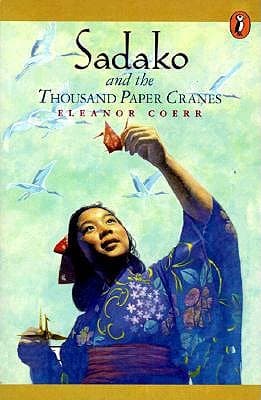
- Sadako and the Thousand Paper Cranes
Eleanor Coerr
4.1 (22k) average on GoodreadsChildren'sWhile both books deal with Japanese protagonists and historical events, Sadako focuses on a more recent and tragic event (Hiroshima) and emphasizes themes of peace and resilience in the face of suffering. Heart of a Samurai explores cultural integration and adventure, offering a broader geographical and cultural scope. Coerr's work is often praised for its emotional depth in depicting trauma, whereas Preus focuses more on the journey of discovery and adaptation.
- Harry Potter and the Sorcerer's Stone
J.K. Rowling
4.5 (7M) average on GoodreadsFantasyRescued from a miserable life under the stairs, an orphaned boy discovers he's a wizard destined for a magical school, where he uncovers a dangerous secret tied to the dark wizard who murdered his parents.
- The Hobbit, or There and Back Again
J.R.R. Tolkien
4.3 (2.9M) average on GoodreadsFantasyA comfort-loving hobbit named Bilbo Baggins is whisked away by a mischievous wizard and a band of dwarves on an unexpected journey to reclaim stolen treasure from a fearsome dragon, discovering courage and a magical ring along the way.
- Harry Potter and the Goblet of Fire
J.K. Rowling
4.6 (2.6M) average on GoodreadsFantasyA bewildered Harry Potter, underage and thrust into a deadly Triwizard Tournament, must brave dragons, mermaids, and a resurgent dark magic to survive a year that will forever alter the wizarding world.
- Harry Potter and the Order of the Phoenix
J.K. Rowling
4.5 (2.5M) average on GoodreadsFantasyIn a year of oppressive secrets and the threat of Voldemort, Harry Potter and Dumbledore's Army secretly train for war, shown through Jim Kay and Neil Packer's dark illustrations.





Enjoyed the summary?
A summary gives you the shape of the book. The book itself has the detail, the examples and the voice.
Find Heart of a Samurai on AmazonAs an Amazon Associate, BookBrief earns from qualifying purchases. How we're funded