
Core Idea
- Difficulty
- Easy
- Read it if
- You are interested in fine art photography, particularly of the human form, and appreciate a classical, sculptural approach to the nude that emphasizes aesthetics, light, and emotional depth over explicit content.
- Skip it if
- You are looking for conceptual photography, explicit or controversial takes on the human body, or a deep dive into photographic techniques rather than artistic appreciation.
Key Takeaways from Heavenly Bodies
Sculpting the Human Form in Color
Vance's mastery extends the classical ideal into vibrant hues.
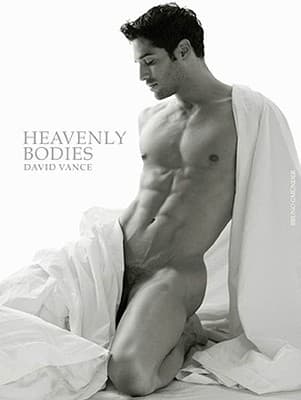
David Vance's 'Heavenly Bodies' is a clear step forward from his earlier work, like 'Timeless.' While 'Timeless' used the stark quality of black and white, 'Heavenly Bodies' uses full color. This shows that the classical look of Greek statues can be enhanced by a vibrant palette. This change is more than technical; it's an expansion, showing that the ideal human form, often linked to monochrome antiquity, can be just as powerful and beautiful in full color. Vance's skill makes color feel natural and ethereal, avoiding over-saturation. He uses it to highlight the contours, textures, and details of the models' bodies, making them more than photographs—they become living sculptures.
“Every picture is a piece of timeless art that you want to blow up and hang on your wall.”
In the book: The book's defining characteristic is its 'full color' photography, a direct contrast to Vance's earlier 'Timeless' which was black and white.
Try this: Appreciate how color can be used not just for realism, but for artistic idealization. When viewing art, consider how the chosen palette impacts the emotional and conceptual message.
Related ideas: classical-photography, color-theory, idealized-form
Timelessness in a Modern Lens
Bridging ancient ideals with contemporary photographic techniques.
Vance's achievement in 'Heavenly Bodies' is his ability to capture the grandeur and calm of classical Greek sculpture through modern photography. This involves more than just posing models; it's a deep understanding of classical aesthetics—the balance, proportion, and ideal beauty of ancient art. He doesn't just copy; he reinterprets, using light, shadow, and composition to turn contemporary bodies into timeless figures. The 'Greek statue' comparison is accurate; it points to a deliberate artistic goal to remove modern markers and show the human form in its purest, almost archetypal state. The success is in making these images feel both ancient and new, showing the lasting power of the human form in art.
“David Vance seeks to make his models appear like Greek statues and succeeds with brilliance.”
In the book: The explicit goal of making models 'appear like Greek statues' and the consistent praise for its 'timeless art' quality.
Try this: When creating or appreciating art, consider how to imbue it with enduring qualities that transcend fleeting trends. Study classical art principles for foundational understanding of form and composition.
Related ideas: classical-art, art-history, photographic-composition
The Power of the Unadorned Form
Focusing purely on physique and pose to convey emotion and beauty.
What sets Vance's work apart is its focus on the human form itself, without extra props, costumes, or complex stories. The models in 'Heavenly Bodies' are not characters; they are examples of physical perfection and grace. This minimalist approach makes the viewer see the raw beauty of the body, its muscles, lines, and curves, as the main subject. Each pose is set up to highlight anatomical precision and aesthetic harmony, like a sculptor's careful work. The lack of an obvious 'story' lets viewers add their own interpretations, leading to a deeper, more personal connection with universal themes of beauty, strength, and vulnerability in the human condition.
“More of the incredibly successful Timeless (2006) with one essential difference: Heavenly Bodies is shot in full color!”
In the book: The focus on models appearing like 'Greek statues' implies a stripping away of contemporary context to highlight pure form.
Try this: In any creative endeavor, consider the impact of minimalism. What can be removed to amplify the core message? Practice observing and appreciating the inherent beauty in simple forms.
Related ideas: minimalist-art, human-anatomy, figure-photography
The Art of Light and Shadow in Color
Vance's masterful lighting sculpts bodies, even in full spectrum.
Even with color, Vance's skill with light and shadow is central. Like a sculptor using chisels to define form, Vance uses light to shape muscles, create depth, and emphasize contours. The interplay of highlights and deep shadows is key to making the three-dimensional human body appear on a two-dimensional photograph, giving the figures a strong sense of volume and presence. This is not flat, brightly lit photography; it understands how light interacts with skin, how it catches an edge, or how it fades into a nuanced shade. The color palette adds another layer, enriching these sculpted forms without flattening them, letting the warmth of skin tones or the cool cast of ambient light contribute to the overall sculptural effect.
“Every picture is a piece of timeless art that you want to blow up and hang on your wall.”
In the book: The 'Greek statue' comparison inherently points to an understanding of how light defines form, a core element of sculpture.
Try this: Experiment with different lighting techniques in photography or even everyday observation to see how it dramatically alters perception of form and texture. Pay attention to how light creates depth.
Related ideas: lighting-techniques, chiaroscuro, photographic-lighting
Beyond the Nude: The Idealized Figure
Transforming the physical body into an object of pure aesthetic contemplation.
Vance's work goes beyond nude photography; it explores the ideal figure. The models are shown not as individuals, but as archetypes of human beauty and strength, carefully chosen and posed to embody a classical ideal. This approach elevates the images from potentially voyeuristic to purely aesthetic, inviting thought rather than immediate personal identification. The 'Heavenly Bodies' are, as the title suggests, almost divine in their perfection, separate from the everyday and placed in a timeless, almost mythological setting. This intentional idealization makes the work feel 'timeless' and worthy of being 'blown up and hung on your wall,' as it speaks to universal aspirations of beauty and form.
“David Vance seeks to make his models appear like Greek statues and succeeds with brilliance.”
In the book: The consistent reference to 'Greek statues' and 'timeless art' points to an aesthetic of idealization over realism.
Try this: When viewing art featuring the human body, consider the artist's intention: is it realism, idealization, or something else? Reflect on how idealization can evoke universal themes.
Related ideas: idealism-in-art, aesthetic-theory, art-philosophy
Emotional Resonance Through Form
Conveying mood and power without explicit narrative.
Despite no obvious emotion on the models' faces or a clear story, Vance's photographs in 'Heavenly Bodies' have deep emotional resonance. This comes entirely from pose, muscle tension, and the play of light and shadow. A slight turn of the head, the curve of a back, or the flex of a limb shows strength, vulnerability, thought, or calm. The 'timeless' quality comes from these universal expressions of the human condition, shown through the body itself. Viewers are invited to feel, not just see, the power and grace in each frame, making the art engaging on a deep, emotional level, much like seeing a powerful sculpture.
“Every picture is a piece of timeless art that you want to blow up and hang on your wall.”
In the book: The description highlights the art's ability to be 'blown up and hung on your wall,' suggesting a lasting emotional impact.
Try this: Practice observing body language and physical forms to understand how they convey emotion and meaning. In your own creative work, explore how non-verbal elements can communicate effectively.
Related ideas: body-language, emotional-expression-art, non-verbal-communication
The Artistic Evolution of a Master
Vance's color work marks a significant, successful progression.
The move from 'Timeless' (2006) to 'Heavenly Bodies' is not just a change in medium but shows David Vance's artistic growth and willingness to try new things. After mastering the elegance of black and white, he successfully entered the complex world of color photography without losing his core style. This development shows that a truly skilled artist can adapt their vision to new tools, enriching their established style. The success of 'Heavenly Bodies' confirms that Vance is a versatile artist who can create the same sense of timeless beauty across different photographic approaches, establishing him as an important figure in fine art photography.
“More of the incredibly successful Timeless (2006) with one essential difference: Heavenly Bodies is shot in full color!”
In the book: The direct comparison to 'Timeless' and the emphasis on the 'essential difference' of full color, while still being 'incredibly successful.'
Try this: Embrace opportunities to evolve your skills and artistic approach. Don't be afraid to experiment with new mediums or techniques while staying true to your core vision. Growth is essential for sustained artistic relevance.
Related ideas: artistic-development, medium-exploration, photographic-evolution
Democratizing Fine Art Photography
Making museum-quality art accessible for personal enjoyment.
The idea that you 'want to blow up and hang on your wall' speaks to how accessible and desirable Vance's work is. It suggests his photographs are not just for coffee tables, but are genuine fine art pieces that people want in their homes. This makes museum-quality aesthetics more available, letting people decorate their own spaces with images that evoke classical beauty and timeless elegance. Vance's work connects high art and personal decor, showing that strong artistic statements can also be personal and enriching additions to daily life.
“Every picture is a piece of timeless art that you want to blow up and hang on your wall.”
In the book: The direct statement about wanting to 'blow up and hang on your wall' highlights its appeal as personal art.
Try this: Seek out art that genuinely resonates with you and consider how it can enrich your personal space. Don't feel confined to traditional galleries for appreciating fine art; art books can be a gateway to collecting.
Related ideas: art-accessibility, fine-art-collecting, art-and-home-decor
The Enduring Appeal of the Nude
Vance reaffirms the human body as a perennial source of artistic inspiration.
Vance's 'Heavenly Bodies' strongly confirms the timeless appeal of the human nude in art. In a time often driven by trends, Vance returns to basic principles, showing that the human body, when photographed with skill, respect, and an eye for idealization, remains one of the most compelling subjects an artist can explore. The book reminds us that the human form is a canvas of complexity and beauty, capable of showing strength, fragility, and grace. Its lasting success points to a basic human fascination with our physical selves, seen through an elevated, artistic lens.
“David Vance seeks to make his models appear like Greek statues and succeeds with brilliance.”
In the book: The book's success following 'Timeless' indicates a sustained demand and appreciation for this specific artistic genre.
Try this: Reflect on why the human form has been a central subject in art across cultures and centuries. When encountering images of the nude, consider the artist's intent and the historical context.
Related ideas: nude-in-art, art-history-themes, human-form-art
Capturing Intangible Qualities
Beyond physicality, Vance photographs an essence of grace and dignity.
What makes Vance's photographs stand out is their ability to capture not just the physical perfection of his models, but also qualities like dignity, serenity, and an almost spiritual grace. These 'Heavenly Bodies' are not just well-formed; they show an inner calm that elevates them beyond flesh and bone. This comes from careful posing, sensitive lighting, and Vance's eye for choosing subjects who naturally embody these qualities. The result is a collection of images that resonate with calm power and beauty, inviting viewers to connect with a deeper, more idealized aspect of humanity.
“Every picture is a piece of timeless art that you want to blow up and hang on your wall.”
In the book: The choice of the title 'Heavenly Bodies' suggests an aspiration to capture something beyond the purely physical.
Try this: When creating or analyzing portraits, consider how to convey internal qualities and character beyond superficial appearance. Look for art that evokes a sense of inner peace or strength.
Related ideas: spiritual-art, dignity-in-art, photographic-portraiture
Heavenly Bodies Quotes
“The stars, though distant, are not silent; they whisper tales of creation and cosmic grandeur to those who take the time to listen.”
“Every photon that reaches our eyes from a distant galaxy is a time capsule, carrying secrets from an era long past.”
“We are, in essence, stardust brought to life, imbued with the capacity to ponder our own origins.”
“The night sky is not merely a backdrop; it is a canvas upon which the universe paints its most magnificent masterpieces.”
“To truly know the heavens is to understand a little more about ourselves, our place in the vast cosmic tapestry.”
“The universe does not reveal its secrets easily, but it rewards the patient and the curious with wonders beyond imagination.”
“From the dance of planets to the explosion of supernovae, the cosmos is a theater of perpetual, breathtaking drama.”
“Our instruments are extensions of our senses, allowing us to perceive the invisible symphony of the cosmos.”
“The silence of space is deceptive; it hums with gravitational waves, cosmic rays, and the echoes of the Big Bang.”
“Every culture has looked to the stars, weaving myths and meaning into the celestial patterns.”
“The pursuit of knowledge about heavenly bodies is a journey without end, each answer leading to a multitude of new questions.”
“Even in the darkest night, the stars remind us of the immense potential for light and understanding.”
“Gravity, the invisible architect, shapes galaxies and dictates the fate of stars, a silent force governing all.”
“We stand on a tiny blue marble, yet our gaze encompasses the entirety of time and space.”
Quiz
10 questions on the main ideas. Each answer comes with a short explanation.
Question 1
What is the primary artistic goal David Vance aims to achieve with his models in 'Heavenly Bodies'?
- To make them appear like modern fashion icons.
- To make them appear like Greek statues.
- To make them appear like abstract sculptures.
- To make them appear like Renaissance paintings.
Show answer
B. To make them appear like Greek statues. The book description explicitly states that David Vance seeks to make his models appear like Greek statues, and 'succeeds with brilliance'.
Question 2
How is each picture in 'Heavenly Bodies' described in terms of its artistic merit?
- As a fleeting moment of contemporary photography.
- As a piece of timeless art.
- As a commercial advertisement.
- As a candid snapshot.
Show answer
B. As a piece of timeless art. The description states, 'Every picture is a piece of timeless art that you want to blow up and hang on your wall,' emphasizing its enduring artistic quality.
Question 3
What is the 'essential difference' between 'Heavenly Bodies' and Vance's previous work, 'Timeless' (2006)?
- Heavenly Bodies features female models, unlike Timeless.
- Heavenly Bodies is shot in full color, unlike Timeless.
- Heavenly Bodies focuses on landscapes, unlike Timeless.
- Heavenly Bodies uses digital manipulation, unlike Timeless.
Show answer
B. Heavenly Bodies is shot in full color, unlike Timeless. The text clearly states: 'More of the incredibly successful Timeless (2006) with one essential difference: Heavenly Bodies is shot in full color!'
Question 4
The description mentions that the photos are 'pieces of timeless art that you want to blow up and hang on your wall.' What does this imply about the intended display or appreciation of the work?
- They are primarily meant for digital viewing on small screens.
- They are designed to be printed large and displayed prominently as fine art.
- They are intended for quick, casual browsing rather than deep appreciation.
- They are merely conceptual pieces not meant for physical display.
Show answer
B. They are designed to be printed large and displayed prominently as fine art. The phrase 'blow up and hang on your wall' directly suggests that the images are of high enough quality and artistic merit to be enlarged and displayed as significant pieces of art in a physical space.
Question 5
How does the artistic ambition of making models appear like 'Greek statues' contribute to the 'timeless art' quality of the photographs?
- By focusing on modern, ephemeral beauty trends.
- By drawing upon classical ideals of form, proportion, and enduring beauty.
- By emphasizing the contemporary context and transient nature of the human body.
- By employing techniques that make the images appear aged and antique.
Show answer
B. By drawing upon classical ideals of form, proportion, and enduring beauty. Greek statues are renowned for their timeless beauty, classical ideals, and enduring aesthetic appeal. By emulating this, Vance imbues his photographs with a similar sense of permanence and classical artistry, contributing to their 'timeless art' designation.
Question 6
The book is described as 'More of the incredibly successful Timeless (2006)'. What does this suggest about the style and quality of 'Heavenly Bodies' compared to its predecessor?
- It is a radical departure in style and theme from 'Timeless'.
- It maintains a similar high standard and artistic vision as 'Timeless', but with a new element.
- It is a less successful follow-up attempting to replicate 'Timeless'.
- It is a completely different genre of photography compared to 'Timeless'.
Show answer
B. It maintains a similar high standard and artistic vision as 'Timeless', but with a new element. The phrase 'More of the incredibly successful Timeless' implies continuity in quality and artistic approach, suggesting that 'Heavenly Bodies' builds upon the strong foundation and success of the earlier work, rather than diverging significantly, while introducing the 'essential difference' of color.
Question 7
Given the emphasis on making models appear like 'Greek statues' and the use of 'full color,' what kind of aesthetic tension or enhancement might arise in 'Heavenly Bodies'?
- A tension between historical black-and-white photography and modern digital techniques.
- An enhancement of the classical, sculptural forms with the vibrancy and realism that color provides.
- A conflict between the starkness of classical sculpture and the softness of contemporary portraiture.
- A contradiction between the static nature of statues and the dynamic movement of live models.
Show answer
B. An enhancement of the classical, sculptural forms with the vibrancy and realism that color provides. Greek statues are often associated with monochromatic marble. Introducing full color to models posed as such would likely enhance the forms by adding depth, texture, and a more lifelike quality, bridging the gap between static sculpture and vibrant human form, thereby enhancing the classical ideals with realism.
Question 8
If 'Heavenly Bodies' is shot in full color, how might this impact the viewer's perception of the models' 'Greek statue' aesthetic compared to if it had been in black and white?
- It would make the models appear more abstract and less human-like.
- It could potentially add a layer of realism and vitality to the sculptural poses, making them less starkly 'statue-like' but more compellingly human-as-art.
- It would detract from the classical feel, making the images appear overly modern and commercial.
- It would emphasize the imperfections of the human body, contrasting with the idealized forms of statues.
Show answer
B. It could potentially add a layer of realism and vitality to the sculptural poses, making them less starkly 'statue-like' but more compellingly human-as-art. While black and white might more directly mimic the monochromatic nature of marble statues, full color introduces the warmth and vitality of living skin, potentially creating a unique blend where the idealized forms of Greek statues are brought to life with a vibrant, human realism, making them 'human-as-art' rather than just imitations.
Question 9
The description highlights the success of 'Timeless' (2006). What does this imply about David Vance's established reputation or signature style before 'Heavenly Bodies'?
- He was known for experimental, avant-garde photography.
- He had already established a successful photographic style characterized by timeless artistry and perhaps classical influences.
- He was primarily a landscape photographer venturing into portraiture.
- He was a newcomer to the art photography scene with 'Timeless' being his breakout work.
Show answer
B. He had already established a successful photographic style characterized by timeless artistry and perhaps classical influences. Calling 'Timeless' 'incredibly successful' and then saying 'Heavenly Bodies' is 'More of' it, suggests Vance had already cultivated a distinct and well-received artistic approach, likely centered on the 'timeless art' aesthetic that is also a hallmark of 'Heavenly Bodies'.
Question 10
Considering the artistic goal and the medium, how does 'Heavenly Bodies' potentially challenge or redefine the perception of the human form in contemporary photography?
- By showcasing the human form solely as a commercial product.
- By elevating the human body, particularly the male form, to an object of classical, timeless art in a full-color, modern context.
- By emphasizing the imperfections and vulnerabilities of the body, contrasting with classical ideals.
- By focusing on candid, unposed moments to capture raw realism.
Show answer
B. By elevating the human body, particularly the male form, to an object of classical, timeless art in a full-color, modern context. By explicitly aiming to make models appear like 'Greek statues' and succeeding with 'timeless art' in full color, Vance is actively elevating the human form beyond mere representation, situating it within a classical artistic tradition and presenting it as an object of enduring beauty and art, rather than just a contemporary subject.
Heavenly Bodies FAQ
What is the primary artistic vision behind 'Heavenly Bodies'?
'Heavenly Bodies' by David Vance aims to transform his models into living embodiments of classical Greek statues. Vance achieves a timeless artistic quality in full color, making each photograph a piece of art suitable for display.
How does 'Heavenly Bodies' differ from Vance's previous work, 'Timeless'?
While 'Heavenly Bodies' shares the successful, timeless aesthetic of Vance's 2006 book 'Timeless,' the essential difference lies in the use of color. 'Heavenly Bodies' is shot entirely in full color, offering a new dimension to his classical inspirations.
Does David Vance use digital manipulation to achieve the 'statue' effect?
The book emphasizes Vance's brilliant success in making models appear like Greek statues through his photographic skill and direction. While post-processing is common in photography, the core artistic vision is achieved through meticulous staging and lighting.
What kind of subjects or models are featured in 'Heavenly Bodies'?
'Heavenly Bodies' features models carefully selected and posed to evoke the idealized forms found in classical Greek sculpture. The focus is on the human form presented with grace and strength, mirroring ancient artistic ideals.
Is 'Heavenly Bodies' suitable for art collectors and enthusiasts?
Absolutely. Each photograph in 'Heavenly Bodies' is described as a piece of timeless art that one would want to enlarge and hang on a wall. It is designed to appeal to those who appreciate fine art photography, classical aesthetics, and the human form.
What is the 'timeless art' concept that David Vance explores?
David Vance's 'timeless art' concept involves creating images that transcend contemporary trends, drawing inspiration from classical antiquity. He seeks to capture beauty and form in a way that resonates across different eras, much like ancient Greek sculptures continue to do.
How does the use of full color enhance the 'Greek statue' aesthetic in this book?
The full-color photography in 'Heavenly Bodies' adds a vibrant, lifelike quality that contrasts with the often monochrome perception of ancient statues. It allows for the subtle interplay of light, shadow, and skin tones to further define the sculptural forms, bringing a new dimension to the classical ideal.
Where can one view or purchase prints from 'Heavenly Bodies'?
While the book itself is a collection of these stunning works, information regarding individual print availability typically would be found through David Vance's official website, his publisher, or reputable fine art galleries. The book serves as a primary showcase for the collection.
Similar books
- The Diary of a Young Girl
Anne Frank
4.2 (2.7M) average on GoodreadsBiographyDuring the Nazi occupation, a teenage girl's diary, written from a secret annex, shares observations on humanity, hope, and the wait for freedom.
- Twisted 1. Twisted love
Ana Huang
3.7 (1.7M) average on GoodreadsA quiet billionaire with a difficult past finds his guarded heart opening to the woman he must protect, but their growing passion uncovers dangerous secrets and a shared, traumatic history.
- Eat, Pray, Love
Elizabeth Gilbert
3.6 (1.5M) average on GoodreadsLifestyleA heartbroken writer leaves her conventional life for a year-long global search for pleasure in Italy, spiritual devotion in India, and unexpected love and balance in Bali.
- Night
Elie Wiesel
4.3 (970k) average on GoodreadsBiographyIn the darkness of Auschwitz and Buchenwald, a teenage Elie Wiesel faces the extermination of his family, the loss of his faith, and the lasting scars of humanity's deepest cruelty.
- Steve Jobs
Walter Isaacson
4.1 (957k) average on GoodreadsBusinessSteve Jobs was a visionary who fused creativity and technology to revolutionize six industries and shape our digital world.
- The Glass Castle
Jeannette Walls
4.3 (903k) average on GoodreadsBiographyJeannette Walls's memoir describes her unusual childhood with brilliant, free-spirited parents whose poverty-stricken life shaped her independence and love despite family problems.






Enjoyed the summary?
A summary gives you the shape of the book. The book itself has the detail, the examples and the voice.
Find Heavenly Bodies on AmazonAs an Amazon Associate, BookBrief earns from qualifying purchases. How we're funded