
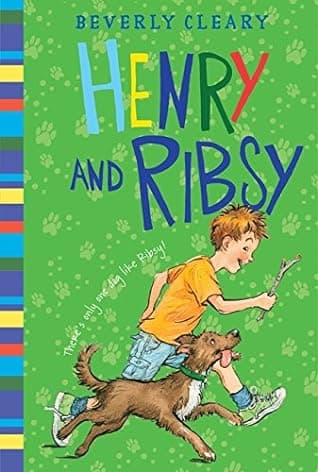
Synopsis
Covers the whole plot, including the ending.
- Difficulty
- Easy
- Pacing
- Moderate
- Mood
- Whimsical, Humorous, Heartwarming, Nostalgic
- Read it if
- You enjoy classic children's stories about a boy and his dog, filled with humorous everyday adventures and a touch of mischief.
- Skip it if
- You prefer complex plots, fantasy, or stories without animal-centric humor.
Henry and Ribsy Plot Summary
Covers the whole plot, including the ending.
The Salmon Fishing Promise
Henry Huggins wants to go salmon fishing with his father, Mr. Huggins. His dog, Ribsy, often gets into trouble. After Ribsy chases a cat and causes a commotion, Mr. Huggins makes a deal: if Henry can keep Ribsy out of trouble for a month, they will go salmon fishing. Henry wants to succeed and imagines catching a huge salmon. He starts planning how to manage Ribsy, trying to teach him tricks and keeping him on a tighter leash. Ribsy and the neighborhood are not always happy about this.
Ribsy's Unwanted Bath
Henry decides Ribsy needs a bath, thinking a clean dog might cause less trouble. He tries to bathe Ribsy in the backyard, but Ribsy hates baths and struggles. Soapy water, mud, and dog hair fly everywhere. Ribsy escapes the tub and runs through the neighborhood, leaving a trail of suds and getting tangled in a garden hose. Henry, with his friends Beezus and Ramona Quimby, chases the dog. The chase ends with Ribsy rolling in leaves and dirt, making the bath useless and adding to his reputation as a difficult dog.
The Meat Market Mix-Up
Henry takes Ribsy to the local meat market to teach him good public behavior. While Henry is not looking, Ribsy, drawn by the smell of meat, takes a large roast off the counter. A chase begins through the market, with the butcher, Mr. Penny, and Henry trying to get the roast back from Ribsy. Ribsy thinks it is a game and runs out of the store with the roast, causing a scene. Henry is embarrassed and has to pay for the damaged roast, adding another mark against Ribsy's challenge.
Ramona's Mischief with the Fishing Worms
Henry spends an afternoon gathering earthworms for his fishing trip, storing them in a can. Ramona Quimby, Beezus's younger sister, finds Henry's worm can. Without Henry knowing, Ramona plays with the worms, using them as 'pets' and trying to feed them to her dolls. When Henry finds out, he is angry because many of his worms are gone or hurt. This incident, while not Ribsy's fault, adds to Henry's stress and the overall chaos around his fishing goal.
The Fire Truck Incident
One afternoon, a fire truck stops near Henry's house. Ribsy, curious, goes to it. He climbs into the truck and gets stuck. The firemen, amused but a little annoyed, try to get him out. A crowd gathers, including Henry, who is embarrassed by Ribsy's latest problem. After some effort, the firemen free Ribsy, who looks sheepish but is unharmed. This public display of Ribsy's actions further puts Henry's fishing trip at risk, making it seem impossible to keep him out of trouble.
A Day at the Park Turns Wild
Henry takes Ribsy to the park, hoping the open space will tire him out and keep him from trouble. However, Ribsy quickly sees squirrels and chases them. He chases them up trees and through flowerbeds, disturbing picnickers and other park visitors. Henry tries hard to control his dog, but Ribsy is enjoying himself, not noticing the chaos he is creating. The incident shows Henry's struggle to control Ribsy's natural instincts and the difficulty of his month-long challenge.
The Lost Dog
One day, Ribsy disappears. Henry searches frantically throughout the neighborhood, calling his name and asking everyone if they have seen his dog. He is worried and sad, imagining bad things that could have happened to Ribsy. His friends, Beezus and Ramona, help search. The neighborhood helps, and posters are made. Henry feels a deep sense of loss, realizing how much he loves Ribsy despite all the trouble. Ribsy's absence threatens the fishing trip promise.
Ribsy's Unexpected Return
After a sad and anxious search, Henry gets a call that Ribsy has been found. He is at a local school carnival, where he had wandered off and, surprisingly, won a prize in a dog contest! Ribsy, charming when he wants to be, had apparently done a trick (probably by accident) that impressed the judges. Henry is very happy to be reunited with his dog, relieved that Ribsy is safe. The incident is a mixed moment, as Ribsy's 'good behavior' was unintentional and not Henry's doing, but it brings him back.
The Final Days of the Challenge
With only a few days left, Henry is very determined to keep Ribsy out of trouble. He keeps Ribsy on a very short leash, both literally and figuratively, limiting his freedom. Ribsy, sensing the tension, seems to behave well, perhaps tired of Henry's constant watching. Henry watches him closely, avoiding all possible problems. The pressure builds, and Henry feels every minute of the remaining time, hoping no last-minute disaster will ruin his chances for the salmon fishing trip.
A Close Call and the Reward
On the very last day of the month, Ribsy has one final close call, chasing a cat up a tree and almost causing a big problem. Henry steps in just in time. Despite the many problems during the month, Henry's father recognizes Henry's great effort and determination to control Ribsy. He sees how hard Henry tried and understands that some things are beyond a boy's control with a dog like Ribsy. Mr. Huggins, impressed by Henry's persistence, decides Henry has earned his reward. He tells Henry they will go salmon fishing after all, which makes Henry very happy and Ribsy wag his tail.
Principal Figures
Henry Huggins
Protagonist
A determined boy trying to keep his dog out of trouble to earn a fishing trip.
Henry is a typical boy living on Klickitat Street, characterized by his earnestness and his deep love for his mischievous dog, Ribsy. He is responsible and persistent, as shown by his month-long effort to control Ribsy for the salmon fishing trip. Henry often feels frustrated by Ribsy's antics but never truly gives up on him. He dreams of adventure and longs for the fishing trip, which serves as his primary motivation throughout the story. He is also a good friend, often interacting with Beezus and dealing with Ramona's unpredictable behavior.
Relationships: Ribsy (Owner and beloved, mischievous dog); Mr. Huggins (Father, sets the challenge, eventually rewards Henry's effort); Mrs. Huggins (Mother, supportive and understanding); Beezus Quimby (Friend and neighbor); Ramona Quimby (Beezus's younger sister, frequently causes mischief for Henry)
Ribsy
Supporting
Henry's lovable but extremely troublesome dog.
Ribsy is a large, shaggy dog with an insatiable curiosity and a penchant for getting into trouble. He is loyal to Henry but often acts on his instincts, leading to chaotic situations like chasing cats, stealing roasts, and getting stuck in fire trucks. Despite his mischievous nature, Ribsy is endearing and loved by Henry. He is a key driver of the plot, as his inability to stay out of trouble forms the central conflict of Henry's challenge. He often seems oblivious to the consequences of his actions, living in the moment and enjoying every adventure.
Relationships: Henry Huggins (Owner and best friend); Mr. Huggins (Henry's father, often exasperated by Ribsy); Ramona Quimby (Child who sometimes interacts with or is affected by Ribsy's antics)
Mr. Huggins
Supporting
Henry's father, who sets the salmon fishing challenge.
Mr. Huggins is Henry's fair but firm father. He loves Henry and enjoys fishing, which he uses as an incentive for Henry to take responsibility for Ribsy. He is a man of his word, but also understanding, ultimately recognizing Henry's effort over perfect results. He represents the voice of reason and parental authority, guiding Henry towards maturity and responsibility, even if he sometimes seems exasperated by Ribsy's antics. His decision to take Henry fishing, despite Ribsy's many slip-ups, underscores his appreciation for effort.
Relationships: Henry Huggins (Son, whom he teaches responsibility); Mrs. Huggins (Wife); Ribsy (Family dog, a source of frequent annoyance)
Mrs. Huggins
Supporting
Henry's supportive and understanding mother.
Mrs. Huggins is Henry's kind and patient mother. She offers emotional support to Henry throughout his challenging month with Ribsy. She often acts as a mediator and a comforting presence, understanding Henry's frustrations and worries. While not as central to the plot as Mr. Huggins, her presence provides a stable and loving home environment for Henry. She is often seen observing the chaos with a calm demeanor, offering practical advice or a sympathetic ear.
Relationships: Henry Huggins (Son, whom she supports); Mr. Huggins (Husband); Ribsy (Family dog)
Beezus Quimby
Supporting
Henry's friend and neighbor, often caught in Ramona's wake.
Beezus is Henry's friend and neighbor, and the older sister of Ramona. She is generally sensible and well-behaved, often acting as a foil to Ramona's wild antics. Beezus is a loyal friend to Henry, sometimes helping him with Ribsy or dealing with Ramona. She offers a perspective of normalcy amidst the chaos of Klickitat Street. While she doesn't directly contribute to Ribsy's troubles, she is often present when they occur, providing a witness or a helping hand to Henry.
Relationships: Henry Huggins (Friend and neighbor); Ramona Quimby (Younger sister, often a source of exasperation); Ribsy (Neighbor's dog)
Ramona Quimby
Supporting
Beezus's younger sister, a source of unpredictable mischief.
Ramona is a lively, imaginative, and often mischievous younger girl. She is a recurring character in Beverly Cleary's books and frequently interacts with Henry, often inadvertently (or sometimes intentionally) adding to his challenges. Her actions, such as playing with Henry's fishing worms, contribute to the general chaos and Henry's mounting frustrations, even if they aren't directly Ribsy's fault. She represents the unpredictable nature of childhood and often serves as a comedic element.
Relationships: Henry Huggins (Neighbor, whom she often annoys); Beezus Quimby (Older sister); Ribsy (Neighbor's dog, sometimes involved in her antics)
Mr. Penny
Supporting
The local butcher whose roast Ribsy steals.
Mr. Penny is the owner of the local meat market. He is a minor character but plays a memorable role when Ribsy steals a roast from his counter. He is initially exasperated and then amused by the dog's antics, but ultimately understanding when Henry has to pay for the damaged meat. He represents the broader neighborhood's reaction to Ribsy's reputation, which is a mix of frustration and grudging affection.
Relationships: Henry Huggins (Customer); Ribsy (The dog who caused trouble in his store)
Scooter
Mentioned
Henry's friend, who occasionally appears.
Scooter is one of Henry's friends from the neighborhood. While not a central figure in this particular story, he is part of Henry's social circle and occasionally joins in the neighborhood activities or discussions about Ribsy's latest escapades. He represents the typical neighborhood kid, often present in the background of Henry's adventures.
Relationships: Henry Huggins (Friend)
Themes & Insights
Responsibility and Pet Ownership
The main theme is Henry's journey to understand and manage pet ownership. His father's challenge makes him actively control Ribsy's behavior, showing the difficulties and rewards of caring for an animal. Henry learns that responsibility means more than feeding a pet. It means understanding their nature, predicting their actions, and dealing with outcomes. The story shows the constant watchfulness and effort needed to keep a mischievous dog out of trouble, and how this effort shapes Henry.
“If you want to go salmon fishing, you'll have to keep that dog out of trouble for a whole month.”
Patience and Persistence
Henry's month-long challenge requires patience and persistence. Despite many problems—Ribsy's bath escape, the meat market incident, the fire truck adventure—Henry does not give up. He always tries new ways and tries to stay in control, even when it seems impossible. His strong desire to earn the fishing trip, despite constant frustration, shows how important perseverance is for reaching a goal, especially with unpredictable things like a dog's instincts.
“Henry sighed. One thing about Ribsy, life was never dull.”
The Nature of Animals
The book explores the nature of dogs, especially their strong instincts and independent wills. Ribsy, though loved and trained by Henry, often gives in to his impulses, whether chasing squirrels, smelling out a roast, or exploring. This theme suggests that while owners can guide and train pets, their basic nature remains, and sometimes, accepting their wilder side is necessary. Ribsy's character reminds us that animals are not small humans and act for different reasons.
“Ribsy, a large dog of doubtful ancestry, had only one fault, if it could be called a fault. He was a great explorer.”
Childhood Challenges and Growth
Henry's quest to control Ribsy is like the challenges children face as they grow and learn. He feels frustration, disappointment, joy, and eventually, accomplishment. The story captures the seriousness of childhood efforts and the small victories and defeats that help a child develop. Henry's interactions with his parents, friends, and the neighborhood also show the social dynamics and learning experiences common in growing up.
“He loved Ribsy no matter what, even if he did get into more trouble than any other dog in the world.”
Plot Devices & Literary Techniques
The Month-Long Challenge
A specific time-bound goal that drives the entire plot.
This is the primary plot device, serving as the central conflict and motivation for Henry. By setting a clear goal (keeping Ribsy out of trouble for a month) with a tangible reward (salmon fishing), the author creates a framework for episodic adventures and escalating tension. Each incident with Ribsy directly impacts Henry's progress towards this challenge, allowing for a series of humorous and frustrating events that build towards the climax and resolution.
Episodic Structure
A series of distinct, self-contained incidents that showcase the central conflict.
The book is structured as a collection of short, interconnected episodes, each detailing a new predicament caused by Ribsy. This episodic nature allows the author to highlight Ribsy's diverse troublemaking capabilities and Henry's varied attempts to control him without relying on a single, overarching complex plot. Each 'adventure' serves to further emphasize the central theme of responsibility and the challenge of managing a mischievous pet.
Foreshadowing (of trouble)
Hints and setups that suggest Ribsy will inevitably cause trouble.
From the very beginning, Ribsy's reputation for mischief is established, and throughout the story, subtle cues or Henry's own anxieties foreshadow that Ribsy is unlikely to remain well-behaved. For example, Henry's elaborate plans to keep Ribsy safe often immediately precede Ribsy getting into a new, unexpected scrape. This creates a humorous tension as the reader anticipates Ribsy's next blunder, often just as Henry thinks he has things under control.
Character Foils (Ramona to Henry)
Contrasting characters that highlight each other's traits.
Ramona Quimby acts as a foil to Henry, particularly in the context of responsibility. While Henry is earnestly trying to be responsible and control his dog, Ramona is often a source of unbridled, impulsive mischief (e.g., with the worms). This contrast emphasizes Henry's mature efforts and the external challenges he faces, not just from Ribsy, but also from the unpredictable nature of other children in his world.
Henry and Ribsy Quotes
“Ribsy was a dog of many enthusiasms, and one of his greatest was chasing cats.”
“He knew that having a dog meant responsibility, but it also meant fun.”
“The hardest thing about having a dog was trying to keep him out of trouble.”
“Ribsy, with his tail wagging, always managed to look innocent, even when he wasn't.”
“A boy and his dog. What could be better?”
“The aroma of freshly baked cookies drifted from Mrs. MacLeod's kitchen, a scent Ribsy knew well.”
“Sometimes Henry wished Ribsy would just sit still for five minutes.”
“Hunting was a serious business to Ribsy, especially when the prey was a squirrel.”
“It was impossible to stay mad at Ribsy for very long.”
“The world was full of interesting smells, and Ribsy was determined to investigate every single one.”
“Ribsy had a way of getting into trouble without really meaning to.”
“Even a short walk was an adventure with Ribsy.”
“He knew Ribsy wasn't perfect, but he was Henry's dog, and that was all that mattered.”
Quiz
10 questions on the plot and the characters. Each answer comes with a short explanation.
Question 1
What is the main reward Henry's father promises him if Ribsy stays out of trouble for a month?
- A new bicycle
- A trip to the zoo
- A salmon fishing trip
- A puppy for Ribsy
Show answer
C. A salmon fishing trip Henry's father promises him a special salmon fishing trip, something Henry has always dreamed of, as an incentive to keep Ribsy out of mischief.
Question 2
Which character frequently causes problems for Henry and Ribsy, often unintentionally?
- Scooter
- Beezus
- Ramona Quimby
- Mr. Grumbie
Show answer
C. Ramona Quimby Ramona Quimby, the younger sister of Henry's friend Beezus, is frequently involved in the escapades that lead to trouble for Ribsy and Henry.
Question 3
What kind of animal is Ribsy?
- A cat
- A dog
- A hamster
- A rabbit
Show answer
B. A dog Ribsy is Henry's beloved dog, a character known for his energetic and often mischievous nature.
Question 4
What is one of Ribsy's most notable bad habits that Henry struggles to control?
- Chewing on furniture
- Chasing cars
- Digging up neighbors' gardens
- Chasing cats and getting into fights
Show answer
D. Chasing cats and getting into fights Ribsy's tendency to chase after cats and engage in dogfights is a recurring source of trouble that Henry must prevent to earn his fishing trip.
Question 5
Why is keeping Ribsy out of trouble so difficult for Henry?
- Henry is often too busy with schoolwork to supervise Ribsy.
- Ribsy is naturally very curious and easily distracted by exciting things.
- Henry's parents deliberately make it harder for him.
- Other neighborhood children intentionally try to get Ribsy into trouble.
Show answer
B. Ribsy is naturally very curious and easily distracted by exciting things. Ribsy's inherent dog nature – his curiosity, love of chasing, and playful energy – makes him prone to finding mischief, regardless of Henry's best efforts.
Question 6
What specific incident involves Ribsy getting covered in something sticky?
- Falling into a puddle of mud
- Rolling in spilled paint
- Getting stuck in a tar pit
- Rolling in spilled garbage and then getting covered in burrs.
Show answer
D. Rolling in spilled garbage and then getting covered in burrs. One of the memorable incidents involves Ribsy getting into garbage and then becoming thoroughly covered in sticky burrs, requiring a major clean-up effort.
Question 7
What is a central theme explored in 'Henry and Ribsy'?
- The importance of academic achievement.
- The challenges and responsibilities of pet ownership.
- The benefits of competitive sports.
- The thrill of space exploration.
Show answer
B. The challenges and responsibilities of pet ownership. The entire premise of the book revolves around Henry's responsibility to care for Ribsy and the difficulties that come with managing a lively pet, highlighting the theme of pet ownership.
Question 8
How does Henry often feel about Ribsy's mischievous behavior?
- Amused and proud of his cleverness.
- Annoyed and frustrated, but ultimately loving towards him.
- Indifferent, as it rarely affects him directly.
- Scared that Ribsy will permanently run away.
Show answer
B. Annoyed and frustrated, but ultimately loving towards him. Henry often feels a mix of exasperation and frustration with Ribsy's antics, especially since his fishing trip is on the line, but his deep affection for his dog always shines through.
Question 9
What is the primary conflict Henry faces throughout the book?
- Struggling to make new friends in his neighborhood.
- Trying to balance his schoolwork with his desire to play.
- Preventing Ribsy from causing trouble to earn a reward from his father.
- Dealing with a bully who lives nearby.
Show answer
C. Preventing Ribsy from causing trouble to earn a reward from his father. The core conflict is Henry's month-long challenge to keep Ribsy out of trouble, which directly impacts his ability to go salmon fishing with his father.
Question 10
What does the story suggest about the relationship between Henry and Ribsy?
- It is a purely transactional relationship based on rewards.
- It is a strong bond of friendship and loyalty, despite the challenges.
- Henry is constantly trying to get rid of Ribsy due to his behavior.
- Ribsy is more loyal to Ramona than to Henry.
Show answer
B. It is a strong bond of friendship and loyalty, despite the challenges. Despite all the trouble Ribsy causes, the book clearly portrays a deep and loving bond between Henry and his dog, emphasizing their friendship and loyalty.
Henry and Ribsy FAQ
What is Henry and Ribsy about?
Henry Huggins desperately wants to go salmon fishing with his father, who promises the trip if Henry can keep his dog, Ribsy, out of trouble for one month. The story follows Henry's humorous attempts to control the mischievous Ribsy, often complicated by his younger neighbor, Ramona Quimby, leading to various small-town adventures and mishaps.
Why should I read Henry and Ribsy?
You should read 'Henry and Ribsy' for its charming portrayal of childhood adventures, the relatable challenges of pet ownership, and its gentle humor. It's a classic that captures the innocence and minor dramas of growing up in a suburban neighborhood, making it a delightful read for young readers and nostalgic adults alike.
What is the background/setting of Henry and Ribsy?
The story is set in the fictional Klickitat Street neighborhood of Portland, Oregon, a typical post-war American suburb. It features familiar settings like Henry's backyard, the local park, and the streets where children ride bikes and play, providing a wholesome and relatable backdrop for Ribsy's escapades.
What are the most memorable quotes?
While 'Henry and Ribsy' is more known for its narrative charm than specific quotes, a memorable sentiment is Henry's constant internal plea: 'Oh, Ribsy!' whenever his dog causes trouble. Another is the humorous exasperation of adults dealing with Ribsy's antics, often expressed with a sigh and a 'That dog!'
What writing style does the author use?
Beverly Cleary uses a straightforward, accessible, and warm writing style, perfectly suited for young readers. Her prose is clear, engaging, and filled with gentle humor, allowing children to easily connect with Henry's perspective and the everyday challenges he faces with Ribsy. She masterfully captures the voice of a child.
What minor details add significant meaning?
The recurring detail of Henry's father's fishing gear, prominently mentioned at the beginning, serves as a constant reminder of Henry's goal and the pressure he feels. Also, the specific types of mischief Ribsy gets into, like chasing cats or burying bones in inconvenient places, highlight his dog-like impulsiveness versus Henry's human responsibility.
What are some subtle foreshadowing moments?
Early on, Ribsy's general reputation for being a 'troublemaker' subtly foreshadows the increasing difficulty Henry will face in keeping him out of mischief. Ramona's seemingly innocent curiosity about Ribsy and her tendency to follow Henry also hints at her future involvement in some of the dog's most chaotic incidents, such as the dog show.
What unexpected character connections exist?
While not entirely 'unexpected,' the evolving connection between Henry and Ramona Quimby is significant. Initially, Ramona is a nuisance, but her involvement, though often problematic, sometimes inadvertently helps Henry or provides a catalyst for new adventures. Also, Henry's connection to the neighborhood adults, who are familiar with Ribsy's antics, creates a sense of community.
What are unspoken character motivations?
Henry's unspoken motivation is not just to go fishing, but to prove his maturity and responsibility to his father. He deeply desires his father's approval and to be seen as capable of handling a big responsibility. Ribsy's unspoken motivation is simply to follow his instincts – to explore, chase, and play – without understanding the human concept of 'trouble.'
What psychological complexities do characters exhibit?
Henry exhibits the psychological complexity of a child grappling with responsibility versus impulse. He loves Ribsy deeply but is constantly frustrated by his dog's behavior, leading to internal conflict. Ramona, though young, displays early signs of her later character traits: a strong will, a vivid imagination, and a tendency to push boundaries, often for attention.
What are the major emotional turning points?
A major emotional turning point is when Ribsy gets lost after the dog show, causing Henry immense distress and guilt. This moment highlights Henry's deep affection for his dog and the fear of losing him. Another is the relief and joy when Ribsy is found, solidifying the bond between boy and dog, despite all the trouble.
How do relationship dynamics evolve?
The relationship between Henry and Ribsy evolves from one of simple companionship to a deeper bond tested by adversity. Henry learns patience and understanding, realizing that Ribsy's mischief isn't malicious. His relationship with his father also evolves, as Henry's efforts to keep Ribsy out of trouble, despite failures, demonstrate his growing sense of duty.
Which parts remain ambiguous or open-ended?
The actual salmon fishing trip itself, while promised, is not the focus of the book's ending, leaving the details of that adventure open to the reader's imagination. The ongoing nature of Ribsy's mischief also remains open-ended; the reader understands that while Henry succeeded in his month-long challenge, Ribsy will undoubtedly continue to find new ways to cause delightful chaos.
What are controversial scenes or decisions?
For a children's book, there are no truly 'controversial' scenes. However, some readers might debate the effectiveness of Henry's strategies for controlling Ribsy, or whether his father's challenge was entirely fair given Ribsy's natural dog instincts. Ramona's persistent teasing and involvement, though humorous, could be seen as a minor point of debate regarding her impact on Henry.
Henry and Ribsy ending explained: how it ends & what it means
The book ends with Henry successfully completing the month-long challenge, meaning he earned his salmon fishing trip with his father. Ribsy, despite all his antics, is ultimately a beloved part of the family. The ending signifies the triumph of perseverance and the unbreakable bond between a boy and his dog, suggesting that love and responsibility often come with a bit of humorous chaos.
About the author

Beverly Cleary was a beloved American children's author, celebrated for her realistic and humorous portrayal of childhood. Her iconic characters, including Ramona Quimby and Henry Huggins, resonated with generations of readers. Cleary's extensive body of work, featuring titles like 'The Mouse and the Motorcycle' and 'Ramona the Brave,' earned her numerous accolades, including the Newbery Medal and the National Medal of Arts.
Similar books
- Because of Winn-Dixie
Kate DiCamillo
4.0 (206k) average on GoodreadsChildren'sA heartwarming story about a child's bond with a unique and influential dog.
- A Dog Called Kitty
Bill Wallace
4.1 (3k) average on GoodreadsChildren'sExplores the relationship between a boy and his dog, with themes of responsibility and overcoming challenges.
- Bridge to Terabithia
Katherine Paterson
4.0 (445k) average on GoodreadsFantasyPaterson's 'Bridge to Terabithia' presents a much more complex and challenging exploration of friendship, grief, and imagination, pushing the boundaries of what children's literature can address emotionally and thematically. 'Henry Huggins and Ribsy' provides comforting, relatable adventures without delving into such profound or difficult human experiences.
- Harry Potter and the Sorcerer's Stone
J.K. Rowling
4.5 (7M) average on GoodreadsFantasyRescued from a miserable life under the stairs, an orphaned boy discovers he's a wizard destined for a magical school, where he uncovers a dangerous secret tied to the dark wizard who murdered his parents.
- The Hobbit, or There and Back Again
J.R.R. Tolkien
4.3 (2.9M) average on GoodreadsFantasyA comfort-loving hobbit named Bilbo Baggins is whisked away by a mischievous wizard and a band of dwarves on an unexpected journey to reclaim stolen treasure from a fearsome dragon, discovering courage and a magical ring along the way.
- Harry Potter and the Goblet of Fire
J.K. Rowling
4.6 (2.6M) average on GoodreadsFantasyA bewildered Harry Potter, underage and thrust into a deadly Triwizard Tournament, must brave dragons, mermaids, and a resurgent dark magic to survive a year that will forever alter the wizarding world.




Enjoyed the summary?
A summary gives you the shape of the book. The book itself has the detail, the examples and the voice.
Find Henry and Ribsy on AmazonAs an Amazon Associate, BookBrief earns from qualifying purchases. How we're funded