

Synopsis
Covers the whole plot, including the ending.
- Difficulty
- Medium
- Pacing
- Moderate
- Mood
- Epic, dramatic, inspiring, reflective, war-torn
Henry V Plot Summary
Covers the whole plot, including the ending.
The Archbishop's Counsel and the French Insult
King Henry V, newly crowned, asks the Archbishop of Canterbury and the Bishop of Ely if his claim to the French throne is legal. They tell him the Salic Law, which usually prevents women from passing on royal succession, does not apply to his claim, making his right to invade France legitimate. This legal and religious backing helps Henry unite his nobles for war. Soon after, French ambassadors deliver a mocking message from the Dauphin, who dismisses Henry's claims and sends him tennis balls, suggesting Henry is still a frivolous youth. This insult angers Henry, strengthening his decision to go to war with France and prove his kingship.
Conspiracy and Execution
Before leaving for France, King Henry uncovers a plot to kill him, involving the Earl of Cambridge, Lord Scroop, and Sir Thomas Grey. He tricks the conspirators into condemning themselves by asking their advice on a lesser crime of sedition, for which they recommend strict punishment. Henry then reveals he knows of their treason, confronting them with their betrayal. Despite his personal affection for Lord Scroop, Henry remains firm, ordering their immediate execution. This act shows Henry's commitment to justice and his change from a wild prince to a decisive monarch, strengthening his power over his court and army.
The Invasion and Harfleur's Siege
The English army, led by King Henry, crosses the Channel and begins to besiege the French town of Harfleur. Faced with strong resistance and wavering morale among his troops, Henry gives his famous 'Once more unto the breach' speech. This speech inspires his soldiers, urging them to fight with new energy and courage, invoking national pride and the honor of their ancestors. He calls on them to be fierce, changing them from tired soldiers into instruments of war. The speech successfully energizes the army, leading to a new assault on the town, showing Henry's leadership and speaking skills in motivating his men.
The Fall of Harfleur and March to Agincourt
After Henry's speech, the English forces continue their attack on Harfleur. Henry warns the town's governor about the potential horrors if the town resists further, stressing the terrible results for its people. Faced with this grim possibility, the governor, fearing for his people, surrenders Harfleur to the English. However, the English army is significantly weakened by disease and the long siege. Despite advice to return to England, Henry decides to march his weakened forces across French territory towards Calais, planning to sail home. This difficult march sets the stage for the inevitable conflict with the much larger French army.
The French Arrogance and English Despair
The French nobles, confident in their greater numbers, gather their large army, expecting an easy win over the weakened English forces. They mock the English, especially King Henry, and boast about their upcoming victory. Meanwhile, the English camp is full of fear and despair. The soldiers are tired, sick, and aware they are outnumbered. On the eve of battle, Henry, disguised as a common soldier, walks among his troops to check their morale and offer encouragement. He talks with them, hearing their fears and doubts, and thinks about the heavy responsibility of being king and the moral weight of war.
Henry's St. Crispin's Day Speech
On the morning of the Battle of Agincourt, with his army severely outnumbered and morale low, King Henry delivers one of Shakespeare's most famous speeches, the 'St. Crispin's Day' speech. He declares that any man who fights with him that day, no matter how humble, will be his brother and will be remembered with honor. He presents their small numbers not as a weakness, but as a strength, ensuring that the glory of victory will be shared by fewer, and thus be greater. This speech changes his soldiers' fear and despair into courage and a shared goal, uniting them against overwhelming odds and preparing them for battle.
The Battle of Agincourt
The Battle of Agincourt begins, with the English longbowmen playing a key role. Despite being outnumbered, the English use the muddy ground and their tactics effectively against the heavily armored and disorganized French cavalry. The battle is brutal, and at one point, fearing a renewed French attack and the possible rescue of prisoners, Henry orders the killing of the French captives – a controversial but practical military decision. The French suffer huge losses, including many of their nobility, while the English achieve a surprising and decisive victory, largely due to Henry's leadership and his archers.
The Aftermath and French Humiliation
After the victory at Agincourt, the English count their dead and prisoners, realizing the extent of their triumph. The French herald, Montjoy, is sent to the English camp to acknowledge the French defeat and to ask about the number of English casualties. Henry, humbly, credits God for the victory. He allows Montjoy to bury the French dead. The English army, though tired, is victorious and begins its journey back to England, carrying the glory of their unexpected success. The battle is a turning point, solidifying Henry's reputation as a strong military leader.
Return to England and Treaty Negotiations
King Henry returns to England to a hero's welcome, celebrated by his people for the victory at Agincourt. After some time, he goes back to France to negotiate a peace treaty. The English victory has significantly weakened the French monarchy, forcing them to the negotiating table. Henry meets with the French King Charles VI, Queen Isabel, and their daughter, Princess Katherine. The main goal of these negotiations is to secure Henry's claim to the French throne and establish lasting peace, which will be sealed by Henry's marriage to Katherine, uniting the two kingdoms under English rule.
Wooing Katherine and the Treaty of Troyes
In a charming and funny scene, King Henry tries to win over Princess Katherine, despite their language barrier. He expresses his affection in broken French and English, promising to be a loving husband. Katherine, at first unsure, is gradually convinced by Henry's sincerity. The negotiations end with the Treaty of Troyes, an important agreement. King Charles VI declares Henry V his heir and regent of France, effectively disinheriting the Dauphin. The treaty also formalizes Henry's marriage to Katherine, ensuring a dynastic union. The play ends with the promise of a future Anglo-French monarchy, though the Chorus hints at future conflicts.
Henry V Characters
King Henry V
Protagonist
The young, ambitious, and inspiring King of England.
Henry V is the central figure of the play, transforming from the wild Prince Hal of previous plays into a formidable and responsible monarch. He is deeply religious, often attributing his victories to God, and possesses exceptional rhetorical skills, capable of inspiring his troops to great feats. He is also a pragmatic leader, making difficult decisions like the execution of conspirators and French prisoners when he deems it necessary for military success. Henry grapples with the moral weight of kingship and war, displaying moments of introspection and humility alongside his fierce determination.
Relationships: Archbishop of Canterbury (Advisor); Dauphin (Antagonist/Rival); Princess Katherine (Wife/Political Alliance); His soldiers (Leader/Comrade)
Dauphin
Antagonist
The arrogant and dismissive French Prince.
The Dauphin is the Prince of France and King Henry's primary antagonist. He is characterized by his extreme arrogance, overconfidence, and dismissive attitude towards Henry and the English. His initial insult of sending tennis balls to Henry serves as the catalyst for the war. Throughout the play, he consistently underestimates Henry and the English army, leading to catastrophic French defeats. His pride and lack of strategic insight contrast sharply with Henry's more calculated and inspiring leadership, ultimately contributing to France's downfall at Agincourt.
Relationships: King Henry V (Rival/Enemy); King Charles VI (Son)
Archbishop of Canterbury
Supporting
The cleric who justifies Henry's claim to France.
The Archbishop of Canterbury is a senior clergyman who provides King Henry V with the legal and theological justification for his claim to the French throne. His detailed explanation of the Salic Law and its non-applicability to Henry's lineage is crucial in persuading Henry and his nobles to pursue the war. While seemingly acting in Henry's best interest, the play also subtly suggests that the Archbishop and the Bishop of Ely are motivated by a desire to divert Henry's attention from potential ecclesiastical reforms that could threaten church wealth.
Relationships: King Henry V (Advisor); Bishop of Ely (Colleague)
Princess Katherine
Supporting
The French Princess who becomes Henry's wife.
Princess Katherine is the daughter of King Charles VI of France. She is initially presented as a gentle and somewhat sheltered young woman, learning English with her lady-in-waiting, Alice. Her interactions with Henry during the courtship scene are marked by humor due to their language barrier, but also by a growing connection. Despite being a political pawn in the peace negotiations, she shows a quiet strength and a willingness to accept her fate. Her marriage to Henry is central to the Treaty of Troyes, symbolizing the union of the two kingdoms.
Relationships: King Henry V (Husband/Political Alliance); Alice (Lady-in-waiting/Teacher); King Charles VI (Father)
Fluellen
Supporting
The zealous and pedantic Welsh captain in Henry's army.
Fluellen is a Welsh captain in Henry's army, known for his strong sense of military discipline, his pedantry, and his distinctive Welsh accent and speech patterns. He is fiercely loyal to Henry and constantly draws parallels between ancient Roman military strategies and the current English campaign. While sometimes a figure of comic relief due to his verbose nature and adherence to military theory, he is also a brave and capable soldier. His interactions with other captains, particularly Pistol, highlight his commitment to order and honor.
Relationships: King Henry V (Loyal Subject/Soldier); Pistol (Antagonistic Colleague); Gower (Fellow Captain)
Pistol
Supporting
A cowardly and boastful soldier from Henry's past.
Pistol is one of King Henry's former tavern companions, a boastful, cowardly, and often comical figure. He uses bombastic language and theatrics to mask his inherent fear and lack of courage. He is more interested in personal gain and survival than military honor. His interactions with Fluellen often lead to conflict, as Fluellen attempts to enforce discipline. Pistol represents the less noble, more opportunistic side of the English army, a stark contrast to Henry's ideals of honor and brotherhood. His eventual return to England with nothing reflects the harsh realities of war for some.
Relationships: King Henry V (Former Acquaintance); Fluellen (Antagonistic Colleague); Nym (Former Companion); Bardolph (Former Companion)
King Charles VI
Supporting
The ailing King of France.
King Charles VI is the aging and often incapacitated King of France. He suffers from periods of mental illness, which contribute to the disarray and lack of decisive leadership within the French court. He is presented as a sympathetic figure, burdened by the war and the arrogance of his own nobles. Ultimately, he is forced to concede to Henry's demands in the Treaty of Troyes, disinheriting his own son, the Dauphin, in favor of Henry. His weakness underscores the strength and determination of Henry V.
Relationships: Dauphin (Son); Princess Katherine (Daughter); King Henry V (Son-in-law/Successor)
Montjoy
Supporting
The French herald.
Montjoy is the principal French herald who serves as a messenger between the French and English armies. He is a dignified and formal figure, initially conveying the Dauphin's mocking message and later delivering challenges and demands from the French King. After the Battle of Agincourt, Montjoy's role shifts dramatically as he is forced to acknowledge the overwhelming French defeat and seek permission for the burial of the dead. His interactions with Henry highlight the changing fortunes of war and the eventual humiliation of the French.
Relationships: King Henry V (Opponent's messenger); King Charles VI (Messenger)
Henry V Themes
The Nature of Kingship and Leadership
The play deeply explores what makes a good king. Henry V is a monarch who carries great responsibility, making difficult and sometimes morally unclear decisions for his kingdom. He is a leader who inspires his troops with strong speeches, but also one who understands the heavy weight of his crown. The theme examines the qualities needed for effective leadership, including courage, piety, strategic thinking, and the ability to connect with and motivate one's subjects, contrasting Henry's leadership with the Dauphin's arrogance.
“Upon the king! Let us our lives, our souls, / Our debts, our careful wives, our children, and / Our sins lay on the king! He must bear all.”
War and its Justifications
The exploration of war, its causes, and its effects is central to 'Henry V'. The play starts with a detailed reason for the invasion of France, based on history and law. However, it also shows the brutal facts of warfare, depicting the suffering of soldiers, the moral problems commanders face (like killing prisoners), and the devastating impact on civilians (as threatened at Harfleur). The theme questions the glory of battle against its human cost, prompting thought on whether any cause truly justifies such destruction.
“For there is none of you so mean and base / That hath not noble lustre in your eyes. / I see you stand like greyhounds in the slips, / Straining upon the start. The game's afoot! / Follow your spirit, and upon this charge / Cry 'God for Harry, England, and Saint George!'”
National Identity and English Pride
The play celebrates English national identity and pride, especially against foreign enemies. Henry V's speeches, particularly the 'St. Crispin's Day' oration, help create a shared sense of purpose and brotherhood among his diverse soldiers. It emphasizes a unified English people, crossing social classes, fighting for a common cause. The portrayal of the French as arrogant and overconfident further elevates the English as righteous and brave, creating a story that champions English military skill and spirit.
“We few, we happy few, we band of brothers; / For he to-day that sheds his blood with me / Shall be my brother; be he ne'er so vile, / This day shall gentle his condition.”
Appearance vs. Reality
This theme explores the difference between how things appear and how they truly are, especially concerning King Henry V. Initially, many, including the Dauphin, see Henry as the frivolous Prince Hal, unfit for kingship. However, he quickly proves them wrong by showing his strategic intelligence, courage, and decisive leadership. The play also highlights the contrast between the glorious image of war often presented and its harsh realities, as seen through the eyes of common soldiers. Characters like Pistol further show this, with their boastful outside hiding a cowardly inside.
“Consideration like an angel came / And whipped th' offending Adam out of him, / Leaving his body as a paradise / T'envelop and contain celestial spirits.”
Plot Devices & Literary Techniques
The Chorus
A narrator who frames the play's action.
The Chorus serves as a narrator, appearing at the beginning of each act and at the end, to provide context, summarize events, and guide the audience's imagination. The Chorus often apologizes for the limitations of the stage, asking the audience to use their 'imaginary forces' to envision the epic scale of battles and travels. This device helps bridge gaps in time and space, sets the mood, and offers commentary on the historical and thematic significance of the events unfolding, enhancing the epic quality of the narrative.
Soliloquies and Asides
Characters reveal inner thoughts directly to the audience.
Shakespeare employs soliloquies and asides to allow characters, most notably King Henry V, to express their innermost thoughts, doubts, and motivations directly to the audience. Henry's soliloquy on the eve of Agincourt, where he reflects on the burdens of kingship and his responsibility for his soldiers' lives, is a prime example. This device provides crucial insight into the psychological depth of the characters, particularly Henry's transformation and the moral complexities he faces, enriching the audience's understanding beyond mere dialogue and action.
Comic Relief
Humorous scenes alleviate tension and highlight contrasts.
Comic relief is provided through the antics and dialogue of the common soldiers and former tavern companions of Henry, such as Pistol, Nym, Bardolph, and Fluellen. Their quarrels, distinctive speech patterns (especially Fluellen's Welsh accent and pedantry), and often cowardly behavior offer a stark contrast to the noble and serious tone of Henry and the French court. These scenes serve to humanize the war, provide a break from the dramatic tension, and often offer a ground-level perspective on the events, highlighting the gap between the grand rhetoric of war and the mundane or absurd experiences of those fighting it.
Quiz
10 questions on the plot and the characters. Each answer comes with a short explanation.
Question 1
What historical period does "Henry V" primarily take place in?
- The late 15th century
- The early 15th century
- The early 16th century
- The late 16th century
Show answer
B. The early 15th century The text explicitly states, "In the early 15th century, young King Henry V ascends to the throne of England."
Question 2
What event leads to Henry V ascending to the throne?
- The death of his mother
- A successful invasion of France
- The death of his father, King Henry IV
- His coronation after a period of regency
Show answer
C. The death of his father, King Henry IV The text states, "young King Henry V ascends to the throne of England after the death of his father, King Henry IV."
Question 3
What is the primary reason Henry V decides to invade France?
- To reclaim ancestral lands inherited from his mother
- To quell a rebellion within England
- The Dauphin ridicules his claim and dismisses it
- To secure a trade route to the East
Show answer
C. The Dauphin ridicules his claim and dismisses it The text explains, "Using his family’s distant roots to French royalty and the interpretation of ancient land laws, Henry lays claim to parts of France. Unsurprisingly, the Dauphin, the ruling prince of France, ridicules Henry’s claim and dismisses it. Left with little choice Henry decides to invade France instead."
Question 4
What is "Henry V" often referred to as, being the last in a series of plays?
- The Shakespearean Cycle
- The English Chronicles
- The Henriad
- The Plantagenet Saga
Show answer
C. The Henriad The text states, "'Henry V' is the last of William Shakespeare’s historical plays, often referred to as The Henriad."
Question 5
Which of the following plays is NOT part of The Henriad, according to the text?
- Richard II
- Henry IV, Part 1
- Henry IV, Part 2
- Macbeth
Show answer
D. Macbeth The text lists "Richard II," "Henry IV, Part 1," and "Henry IV, Part 2" as part of The Henriad, and "Macbeth" as another play by Shakespeare.
Question 6
The historical plays mentioned are loosely based on which branch of England's royal house?
- The House of Tudor
- The House of Stuart
- The House of Plantagenet (Lancaster branch)
- The House of Windsor
Show answer
C. The House of Plantagenet (Lancaster branch) The text states, "All plays are loosely based on the Lancaster branch of England’s House of Plantagenet."
Question 7
What modern Netflix show is mentioned as having similar storylines to "Henry V"?
- The Crown
- The Tudors
- The King
- Vikings
Show answer
C. The King The text mentions, "Fans of the Netflix show "The King" will recognize similar storylines that are also loosely based on true events."
Question 8
William Shakespeare's lifespan is given as:
- 1464-1516
- 1564-1616
- 1500-1550
- 1600-1650
Show answer
B. 1564-1616 The text states, "William Shakespeare (1564-1616) was an English playwright, poet and actor."
Question 9
Which of the following is NOT listed as one of Shakespeare's renowned plays?
- Hamlet
- Othello
- Macbeth
- Romeo and Juliet
Show answer
B. Othello The text lists "Hamlet," "Macbeth," and "Romeo and Juliet" as examples of Shakespeare's plays, but not "Othello."
Question 10
What aspect of human experience do Shakespeare's plays primarily focus on?
- Scientific discovery and innovation
- The range of human emotion and conflict
- The history of British monarchy
- Philosophical debates on existentialism
Show answer
B. The range of human emotion and conflict The text states, "Shakespeare’s plays focus on the range of human emotion and conflict."
Henry V FAQ
What is William Shakespeare's play Henry V about?
Henry V is a historical play by William Shakespeare that follows the young King Henry V as he ascends to the English throne. It details his decision to invade France to assert his claim, facing ridicule from the Dauphin and the challenge of uniting his own kingdom after civil wars.
What historical period does Henry V cover?
The play is set in the early 15th century, during the reign of King Henry V of England, shortly after the death of his father, King Henry IV.
What is the significance of Henry V in Shakespeare's body of work?
Henry V is the final play in Shakespeare's tetralogy known as The Henriad, which also includes Richard II and both parts of Henry IV. It concludes the historical narrative of the Lancaster branch of the House of Plantagenet.
What is the basis for the story in Henry V?
The play is loosely based on historical events concerning the Lancaster branch of England's House of Plantagenet. It shares thematic similarities with the Netflix film 'The King,' which is also inspired by these true events.
Who was William Shakespeare?
William Shakespeare (1564-1616) was an acclaimed English playwright, poet, and actor, widely regarded as the greatest dramatist of all time and the most influential writer in the English language. His works explore the full spectrum of human emotion and conflict.
What are some other famous plays by Shakespeare?
Besides the Henriad plays, Shakespeare is renowned for masterpieces such as Hamlet, Macbeth, Romeo and Juliet, Othello, and A Midsummer Night's Dream, many of which have been adapted for stage and screen.
What is the main conflict in Henry V?
The central conflict revolves around King Henry V's struggle to prove himself as a capable ruler, both to his own subjects recovering from civil unrest and to the French, whom he seeks to conquer. It highlights themes of leadership, legitimacy, and national identity.
How does Henry V justify his invasion of France?
Henry V claims parts of France based on his family's distant lineage to French royalty and his interpretation of ancient land laws. This claim is met with mockery by the Dauphin, pushing Henry towards military action.
What does 'The Henriad' refer to?
The Henriad is the collective term for a group of four of Shakespeare's history plays: Richard II, Henry IV Part 1, Henry IV Part 2, and Henry V. These plays chronologically depict the reigns of these English monarchs.
Is Henry V based on a true story?
While 'Henry V' is based on historical figures and events from the early 15th century, it is a dramatic interpretation by Shakespeare. Like many historical plays, it takes liberties for dramatic effect and is considered historical fiction.
About the author
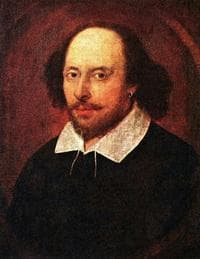
William Shakespeare was an English playwright, poet and actor. He is widely regarded as the greatest writer in the English language and the world's pre-eminent dramatist. He is often called England's national poet and the "Bard of Avon". His extant works, including collaborations, consist of some 39 plays, 154 sonnets, three long narrative poems, and a few other verses, some of uncertain authorship. His plays have been translated into every major living language and are performed more often than those of any other playwright. Shakespeare remains arguably the most influential writer in the English language, and his works continue to be studied and reinterpreted.
Similar books
- To Kill a Mockingbird
Harper Lee
4.3 (4.5M) average on GoodreadsHistorical FictionIn the 1930s Jim Crow South, Harper Lee writes about racial injustice, moral growth, and the quiet courage of a lawyer father, Atticus Finch, as seen through his young daughter's eyes.
- The Great Gatsby
F. Scott Fitzgerald
3.9 (3.8M) average on GoodreadsHistorical FictionIn the opulent Roaring Twenties, a mysterious millionaire's lavish parties hide his desperate, tragic pursuit of a lost love, exposing the emptiness within the American Dream.
- Pride and Prejudice
Jane Austen
4.3 (3M) average on GoodreadsHistorical FictionIn a society focused on status and money, Elizabeth Bennet navigates love and pride, challenging Mr. Darcy and social expectations to find true affection.
- Angels & Demons
Dan Brown
3.9 (2.7M) average on GoodreadsThrillerA Harvard symbologist races through Rome's ancient sites, deciphering cryptic clues to unmask the Illuminati and stop a vengeful plot to destroy the Vatican with a stolen antimatter weapon.
- The Kite Runner
Khaled Hosseini
4.3 (2.4M) average on GoodreadsHistorical FictionIn pre-Taliban Afghanistan, a wealthy boy's betrayal of his servant's son during a kite-running tournament starts a lifelong journey for amends as his country collapses.
- The Help
Kathryn Stockett
4.5 (2.2M) average on GoodreadsHistorical FictionIn 1960s Mississippi, an aspiring writer and two Black maids risk everything to expose the harsh realities of their lives, defying societal norms with stories that start a quiet revolution.






Enjoyed the summary?
A summary gives you the shape of the book. The book itself has the detail, the examples and the voice.
Find Henry V on AmazonAs an Amazon Associate, BookBrief earns from qualifying purchases. How we're funded