
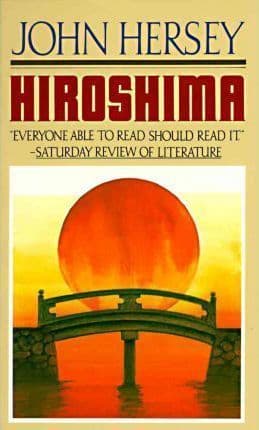
Core Idea
- Difficulty
- Medium
- Read it if
- You want a deeply personal, human-centered account of a historical catastrophe, understand the immediate and long-term impacts of nuclear warfare, or appreciate the power of empathetic journalism.
- Skip it if
- You are looking for a political analysis of the decision to drop the bomb, a military history of WWII, or prefer fiction over journalistic narrative.
Key Takeaways from Hiroshima
The Mundanity of Catastrophe
Ordinary lives were shattered in an instant, highlighting the suddenness and arbitrary nature of mass destruction.
Hersey excels at showing the atom bomb's effect through the personal, often small, moments of six ordinary people just before the explosion. This approach makes the disaster relatable and frightening. The survivors were doing everyday things—making breakfast, reading a newspaper, finding a cooler spot—when their lives changed forever. This focus on the ordinary highlights how random the bombing was; it hit civilians, not soldiers, who were caught unaware during their daily lives. The sudden shift from normal to total chaos and suffering reminds us how quickly life can change and how vulnerable ordinary people are to forces beyond their control. It challenges the impersonal view of war, making readers face the human cost.
“The Reverend Mr. Tanimoto, who was then a young man, was about to sit down to breakfast when the bomb fell. He was in his underwear.”
In the book: The initial vignettes of each survivor: Mr. Tanimoto about to push over a desk, Miss Sasaki just turning her head, Dr. Fujii relaxing on his porch, Mrs. Nakamura watching a neighbor tear down her house, Dr. Sasaki walking down a corridor, Father Kleinsorge reading a Jesuit magazine.
Try this: When considering large-scale disasters, focus on the individual stories to understand the true human impact, rather than just statistics. Empathy is cultivated through specific, personal narratives.
Related ideas: human-cost-of-war, civilian-suffering, sudden-disaster
The Unseen Enemy: Radiation Sickness
The long-term, insidious effects of radiation sickness introduced a new, terrifying dimension to warfare.
One of the most unsettling parts of Hersey's account is the appearance of 'radiation sickness,' a new medical phenomenon at the time. Unlike regular injuries, this was an unseen killer, affecting victims days or weeks after the initial blast. Symptoms—nausea, vomiting, hair loss, fever, internal bleeding, and a sharp drop in white blood cells—were confusing and scary for both victims and doctors. The medical community was unprepared, leading to wrong diagnoses and ineffective treatments. This hidden, lasting threat turned the immediate horror of the blast into prolonged agony, showing that the bomb's destructive power went far beyond its initial physical impact. It added a new ethical element to warfare, where suffering continued long after the conflict supposedly ended, creating a generation of 'hibakusha' (atomic bomb survivors) who carried the invisible scars of the weapon.
“Many of the people who were in Hiroshima when the bomb dropped suffered from a strange, new disease. It was called 'radiation sickness.'”
In the book: Dr. Sasaki's struggle to understand and treat the 'new disease,' the descriptions of patients' hair falling out in clumps, the sudden onset of fever and purpura, and the eventual understanding of lowered white blood cell counts.
Try this: When evaluating the impact of new technologies, especially those with destructive potential, consider not only immediate effects but also long-term, unforeseen consequences. Advocate for thorough research and ethical foresight.
Related ideas: radiation-sickness, unforeseen-consequences, invisible-threat
The Resilience of the Human Spirit
Amidst unimaginable devastation, survivors displayed remarkable courage, selflessness, and an instinct for mutual aid.
Despite severe injuries, psychological harm, and the complete breakdown of services, Hersey's survivors consistently show remarkable resilience and kindness. Mr. Tanimoto, though injured himself and seeing terrible things, tirelessly helps others, taking the injured to safety. Dr. Sasaki works for days without sleep or proper equipment, performing many amputations and treatments. These acts of selfless help, often by people who were themselves victims, show a basic human drive to assist others in a crisis. This is a strong counter-narrative to the idea that disaster always leads to societal collapse and everyone fending for themselves. Instead, Hersey shows how community ties, even under extreme stress, can lead to extraordinary acts of courage and mutual support, offering a bit of hope amid overwhelming despair.
“The Reverend Mr. Tanimoto found strength to go back to the river and pull out more people.”
In the book: Mr. Tanimoto's repeated trips to the river to rescue trapped people, Dr. Sasaki's relentless work in the overwhelmed hospital, and Father Kleinsorge's care for his fellow Jesuits and other injured people he encountered.
Try this: In times of crisis, look for opportunities to offer help and support to others, recognizing that collective action and compassion are powerful forces for recovery. Cultivate a spirit of community and mutual aid.
Related ideas: human-resilience, mutual-aid, compassion-in-crisis
The Indiscriminate Nature of Modern Warfare
The atom bomb blurred the lines between combatant and civilian, making everyone a potential target.
Hersey's story clearly shows how the atom bomb, by its nature, erased any difference between military and civilian targets. Hiroshima was a city full of ordinary people—schoolchildren, shopkeepers, office workers—all of whom became casualties of a single weapon. This widespread destruction marked a terrible shift in warfare, where entire populations could be wiped out, not as accidental harm, but as the main effect of a weapon. The survivors' stories emphasize this: they were not soldiers on a battlefield but civilians living their daily lives. This aspect of the bombing forces a deep ethical reevaluation, questioning the morality of weapons that inherently target and destroy non-combatants on a large scale. It highlights the terror of modern warfare, where technology can outpace ethical considerations, making every citizen a potential victim.
“The bomb had not been aimed at a military target, but at the center of a city.”
In the book: The fact that all six of Hersey's main characters were civilians, engaged in non-military activities, and their varied locations across the city, yet all were severely impacted by the single blast.
Try this: Engage in critical discussions about the ethics of modern weaponry and the protection of civilian populations in conflict zones. Support international efforts to limit the development and use of indiscriminate weapons.
Related ideas: war-ethics, civilian-protection, weapons-of-mass-destruction
The Psychological Scars Outlast Physical Wounds
Beyond immediate injuries, survivors grappled with profound trauma, guilt, and a changed world view.
While the physical wounds in Hiroshima were terrible, Hersey subtly reveals the deep psychological scars that lasted for decades. Survivors, known as 'hibakusha,' carried not only the physical marks of radiation sickness and burns but also huge emotional burdens. Many felt survivor's guilt, wondering why they lived while loved ones died. The trauma of seeing such widespread death and destruction, combined with the fear of an invisible illness, led to long-term anxiety, depression, and social exclusion. The shame linked to being a hibakusha, often due to unfounded fears of being contagious or having genetic defects, added to their suffering. This long-term psychological toll shows that the bomb's impact went far beyond the immediate blast, creating a generation forever marked by an event that fundamentally changed their sense of safety, fairness, and humanity.
“The survivors were often haunted by a terrible sense of shame or guilt for having survived when so many others had not.”
In the book: The persistent health anxieties of Miss Sasaki and Mrs. Nakamura, the social isolation faced by many hibakusha, and the later chapter detailing the long-term psychological and social challenges faced by the survivors.
Try this: Recognize that trauma, especially from large-scale disasters, has long-lasting psychological effects. Support mental health services for survivors of war and disaster, and challenge stigmas associated with such experiences.
Related ideas: survivors-guilt, post-traumatic-stress, social-stigma
The Unpreparedness of Humanity
No one, not even the medical community, was equipped to handle the unprecedented scale and nature of the atom bomb's aftermath.
Hersey carefully details the complete collapse of services and Hiroshima's total unpreparedness for a disaster of this size. Hospitals were destroyed, doctors and nurses killed or injured, and all communication lines cut. The sheer number of casualties overwhelmed any ability to help, leading to a desperate, chaotic fight for survival. The lack of knowledge about radiation sickness made the crisis worse, leaving medical professionals powerless against an unknown enemy. This shows a crucial lesson: humanity was completely unprepared for the effects of its own destructive technologies. The scale of the devastation went beyond all existing emergency plans, revealing a terrifying gap between scientific ability and society's readiness to manage its results. It is a stark reminder of how easily systems can fail under extreme pressure.
“There was no equipment, no medicine, no doctors, no nurses. Everything was gone.”
In the book: Dr. Sasaki's experience as one of the few uninjured doctors, working for days straight in a destroyed hospital with minimal supplies, and the widespread lack of knowledge about treating radiation sickness among the medical staff.
Try this: Prioritize disaster preparedness and emergency response planning, especially in an era of complex and potentially catastrophic threats. Invest in public health infrastructure and education on disaster medicine.
Related ideas: disaster-preparedness, medical-emergency, system-collapse
The Evolving Narrative of the 'Hibakusha'
The final chapter reveals the complex, lifelong journey of survivors, from initial trauma to activism and legacy.
Hersey's choice to revisit his subjects four decades later adds an important layer to the book, making it a deep look at lifelong impact and endurance. The final chapter, 'The Aftermath,' shows how the hibakusha handled the difficulties of their survival: ongoing health problems, social discrimination, and the struggle to rebuild their lives. Importantly, it shows their change from silent sufferers to strong advocates for peace and nuclear disarmament. People like Mr. Tanimoto dedicated their lives to sharing their stories and campaigning against nuclear weapons. This change highlights the moral weight of their experience and their resolve to ensure such a tragedy never happens again. It turns them from passive victims into active agents of change, giving their suffering a lasting purpose and legacy that speaks to human conscience.
“They were not merely victims, but witnesses, and eventually, some became activists.”
In the book: Mr. Tanimoto's tireless work for peace and his visits to the United States, Miss Sasaki's eventual entry into a convent and her work with orphans, and the collective efforts of hibakusha groups to share their testimonies.
Try this: Listen to and amplify the voices of survivors of conflict and injustice. Support their efforts to advocate for change and learn from their experiences to prevent future atrocities.
Related ideas: nuclear-disarmament, peace-activism, survivor-legacy
The Power of Witness: Journalism as a Moral Imperative
Hersey's meticulous, empathetic journalism provides an essential counter-narrative to official accounts of war.
John Hersey's 'Hiroshima' is an excellent example of empathetic journalism, setting a standard for how to cover human tragedy. By focusing only on the experiences of six people, Hersey avoids the abstract language of war and politics, instead putting the reader into the raw reality of suffering. His calm, almost clinical writing, without obvious emotional manipulation, makes the horror even stronger, letting the facts speak for themselves. The book acts as a vital contrast to the often-cleaned-up official stories of military wins or scientific achievements, forcing readers to face the terrible human cost. This act of witnessing makes journalism a moral duty, ensuring that victims' voices are heard and that the true impact of such events is never forgotten. It shows the power of storytelling to shape understanding and move conscience, proving that detailed human stories are more effective than statistics.
“I was not interested in what the bomb did to a city, but what it did to people.”
In the book: The entire structure of the book, focusing on the minute-by-minute experiences of individuals, and Hersey's decision to publish the entire account in a single issue of The New Yorker, creating an immersive reading experience.
Try this: Support and consume in-depth, human-centered journalism that prioritizes individual experiences over broad generalizations. Recognize the ethical responsibility of storytellers to bear witness to suffering.
Related ideas: journalistic-ethics, human-centered-reporting, bearing-witness
The Enduring Threat of Nuclear Weapons
The book serves as a timeless warning about the existential danger posed by atomic warfare.
Even decades after it was first published, 'Hiroshima' remains an urgent warning about the catastrophic potential of nuclear weapons. Hersey's detailed account of the immediate and long-term effects—instant destruction, lingering radiation sickness, psychological trauma, and societal collapse—paints a clear picture of a world pushed to the edge. The book implies that any use of such weapons, regardless of strategic reason, unleashes an uncontrolled and inhumane series of events. In a world where nuclear spread is still a threat, Hersey's work is a powerful, direct reminder that the 'unthinkable' results of atomic warfare are very real. It asks humanity to remember Hiroshima not just as a historical event, but as a constant warning, urging ongoing efforts towards disarmament and peace to prevent such devastation from happening again.
“The world was changed forever on that day, and the shadow of the bomb has never lifted.”
In the book: The vivid descriptions of the blast's effects on the human body and city, and the subsequent chapters detailing the protracted suffering and health issues faced by the survivors, underscoring the enduring nature of the damage.
Try this: Advocate for nuclear disarmament and non-proliferation treaties. Educate oneself and others on the history and consequences of nuclear weapons to foster a global commitment to peace.
Related ideas: nuclear-proliferation, arms-control, global-peace
The Unspeakable Horror of the 'Pika-Don'
The sensory experience of the bomb – the flash, the sound, the heat, the pressure – was beyond human comprehension.
Hersey captures the terrifying, almost unreal sensory experience of the atomic bomb, known in Japan as 'Pika-Don' (flash-boom). Survivors consistently describe an unimaginable flash of light, brighter than a thousand suns, followed by an immense, silent pressure wave rather than a normal sound. This initial, overwhelming attack on the senses was combined with intense heat that instantly vaporized some and burned the skin of others, leaving permanent 'shadows' where bodies had been. The later roar and debris created an apocalyptic scene. This 'Pika-Don' was not just a powerful explosion; it was an event that defied human perception and language, fundamentally changing how survivors experienced reality. Hersey's precise yet vivid descriptions convey the weapon's sheer, incomprehensible power, emphasizing that it was an experience unlike any other form of warfare, leaving a lasting mark on the shared memory of those who lived through it.
“There was a tremendous flash of light, and a noise that was not a noise, but a pressure.”
In the book: The consistent descriptions from multiple survivors of the blinding flash, the 'soundless' pressure wave, the instantaneous heat, and the subsequent chaos of collapsing buildings and fires.
Try this: When studying historical events, prioritize understanding the sensory and lived experiences of those involved, as these details often convey the deepest truths beyond factual accounts. Cultivate empathy through vivid description.
Related ideas: sensory-experience, atomic-bomb-effects, apocalyptic-event
Hiroshima Quotes
“The Reverend Mr. Tanimoto got up at five o'clock in the morning, August 6, 1945, and went out to see that his house was in order.”
“There, in the tin factory, in the first moment of the atomic age, a human being was crushed by books.”
“A nurse, at the Red Cross Hospital, saw a whole troop of soldiers that she had seen a few minutes before, marching in perfect formation, come back with their faces all burnt and their eyeballs melted.”
“Many who were in the park, or near the river, were spared the blast, but not the fire.”
“The people of Hiroshima had been through a good many air-raid alerts, but they had never been bombed.”
“It seems an odd thing to say, but I could not work for a month after the explosion because of the heat.”
“The feeling of a man who is not a physicist, but a citizen, is that he has been given a great new power over nature, but he has been given no new wisdom about its use.”
“Their faces were wholly burned, their eye-sockets were hollow, the fluid from their melted eyes had run down their cheeks.”
“He was, he said, like a man who had been told to go to an unfamiliar house, in the dark, and found himself in a room full of strangers.”
“The world was not prepared for the idea of a whole city suffering from radiation sickness.”
“He was a man who had been through the war, but he had never seen anything like this.”
“The crux of the matter is that the bomb killed and wounded, by first intention, a great many civilians.”
“It was as if the city had been wiped clean with a giant eraser.”
“The only thing they could do was to put a piece of gauze over their mouths and noses and try to breathe as little as possible.”
Quiz
10 questions on the main ideas. Each answer comes with a short explanation.
Question 1
Which of the following characters was a German Jesuit priest living in Hiroshima at the time of the bombing?
- Dr. Masakazu Fujii
- Father Wilhelm Kleinsorge
- Toshiko Sasaki
- Dr. Terufumi Sasaki
Show answer
B. Father Wilhelm Kleinsorge Father Wilhelm Kleinsorge was a German Jesuit priest stationed in Hiroshima, making him a unique foreign perspective among the survivors Hersey profiled.
Question 2
What was the immediate effect of the atomic bomb on Miss Toshiko Sasaki, a clerk at the East Asia Tin Works?
- She was killed instantly by falling debris.
- She was trapped under a collapsed bookcase and severely injured her leg.
- She was blown into a river but managed to swim to safety.
- She suffered only minor cuts and bruises but was deeply traumatized.
Show answer
B. She was trapped under a collapsed bookcase and severely injured her leg. Miss Sasaki was pinned under a collapsing bookcase in her office, leading to a severely fractured and later amputated leg.
Question 3
What was the initial reaction of Dr. Terufumi Sasaki, a young surgeon at the Red Cross Hospital, immediately after the bomb fell?
- He fainted from shock and injury.
- He began treating patients despite his own injuries and the chaos.
- He searched for his family members.
Show answer
B. He began treating patients despite his own injuries and the chaos. Despite the complete devastation and his own minor injuries, Dr. Sasaki immediately began tending to the overwhelming number of wounded at the Red Cross Hospital.
Question 4
How did Reverend Kiyoshi Tanimoto manage to survive the initial blast and its immediate aftermath?
- He was in a heavily reinforced bunker.
- He was shielded by two heavy concrete pillars on a porch.
- He was swimming in a river at the time.
- He was outside the city limits for a meeting.
Show answer
B. He was shielded by two heavy concrete pillars on a porch. Reverend Tanimoto was on the porch of a house and threw himself between two large concrete pillars, which protected him from the blast.
Question 5
What specific type of illness did many survivors, including Father Kleinsorge, begin to suffer from days and weeks after the bombing?
- Typhoid fever
- Dysentery
- Radiation sickness (atomic bomb sickness)
- Severe allergic reactions
Show answer
C. Radiation sickness (atomic bomb sickness) Many survivors developed 'atomic bomb sickness,' characterized by symptoms like nausea, fever, hair loss, and purpura, which Hersey describes as the effects of radiation.
Question 6
What was the common, immediate physical sensation reported by survivors who were outdoors at the moment of the blast?
- A sudden, intense cold
- A tremendous flash of light followed by a wave of heat
- A deafening silence before the explosion
- A strong earthquake-like tremor
Show answer
B. A tremendous flash of light followed by a wave of heat Many survivors described seeing a blinding flash of light, 'like a sheet of sun,' immediately followed by an intense wave of heat.
Question 7
In the final chapter, 'The Aftermath,' what became of Dr. Masakazu Fujii, the physician whose private hospital was destroyed?
- He rebuilt his hospital and continued his practice successfully.
- He became a prominent political figure in post-war Hiroshima.
- He suffered a stroke that left him partially paralyzed and later drowned accidentally.
- He emigrated to the United States to start a new life.
Show answer
C. He suffered a stroke that left him partially paralyzed and later drowned accidentally. Dr. Fujii suffered a stroke that incapacitated him and later tragically drowned when his wheelchair overturned near a river.
Question 8
How did Hersey's decision to focus on six individual survivors contribute to the book's overall impact and message?
- It provided a broad statistical analysis of the bomb's effects.
- It allowed for a detached, objective historical account.
- It humanized the devastation, making the abstract horror tangible and personal.
- It primarily served to highlight the political implications of the bombing.
Show answer
C. It humanized the devastation, making the abstract horror tangible and personal. By focusing on the intimate experiences of a few individuals, Hersey brought the immense and abstract tragedy of the atomic bombing down to a human scale, making it relatable and profoundly moving.
Question 9
What significant ethical dilemma did the doctors, like Dr. Terufumi Sasaki, face in the immediate aftermath of the bombing?
- Whether to prioritize Japanese or foreign casualties.
- How to treat an unprecedented number of severely burned and injured patients with virtually no supplies or staff.
- Deciding whether to flee the city or stay and help.
- The moral implications of using atomic weapons in warfare.
Show answer
B. How to treat an unprecedented number of severely burned and injured patients with virtually no supplies or staff. Doctors faced the impossible task of treating thousands of horribly injured people with almost no medical resources, equipment, or even clean water, forcing them to make agonizing choices about who could potentially be saved.
Question 10
The book 'Hiroshima' is often described as a pioneering work of 'New Journalism.' What aspect of Hersey's writing style supports this classification?
- Its strict adherence to traditional objective reporting without personal voice.
- The use of fictionalized dialogue and composite characters for dramatic effect.
- Its immersive, narrative storytelling that uses literary techniques to convey factual events and personal experiences.
- Its focus solely on statistical data and governmental reports.
Show answer
C. Its immersive, narrative storytelling that uses literary techniques to convey factual events and personal experiences. Hersey's 'Hiroshima' uses novelistic techniques – detailed character development, vivid imagery, and a chronological narrative – to present a factual, journalistic account, a hallmark of New Journalism.
Hiroshima FAQ
What is 'Hiroshima' by John Hersey about?
'Hiroshima' by John Hersey is a journalistic account of the immediate aftermath of the atomic bombing of Hiroshima on August 6, 1945. It tells the stories of six survivors and their experiences during and after the explosion, offering a deeply human perspective on the catastrophe.
Does 'Hiroshima' cover the political or military reasons for the bombing?
No, 'Hiroshima' primarily focuses on the personal experiences and immediate impact of the bombing on its victims. It deliberately avoids delving into the political, military, or strategic justifications for the use of the atomic bomb, concentrating instead on the human cost.
What is the significance of the 'new final chapter' in later editions of 'Hiroshima'?
The new final chapter, added nearly four decades after the original publication, details John Hersey's return to Hiroshima and his reunion with the survivors whose stories he initially told. It provides an update on their lives, showing the long-term effects and enduring resilience of the individuals.
How does Hersey's journalistic style in 'Hiroshima' differ from typical historical accounts?
Hersey's style is characterized by its stark, detached, and factual reporting, almost like a clinical observation, yet it achieves profound emotional impact through the accumulation of precise details from the survivors' perspectives. Unlike broader historical analyses, it narrows its focus to individual experiences.
What is 'radiation sickness' as described in 'Hiroshima'?
Radiation sickness, as depicted in 'Hiroshima,' refers to the array of severe and often fatal symptoms experienced by survivors exposed to the atomic bomb's invisible radiation. These symptoms included nausea, hair loss, fever, internal bleeding, and a drastic drop in white blood cell count, often appearing days or weeks after the initial blast.
Is 'Hiroshima' a fictionalized account or based entirely on facts?
'Hiroshima' is a work of non-fiction, based entirely on John Hersey's meticulous interviews with survivors and extensive research. While it reads like a narrative, every detail and event described is factual and reported with journalistic integrity.
How does 'Hiroshima' portray the Japanese people during wartime?
The book portrays the Japanese people not as an enemy nation, but as individual human beings caught in an unprecedented disaster. It focuses on their resilience, suffering, and immediate efforts to help each other, stripping away nationalistic labels to reveal universal human experiences.
What impact did 'Hiroshima' have on its initial publication?
'Hiroshima' had an immense and immediate impact upon its initial publication in The New Yorker in 1946, selling out issues and being widely reprinted. It brought the human reality of the atomic bomb's devastation to a global audience, profoundly shaping public perception of nuclear warfare.
About the author
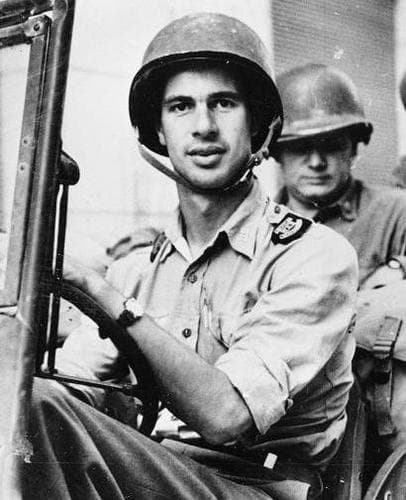
John Hersey was an American author and journalist known for his works of non-fiction. His most notable book, "Hiroshima," provides a detailed account of the experiences of survivors of the atomic bombing in 1945. Hersey's writing is characterized by its journalistic rigor and humanistic approach to historical events.
Similar books
- The Diary of a Young Girl
Anne Frank
4.2 (2.7M) average on GoodreadsBiographyDuring the Nazi occupation, a teenage girl's diary, written from a secret annex, shares observations on humanity, hope, and the wait for freedom.
- Night
Elie Wiesel
4.3 (970k) average on GoodreadsBiographyIn the darkness of Auschwitz and Buchenwald, a teenage Elie Wiesel faces the extermination of his family, the loss of his faith, and the lasting scars of humanity's deepest cruelty.
- Steve Jobs
Walter Isaacson
4.1 (957k) average on GoodreadsBusinessSteve Jobs was a visionary who fused creativity and technology to revolutionize six industries and shape our digital world.
- Unbroken: A World War II Story of Survival, Resilience and Redemption
Laura Hillenbrand
4.4 (767k) average on GoodreadsBiographyLouis Zamperini's incredible World War II odyssey transforms him from a rebellious youth and Olympic runner into a survivor of a plane crash, shark-infested waters, and brutal Japanese POW camps, only to find redemption through forgiveness.
- The Immortal Life of Henrietta Lacks
Rebecca Skloot
4.1 (587k) average on GoodreadsBiographyA poor Southern tobacco farmer's unwitting contribution of 'immortal' cells starts a journey through scientific breakthroughs, medical ethics, and her family's decades-long fight for recognition and understanding.
- Angela's Ashes
Frank McCourt
4.1 (540k) average on GoodreadsBiographyIn Depression-era Limerick, young Frank McCourt navigates an impoverished Irish Catholic childhood, sustained by his father's captivating stories and his own spirit, turning hardship into a tale of resilience, humor, and ultimate forgiveness.






Enjoyed the summary?
A summary gives you the shape of the book. The book itself has the detail, the examples and the voice.
Find Hiroshima on AmazonAs an Amazon Associate, BookBrief earns from qualifying purchases. How we're funded