
Core Idea
- Difficulty
- Hard
- Read it if
- You are a serious student of political philosophy, critical theory, or legal theory interested in challenging conventional understandings of sovereignty, law, and the state, and are prepared for dense, interdisciplinary analysis.
- Skip it if
- You are looking for an introduction to political science, a light read, or a practical guide; this book assumes significant prior philosophical knowledge and is highly abstract.
Key Takeaways from Homo Sacer
Sovereignty's Biopolitical Core
Western political power has always been fundamentally about controlling 'bare life'.
Agamben reinterprets Western political thought, arguing that power and 'life' have been linked from the start, not a modern idea as Foucault suggested. He claims the sovereign's power is not just about law and order, but about the ability to decide over life itself—specifically, 'bare life.' This ability, often hidden, is the basic 'biopolitical' element behind all political structures. The 'political' in the Western tradition is thus tied to this power over biological existence, making society a place where life is always exposed to power.
“The original political relation is the ban.”
In the book: Agamben traces this through Aristotle's definition of man as a 'political animal' (zoon politikon), arguing that the 'life' being spoken of is not merely social, but a life that can be included in the political only by being simultaneously excluded, creating a zone of indistinction.
Try this: When analyzing political decisions, look beyond stated intentions (e.g., 'public safety') to uncover how they implicitly or explicitly regulate, manage, or expose the biological existence of populations or individuals. Question whose 'life' is being prioritized and whose is being rendered 'killable'.
Related ideas: biopolitics, bare-life, sovereignty
Homo Sacer: The Killable, Unsacrificable
The ancient figure of Homo Sacer reveals the hidden core of sovereign power.
Agamben revives the Roman legal figure of the 'Homo Sacer'—a person who could be killed by anyone without it being murder, yet could not be sacrificed. This contradictory status, he argues, is not an old oddity but a basic model for understanding sovereign power. The Homo Sacer exists in a state of complete exposure, without legal or divine protection, yet also outside ritual violence. This figure represents 'bare life'—life reduced to its biological minimum, excluded from both human and divine law, and thus killable. This zone of exception, where life is exposed to unlimited power, is central to sovereignty.
“Homo sacer is the one who may be killed but not sacrificed.”
In the book: The legal concept of 'homo sacer' from ancient Roman law, where such a person was 'sacred' in a negative sense – set apart, cursed, and exposed to death without legal consequence.
Try this: Identify contemporary individuals or groups whose lives, while not explicitly illegal to end, exist in a state of diminished legal protection or public indifference, making them effectively 'killable' without consequence (e.g., certain refugee populations, prisoners in extreme conditions, or those deemed 'enemy combatants' outside legal frameworks).
Related ideas: homo-sacer, sacred, exception
The State of Exception as Paradigm
The sovereign's ability to suspend law is the true essence of political power.
Drawing on Carl Schmitt, Agamben states that the 'state of exception'—the suspension of normal law during a crisis—is not unusual but the main model of political rule. The sovereign's power is not mainly about making or enforcing laws, but about deciding when to suspend them. This suspension creates a 'zone of indistinction' where law no longer applies, but sovereign power is most apparent. In this zone, 'bare life' directly faces power, losing its legal protections. This constant possibility of exception means that law itself always contains its own potential suspension, making the state of exception an inherent part of the legal order.
“The sovereign is he who decides on the state of exception.”
In the book: Agamben's analysis of Carl Schmitt's concept of sovereignty and the state of exception, particularly in emergency declarations, martial law, or indefinite detentions where normal legal rights are suspended.
Try this: Be highly suspicious of any government or authority that invokes a 'state of emergency' or 'crisis' to justify the suspension of rights or laws. Recognize that such actions are not temporary deviations but reveal the fundamental nature of sovereign power and its potential for abuse.
Related ideas: state-of-exception, sovereignty, schmitt
Life Included Through Exclusion
Political inclusion often operates by first designating a life as outside the law.
Agamben's idea of 'inclusive exclusion' is key: something enters the political order by being placed outside it, in a zone exposed to unlimited power. This is the 'ban'—simultaneously excluded from the community and left to the sovereign's arbitrary will. The life of Homo Sacer is 'included' in the political order as bare life, as something that can be killed without legal consequence. This shows that political life is not just about rights and participation, but about first designating a 'non-political' life that can be acted upon without legal limits. The political space is formed by this basic exclusion, which paradoxically makes something available to power.
“The original political relation is the ban.”
In the book: The figure of the 'wolf-man' (wargus) in Germanic law, who was both excluded from the community and subject to being killed by anyone, embodying the 'ban' and inclusive exclusion.
Try this: Examine how certain populations (e.g., migrants, undocumented workers, prisoners) are 'included' in the social fabric (e.g., as labor, as statistics) only through their exclusion from full legal rights and protections, leaving them vulnerable to exploitation and violence.
Related ideas: inclusive-exclusion, ban, bare-life
The Camp as Biopolitical Paradigm
The concentration camp is the hidden nomos of modernity.
For Agamben, the concentration camp is not a strange historical event but the ultimate example of modern biopolitics. It is where the state of exception becomes permanent, law is suspended, and individuals are reduced to 'bare life,' completely exposed to the sovereign's power without legal help. In the camp, the differences between fact and law, inside and outside, political and non-political, disappear. This makes the camp a 'nomos' (law/order) of modernity, showing the true nature of political space where human life is always potentially just a biological existence subject to total management and control. The camp is not just a place, but a framework for understanding modern power.
“The camp is the space that opens when the state of exception starts to become the rule.”
In the book: Agamben's extensive analysis of the Nazi concentration camps and their operational logic, arguing they represent a 'pure biopolitical space' where all rights are suspended and life is reduced to its biological minimum.
Try this: Recognize that the logic of the camp can manifest in various forms, not just physical enclosures. Consider detention centers, refugee camps, or even urban zones under constant surveillance and policing as sites where individuals are managed as 'bare life' outside normal legal protections.
Related ideas: concentration-camp, nomos, biopolitics
The Decentered Subject of Biopolitics
Modern power targets not the citizen, but life itself, making the subject a site of control.
Agamben argues that modern power works not mainly through traditional legal rules or ideological manipulation, but through the direct management of biological life. This change, which he calls 'biopolitics,' means that the focus of politics is no longer the citizen or the individual with rights, but 'life' itself—its health, reproduction, well-being, and death. Power affects and shapes life at its most personal level, making the individual's body and existence a site of political management. This shift means that even seemingly good policies (e.g., public health, welfare) can be seen as forms of biopolitical control, blurring the lines between care and control.
“The ultimate political problem of our time is that of the bare life itself.”
In the book: Modern state practices like public health campaigns, population control policies, and even the medicalization of birth and death, which manage life not just individually but at a population level.
Try this: Critically analyze policies related to public health, security, and social welfare, questioning how they might be subtly managing populations as 'bare life' rather than empowering individuals or ensuring genuine freedom. Consider the data collected on individuals and how it enables biopolitical control.
Related ideas: biopolitics, subjectivity, management
The Obscurity of the Sacred
The 'sacred' is not divine reverence, but a primal separation and exposure to violence.
Agamben redefines the 'sacred' not as something revered or holy, but as something 'set apart' and exposed to violence. Drawing on anthropology and ancient law, he argues that the sacred is linked to the 'ban'—an exclusion that makes a person or thing killable but unsacrificable. This ancient understanding of the sacred helps explain Homo Sacer and how sovereignty works. The sacred is the zone where human and divine law meet and dissolve, leaving 'bare life' exposed. This reinterpretation challenges common ideas of the sacred and shows its darker, more violent origins in the formation of political power.
“The sacred is the originary structure of the exclusion and exposure of life.”
In the book: Anthropological research on taboo and the etymology of 'sacer' (meaning both 'holy' and 'accursed') to demonstrate the inherent ambiguity and violent potential within the concept of the sacred.
Try this: When encountering concepts of 'sacred' or 'inviolable' life (e.g., 'sanctity of life'), question whether this designation might paradoxically create a zone of exclusion and exposure for certain lives, rather than universal protection. Look for the hidden violence in what is declared 'sacred'.
Related ideas: sacred, taboo, ban
Beyond the Political Animal
A true politics must move beyond the classical definition of human as zoon politikon.
Agamben critiques the basic Aristotelian definition of man as a 'political animal' (zoon politikon), arguing that this definition already contains the potential for biopolitics. For Agamben, including 'life' in the 'polis' through this definition also creates the possibility of its exclusion as 'bare life.' A truly liberating politics, therefore, cannot just repeat this classical understanding. It must instead challenge the structure that allows human existence to be reduced to 'bare life.' This means thinking beyond traditional ideas of sovereignty, law, and the state, and imagining a form of life not constantly exposed to sovereign power.
“Man is a political animal because he is capable of language and has a sense of good and evil.”
In the book: Agamben's re-reading of Aristotle's 'Politics,' particularly the distinction between 'zoe' (biological life) and 'bios' (qualified life), and how the political animal is always already implicated in the relationship with bare life.
Try this: When envisioning alternative political forms or movements, resist the urge to simply re-establish rights within existing frameworks. Instead, question how to create a form of community and life that fundamentally disarms the power of sovereignty to reduce individuals to 'bare life' in the first place.
Related ideas: zoon-politikon, zoe, bios, emancipation
The Abandonment of Law
The sovereign's power is not just to make law, but to abandon life to lawlessness.
Sovereignty, in Agamben's view, is not just about making and enforcing laws, but about the power to abandon certain lives to a zone outside the law, where they are still subject to sovereign power. This abandonment is the 'ban'—simultaneously excluded from community protection and exposed to unlimited violence. The Homo Sacer is the main example of this abandonment. This shows a truth: the sovereign's power is not limited by law, but defines law's limits by deciding who falls outside its protection. This abandonment is not a failure of law, but a function of sovereignty, making certain lives available for any act of power.
“The sovereign is essentially the one who abandons.”
In the book: The legal implications of 'outlawry' in medieval European law, where an individual was literally 'outside the law' and could be killed with impunity, yet still within the sovereign's ultimate domain of power.
Try this: Identify situations where individuals or groups are effectively 'abandoned' by the legal system, even if not explicitly outlawed. This could include victims of systemic injustice, those denied due process, or populations whose suffering is ignored by the state, rendering their lives exposed.
Related ideas: abandonment, ban, sovereignty, lawlessness
Homo Sacer Quotes
“The original political relation is the ban.”
“The sovereign is the one to whom all things are possible.”
“Bare life is not a natural life, but a political life.”
“The camp is the nomos of the modern age.”
“What is at stake in the concept of bare life is the very decision concerning the boundary between nature and culture.”
“The state of exception is not the exception but the rule.”
“Homo sacer is the figure of a life that may be killed but not sacrificed.”
“Modern biopolitics is the attempt to naturalize life in the polis.”
“The juridical order takes form as the permanent possibility of deciding on the undecidable.”
“The ultimate ground of political power is the production of a bare life.”
“Every political community is founded on the exclusion of a bare life.”
“To be outside the law does not mean to be outside the juridical order.”
“The sovereign ban is the fundamental structure of the political.”
“The space of exception is in truth the normal place for sovereignty.”
Quiz
10 questions on the main ideas. Each answer comes with a short explanation.
Question 1
Which ancient philosopher's notion of 'man as a political animal' does Agamben identify as implicitly containing an idea of biopolitics?
- Plato
- Socrates
- Aristotle
- Epicurus
Show answer
C. Aristotle Agamben explicitly states that he traces the implicit presence of biopolitics from the earliest treatises of political theory, 'notably in Aristotle's notion of man as a political animal.'
Question 2
Agamben defines the 'sacred person' as one who can be killed and yet not what?
- Avenged
- Mourned
- Sacrificed
- Remembered
Show answer
C. Sacrificed The text states, 'Agamben defines the sacred person as one who can be killed and yet not sacrificed—a paradox he sees as operative in the status of the modern individual.'
Question 3
From which modern philosopher does Agamben take his cue for analyzing biopolitics?
- Michel Foucault
- Jacques Derrida
- Hannah Arendt
- Jürgen Habermas
Show answer
A. Michel Foucault The passage explicitly states, 'Taking his cue from Foucault's fragmentary analysis of biopolitics, Agamben probes with great breadth, intensity, and acuteness the covert or implicit presence of an idea of biopolitics.'
Question 4
According to Agamben, why has the notion of sovereignty as power over 'life' remained merely implicit throughout much of Western political thought?
- It was considered too trivial to be explicitly stated.
- Political theorists deliberately suppressed this connection.
- It is tied to the indissociability of the sacred from the idea of sovereignty.
- Ancient languages lacked the terminology to express it.
Show answer
C. It is tied to the indissociability of the sacred from the idea of sovereignty. The text states, 'The reason it remains merely implicit has to do, according to Agamben, with the way the sacred, or the idea of sacrality, becomes indissociable from the idea of sovereignty.'
Question 5
What is the core problem Agamben aims to connect with political and social ethics in Homo Sacer?
- The decline of religious faith in modern society.
- The problem of pure possibility, potentiality, and power.
- The historical evolution of democratic institutions.
- The impact of technology on individual freedom.
Show answer
B. The problem of pure possibility, potentiality, and power. The introduction states, 'In Homo Sacer, Agamben aims to connect the problem of pure possibility, potentiality, and power with the problem of political and social ethics.'
Question 6
Agamben draws upon Carl Schmitt's idea of the sovereign's status as what?
- The ultimate legislator.
- The embodiment of popular will.
- The exception to the rules he safeguards.
- The guarantor of natural rights.
Show answer
C. The exception to the rules he safeguards. The passage notes, 'Drawing upon Carl Schmitt's idea of the sovereign's status as the exception to the rules he safeguards.'
Question 7
How does Agamben characterize the 'naked life' of individuals in the modern system?
- It is fully protected by constitutional rights.
- It is a private sphere free from state intervention.
- It is subject to a system that exerts control over the collective 'naked life' of all individuals.
- It represents a return to a pre-political state of nature.
Show answer
C. It is subject to a system that exerts control over the collective 'naked life' of all individuals. Agamben sees the paradox of the sacred person as 'operative in the status of the modern individual living in a system that exerts control over the collective 'naked life' of all individuals.'
Question 8
Agamben's work is described as drawing upon an uncommon erudition from several traditions. Which of the following is NOT listed as one of his areas of erudition?
- Classical traditions of philosophy and rhetoric
- East Asian spiritual texts
- Grammarians of late antiquity
- Christian theology
Show answer
B. East Asian spiritual texts The text lists 'classical traditions of philosophy and rhetoric, the grammarians of late antiquity, Christian theology, and modern philosophy' as his areas of erudition, but not 'East Asian spiritual texts.'
Question 9
The paradox of the 'sacred person' is presented by Agamben as being operative in the status of whom?
- Ancient kings and emperors.
- Religious figures and prophets.
- The modern individual.
- Criminals and outcasts.
Show answer
C. The modern individual. Agamben explicitly states that the paradox of the sacred person is 'operative in the status of the modern individual living in a system that exerts control over the collective 'naked life' of all individuals.'
Question 10
Agamben argues that the idea of sovereignty as power over 'life' is implicit throughout Western thinking about sovereignty, whether of the king or what other entity?
- The Church
- The military
- The state
- The people
Show answer
C. The state The text explains that this notion is implicit 'throughout the history of Western thinking about sovereignty (whether of the king or the state)'.
Homo Sacer FAQ
What is the main argument of Giorgio Agamben's Homo Sacer?
Agamben argues that Western political theory, from Aristotle to modern times, implicitly bases sovereignty on power over 'life' (biopolitics). He connects this to the concept of the 'sacred' and the 'exception,' defining the 'Homo Sacer' as a person who can be killed but not sacrificed, representing the individual's precarious status under modern sovereign power.
What is 'naked life' (bare life) in the context of Homo Sacer?
'Naked life' refers to human biological existence stripped of all political rights, social status, and juridical form. It is the life that can be killed with impunity, existing solely as an object of sovereign power, and is central to Agamben's analysis of biopolitics.
How does Agamben's concept of biopolitics differ from Foucault's?
While Agamben takes inspiration from Foucault's analysis of biopolitics, he extends it by arguing that biopolitics is not a modern invention but an inherent, though often implicit, aspect of Western political thought from its very beginnings. He emphasizes the sovereign's power over 'naked life' as a foundational element, rather than just a technique of governance.
Does Homo Sacer offer solutions or practical advice for individuals?
Homo Sacer is primarily a work of critical philosophical analysis, aiming to expose and diagnose the historical and conceptual underpinnings of modern political power and the individual's place within it. It does not offer direct practical advice or prescriptive solutions, but rather provides a framework for understanding contemporary ethico-political issues.
What is the significance of the 'exception' in Agamben's theory?
The 'exception' (or state of exception) is crucial for Agamben, drawing on Carl Schmitt. It is the moment when the sovereign suspends the law to preserve the legal order, thereby revealing the sovereign's ultimate power to decide over life and death, and to place individuals outside the protective framework of law.
How does Agamben connect the sacred and sovereignty?
Agamben argues that the sacred, particularly in its archaic sense of being simultaneously venerable and accursed, becomes intertwined with sovereignty. The Homo Sacer, being sacred, is someone who can be killed without being guilty of sacrilege, reflecting the sovereign's power to exclude and dispose of life without being subject to the law.
Is Homo Sacer a critique of modern democracy?
Agamben's work critiques the underlying structures of modern political systems, including democracies, by showing how they continue to operate through mechanisms of biopolitics and the state of exception. He suggests that even in liberal democracies, the potential for sovereign power over 'naked life' remains a latent threat.
What is the historical basis for the concept of 'Homo Sacer'?
Agamben draws on Roman law, specifically the figure of 'homo sacer' who could be killed by anyone without incurring homicide charges, yet could not be sacrificed in a religious ritual. He uses this archaic legal figure as a paradigm for understanding the status of individuals under modern biopolitical power.
How does Homo Sacer influence contemporary political philosophy?
Homo Sacer has profoundly influenced contemporary political philosophy, critical theory, and legal studies by introducing key concepts like 'naked life,' 'biopolitics,' and the 'state of exception.' It provides a powerful analytical lens for examining issues of sovereignty, human rights, refugee status, and the exercise of power in modern society.
About the author
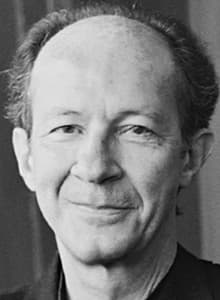
Giorgio Agamben is an Italian philosopher known for his work in political philosophy and aesthetics. His notable book, Homo Sacer, explores the relationship between sovereignty and life, contributing to discussions on biopolitics and the state of exception. Agamben's writings often engage with themes of law, power, and human rights.
Similar books
- Brave New World
Aldous Huxley
4.0 (1.4M) average on GoodreadsFantasyIn a future where happiness comes from chemicals and individuality is gone, one man's desire for real experience threatens the calm, controlled society.
- Life of Pi
Yann Martel
3.9 (1.3M) average on GoodreadsFantasyStranded in the vast Pacific, a young Indian boy forms an unlikely bond with a Bengal tiger, questioning belief and survival.
- The Picture of Dorian Gray
Oscar Wilde
4.1 (966k) average on GoodreadsFantasyA beautiful young man's soul decays within a cursed portrait, mirroring the grotesque cost of his hedonistic pursuit of eternal youth and illicit pleasure.
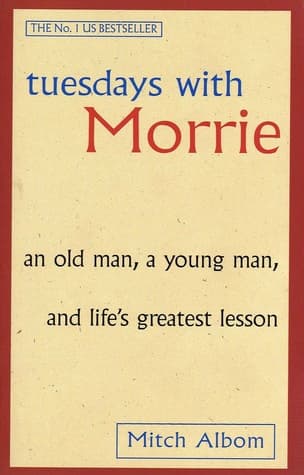
- Tuesdays with Morrie
Mitch Albom
4.1 (782k) average on GoodreadsBiographyA dying professor's weekly lessons from his bedside change a former student, giving him ideas on life, love, and letting go.
- The Tipping Point: How Little Things Can Make a Big Difference
Malcolm Gladwell
4.0 (690k) average on GoodreadsBusinessMalcolm Gladwell explains how small, targeted actions can start widespread changes in trends, behaviors, and ideas.
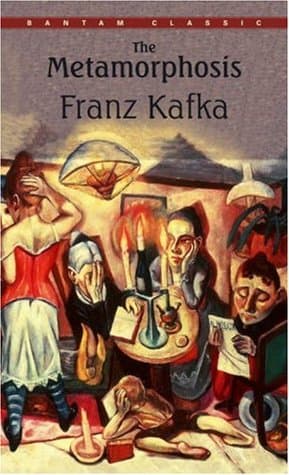
- The Metamorphosis
Franz Kafka
3.8 (643k) average on GoodreadsFantasyAwakening as a monstrous insect, Gregor Samsa struggles with family disappointment and his own growing isolation, not with the horror of his new form.




Enjoyed the summary?
A summary gives you the shape of the book. The book itself has the detail, the examples and the voice.
Find Homo Sacer on AmazonAs an Amazon Associate, BookBrief earns from qualifying purchases. How we're funded