

Synopsis
Covers the whole plot, including the ending.
- Difficulty
- Easy
- Pacing
- Moderate
- Mood
- Heartwarming, Hopeful, Inspiring, Charming
- Read it if
- You enjoy heartwarming stories about community, resilience, and finding your place, with a strong, capable young female protagonist.
- Skip it if
- You prefer complex narratives with morally ambiguous characters or dark, gritty themes.
Hope Was Here Plot Summary
Covers the whole plot, including the ending.
Moving to Mulhoney
Sixteen-year-old Hope Yancey and her Aunt Addie, a professional short-order cook, arrive in Mulhoney, Wisconsin. They've moved from Brooklyn after Addie was offered a job managing the Welcome Stairways diner, owned by G.T. Stoop. Hope, accustomed to frequent moves and temporary homes due to Addie's job, tries to maintain her usual detached optimism, but the small town feels different. Upon their arrival, they find the diner in disarray and meet G.T., who is recovering from a serious illness. He immediately impresses Hope with his quiet strength and integrity, and she quickly begins to adapt to the rhythm of the diner, taking on waitressing duties and observing the local regulars.
G.T.'s Mayoral Announcement
As Hope and Addie settle into their new lives at the Welcome Stairways, G.T. Stoop reveals a surprising decision: he's going to run for mayor of Mulhoney. This comes as a shock to the town, especially since G.T. is still recovering from leukemia and faces a formidable opponent in the entrenched and notoriously corrupt incumbent, Mayor Eli Millstone. Millstone, who controls much of the town's businesses and politics, represents everything G.T. stands against. G.T.'s announcement ignites a spark of hope in the community, and Hope, initially just an employee, finds herself drawn into the campaign, becoming an integral part of G.T.'s small but dedicated team.
First Campaign Steps and Diner Life
Hope quickly integrates into the daily life of the Welcome Stairways diner, learning waitressing and dealing with the diverse clientele. She meets Flo, the no-nonsense dishwasher, and takes notes on the regulars, including the gruff but kind Deputy Boyle. At the same time, she begins assisting G.T. with his mayoral campaign, helping with simple tasks like sorting mail and organizing. She observes G.T.'s genuine connection with people and his unwavering commitment to honesty, which stands in contrast to the underhanded tactics employed by Mayor Millstone's camp. Hope starts to feel a sense of belonging, a feeling she hasn't experienced often due to her transient past.
Millstone's Dirty Tricks
As G.T.'s campaign gains momentum, Mayor Millstone's office escalates its efforts to discredit him. Anonymous flyers with false accusations about G.T.'s health and business dealings start appearing around town. Millstone's cronies attempt to intimidate G.T.'s supporters and spread rumors. Hope witnesses the ugliness of political corruption but also sees G.T.'s calm resolve in the face of these attacks. He refuses to engage in mudslinging, choosing instead to focus on his positive vision for Mulhoney. This ethical stance further solidifies Hope's admiration for G.T. and strengthens her commitment to his cause, despite the increasing pressure.
The Importance of Truth
Hope, with her sharp observational skills and knack for language, helps G.T. articulate his message. She assists him in writing speeches and crafting responses to Millstone's attacks, always ensuring that G.T.'s core values of honesty and community improvement shine through. Hope learns the power of words and how to use them effectively to counter misinformation. G.T. encourages her to find her own voice and to believe in the power of truth, a lesson that resonates deeply with Hope, who has often felt voiceless in her own life. Their collaboration strengthens their bond and the campaign's ethical foundation.
Personal Revelations and Support
Amidst the campaign chaos, Hope begins to open up to Aunt Addie about her long-held resentment towards her absent mother, whom she hasn't seen in years. This emotional vulnerability is a significant step for Hope, who typically keeps her feelings guarded. Addie, in turn, offers her unwavering love and practical wisdom. The diner staff and G.T. also become a surrogate family for Hope, providing a stable and supportive environment she's rarely experienced. Deputy Boyle, in particular, offers quiet encouragement and a sense of protective concern, making Hope feel truly seen and valued in Mulhoney.
The Town Hall Debate
A crucial moment in the campaign arrives with the town hall debate between G.T. Stoop and Mayor Millstone. The event draws a large crowd, eager to see the two candidates confront each other. Millstone, confident and theatrical, attempts to belittle G.T. and dismiss his proposals. However, G.T., despite his physical frailty, delivers a powerful and heartfelt speech, articulating his vision for a better Mulhoney with simple honesty and conviction. Hope, watching from the audience, is deeply moved by G.T.'s integrity and the positive reaction from many townspeople. The debate clearly shows the stark contrast between the two men.
A Setback and Renewed Hope
Just as the election approaches and G.T.'s campaign gains significant traction, he suffers a health setback, requiring him to be hospitalized. This news sends a wave of concern through Mulhoney and threatens to derail the campaign. However, G.T.'s illness galvanizes the community. The diner becomes a hub of activity as volunteers step up to continue the campaign, demonstrating their loyalty and belief in G.T.'s vision. Hope, Addie, and the rest of the diner family work tirelessly, inspired by G.T.'s enduring spirit. They prove that the hope he represents is bigger than any single person.
Election Day
Election day arrives, filled with tension and anticipation. Hope, Addie, and the entire Welcome Stairways team are busy, serving coffee and food to voters and volunteers. Despite G.T.'s absence from the public eye due to his health, the community's support for him is clear. As the polls close and the votes are tallied, the results come in: G.T. Stoop wins the mayoral election by a significant margin, unseating the long-reigning Mayor Millstone. The victory shows the power of integrity, community, and the hope G.T. inspired. It proves that even in a small town, change is possible when people believe in a better future.
A New Beginning
After the election, the town celebrates G.T.'s victory, though tinged with the sadness of his continued illness. Hope reflects on her journey, realizing that Mulhoney, the Welcome Stairways diner, and the people she's met have become her home. She no longer feels like a temporary visitor but a cherished member of a community. G.T.'s legacy of hope and integrity lives on, inspiring Hope to embrace her own future with newfound confidence. The book concludes with Hope looking forward, having found not just a place to stay, but a place to belong, and the understanding that true hope is about believing in the good that can happen.
Hope Was Here Characters
Hope Yancey
Protagonist
A resilient and observant teenage waitress searching for a place to belong.
Hope is a sixteen-year-old who has moved frequently throughout her life with her Aunt Addie, leading her to develop a guarded but optimistic outlook. She is highly observant, intelligent, and possesses a strong sense of integrity. Initially detached and wary of forming deep connections, she gradually opens up as she becomes involved in G.T.'s mayoral campaign and finds a sense of purpose and belonging in Mulhoney. Her internal struggle revolves around her absent mother and her desire for a stable home.
Relationships: Addie (Aunt and guardian, close and supportive); G.T. Stoop (Employer, mentor, father figure); Deputy Boyle (Friend and potential romantic interest)
Addie
Supporting
Hope's loving and practical aunt, a skilled short-order cook.
Addie is Hope's aunt and legal guardian, a warm, no-nonsense woman with a talent for cooking and a deep love for Hope. She provides stability and practical wisdom, often using food as a metaphor for life's challenges. Addie is fiercely loyal and encourages Hope to open up and find her place in the world. Her decision to move to Mulhoney for the diner job sets the stage for Hope's journey, and she acts as a crucial emotional anchor for Hope throughout the story.
Relationships: Hope Yancey (Aunt and guardian, loving and supportive); G.T. Stoop (Employer and friend, professional and respectful)
G.T. Stoop
Supporting
The owner of the Welcome Stairways diner and a mayoral candidate who embodies hope and integrity.
G.T. is the kind and wise owner of the Welcome Stairways diner, recovering from leukemia. Despite his physical frailty, he possesses immense moral strength, integrity, and a deep love for his community. He decides to run for mayor against a corrupt incumbent, driven by a genuine desire to improve Mulhoney. G.T. serves as a mentor and father figure to Hope, teaching her about the importance of truth, perseverance, and the power of hope. His illness and campaign are central to the plot.
Relationships: Hope Yancey (Employer, mentor, father figure); Addie (Employer and friend, respectful and appreciative); Eli Millstone (Political opponent)
Deputy Boyle
Supporting
A kind and observant local deputy who takes an interest in Hope.
Deputy Boyle is a quiet, thoughtful local law enforcement officer who frequents the Welcome Stairways diner. He is observant, kind, and provides a calming presence. He develops a gentle, protective interest in Hope, offering her subtle encouragement and support. His consistent presence and genuine care help Hope feel safer and more connected to the Mulhoney community, and there's a hint of budding romantic interest between them.
Relationships: Hope Yancey (Friend and potential romantic interest); G.T. Stoop (Supporter and friend)
Eli Millstone
Antagonist
The corrupt incumbent mayor of Mulhoney.
Eli Millstone is the long-serving, corrupt mayor of Mulhoney. He is manipulative, self-serving, and uses his power to control the town and enrich himself. He represents the forces of cynicism and dishonesty that G.T. Stoop challenges. Millstone employs dirty tricks and smear campaigns against G.T., highlighting the moral conflict at the heart of the story. His character embodies the obstacles and negative influences that Hope and G.T. must overcome.
Relationships: G.T. Stoop (Political opponent); Hope Yancey (Opponent through G.T.'s campaign)
Flo
Supporting
The no-nonsense, but ultimately kind, dishwasher at the Welcome Stairways diner.
Flo is the gruff and seemingly perpetually annoyed dishwasher at the Welcome Stairways diner. She is initially unwelcoming towards Hope, but beneath her tough exterior, she is a loyal and caring member of the diner family. Flo's directness and dry wit provide comic relief and a dose of reality. She eventually warms up to Hope, offering her a different kind of support and becoming another stable figure in Hope's life.
Relationships: Hope Yancey (Coworker, initially prickly but grows to be fond); Addie (Coworker and friend); G.T. Stoop (Employer and respected friend)
Harrison
Mentioned
Hope's absent mother.
Harrison is Hope's biological mother, who is largely absent from Hope's life. Hope carries a deep resentment and longing for her mother's presence, which influences her guarded personality and search for belonging. Although she never appears in the story, her absence is a driving force behind Hope's emotional journey and her need to find a stable home and family.
Relationships: Hope Yancey (Mother-daughter, strained and absent); Addie (Sister)
Hope Was Here Themes
The Power of Hope and Optimism
Hope is not just the protagonist's name; it is a central theme. G.T. Stoop embodies this, running for mayor despite illness and overwhelming odds, inspiring the town to believe in a better future. Hope Yancey, despite her transient past, learns to embrace optimism and the belief that good things can happen when people work together and stand for what's right. The diner itself, named 'Welcome Stairways,' symbolizes the upward climb towards a better future, fueled by the hope of its owner and staff. This theme is most evident in G.T.'s campaign speeches and Hope's internal monologue about finding reasons to believe.
“Hope is a verb, not a noun. It's an action, a decision to keep moving forward, even when things look bleak.”
Finding Home and Belonging
Hope's frequent moves have left her feeling rootless and detached, constantly searching for a place to truly belong. Mulhoney, and particularly the Welcome Stairways diner, gradually becomes that home. The diner staff and G.T. form a surrogate family, offering Hope the stability and acceptance she craves. This theme is explored through Hope's observations of the regulars, her growing bond with Addie, and her active participation in the community through the mayoral campaign. Her journey is about understanding that home isn't just a physical place, but a feeling of connection and being valued.
“Home wasn't a place. It was a feeling of being safe, of being loved, of being understood.”
Integrity vs. Corruption
The mayoral election is a clear battle between integrity, represented by G.T. Stoop, and corruption, embodied by Mayor Eli Millstone. G.T. consistently chooses honesty, transparency, and community welfare, even when faced with Millstone's dirty tactics and smear campaigns. Hope witnesses the moral struggle and becomes a key player in advocating for truth. This theme highlights the importance of ethical leadership and the impact one person's commitment to honesty can have on an entire community, showing that integrity can ultimately triumph over deceit.
“The truth has its own way of shining through, Hope. We just have to make sure we're speaking it.”
The Power of Community
Mulhoney, despite its small size, demonstrates the strength and support found within a close-knit community. The town rallies around G.T. during his illness and campaign, showing collective belief in his vision. The Welcome Stairways diner acts as a central hub, a microcosm of the community where people connect, share stories, and offer support. Hope, initially an outsider, is gradually drawn into this web of relationships, experiencing the warmth and resilience that comes from belonging to a supportive group. This theme emphasizes the idea that individuals are stronger together.
“A community is like a good stew. Everyone brings something different to the pot, and that's what makes it rich.”
Plot Devices & Literary Techniques
The Welcome Stairways Diner
A central setting that symbolizes hope, community, and stability.
The diner is more than just a workplace; it's the heart of Mulhoney and a symbol of G.T.'s vision. Its name, 'Welcome Stairways,' implies upward movement and a path to a better future. It serves as a gathering place for the community, a source of comfort and sustenance, and a literal and metaphorical home for Hope. The diner represents the values of hard work, honest living, and the power of food to bring people together, embodying the hope that G.T. and the story champion.
G.T.'s Illness
A catalyst for the mayoral campaign and a test of G.T.'s resilience.
G.T.'s recovery from leukemia is not merely a background detail; it's a significant plot device. His illness is the primary reason Addie and Hope come to Mulhoney, initiating the entire narrative. It also serves as a poignant reminder of his vulnerability and the ticking clock for his mayoral ambitions, adding urgency and emotional depth to the campaign. His physical weakness contrasts with his immense moral strength, highlighting his unwavering commitment to his ideals despite personal hardship.
Hope's Namesake
A symbolic name that reflects the central theme of the story.
Hope's name is highly symbolic, directly aligning with the central theme of the novel. It represents not only her own journey towards optimism and belonging but also the broader message of the book – the importance of maintaining hope in the face of adversity. Her initial cynicism provides a contrast that allows her to grow into her name, embodying the very quality the story promotes. The name acts as a constant reminder of the overarching message and her personal transformation.
Hope Was Here Quotes
“Hope was here. Hope was in the kitchen. Hope was a girl with a mission.”
“Sometimes you have to take a leap of faith and hope you land on your feet.”
“A good diner is like a good heart. It's got a lot of give and a lot of love.”
“You can't let other people's sourness curdle your cream.”
“Every customer is a guest in your home. Treat them that way.”
“Sometimes the best way to fix something is to just keep stirring.”
“It's hard to make good pie if your heart isn't in it.”
“You got to have a dream, kid. And you got to work for it.”
“The truth has a way of coming out, like a stubborn stain.”
“Sometimes the best thing you can do is just show up.”
“A town is only as good as the people who live in it.”
“It takes courage to be kind, especially when it's not easy.”
“Life can surprise you, even when you think you've got it all figured out.”
“You don't just serve food; you serve hope.”
Quiz
10 questions on the plot and the characters. Each answer comes with a short explanation.
Question 1
What is the name of the diner that Hope and her aunt move to Wisconsin to take over?
- The Corner Cafe
- The Blue Plate Special
- The Welcome Diner
- The Welcome Stairways
Show answer
D. The Welcome Stairways Hope and her aunt move to take over the Welcome Stairways diner in Mulhoney, Wisconsin.
Question 2
What is the name of Hope's aunt?
- Addie
- Brenda
- Clara
- Dorothy
Show answer
B. Brenda Hope's aunt, Brenda, is the one who initially gets the job managing the diner and brings Hope along.
Question 3
Who is the owner of the diner who decides to run for mayor?
- Floyd
- G.T. Stoop
- Eli Millstone
- Sal
Show answer
B. G.T. Stoop G.T. Stoop is the ailing but determined owner of the Welcome Stairways who decides to run for mayor.
Question 4
What is the primary reason G.T. decides to run for mayor?
- He wants to increase tourism in Mulhoney.
- He believes the current mayor, Eli Millstone, is corrupt and is hurting the town.
- He wants to sell the diner and needs the public platform.
- He feels it's his civic duty after retiring from the diner.
Show answer
B. He believes the current mayor, Eli Millstone, is corrupt and is hurting the town. G.T. runs for mayor to challenge the corrupt practices of the incumbent, Eli Millstone.
Question 5
What specific job does Hope take on at the Welcome Stairways diner?
- Cook
- Dishwasher
- Waitress
- Busser
Show answer
C. Waitress Hope quickly establishes herself as a capable and caring waitress at the diner.
Question 6
What is the significance of the 'Stairways' in the diner's name, 'Welcome Stairways'?
- It refers to a physical set of stairs inside the diner.
- It symbolizes the journey and upward path of hope and improvement.
- It's a tribute to a famous local landmark.
- It's part of an old family name associated with the diner's history.
Show answer
B. It symbolizes the journey and upward path of hope and improvement. The 'Stairways' is a metaphor for the challenges and progress in life, embodying G.T.'s philosophy of hope.
Question 7
What is Hope's personal struggle that she grapples with throughout the book?
- Her inability to make friends in a new town.
- Her difficulty in learning new skills at the diner.
- Her feelings of abandonment from her mother and searching for a stable home.
- Her fear of public speaking, which hinders her role in the campaign.
Show answer
C. Her feelings of abandonment from her mother and searching for a stable home. Hope has moved many times due to her mother's restless nature, leading to a deep desire for a permanent home and family.
Question 8
What is G.T.'s primary health issue that is a concern during his mayoral campaign?
- Severe asthma
- A progressive heart condition
- Chronic arthritis
- Diabetes
Show answer
B. A progressive heart condition G.T.'s declining health, specifically his heart condition, adds urgency and drama to his campaign.
Question 9
How does Hope contribute significantly to G.T.'s mayoral campaign beyond working at the diner?
- She writes all of G.T.'s speeches.
- She becomes G.T.'s main driver and travel companion.
- She helps organize campaign events and connects with voters through her genuine interactions.
- She single-handedly raises a significant amount of money for the campaign.
Show answer
C. She helps organize campaign events and connects with voters through her genuine interactions. Hope's warm personality and dedication make her invaluable in campaigning, especially in connecting with the townspeople.
Question 10
What is the overarching theme that the book 'Hope Was Here' emphasizes through G.T.'s campaign and Hope's personal journey?
- The importance of wealth and status in achieving one's goals.
- The power of community, integrity, and maintaining hope even in difficult circumstances.
- The idea that moving frequently is beneficial for personal growth.
- That political change can only be achieved by experienced politicians.
Show answer
B. The power of community, integrity, and maintaining hope even in difficult circumstances. The book strongly highlights how hope, community support, and standing up for what's right can lead to positive change, both personally and politically.
Hope Was Here FAQ
What is the central conflict Hope faces when she first arrives in Mulhoney?
Hope and her Aunt Addie arrive in Mulhoney to take over the Welcome Stairways diner, but they quickly discover that the current owner, G.T. Stoop, is not ready to retire as planned. Instead, G.T. is determined to run for mayor against the corrupt incumbent, Eli Millstone, which throws a wrench into their initial plans for a smooth transition and immediately immerses Hope in local politics.
Who is G.T. Stoop and what is his primary motivation for running for mayor?
G.T. Stoop is the ailing but spirited owner of the Welcome Stairways diner in Mulhoney. His primary motivation for running for mayor is to combat the entrenched corruption of Eli Millstone and his cronies, aiming to restore integrity and genuine community spirit to the town. He believes the town deserves better leadership and a future built on honesty and hope.
How does Hope's past experience in various diners prepare her for working at Welcome Stairways?
Hope's nomadic childhood, moving from town to town with her Aunt Addie and working in numerous diners, has given her extensive experience in customer service, short-order cooking, and adapting to new environments. This background makes her exceptionally capable and resilient, allowing her to quickly become an invaluable asset at Welcome Stairways, especially during the chaotic mayoral campaign.
What is the significance of the 'Welcome Stairways' diner name?
The name 'Welcome Stairways' symbolizes the diner's role as a place of refuge, transition, and ascent for its patrons and employees. It suggests a journey upwards, both literally in terms of the diner's physical layout and metaphorically as a place where people can find support and move towards a better future, reflecting G.T.'s vision and Hope's own personal growth.
What role does Braverman play in the mayoral campaign, and what does he represent?
Braverman is G.T.'s loyal and astute campaign manager, initially hesitant but ultimately committed to G.T.'s vision. He represents the voice of practical strategy and cautious optimism, often tempering G.T.'s more idealistic impulses with realistic assessments. His dedication is crucial in navigating the political landscape against the well-resourced incumbent.
Beyond the mayoral race, what underlying personal struggle does Hope grapple with throughout the book?
Hope grapples with the underlying personal struggle of finding a permanent home and a sense of belonging after a childhood marked by constant relocation due to her mother's illness and her father's absence. She longs for stability and a place where she can truly put down roots, which makes her investment in Mulhoney and the diner particularly profound.
Are there any subtle indications of G.T.'s declining health that Hope notices before it becomes critical?
Yes, Hope subtly notices G.T.'s declining health through his occasional fatigue, shortness of breath, and the increasing reliance on Aunt Addie for his medical care. These moments are often brushed aside by G.T.'s spirited demeanor, but they serve as quiet foreshadowing of the serious health crisis he faces later in the campaign.
What is the 'secret ingredient' G.T. often talks about in his cooking and his campaign?
The 'secret ingredient' G.T. often talks about is 'hope' itself, mixed with genuine care and community spirit. In his cooking, it means putting heart into every dish; in his campaign, it means inspiring people to believe in a better future and to work together for positive change. It's a metaphor for the intangible qualities that make things truly special and impactful.
How does Hope's relationship with her absent father influence her view of trust and commitment?
Hope's relationship with her absent father, who often made promises he couldn't keep, makes her wary of trust and commitment, especially when it comes to male figures. This past experience contributes to her initial skepticism and guardedness, but also makes her eventual faith in G.T. and her bond with him all the more significant as she learns to trust again.
How does Aunt Addie's steady, nurturing presence impact Hope's emotional development?
Aunt Addie's steady, nurturing presence provides Hope with much-needed stability, unconditional love, and practical guidance. Addie acts as Hope's emotional anchor, teaching her resilience and compassion, and helping her process her complex feelings about her past and her search for belonging. Her consistent support allows Hope to thrive and open up.
What psychological effect does working in the diner have on Hope, particularly in contrast to her past experiences?
Working in the diner provides Hope with a sense of purpose, competence, and belonging that she often lacked in her transient past. The structured environment, the camaraderie with her coworkers, and the direct positive impact she has on customers' lives help to build her self-esteem and give her a concrete place in the community, fostering a sense of stability she craves.
How does the town of Mulhoney itself act as a character, influencing the protagonists?
Mulhoney acts as a character, representing both the potential for small-town charm and community spirit, as well as the susceptibility to corruption and inertia. Its residents, its traditions, and its political climate directly challenge and shape Hope, G.T., and Addie, forcing them to confront their ideals and fight for the town's soul.
Is G.T.'s decision to run for mayor solely altruistic, or are there personal motivations tied to his legacy?
While G.T.'s primary motivation is genuinely altruistic, aiming to rid Mulhoney of corruption, there are undoubtedly personal motivations tied to his legacy. Facing his own mortality, G.T. wants to leave a positive mark on the town he loves, ensuring its future is in good hands and that his life's work of fostering community through the diner has lasting impact.
How does the book challenge the stereotype of small towns as always idyllic and harmonious?
The book challenges the idyllic small-town stereotype by portraying Mulhoney as a place susceptible to corruption, political maneuvering, and entrenched power structures, as embodied by Eli Millstone. It demonstrates that even close-knit communities can harbor darkness and require active effort to maintain their integrity, showing a more realistic and nuanced view of small-town life.
What is the ultimate message about 'hope' that the book conveys through Hope's journey?
The book conveys that 'hope' is not just a passive wish, but an active force that requires courage, community, and perseverance, even in the face of adversity. Through Hope's journey, it shows that hope can be found in unexpected places, nurtured through connection with others, and is essential for both personal growth and collective change.
Could G.T.'s campaign be viewed as a metaphor for fighting against larger societal injustices, not just local corruption?
Yes, G.T.'s campaign can certainly be viewed as a metaphor for fighting against larger societal injustices. The corruption in Mulhoney, represented by Eli Millstone's self-serving policies and disregard for the common good, mirrors broader issues of political dishonesty and abuse of power. G.T.'s struggle symbolizes the ongoing battle for integrity and genuine leadership in any community, big or small.
How does the theme of food and cooking contribute to the overall warmth and community spirit of the novel?
The theme of food and cooking is central to establishing the warmth and community spirit of the novel. The diner, as a place where food is prepared with love and shared, becomes a hub for connection, comfort, and conversation. Recipes, meals, and the act of serving others symbolize nurturing, tradition, and the building of relationships, reinforcing the idea that good food brings people together and provides sustenance beyond just physical hunger.
What specific moment highlights Hope's transition from an observer to an active participant in G.T.'s campaign?
A specific moment highlighting Hope's transition occurs when she takes initiative to help organize campaign materials, manages the diner's role as a campaign headquarters, and particularly when she starts directly engaging with voters and advocating for G.T.'s vision. Her impassioned speeches and willingness to confront opponents, especially during public events, clearly mark her shift from a quiet employee to a vital, outspoken campaigner.
Similar books
- Walk Two Moons
Sharon Creech
4.0 (151k) average on GoodreadsChildren'sFeatures a strong young female protagonist on a journey of self-discovery, dealing with family issues and finding belonging.
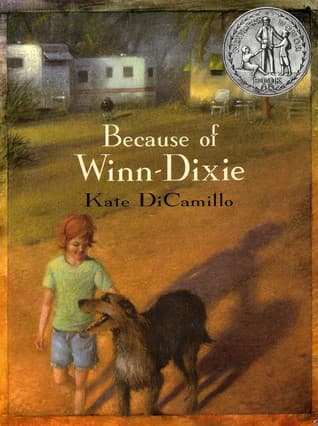
- Because of Winn-Dixie
Kate DiCamillo
4.0 (206k) average on GoodreadsChildren'sA story about a young girl finding community and hope in a new town, with themes of kindness and overcoming loneliness.
- A Long Way from Chicago
Richard Peck
3.9 (32k) average on GoodreadsChildren'sExplores small-town life, quirky characters, and a young protagonist's evolving understanding of the world around them.
- Holes
Louis Sachar
4.0 (970k) average on GoodreadsChildren's'Holes' shares with 'Hope Was Here' a theme of an outsider protagonist finding their place and fighting against injustice, often involving uncovering past secrets. However, Sachar's novel employs a more fantastical and intricate plot, with interwoven timelines and a greater emphasis on fate and historical irony. While both books feature a 'good vs. evil' dynamic, 'Holes' often presents a darker, more absurd take on institutional corruption, whereas 'Hope Was Here' maintains a more grounded and optimistic tone regarding civic engagement and moral victory.
- Harry Potter and the Sorcerer's Stone
J.K. Rowling
4.5 (7M) average on GoodreadsFantasyRescued from a miserable life under the stairs, an orphaned boy discovers he's a wizard destined for a magical school, where he uncovers a dangerous secret tied to the dark wizard who murdered his parents.
- The Hobbit, or There and Back Again
J.R.R. Tolkien
4.3 (2.9M) average on GoodreadsFantasyA comfort-loving hobbit named Bilbo Baggins is whisked away by a mischievous wizard and a band of dwarves on an unexpected journey to reclaim stolen treasure from a fearsome dragon, discovering courage and a magical ring along the way.





Enjoyed the summary?
A summary gives you the shape of the book. The book itself has the detail, the examples and the voice.
Find Hope Was Here on AmazonAs an Amazon Associate, BookBrief earns from qualifying purchases. How we're funded