“The goal of a page-turner is to make the reader want to keep reading.”
— General statement about the book's core purpose.

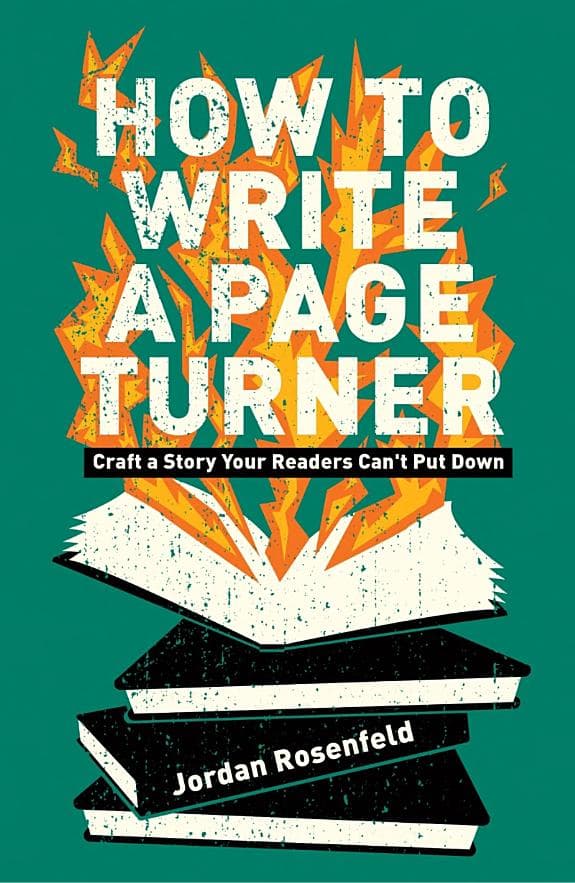
Jordan Rosenfeld (2019)
Goodreads Rating
4.21/ 5(204 reviews)
Genre
General
Summary Read
11 min
Book Length
240 min
Sign in to track this book
This guide teaches writers to weave suspense and conflict into every part of their story, from character flaws to plot reveals, ensuring readers are captivated until the final page.
Ask anything about How To Write a Page Turner and get instant answers grounded in the summary.
Rosenfeld introduces tension as the main force behind an engaging story. She shows how it keeps readers interested and emotionally invested. She breaks tension into four parts: danger, conflict, uncertainty, and withholding. The first chapters define each part, explaining how they make a story compelling and stop it from becoming predictable. The author stresses that tension is not just about big action; it can appear in subtle character interactions, inner struggles, and how information is revealed. This basic understanding prepares readers for how these elements work in fiction writing.
This section looks at the psychological character traits that create tension. Rosenfeld argues that good characters have internal conflict, which comes from their flaws, unfulfilled wishes, secrets, and moral problems. She shows how these inner struggles make readers wonder what will happen, investing them in how the character handles personal challenges. Techniques include making characters with conflicting traits, giving them hard choices, and exploring their past hurts. The author says a character's inner world is a rich source of tension, often stronger than external plot events, because it builds empathy and strong reader connection.
Rosenfeld writes a lot about how dialogue builds tension. She goes beyond simple information exchange, showing how dialogue can be a battle for power, a way to hide important information, and a look into characters' unspoken fears or desires. Key methods include using subtext, where what is not said is as important as what is said; creating verbal fights; and using interruptions or loaded questions. The author gives examples of how simple conversations can become tense through careful word choice, pacing, and the power dynamics between speakers, making every exchange feel important.
This chapter focuses on how tension should be built into the story's plot. Rosenfeld discusses how to build tension from the beginning, through the rising action, climax, and resolution. She highlights 'energetic markers' – key plot points that increase stakes and add new conflicts or problems. The author guides writers on how to create a rollercoaster effect, with moments of increasing tension mixed with short breaks, keeping the reader engaged without being overwhelmed. This section provides a plan for keeping the story moving throughout the novel.
Rosenfeld explores withholding information as a main way to create uncertainty and suspense. She explains that tension is not always about what is happening, but often about what the reader *does not* know. This involves carefully controlling what the story reveals, dropping hints, foreshadowing, and using mysteries. The author distinguishes between simply confusing the reader and strategically building curiosity, emphasizing that withheld information must feel purposeful and eventually lead to a satisfying reveal. This technique keeps readers guessing and turning pages, wanting to find out the full truth.
This section shows how setting can be more than just a background; it can actively create tension. Rosenfeld discusses how descriptions can create a mood of dread, confinement, or coming danger. She shows how a setting's physical traits, weather, or history can reflect and increase a character's inner state or external conflicts. The author gives examples of how sensory details—sights, sounds, smells, and textures—can immerse the reader in an environment that adds to the overall feeling of unease and suspense, making the world itself feel threatening or uncertain.
Rosenfeld looks at the small details of writing, showing how tension can be built sentence by sentence. She discusses methods such as varying sentence length, using strong verbs and precise nouns, employing vivid imagery, and controlling pacing through punctuation and rhythm. The author explains how short, choppy sentences can create urgency, while longer, more complex sentences can build suspense or show a character's spiraling thoughts. This section emphasizes that tension is not just a big plot concern but is part of the language itself, affecting the reader's immediate experience and emotional response to the text.
Building on the initial definition of conflict, this chapter focuses on its external forms. Rosenfeld explores different types of external conflict—character vs. character, character vs. society, character vs. nature, character vs. fate—and how each can increase tension. She stresses the need for clear stakes, explaining that readers must understand what a character could lose if they fail. The author guides on how to continually raise these stakes throughout the story, adding new obstacles and increasing pressure on characters, ensuring every plot development feels important.
Rosenfeld discusses how to use foreshadowing and red herrings to build tension and surprise. Foreshadowing, she explains, creates a sense of coming doom or revelation, making the reader expect future events. It can be subtle, in descriptions or dialogue, or more obvious, setting expectations. Red herrings, in contrast, mislead the reader on purpose, creating false trails and increasing uncertainty, only to reveal a different truth later. The author emphasizes that both techniques must be used carefully to avoid being too obvious or too confusing, ensuring they improve the story's overall tension.
This chapter is about pacing, which Rosenfeld calls the story's 'heartbeat.' She explains how changing the pace—speeding up or slowing down—directly affects the reader's experience of tension. Fast pacing, with shorter sentences, quick scene changes, and urgent dialogue, can create immediacy and excitement. Slower pacing, with more descriptions, internal thoughts, and reflective moments, can build suspense or allow for emotional depth. The author shows how skilled control over pacing allows writers to build and release tension effectively, keeping a compelling rhythm throughout the story.
Rosenfeld emphasizes that for tension to work, there must be clear and important consequences for a character's actions or inactions. This section explores how to ensure every decision has weight and that successes or failures have real impacts on the character and plot. She discusses how to increase stakes progressively, making potential losses greater as the story goes on. The author also touches on the importance of satisfying payoffs, where the built-up tension is released in a meaningful way, whether through a climax, a key revelation, or a significant character change. Without clear stakes and payoffs, tension fades.
This chapter explores the sophisticated technique of the unreliable narrator as a powerful way to create tension, mainly through uncertainty. Rosenfeld explains how a narrator whose credibility is compromised—whether due to mental instability, dishonesty, bias, or limited view—forces the reader to question everything they are told. This creates constant doubt and suspicion, making the reader actively work to piece together the 'true' story. The author gives examples of how an unreliable narrator can build psychological tension, surprise reveals, and keep the reader on edge, unsure of what to believe.
Rosenfeld offers practical advice on how to end chapters and scenes in a way that maximizes tension and makes readers want to keep going. She discusses various types of cliffhangers, from literal life-or-death situations to emotional or informational ones. The author emphasizes that a compelling ending does not always need a dramatic revelation; it can be a new question, a character making a hard choice, or a moment of deep uncertainty. The goal is to leave the reader with an unresolved question or a strong emotional state, making it hard for them to put the book down.
This final section moves from creating to revising, offering practical ways for writers to check and improve tension in their drafts. Rosenfeld gives actionable advice on how to find 'flat' scenes, strengthen character reasons, increase stakes, and tighten pacing during editing. She encourages writers to read their work critically, looking for chances to add more conflict, deepen uncertainty, withhold information, and add danger. The chapter helps with self-editing, ensuring that the principles of tension are not just understood but used well to turn a draft into a gripping story.
The Protagonist (Implied Reader)
Transforms from a writer potentially struggling with narrative pull to one equipped with a comprehensive toolkit for building and sustaining tension. Learns to identify and implement various tension elements.
The Author/Mentor
Acts as a constant, knowledgeable guide, leading the reader through the complexities of tension building. Her 'arc' is in the structured delivery of knowledge.
The Antagonist (Conceptual)
Represents the starting point from which the aspiring author learns to evolve and deepen their character creations, moving towards complex, tension-rich individuals.
The Antagonist (Conceptual)
Represents the narrative state that the aspiring author aims to transcend, transforming it into a dynamic, page-turning story through the application of tension techniques.
The Supporting (Implied)
Remains constant in their desire for compelling stories, serving as the benchmark for the aspiring author's success in applying tension.
The Supporting (Conceptual)
Their works serve as static, perfect examples that illuminate the principles of tension, providing inspiration and concrete learning points for the aspiring author.
This theme says tension is not just for certain genres but is a core part of all good storytelling. Rosenfeld argues that whether a story is a thriller, a drama, or a romance, danger, conflict, uncertainty, and withholding keep readers invested. It is about the human desire to solve questions, see struggles, and guess outcomes. The book shows how even subtle psychological tension in a character's inner world can be as powerful as obvious physical danger, making tension a key part of any story aiming for deep reader engagement.
“Tension is the heart of conflict, the backbone of uncertainty, the hallmark of danger. It keeps readers guessing and characters on their toes.”
The book strongly emphasizes that good tension does not happen by accident; it results from careful and skilled author choices. It moves past the idea of 'inspiration' to focus on using craft elements systematically. Rosenfeld breaks tension into clear components and techniques, showing writers how to intentionally design characters, plots, dialogue, and prose to get specific emotional responses from the reader. This theme shows writers that writing an engaging story is a learnable skill, achieved by understanding and using specific literary tools and strategies.
“To avoid writing that's formulaic, predictable, and slow, How to Write a Page Turner will help you sew the threads of tension tight for an unforgettable story.”
Every technique and principle in the book aims to capture and hold the reader's attention. Rosenfeld consistently frames tension as the way to create an immersive experience that readers cannot put down. The book highlights the reader's psychological needs—their desire for answers, their curiosity, their emotional investment in characters—and teaches writers how to use these needs through carefully built tension. This theme underscores that successful storytelling is not just about telling a story, but about actively managing the reader's experience to keep them deeply involved from start to finish.
“When you've got tension in place, stories leave readers breathless and wanting more.”
A main theme is that tension is not limited to one part of a story but runs through every element. Rosenfeld carefully shows how character flaws, plot points, dialogue, setting, and even individual sentences all add to the overall tension. She illustrates how these parts work together; for example, a character's inner conflict can drive external plot conflict, which is then amplified by the writing style and the strategic withholding of information. This complete view encourages writers to think of their stories as complex systems where every part helps build and maintain the story's pull.
“While this book walks you through the key areas that need tension building, from character to plot, it also delves deeper, analyzing exceptional examples from contemporary fiction's most gripping page-turners.”
Danger, Conflict, Uncertainty, Withholding as foundational elements.
This is the overarching framework Rosenfeld introduces to categorize and understand tension. 'Danger' refers to physical, emotional, or psychological threats to a character. 'Conflict' encompasses both internal struggles and external opposition. 'Uncertainty' involves the reader's lack of knowledge about what will happen next or the true nature of events. 'Withholding' is the deliberate control of information release. These four pillars serve as a diagnostic tool for writers, enabling them to identify where tension might be lacking in their stories and providing concrete categories for its implementation across all narrative levels.
Unspoken meanings and hidden agendas within conversations.
Subtext is presented as a powerful device for injecting tension into character interactions. It refers to the underlying meanings, unspoken emotions, or hidden intentions that exist beneath the surface of spoken words. By having characters say one thing while meaning or implying another, writers create a sense of unease, suspicion, or unresolved conflict. This forces the reader to actively interpret the conversation, generating psychological tension and making even mundane exchanges feel fraught with significance. It's a key tool for showcasing power dynamics and character secrets without explicit exposition.
Progressively increasing what a character stands to lose.
Escalating stakes is a crucial plot device that ensures tension builds throughout a narrative. It involves continually raising the personal, emotional, or physical consequences for a character if they fail to achieve their goals or overcome obstacles. What might start as a minor inconvenience quickly grows into a threat to their livelihood, relationships, or even life. By making each subsequent challenge more severe and the potential losses greater, the writer keeps the reader invested and anxious about the character's fate, compelling them to turn pages to discover the outcome.
An unresolved query that propels reader curiosity.
The Narrative Question refers to the central, unresolved question or mystery that drives the plot and reader curiosity. This device can be explicit (e.g., 'Who is the killer?') or implicit (e.g., 'Will they overcome their past trauma?'). By establishing a compelling question early on and delaying its answer through strategic withholding and rising action, the author creates a powerful pull. Every scene and plot point then serves to complicate or move closer to answering this question, making the reader feel an urgent need to continue reading until a resolution is reached.
Varying the speed of the narrative to control tension and suspense.
Pacing Modulation is the deliberate adjustment of the narrative's speed and rhythm to impact reader experience. Fast pacing, achieved through short sentences, rapid scene cuts, and urgent dialogue, can create a sense of immediacy, action, or panic, heightening tension. Conversely, slower pacing, employing longer sentences, detailed descriptions, and internal monologues, can build suspense, allow for emotional depth, or create a sense of dread. By skillfully modulating pacing, writers can control the reader's emotional journey, building tension and then releasing it strategically to maintain engagement.
“The goal of a page-turner is to make the reader want to keep reading.”
— General statement about the book's core purpose.
“Show, don't tell. This is the most fundamental rule of fiction writing.”
— Explaining the importance of descriptive writing over exposition.
“Conflict is the engine of plot.”
— Highlighting the essential role of conflict in driving a story forward.
“Every scene needs a purpose. If it doesn't advance the plot or reveal character, cut it.”
— Emphasizing the need for efficiency and impact in every scene.
“A strong opening hooks the reader immediately.”
— Discussing the critical nature of the first pages of a story.
“Character is revealed through action, not just description.”
— Reinforcing the idea that characters come alive through what they do.
“Raise the stakes. Make the reader care about what happens to your characters by showing them what they stand to lose.”
— Advising on how to increase reader investment in the narrative.
“Pacing is the rhythm of your story.”
— Defining pacing and its importance in controlling the reader's experience.
“Dialogue should sound natural but also serve a purpose.”
— Guidance on writing effective and purposeful conversations.
“Surprise your reader, but don't cheat them.”
— Balancing unexpected twists with logical plot development.
“The ending should be satisfying, even if it's not happy.”
— Discussing the importance of a resonant conclusion to the story.
“Revision is where the magic happens. The first draft is just the beginning.”
— Underscoring the iterative nature of the writing process.
“Create a sense of urgency. Make the reader feel like they need to know what happens next.”
— Techniques for building momentum and keeping the reader engaged.
“Every word counts. Be ruthless with your prose.”
— Advocating for concise and impactful language.
Ready to see how well you understood this book? Take our interactive quiz with 10 questions.
Support the author — grab the full book.
As an Amazon Associate, BookBrief earns from qualifying purchases, at no extra cost to you. How we're funded.