

Synopsis
Covers the whole plot, including the ending.
- Difficulty
- Medium
- Pacing
- Variable
- Mood
- Humorous, Satirical, Reflective, Moralistic, Witty
- Read it if
- You want to experience a foundational work of English literature in an accessible modern translation, enjoy diverse short stories, or are interested in medieval life and social commentary.
- Skip it if
- You prefer a single, continuous narrative, dislike older literary styles (even in translation), or are put off by religious themes and bawdy humor.
The Canterbury Tales Plot Summary
Covers the whole plot, including the ending.
The General Prologue
In April, twenty-nine pilgrims gather at the Tabard Inn in Southwark, London, planning to travel to the shrine of Saint Thomas Becket in Canterbury. The narrator, Chaucer, introduces each pilgrim, detailing their social status, job, appearance, and personality. Among them are a Knight, his Squire, and Yeoman; a Prioress, Monk, and Friar; a Merchant, Clerk, and Man of Law; a Franklin, Haberdasher, Carpenter, Weaver, Dyer, and Tapestry-maker; a Cook, Shipman, Physician, and Wife of Bath; a Parson, Plowman, Miller, Manciple, Reeve, Summoner, Pardoner, and Chaucer himself. The Host, Harry Bailly, suggests a storytelling contest for entertainment, with the best storyteller winning a free meal on their return.
The Knight's Tale
The Knight, a man of honor, tells a classical romance set in ancient Athens. Two Theban knights, Palamon and Arcite, are captured by Duke Theseus and imprisoned. From their window, they both see and fall in love with Emelye, Theseus's sister-in-law. Arcite is later freed but banished, while Palamon stays imprisoned. Their rivalry grows, leading to a secret duel, interrupted by Theseus. He orders them to return in a year with a hundred knights each for a tournament, with Emelye as the prize. Arcite prays to Mars for victory, Palamon to Venus for Emelye, and Emelye to Diana for virginity or a good husband. Arcite wins the battle but is fatally injured by a divine act. After his death, Palamon and Emelye eventually marry.
The Miller's Tale
The Miller, drunk and loud, insists on telling a crude story after the Knight's noble one. His story features John, a foolish old carpenter, and his beautiful young wife, Alison. Nicholas, a clever astronomy student staying with them, desires Alison and seduces her. They plan to trick John into believing a second Great Flood is coming. Nicholas convinces John to hang three tubs from the rafters, each with food and an axe, so they can escape to the roof. While John is suspended, Nicholas and Alison sleep together. Absolon, a lovesick parish clerk who also wants Alison, comes to her window. Alison plays a crude trick on him. In return, Absolon brands Nicholas with a hot iron. Nicholas's scream wakes John, who, thinking the flood has come, cuts the rope and falls, breaking his arm and becoming a joke.
The Wife of Bath's Prologue and Tale
The Wife of Bath, Alison, gives a long and blunt prologue, defending her many marriages and her right to sexual experience and control over her husbands. She argues against clerical celibacy and uses biblical interpretations to support her views on marriage and female independence. She recounts her experiences with her five husbands, especially her fifth, Jankyn, who beat her but eventually gave in to her will. Her tale is an Arthurian romance: a young knight rapes a maiden and is condemned to death. Queen Guinevere steps in, giving him a year and a day to find out 'what thing it is that women most desire.' After a fruitless search, he meets an old, ugly hag who promises him the answer if he agrees to do whatever she asks. He agrees, and she reveals that women desire 'sovereignty' over their husbands and lovers. The knight saves his life, but then has to marry the hag. On their wedding night, she offers him a choice: an old, ugly, but faithful wife, or a young, beautiful, but unfaithful one. He lets her choose, giving her sovereignty, and she transforms into a young, beautiful, and faithful woman.
The Pardoner's Prologue and Tale
The Pardoner, a dishonest religious figure, openly admits his fraudulent methods of selling fake relics and indulgences. He confesses that his only motive is greed, and that he preaches against avarice only to make others give him money, even though he commits the very sin he condemns. Despite his hypocrisy, he claims he can still tell a moral tale. His story is about three young men in Flanders who are drinking in a tavern when they hear a bell for a friend who died of the plague. They vow to find and kill Death. An old man directs them to a pile of gold coins under a tree. Overjoyed, they forget their quest and start planning to take the gold for themselves. The two older men plot to stab the youngest, who went to town for supplies. Meanwhile, the youngest poisons the wine he brings back for them. When he returns, the two older men kill him, then drink the poisoned wine and die. Thus, all three die because of their greed.
The Prioress's Tale
The Prioress, Madame Eglentyne, tells a tale of strong faith and anti-Semitism. Her story is set in an Asian city with both Christians and Jews. A young, innocent Christian boy, devoted to the Virgin Mary, learns to sing 'O Alma Redemptoris Mater' and sings it loudly as he walks through the Jewish neighborhood to school. The local Jews, influenced by Satan, are angered by his singing, which they see as an insult. They hire a villain to murder the boy, cut his throat, and throw his body into a privy. The boy's widowed mother searches for him. Miraculously, the boy's body begins to sing the hymn again, showing where it is. The local provost, a Christian, orders the arrest and torture of the Jews involved, who are then dragged by wild horses and hanged. The boy continues to sing until a holy abbot removes a grain from his tongue, after which the boy dies and is buried as a martyr.
The Nun's Priest's Tale
The Nun's Priest tells a fable about a proud rooster named Chauntecleer, who lives with seven hens, his favorite being Pertelote, in a poor widow's yard. Chauntecleer dreams of a fox, which Pertelote dismisses as indigestion. Chauntecleer, however, gives a learned speech on the truth of dreams. Despite his intelligence, his pride in his singing leads to trouble. A clever fox named Daun Russell flatters Chauntecleer, praising his singing voice and challenging him to sing with his eyes closed. Chauntecleer, full of vanity, closes his eyes and stretches his neck, allowing the fox to grab him by the throat and run towards the woods. The entire farmyard chases them. As the fox is about to reach his den, Chauntecleer, recovering, advises the fox to boast to his pursuers. The fox opens his mouth to speak, and Chauntecleer flies to a nearby tree, escaping. The tale ends with a moral about the dangers of flattery and carelessness.
The Franklin's Tale
The Franklin tells a Breton lai, a story of true nobility and honorable behavior. It is about Arveragus, a knight, and his wife, Dorigen, who live in Brittany. They agree to a marriage based on mutual respect and equality, where Arveragus promises never to control Dorigen. While Arveragus is away for two years, Dorigen is courted by a young squire named Aurelius. To discourage him, she jokingly promises to be his if he can remove all the dangerous black rocks from the coast of Brittany. Aurelius, deeply in love, falls into despair. He seeks help from a magical clerk from Orleans, who, for a thousand pounds, creates an illusion that makes the rocks seem to vanish. Dorigen, horrified by her rash promise, tells Arveragus, who, keeping his word, tells her to honor her promise. Aurelius, moved by Arveragus's kindness, releases Dorigen from her vow. The clerk, in turn, is so impressed by Aurelius's generosity that he forgives his debt. The tale explores the meaning of true nobility.
The Parson's Tale
As the pilgrims near Canterbury, the Parson, a truly devout man, is asked to tell a tale. He refuses, saying he cannot tell fables or rhyming verses. Instead, he offers a long, serious prose sermon on sin, penance, and salvation. He details the seven deadly sins – Pride, Envy, Wrath, Sloth, Avarice, Gluttony, and Lechery – and their various parts, giving examples and remedies for each. He then explains the three parts of penance: contrition (sorrow for sin), confession (admitting sins to a priest), and satisfaction (making up for sins). The Parson stresses the importance of true repentance and living a good life to achieve eternal happiness. This tale provides a spiritual conclusion to the pilgrimage, offering guidance for moral conduct and contrasting sharply with the often-worldly concerns of the other pilgrims and their stories.
Chaucer's Retraction
At the very end of The Canterbury Tales, after the Parson's sermon, Chaucer offers a personal 'Retraction.' In this brief but important epilogue, he apologizes for any parts of his work that might be seen as immoral, worldly, or sinful, including some of the tales he just presented (referring to the more crude or secular ones) and other works he has written. He explicitly asks for God's mercy and forgiveness for these wrongdoings. Conversely, he expresses gratitude for any of his writings that have promoted virtue and led people to salvation. This retraction places a moral judgment on the entire collection, suggesting a final, serious reflection on the spiritual meaning of storytelling and artistic creation, fitting with the religious purpose of the pilgrimage itself.
Principal Figures
The Narrator (Chaucer)
Authorial Voice/Pilgrim
An observant and often naive chronicler of the pilgrimage.
The Narrator is a character within the story, representing Geoffrey Chaucer himself. He presents himself as somewhat simple and literal-minded, faithfully recounting the words and actions of the other pilgrims without much critical judgment, though his descriptions often reveal their true natures. He is a keen observer of human nature and social types, providing detailed portraits of each pilgrim in the General Prologue. While he participates in the journey, his primary role is to set the scene and introduce the diverse cast.
Relationships: All Pilgrims (Observer and fellow traveler)
The Knight
Protagonist (of his tale)/Pilgrim
A noble, experienced, and honorable warrior.
The Knight is presented as the epitome of chivalry and Christian virtue. He has fought in many Crusades and battles, always for honor and not for personal gain. He is modest, wise, and humble, dressed in a simple fustian tunic. His tale, a classical romance of courtly love and fate, reflects his noble character and ideals. He represents the highest ideals of medieval society, though his tale itself is somewhat detached from the realities of the other pilgrims.
Relationships: The Squire (Father-son, mentor-mentee); The Yeoman (Master-servant)
The Wife of Bath (Alison)
Protagonist (of her tale)/Pilgrim
An outspoken, experienced, and independent woman with a strong will.
Alison, the Wife of Bath, is one of the most vibrant and memorable characters. She is a successful cloth maker, deaf in one ear, and has been married five times, openly discussing her sexual experiences and her strategies for gaining mastery over her husbands. She is boisterous, well-traveled, and an expert on marriage, challenging traditional views on female roles and sexuality. Her prologue is a lengthy, humorous, and provocative defense of her life choices, and her tale reflects her belief in female 'sovereignty' in relationships.
Relationships: Her five husbands (Spousal, often contentious); The Pardoner (Debate partner on marriage)
The Miller
Protagonist (of his tale)/Pilgrim
A boisterous, crude, and physically imposing man.
The Miller, Robin, is a large, brawny man with a red beard, a wart on his nose, and a love for wrestling and telling vulgar stories. He is a cheat, known for stealing grain. He is drunk and insistent on telling his tale immediately after the Knight, deliberately choosing a fabliau that parodies the Knight's noble romance. His tale is full of slapstick humor, trickery, and crude sexual innuendo, reflecting his own unrefined and rebellious nature. He represents the lower, less refined elements of medieval society.
Relationships: The Reeve (Antagonistic, as the Reeve is a carpenter, the target of the Miller's tale)
The Pardoner
Antagonist (morally)/Pilgrim
A corrupt and effeminate ecclesiastical figure who sells fake relics.
The Pardoner is a deeply hypocritical and morally bankrupt character. He openly admits to his fraudulent practices, revealing that he sells fake relics and indulgences for personal gain, preying on the piety of the common people. He is described with effeminate features, long yellow hair, and a high voice. Despite his confession of avarice, he tells a powerful moral tale against greed, demonstrating his skill as a preacher. He is a stark example of corruption within the medieval Church.
Relationships: The Summoner (Close companions, often singing together)
The Host (Harry Bailly)
Supporting/Pilgrim
The jovial and authoritative host of the Tabard Inn.
Harry Bailly, the Host, is a large, merry, and wise man who owns the Tabard Inn. He proposes the storytelling competition to entertain the pilgrims on their journey to Canterbury and acts as the master of ceremonies, judge, and guide. He is a shrewd businessman and a good-natured leader, often interjecting with comments, praises, or criticisms of the tales and their tellers. He maintains order among the diverse group and ensures the pilgrimage remains lively.
Relationships: All Pilgrims (Host and organizer of the competition)
The Parson
Supporting/Pilgrim
A truly devout and virtuous parish priest.
The Parson is presented as an ideal clergyman, embodying genuine Christian charity and humility. Unlike many of the corrupt ecclesiastical figures among the pilgrims, he is poor in material wealth but rich in holy thought and work. He practices what he preaches, living a simple life and diligently caring for his flock, setting a strong moral example. His 'tale' is a lengthy prose sermon on penance and the seven deadly sins, serving as a moral anchor for the entire collection.
Relationships: The Plowman (Brother, both representing ideal Christian workers)
Emelye
Mentioned/Object of desire
The beautiful sister-in-law of Duke Theseus, desired by Palamon and Arcite.
Emelye is the central female figure in the Knight's Tale, the object of intense courtly love and rivalry between Palamon and Arcite. She is depicted as beautiful, chaste, and initially desires to remain a virgin, praying to Diana for this wish. However, she ultimately accepts her role as the prize in a tournament and marries Palamon. She embodies the ideal of feminine beauty and the passive role of women in medieval courtly romance, her agency largely determined by the men around her.
Relationships: Palamon (Husband, eventual); Arcite (Unrequited lover); Duke Theseus (Brother-in-law)
Themes & Insights
Social Hierarchy and Class Satire
Chaucer details the social structure of medieval England, from the noble Knight to the humble Plowman, and satirizes the perceived good and bad qualities of each group. The General Prologue describes characters representing the military, clergy, and commoners, showing the hypocrisy and corruption common within each. For example, the good Parson contrasts sharply with the greedy Pardoner and the worldly Monk, revealing the Church's failures. The tales often reflect the tellers' social standing and personal biases, as seen in the Miller's crude story directly challenging the Knight's aristocratic romance, or the Reeve's retaliatory tale against a miller.
“He was a verray, parfit gentil knyght.”
Corruption of the Church
A common theme throughout the tales is the widespread corruption within the medieval Church. Chaucer exposes the greed, hypocrisy, and moral failures of various religious figures. The Pardoner openly admits to selling fake relics and indulgences for money, while the Monk prefers hunting and worldly pleasures to monastic duties. The Friar cares more about drinking and seducing women than helping the poor. These characters stand in stark contrast to the ideal, truly pious Parson, who preaches and lives by Christian virtues. This theme critiques the institutional Church without necessarily condemning faith itself, showing the gap between religious ideals and their human followers.
“For though I telle noght myself for hooly, / Yet kan I telle a moral tale al soolily.”
The Nature of Love and Marriage
Love and marriage are explored in many forms, from courtly love to crude, transactional relationships. The Knight's Tale shows idealized, though tragic, courtly love between Palamon, Arcite, and Emelye. In contrast, the Wife of Bath's Prologue and Tale offer a radical view on marriage, advocating for female control and sexual independence, based on her experiences with five husbands. The Miller's Tale presents a crude, farcical depiction of adultery and trickery within a marriage. The Franklin's Tale, conversely, explores a marriage built on mutual respect and equality. These varied stories question societal norms and expectations regarding gender roles, fidelity, and the power dynamics in romantic relationships.
“Wommen desiren to have sovereyntee / As well over hir housbond as hir love, / And for to been in maistrie him above.”
Truth vs. Deception
Many tales involve characters using deceit, trickery, or self-deception to reach their goals, often with funny or sad results. The Pardoner's honest confession of his fraudulent practices, even as he preaches against greed, is a prime example of deliberate deception. In the Miller's Tale, Nicholas and Alison trick John with the 'flood' story to have their affair. Chauntecleer in the Nun's Priest's Tale is fooled by the fox's flattery, almost costing him his life. Conversely, the Parson's Tale champions spiritual truth and sincere repentance. This theme explores the moral implications of honesty and dishonesty, and how easily people can be manipulated by appearances or their own desires.
“For though I knowe al this to be untrue, / I make men believe it is not newe.”
Storytelling and Art
The entire structure of The Canterbury Tales is a celebration of storytelling. The pilgrimage acts as a larger story, with the tales forming a competition and revealing as much about the teller as the story. Chaucer explores different genres – romance, crude humor, sermon, animal fable – showing the versatility and power of narrative. The Host's role as judge highlights the performance aspect of storytelling, while the pilgrims' reactions to each other's tales (e.g., the Reeve's anger at the Miller) show the personal and social impact of stories. This theme reflects on the purpose of art, its ability to entertain, instruct, provoke, and reveal truth, even if that truth is sometimes uncomfortable or satirical.
“Who so shal telle a tale after a man, / He moot reherce as ny as evere he kan / Everich a word, if it be in his charge, / Al speke he never so rudeliche and large.”
Plot Devices & Literary Techniques
Frame Narrative
A story within a story, where the main narrative sets the stage for a series of individual tales.
The Canterbury Tales employs a classic frame narrative structure. The overarching story is the pilgrimage itself, with the journey to Canterbury serving as the literal frame. Within this frame, each pilgrim tells a tale, creating a collection of diverse stories. This device allows Chaucer to present a wide range of genres, themes, and social commentaries, as each tale is filtered through the perspective and personality of its specific teller. The frame also provides opportunities for interaction between the pilgrims, as they react to each other's stories and personalities, adding depth and realism to the overall narrative.
Character Sketch/Prologue
Detailed descriptions of characters that reveal their social standing, personality, and moral fiber.
Chaucer's use of character sketches, particularly in the General Prologue and in the prologues to individual tales (like the Wife of Bath's), is a powerful plot device. These descriptions go beyond mere physical appearance, delving into the characters' professions, moral qualities, and often their hidden flaws or virtues. By presenting these detailed portraits before the tales are told, Chaucer primes the reader to interpret the stories through the lens of the teller's personality, biases, and social class. This technique creates dramatic irony and allows for satire, as the tales often confirm or contradict the initial impressions established in the prologues.
Retraction
An authorial statement at the end of a work, apologizing for any potentially offensive content.
Chaucer's Retraction, placed at the very end of The Canterbury Tales, serves as a significant plot device. It is a personal epilogue where the author, in his own voice, apologizes for any of his writings that might be considered sinful or immoral, while expressing gratitude for works that lead to virtue. This device complicates the interpretation of the preceding tales, especially the more bawdy or satirical ones. It introduces a final layer of moral judgment, aligning the entire work with a spiritual purpose, and invites readers to reconsider the ethical implications of the stories they have just read, potentially shifting their understanding of Chaucer's ultimate intent.
Verisimilitude (Realism)
The creation of a believable and lifelike setting and characters, despite fictional elements.
Chaucer masterfully uses verisimilitude to make his medieval world feel authentic and relatable. He achieves this through detailed descriptions of pilgrims' clothing, dialects (implied, though lost in translation), and social customs. The interactions between pilgrims, their squabbles (like the Miller and the Reeve), and their reactions to each other's tales lend a strong sense of realism to the journey. Even fantastical elements, like magic in the Franklin's Tale, are grounded in believable human motivations. This device immerses the reader in the fourteenth-century setting, making the characters and their diverse stories feel genuinely human and historically resonant.
The Canterbury Tales Quotes
“Whan that Aprill with his shoures soote, The droghte of March hath perced to the roote, And bathed every veyne in swich licour Of which vertu engendred is the flour;”
“He was a verray parfit gentil knyght.”
“And though he were a philosophre yet had he but litel gold in his cofre.”
“She was so charitable and so pitous She wolde wepe, if that she sawe a mous Caught in a trappe, if it were deed or bledde.”
“For he hadde geten hym yet no benefice, He was a povre scoler of Oxenforde.”
“If gold ruste, what shal iren do?”
“My housbonde was a good man, for he loved me best of alle.”
“But al for noght; I sette not a straw of hir dremynges.”
“Mordre wol out, that se we day by day.”
“The firste cause of swich a murye peyne, Is love, which that bownden is in cheyne.”
“Thanne longen folk to goon on pilgrimages, And palmeres for to seken straunge strondes, To ferne halwes, kouthe in sondry londes;”
“And of his port as meek as is a mayde.”
“He knew the tavernes wel in every toun, And every hostiler and tappestere, Bet than a lazar or a beggestere.”
“Experience, though noon auctoritee Were in this world, is right ynogh for me To speke of wo that is in mariage;”
“For trewely ther is noon so hooly a lyf as for to love God with al thyn herte.”
Quiz
10 questions on the plot and the characters. Each answer comes with a short explanation.
Question 1
Which month is traditionally associated with the pilgrimage in 'The Canterbury Tales'?
- March
- April
- May
- June
Show answer
B. April The General Prologue famously begins with descriptions of April showers, signaling the start of the pilgrimage season.
Question 2
What is the primary destination of the pilgrims in 'The Canterbury Tales'?
- Westminster Abbey
- The Tower of London
- The Shrine of Thomas Becket at Canterbury Cathedral
- Winchester Cathedral
Show answer
C. The Shrine of Thomas Becket at Canterbury Cathedral The pilgrims are traveling to Canterbury to visit the shrine of Saint Thomas Becket.
Question 3
Which character proposes the storytelling competition among the pilgrims?
- The Knight
- The Host (Harry Bailly)
- The Pardoner
- The Wife of Bath
Show answer
B. The Host (Harry Bailly) Harry Bailly, the Host of the Tabard Inn, suggests the storytelling contest to entertain the pilgrims on their journey.
Question 4
What is the primary theme explored in 'The Knight's Tale'?
- The dangers of greed
- Courtly love and chivalry
- The virtue of poverty
- The importance of education
Show answer
B. Courtly love and chivalry The Knight's Tale is a classic example of a chivalric romance, focusing on noble knights, love, and honor.
Question 5
The Wife of Bath is notable for her outspoken views on what topic?
- The proper way to brew ale
- The role of women in marriage and society
- The best pilgrimage routes to Rome
- The intricacies of medieval law
Show answer
B. The role of women in marriage and society The Wife of Bath's Prologue and Tale famously discuss her experiences with five husbands and her arguments for female sovereignty in marriage.
Question 6
Which character is depicted with a wart on his nose from which red hairs sprout, and is known for his crude and boisterous nature?
- The Summoner
- The Friar
- The Miller
- The Reeve
Show answer
C. The Miller The Miller is described in the General Prologue with a large wart on his nose, red beard, and a love for wrestling.
Question 7
What is the primary moral lesson conveyed by 'The Pardoner's Tale'?
- Love conquers all
- The corrupting influence of avarice (greed)
- The importance of forgiveness
- Humility leads to salvation
Show answer
B. The corrupting influence of avarice (greed) The Pardoner's Tale, despite the Pardoner's own hypocrisy, vividly illustrates the destructive power of greed, encapsulated in the phrase 'Radix malorum est Cupiditas' (Greed is the root of all evil).
Question 8
The storytelling competition's rules state that the winner will receive what prize?
- A monetary reward from the Host
- A free supper at the Tabard Inn upon their return
- A blessing from the Archbishop of Canterbury
- A place of honor at the next royal feast
Show answer
B. A free supper at the Tabard Inn upon their return The Host promises that the pilgrim who tells the best tale will be treated to a supper at the expense of all the others when they return to the Tabard Inn.
Question 9
Which of the following tales is an example of a fabliau, characterized by its bawdy humor and realistic, often vulgar, portrayal of lower-class life?
- The Man of Law's Tale
- The Prioress's Tale
- The Miller's Tale
- The Physician's Tale
Show answer
C. The Miller's Tale The Miller's Tale, with its love triangle, deception, and scatological humor, is a quintessential example of a medieval fabliau.
Question 10
What literary device does Chaucer primarily use in the General Prologue to introduce his diverse cast of characters?
- Extensive dialogue between characters
- Detailed allegorical dreams
- Vivid character sketches and satiric portraits
- Flashbacks to their personal histories
Show answer
C. Vivid character sketches and satiric portraits Chaucer's genius in the General Prologue lies in his precise and often satiric descriptions of each pilgrim, revealing their social status, profession, and personality through their appearance and habits.
The Canterbury Tales FAQ
What is the central premise of 'The Canterbury Tales'?
The book centers on a group of diverse pilgrims traveling from Southwark to the shrine of Thomas Becket in Canterbury. To pass the time on their journey, they engage in a storytelling competition proposed by their host, Harry Bailly, with the best tale winning a free meal upon their return.
Who are some of the most prominent pilgrims and what do they represent?
Key pilgrims include the noble Knight, representing chivalry; the worldly Wife of Bath, challenging medieval gender norms; the drunken Miller, embodying lower-class revelry; and the pious Parson, symbolizing true Christian virtue. Each character is a microcosm of medieval English society.
What is the significance of the pilgrimage setting?
The pilgrimage provides a unique social melting pot where people from all estates and walks of life, who would not typically interact, are brought together. This allows Chaucer to explore the social hierarchies, moral complexities, and diverse perspectives of 14th-century England through their interactions and tales.
How do the tales reflect the tellers' personalities and social standing?
The tales are intricately linked to their tellers. For example, the Knight tells a tale of courtly love and chivalry, reflecting his noble virtues, while the Miller, a boisterous commoner, tells a fabliau full of bawdy humor and trickery, aligning with his character.
What is the 'General Prologue' and why is it important?
The 'General Prologue' introduces each pilgrim with vivid descriptions of their appearance, profession, and moral character before the storytelling begins. It sets the stage by establishing the individual personalities and social dynamics that will inform and be reflected in their subsequent tales.
Are there any subtle connections or rivalries between the pilgrims beyond their direct interactions?
Yes, there are often subtle rivalries and thematic links. The Miller's tale, a crude fabliau, is told in direct opposition to the Knight's noble romance, reflecting a class conflict. Similarly, the Reeve, a carpenter, tells a tale to get back at the Miller for mocking his profession in his own story.
What role does the Host, Harry Bailly, play in the narrative structure?
Harry Bailly acts as both the arbiter of the storytelling contest and a lively master of ceremonies, often interrupting, praising, or criticizing the tales and their tellers. He provides a unifying voice and helps to maintain the narrative flow and the sense of a real journey.
How does Chaucer use irony and satire throughout the descriptions of the pilgrims?
Chaucer frequently employs subtle irony, particularly in describing corrupt religious figures like the Friar, Summoner, and Pardoner, whose outward piety often masks greed and moral failings. His descriptions allow readers to infer their true characters beneath the surface praise.
What is the significance of the Wife of Bath's gap teeth and what does it reveal about her character?
The Wife of Bath's gap teeth were a medieval physiognomic sign of lustfulness and boldness. This detail, combined with her five marriages and extensive travels, immediately signals her experienced, assertive, and unconventional nature, particularly regarding sexuality and marital power dynamics.
How does the character of the Pardoner demonstrate psychological manipulation?
The Pardoner is a master of psychological manipulation, openly admitting to tricking people into buying fake relics and pardons for sins. He preys on fear and superstition, crafting sermons designed to induce guilt and extract money, despite his own confessed hypocrisy.
What psychological insights does the Wife of Bath offer into medieval marriage and gender roles?
The Wife of Bath provides a candid, often cynical, view of marriage as a power struggle. Her prologue reveals her strategies for dominating her husbands, offering a rare female perspective that challenges patriarchal norms and explores the complexities of female agency and desire in her era.
How does the Knight's tale, despite its idealism, touch upon themes of fate and human choice?
While idealistic, the Knight's Tale, 'Palamon and Arcite,' explores how the characters' noble aspirations and loves are often subject to the whims of the gods (or fate) and the unpredictable nature of human desire. It subtly questions the extent of free will within a divinely ordered world.
What psychological motivations drive the rivalry between the Miller and the Reeve?
The rivalry between the Miller and the Reeve is driven by personal pride and professional jealousy. The Miller's crude tale about a carpenter offends the Reeve, who was a carpenter himself, prompting him to seek revenge by telling an equally unflattering story about a miller.
To what extent is 'The Canterbury Tales' a critique of the Church rather than just individual clerics?
While Chaucer critiques individual corrupt clerics like the Friar and Pardoner, the work also subtly questions the institutional practices that allowed such corruption to flourish, such as the selling of indulgences and the lax oversight of mendicant orders. However, it upholds the ideal of figures like the Parson.
Is there a definitive 'winner' of the storytelling contest, and if not, what is the implication?
Chaucer never explicitly declares a winner, as the work remains unfinished. This lack of a definitive victor suggests that the true value lies not in competition, but in the diversity of human experience, the act of storytelling itself, and the rich tapestry of medieval life it presents.
How does Chaucer's use of different literary genres contribute to the book's overall message?
By employing a wide range of genres—romance, fabliau, saint's life, sermon, beast fable—Chaucer demonstrates the breadth of medieval literary forms and human experience. This variety allows him to explore different moral perspectives and social realities, enriching the book's commentary on society.
What is the enduring relevance of 'The Canterbury Tales' for modern readers?
The tales remain relevant due to their timeless exploration of human nature, including themes of love, betrayal, greed, piety, social class, and gender roles. Chaucer's vivid characters and their relatable dilemmas continue to resonate, offering insights into both historical and contemporary human behavior.
How does the unfinished nature of 'The Canterbury Tales' impact its interpretation?
The unfinished state means there's no clear resolution to the pilgrimage or the storytelling contest, inviting readers to contemplate the ongoing, messy nature of human life and society. It emphasizes the journey and the individual stories over a neat conclusion, leaving much open to reader interpretation.
About the author

Geoffrey Chaucer was an English poet, author, and civil servant best known for The Canterbury Tales. He has been called the "father of English literature", or, alternatively, the "father of English poetry". He was the first writer to be buried in what has since come to be called Poets' Corner, in Westminster Abbey. Chaucer also gained fame as a philosopher and astronomer, composing the scientific A Treatise on the Astrolabe for his 10-year-old son Lewis. He maintained a career in the civil service as a bureaucrat, courtier, diplomat, and member of parliament.
Similar books
- To Kill a Mockingbird
Harper Lee
4.3 (4.5M) average on GoodreadsHistorical FictionIn the 1930s Jim Crow South, Harper Lee writes about racial injustice, moral growth, and the quiet courage of a lawyer father, Atticus Finch, as seen through his young daughter's eyes.
- The Great Gatsby
F. Scott Fitzgerald
3.9 (3.8M) average on GoodreadsHistorical FictionIn the opulent Roaring Twenties, a mysterious millionaire's lavish parties hide his desperate, tragic pursuit of a lost love, exposing the emptiness within the American Dream.
- Pride and Prejudice
Jane Austen
4.3 (3M) average on GoodreadsHistorical FictionIn a society focused on status and money, Elizabeth Bennet navigates love and pride, challenging Mr. Darcy and social expectations to find true affection.
- Angels & Demons
Dan Brown
3.9 (2.7M) average on GoodreadsThrillerA Harvard symbologist races through Rome's ancient sites, deciphering cryptic clues to unmask the Illuminati and stop a vengeful plot to destroy the Vatican with a stolen antimatter weapon.
- The Kite Runner
Khaled Hosseini
4.3 (2.4M) average on GoodreadsHistorical FictionIn pre-Taliban Afghanistan, a wealthy boy's betrayal of his servant's son during a kite-running tournament starts a lifelong journey for amends as his country collapses.
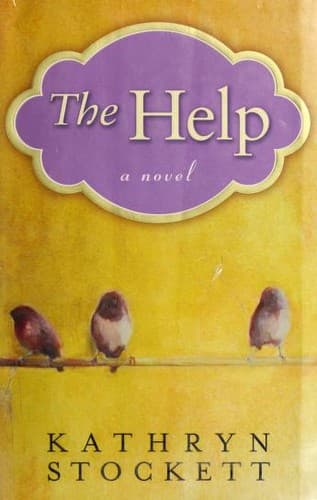
- The Help
Kathryn Stockett
4.5 (2.2M) average on GoodreadsHistorical FictionIn 1960s Mississippi, an aspiring writer and two Black maids risk everything to expose the harsh realities of their lives, defying societal norms with stories that start a quiet revolution.





Enjoyed the summary?
A summary gives you the shape of the book. The book itself has the detail, the examples and the voice.
Find The Canterbury Tales on AmazonAs an Amazon Associate, BookBrief earns from qualifying purchases. How we're funded