

Synopsis
Covers the whole plot, including the ending.
- Difficulty
- Medium
- Pacing
- Moderate
- Mood
- Bleak, Suspenseful, Philosophical, Lonely, Desperate
- Read it if
- You enjoy post-apocalyptic stories with a strong psychological element and a thought-provoking twist on the monster mythos.
- Skip it if
- You prefer action-heavy survival stories over introspective, character-driven narratives with philosophical undertones.
I Am Legend Plot Summary
Covers the whole plot, including the ending.
The Last Man
Robert Neville lives a monotonous and terrifying life as the only uninfected human in Los Angeles. Each day, he repairs his house, boards up windows, and scavenges for supplies like food, gasoline, and garlic. He is haunted by the constant presence of vampires, both the living dead and the more intelligent, organized 'infected' who besiege his home nightly. He often drinks to cope with loneliness and fear, thinking about the past and the plague that changed humanity. His routine is a desperate effort to stay sane and survive in a world where he is the prey.
Daily Hunt and Scientific Inquiry
During the day, when the vampires are dormant, Neville ventures out in his station wagon, hunting the sleeping creatures. He stakes them, recording his kills in a logbook. This grim task is not just about survival but also an attempt to understand the plague. He collects dead vampires, bringing them to his makeshift laboratory in his basement. There, he performs autopsies and microscopic examinations, trying to uncover the infection's biology, hoping to find a cure or a weakness.
Ben Cortman and the Nightly Siege
Every night, Neville's house is surrounded by a horde of vampires, led by his former neighbor, Ben Cortman. Cortman, now a sophisticated and relentless vampire, constantly calls Neville's name, mocking him and demanding he come outside. This nightly psychological warfare wears on Neville's nerves, making sleep difficult and increasing his loneliness. Cortman's taunts remind Neville of his isolation and the loss of his old life, pushing him closer to despair.
Flashbacks to the Outbreak
Through fragmented flashbacks, Neville remembers the plague's terrifying start. He recalls the panic, the quarantine, and the rapid spread of the disease. Most painfully, he relives the deaths of his wife, Virginia, and his daughter, Kathy. He recounts how Virginia died from the disease and, after her initial burial, returned as a vampire, forcing him to stake her, an act that deeply traumatized him. These memories fuel his hatred for the vampires and his drive to understand and destroy them.
The Dog
One day, Neville spots a stray dog near his house. Driven by a need for companionship, he tries to lure it to him, leaving out food for weeks. The dog is terrified and wary, but eventually, after persistent efforts, it allows Neville to approach. He brings the dog, whom he names 'Sam,' into his home, feeling relief and connection. For a short time, Sam gives Neville comfort and a reason to keep fighting, easing his isolation.
Loss of Sam
Neville's brief happiness with Sam ends tragically. After a few weeks, Sam becomes sick, showing plague symptoms. Despite Neville's desperate attempts to save her, the dog dies from the infection. Neville must bury his only companion, an experience that plunges him back into despair and shows the futility of his fight against the disease. Sam's death leaves him more isolated and broken than before.
Scientific Breakthrough
After years of research and experimentation, Neville makes a scientific discovery. He finds there are two types of vampires: the living dead, animated by a bacterial infection, and the 'infected' (later revealed as the new species), who are still alive but changed by a viral strain. He learns that sunlight, garlic, and stakes kill the living dead due to their bacterial nature, while the new species, though sensitive to light, are not killed by garlic or stakes in the same way. This realization gives him a deeper understanding of his enemies.
Encounter with Ruth
One day, while scavenging, Neville spots a woman walking in daylight. Stunned, he realizes she is not a vampire. He cautiously approaches her, and she identifies herself as Ruth. Overjoyed and desperate for human connection, Neville brings her back to his home. Ruth is wary and secretive at first, but they slowly form a bond. She is well-dressed and seems healthy, a contrast to the decaying world outside, and her presence sparks a fragile hope in Neville.
Ruth's Secret and the New Society
Neville discovers Ruth's true nature when he finds her trying to inject herself with a sedative, a common practice among the 'infected' to counteract their vampiric tendencies during the day. Ruth confesses she is one of the new, intelligent 'infected' and was sent to spy on him. She reveals that her people, though still sensitive to sunlight and needing blood, have formed a new society, organized and striving for a new way of life. They view Neville as a dangerous killer, a relic of the old world who preys on their kind.
Capture and Trial
Despite Ruth's warning, Neville is captured by the new society. He is taken to their stronghold, a fortified building where he is put on trial. The 'infected' people, now the dominant species, accuse him of murder, detailing his years of hunting and killing their kind. Neville, bewildered and horrified, realizes that from their perspective, he is the monster, the one who stalks and executes them without mercy. His understanding of the world is completely inverted.
The Last Legend
Neville is sentenced to death. Ruth visits him in his cell, expressing sorrow and explaining that his death is necessary for the new society to move forward without fear. She offers him a quick, painless poison. As he looks out at the faces of the 'infected' people, gathered to witness his execution, he sees fear and hatred in their eyes. He realizes that just as vampires were a legend of terror to humanity, he, Robert Neville, has become a terrifying legend to the new race, 'the last legend' of a bygone era.
Acceptance and Legacy
With Ruth's poison, Neville calmly accepts his fate. He observes the crowds of 'infected' people, their faces showing fear, awe, and relief at his coming death. He understands that his existence, his daily hunts, and his survival have made him the ultimate boogeyman in their new world. As he watches them, he realizes he represents the old order, a horrifying relic that must be removed for the new order to truly begin. His final thought is of the irony: he is the monster, the legend, to a world that has moved beyond humanity.
I Am Legend Characters
Robert Neville
Protagonist
The last uninfected human in a world overrun by vampires.
Robert Neville is a former factory worker and veteran who is forced to become a solitary hunter, scientist, and survivor. He is intelligent, resourceful, and driven by a desperate need to understand and combat the vampiric plague. Despite his scientific pursuits, he is deeply emotional, plagued by loneliness, grief, and the psychological toll of his isolation. He struggles with alcoholism and suicidal thoughts but is ultimately resilient, clinging to hope even in the face of utter despair. He represents the fading remnants of humanity.
Relationships: Virginia Neville (Deceased wife, a source of profound grief and trauma); Kathy Neville (Deceased daughter, another source of immense sorrow); Ben Cortman (Former neighbor, now a leader of the 'living dead' vampires who relentlessly taunts him); Sam (His brief, beloved companion dog); Ruth (An 'infected' woman who offers him companionship but is also a spy for the new society)
Ben Cortman
Antagonist/Supporting
Neville's former neighbor, now a persistent and vocal vampire.
Ben Cortman is a central figure in Neville's nightly torment. Before the plague, he was Neville's friendly, if somewhat boisterous, neighbor. After becoming a 'living dead' vampire, he retains enough memory and malice to incessantly call out Neville's name from outside his house, mocking him and fueling his psychological anguish. He represents the relentless and personal nature of Neville's struggle, a constant reminder of the past and the ever-present danger that surrounds him. His taunts are a cruel form of psychological warfare against Neville.
Relationships: Robert Neville (Former neighbor, now a tormentor and prey)
Virginia Neville
Mentioned/Flashback
Neville's deceased wife, whose death and subsequent reanimation deeply traumatized him.
Virginia is Robert Neville's beloved wife, who succumbs to the plague early in the outbreak. Her death, and especially her return as a vampire, forces Neville to perform the horrific act of staking her, leaving him with profound and lasting psychological scars. She represents the devastating personal cost of the plague and the loss of Neville's former life and happiness. Her memory is a constant source of grief and motivation for Neville's relentless fight against the vampires.
Relationships: Robert Neville (Deceased wife, a source of profound grief and trauma)
Kathy Neville
Mentioned/Flashback
Neville's deceased daughter, another victim of the plague.
Kathy is Robert Neville's young daughter, who also falls victim to the plague during its initial outbreak. Her death is another tragic loss that contributes to Neville's deep-seated grief and isolation. While less prominent than Virginia's story, Kathy's memory further emphasizes the complete destruction of Neville's family and the pre-plague world, deepening his sense of loss and driving his solitary fight for survival and understanding.
Relationships: Robert Neville (Deceased daughter, a source of immense sorrow)
Sam
Supporting
A stray dog that briefly becomes Neville's only companion.
Sam is a stray dog Neville encounters and eventually befriends. For a short period, Sam provides Neville with much-needed companionship, alleviating his crushing loneliness and offering a semblance of normalcy and hope. Sam's eventual infection and death are a devastating blow to Neville, reinforcing the pervasive nature of the disease and the futility of his fight against it. Sam symbolizes the fragility of hope and the pain of loss in Neville's desolate world.
Relationships: Robert Neville (His brief, beloved companion dog)
Ruth
Supporting/Antagonist
An 'infected' woman who becomes Neville's confidante and reveals the new society.
Ruth is an intelligent and complex character, initially appearing as an uninfected survivor, a beacon of hope for Neville. She is revealed to be one of the 'new people,' an 'infected' individual who is part of an organized society that views Neville as a monster. Ruth is conflicted, showing genuine empathy for Neville while also being loyal to her new species. She represents the shifting moral landscape of the post-plague world and the gray areas between 'monster' and 'human.' She delivers the final, crucial understanding to Neville.
Relationships: Robert Neville (Initially a potential romantic interest/companion, later revealed as a spy and guide to his fate)
The New People / The Infected
Antagonists
The evolved, organized society of intelligent vampires.
The New People are the 'infected' individuals who, unlike the mindless 'living dead,' have retained their intelligence and formed a new, organized society. They are sensitive to sunlight and require blood, but they are capable of communication, reasoning, and building a new civilization. They view Robert Neville not as a victim, but as a dangerous predator who has indiscriminately murdered their kind for years. They represent the next stage of evolution, a new dominant species for whom humanity is a relic and Neville is a legendary monster.
Relationships: Robert Neville (Their legendary killer and the last remnant of the old world)
I Am Legend Themes
Isolation and Loneliness
The novel explores the psychological cost of complete isolation. Robert Neville is the last uninfected man, surrounded by creatures who want to kill him or are mindless. His daily routine is an effort to stay sane, but he constantly fights overwhelming loneliness, leading to alcoholism and deep despair. The brief companionship he finds with Sam the dog shows his need for connection, and Sam's death plunges him back into despair. Even when Ruth appears, her presence ultimately highlights his unique isolation from both humanity and the new species.
“And the loneliness was bad. It was a physical ache, a palpable presence that sat with him in his empty house.”
The Nature of Humanity and Monstrosity
Matheson expertly reverses the traditional vampire story, asking who the real monster is. Initially, Neville sees himself as the last human, fighting monstrous vampires. However, as he discovers the 'new people' – intelligent, organized 'infected' beings – his view is challenged. From their perspective, Neville is the legendary killer, who hunts and murders their kind without mercy, stalking them in their sleep. This theme makes the reader consider how 'humanity' and 'monstrosity' are relative and depend on perspective, especially when a new dominant species appears.
“He was an aberration. A foulness. And his death was a necessity.”
Survival and Adaptation
The novel shows the human will to survive, even in the worst situations. Neville shows remarkable resilience, adapting to a world without society, electricity, or safety. He learns to scavenge, repair, and fortify his home, and he applies scientific methods to understand the plague. His survival is not just physical but also mental, as he fights to stay sane against constant terror and loneliness. However, the ultimate adaptation is not Neville's, but that of the 'new people,' who have created a functioning society, making Neville the obsolete, unadapted relic.
“He knew that he would never give up. He would fight until he died.”
Science vs. Superstition
Neville initially relies on traditional vampire superstitions (garlic, crosses, stakes). However, his scientific curiosity drives him to research the biological cause of the plague. He conducts experiments, uses microscopes, and performs autopsies, eventually discovering that vampirism is caused by bacteria (for the living dead) and a virus (for the new people). This shift from superstition to scientific understanding is important for his survival and helps him grasp the true nature of his enemies, replacing myths with biological facts. This theme shows humanity's reliance on reason even when facing the seemingly supernatural.
“Superstition, he thought, was a chemical reaction, a result of the bacteria.”
Plot Devices & Literary Techniques
First-Person Perspective
The story is told entirely from Robert Neville's point of view.
This narrative choice immerses the reader directly into Neville's isolated and terrifying world. It allows for deep insight into his psychological state, his loneliness, his scientific frustrations, and his shifting understanding of his reality. The reader experiences his paranoia, grief, and eventual epiphany alongside him, making the final twist – where he realizes he is the monster – all the more impactful and personal. His internal monologues and observations are crucial to conveying the immense burden of his existence.
Flashbacks
Interspersed memories of the pre-plague world and the initial outbreak.
Flashbacks are used to reveal the backstory of the plague, the loss of Neville's family (Virginia and Kathy), and the initial chaos of the world's collapse. These fragmented memories provide crucial context for Neville's current trauma, his motivation to fight, and the depth of his grief. They contrast the vibrant past with his desolate present, emphasizing what has been lost and fueling his desperate hope for a cure or a return to normalcy. They also serve to humanize Neville, showing the life he once had.
Dramatic Irony
The audience's understanding of events differs from a character's.
Dramatic irony is powerfully employed, particularly in the latter half of the novel. For most of the story, Neville and the reader believe he is the last human hero fighting monstrous vampires. However, as Ruth reveals the existence of the 'new people' and their organized society, it becomes clear that Neville's actions, from their perspective, are those of a ruthless killer. The audience comes to understand that Neville is the 'legend' of terror to this new species, a realization that completely recontextualizes his entire struggle and his role in the world.
Symbolism of Light and Dark
Light represents safety and day, dark represents danger and night.
The stark contrast between day and night is a core structural and symbolic element. Day represents Neville's period of relative safety, where he can hunt, scavenge, and conduct his research, embodying a fragile sense of control and purpose. Night, conversely, brings terror, siege, and the constant threat of the vampires, representing his vulnerability and the overwhelming power of the 'infected.' This binary reinforces Neville's isolation and the constant, existential threat he faces, underscoring his inverted existence where the sun is his only true ally.
I Am Legend Quotes
“Full dark, no stars. The end of the world came and went and no one noticed. What does it matter? It doesn't matter. It never did.”
“He was a new species, an anachronism, a ghost, a relic, a living dead man. He was the legend.”
“Normalcy was a relative concept. He had to be normal, even if it was a normal of one.”
“He knew what they were. They were the new race, the inheritors of the earth.”
“Another day. Another day of the same, of the endless, of the meaningless.”
“The feeling of being watched was a constant, gnawing presence, even when he knew they weren't there.”
“He had hoped for a miracle, but miracles were rare, and he had used up his quota long ago.”
“They were not monsters, not in the way he had always thought. They were merely different.”
“The silence was the worst. The silence that screamed of absence, of emptiness, of death.”
“He was the aberration, the mutation, the freak. He was the thing that had to be destroyed.”
“What was the purpose of living, if all you did was exist?”
“He was a symbol of their past, a living ghost of a world they had moved beyond.”
“Fear was a constant companion, a shadow that never left him, even in the brightest day.”
“Sometimes, he thought he was going mad, and then he would remember that there was no one left to tell him otherwise.”
“The future belonged to them, the nocturnal, the strong, the adaptable.”
Quiz
10 questions on the plot and the characters. Each answer comes with a short explanation.
Question 1
What is the primary reason Robert Neville believes he is immune to the vampire plague at the beginning of the novel?
- He has a unique blood type.
- He was bitten by a non-infected animal.
- He was bitten by an infected vampire but didn't turn.
- He consumed a specific herb prior to the outbreak.
Show answer
C. He was bitten by an infected vampire but didn't turn. Neville recalls being bitten by an infected creature while unconscious during the initial outbreak, but awoke days later without having turned, leading him to believe he is immune.
Question 2
What is the primary method Neville uses to kill the traditional, 'living' vampires during the day?
- Decapitation with an axe.
- Burning them with gasoline and fire.
- Staking them through the heart.
- Exposing them to direct sunlight.
Show answer
C. Staking them through the heart. Neville spends his days systematically hunting and staking the dormant vampires he finds in their resting places.
Question 3
Which specific item does Neville frequently use to barricade his windows and doors each night?
- Steel plates.
- Plywood boards.
- Concrete blocks.
- Heavy furniture.
Show answer
B. Plywood boards. Neville meticulously boards up his windows and doors with plywood every evening to protect himself from the nightly onslaught of vampires.
Question 4
What significant discovery does Neville make about the nature of the vampire plague through his scientific research?
- There are two distinct strains of the virus, one airborne and one bloodborne.
- Vampirism is caused by a bacteria, not a virus, which can be killed by antibiotics.
- The disease is caused by a bacillus that has mutated, affecting living and dead hosts differently.
- The vampires are not actually dead, but in a comatose state induced by a fungal infection.
Show answer
C. The disease is caused by a bacillus that has mutated, affecting living and dead hosts differently. Neville's intense research reveals that the disease is caused by a bacillus, and its effects differ depending on whether the host was alive or dead when infected (creating 'living' and 'dead' vampires).
Question 5
Who is Ben Cortman?
- Neville's former boss who still haunts him.
- Neville's neighbor who becomes a persistent, taunting vampire.
- A fellow survivor Neville briefly encounters but loses.
- The leader of the new society of evolved vampires.
Show answer
B. Neville's neighbor who becomes a persistent, taunting vampire. Ben Cortman is Neville's former neighbor, who becomes a vocal and relentless 'living' vampire, tormenting Neville from outside his house almost every night.
Question 6
What is the primary difference Neville observes between the 'living' vampires and the 'dead' vampires?
- Living vampires are stronger, dead vampires are faster.
- Living vampires retain some intelligence and can speak; dead vampires are mindless and mute.
- Living vampires are repelled by garlic; dead vampires are not.
- Living vampires only attack at night; dead vampires can attack in dim light.
Show answer
B. Living vampires retain some intelligence and can speak; dead vampires are mindless and mute. Neville notes that the 'living' vampires, infected while still alive, retain a degree of their former personality and intelligence, often taunting him, while the 'dead' vampires, reanimated corpses, are more bestial and silent.
Question 7
What is the outcome of Neville's relationship with Ruth?
- She helps him find a cure and they escape together.
- She betrays him as an emissary for the new society of intelligent vampires.
- She dies defending him from a vampire attack.
- They successfully establish a new, safe community.
Show answer
B. She betrays him as an emissary for the new society of intelligent vampires. Ruth is revealed to be an agent of the new society of evolved, intelligent vampires, sent to observe Neville. She ultimately betrays him, though she shows some genuine conflicted feelings.
Question 8
What is the ultimate fate of Robert Neville?
- He finds a cure and begins rebuilding society.
- He is captured and executed by the new society of intelligent vampires.
- He succumbs to the plague and becomes a vampire himself.
- He commits suicide after realizing his efforts are futile.
Show answer
B. He is captured and executed by the new society of intelligent vampires. Neville is captured by the new society of intelligent vampires, put on trial, and ultimately executed with a poisoned pill, becoming a legend in their new world.
Question 9
How does the novel's title, 'I Am Legend', gain its full meaning at the end of the story?
- Neville successfully eradicates all vampires, becoming a legendary hero.
- Neville realizes he is a mythical figure, a 'legend' of the old world to the new vampire society, who fear and hunt him.
- He discovers ancient texts that foretold his coming as a savior.
- His scientific research is posthumously published, making him a legend in the scientific community.
Show answer
B. Neville realizes he is a mythical figure, a 'legend' of the old world to the new vampire society, who fear and hunt him. At the end, Neville understands that to the new society of intelligent, organized vampires, he is the monster, the terrifying 'legend' who stalks and kills their kind during the day. He is the last vestige of a feared, bygone era.
Question 10
What is the significant behavioral difference between the newly evolved, intelligent vampires and the 'living' vampires Neville has been fighting?
- The evolved vampires are completely immune to sunlight, unlike the others.
- The evolved vampires are organized, secretive, and attempting to build a new society, rather than just mindlessly attacking.
- The evolved vampires do not require blood for sustenance.
- The evolved vampires can transform into bats, a power the others lack.
Show answer
B. The evolved vampires are organized, secretive, and attempting to build a new society, rather than just mindlessly attacking. The crucial difference is that the new society of intelligent vampires are organized, rational, and are actively working to establish a new order, seeing Neville as a threat to their existence and stability, rather than just another source of blood.
I Am Legend FAQ
What is the central premise of 'I Am Legend'?
The novel centers on Robert Neville, seemingly the last human on Earth, who is besieged nightly by a society of vampires. He spends his days trying to understand and eradicate the vampire plague, while his nights are a desperate struggle for survival against their relentless attacks on his fortified home.
Who is Robert Neville and what is his daily routine?
Robert Neville is a lone survivor in a world overrun by vampires. His days are spent in methodical research, attempting to find a cure or weakness for the vampirism, and hunting the sleeping undead. By night, he fortifies his home, drinks heavily, and endures the psychological torment and physical assaults from the vampires outside.
What kind of vampires are depicted in the novel, and how do they differ from traditional lore?
Matheson's vampires are scientifically explained, a result of a bacterial infection, rather than supernatural. They are sensitive to sunlight and garlic, but these are biological reactions, not mystical weaknesses. They retain some intelligence and social structures, particularly the 'new' vampires, which sets them apart from mindless monsters.
What significant event happens early in the book that shapes Neville's daily existence?
Early in the narrative, Neville encounters and kills his former neighbor, Ben Cortman, who has become a vampire. This act solidifies the horrifying reality of his situation and marks the transition from hope to a grim routine of survival, forcing him to accept the new nature of the world and his place within it.
How does Neville discover the scientific basis of vampirism?
Through painstaking research in public libraries and a microscope, Neville deduces that vampirism is caused by a virulent bacterium that causes blood coagulation and sensitivity to light. He experiments with garlic and stakes, discovering their biological effects rather than supernatural ones, and uses his knowledge to develop effective countermeasures.
What is the significance of the dog Neville encounters?
The dog represents a profound, albeit brief, connection and a glimmer of hope for companionship for Neville. Its eventual death from the plague is a devastating blow, reinforcing his isolation and the pervasive nature of the infection, pushing him further into despair and confirming his unique, lonely position.
What is the nature of the 'new' vampires and how do they differ from the 'old' ones?
The 'new' vampires are infected humans who have adapted to the plague, retaining their intelligence and forming a new society. Unlike the 'old' vampires, who are more feral and mindless, the new ones are organized, capable of communication, and seek to build a new world order, viewing Neville as a monstrous aberration.
What is the true significance of the title, 'I Am Legend,' revealed at the end?
The title's meaning becomes clear when Neville realizes he is the last of his kind, a terrifying legend to the new vampire society, much like vampires were legends to humans. He is the boogeyman, the monster who hunts and kills their people, marking a complete inversion of predator and prey.
How does Neville's isolation impact his mental state throughout the novel?
Neville's prolonged isolation leads to severe psychological deterioration, marked by bouts of loneliness, despair, and alcoholism. He talks to himself, experiences hallucinations, and struggles to maintain his sanity, highlighting the profound human need for social connection and the devastating effects of its absence.
Discuss the evolution of Neville's character from the beginning to the end of the book.
Neville transforms from a man driven by desperation and a slim hope of finding others to a hardened, almost robotic survivor focused solely on revenge and scientific understanding. By the end, he grasps the irony of his situation, accepting his role as the 'legend' and facing his demise with a profound, if bitter, understanding.
How does fear manifest in Neville, and how does he cope with it?
Fear is a constant companion for Neville, manifesting as terror during the nightly sieges and a deep-seated dread of perpetual loneliness. He copes primarily through routine, scientific study, and heavy drinking, using these mechanisms to impose order on his chaotic existence and numb himself to the overwhelming anxiety.
What role does alcohol play in Neville's daily life and psychological well-being?
Alcohol serves as Neville's primary coping mechanism, numbing his fear, loneliness, and the trauma of his existence. While it offers temporary solace, it also contributes to his psychological decline, blurring the lines of reality and hindering his ability to fully process his situation, showcasing both its comfort and destructive potential.
How does the novel challenge traditional notions of good and evil?
'I Am Legend' brilliantly subverts traditional morality by casting Neville, the human, as the villain from the perspective of the new vampire society. His actions, though self-preservation to him, are seen as monstrous atrocities by the evolving population, forcing the reader to question who is truly 'good' or 'evil' in a changed world.
What is the significance of the character of Ruth in Neville's final days?
Ruth represents a fleeting chance for connection and a harsh dose of reality for Neville. She is a 'new' vampire sent to spy on him, and her betrayal, though softened by her conflicted feelings, ultimately confirms his status as an outsider and the true nature of the new world order, sealing his fate.
How does the ending of the novel reinterpret the entire narrative?
The ending dramatically recontextualizes the entire story, revealing that Neville was not a hero fighting monsters but an unwitting monster himself to a new, evolving civilization. This inversion forces a re-evaluation of all his actions, making his prior struggles appear as acts of terror against the future.
What broader themes does 'I Am Legend' explore beyond horror and survival?
Beyond its horror elements, the novel delves into profound themes of identity, social evolution, the nature of humanity, and the relativity of morality. It questions what it means to be human when the definition of 'normal' shifts, and explores the terrifying loneliness of being the last of your kind.
How does the scientific explanation of vampirism impact the story's overall message?
The scientific explanation grounds the horror in a plausible, if terrifying, reality, making the threat more visceral and less supernatural. It emphasizes the fragility of human existence and the potential for biological disaster, shifting the focus from mystical evil to the relentless, indifferent forces of nature and evolution.
What is the lasting legacy or influence of 'I Am Legend' on subsequent fiction?
'I Am Legend' had a profound impact, pioneering the post-apocalyptic subgenre and influencing countless zombie and vampire narratives. Its unique inversion of the monster trope, psychological depth, and focus on a sole survivor's struggle against a new dominant species set a benchmark for future speculative fiction.
About the author

Richard Matheson was an American author known for his contributions to the science fiction and horror genres. His notable works include "I Am Legend," a seminal vampire novel, "Hell House," a classic haunted house story, and "Somewhere In Time," which explores themes of time travel and love. His writing often blends speculative elements with psychological depth.
Similar books
- The Road
Cormac McCarthy
4.0 (716k) average on GoodreadsScience FictionExplores themes of isolation and survival in a desolate, post-apocalyptic world.
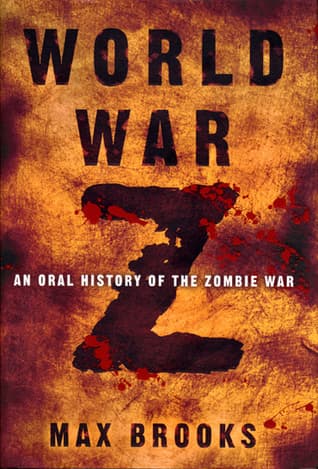
- World War Z: An Oral History of the Zombie War
Max Brooks
4.0 (440k) average on GoodreadsFantasyDeals with a global pandemic and humanity's fight against a new, dominant species, though in an oral history format.
- The War of the Worlds
H.G. Wells
3.8 (245k) average on GoodreadsFantasyFeatures humanity's struggle against an alien, superior intelligence, and the eventual re-evaluation of humanity's place in the world.
- Harry Potter and the Sorcerer's Stone
J.K. Rowling
4.5 (7M) average on GoodreadsFantasyRescued from a miserable life under the stairs, an orphaned boy discovers he's a wizard destined for a magical school, where he uncovers a dangerous secret tied to the dark wizard who murdered his parents.
- The Hunger Games
Suzanne Collins
4.3 (6.4M) average on GoodreadsFantasyIn a future where children fight to the death on live television, Katniss Everdeen volunteers for the arena, turning a death sentence into a fight for survival and a spark of rebellion.
- 1984
George Orwell
4.2 (3.1M) average on GoodreadsPoliticsIn a future where surveillance and thought control are absolute, a man's search for truth clashes with the Party, showing that hope can be a form of rebellion.





Enjoyed the summary?
A summary gives you the shape of the book. The book itself has the detail, the examples and the voice.
Find I Am Legend on AmazonAs an Amazon Associate, BookBrief earns from qualifying purchases. How we're funded