
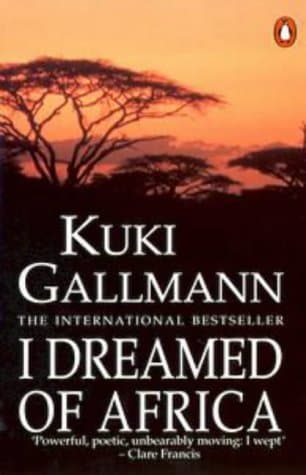
Core Idea
- Difficulty
- Medium
- Read it if
- You are drawn to powerful memoirs of resilience, love for nature, and stories of adapting to extreme personal loss in an exotic, challenging environment.
- Skip it if
- You prefer fast-paced narratives or are sensitive to detailed descriptions of personal tragedy and the harsh realities of African bush life.
Key Takeaways from I Dreamed of Africa
Africa: A Love Affair Beyond Reason
The continent demands an all-encompassing commitment, offering profound beauty alongside relentless tragedy.
Gallmann's memoir shows an almost mystical bond with the African landscape. Her initial move, driven by a romantic ideal, quickly evolves into a deep, visceral connection that goes beyond just living there. She doesn't just live in Africa; she becomes an integral part of its ecosystem, experiencing its cycles of life and death with an intensity that would be overwhelming for most. This emphasizes that Africa isn't a passive backdrop but an active, demanding character in her story, shaping her identity and destiny. It's a love affair that requires immense sacrifice and resilience, yet offers unparalleled spiritual fulfillment and a sense of belonging that no other place could provide.
“Africa will either make or break you, but it will never leave you indifferent.”
In the book: Kuki's immediate and unshakeable decision to stay in Africa even after the death of her husband, Paolo, and later her son, Emanuele, rather than returning to Italy, despite the immense personal cost and responsibility of managing the ranch alone. Her commitment to the land and its wildlife became her primary purpose.
Try this: Embrace environments or passions that demand your full presence and commitment, even if they come with significant challenges. True fulfillment often lies in deep, sustained engagement rather than superficial enjoyment.
Related ideas: sense-of-place, resilience, spiritual-connection
Tragedy as a Catalyst for Purpose
Profound loss, though devastating, can forge a new, stronger sense of mission and connection to life.
The narrative is marked by unimaginable losses: the sudden death of her beloved husband, Paolo, and then, years later, the tragic death of her son, Emanuele. Instead of succumbing to despair, Gallmann channels her grief into a powerful force for good. These tragedies, rather than breaking her, solidify her resolve to protect the land and its wildlife, transforming her personal suffering into a public mission. This highlights how extreme adversity can strip away the non-essential, revealing a core purpose and strength previously untapped. It's a look at human resilience and the transformative power of grief when channeled constructively.
“Out of the ashes of my despair, I found a new reason to live, a new purpose to dedicate myself to.”
In the book: After Emanuele's death from a snakebite, Kuki establishes the Gallmann Memorial Foundation dedicated to conservation, education, and community development, turning her private sorrow into a lasting legacy for the land and its people.
Try this: When faced with significant loss, seek ways to honor what was lost by creating something meaningful or contributing to a cause that resonates with your experience. Grief can be a powerful motivator for positive change.
Related ideas: grief-transformation, purpose-driven-life, resilience
The Wildness Within and Without
Navigating the untamed external world mirrors the journey of confronting one's own inner wilderness.
Gallmann's life in Kenya is a constant negotiation with the raw, unpredictable forces of nature—dangerous animals, harsh weather, and the ever-present threat of disease. This external struggle is deeply intertwined with her internal life, which is marked by passion, grief, and an unyielding spirit. The book suggests that living in such an elemental environment forces a confrontation with one's own primal instincts and vulnerabilities. This emphasizes the symbiotic relationship between external challenges and internal growth, where the 'wild' outside serves as a catalyst for understanding and mastering one's own emotional and psychological 'wilderness.'
“The wildness of Africa became a mirror to the wildness in my own heart, untamed and unpredictable.”
In the book: Her encounters with wild animals, the physical demands of managing a vast ranch, and the emotional toll of loss all contribute to her self-discovery and transformation. She learns to trust her instincts and adapt to circumstances beyond her control.
Try this: Seek out experiences that push you beyond your comfort zone and force you to confront your limitations. These challenges can reveal hidden strengths and a deeper understanding of yourself.
Related ideas: self-discovery, human-nature-connection, existentialism
Stewardship Over Ownership
True connection to land involves a deep responsibility for its preservation, transcending mere possession.
Initially arriving as settlers establishing a ranch, Kuki's perspective changes dramatically through her experiences. The repeated tragedies and her deepening understanding of the African ecosystem transform her view from that of a proprietor to a dedicated steward. This shift is important, as it underpins her conservation efforts and her commitment to the indigenous communities. This argues that true connection to a place, especially one as magnificent and fragile as the African wilderness, requires a deep sense of responsibility for its well-being, both for the environment and its inhabitants. It's a call to adopt a long-term, ethical approach to our relationship with nature.
“We were not owners of this land, but merely its temporary custodians, entrusted with its care.”
In the book: Kuki's establishment of the Gallmann Memorial Foundation focuses on conservation, anti-poaching, and community development, demonstrating her commitment to protecting the land and its people, rather than just exploiting its resources.
Try this: Consider your relationship with your environment—your home, your community, your planet. Adopt a mindset of stewardship, actively seeking ways to preserve and protect, rather than solely consume or possess.
Related ideas: conservation, environmental-ethics, indigenous-wisdom
The Power of Memory and Storytelling
Recounting personal history is not just remembrance, but an act of creation and resilience.
Gallmann's memoir itself shows the therapeutic and empowering nature of storytelling. Through her vivid descriptions and reflective prose, she reconstructs her past, giving form to her grief, celebrating her joys, and immortalizing the people she loved. This act of writing is not merely a passive recounting but an active process of making sense of her experiences, finding continuity amidst discontinuity, and preserving a legacy. This emphasizes that personal narrative is a vital tool for healing, for processing trauma, and for ensuring that the lessons learned from life's most profound moments are not lost but shared and understood.
“To write is to remember, and to remember is to live again, to find meaning in what was lost.”
In the book: The entire book is an intricate tapestry of memories, anecdotes, and reflections, meticulously crafted to convey the emotional landscape of her life in Africa, especially after her losses.
Try this: Engage in journaling, storytelling, or creative expression to process your life experiences, especially challenging ones. Sharing your story can be a powerful path to healing and connection.
Related ideas: narrative-therapy, legacy, autobiography
Beauty and Brutality as Inseparable Forces
Life's most exquisite moments are often inextricably linked with its harshest realities.
The African landscape, as depicted by Gallmann, is a place of breathtaking beauty—stunning vistas, abundant wildlife, and rich cultures. Yet, this beauty is consistently juxtaposed with extreme brutality: the constant threat of danger, the harshness of survival, and the profound personal tragedies she endures. This highlights a central theme: that life, especially in its rawest forms, does not offer beauty without cost. It suggests that a full appreciation of life's splendor requires an acknowledgment and acceptance of its inherent difficulties and pain. This integrated view allows for a deeper, more realistic understanding of existence.
“Africa taught me that beauty and brutality are two sides of the same coin, and one cannot exist without the other.”
In the book: The vivid descriptions of stunning sunrises and sunsets, the majesty of elephants, are often followed by accounts of poachers, snakebites, or the struggle for water during droughts.
Try this: Cultivate an integrated perspective on life, recognizing that joy and sorrow, beauty and challenge, are often intertwined. Avoid seeking only the pleasant and learn to find meaning in the difficult.
Related ideas: duality-of-life, existential-acceptance, nature-philosophy
The Resilience of Indigenous Knowledge
Traditional wisdom offers profound lessons for survival and living in harmony with the natural world.
Despite her European background, Gallmann deeply respects and learns from the indigenous communities around her. Their knowledge of the land, its animals, and its rhythms proves invaluable for her survival and for the successful management of her ranch. This shows the importance of traditional ecological knowledge, often overlooked by modern, Western perspectives. It argues that sustainable living and a deeper connection to place can be achieved by listening to and integrating the wisdom passed down through generations of people who have lived intimately with the land. It's a call for humility and cross-cultural learning.
“The local people, with their ancient wisdom, knew more about living with the land than any book could teach.”
In the book: Kuki relies on her local staff, particularly the Samburu and Maasai, for tracking animals, understanding weather patterns, and navigating the complexities of the African bush, acknowledging their superior knowledge.
Try this: Seek out and respect the wisdom of long-standing communities or traditions in your own environment. Recognize that valuable knowledge often exists outside of formal education or modern scientific frameworks.
Related ideas: indigenous-knowledge, cultural-exchange, sustainable-living
Love as the Ultimate Motivator
Deep affection for people and place provides the strength to endure immense hardship.
At its heart, 'I Dreamed of Africa' is a deep meditation on love. It's the love for her husband, Paolo, that initially brings her to Africa; the love for her son, Emanuele, that gives her joy; and the enduring love for the land and its creatures that sustains her through unimaginable grief. This asserts that love, in its broadest sense, is the most powerful force for resilience and purpose. It provides not only happiness but also the fortitude to face adversity, to rebuild, and to find meaning even in the face of desolation. This is a deeply human message about the enduring power of connection.
“It was love, in all its forms—for my family, for this land, for life itself—that kept me going.”
In the book: Despite the profound sorrow of losing her husband and son, Kuki chooses to remain in Africa and dedicate her life to preserving the environment they all loved, driven by her deep affection for them and the land.
Try this: Identify the core loves in your life—people, passions, places—and lean into them during difficult times. Understand that these connections are not just sources of joy, but also foundational to your strength and purpose.
Related ideas: human-connection, emotional-resilience, purpose-of-life
The Illusion of Control
Life's most significant lessons often emerge from surrendering to forces beyond our influence.
Gallmann, like many, arrives in Africa with certain expectations and desires for control over her life and environment. However, the unpredictability of the wilderness, coupled with the profound personal losses, forces her to confront the illusion of control. She learns that true strength is not dominating circumstances, but adapting to them, finding grace amidst chaos, and surrendering to the larger rhythms of life and death. This emphasizes a crucial philosophical shift: that peace and wisdom are often found in accepting what cannot be changed and focusing energy on what can be influenced—one's own attitude and actions.
“Africa taught me that you can plan and strive, but ultimately, life unfolds on its own terms.”
In the book: Her meticulous plans for the ranch are constantly challenged by droughts, floods, wild animals, and ultimately, the unforeseen deaths of her family members, forcing her to continually adapt and let go of rigid expectations.
Try this: Practice letting go of the need to control every outcome. Focus on your effort and attitude, and cultivate acceptance for the unpredictable nature of life. This can reduce stress and foster greater resilience.
Related ideas: acceptance, stoicism, mindfulness
I Dreamed of Africa Quotes
“There are some places on Earth that are so beautiful they can make you cry. Africa is one of them.”
“Living in Africa, one learns to accept the unpredictable, the sudden, the unexpected as part of the rhythm of life.”
“We are only guardians of the land, not its owners.”
“Grief is a landscape you walk through, not a place you stay.”
“Africa is not a place; it's a feeling.”
“In Africa, every day is a lesson in humility.”
“The wildness of Africa became the wildness of my own heart.”
“You can never truly own a piece of land; it always owns you.”
“Life, in its rawest form, is lived here.”
“The scent of rain on dry earth after a long drought is one of the most beautiful things in the world.”
“When you live close to nature, you learn to read the signs, to anticipate, to understand the rhythm of things.”
“Hope is a necessary ingredient for survival, especially in a place like Africa.”
“To truly know a place, you must live its seasons, feel its moods, share its struggles.”
“There is a profound peace that comes from living simply, surrounded by the vastness of the natural world.”
Quiz
10 questions on the main ideas. Each answer comes with a short explanation.
Question 1
What significant personal event prompts Kuki Gallmann's initial move to Kenya with Paolo?
- She was offered a job managing a wildlife conservancy.
- She married Paolo and they decided to start a new life.
- She inherited land in Kenya from a distant relative.
- She was seeking adventure after finishing her university studies.
Show answer
B. She married Paolo and they decided to start a new life. Kuki's move to Kenya is directly tied to her marriage to Paolo and their shared dream of building a life in Africa, which forms the foundation of the memoir.
Question 2
What is the approximate size of the ranch Kuki and Paolo establish in Kenya?
- 10,000 acres
- 50,000 acres
- 90,000 acres
- 150,000 acres
Show answer
C. 90,000 acres The book explicitly states they established a 'vast ranch' of 90,000 acres, which becomes a central element of her life and responsibilities.
Question 3
Which of these animals is NOT depicted as a significant part of the wildlife Kuki encounters or manages on her ranch?
- Elephants
- Lions
- Penguins
- Rhinoceroses
Show answer
C. Penguins The memoir is set in the African savanna, featuring typical African wildlife like elephants, lions, and rhinos, but not penguins.
Question 4
What is the primary emotional challenge Kuki faces after the initial tragedies strike her family?
- Resentment towards the local Kenyan community.
- The overwhelming sense of loneliness and the burden of responsibility.
- A desire to abandon Africa and return to Europe.
- Difficulty in adapting to the African climate and environment.
Show answer
B. The overwhelming sense of loneliness and the burden of responsibility. After the deaths of her husband and son, Kuki is left pregnant and alone, responsible for the vast ranch, leading to profound loneliness and the weight of her new duties.
Question 5
How does Kuki Gallmann largely describe her relationship with the natural environment of Africa?
- As a constant battle against its harsh and unforgiving elements.
- As a source of profound spiritual connection and enduring solace.
- As a means to exploit its resources for personal gain.
- As an exotic backdrop for her social life with other expatriates.
Show answer
B. As a source of profound spiritual connection and enduring solace. Despite the tragedies, Kuki finds deep solace and spiritual connection in the African landscape and its wildlife, which becomes a crucial part of her healing and resilience.
Question 6
What is one of the practical challenges Kuki faces in managing the 90,000-acre ranch without her husband's direct involvement?
- Lack of interest from local workers to assist her.
- The complete absence of any existing infrastructure or staff.
- Learning to oversee cattle, wildlife, and the vast logistics of the property.
- Constant threats from rival ranch owners trying to seize her land.
Show answer
C. Learning to oversee cattle, wildlife, and the vast logistics of the property. Kuki, initially less involved in the day-to-day management, had to quickly learn and take charge of all aspects of the enormous ranch, from livestock to conservation and personnel.
Question 7
The memoir explores the theme of resilience. How does Kuki primarily demonstrate this quality in the face of repeated personal losses?
- By withdrawing from society and living in isolation.
- By dedicating herself to the preservation of her adopted home and its wildlife.
- By seeking revenge against those she blames for her misfortunes.
- By constantly traveling to avoid facing her grief.
Show answer
B. By dedicating herself to the preservation of her adopted home and its wildlife. Kuki's resilience is embodied in her decision to stay in Africa, nurture her son, and dedicate her life to the conservation of the land and its creatures, transforming her grief into purpose.
Question 8
Beyond the personal narrative, what broader commentary does Kuki Gallmann's memoir implicitly offer about the colonial legacy in East Africa?
- It strongly advocates for the return of all land to indigenous populations.
- It highlights the complexities and often contradictory role of European settlers in African conservation efforts.
- It completely ignores any historical context, focusing solely on personal experience.
- It glorifies the colonial era as a period of unquestioned progress and development.
Show answer
B. It highlights the complexities and often contradictory role of European settlers in African conservation efforts. While a personal memoir, Kuki's story, as a European managing vast African land for conservation, implicitly touches upon the ongoing dialogue and complex relationship between foreign presence and local ecology/communities in post-colonial Africa.
Question 9
How does Kuki Gallmann's evolving understanding of 'home' contribute to the central message of the memoir?
- She ultimately concludes that her true home was always in Europe, despite her time in Africa.
- She learns that 'home' is not a fixed geographical location but where one's deepest connections and purpose lie.
- Her concept of home remains unchanged throughout the book, rooted in her childhood memories.
- She defines home strictly by the presence of her family members, regardless of location.
Show answer
B. She learns that 'home' is not a fixed geographical location but where one's deepest connections and purpose lie. Through immense loss and adaptation, Kuki transcends a traditional definition of home, finding it in her profound connection to the African land, its people, and her mission, making it her true spiritual and physical home.
Question 10
Which specific literary device is most evident in Gallmann's descriptions of the African landscape and its animals, contributing significantly to the memoir's evocative tone?
- Satire, used to mock the challenges of ranch life.
- Extensive use of scientific jargon to detail ecological processes.
- Vivid, sensory imagery and personification, imbuing nature with life and emotion.
- A detached, journalistic style focusing purely on factual reporting.
Show answer
C. Vivid, sensory imagery and personification, imbuing nature with life and emotion. Gallmann's writing is highly descriptive, using rich sensory details and often personifying the landscape and animals, allowing the reader to deeply experience her connection to Africa.
I Dreamed of Africa FAQ
What is 'I Dreamed of Africa' about?
'I Dreamed of Africa' is a captivating memoir by Kuki Gallmann, detailing her move to Kenya at age 25 with her husband, where they established a vast ranch. It chronicles her experiences with the beauty and harsh realities of African life, including personal tragedies and her resilience in overseeing a massive estate.
Is 'I Dreamed of Africa' a true story?
Yes, 'I Dreamed of Africa' is a non-fiction memoir based entirely on Kuki Gallmann's personal experiences and life in Kenya. It is her authentic account of love, loss, and living in the African wilderness.
Does Kuki Gallmann still live in Africa?
Kuki Gallmann continues to live in Kenya at Ol Ari Nyiro, the ranch she and her husband established. She is deeply involved in conservation efforts and managing the Gallmann Memorial Foundation.
What kind of tragedies does Kuki Gallmann face in the book?
The book poignantly describes several personal tragedies, including the loss of her husband and later her son. These profound losses force Kuki to confront immense grief while navigating the challenges of managing her vast African ranch alone.
What is the 'Ol Ari Nyiro' concept mentioned in the book?
Ol Ari Nyiro is the name of the vast ranch and conservancy established by Kuki Gallmann and her family in Kenya. It represents not only their home but also a significant commitment to wildlife conservation and sustainable living in Africa.
How does 'I Dreamed of Africa' differ from other memoirs about Africa?
While sharing themes with other African memoirs, Gallmann's book stands out for its deep personal introspection on profound loss and resilience, combined with an intimate portrayal of conservation efforts on her own land. It offers a unique blend of personal tragedy and unwavering commitment to the continent.
Are there photos included in 'I Dreamed of Africa'?
Yes, the book includes 32 pages of photographs, with half of them in full color. These images provide a visual journey into Kuki Gallmann's life, the landscapes, and the wildlife of her Kenyan ranch.
Does 'I Dreamed of Africa' have a movie adaptation?
Yes, 'I Dreamed of Africa' was adapted into a major motion picture released in 2000, starring Kim Basinger as Kuki Gallmann. The film brought her incredible story to a wider audience.
What themes are explored in 'I Dreamed of Africa'?
'I Dreamed of Africa' explores powerful themes such as love, loss, resilience, the human connection to nature, and the challenges and rewards of living in a wild, untamed land. It's a testament to the enduring spirit in the face of adversity.
Similar books
- Gorillas in the Mist
Dian Fossey
4.2 (19k) average on GoodreadsBiographyExplores a deep, almost obsessive dedication to African wildlife conservation, facing significant challenges and personal sacrifices.
- Cry of the Kalahari
Mark Owens
4.3 (4k) average on GoodreadsLifestyleChronicles the experiences of researchers living in remote African wilderness, highlighting challenges, beauty, and conservation efforts.
- West with the Night
Beryl Markham
4.2 (30k) average on GoodreadsLifestyleBoth Markham's and Gallmann's memoirs are set in East Africa and feature strong, independent European women deeply connected to the land. Markham's work, however, focuses more on adventure, aviation, and her unconventional lifestyle, with less emphasis on personal tragedy and conservation. While both share a love for Africa, Gallmann's narrative is more introspective and focused on stewardship, whereas Markham's is more outward-looking and concerned with the thrill of exploration and breaking societal norms. Markham's prose is equally beautiful but often more detached, contrasting with Gallmann's deeply emotional and personal recounting of loss and healing.
- Eat, Pray, Love
Elizabeth Gilbert
3.6 (1.5M) average on GoodreadsLifestyleA heartbroken writer leaves her conventional life for a year-long global search for pleasure in Italy, spiritual devotion in India, and unexpected love and balance in Bali.
- Wild: From Lost to Found on the Pacific Crest Trail
Cheryl Strayed
4.0 (615k) average on GoodreadsLifestyleAfter losing her mother and her marriage, a young woman impulsively hikes over a thousand miles of the Pacific Crest Trail alone, finding strength and healing in the unforgiving wilderness.
- Into Thin Air: A Personal Account of the Mount Everest Disaster
Jon Krakauer
4.2 (395k) average on GoodreadsLifestyleOn May 10, 1996, ambition and a sudden, violent storm turned Mount Everest into a deadly trap, leaving Jon Krakauer to tell the harrowing story of a disaster that took lives and shattered climbers' dreams.




Enjoyed the summary?
A summary gives you the shape of the book. The book itself has the detail, the examples and the voice.
Find I Dreamed of Africa on AmazonAs an Amazon Associate, BookBrief earns from qualifying purchases. How we're funded