
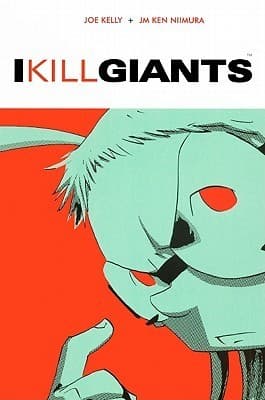
Synopsis
Covers the whole plot, including the ending.
- Difficulty
- Easy
- Pacing
- Moderate
- Mood
- Bittersweet, Imaginative, Emotional, Hopeful, Dark
- Read it if
- You enjoy poignant, character-driven coming-of-age stories with a strong fantasy element that explores themes of grief, escapism, and acceptance. Perfect for fans of unique graphic novels that blend reality and imagination.
- Skip it if
- You prefer straightforward fantasy without metaphorical elements, or if you're looking for a lighthearted story without emotional depth.
I Kill Giants Plot Summary
Covers the whole plot, including the ending.
Barbara's World of Giants and Fairies
Barbara Thorson is an eccentric fifth-grader who thinks she is a giant slayer. She lives in a world with hidden giants, fairies, and other mythical creatures. She carries a war hammer named Coveleski, which she believes is magical. She spends her days building traps and looking for giants in the woods and around her Long Island town. Her older sister, Karen, struggles to manage the house and Barbara's behavior. Her younger brother, Kevin, mostly ignores her. At school, Barbara is an outcast. She often gets in trouble for her obsessions and skips class for her 'work.' Her fantasy world is her only comfort. She writes about it in her notebooks, which frustrates her teachers and confuses her new school counselor, Mrs. Mollé.
A New Friend and Growing Concern
A new student named Sophia moves to Barbara's school from Leeds, England, and tries to befriend the reclusive giant slayer. Sophia is at first interested in Barbara's stories and views. Soon, she worries about Barbara's intense belief in giants and her isolation. Meanwhile, Mrs. Mollé, the school psychologist, tries to connect with Barbara, sensing a deeper issue. Barbara sees Mrs. Mollé as a nuisance and a threat to her secret mission. She avoids questions and refuses therapy. Karen, overwhelmed by her responsibilities, struggles to manage Barbara's school attendance and her behavior, which includes violent outbursts and more withdrawal into her fantasy world.
The Threat of the Titan
Barbara focuses on the coming of a powerful, ancient giant called a Titan. She thinks this Titan will destroy things and only she can stop it. Her preparations become more frantic and dangerous. She spends nights on the beach, sets traps, and even confronts a group of bullies, led by Taylor, who torment her at school. Barbara interprets everyday events, like a storm or a power outage, as signs of the Titan's approach. Sophia tries to understand Barbara's world, even joining her on some of her 'hunts.' But the line between reality and fantasy becomes more blurred for both of them, especially for Barbara, who seems to be losing her grip on the real world.
Sophia's Doubt and the Truth About Coveleski
Sophia's patience runs out as Barbara's behavior gets more extreme. During one of their 'hunts,' Sophia sees Barbara's desperate and self-destructive actions. This makes Sophia openly question if Barbara is mentally unwell. This causes a rift between them. In a vulnerable moment, Barbara tells Sophia that Coveleski, her war hammer, isn't magical in the way Sophia might think. Instead, she says it's a symbolic weapon, given to her by her father before his death. It represents her duty to protect the town. This hints at the deeper, personal meaning of her giant-slaying mission, connecting it to her family and past trauma.
Confrontation with Mrs. Mollé and Karen's Plea
Mrs. Mollé, after many failed attempts to talk to Barbara, learns more about her home situation and her mother's illness. She confronts Barbara directly, trying to get her to acknowledge her mother's deteriorating health. Barbara, however, lashes out, protecting her fantasy world as a shield against the painful truth. Karen, exhausted and overwhelmed, also pleads with Barbara. She asks her to stop her giant-hunting act and face the serious situation at home. The sisters' relationship is strained, with Karen feeling neglected and Barbara feeling misunderstood and burdened by her perceived duty.
The Beach Incident and Taylor's Revelation
Barbara's giant hunting becomes dangerous when she tries to set a trap on the beach. This causes an accident where she is injured, further alarming Karen and Mrs. Mollé. During this time, the school bully, Taylor, unexpectedly approaches Barbara. Instead of tormenting her, Taylor says she has also experienced loss. She understands Barbara's need for a coping mechanism. Taylor shares a story about her grandmother, hinting at her own struggles and offering empathy. This briefly bridges the social gap between the two girls.
The Truth Unveiled: Barbara's Mother
Sophia, worried about Barbara, visits her home and finally learns the truth: Barbara's mother is dying from a severe, unnamed illness, likely cancer, and is confined to her bed. The 'giants' Barbara has been fighting are metaphors for her fear, grief, and the helplessness she feels about her mother's coming death. The 'Titan' she fears is death itself. Sophia sees the mother in her bed, weak and frail, and the reality of Barbara's situation becomes clear. This shatters Sophia's initial idea of Barbara's 'fantasy' as just imaginative play.
The Final Battle Begins
As her mother's condition quickly worsens, Barbara thinks the 'Titan' giant is arriving. She goes to the woods, preparing for what she believes will be her final battle. She wants to face this giant alone, believing it is her job to protect her family and town from its destructive power. Her actions become frantic and desperate, fueled by grief and a need for control in a situation where she has none. She puts on her 'armor' and brandishes Coveleski, ready to confront the ultimate monster that threatens to take her mother away.
The Giant's Message
Barbara confronts the 'Titan' in a hallucinatory sequence in the woods. The giant is not a monster but a manifestation of her fears and grief. It speaks to her, saying its purpose is not to destroy but to end suffering. The giant tells her she cannot fight death, but she can fight for life and love. It explains that the real fight is not with external monsters, but with internal pain and the inability to accept loss. This encounter is a turning point, making Barbara face her mother's illness and her own deep emotions.
Acceptance and Farewell
After her encounter with the 'Titan,' Barbara returns home, no longer burdened by the literal fight against giants. She finds her family around her mother, who is nearing her end. Barbara finally sits by her mother's bedside, holding her hand, and shares a quiet, loving farewell. She accepts that her mother is dying and that she cannot fight this battle. She finds peace in being present and sharing a final moment of connection. Her journey from denial to acceptance ends in this tender, heartbreaking scene, showing her first steps toward processing her grief in a healthy way.
I Kill Giants Characters
Barbara Thorson
Protagonist
A fifth-grade giant slayer struggling with grief and reality.
Barbara is a fiercely intelligent, imaginative, and deeply troubled fifth-grader who believes she is the sole protector of her town against giants. She carries a war hammer, Coveleski, and meticulously documents her giant-hunting lore in notebooks. Her eccentric behavior, social isolation, and frequent clashes with authority figures mask a profound grief and fear related to her mother's terminal illness. She uses her elaborate fantasy world as a coping mechanism, a shield against the unbearable reality she refuses to acknowledge. Her journey is one of denial, escapism, and ultimately, a painful acceptance of loss.
Relationships: Karen Thorson (older sister, caregiver, often exasperated); Sophia (new friend, initially intrigued, later deeply concerned); Mrs. Mollé (school psychologist, attempts to help her); Barbara's Mother (dying from illness, the source of Barbara's grief); Taylor (bully, later shows empathy)
Karen Thorson
Supporting
Barbara's older sister, burdened with adult responsibilities.
Karen is Barbara's older sister, thrust into the role of primary caregiver for her younger siblings and their ailing mother. She is overwhelmed, exhausted, and often frustrated by Barbara's erratic behavior and refusal to engage with reality. Despite her exasperation, she deeply loves Barbara and tries her best to manage the household and ensure Barbara attends school, even as she struggles to process her own grief and fear regarding their mother's illness. Karen represents the difficult reality and the immense pressure placed on young adults in crisis.
Relationships: Barbara Thorson (younger sister, source of stress and love); Barbara's Mother (ailing mother, source of shared grief)
Sophia
Supporting
A new student who tries to befriend Barbara.
Sophia is a new girl at Barbara's school, recently moved from England. She is initially drawn to Barbara's unique imagination and unconventional personality, seeking to understand her fantastical world. As she spends more time with Barbara, Sophia grows increasingly concerned about her friend's well-being, witnessing the extent of Barbara's delusion and self-destructive tendencies. She is a compassionate and persistent friend who eventually discovers the painful truth behind Barbara's giant-slaying mission, becoming a crucial catalyst for Barbara's eventual confrontation with reality.
Relationships: Barbara Thorson (friend, initially intrigued, later deeply concerned)
Mrs. Mollé
Supporting
The school psychologist who attempts to help Barbara.
Mrs. Mollé is the compassionate and persistent school psychologist who recognizes that Barbara's giant-slaying fantasy is a symptom of deeper emotional distress. She makes repeated attempts to connect with Barbara, offering support and guidance, despite Barbara's resistance and evasiveness. Mrs. Mollé represents the adult world's attempt to intervene and provide help, even when misunderstood or rejected. She eventually uncovers aspects of Barbara's home life and tries to guide both Barbara and Karen towards facing the difficult reality of their mother's illness.
Relationships: Barbara Thorson (student, attempts to counsel); Karen Thorson (student's sister, discusses Barbara's welfare)
Barbara's Mother
Mentioned
The unseen catalyst for Barbara's fantasy world.
Barbara's mother is a largely unseen character, confined to her bed by a terminal illness, likely cancer. Her deteriorating health and impending death are the core catalysts for Barbara's elaborate giant-slaying fantasy. She is the 'giant' Barbara is truly fighting against, representing the overwhelming, uncontrollable force of death and loss. Though physically absent for much of the story, her presence looms large over the Thorson household, driving the plot and the emotional arcs of Barbara and Karen. Her final moments provide the setting for Barbara's ultimate acceptance.
Relationships: Barbara Thorson (daughter, source of Barbara's grief and fear); Karen Thorson (daughter, source of Karen's burden and grief)
Taylor
Supporting
A school bully who later reveals surprising empathy.
Taylor is initially introduced as a typical school bully who targets Barbara, mocking her eccentricities and giant-hunting stories. She represents the external pressures and social ostracism Barbara faces. However, her character arc takes an unexpected turn when she reveals a past personal loss (her grandmother), allowing her to relate to Barbara's pain on a deeper level. This moment of shared vulnerability momentarily breaks down the barrier between them, showcasing that even bullies can have hidden depths and shared experiences of grief.
Relationships: Barbara Thorson (classmate, initially bully, later empathetic)
Kevin Thorson
Supporting
Barbara's younger brother, often overlooked.
Kevin is Barbara's younger brother, who largely remains in the background, overshadowed by Barbara's dramatic behavior and their mother's illness. He represents the silent observer in a family in crisis, often trying to find his own way amidst the chaos. While not a central figure, his quiet presence highlights the impact of the family's situation on all its members, even those who seem to be coping by withdrawing.
Relationships: Barbara Thorson (older sister); Karen Thorson (older sister)
I Kill Giants Themes
Grief and Loss
The main theme is Barbara's inability to cope with her mother's terminal illness and coming death. Her giant-slaying fantasy shows her grief, fear, and desperate attempt to control an uncontrollable situation. The 'giants' she fights are metaphors for death, helplessness, and the pain of losing a loved one. The story shows her journey through the stages of grief, from denial and anger to acceptance. It highlights how loss affects a child and how people cope.
“I kill giants. It’s what I do.”
Escapism and Fantasy vs. Reality
Barbara creates a fantasy world to protect herself from her life's harsh realities. Her belief in giants and her role as a giant slayer lets her turn her inner struggles into monsters she can fight. The story blurs the lines between her imagination and reality, making the reader question what is real. This theme explores how fantasy can protect, but also how it can isolate and stop people from facing truths. It shows the importance of facing reality to heal.
“It's okay to be scared. Everyone is. But you have to fight. You have to fight for what you believe in. And you have to fight for the people you love.”
Coping Mechanisms and Mental Health
The story looks at different coping methods, mainly Barbara's fantasy world, as a response to trauma and stress. Her behavior, including social isolation, aggression, and obsessive tendencies, can be seen as symptoms of a child dealing with great psychological pressure. Mrs. Mollé's role as a school psychologist shows the importance of mental health support for grieving children. The story suggests that while fantasy can be a temporary refuge, healthy coping means acknowledging reality and seeking connection, instead of withdrawing.
“You can’t run from the things that scare you, Barbara. Not forever.”
Family Bonds and Responsibility
The Thorson family is under great strain because of the mother's illness. Karen, as the eldest, takes on much responsibility. She struggles to care for her siblings and manage the household while dealing with her own grief. This theme explores family dynamics in crisis, unspoken burdens, and the challenges of communicating and supporting each other during hard times. Despite friction and misunderstandings, there is an underlying current of love and loyalty that brings the family together in their shared moment of loss and acceptance.
“Sometimes, you just gotta let go.”
Plot Devices & Literary Techniques
The War Hammer 'Coveleski'
A symbolic weapon representing Barbara's duty and connection to her father.
Coveleski is Barbara's prized war hammer, which she believes is magical and essential for giant slaying. Initially, it appears to be a literal weapon in her fantasy world. However, it is revealed to be a sentimental object given to her by her deceased father, symbolizing his strength, her perceived duty to protect, and her connection to him. It acts as a transitional object, allowing her to channel her grief and fear into a tangible mission. Its significance shifts from a magical tool to a powerful symbol of her internal struggle and inherited strength, evolving as her understanding of her 'mission' changes.
The Giants (Metaphor)
Personifications of fear, grief, and the uncontrollable aspects of life.
The giants Barbara hunts are not literal monsters but powerful metaphors. They represent her deepest fears: the illness consuming her mother, the overwhelming nature of grief, the helplessness she feels, and ultimately, death itself. Each 'giant' she encounters or prepares for corresponds to a stage of her emotional struggle. The ultimate 'Titan' giant is the personification of death, which she must confront and, in doing so, accept. This device allows the story to explore complex psychological states through a fantastical lens, making internal battles external and tangible for Barbara and the reader.
Barbara's Notebooks
A visual and narrative device for Barbara's inner world and coping mechanism.
Barbara's notebooks are filled with her meticulous drawings, maps, and lore about giants and their weaknesses. These notebooks serve multiple functions: they are a visual representation of her rich inner fantasy world, a detailed record of her coping mechanism, and a narrative device that provides insight into her mental state. They show the extent of her dedication to her fantasy and her need for control through documentation. As her grip on reality loosens, the notebooks become a testament to her desperation, eventually reflecting her journey towards understanding the true nature of her 'giants'.
The 'Titan' Giant's Dialogue
A climactic moment of direct thematic revelation and emotional catharsis.
In the story's climax, Barbara confronts the 'Titan' giant, which speaks to her directly. This dialogue is a pivotal plot device, as the giant articulates the core themes of the book. It tells Barbara that she cannot fight death, but she can fight for life, love, and for herself. This is not a literal conversation with a monster, but a powerful internal monologue externalized, representing Barbara's subconscious confronting her conscious denial. It serves as the turning point for her acceptance of grief, providing the emotional and thematic resolution to her long-standing internal conflict.
I Kill Giants Quotes
“I'm not afraid of giants. I kill them.”
“Sometimes you have to pretend to be a lot braver than you are.”
“It's not about being a hero, it's about being strong enough to face what scares you.”
“Monsters are real. And ghosts are real too. They live inside us, and sometimes, they win.”
“You can't just fight the monsters you can see. Sometimes the hardest ones are the ones you can't.”
“Even if you can't see them, that doesn't mean they aren't there.”
“It's okay to be scared. Everyone gets scared. But you can't let it stop you.”
“Sometimes the biggest giants are the ones we build for ourselves.”
“The world is full of terrible things, Barbara. But it's also full of wonderful things. You have to decide which ones you're going to fight for.”
“I carry a hammer. For giants. And a purse. For, you know, stuff.”
“It's not about winning every fight. It's about getting back up every time you fall.”
“You don't have to face everything alone, Barbara.”
“Because if I don't, who will?”
“Grief is a giant. A big, ugly giant. And it's coming for you.”
Quiz
10 questions on the plot and the characters. Each answer comes with a short explanation.
Question 1
What unique accessory does Barbara Thorson always wear, which she claims helps her in her giant-hunting endeavors?
- A Viking helmet with horns
- A pair of dragon-scale gauntlets
- A cloak made of shadow-wolf fur
- A enchanted amulet passed down through her family
Show answer
A. A Viking helmet with horns Barbara is rarely seen without her iconic Viking helmet, which she believes is crucial for her role as a giant slayer, even taking it to school.
Question 2
Who is Sophia, the new girl who tries to befriend Barbara?
- A fellow giant hunter from another town
- Barbara's long-lost sister returning home
- A girl who genuinely wants to understand Barbara and her world
- An agent of the giants sent to spy on Barbara
Show answer
C. A girl who genuinely wants to understand Barbara and her world Sophia is a new student who tries to reach out to Barbara, initially being rebuffed but eventually becoming a key figure in helping Barbara confront her reality.
Question 3
What 'weapon' does Barbara use to fight the giants?
- A mystical sword called 'Harbinger'
- A powerful magical staff
- A war hammer she forged herself
- A giant-slaying warhammer she keeps in a special pouch
Show answer
D. A giant-slaying warhammer she keeps in a special pouch Barbara carries a small but potent 'warhammer' in her pouch, which she believes is the only tool capable of truly defeating the giants.
Question 4
What is the primary theme explored through Barbara's interactions with giants?
- The importance of physical strength in overcoming obstacles
- The power of imagination as an escape from harsh realities
- The conflict between ancient magic and modern science
- The struggle for environmental preservation against industrialization
Show answer
B. The power of imagination as an escape from harsh realities Barbara's elaborate fantasy world of giants serves as a coping mechanism and an escape from the painful reality of her family's situation, highlighting the power of imagination.
Question 5
What is the true nature of the 'giants' Barbara is fighting?
- Actual mythological creatures invading her town
- Metaphorical representations of her older sister's bullying
- A manifestation of her fear and grief surrounding her mother's illness
- Psychological projections of her own insecurities and anxieties
Show answer
C. A manifestation of her fear and grief surrounding her mother's illness The giants are revealed to be symbolic representations of Barbara's fear and inability to cope with her mother's terminal illness, specifically her struggle to accept death.
Question 6
Who is Mrs. Mollé, and what is her role in Barbara's story?
- Barbara's estranged grandmother who returns to help her
- The school guidance counselor who tries to understand Barbara
- A powerful sorceress who advises Barbara on giant-hunting tactics
- The leader of a rival gang of fantasy enthusiasts
Show answer
B. The school guidance counselor who tries to understand Barbara Mrs. Mollé is Barbara's school psychologist/guidance counselor. She initially struggles to connect with Barbara but eventually plays a crucial role in helping her confront her reality and grief.
Question 7
What significant event occurs that forces Barbara to confront the 'giants' in a more direct and terrifying way?
- A giant attacks her school, revealing their presence to everyone
- Her mother's health takes a severe turn for the worse, becoming undeniable
- She discovers that Sophia is actually a giant in disguise
- Her older sister, Karen, finally reveals she also sees the giants
Show answer
B. Her mother's health takes a severe turn for the worse, becoming undeniable As her mother's illness progresses and her condition deteriorates, the 'giants' become more threatening and palpable, forcing Barbara to face the reality she's been trying to avoid.
Question 8
What is the final, ultimate giant Barbara must face, and what does it represent?
- The Titan of Revenge, representing her anger at the world
- The Giant of Oblivion, representing the fear of being forgotten
- The Giant of Grief, representing the pain of losing a loved one
- The Giant of Death, representing the inevitability of mortality and loss
Show answer
D. The Giant of Death, representing the inevitability of mortality and loss The final giant Barbara confronts is the Giant of Death, a colossal and terrifying figure that represents the ultimate loss she fears – the death of her mother. Facing it means accepting her mother's mortality.
Question 9
How does Barbara ultimately 'defeat' the final giant?
- By striking it with her warhammer and destroying its physical form
- By accepting the reality of her mother's impending death and embracing her grief
- By convincing her sister and Sophia to believe in the giants with her
- By using a powerful ancient spell passed down through her lineage
Show answer
B. By accepting the reality of her mother's impending death and embracing her grief Barbara's victory isn't a physical one; it's an emotional and psychological breakthrough. She defeats the giant by finally accepting her mother's death, allowing herself to grieve, and facing the truth of her situation.
Question 10
What is the significance of the phrase 'I kill giants' by the end of the story?
- It remains a literal declaration of her fantasy role
- It signifies her triumph over her personal demons and the overwhelming reality of grief
- It becomes a shared mantra for her and Sophia as new giant hunters
- It's revealed to be a coded message for her estranged father
Show answer
B. It signifies her triumph over her personal demons and the overwhelming reality of grief By the end, 'I kill giants' evolves from a literal boast to a profound statement of strength. It means Barbara has confronted and overcome the overwhelming 'giants' of fear, grief, and denial that were consuming her.
I Kill Giants FAQ
What is I Kill Giants about?
I Kill Giants is about Barbara Thorson, an eccentric, D&D-loving fifth-grader who believes she hunts and kills giants to protect her town. As she navigates school bullies, a strained relationship with her older sister Karen, and a new school psychologist, she grapples with the increasingly blurred line between her fantastical world and the harsh realities of her life.
Why should I read I Kill Giants?
You should read I Kill Giants for its poignant exploration of grief, escapism, and the power of imagination, wrapped in a unique blend of fantasy and emotional realism. Joe Kelly and J.M. Ken Niimura craft a deeply moving story that resonates with anyone who has faced overwhelming fear and sought refuge in their inner world.
What is the background/setting of I Kill Giants?
The story is set in a seemingly ordinary suburban American town, primarily focusing on Barbara's school, her home, and the surrounding woods and beaches where she 'hunts' giants. This mundane setting provides a stark contrast to Barbara's elaborate fantasy world, highlighting her internal struggle.
What are the most memorable quotes?
One memorable quote is Barbara's mantra, 'I kill giants.' It encapsulates her identity and her coping mechanism. Another powerful line is from Mrs. Mollé, 'Sometimes, the real monsters are the ones you can't see,' which directly addresses the underlying themes of the book.
What writing style does the author use?
Joe Kelly's writing style is direct and empathetic, often using Barbara's internal monologue to convey her unique perspective and struggles. He masterfully blends fantastical elements with raw emotional realism, making Barbara's imaginative world feel as tangible as her real-world challenges.
What minor details add significant meaning?
Barbara's constant wearing of bunny ears, which she believes are a 'coventry' that protects her, is a crucial detail. It symbolizes her childlike innocence, her need for protection, and her refusal to fully abandon her fantasy world, even as reality encroaches.
What are some subtle foreshadowing moments?
Subtle foreshadowing includes Barbara's increasing fatigue and frequent nosebleeds, which she dismisses as battle wounds. These physical symptoms hint at her underlying health issue, which is the true 'giant' she is fighting, long before it's explicitly revealed.
What unexpected character connections exist?
The most unexpected connection is between Barbara and Mrs. Mollé, the school psychologist. Initially seen as an antagonist trying to 'fix' Barbara, Mrs. Mollé ultimately becomes a compassionate ally who understands Barbara's need for her fantasy, having experienced her own grief.
What are unspoken character motivations?
Barbara's unspoken motivation for clinging so fiercely to her giant-killing persona is to avoid confronting the impending death of her mother. Her elaborate fantasy world serves as a psychological shield against an unbearable reality.
What psychological complexities do characters exhibit?
Barbara exhibits complex psychological defense mechanisms, primarily escapism and denial, to cope with severe trauma. Her sister Karen struggles with resentment and guilt, trying to manage family responsibilities while also processing her own grief, leading to strained interactions with Barbara.
What are the major emotional turning points?
A major emotional turning point is when Barbara finally allows herself to grieve, breaking down in Mrs. Mollé's office and admitting her fears. Another is her final confrontation with the 'Titan,' which represents her acceptance of her mother's mortality.
How do relationship dynamics evolve?
Barbara's relationship with her sister Karen evolves from one of mutual frustration and misunderstanding to a place of loving, albeit difficult, acceptance. Mrs. Mollé's dynamic with Barbara shifts from professional distance to genuine empathy and support, as she helps Barbara navigate her grief.
Which parts remain ambiguous or open-ended?
The precise nature of the giants themselves remains somewhat ambiguous; while they are clearly a manifestation of Barbara's grief, the story allows for the possibility that her imagination imbued them with a certain 'realness' within her personal reality, leaving their exact ontological status open to interpretation.
What are controversial scenes or decisions?
One potentially controversial aspect is the portrayal of Barbara's aggression and isolation. While it's explained by her coping mechanisms, some readers might debate the effectiveness or appropriateness of her initial behavior towards others, such as her bullying of Taylor.
I Kill Giants ending explained: how it ends & what it means
The story ends with Barbara confronting the 'Titan,' the largest and most terrifying giant, which she realizes represents her mother's impending death. After 'defeating' it by accepting her grief and saying goodbye, she begins to open up to her sister and Mrs. Mollé, signaling the start of her healing journey and her return to reality, still carrying her strength and imagination but now grounded in acceptance.
Similar books
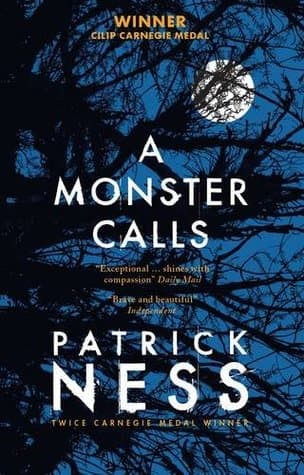
- A Monster Calls
Patrick Ness
4.3 (208k) average on GoodreadsFantasyBoth feature a child using fantasy to cope with a parent's terminal illness and grief.
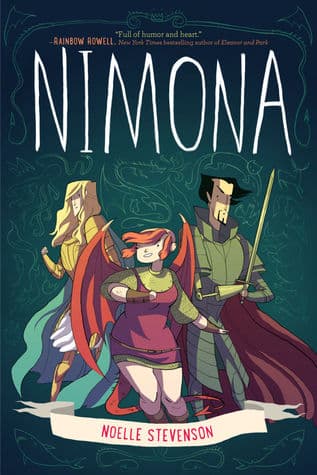
- Nimona
Noelle Stevenson
4.2 (106k) average on GoodreadsFantasyFeatures a strong, unconventional young female protagonist with a unique perspective on heroism and a blend of fantasy and real-world struggles.
- Coraline
Neil Gaiman
4.0 (23k) average on GoodreadsFantasyCoraline also features a young girl escaping into a dangerous, imagined world due to unhappiness at home. However, I Kill Giants grounds its fantasy more firmly in psychological realism, focusing on Barbara's internal battle against grief and denial rather than an external struggle against a purely evil antagonist. The 'threat' in I Kill Giants is primarily internal and metaphorical, while in Coraline, it's a tangible, malevolent force.
- Harry Potter and the Sorcerer's Stone
J.K. Rowling
4.5 (7M) average on GoodreadsFantasyRescued from a miserable life under the stairs, an orphaned boy discovers he's a wizard destined for a magical school, where he uncovers a dangerous secret tied to the dark wizard who murdered his parents.
- The Hunger Games
Suzanne Collins
4.3 (6.4M) average on GoodreadsFantasyIn a future where children fight to the death on live television, Katniss Everdeen volunteers for the arena, turning a death sentence into a fight for survival and a spark of rebellion.
- 1984
George Orwell
4.2 (3.1M) average on GoodreadsPoliticsIn a future where surveillance and thought control are absolute, a man's search for truth clashes with the Party, showing that hope can be a form of rebellion.




Enjoyed the summary?
A summary gives you the shape of the book. The book itself has the detail, the examples and the voice.
Find I Kill Giants on AmazonAs an Amazon Associate, BookBrief earns from qualifying purchases. How we're funded