
Synopsis
Covers the whole plot, including the ending.
- Difficulty
- Medium
- Pacing
- Slow
- Mood
- Introspective, Poetic, Melancholy, Hopeful, Intimate
- Read it if
- You enjoy experimental prose, poetic language, and a deeply introspective reading experience that blurs the line between author and reader. Perfect for those who appreciate emotional depth and unique narrative structures.
- Skip it if
- You prefer traditional plot-driven narratives, strong character development, or clear resolutions. This book is not for readers seeking a conventional story arc.
I Wrote This for You and Only You Plot Summary
Covers the whole plot, including the ending.
The Invitation to Intimacy
The book begins with a direct, intimate address from the unnamed narrator to an equally unnamed 'you.' This immediate intimacy sets the tone, presenting the narrator as a personal confidant or lover. They speak of creating something specifically for 'you,' an act of dedication and vulnerability. The narrator uses evocative language to describe their inner thoughts, often reflecting on shared memories or unspoken understandings with 'you.' This first section establishes the core idea: the book itself is a private communication, a tender offering meant to resonate individually with the reader, who is 'you.' There is a sense of longing and a desire for deep connection, even if the details of this connection remain unclear.
Fragments of Shared Experience
Throughout the early sections, the narrator shares fragmented memories and observations that hint at a shared past with 'you.' These are not linear story events but sensory details, emotional states, and philosophical thoughts. They recall specific moments—a shared silence, a particular glance, the feeling of a touch—without explicitly detailing the context. The prose often focuses on the beauty in everyday occurrences, given special meaning because they were experienced or imagined with 'you.' A recurring theme is searching, both for 'you' and for understanding within the relationship. The narrator's words evoke nostalgia, a longing for what was or what could be, painting a picture of a deep, yet possibly fractured, bond.
The Weight of Absence
A sense of absence or distance begins to appear in the narrator's reflections. While 'you' are constantly addressed, there are hints that 'you' might not be physically present, or that a significant emotional gap has opened between the narrator and 'you.' The narrator expresses feelings of loneliness, confusion, and a persistent longing for connection that is not fully returned or understood. They question the nature of their bond, the reasons for 'your' perceived withdrawal, and the impact of this separation on their own identity. This section explores the pain of unfulfilled desire and the struggle to maintain a connection when faced with silence or ambiguity, moving from pure romantic idealization to a more complex emotional state.
Musings on Love and Loss
The prose explores the philosophical aspects of love, loss, and memory. The narrator thinks about the fragility of human connection, the inevitability of change, and the lasting impact of past relationships. They ponder if love can truly last, or if it will fade, leaving only echoes. There is a bittersweet acceptance of a possible ending, even while holding onto hope for reconciliation or renewed understanding. The language becomes more introspective, exploring grief, yearning, and the complex mix of hope and despair that comes with deep emotional attachment. The narrator seeks meaning in the pain, trying to express the lessons learned from loving 'you.'
The Act of Creation as Connection
A significant idea emerges: writing itself is the main way the narrator maintains or re-establishes connection with 'you.' The narrator repeatedly says they are writing 'this for you,' framing the entire book as a direct communication, a lifeline across whatever distance separates them. Writing becomes proof of their lasting feelings, a way to process emotions, and an attempt to be heard and understood. It is an act of faith, believing these words will somehow reach 'you' and resonate. This section highlights the therapeutic and connective power of artistic expression, presenting the book not just as a collection of thoughts, but as a living letter to 'you.'
The Search for Understanding
The narrator continues to deal with ambiguity, often asking rhetorical questions to 'you' about their bond and 'your' perspective. They express a deep desire for understanding, for a clear signal or acknowledgment from 'you.' There is vulnerability in this search, as the narrator reveals hopes and fears, admitting confusion and longing for resolution. This section reflects the human experience of seeking clarity in complex relationships, of wanting to know where one stands. The narrator's introspection shows a need for mutual understanding, a desire to bridge the gap of unspoken thoughts and emotions that often exist between people, especially during love or its aftermath.
Embracing Imperfection and Vulnerability
A recurring theme is the acceptance of imperfection, both in the narrator's own emotional state and in the relationship with 'you.' The narrator acknowledges their vulnerabilities, fears, and flaws, presenting an honest portrayal of human emotion. There is beauty in this openness, a recognition that true connection often comes from shared vulnerability rather than idealized perfection. This section suggests a maturity in the narrator's view, moving beyond naive romanticism towards a more nuanced understanding of love's complexities. It is about finding strength in sincerity and recognizing that genuine intimacy often requires dropping pretenses and showing one's true self, even if it means risking hurt.
The Enduring Power of Memory
Memory plays an important role, acting as both comfort and torment. The narrator often revisits past moments with 'you,' holding onto them as proof of their connection. These memories often have a bittersweet quality, reminding the narrator of what was, what is, and what might never be again. They form a constant background to the narrator's present emotional state, shaping perceptions and desires. Remembering is a way to keep 'you' alive in their thoughts, even if 'you' are physically or emotionally distant. This section shows the lasting impact of shared history and how it continues to shape one's identity and emotional state long after the events.
Hope Amidst Uncertainty
Even in moments of deep sadness or confusion, hope runs through the narrator's words. This hope is not necessarily for a grand reunion or a perfect resolution, but for continued understanding, for the lasting resonance of their connection, or simply for the possibility that 'you' will read and understand these words. The narrator's persistent act of writing 'for you' is itself an act of hope, a belief in the power of communication and the potential for shared feeling. This section highlights the human spirit's resilience in the face of emotional uncertainty, suggesting that even a small glimmer of possibility can sustain one through difficult times, and that love can endure beyond immediate circumstances.
The Reader as 'You'
The most defining aspect of the book is the reader's realization that they are, in fact, the 'you' being addressed. The narrator's intimate, direct prose creates a unique experience where the reader feels personally seen, understood, and spoken to. The ambiguity of 'your' identity allows the reader to project their own experiences, desires, and relationships onto the narrative, making the book deeply personal. This mechanism blurs the line between author, character, and reader, forming a unique connection. The book becomes a mirror, reflecting the reader's own emotional state through the narrator's words, making each reading a unique and intimate encounter with the text and, by extension, with oneself. It explores universal human emotions through a highly individualized lens.
Principal Figures
The Narrator
Protagonist
The introspective, unnamed voice pouring out their heart to 'you.'
The Narrator is an unnamed, deeply introspective, and highly emotional individual who serves as the sole voice of the book. They are characterized by their profound sensitivity, their poetic sensibility, and their unwavering focus on 'you.' Their internal world is rich with feelings of love, longing, vulnerability, and occasional despair. The Narrator is a keen observer of human emotion and the nuances of relationships, constantly seeking to articulate the complexities of their bond with 'you.' They are driven by a desperate need for connection and understanding, using writing as their primary means of expression and communication.
Relationships: 'You' (The central object of their affection, longing, and artistic expression; a deeply intimate, yet ambiguous, connection.)
'You'
Central Figure/Recipient
The unnamed, idealized, and ambiguous recipient of the narrator's devotion.
'You' is the central, unnamed figure to whom the entire book is addressed. 'You' are both a specific individual in the narrator's mind and a universal placeholder for the reader. 'You' are idealized, a source of both immense joy and profound pain for the narrator. 'You' are perceived as potentially distant or absent, leading to much of the narrator's longing and introspection. The identity and specific actions of 'you' are deliberately left vague, allowing the reader to project their own experiences and interpretations onto this crucial role. 'You' exist primarily through the narrator's perceptions, memories, and desires.
Relationships: The Narrator (The object of the Narrator's intense focus, love, and longing; the silent recipient of their written confessions.)
The Reader
Implied Protagonist/Active Participant
The actual individual reading the book, who becomes 'you.'
While not a character in the traditional sense, the Reader is an essential active participant, as the entire conceit of the book places them directly into the role of 'you.' The Reader is invited to experience the intimate address personally, making the book a unique, individual experience. The Reader's own emotions, memories, and relationship experiences are implicitly drawn upon to fill the gaps left by the ambiguous 'you.' This active engagement transforms the Reader from a passive observer into the central figure of the narrative, responsible for interpreting and applying the narrator's words to their own life. Their role is to complete the emotional circuit the narrator attempts to establish.
Relationships: The Narrator (The direct recipient of the Narrator's intimate address and emotional outpouring, forming a deeply personal, one-sided literary relationship.)
Themes & Insights
The Power of Intimacy and Vulnerability
The book centers on the deep intimacy between the narrator and 'you,' which extends to the reader. The narrator's willingness to reveal their deepest emotions, fears, and longings creates an environment of extreme vulnerability. This vulnerability is not weakness, but the foundation of genuine connection. By sharing their true self, the narrator invites a reciprocal openness, even if that reciprocity is an internal experience for the reader. This theme appears in every phrase, as the narrator's direct address and emotional honesty compel the reader to engage personally, fostering a unique sense of being seen and understood. The work is an ode to the courage needed for true intimacy.
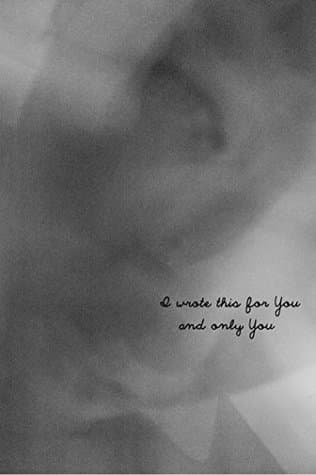
“I need you to understand something. I wrote this for you. I wrote this for you and only you.”
Love and Loss as Intertwined Experiences
The book explores love not as a static emotion, but as a dynamic interplay with loss and longing. The narrator's intense affection for 'you' is constantly touched by the possibility or reality of absence, distance, or misunderstanding. This intertwining suggests that the depth of love often becomes most clear in its potential or actual loss. The pain of separation, the yearning for what was, and the uncertainty of future connection are all part of the loving experience portrayed. The narrative accepts the bittersweet nature of deep attachment, where joy and sorrow are two sides of the same coin, constantly influencing each other. This theme shows in the narrator's nostalgic reflections on shared moments and their concurrent struggle with 'your' perceived distance.
“I miss you in ways that only a heart can understand, in silences that speak louder than words.”
The Transformative Nature of Writing and Art
Writing is presented not just as a medium, but as a vital, transformative act for the narrator. It is their main way of processing emotions, maintaining connection with 'you,' and finding meaning in experiences. Putting thoughts and feelings into words allows the narrator to deal with complex emotions, to overcome physical distance, and to create a lasting testament to their love and longing. The book itself becomes a piece of art that serves as a bridge, an attempt to bring presence out of absence. For the reader, the artistic prose transforms their experience into a personal reflection, showing how art can be a mirror and a catalyst for self-discovery and emotional processing. This theme highlights the power of creative expression to heal, connect, and articulate the ineffable.
“I write because it's the only way I know how to talk to you, to make you hear me when you're not here.”
The Subjectivity of Perception and Memory
The story is entirely filtered through the narrator's subjective experience, emphasizing how personal and often unclear our perceptions of relationships and memories can be. 'You' are defined solely by the narrator's feelings, recollections, and projections. There is no external validation or objective account of 'your' actions or feelings, leaving much open to interpretation. This shows how memory can be selective, colored by emotion, and how our understanding of others is always an internal construction. The reader, in becoming 'you,' experiences this subjectivity firsthand, filling in the blanks with their own perceptions. This theme encourages an awareness of how individual perspectives shape our realities and our relationships, and how even shared moments can be remembered and felt differently by each person involved.
“Perhaps I only remember the parts of you that fit into the story I'm trying to tell myself.”
Plot Devices & Literary Techniques
Direct Address to 'You'
The consistent use of 'you' as the primary recipient of the narrator's words.
This is the foundational device of the entire book. By constantly addressing 'you,' the narrator creates an immediate and intense sense of intimacy. This 'you' is deliberately ambiguous, allowing the reader to seamlessly step into that role. It blurs the line between a character within the narrative and the actual reader, making the experience profoundly personal and immersive. The direct address bypasses traditional narrative distance, drawing the reader into a one-sided, yet deeply felt, conversation, and making the book's content resonate on an individual, rather than universal, level.
Unnamed Narrator and Recipient
The deliberate lack of specific names for the main 'characters.'
The absence of names for both the narrator and 'you' is a crucial device that enhances the universality and personal connection of the book. By remaining unnamed, the narrator can represent anyone experiencing profound love or longing, and 'you' can represent anyone the reader has loved or lost. This anonymity prevents the reader from getting caught up in specific character details and instead encourages them to project their own experiences and relationships onto the narrative. It reinforces the idea that the emotions expressed are universal, even if the specific circumstances are left to the reader's imagination, creating a deeply relatable and adaptable emotional landscape.
Fragmented Prose and Lack of Linear Plot
The use of short, poetic passages rather than a continuous storyline.
Instead of a traditional linear plot, the book consists of a series of poetic prose fragments, observations, and emotional reflections. This non-linear structure mirrors the way memories and emotions often surface in our minds – not as a coherent story, but as disconnected moments, feelings, and thoughts. It invites the reader to piece together an emotional narrative rather than a factual one. This device also emphasizes the internal, subjective nature of the narrator's experience, focusing on mood and feeling over concrete events. It allows for a deeper exploration of emotional states, making the book feel more like a stream of consciousness than a structured story.
Ambiguity and Open Interpretation
The intentional vagueness regarding the relationship's specifics and outcomes.
The book thrives on ambiguity. The exact nature of the relationship between the narrator and 'you' – whether it's past, present, unrequited, or imagined – is never fully clarified. This device is vital for allowing readers to project their own experiences onto the text. It prevents the book from being confined to a single story, instead making it a vessel for countless individual narratives. The open interpretation ensures that each reader's experience is unique and deeply personal, as they fill in the blanks with their own emotional history, making the book profoundly relatable and enduring in its impact beyond a single reading.
I Wrote This for You and Only You Quotes
“You are the best story I have ever told.”
“The world is not a safe place for beautiful things, and you are beautiful.”
“I hope you find someone who knows how to love you when you are sad.”
“Maybe the art isn't in what you create, but in what you destroy.”
“I hope you are somewhere laughing, and I hope I am the reason.”
“You are my favorite kind of lonely.”
“Don't let anyone tell you that you're too much. You are exactly enough.”
“I think the most important thing is to be kind to yourself.”
“Every time I write for you, I feel like I'm writing myself into existence.”
“I hope you find the things that make your heart sing.”
“Sometimes the most beautiful things are the ones that break you a little.”
“You are not a poem. You are the poet.”
“I hope you never stop believing in magic.”
“We are all just trying to make sense of the beautiful mess.”
“Thank you for being the reason I believe in love.”
Quiz
10 questions on the plot and the characters. Each answer comes with a short explanation.
Question 1
The 'I Wrote This For You' project began in what year?
- 2007
- 2011
- 2015
- 2009
Show answer
A. 2007 The book description explicitly states that the 'I Wrote This For You' project started in 2007.
Question 2
What is the primary format of the 'I Wrote This For You' series?
- Long-form narrative novels
- Collections of prose and photography
- Graphic novels with dialogue
- Poetry anthologies without images
Show answer
B. Collections of prose and photography The series is described as a 'collection of prose and photography,' emphasizing its unique mixed-media approach.
Question 3
The title of the book, 'I Wrote This for You and Only You,' suggests what kind of relationship between the text and the reader?
- A general, universal message for everyone.
- A highly personal and intimate connection.
- A formal, academic analysis of emotions.
- A detached observation of human nature.
Show answer
B. A highly personal and intimate connection. The phrase 'for you and only you' directly implies a deeply personal, intimate, and unique experience for each individual reader, a core theme of the series.
Question 4
Which time period do the entries in 'I Wrote This for You and Only You' primarily cover?
- 2007 to 2010
- 2011 to 2015
- 2000 to 2005
- 2015 to 2020
Show answer
B. 2011 to 2015 The book description states it 'gathers together the very best entries in the project from 2011 to 2015.'
Question 5
What is 'I Wrote This for You and Only You' in relation to the overall series?
- The first book in the series
- The second book in the series
- The third book in the series
- A standalone spin-off
Show answer
C. The third book in the series The description clearly states, 'this is the third book in the I Wrote This For You series.'
Question 6
How does the book describe the nature of its emotional impact on readers?
- Predictable and universally understood.
- Unique to each person that reads it.
- Primarily focused on a single, specific emotion.
- Designed to evoke a sense of detachment.
Show answer
B. Unique to each person that reads it. The text highlights that the series is 'unique to each person that reads it,' emphasizing its subjective and individual emotional resonance.
Question 7
The series is characterized by 'hauntingly beautiful words, photography and emotion.' Which of these elements is MOST emphasized as being individually experienced?
- The photography
- The words
- The emotion
- All elements are equally and universally experienced.
Show answer
C. The emotion While all elements contribute, the description specifically states the overall 'exploration of hauntingly beautiful words, photography and emotion that's unique to each person that reads it,' implying the emotional impact is the most personally interpreted.
Question 8
Given the description, what is the most likely reason for the series' international #1 bestselling status?
- Its complex, multi-layered plot.
- Its universal appeal through personal connection and evocative content.
- Its groundbreaking scientific discoveries.
- Its use of celebrity endorsements.
Show answer
B. Its universal appeal through personal connection and evocative content. The book emphasizes its 'internationally acclaimed exploration of hauntingly beautiful words, photography and emotion that's unique to each person that reads it,' suggesting its success comes from its ability to resonate deeply and personally with a wide audience.
Question 9
The phrase 'I need you to understand something. I wrote this for you. I wrote this for you and only you' serves primarily to:
- Establish the author's identity.
- Create an immediate, direct, and intimate address to the reader.
- Summarize the plot of the preceding books.
- Provide instructions on how to read the book.
Show answer
B. Create an immediate, direct, and intimate address to the reader. This opening statement is a direct address, pulling the reader into a one-on-one, personal conversation, which is central to the series' unique appeal and theme of individual connection.
Question 10
Based on the provided information, which genre best fits the 'I Wrote This For You' series beyond the listed 'Creativity, Young Adult, Romance'?
- Mystery Thriller
- Self-Help/Inspirational
- Science Fiction
- Historical Fiction
Show answer
B. Self-Help/Inspirational While not explicitly stated, the focus on 'emotion that's unique to each person,' 'hauntingly beautiful words,' and the direct, personal address strongly aligns with self-help or inspirational literature, which aims to evoke personal reflection and feeling.
I Wrote This for You and Only You FAQ
What is the core premise of 'I Wrote This for You and Only You' for new readers?
'I Wrote This for You and Only You' is the third installment in the 'I Wrote This For You' series, compiling prose and photography from 2011 to 2015. It continues the project's unique exploration of emotion, designed to resonate personally with each reader through its hauntingly beautiful words and evocative images. The book emphasizes a direct, intimate connection between the author and the individual reader.
How does this book differ from the previous 'I Wrote This For You' collections?
While maintaining the project's signature style of prose and photography, 'I Wrote This for You and Only You' specifically curates entries from 2011-2015, offering a distinct chronological slice of the project's evolution. It builds upon the themes of the earlier books while potentially showcasing new emotional depths and photographic styles developed during that period. The title itself reinforces the intensely personal and singular reading experience.
Is there a continuous narrative or a central character throughout the book?
No, 'I Wrote This for You and Only You' does not feature a continuous narrative or traditional characters in the sense of a novel. Instead, it comprises a collection of standalone prose pieces and accompanying photographs, each exploring different facets of human emotion, connection, and introspection. The 'you' referred to in the title is the reader, making them the central focus of the emotional journey.
What kind of themes are commonly explored in the prose and photography?
The book frequently delves into themes of love, loss, longing, memory, identity, loneliness, hope, and the search for understanding and connection. The prose often uses evocative, poetic language to explore these complex emotions, while the photography typically features atmospheric, often melancholic, imagery that complements the text's mood. It aims to create a shared emotional space with the reader.
How does the photography interact with the written text in the book?
The photography is an integral part of the 'I Wrote This For You' experience, not merely an illustration. Each image is carefully paired with its accompanying prose to amplify the emotional impact, often providing a visual metaphor or setting a specific mood. The interplay between text and image is designed to create a richer, more immersive, and often ambiguous emotional landscape for the reader.
Are there any recurring visual motifs or symbols in the photography from 2011-2015?
Readers often notice recurring motifs such as desolate landscapes, solitary figures, blurred movements, natural elements like trees or water, and spaces that evoke a sense of quiet introspection or abandonment. These visual choices consistently reinforce the themes of isolation, reflection, and the search for beauty in melancholy, characteristic of pleasefindthis's style. The use of light and shadow is also a consistent symbolic element.
Does the book contain any subtle references or Easter eggs to the author's personal life or earlier works?
While the project largely maintains an anonymous and universal voice, astute readers might find subtle echoes of themes or specific phrases that reappear across the 'I Wrote This For You' series, suggesting an underlying continuity in the author's emotional landscape. The evolution of photographic style or recurring locations might also hint at personal influences, though these are never explicitly stated. The 'you' often feels like a specific 'you' despite its universal intent.
How does the 'I wrote this for you' declaration evolve or deepen within this specific collection?
In 'I Wrote This for You and Only You,' the titular declaration deepens by emphasizing exclusivity and direct address more strongly than in previous volumes. It suggests an even more intense, focused connection, as if each piece was crafted with a singular, imagined recipient in mind, thereby inviting the actual reader to step into that unique role. This intensifies the intimacy and personal resonance of the work.
What psychological effect does the direct address ('I wrote this for you') aim to achieve in the reader?
The direct address creates a powerful sense of intimacy and personal validation, making the reader feel uniquely seen and understood. Psychologically, it bypasses the typical author-reader distance, fostering a profound emotional connection that can evoke feelings of empathy, recognition, and even catharsis, as if the words were indeed penned solely for their specific experiences. This personalization is central to the project's impact.
How does the ambiguity of the 'you' contribute to the book's psychological impact?
The ambiguity of 'you' allows readers to project their own experiences, relationships, and emotional states onto the text, making it deeply personal. Psychologically, this 'blank slate' approach encourages introspection and self-identification, as the reader fills in the gaps with their own story, thereby feeling a profound, almost therapeutic connection to the words and images. It makes the book a mirror for their own feelings.
In what ways does the book explore the psychology of longing and unfulfilled desire?
The book frequently uses evocative language and melancholic imagery to tap into the universal human experience of longing, whether for connection, understanding, or a lost past. It often articulates the ache of unfulfilled desire through fragmented thoughts and atmospheric scenes, allowing readers to project their own specific longings onto the pages. This resonates deeply with the psychology of yearning.
How does the 'Young Adult' categorization apply to a book without traditional characters or plot?
The 'Young Adult' categorization likely refers to the emotional depth and themes that resonate strongly with the introspective and often turbulent experiences of adolescence and early adulthood. Themes of identity, first love, heartbreak, existential questioning, and the search for meaning are highly relevant to YA readers, even without a conventional narrative structure. The raw emotional honesty appeals across age groups, but especially to those navigating intense feelings.
Is the 'I' in the book meant to be the author, or a more generalized persona?
The 'I' in the book is intentionally ambiguous, serving as a generalized persona that embodies universal human emotions and experiences, rather than explicitly representing pleasefindthis. While the words originate from the author, the 'I' functions as a conduit for shared feelings, allowing readers to connect with the prose on an emotional level without being distracted by specific biographical details. It aims for a collective 'I'.
What is the primary message or takeaway readers are meant to glean from this collection?
The primary message is often interpreted as an affirmation of shared human experience and emotion, particularly in moments of vulnerability, love, and introspection. Readers are encouraged to find solace, understanding, and a sense of not being alone in their feelings, realizing that their innermost thoughts and longings are universal. The book offers a space for emotional recognition and connection.
Some readers find the book melancholic; is there an underlying message of hope or resilience?
While often melancholic, many readers find an underlying message of hope and resilience within the collection. The very act of articulating profound emotions, even sorrowful ones, can be seen as an act of hope—a belief in the possibility of connection and understanding. The shared experience of these feelings can be profoundly comforting and empowering, suggesting that even in sadness, there is beauty and strength. The beauty of the prose and photography itself offers a form of hope.
How does the book's structure (short prose, photography) contribute to its 'Creativity' genre label?
The book's unconventional structure, blending poetic prose with evocative photography in a non-linear fashion, exemplifies its 'Creativity' genre label. It challenges traditional narrative forms, encouraging readers to engage with the content on a more intuitive, emotional, and artistic level. The innovative combination of mediums fosters a unique reading experience that prioritizes feeling and aesthetic impact over conventional storytelling. It invites creative interpretation.
Is 'I Wrote This for You and Only You' meant to be read in a specific order?
No, 'I Wrote This for You and Only You' is generally not meant to be read in a specific order. Each entry stands alone, allowing readers to dip in and out, or read it cover-to-cover, depending on their mood or preference. This non-linear approach enhances its personal nature, as readers can encounter pieces that resonate most with them at any given moment, making the experience truly their own.
How does the book invite a sense of co-creation from the reader?
The book actively invites a sense of co-creation by leaving space for the reader to project their own interpretations, memories, and emotions onto the text and images. The deliberate ambiguity of the 'you' and the open-ended nature of the prose encourage readers to fill in the narrative gaps with their personal experiences, making the book's meaning uniquely constructed by each individual. This makes the reading experience highly interactive and personal.
Similar books
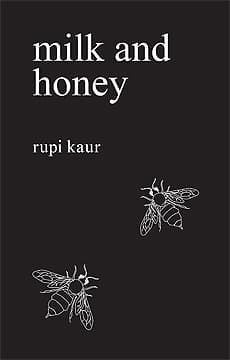
- Milk and Honey
Rupi Kaur
4.1 (345k) average on GoodreadsPsychologyBoth are collections of short, poetic prose exploring themes of love, loss, and healing, with a direct, intimate tone.
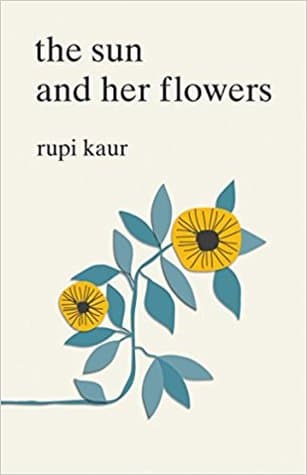
- The Sun and Her Flowers
Rupi Kaur
4.2 (142k) average on GoodreadsPsychologySimilar in style to 'Milk and Honey', focusing on vulnerability and personal growth through short, impactful pieces.
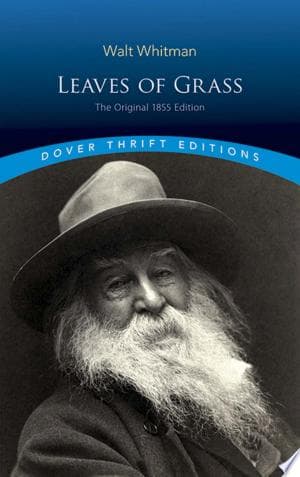
- Leaves of Grass
Walt Whitman
4.1 (90k) average on GoodreadsPhilosophyA classic example of direct address to the reader, celebrating individuality and universal connection through poetry.
- The Fault in Our Stars
John Green
4.2 (3.6M) average on GoodreadsYoung Adult'The Fault in Our Stars' explores similar themes of love, loss, and the weight of absence within a strong, character-driven narrative framework. While Green's novel provides a traditional plot and character development for readers to follow, 'I Wrote This for You' offers a more abstract, fragmented exploration of these emotions, focusing on evoking feelings directly rather than through a story arc.
- The Goldfinch
Donna Tartt
3.9 (720k) average on GoodreadsLiterary FictionHaunted by a tragic explosion and clutching a stolen Dutch masterpiece, a young orphan navigates the opulent drawing rooms of New York and the gritty underbelly of the art world, desperately seeking connection and redemption amidst a life spiraling into crime and obsession.
- Girl with a Pearl Earring
Tracy Chevalier
3.9 (627k) average on GoodreadsHistorical FictionA young servant in 17th-century Delft finds her quiet world intertwined with the painter Johannes Vermeer as she becomes his muse, blurring the lines of class, art, and forbidden desire.



Enjoyed the summary?
A summary gives you the shape of the book. The book itself has the detail, the examples and the voice.
Find I Wrote This for You and Only You on AmazonAs an Amazon Associate, BookBrief earns from qualifying purchases. How we're funded