
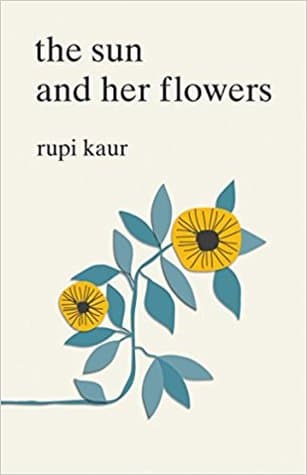
Core Idea
- Difficulty
- Easy
- Read it if
- You appreciate modern poetry that explores themes of healing, self-love, trauma, and the immigrant experience with direct, accessible language and emotional depth. Ideal for those seeking solace and empowerment through verse.
- Skip it if
- You prefer traditional poetic structures, dense metaphors, or find minimalist, direct emotional expression in poetry to be simplistic or overly sentimental.
Key Takeaways from The Sun and Her Flowers
The Cyclical Nature of Healing
Growth isn't linear; it's a process of wilting, falling, rooting, rising, and blooming.
Kaur shows that personal growth and healing are not a straight path but a cycle, like a flower's life. This idea suggests that times of struggle, sadness, and perceived failure—'wilting' and 'falling'—are not setbacks. Instead, they are necessary for 'rooting' oneself more deeply. These moments of vulnerability help build a stronger base, allowing for later 'rising' and 'blooming.' The book encourages readers to accept these low points as part of transformation, rather than fighting them. It challenges the pressure for constant happiness and progress, promoting acceptance of natural emotional ups and downs as essential for self-discovery and resilience.
“this is the recipe of life said my mother as she held me in her arms as i wept think of those flowers you plant in the garden each year they will teach you that people too must wilt fall root rise in order to bloom”
In the book: The entire structure of the book, divided into five chapters titled 'wilting,' 'falling,' 'rooting,' 'rising,' and 'blooming,' serves as the primary evidence for this cyclical theme. The mother's advice at the beginning directly encapsulates this philosophy.
Try this: When facing emotional difficulties or setbacks, instead of viewing them as failures, reframe them as essential 'wilting' or 'falling' phases. Engage in self-reflection and introspection ('rooting') during these times to build resilience and prepare for future growth. Practice self-compassion, understanding that discomfort is a temporary, necessary part of the journey towards blooming.
Related ideas: emotional-resilience, personal-growth, self-compassion
Honoring Ancestry and Roots
Understanding and embracing one's heritage is fundamental to self-identity and strength.
Kaur highlights how much ancestry affects personal identity and resilience. She explores the idea that one's strength and sense of self are connected to the struggles and triumphs of past generations. By recognizing her roots, especially the experiences of immigrant women and those who faced oppression, Kaur finds a source of power. This connection to heritage is not just about remembering; it is about drawing strength from the past to handle current problems and build a future. It suggests that understanding our origins provides an anchor in a world that often pushes people to conform or forget their history, advocating for a strong, inherited resilience.
“i stand on the backs of women who were told they were not enough”
In the book: Numerous poems in the 'rooting' section and throughout the book directly address the experiences of her mother, grandmother, and other ancestral figures, often highlighting their struggles as immigrants and women of color. The poem 'broken english' speaks to the intergenerational experience of language and culture.
Try this: Research and reflect on your family history and cultural heritage. Engage in conversations with older family members to understand their life experiences and struggles. Recognize how their journey has shaped your present identity and draw strength from their resilience.
Related ideas: cultural-identity, intergenerational-trauma, heritage-strength
The Evolution of Love
Love manifests in diverse forms, from romantic passion to self-love and communal solidarity.
Kaur looks at love in many ways, going beyond typical romantic ideas to include self-love, family ties, and appreciation for community. She presents love as not just an outside force but something grown within, starting with self-acceptance. The book challenges unhealthy relationship patterns and promotes love that is respectful and empowering. Kaur also extends love to include solidarity with others, especially those with similar struggles, showing the importance of shared empathy and support. This broad view of love encourages readers to find and nurture real connections, both with themselves and the world around them.
“the next time he says he loves you if he doesn’t say it like a goddamn prayer you don’t need it”
In the book: Kaur dedicates sections to the heartbreak of failed relationships ('falling'), the rediscovery of self-worth ('rising'), and the celebration of sisterhood and shared experience. Her poems often contrast superficial love with profound, respectful connection.
Try this: Evaluate your relationships (romantic, platonic, familial) to ensure they are built on mutual respect and genuine care. Prioritize self-love practices, understanding that a strong sense of self is the foundation for healthy external relationships. Cultivate empathy and support within your community.
Related ideas: self-love, healthy-relationships, communal-solidarity
Finding Home Within Yourself
True belonging is an internal state, cultivated through self-acceptance and resilience, independent of external circumstances.
For those who feel displaced, whether physically or emotionally, the idea of 'home' can be hard to find. Kaur argues that the true home is not a place or another person, but an inner sanctuary. This internal home is built on self-acceptance, self-knowledge, and self-worth. It means shifting from seeking outside approval to cultivating inner stability that stays constant despite external changes. This theme speaks to the immigrant experience, where physical homes are often left behind, emphasizing the need to build a strong sense of self that can thrive anywhere. It is about becoming your own anchor, your own safe space.
“you must want to spend the rest of your life with yourself first”
In the book: Poems discussing expatriation, the feeling of being an outsider, and the journey of self-discovery after heartbreak all contribute to this theme. The focus on self-love in the 'rising' chapter is central to building this internal home.
Try this: Practice mindfulness and self-reflection to understand your core values and desires. Develop a strong sense of self-worth that is independent of others' opinions or external achievements. Create daily rituals that ground you and foster a sense of internal peace, making yourself your own 'home.'
Related ideas: self-acceptance, inner-peace, belonging
The Power of Vulnerability in Healing
Embracing and expressing pain, rather than suppressing it, is a vital step towards emotional recovery.
Kaur's poetry shows the power of vulnerability. She openly addresses trauma, abuse, heartbreak, and insecurity, showing that acknowledging pain is a strong act. By sharing her experiences, she helps readers face their own hidden emotions. This open expression of vulnerability is presented as vital for healing, as it allows for processing and connection with others who have faced similar issues. The book argues that only by facing our deepest wounds can we begin to heal, moving from 'wilting' and 'falling' into 'rising' and 'blooming' with more authenticity.
“i want to apologize to all the women i have called beautiful before i’ve called them intelligent or brave”
In the book: Many poems explicitly detail experiences of sexual assault, emotional abuse, and the pain of lost love. The raw, direct language used throughout the collection exemplifies this vulnerability.
Try this: Allow yourself to feel and acknowledge difficult emotions without judgment. Consider journaling, talking to a trusted friend or therapist, or engaging in creative expression to process your feelings. Understand that vulnerability is a strength that fosters deeper connections and facilitates healing.
Related ideas: emotional-healing, self-expression, trauma-recovery
Reclaiming Self-Worth Post-Trauma
Healing from past wounds involves actively rebuilding self-esteem and recognizing inherent value.
A main part of Kaur's work focuses on regaining self-worth after trauma, heartbreak, or being undervalued by society. She shows how past wounds can damage one's sense of value, making it hard to trust oneself or others. The book highlights the process of internal rebuilding—moving from self-blame to recognizing one's strength and resilience. This recovery is active; it requires self-affirmation, setting boundaries, and celebrating personal growth. It emphasizes that while outside validation might be sought, true self-worth must come from within, allowing the individual to 'rise' above the past and 'bloom' as their authentic self.
“i am a forest and a fire and a river and a mountain and i am everything you cannot tame”
In the book: The 'rising' chapter is replete with poems of self-affirmation, declarations of independence, and the setting of healthy boundaries. Poems that directly address moving on from abusive relationships serve as strong examples.
Try this: Actively challenge negative self-talk and replace it with positive affirmations. Practice setting firm boundaries in your relationships to protect your emotional well-being. Celebrate small victories in your healing journey and acknowledge your inherent strength and resilience.
Related ideas: self-esteem, boundary-setting, trauma-informed-care
Feminine Strength and Sisterhood
The collective power and mutual support among women are essential for empowerment and healing.
Kaur champions feminine strength and the role of sisterhood in facing life's challenges. She often uses images of women supporting each other, gaining strength from shared experiences, and uplifting one another. This theme highlights the importance of finding community and solidarity, especially among women who have faced similar struggles. The book suggests that collective empathy and encouragement create a strong network for healing and empowerment, allowing individuals to 'rise' together and 'bloom' more vibrantly. It is a celebration of shared resilience and unique bonds.
“i want to be with people who know the darkness inside me and still choose to stay”
In the book: Several poems are dedicated to the strength of women, the bond between sisters and friends, and the collective experience of womanhood. The poem 'what if i told you' speaks to the shared trauma and healing among women.
Try this: Actively seek out and cultivate supportive relationships with other women. Participate in women's groups or communities that foster mutual encouragement and understanding. Offer support and empathy to other women in their struggles, strengthening the collective bond.
Related ideas: feminist-empowerment, women's-solidarity, mutual-support
Beauty Beyond the Superficial
True beauty is an internal radiance, born from resilience, experience, and self-acceptance, not external appearance.
Kaur questions traditional ideas of beauty, shifting the focus from external looks to an inner light formed through life's challenges. She argues that true beauty is not about flawless skin but about the strength found in vulnerability, the wisdom gained from pain, and the resilience shown in healing. The 'blooming' phase is not just about physical beauty, but about the full, authentic expression of a self that has endured and grown. This view encourages readers to see 'scars' as signs of honor and unique beauty, building a deeper relationship with their bodies and selves. It is about recognizing the 'gold' made from pain.
“the world gives you so much pain and here you are making gold out of it”
In the book: Poems that focus on body image, self-love after trauma, and the celebration of imperfections directly support this theme. The recurring motif of the flower blooming, often implying a journey through hardship, reinforces this idea.
Try this: Practice mindful appreciation for your body and its journey, acknowledging its strength and resilience. Challenge societal beauty standards by focusing on your internal qualities and personal growth. Celebrate your unique story and the wisdom gained from your experiences as sources of true beauty.
Related ideas: body-positivity, inner-beauty, self-acceptance
The Impermanence of Pain
While suffering is inevitable, it is a transient state that eventually gives way to growth and renewal.
A central message in Kaur's work is that pain is temporary. The 'wilting' and 'falling' stages, while deeply felt, are shown as necessary but not permanent. Just as winter leads to spring, emotional suffering is portrayed as a phase that, with time and effort, will lead to 'rooting,' 'rising,' and 'blooming.' This perspective offers hope, encouraging readers to get through difficult times with the understanding that they are part of a larger, transformative process. It reminds us that even in deep valleys, seeds for future growth are being planted, and our experiences will not remain a 'background blur' forever.
“you tell me to quiet down cause my opinions make a loud noise / but i was not made to be a background blur”
In the book: The progression through the book's chapters, from 'wilting' to 'blooming,' inherently demonstrates the transient nature of each stage. Poems describing deep sorrow eventually transition into expressions of hope and renewal.
Try this: During times of distress, remind yourself that this pain is a temporary phase in your journey. Focus on small, actionable steps towards healing and growth, trusting that brighter days will follow. Cultivate patience and self-compassion, knowing that healing takes time.
Related ideas: hope, resilience, emotional-transience
The Sun and Her Flowers Quotes
“i didn’t know what to do with my body / so i made it into a home / for you.”
“fall in love with your solitude.”
“you are your own soulmate.”
“the world gives you so much pain / and here you are / making gold out of it.”
“what is stronger than the human heart / which shatters over and over again / and still lives.”
“i have been searching for an answer / to the question / how do i love myself / and all i found was / there is no answer / just practice.”
“we are all born / with a certain amount of wonder / we spend our lives / trying to get it back.”
“you tell me to quiet down cause my opinions make me less beautiful / but i was not made with a fire in my belly so i could be put out / i was not made with a lightness on my tongue so i could be easy to swallow / i was made with a voice so i could tell stories.”
“the sun and her flowers / are here to remind you / that even in the darkest moments / there is beauty / to be found.”
“i want to apologize to all the women i have called beautiful / before i’ve called them intelligent or brave / i am sorry i made it sound as though / something as simple as what you’re born with / is all you have to be proud of / when you have broken mountains with your wit / from now on i will say things like / you are resilient you are extraordinary.”
“how you love yourself is / how you teach others / to love you.”
“i am a forest / and a fire / and a storm / and a flower / i am everything and nothing / and i am here / to grow.”
“we have been socialized to know / that love is a choice / but we have forgotten / that healing is also a choice.”
“my heart is a museum of memories / and you are the most valuable exhibit.”
“you must want to spend the rest of your life with yourself first.”
Quiz
10 questions on the main ideas. Each answer comes with a short explanation.
Question 1
Which of the following is NOT one of the five chapters in 'The Sun and Her Flowers'?
- wilting
- growing
- rising
- blooming
Show answer
B. growing The five chapters are wilting, falling, rooting, rising, and blooming, representing the cyclical journey of growth and healing.
Question 2
The poem 'this is the recipe of life' uses which natural metaphor to describe human growth and healing?
- The changing seasons of a tree
- The ebb and flow of ocean tides
- The life cycle of garden flowers
- The journey of a migrating bird
Show answer
C. The life cycle of garden flowers The mother explicitly tells the speaker to 'think of those flowers you plant in the garden each year they will teach you that people too must wilt fall root rise in order to bloom.'
Question 3
A central theme explored in 'The Sun and Her Flowers' regarding one's origins is:
- Detachment from past experiences.
- Embracing and honoring ancestry.
- The rejection of familial ties.
- Focus solely on future aspirations.
Show answer
B. Embracing and honoring ancestry. The book description explicitly states that the collection is about 'Ancestry and honoring one’s roots.'
Question 4
Which emotion is most consistently associated with the 'wilting' chapter?
- Joy and celebration
- Grief, heartbreak, and loss
- Ambition and striving
- Indifference and apathy
Show answer
B. Grief, heartbreak, and loss The 'wilting' chapter typically represents the initial stages of pain, loss, and heartbreak, mirroring a flower's decline before renewal.
Question 5
The concept of 'expatriation' in the context of the book primarily refers to:
- Traveling to exotic foreign lands for adventure.
- The process of leaving one's native country and finding a sense of belonging within oneself.
- Severing all ties with one's cultural heritage.
- Strict adherence to traditional gender roles.
Show answer
B. The process of leaving one's native country and finding a sense of belonging within oneself. The description states 'Expatriation and rising up to find a home within yourself,' indicating a journey of displacement leading to internal self-discovery and belonging.
Question 6
Kaur's poetry in 'The Sun and Her Flowers' is characterized by its use of:
- Complex rhyme schemes and traditional meter.
- Minimalistic style, lowercase letters, and lack of punctuation.
- Extensive use of archaic language and classical allusions.
- Long, narrative poems with detailed plot structures.
Show answer
B. Minimalistic style, lowercase letters, and lack of punctuation. Rupi Kaur's distinctive style, carried over from 'milk and honey,' is known for its simplicity, use of lowercase, and lack of traditional punctuation.
Question 7
The phrase 'a celebration of love in all its forms' most broadly encompasses which of the following themes within the collection?
- Exclusively romantic love between partners.
- Self-love, familial love, platonic love, and romantic love.
- Love for material possessions and wealth.
- Love for abstract concepts like justice and freedom, without personal connection.
Show answer
B. Self-love, familial love, platonic love, and romantic love. The phrase 'love in all its forms' suggests a comprehensive exploration, which aligns with themes of self-love (finding a home within yourself), familial bonds (honoring roots), and broader human connections.
Question 8
How does the 'rooting' chapter conceptually contribute to the overall journey of healing in the book?
- It focuses on external validation and seeking approval from others.
- It represents the process of self-discovery, establishing a foundation, and connecting with one's inner self and heritage after periods of loss.
- It primarily describes the physical act of planting seeds in a garden.
- It signifies a permanent state of stagnation and inability to move forward.
Show answer
B. It represents the process of self-discovery, establishing a foundation, and connecting with one's inner self and heritage after periods of loss. Following 'wilting' and 'falling,' 'rooting' symbolizes the essential process of grounding oneself, reconnecting with one's origins, and building a strong internal foundation necessary for subsequent growth ('rising' and 'blooming').
Question 9
The structure of 'The Sun and Her Flowers' with its five distinct chapters is best described as:
- A random collection of unrelated poems grouped by length.
- A chronological narrative detailing a specific relationship from start to finish.
- A thematic progression mirroring the cyclical process of nature and human emotional development.
- An alphabetical arrangement of poems by their first letter.
Show answer
C. A thematic progression mirroring the cyclical process of nature and human emotional development. The chapters 'wilting, falling, rooting, rising, and blooming' directly parallel the life cycle of a flower, serving as a metaphor for the human experience of growth, healing, and self-discovery.
Question 10
How does the author's illustration style in 'The Sun and Her Flowers' contribute to the reader's experience?
- They provide highly detailed, realistic depictions of the natural world.
- They serve as complex allegories that require deep academic interpretation.
- They offer simple, poignant visual metaphors that enhance the emotional resonance and accessibility of the poems.
- They are purely decorative elements with no direct connection to the poetic content.
Show answer
C. They offer simple, poignant visual metaphors that enhance the emotional resonance and accessibility of the poems. Kaur's illustrations are typically minimalist line drawings that directly complement the themes and emotions of her poems, making the collection more visually engaging and emotionally impactful.
The Sun and Her Flowers FAQ
What themes are explored in 'The Sun and Her Flowers'?
'The Sun and Her Flowers' delves into profound themes of growth, healing, ancestry, self-love, and the journey of finding a home within oneself. It explores the cyclical nature of life through wilting, falling, rooting, rising, and blooming.
How is 'The Sun and Her Flowers' structured?
The book is divided into five distinct chapters: wilting, falling, rooting, rising, and blooming. Each chapter represents a stage in the journey of healing and self-discovery, mirroring the life cycle of a flower.
Does 'The Sun and Her Flowers' explore romantic relationships?
Yes, 'The Sun and Her Flowers' celebrates love in all its forms, including romantic love. While it also touches on self-love, familial love, and ancestral love, romantic relationships are a significant component of the collection's emotional landscape.
What is the significance of the title 'The Sun and Her Flowers'?
The title metaphorically represents the relationship between a life-giving force (the sun) and the beings that grow from it (the flowers). It symbolizes nurturing, resilience, and the inherent beauty in growth, even through difficult stages.
How does 'The Sun and Her Flowers' differ from Rupi Kaur's previous work, 'milk and honey'?
While both collections share Rupi Kaur's distinctive poetic style, 'The Sun and Her Flowers' offers a more explicit focus on ancestry, expatriation, and the journey of finding a 'home within yourself.' It expands on themes of healing and growth with a broader scope than 'milk and honey.'
Does the book include illustrations?
Yes, similar to her previous work, 'The Sun and Her Flowers' is beautifully illustrated by Rupi Kaur herself. These illustrations complement the poetry, adding another layer of depth and emotion to the reading experience.
What is 'wilting' in the context of the book?
'Wilting' represents periods of sadness, struggle, and emotional depletion, much like a flower losing its vibrancy. It signifies the initial phase of pain or heartbreak that often precedes growth and healing.
Is 'The Sun and Her Flowers' suitable for someone going through a breakup?
Absolutely. The book's themes of healing, self-discovery, and finding strength after pain make it highly resonant for those experiencing heartbreak or loss. Its journey from 'wilting' to 'blooming' offers comfort and hope.
Does 'The Sun and Her Flowers' touch upon cultural identity?
Yes, the book deeply explores themes of ancestry and honoring one’s roots, as well as the experience of expatriation. It reflects on how cultural heritage and background shape identity and the search for belonging.
About the author

Rupi Kaur is a Canadian poet and illustrator known for her work in contemporary poetry. She gained widespread recognition for her collections, "Milk and Honey" and "The Sun and Her Flowers," which explore themes of love, loss, and healing through accessible and minimalist verse. Kaur's work often incorporates visual elements, enhancing the emotional impact of her poetry.
Similar books
- Milk and Honey
Rupi Kaur
4.1 (345k) average on GoodreadsPsychologyShares the same author's style and thematic focus on trauma, healing, and femininity.
- The Princess Saves Herself in This One
Amanda Lovelace
3.9 (77k) average on GoodreadsPsychologyExplores similar themes of trauma, recovery, and female empowerment through accessible poetry.
- Where the Sidewalk Ends
Shel Silverstein
4.3 (1.2M) average on GoodreadsFantasyFeatures simple, illustrative poetry with profound underlying messages, though different themes.
- The Perks of Being a Wallflower
Stephen Chbosky
4.2 (1.3M) average on GoodreadsPsychologyThrough letters, a shy high school freshman learns to navigate first love, trauma, and self-discovery, stepping off the sidelines and into life.
- Eleanor Oliphant Is Completely Fine
Gail Honeyman
4.3 (708k) average on GoodreadsLiterary FictionA lonely woman's structured life changes when an IT guy and an elderly man help her learn to open her heart.
- One Flew Over the Cuckoo's Nest
Ken Kesey
4.2 (631k) average on GoodreadsPsychologyIn a mind-bending asylum, the boisterous Randle McMurphy wages a defiant war against the tyrannical Nurse Ratched, inspiring his fellow inmates, including the seemingly catatonic Chief Bromden, to reclaim their lost humanity.





Enjoyed the summary?
A summary gives you the shape of the book. The book itself has the detail, the examples and the voice.
Find The Sun and Her Flowers on AmazonAs an Amazon Associate, BookBrief earns from qualifying purchases. How we're funded