
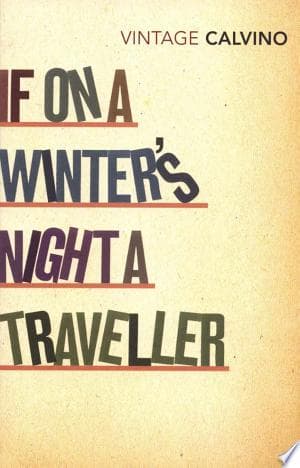
Synopsis
Covers the whole plot, including the ending.
- Difficulty
- Medium
- Pacing
- Variable
- Mood
- Playful, Intellectual, Experimental, Introspective
- Read it if
- You enjoy experimental fiction, meta-narratives, and books that play with the act of reading itself.
- Skip it if
- You prefer straightforward plots with clear resolutions and dislike fragmented or self-referential stories.
If on a Winter's Night a Traveller Plot Summary
Covers the whole plot, including the ending.
The Reader Begins 'If on a Winter's Night a Traveller'
The novel opens by speaking directly to 'You', the Reader, guiding you through the steps of getting ready to read a new book. You buy 'If on a Winter's Night a Traveller' by Italo Calvino, get comfortable, and start reading the first chapter. The story places you in a train station, introducing Giselda, a woman waiting for her train, watched by a man who might be her lover or just another passenger. The mood is one of waiting and a little sadness. But as the story begins to unfold, the text suddenly stops, showing a printer's error where pages repeat, making it impossible to continue.
The Reader's Quest for the Missing Chapters
Frustrated by the faulty copy, You go back to the bookstore to exchange it. The bookseller, somewhat uninterested, gives you a replacement. However, when you get home and start reading again, you find the new book, though titled 'If on a Winter's Night a Traveller', is a completely different story. This new narrative, 'Outside the Town of Malbork' by Tazio Bazakbal, begins with a character, Marana, in a mysterious, foggy place. While at the bookstore, You also meet Ludmilla, another reader who is also trying to find the correct continuation of 'If on a Winter's Night a Traveller', sharing your problem and confusion.
A Series of Unfinished Novels
Your shared search with Ludmilla for the true 'If on a Winter's Night a Traveller' leads you both through a confusing series of unfinished novels. Each book you get, thinking it is the continuation, turns out to be a different work by a different fictional author. These include 'Outside the Town of Malbork' by Tazio Bazakbal, 'Leaning from the Steep Slope' by Ukko Ahti, 'Without Fear of Wind or Vertigo' by Vorts Viljandi, and 'Looks Down in the Gathering Shadow' by Cavedweller. Each fragment is a distinct genre and style, from detective fiction to philosophical thoughts, leaving you always at the start of a new, interesting plot.
The Conspiracy of the Fictional Authors
As you and Ludmilla continue your search, you begin to suspect a larger plan. You meet various people in the literary world, such as Professor Uzzi-Tuzii, an academic focused on text analysis, and Silas Flannery, a private and worried writer who struggles to start his own novels. It becomes clear that the seemingly random appearance of different books is not by chance. There is a complex network of connections between the fictional authors, publishers, and even government agencies, all controlling the literary market, creating false author names, and producing books that are purposely left unfinished or mislabeled.
The Reader's Growing Relationship with Ludmilla
Throughout the confusing journey through broken narratives, the relationship between You, the Reader, and Ludmilla, the Other Reader, grows a lot. Their initial shared frustration over the books turns into a deeper connection, marked by curiosity, mutual help, and growing romantic interest. They become partners in solving the literary mystery, spending time together discussing the books, sharing ideas, and navigating the strange world of authors and publishers. Ludmilla is the ideal reading partner, someone who understands and shares the Reader's passion and confusion.
Encounters with Literary Figures
Your search leads you to various unusual people in the literary world. You visit the troubled writer Silas Flannery, who admits his struggles with writer's block and his ways of creating, including using a tape recorder to catch random thoughts. You also meet Ermes Marana, a mysterious figure who seems to be behind the spread of many of the false or incomplete books, possibly as a literary saboteur or a revolutionary trying to break down traditional publishing. These meetings offer glimpses into the complex and often strange processes of writing, publishing, and reading, further blurring the lines between fiction and reality.
The Unreadable Books
The literary journey introduces you to books that challenge what a novel is. You encounter works like 'In a Network of Lines that Intersect' by Anatoly Anatolin, which is structured like a complex diagram, and 'In a Network of Lines that Intersect' again, but by a different author, Bertrand Vandervelde, which focuses on the act of reading itself. These fragments are not just unfinished but often experiment with form and content, making them hard to follow in a traditional way. They reflect on storytelling, the author's purpose, and the reader's role in finding meaning, pushing the limits of what a book can be.
The Search for Meaning and Connection
Beyond the literal search for a complete book, You and Ludmilla are involved in a deeper search for meaning and connection. Each unfinished story, despite its sudden end, offers a look into different worlds, ideas, and human experiences. The constant stopping forces you to face the act of reading itself, the desire for an end, and the imaginative process of filling in the gaps. The shared experience of this literary journey also strengthens the bond between You and Ludmilla, suggesting that perhaps the true 'story' is not in any single book, but in the shared journey and the human connection made through it.
The Circle of Readers
Towards the end of your journey, You and Ludmilla find yourselves in a library, meeting a group of other readers, each with a distinct way of approaching literature. There is the 'reader who skips pages', the 'reader who reads only the end', the 'reader who reads for the plot', the 'reader who reads for the style', and so on. This gathering shows the many ways people interact with books and the personal nature of reading. It highlights that there is not one 'right' way to read, and that each reader brings their own views and desires to the text, making reading a very personal and varied act.
The Reader Marries Ludmilla and Begins a New Book
After navigating the complex world of unfinished books and literary conspiracies, the story ends with a personal resolution for You, the Reader. You marry Ludmilla, making firm the emotional connection that grew throughout your shared literary quest. The final chapter brings You back to the familiar act of preparing to read a new book, but this time, it is with Ludmilla. The very last line of the novel states that You are about to begin reading 'If on a Winter's Night a Traveller' by Italo Calvino, creating a repeating structure and suggesting that the journey of reading, like life, is continuous and always renewing, with new stories always waiting to be found.
If on a Winter's Night a Traveller Characters
The Reader (You)
Protagonist
The central figure, experiencing the novel directly.
The Reader is the 'You' addressed throughout the novel, an everyman (or everywoman) who loves books and embarks on a quest to find the complete version of 'If on a Winter's Night a Traveller'. The Reader is driven by a desire for narrative completion and understanding, representing the universal experience of engaging with literature. This character is largely defined by their internal thoughts and reactions to the unfolding literary mystery, acting as a proxy for the actual reader of Calvino's book.
Relationships: Ludmilla (Develops from a fellow reader into a romantic partner and wife.); Silas Flannery (Brief, observational encounter with a reclusive author.); Ermes Marana (Antagonistic, mysterious figure who thwarts the Reader's quest.)
Ludmilla
Supporting
The 'Other Reader' who shares the protagonist's quest and becomes his romantic interest.
Ludmilla is introduced as 'the Other Reader', encountered by You at the bookstore. She shares your frustration with the defective books and becomes your companion in the quest to find the true 'If on a Winter's Night a Traveller'. Ludmilla represents an ideal reader – perceptive, intelligent, and deeply engaged with the texts. She is also a figure of romance and intellectual companionship, providing a human anchor in the bewildering literary maze. Her interpretations of the books often offer alternative perspectives to the Reader's.
Relationships: The Reader (You) (Develops from a shared interest into a deep romantic and intellectual partnership, leading to marriage.); Professor Uzzi-Tuzii (Acquaintance through shared literary circles, she consults him about textual issues.)
Silas Flannery
Supporting
A reclusive, neurotic writer struggling with his craft.
Silas Flannery is one of the fictional authors whose work You encounter. He is depicted as a reclusive and highly self-conscious writer, plagued by writer's block and an obsession with recording every thought and sensation. His character explores the anxieties of authorship, the pressure to produce, and the often-solitary nature of the creative process. He reveals the artificiality and constructed nature of literature, even admitting to deliberately leaving works unfinished or engaging in textual manipulation.
Relationships: The Reader (You) (Brief, indirect interaction through his writings and a visit to his home, where he reveals his creative process.); Ermes Marana (Possibly a victim or collaborator in Marana's literary schemes.)
Ermes Marana
Antagonist/Supporting
A mysterious figure involved in literary sabotage and manipulation.
Ermes Marana is a shadowy and elusive character who seems to be at the center of the conspiracy of unfinished and mislabeled books. He is portrayed as a translator, a literary agent, and potentially a revolutionary or saboteur, aiming to disrupt the conventional literary market. His motives are ambiguous – he might be seeking to free literature from commercial constraints, or simply to create chaos. He represents the forces that undermine the reader's desire for a coherent narrative and the author's control over their work.
Relationships: The Reader (You) (Antagonistic, as Marana's actions directly impede the Reader's quest.); Ludmilla (He attempts to manipulate or seduce Ludmilla, seeing her as a valuable reader.); Silas Flannery (Implied connection, as Marana seems to be involved in the dissemination of Flannery's works.)
Professor Uzzi-Tuzii
Supporting
An academic specializing in textual analysis and literary forgery.
Professor Uzzi-Tuzii is a scholar whom You and Ludmilla consult regarding the textual anomalies. He is an expert in obscure languages and literary hoaxes, providing academic context to the strange occurrences. His character embodies the intellectual and analytical approach to literature, offering theories about translation errors, forgeries, and the manipulation of texts. He represents the scholarly world's attempt to impose order and meaning on literary chaos, even when faced with seemingly impossible situations.
Relationships: The Reader (You) (Consulted for his expertise on textual matters.); Ludmilla (Consulted for his expertise on textual matters.)
Lotaria
Supporting
Ludmilla's sister, a politically-minded academic who critiques literature.
Lotaria is Ludmilla's sister, a university student or academic who approaches literature from a highly theoretical and political perspective. She often dismisses traditional narrative enjoyment in favor of deconstructing texts for their ideological implications. Her character represents a critical, often dogmatic, way of reading, contrasting with Ludmilla's more intuitive and emotional engagement. She engages in debates about the social function of literature and the responsibilities of authors, often to the frustration of the Reader and Ludmilla.
Relationships: Ludmilla (Sister, with differing views on literature and life.); The Reader (You) (Engages in intellectual debates, often disagreeing with his more traditional reading approach.)
Cavedweller
Mentioned
A fictional author of one of the fragmented novels.
Cavedweller is one of the many fictional authors whose work, 'Looks Down in the Gathering Shadow', You encounter. The fragment attributed to Cavedweller is often primal and atmospheric, evoking ancient settings and existential themes. As with the other fictional authors, Cavedweller serves to expand the range of genres and narrative styles presented within the overarching meta-narrative, contributing to the sense of a vast, interconnected, and fragmented literary universe.
Tazio Bazakbal
Mentioned
A fictional author whose novel 'Outside the Town of Malbork' is the Reader's first misdirection.
Tazio Bazakbal is the fictional author of 'Outside the Town of Malbork', the first book You mistakenly read instead of the continuation of 'If on a Winter's Night a Traveller'. Bazakbal's style is characterized by a mysterious, almost Kafkaesque atmosphere, often set in an indeterminate, fog-shrouded landscape. This author introduces the Reader to the pattern of encountering compelling, yet ultimately unfinished, narratives that diverge from the original quest, setting the tone for the entire novel's structure.
If on a Winter's Night a Traveller Themes
The Act of Reading and the Reader's Role
The novel speaks directly to 'You', the Reader, making the act of reading the main subject. It explores the reader's desires, frustrations, and active part in finding meaning. Each unfinished story forces you to face your expectations for plot, character, and closure. The various 'Other Readers' met near the end, each with their own reading habits, further show how personal and diverse engaging with a text is. Calvino argues that the reader is not a passive receiver but an active co-creator of the literary experience, constantly filling in gaps and forming interpretations. This is clear in the Reader's longing for the continuation of 'If on a Winter's Night a Traveller'.
“You are about to begin reading Italo Calvino's new novel, If on a Winter's Night a Traveller. Relax. Concentrate. Dispel every other thought. Let the world around you fade.”
The Nature of Narrative and Storytelling
Calvino examines the very mechanics of storytelling. By presenting ten distinct, unfinished first chapters, he shows a wide range of genres, styles, and narrative techniques. The constant stopping highlights how artificial plot is and how arbitrary beginnings and endings are. The novel questions what makes a 'complete' story and explores the appeal of story hooks. The characters, especially Silas Flannery, reveal the writer's struggle with creation, emphasizing that stories are built, not just found. The lack of an end for any of the embedded novels suggests that the journey of a story, rather than its end, is important. Each fragment, like 'Outside the Town of Malbork', offers a glimpse into a possible story world, only to be taken away.
“I am a man who writes, or rather, who tries to write, and I have found that my true vocation is to begin books over and over again.”
Intertextuality and Literary Pastiche
The novel is a strong example of intertextuality, not just by referencing other fictional works, but by being them. Each of the ten embedded novels is a copy of a different literary genre and style, from detective fiction ('In a Network of Lines that Intersect') to existential philosophy ('Leaning from the Steep Slope') to erotic romance ('Without Fear of Wind or Vertigo'). This constant changing shows Calvino's wide knowledge of literary forms and his ability to imitate them. The novel celebrates the wide world of literature while also taking it apart, suggesting that all stories are, in some way, echoes or variations of previous ones. The entire book is a conversation with the history of fiction.
“Every new book you read can be a different book for you, depending on who you are.”
The Quest for Meaning and Connection
Beyond the literal search for a complete book, the novel explores a deeper human desire for meaning, order, and connection. The Reader's constant pursuit of the 'true' novel reflects a universal search for understanding in a broken world. The growing relationship between You and Ludmilla becomes a central 'plot' that provides emotional and intellectual satisfaction, contrasting with the unresolved literary fragments. Their shared journey and eventual marriage suggest that real human connection can provide a kind of closure and meaning that individual stories often cannot. The shared act of discussing and interpreting the books becomes a way to build this bond, as seen in their frequent talks about the confusing texts.
“Reading is always this: there is a book that you are reading, and there is the book that you would like to be reading.”
Reality vs. Illusion/Fiction
Calvino constantly blurs the lines between the 'real' world of the Reader and the fictional worlds within the books. The meta-narrative structure, where the Reader is a character, challenges the reader to question the boundaries of the text. Characters like Ermes Marana and Silas Flannery, who exist in the 'real' world of the Reader but also affect the creation and spread of the fictional books, further complicate this difference. The novel suggests that reality itself is a construction, and that our view of it is shaped by the stories we take in. The very idea of the book – a book that is ten other books – is an illusion that the reader must navigate.
“The world is a network of lines that intersect: if you want to understand anything, you must follow one of these lines, but you never know which one is the right one.”
Plot Devices & Literary Techniques
Metafiction
A narrative technique where the story self-consciously refers to itself as a fictional construct.
Metafiction is the cornerstone of 'If on a Winter's Night a Traveller'. The novel constantly reminds the reader that it is a book, directly addressing 'You' as the protagonist, and discussing the process of reading and writing. This device blurs the line between the reader and the character, inviting active participation in the story's construction. The embedded, unfinished novels serve as examples of different narrative possibilities, making the reader aware of the choices involved in storytelling. This self-awareness challenges the reader's suspension of disbelief, forcing them to reflect on the nature of fiction itself.
Second-Person Narrative
The use of 'You' as the primary pronoun, directly addressing the reader.
The entire framing narrative is written in the second person, making 'You', the actual reader of Calvino's book, the protagonist. This unique narrative voice creates an immediate and immersive experience, drawing the reader directly into the story's events and internal monologues. It personalizes the literary quest, making the reader's frustrations and desires mirror those of the character 'You'. This device is crucial for the novel's thematic exploration of the reader's role, as it literally places the reader within the text and makes them the central figure of the meta-narrative.
Frame Story (and nested narratives)
A story within a story, where a main narrative frames several shorter, independent tales.
Calvino employs a complex frame story structure. The overarching narrative of 'You', the Reader, and Ludmilla searching for a complete book serves as the frame. Within this frame, ten distinct, unfinished first chapters of entirely different novels are nested. Each embedded novel, such as 'Outside the Town of Malbork' or 'Leaning from the Steep Slope', is a complete story fragment in itself, offering a glimpse into a different genre and world. This structure allows Calvino to explore a vast array of literary styles and themes, while the frame narrative provides a continuous thread of the Reader's personal journey and quest for narrative coherence.
Pastiche/Parody
Imitation of literary styles or genres, often with a celebratory or ironic tone.
Each of the ten embedded novels is a masterful pastiche, imitating the style and conventions of different literary genres. From the existential mystery of 'Outside the Town of Malbork' to the spy thriller elements of 'In a Network of Lines that Intersect', Calvino demonstrates his versatility and knowledge of literary forms. While some imitations verge on parody, they primarily serve to celebrate the diversity of storytelling. This device allows the novel to explore the vastness of literature within a single text, showcasing how different narrative modes evoke different emotions and intellectual responses from the reader, and questioning the boundaries between genres.
Unreliable Narration (of the embedded texts)
The fragmented and often contradictory nature of the internal narratives creates an unreliable literary landscape.
While the main 'You' narrative is relatively straightforward, the various embedded novels often present ambiguous situations, shifting perspectives, and unresolved mysteries, making them 'unreliable' in their ability to deliver a coherent plot. The constant interruption also renders each narrative unreliable in terms of completion. The information presented about the fictional authors and their motives (e.g., Ermes Marana's conspiracy) is also often speculative and never fully confirmed. This unreliability forces the Reader to actively interpret and fill in the gaps, highlighting the subjective nature of truth in storytelling and the reader's role in constructing meaning.
If on a Winter's Night a Traveller Quotes
“You are about to begin reading Italo Calvino's new novel, If on a winter's night a traveller.”
“The world is an endless maze, and the books are the threads that guide us through it.”
“The act of reading is a lonely one, but in that solitude, we find ourselves connected to all who have read before us and all who will read after.”
“Every book is a world, and every page a journey. To read is to travel without moving.”
“Reading is not just deciphering words; it is entering into a dialogue with the author, with the story, and with oneself.”
“You, Reader, are the protagonist of this book.”
“The book you are holding wants to be read. It is waiting for you.”
“There are books you finish and books that finish you.”
“Reading is always this: there is a threshold that separates the person who reads from the person who writes, and that threshold is the book.”
“The reader's task is to make sense of the fragments, to piece together the narrative from the scattered clues.”
“Each time you begin reading a book, you are taking on a new life.”
“The meaning of a book is not in its words but in the space between them, in the silence that the reader fills.”
“To read is to leave yourself behind and become another.”
“A book is a mirror: if an ape looks in, no apostle can look out.”
“The universe is a library, and its books are waiting to be read.”
Quiz
10 questions on the plot and the characters. Each answer comes with a short explanation.
Question 1
What is the initial problem the Reader encounters with their copy of 'If on a Winter's Night a Traveller'?
- It is missing the first chapter.
- It has a printer's error that causes the story to end abruptly.
- It is a different edition than the one advertised.
- It is water-damaged.
Show answer
B. It has a printer's error that causes the story to end abruptly. The Reader's journey begins because their initial copy of 'If on a Winter's Night a Traveller' has a printer's error, causing the first story to stop prematurely.
Question 2
Who is Ludmilla?
- The author of one of the interrupted novels.
- A fellow Reader who shares the protagonist's quest for complete stories.
- The mysterious bookseller who keeps giving the Reader the wrong books.
- A character within one of the many fragmented narratives.
Show answer
B. A fellow Reader who shares the protagonist's quest for complete stories. Ludmilla is another Reader whom the protagonist encounters, and she becomes a companion in the shared pursuit of finding the complete versions of the interrupted novels.
Question 3
What is the primary narrative device used to present the multiple stories within the novel?
- Flashbacks from a single protagonist's memory.
- Chapters that begin a new, different novel each time.
- Dream sequences that reveal different worlds.
- Letters exchanged between various characters.
Show answer
B. Chapters that begin a new, different novel each time. The novel is structured around the conceit of the Reader starting a new book, only for it to be interrupted, leading to the beginning of yet another entirely different narrative in the subsequent chapter.
Question 4
Which of the following is NOT explicitly mentioned as a genre or type of story the Reader encounters?
- A detective adventure
- A historical epic
- An erotic story
- A diary
Show answer
B. A historical epic The book description mentions a detective adventure, a romance, a satire, an erotic story, a diary, and a quest, but not a historical epic.
Question 5
What is the overarching theme explored by the novel's structure and the Reader's journey?
- The futility of searching for lost items.
- The nature of reading, authorship, and storytelling itself.
- The importance of friendship in overcoming adversity.
- The dangers of mass-produced goods.
Show answer
B. The nature of reading, authorship, and storytelling itself. The novel is a meta-fictional exploration of reading, the relationship between author and reader, the process of literary creation, and the very act of storytelling, making the Reader the 'hero'.
Question 6
Who is Silas Flannery?
- The main antagonist trying to prevent the Reader from completing any book.
- A reclusive author whose works are frequently interrupted or misattributed.
- The head of the publishing house responsible for the errors.
- A literary critic who provides commentary on the various narratives.
Show answer
B. A reclusive author whose works are frequently interrupted or misattributed. Silas Flannery is a significant character, an author whose works often appear to be the ones the Reader is trying to find, or whose style is mimicked, playing a key role in the meta-narrative about authorship.
Question 7
What is the 'Other Reader' (the female Reader) often referred to as in the narrative?
- The Critic
- Ludmilla
- The Muse
- The Narrator's Wife
Show answer
B. Ludmilla The female Reader, who accompanies the protagonist on his quest for complete books, is named Ludmilla.
Question 8
How does the novel ultimately resolve the Reader's quest to find a complete story?
- The Reader finally finds a complete copy of 'If on a Winter's Night a Traveller' in a hidden library.
- The Reader and Ludmilla decide to write their own complete story together.
- The act of reading itself, and the anticipation of new stories, becomes the resolution.
- The Reader discovers that all the stories were fragments of a single, grand narrative.
Show answer
C. The act of reading itself, and the anticipation of new stories, becomes the resolution. The novel's conclusion emphasizes the ongoing nature of reading and the pleasure of beginning new stories, rather than the definitive completion of any single narrative. The final lines famously depict the Reader settling into bed to read 'If on a Winter's Night a Traveller' (the book you are holding).
Question 9
The novel frequently addresses 'you, the Reader.' What literary technique does this directly employ?
- Stream of consciousness
- Second-person narration
- Omniscient third-person narration
- Epistolary format
Show answer
B. Second-person narration By addressing 'you, the Reader' directly, the novel uses second-person narration, immersing the actual reader into the role of the protagonist.
Question 10
What is the significance of the title 'If on a Winter's Night a Traveller' given the novel's structure?
- It is the title of the only complete story the Reader successfully finishes.
- It is the title of the first incomplete book, and its fragmented nature mirrors the entire reading experience presented.
- It refers to a specific character's journey within one of the internal narratives.
- It is a metaphor for the author's solitary writing process.
Show answer
B. It is the title of the first incomplete book, and its fragmented nature mirrors the entire reading experience presented. The title 'If on a Winter's Night a Traveller' is presented as the book the Reader initially buys and attempts to read. Its immediate interruption sets the stage for the entire novel's structure of fragmented beginnings, making it emblematic of the central theme of interrupted narratives.
If on a Winter's Night a Traveller FAQ
What is the core premise of 'If on a Winter's Night a Traveller'?
The novel directly addresses 'You, the Reader,' who attempts to read a newly purchased copy of 'If on a Winter's Night a Traveller.' However, due to a printing error, the first chapter abruptly ends, leading You on a quest to find the continuation, only to repeatedly encounter the beginnings of entirely different, unrelated novels.
Who is Ludmilla and what is her role in the narrative?
Ludmilla is another Reader, encountered by You during the search for the complete book. She becomes a significant figure, often sharing the same frustrations with incomplete narratives and eventually forming a romantic relationship with You, symbolizing a shared journey through the labyrinth of stories.
What kind of stories does the reader encounter throughout the book?
The reader encounters a wide array of literary genres, including a detective story ('If on a Winter's Night a Traveller'), a Russian novel ('Outside the town of Malbork'), a French erotic tale ('Leaning from the steep slope'), and a philosophical Japanese text ('In a network of lines that enlace'). Each fragment offers a distinct style and plot, showcasing Calvino's versatility.
What is the significance of the character Silas Flannery?
Silas Flannery is a reclusive, enigmatic writer whom You and Ludmilla eventually track down. He is presented as a potential author of many of the fragmented books, and his character explores themes of authorship, the creative process, and the commercialization of literature, often appearing disillusioned with his own work.
How does the novel conclude for 'You, the Reader'?
The novel concludes with You and Ludmilla getting married and finally settling down to read a complete book together, although the specific content of this final book remains ambiguous. This ending suggests that the true 'completion' might not be finding a single story, but rather the shared experience of reading and connection.
Are there any hidden connections between the fragmented stories, despite their apparent dissimilarity?
While overtly disparate, some subtle thematic echoes and recurring motifs, such as characters experiencing a sense of being observed or a search for meaning, can be found across the fragments. Calvino subtly hints at a larger, underlying 'story' about the act of reading itself, rather than a direct plot connection.
What is the significance of the recurring motif of the 'unreadable book' or the 'book that cannot be finished'?
This motif directly reflects the reader's experience throughout the novel, symbolizing the elusive nature of complete understanding and the frustration inherent in literary pursuit. It also critiques the commercial publishing industry and the sometimes arbitrary fragmentation of artistic creation.
How does the novel subtly critique the publishing industry?
Through characters like Ermes Marana, the translator who manipulates manuscripts, and the various publishing houses that produce incomplete or mislabeled books, Calvino satirizes the commercial pressures, errors, and deliberate obfuscations within the literary world. He highlights how these factors interfere with the pure act of reading.
Is there a deeper meaning to the 'other reader,' Lotaria, Ludmilla's sister?
Lotaria represents a different, academic approach to reading, focused on structural analysis, semiotics, and deconstruction. Her character serves as a foil to You and Ludmilla's more emotional and immersive engagement with stories, prompting reflection on various methods of literary interpretation and their limitations.
How does the novel explore the reader's identity?
By directly addressing 'You' and placing the reader at the center of the narrative, Calvino blurs the line between the physical reader and the protagonist. The novel suggests that reading is an active, identity-forming process, where the reader's desires, frustrations, and interpretations shape the 'story' being experienced.
What psychological impact does the constant interruption have on 'You, the Reader'?
The constant interruption cultivates a sense of perpetual longing and frustration in the reader, mirroring the human desire for completion and understanding. It forces an active engagement, as You must constantly re-orient and adapt to new worlds, fostering both resilience and a yearning for narrative closure.
How does the relationship between You and Ludmilla evolve psychologically?
Their relationship deepens through shared literary frustration and a mutual quest for meaning, symbolizing a psychological bond formed through intellectual and emotional compatibility. They become partners in navigating the chaos of texts, finding solace and understanding in each other amidst the narrative disarray.
What is the psychological effect of Calvino's second-person narration?
The second-person narration directly implicates and immerses the actual reader into the story, making them the protagonist. This creates a unique psychological experience of agency and complicity, blurring the boundaries between fiction and reality, and intensifying the reader's emotional investment in the narrative's quest.
Is the ultimate message of the book about the journey or the destination of reading?
The book strongly emphasizes the journey of reading over a singular destination. The constant deferral of a complete story highlights that the act of engaging with narratives, the pursuit of meaning, and the experience of interpretation are more significant than reaching a definitive end. It's about the process, not just the product.
Could the entire novel be interpreted as a metaphor for life itself?
Yes, it can be interpreted as a metaphor for life, where we constantly encounter incomplete narratives, unexpected twists, and an ongoing search for meaning and connection. The fragmented stories mirror life's unpredictable nature, and the quest for a 'whole' book reflects humanity's desire for a coherent, unified existence.
Does the book ultimately offer a critique or a celebration of literature?
It offers both a critique and a celebration. It critiques the commodification and fragmentation of literature but ultimately celebrates the enduring power of storytelling, the reader's imaginative capacity, and the profound human need for narrative. The act of reading, despite its frustrations, is portrayed as essential and rewarding.
What is the significance of the final scene where You and Ludmilla read a complete book together?
This scene symbolizes the attainment of a certain peace and fulfillment, not necessarily in finding 'the' complete story, but in the shared act of reading and connection. It suggests that true completion lies in human relationships and the communal experience of engaging with art, rather than an isolated intellectual pursuit.
How does the novel challenge traditional notions of authorship?
By introducing multiple fragmented authors, a manipulative translator, and the elusive Silas Flannery, the novel challenges the singular authority of the author. It suggests that authorship is a complex, often collaborative, and sometimes even deceptive process, and that the reader plays a crucial role in constructing meaning.
Is there a 'correct' interpretation of the book's ending or its overall meaning?
No, Calvino deliberately avoids a single 'correct' interpretation, aligning with post-modern literary theory. The fragmented nature and open-ended conclusion encourage individual readers to construct their own meanings, emphasizing that interpretation is an active, subjective process central to the reading experience.
About the author
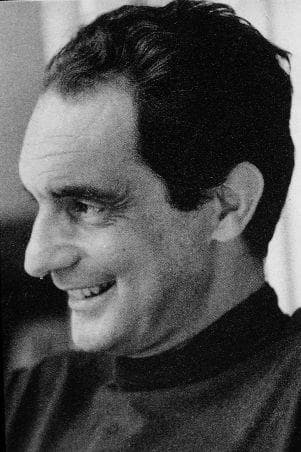
Italo Calvino was an Italian writer and journalist. His best known works include the Our Ancestors trilogy (1952–1959), the Cosmicomics collection of short stories (1965), and the novels Invisible Cities (1972) and If on a winter's night a traveler (1979).
Similar books
- House of Leaves
Mark Z. Danielewski
4.1 (131k) average on GoodreadsThrillerBoth are highly experimental, meta-fictional, and engage the reader in an interactive way.
- Pale Fire
Vladimir Nabokov
4.1 (43k) average on GoodreadsLiterary FictionFeatures a complex, multi-layered narrative with unreliable narrators and literary games.
- Cloud Atlas
David Mitchell
4.0 (216k) average on GoodreadsLiterary FictionPresents multiple distinct narratives and genres that are interconnected and incomplete.
- Nineteen Eighty-Four
George Orwell
4.2 (5.5M) average on GoodreadsFictionWinston Smith dreams of truth and rebellion in a world where Big Brother watches all, but he confronts the terrifying power of a regime that controls not just actions, but thoughts.
- The Frozen River
Ariel Lawhon
4.4 (600k) average on GoodreadsFictionIn 1789 Maine, a heroic midwife's diary helps her expose a murder and get justice in a town that wants to silence her.
- A Man Called Ove
Fredrik Backman
4.4 (569k) average on GoodreadsFictionA stubborn widower, who lives by strict rules, finds his quiet world changed by a lively new family next door, making him face his past and find happiness in human connection.




Enjoyed the summary?
A summary gives you the shape of the book. The book itself has the detail, the examples and the voice.
Find If on a Winter's Night a Traveller on AmazonAs an Amazon Associate, BookBrief earns from qualifying purchases. How we're funded