

Synopsis
Covers the whole plot, including the ending.
- Difficulty
- Easy
- Pacing
- Moderate
- Mood
- Heartwarming, Humorous, Romantic, Hopeful
- Read it if
- You enjoy lighthearted historical romance with a touch of mystery, charming children, and a 'nanny falls for the guardian' trope.
- Skip it if
- You prefer gritty historical realism, intense action, or explicit romance.
In Good Company Plot Summary
Covers the whole plot, including the ending.
A Nanny's Predicament
Millie Longfellow, an energetic and unusual nanny who loves playful antics, finds herself in a familiar situation: she's been fired again. She truly cares for children, but her methods often don't fit the strict social rules of her wealthy employers. Her latest dismissal leaves her sad but not defeated; she still wants to prove she can provide excellent care. She returns to Mrs. Witherbottom's employment agency, hoping for another chance, though her reputation for being 'difficult' makes new jobs hard to find.
Everett Mulberry's Dilemma
Everett Mulberry, a rising figure in New York society, unexpectedly becomes the guardian of his late cousin's three children: the mischievous twins, William and Walter, and their older sister, Daisy. The children, still grieving and known for elaborate pranks, have driven away many nannies. Everett is frustrated and desperate. He is preparing for the summer season in Newport, Rhode Island, where he hopes to improve his social standing and investigate the mysterious details of his cousin's death. The urgent need for good childcare threatens his plans, and he is running out of options from the city's top agencies.
An Unlikely Match
Frustrated with both Millie's unusual approach and Everett's demanding expectations, Mrs. Witherbottom, the strict head of the employment agency, makes a bold suggestion. She proposes Millie take the challenging nanny position for Everett's three wards. Both Millie and Everett are hesitant at first, having heard negative things about each other. Millie fears Everett's reputation for being rigid, while Everett is wary of Millie's past dismissals. However, with no other choices and summer nearing, they reluctantly agree to a trial, setting the stage for an unexpected partnership.
Arrival in Newport
Millie, along with William, Walter, and Daisy, travels to Everett's grand summer home in Newport, Rhode Island. The children, initially cautious and still reeling from their parents' loss, test Millie's patience with pranks and defiance. But Millie's genuine warmth, playful nature, and refusal to be easily scared slowly start to win them over. She introduces games and activities that capture their imaginations, bringing a sense of fun and stability they've lacked. Everett, meanwhile, is busy with his social duties and his initial doubts about Millie's skills, leaving her mostly alone with the children.
A Developing Rapport
Millie continues to win over the children. She discovers William's interest in science, encourages Walter's art, and helps Daisy cope with her grief and shyness. She brings energy to the house, changing the once sad atmosphere into one filled with laughter and creativity. The children, who had pushed away every previous nanny, now trust Millie completely, confiding in her and wanting to spend time with her. This growing bond strengthens Millie's desire to stay in their lives, even as she deals with Everett's distant manner and the challenges of her job.
Everett's Observations
Despite his early doubts and focus on social climbing, Everett notices the remarkable change in his wards. The children, once unruly and withdrawn, are now happier, more involved, and much better behaved under Millie's care. He observes Millie's unique way of connecting with them, her constant patience, and her true affection. These observations slowly challenge his fixed ideas about her and his own priorities. He begins to see Millie not just as a capable employee, but as an essential part of his household and the children's well-being.
Investigating the Past
While handling his social duties in Newport, Everett spends much time investigating the suspicious circumstances of the children's parents' deaths. He finds inconsistencies and veiled threats, suggesting their deaths might not have been accidental. His investigation leads him to question members of the Newport elite, some of whom seem to be hiding secrets. This search for justice is driven by his duty to his wards and a wish to protect them from any remaining danger. He becomes increasingly focused on this mystery, sometimes neglecting his immediate family life.
A Budding Affection
As summer goes on, the initial professional distance between Millie and Everett lessens. They talk more often, discussing the children's progress and sharing observations. Everett starts to value Millie's insights and her uncommon wisdom, while Millie sees glimpses of a kind and caring man beneath his reserved exterior. Moments of shared laughter and real concern for the children change their dynamic, hinting at a connection beyond their work roles. Both find themselves increasingly drawn to the other's unique qualities.
The Threat Intensifies
Everett's investigation into his cousin's death takes a dangerous turn when he uncovers evidence of financial fraud and a conspiracy involving powerful people. This discovery puts him, and by extension, the children and Millie, at risk. Subtle threats become more open dangers, making the safety of his household his top concern. Millie, unaware of the full danger, notices strange events and increased tension in the house, becoming more protective of the children and worried about Everett's distracted state.
A Near Tragedy
The growing threats lead to a frightening incident that directly endangers the children and Millie. A deliberate act, perhaps a staged accident or an attempted kidnapping, narrowly misses its target but leaves everyone shaken. This near-tragedy is a harsh wake-up call for Everett. He realizes that his pursuit of social status and justice, while important, has overshadowed his most vital responsibilities: the safety and well-being of his wards and the woman who has become so important to their lives. He must confront the true meaning of family and the company he truly wants to keep.
Confessions and Resolutions
After the danger, Everett drops his social pretenses and finally faces his true feelings for Millie. He tells her he loves her and wants her to be a permanent part of his and the children's lives. At the same time, he gathers enough evidence to expose and bring to justice those behind his cousin's death and the threats. Solving the mystery brings closure and safety, allowing Everett to focus fully on rebuilding his family with Millie at its center. The children, seeing Everett's devotion, are thrilled that Millie will stay.
A New Beginning
With the mystery solved and their love declared, Millie and Everett begin a new chapter. Everett lets go of his obsession with social approval, realizing that true happiness comes from the love and companionship of his family. Millie, finally finding a place where her unique spirit is cherished, embraces her role in the Mulberry household. They commit to building a life together, putting the children's happiness and their own unconventional family ahead of society's strict expectations. Their journey ends with the promise of a future filled with love, laughter, and real connection.
Principal Figures
Millie Longfellow
Protagonist
A spirited and unconventional nanny with a big heart.
Millie is an orphan who carries a deep desire to belong and to create a loving home for the children in her care. She is characterized by her boundless energy, playful imagination, and a refusal to conform to the stiff, formal expectations of upper-class society. Despite her frequent dismissals, she remains optimistic and dedicated to finding a family that will appreciate her unique approach to childcare. Her greatest strength lies in her ability to connect with children on their level, understanding their needs and fostering their creativity. She is driven by a longing for acceptance and a place where her genuine warmth is valued.
Relationships: Everett Mulberry (Initially employer, then love interest and future husband.); William Mulberry (Ward, develops a strong, loving bond.); Walter Mulberry (Ward, develops a strong, loving bond.); Daisy Mulberry (Ward, develops a strong, loving bond.); Mrs. Witherbottom (Employment agency owner, a stern but ultimately helpful mentor.)
Everett Mulberry
Protagonist
A reserved guardian focused on social standing and justice.
Everett is a driven and somewhat rigid gentleman, unexpectedly burdened with the guardianship of his three young cousins. He is initially preoccupied with maintaining his social standing in New York and Newport society and solving the mystery of his cousin's death. Beneath his controlled exterior, he possesses a strong sense of responsibility and a deep, though often unexpressed, care for his wards. He struggles with emotional expression and often prioritizes logic and societal expectations over heartfelt connection, making him initially dismissive of Millie's unconventional methods.
Relationships: Millie Longfellow (Initially employee, then love interest and future wife.); William Mulberry (Ward, initially distant, grows to love and protect.); Walter Mulberry (Ward, initially distant, grows to love and protect.); Daisy Mulberry (Ward, initially distant, grows to love and protect.)
William Mulberry
Supporting
The elder twin, mischievous and scientifically curious.
William is one of the Mulberry twins, known for his mischievous nature and a budding interest in scientific experiments. He is initially resistant to nannies, participating in pranks to drive them away, a coping mechanism for his grief. Millie's understanding and encouragement of his scientific curiosity help him to channel his energy constructively and begin to heal. He is fiercely loyal to his siblings.
Relationships: Millie Longfellow (Nanny, develops a strong, loving bond.); Walter Mulberry (Twin brother, close bond.); Daisy Mulberry (Older sister, protective bond.); Everett Mulberry (Guardian, initially distant, grows closer.)
Walter Mulberry
Supporting
The younger twin, artistic and sensitive.
Walter is the other Mulberry twin, more sensitive and artistically inclined than his brother. He also participates in the nanny-driving antics but responds deeply to Millie's kindness and encouragement of his creative pursuits. He expresses his emotions through art and often looks to Millie for comfort and understanding, particularly as he grapples with the loss of his parents.
Relationships: Millie Longfellow (Nanny, develops a strong, loving bond.); William Mulberry (Twin brother, close bond.); Daisy Mulberry (Older sister, protective bond.); Everett Mulberry (Guardian, initially distant, grows closer.)
Daisy Mulberry
Supporting
The eldest child, quiet and burdened by grief.
Daisy is the eldest of the Mulberry children, initially quiet, reserved, and deeply affected by the loss of her parents. She carries a sense of responsibility for her younger brothers and is wary of new nannies. Millie's gentle persistence and genuine care help Daisy to open up, share her grief, and rediscover joy. She becomes a confidante for Millie and a protective figure for her brothers.
Relationships: Millie Longfellow (Nanny, develops a strong, loving bond and confidante.); William Mulberry (Younger brother, protective bond.); Walter Mulberry (Younger brother, protective bond.); Everett Mulberry (Guardian, initially distant, grows closer.)
Mrs. Witherbottom
Supporting
The stern but insightful owner of the employment agency.
Mrs. Witherbottom runs the prestigious employment agency that Millie frequently relies on. She is a no-nonsense woman with a keen eye for character, despite her stern demeanor. She often acts as a catalyst for the plot, pushing Millie and Everett together when no one else would. She sees potential in both of them and, though she maintains a professional distance, ultimately desires the best outcome for her clients.
Relationships: Millie Longfellow (Client, often exasperated but ultimately supportive.); Everett Mulberry (Client, often exasperated but ultimately supportive.)
Mr. Finch
Mentioned
Everett's late cousin and the children's father.
Mr. Finch is Everett's late cousin and the father of William, Walter, and Daisy. His unexpected death, which is later revealed to be suspicious, sets the entire plot in motion. While he doesn't appear in person, his memory and the mystery surrounding his demise are central to Everett's motivations and the unfolding events. He is portrayed as having been involved in a complex financial situation.
Relationships: Everett Mulberry (Cousin.); William Mulberry (Son.); Walter Mulberry (Son.); Daisy Mulberry (Daughter.)
Themes & Insights
The True Meaning of Family
The novel explores how family is defined by love, care, and constant presence, not just blood. Millie, an orphan, seeks a family where she belongs and finds it with Everett and the children. Everett, initially focused on social duties and legal guardianship, learns that true family means prioritizing emotional well-being and his own heart. The Mulberry home changes from a place of sadness and formality to one of warmth and laughter, showing how Millie's love creates a true home. This is clear when Millie connects with the children's interests, like William's science, and comforts Daisy, becoming a mother figure.
“Perhaps a family was not just blood, but the people who chose to stay, who fought for your laughter and dried your tears.”
Societal Expectations vs. Individual Happiness
The story highlights the strict social expectations of the Gilded Age and how they often conflict with personal desires and happiness. Everett initially seeks social status and appearances, which often blinds him to his wards' emotional needs and his growing feelings for Millie. Millie, in contrast, often defies these norms with her playful and unusual methods, frequently getting fired for her authenticity. The conflict between these forces is central to Everett's journey; he must ultimately choose between a life dictated by society and one built on love and genuine connection. His internal struggle during Newport's social season, compared to his observations of Millie's joy with the children, illustrates this theme.
“Sometimes, the grandest houses held the emptiest hearts, unless someone brave enough dared to fill them with joy.”
Healing from Grief and Loss
The Mulberry children are introduced as deeply grieving their parents' sudden loss, which shows in their mischievous behavior and withdrawal. Millie's arrival brings a healing presence, helping them process their emotions in a healthy way. Her patient, understanding, and fun-loving approach provides a safe space for them to express sadness and gradually find joy again. Everett also deals with his cousin's death, channeling his grief into an investigation. The novel shows that healing requires empathy, connection, and support, not just moving on. Millie's gentle talks with Daisy about her parents and her playful distractions for the twins are key examples of this theme.
“Laughter was not a betrayal of sorrow, but a whisper of hope that joy could still be found.”
The Power of Unconventionality
Millie Longfellow embodies the strength of unconventional thinking and action in a world that values conformity. Her playful, imaginative, and empathetic approach to childcare is initially seen as a drawback by society's elite, leading to her frequent dismissals. However, these very 'unconventional' qualities allow her to break through the children's defenses and eventually win Everett's heart. The story champions the idea that true connection and effectiveness often come from stepping outside rigid norms and embracing one's unique strengths, rather than strictly following established rules. Millie's success where other, more 'proper' nannies failed, especially with the mischievous twins, highlights this theme.
“Sometimes, the rules needed a good shaking up to reveal what truly mattered beneath.”
Plot Devices & Literary Techniques
The 'Impossible' Children
The three mischievous Mulberry children act as a catalyst for change.
The children—William, Walter, and Daisy—serve as a crucial plot device. Their unruly behavior and success in driving away numerous nannies create the desperate situation that forces Mrs. Witherbottom to pair Millie and Everett. Their initial resistance and eventual adoration for Millie are central to her character development and Everett's transformation. They act as a mirror, reflecting Everett's initial emotional distance and later his growing capacity for love, while also providing the primary motivation for Millie's persistent dedication and her desire to find a true home.
The Employment Agency
Mrs. Witherbottom's agency acts as a narrative bottleneck and matchmaker.
Mrs. Witherbottom's employment agency functions as a bottleneck and a critical point of intersection for the protagonists. By being the only agency willing to give Millie another chance and the only one left with a nanny for Everett, it forces their paths to cross. Mrs. Witherbottom herself, with her stern but insightful nature, acts as an external force pushing them together, recognizing a potential match that neither Millie nor Everett would have considered independently. The agency's rules and the characters' reputations within it drive much of the initial conflict and setup.
The Mysterious Death
The suspicious circumstances of the children's parents' death provide external conflict and stakes.
The mysterious death of the children's parents serves as a significant external plot device. It provides Everett with a compelling subplot and a driving motivation beyond simply caring for his wards. This mystery introduces elements of suspense, danger, and intrigue, raising the stakes for Everett, the children, and eventually Millie. It allows for Everett to demonstrate his protective instincts and ultimately forces him to confront his priorities when the danger directly threatens his nascent family, acting as a catalyst for his emotional breakthrough.
Newport Society
The social setting provides a backdrop for Everett's aspirations and a contrast to Millie's nature.
Newport society, with its strict rules, elaborate events, and focus on status, functions as a setting that highlights Everett's initial values and provides a stark contrast to Millie's free spirit. It is the arena where Everett seeks to solidify his social standing and where the investigation into his cousin's death unfolds. The pressures and expectations of this society are a constant source of internal conflict for Everett, forcing him to choose between external validation and internal happiness. It also provides opportunities for Millie to subtly challenge norms and showcase her genuine character.
In Good Company Quotes
“Perhaps I should have been more specific and mentioned that I also preferred my gentlemen to be able to string two words together without sounding as if they’d suffered a severe blow to the head.”
“A woman who could manage a household and converse intelligently about more than just fashion and gossip was a rare and precious commodity.”
“There was a fine line between being a dutiful daughter and allowing one's life to be utterly dictated by another.”
“One could not simply wish away unpleasantness. Sometimes, one had to face it head-on, even if it meant a bit of discomfort.”
“It was astounding how much more clearly one could think when not surrounded by the incessant chatter and expectations of society.”
“True strength wasn't about never falling, but about rising every single time you did.”
“He found himself continually surprised by her, a sensation he rather enjoyed, despite his usual preference for predictability.”
“Sometimes the greatest adventures began with the most unassuming of invitations.”
“A good laugh, she decided, was often the best remedy for a troubled mind.”
“It was not enough to merely exist; one ought to live, truly live, with purpose and joy.”
“He might have been a man of logic and order, but even he could appreciate the unexpected beauty of a woman's spirit.”
“The world was full of possibilities, if only one dared to look beyond the confines of what was expected.”
“Sometimes, the most valuable lessons were learned not in drawing rooms, but in the quiet moments of observation and reflection.”
“He found her candor refreshing, a stark contrast to the polite obfuscations he was accustomed to in society.”
Quiz
10 questions on the plot and the characters. Each answer comes with a short explanation.
Question 1
Why does Millie Longfellow frequently find herself dismissed from nanny positions before being hired by Everett Mulberry?
- She often arrives late to her appointments.
- Her playfulness and enthusiasm are not always well received by employers.
- She struggles with basic childcare duties.
- The children she cares for are consistently disobedient.
Show answer
B. Her playfulness and enthusiasm are not always well received by employers. The book states that Millie's playfulness and enthusiasm are not always well received, leading to her frequent dismissals.
Question 2
What is Everett Mulberry's primary goal in Newport, Rhode Island, during the summer?
- To solve the mystery of the children's parents' death.
- To find a suitable spouse for himself.
- To achieve coveted societal status within the upper echelons.
- To establish a new business venture.
Show answer
C. To achieve coveted societal status within the upper echelons. Everett is focused on achieving coveted societal status of the upper echelons while in Newport.
Question 3
Who unexpectedly becomes the guardian to the three children that Millie eventually cares for?
- A distant aunt.
- Everett Mulberry.
- The family lawyer.
- A close family friend.
Show answer
B. Everett Mulberry. Everett Mulberry unexpectedly becomes the guardian to the three children, which leads him to seek a nanny.
Question 4
What specific event drives Everett to investigate the circumstances surrounding the children's parents' death?
- A letter from the children's grandparents.
- A conversation with Millie that raises his suspicions.
- Suspicious circumstances surrounding their death.
- The children explicitly ask him to.
Show answer
C. Suspicious circumstances surrounding their death. Everett investigates the 'suspicious circumstances surrounding the death of the children’s parents,' indicating this is the catalyst.
Question 5
What is the name of the employment agency that gives Millie and Everett 'one last chance' to work together?
- The Grand Nanny Bureau.
- The East Coast Placement Agency.
- The story does not specify the name of the agency, only that it is 'the employment agency'.
- The Mulberry Family Staffing Co.
Show answer
C. The story does not specify the name of the agency, only that it is 'the employment agency'. The provided synopsis refers to it simply as 'the employment agency' without giving a specific name.
Question 6
What is the central internal conflict Everett faces regarding his priorities by the end of the story?
- Whether to pursue a career in politics or business.
- Choosing between his desire for societal status and the love of those around him.
- Deciding to stay in Newport or return to his original home.
- Balancing his duties as a guardian with his personal hobbies.
Show answer
B. Choosing between his desire for societal status and the love of those around him. The synopsis asks, 'will it take the loss of those he loves to learn whose company he truly wants for the rest of his life?', indicating a conflict between societal ambition and personal connection.
Question 7
What is Millie's ultimate career aspiration at the beginning of the book?
- To become a successful governess in Europe.
- To open her own orphanage.
- To become the best nanny the East Coast has ever seen.
- To marry into a wealthy family.
Show answer
C. To become the best nanny the East Coast has ever seen. Millie 'is determined to become the best nanny the East Coast has ever seen,' highlighting her specific career goal.
Question 8
The children under Everett's guardianship are described in a way that implies a specific challenge for nannies. What is this challenge?
- They are exceptionally quiet and withdrawn.
- They are prone to frequent illnesses.
- They are 'mischievous' and 'scare off every nanny he hires'.
- They are overly demanding and spoiled.
Show answer
C. They are 'mischievous' and 'scare off every nanny he hires'. The text states the children 'scare off every nanny he hires' and that Millie 'falls in love with her mischievous charges,' indicating their difficult behavior.
Question 9
What is the primary thematic question explored by Everett's character arc?
- The importance of historical preservation.
- The pursuit of wealth versus personal happiness and genuine connection.
- The challenges of single parenthood in the Gilded Age.
- The influence of societal expectations on career choices.
Show answer
B. The pursuit of wealth versus personal happiness and genuine connection. Everett's journey involves him focusing on 'achieving the coveted societal status' but ultimately learning 'whose company he truly wants for the rest of his life,' highlighting the theme of societal status versus genuine connection and love.
Question 10
Given the historical fiction setting and the mention of 'Newport, Rhode Island' and 'upper echelons', during which historical period is the story most likely set?
- The Roaring Twenties (1920s)
- The Victorian Era (mid to late 19th century)
- The Gilded Age (late 19th to early 20th century)
- The Progressive Era (early 20th century)
Show answer
C. The Gilded Age (late 19th to early 20th century) Newport, Rhode Island, was a prominent summer resort for the wealthy 'upper echelons' during the Gilded Age, a period known for its social climbing and emphasis on status, which aligns with Everett's goals.
In Good Company FAQ
What is the central premise of 'In Good Company'?
The story follows Millie Longfellow, a spirited nanny struggling to find a stable position due to her unconventional methods, and Everett Mulberry, a reluctant guardian to three mischievous children who scare off every caregiver. They are reluctantly paired by an employment agency, leading them to Newport, Rhode Island, for the summer, where their lives become intertwined.
Who are the main protagonists of the story?
The main protagonists are Millie Longfellow, an enthusiastic and playful nanny, and Everett Mulberry, a driven businessman who unexpectedly becomes guardian to his late sister's children. Their contrasting personalities and initial goals drive much of the narrative conflict and eventual romance.
What kind of challenges does Millie face in her career?
Millie struggles with finding acceptance for her playful and enthusiastic approach to childcare, which often leads to her dismissal from positions. Her unconventional methods, while loving and effective with children, are not always appreciated by the more rigid societal expectations of the upper-class families she works for.
What is Everett Mulberry's primary goal at the beginning of the book?
Everett's initial goal is twofold: to secure competent childcare for his three challenging wards and to achieve a coveted societal status within the upper echelons, particularly during their summer stay in Newport. He is focused on appearances and establishing his position in high society.
Who are the three children Everett is guardian to, and what are their personalities like?
Everett is guardian to three children, though their specific names aren't detailed in the synopsis, they are described as mischievous and capable of scaring off nannies. Their challenging behavior is likely a manifestation of their grief and adjustment to their parents' deaths and new guardian.
What 'hidden detail' about the children's parents' death becomes a plot point?
A significant hidden detail is that Everett begins to investigate the suspicious circumstances surrounding the death of the children's parents. This investigation introduces a mystery element, suggesting their deaths may not have been accidental and could involve foul play or hidden secrets.
How does the Newport setting contribute to the 'hidden details' aspect of the plot?
Newport, Rhode Island, as a summer destination for the elite, likely serves as a backdrop for both Everett's social aspirations and the unfolding mystery. The opulent environment could conceal secrets, rivalries, or individuals connected to the suspicious deaths, adding layers to the investigation.
Are there any characters besides Millie and Everett who might hold crucial information about the mystery?
While not explicitly stated, it's highly probable that secondary characters, such as members of the social set in Newport, former associates of the children's parents, or even household staff, could possess crucial information regarding the suspicious deaths, making them potential suspects or allies in Everett's investigation.
How does Millie's orphan background influence her approach to childcare and her emotional state?
Millie's background as an orphan likely fuels her deep empathy and dedication to children, particularly those who are vulnerable or grieving. Her playfulness might stem from a desire to create the joyful childhood she may have lacked, and her determination could reflect a need for stability and belonging.
What psychological transformation does Everett undergo throughout the story?
Everett undergoes a significant psychological transformation, shifting from a focus on societal status and ambition to understanding the true value of love and family. He learns to prioritize the emotional well-being of his wards and his relationship with Millie over external validation and social climbing.
How do the children's 'mischievous' behaviors reflect their psychological state?
The children's mischievous behaviors are likely a coping mechanism for their grief, trauma, and uncertainty following their parents' deaths. Their acting out could be a cry for attention, a test of boundaries, or an expression of their unresolved emotions, stemming from their new, unstable environment.
What role does grief play in the psychological development of the characters?
Grief plays a central role, impacting the children's behavior, Everett's initial reluctance to connect emotionally, and potentially Millie's empathy. The process of mourning the children's parents, and the revelation of the circumstances of their deaths, forces all characters to confront loss and re-evaluate their priorities.
What is the primary moral lesson Everett is expected to learn by the end of the book?
Everett is expected to learn that true 'good company' and happiness come from genuine relationships and love, rather than from societal status or wealth. The potential 'loss of those he loves' serves as a catalyst for him to realize whose company he truly wants for the rest of his life, prioritizing emotional connection over ambition.
How does the phrase 'In Good Company' function as a double entendre in the title?
The title 'In Good Company' functions as a double entendre, referring both to Everett's initial pursuit of high societal standing and the 'good company' of Millie and the children he eventually comes to cherish. It highlights the contrast between superficial social connections and meaningful familial bonds.
Is the romance between Millie and Everett a slow burn or an 'insta-love' scenario?
Given their initial differences in personality and goals, and the challenges they face, the romance between Millie and Everett is likely a slow burn. Their relationship would develop through shared experiences, overcoming obstacles, and mutual respect, rather than immediate attraction, as they learn to appreciate each other's strengths.
How does the historical setting of the East Coast in the late 19th or early 20th century influence the themes of the book?
The historical setting emphasizes themes of social class, decorum, and the expectations placed upon women and guardians during that era. It highlights the contrast between Millie's progressive childcare methods and the more rigid societal norms, as well as the ambition for social climbing prevalent among the wealthy elite.
What kind of resolution can readers expect regarding the mystery of the parents' death?
Readers can expect a complete resolution to the mystery of the children's parents' death, likely involving the unmasking of the true circumstances and potentially the culprit. This resolution will not only bring justice but also provide closure for the children and allow Everett to fully embrace his new family.
Does Millie's past as an orphan play a role in her finding a 'family' with Everett and the children?
Absolutely. Millie's orphan past makes her desire for a true family and a sense of belonging particularly strong. Her connection with Everett and the children likely fulfills this deep-seated need, allowing her to find the 'good company' she's always yearned for, completing her personal journey.
Similar books
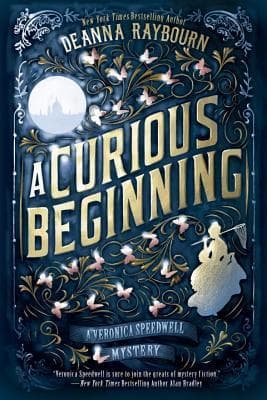
- A Curious Beginning
Deanna Raybourn
4.0 (23k) average on GoodreadsHistorical FictionWhile both books feature strong female protagonists in historical settings, Raybourn's Veronica Speedwell series integrates its historical context much more intricately with complex mysteries and darker undertones. 'In Good Company' uses its historical setting primarily as a backdrop for a more straightforward romance, with the 'investigating the past' element serving mainly to resolve Agatha's personal predicament rather than driving a broader, intricate plot as seen in Raybourn's work.
- To Kill a Mockingbird
Harper Lee
4.3 (4.5M) average on GoodreadsHistorical FictionIn the 1930s Jim Crow South, Harper Lee writes about racial injustice, moral growth, and the quiet courage of a lawyer father, Atticus Finch, as seen through his young daughter's eyes.
- The Great Gatsby
F. Scott Fitzgerald
3.9 (3.8M) average on GoodreadsHistorical FictionIn the opulent Roaring Twenties, a mysterious millionaire's lavish parties hide his desperate, tragic pursuit of a lost love, exposing the emptiness within the American Dream.
- Pride and Prejudice
Jane Austen
4.3 (3M) average on GoodreadsHistorical FictionIn a society focused on status and money, Elizabeth Bennet navigates love and pride, challenging Mr. Darcy and social expectations to find true affection.
- Angels & Demons
Dan Brown
3.9 (2.7M) average on GoodreadsThrillerA Harvard symbologist races through Rome's ancient sites, deciphering cryptic clues to unmask the Illuminati and stop a vengeful plot to destroy the Vatican with a stolen antimatter weapon.
- The Kite Runner
Khaled Hosseini
4.3 (2.4M) average on GoodreadsHistorical FictionIn pre-Taliban Afghanistan, a wealthy boy's betrayal of his servant's son during a kite-running tournament starts a lifelong journey for amends as his country collapses.





Enjoyed the summary?
A summary gives you the shape of the book. The book itself has the detail, the examples and the voice.
Find In Good Company on AmazonAs an Amazon Associate, BookBrief earns from qualifying purchases. How we're funded