
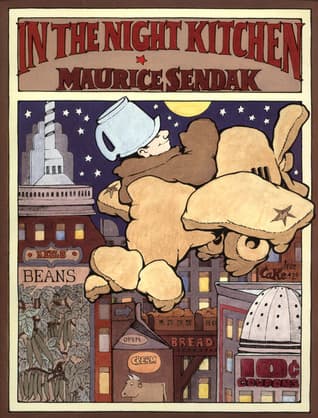
Synopsis
Covers the whole plot, including the ending.
- Difficulty
- Easy
- Pacing
- Fast
- Mood
- Whimsical, Dreamlike, Playful, Surreal
- Read it if
- You enjoy whimsical, dreamlike stories with unique illustrations and a sense of adventure.
- Skip it if
- You prefer highly structured narratives or explicit moral lessons in children's books.
In the Night Kitchen Plot Summary
Covers the whole plot, including the ending.
Mickey's Bedtime Escape
The story opens with young Mickey in his bed, trying to sleep. He hears various noises at night — 'CRASH! BANG! WHANG!'. Annoyed, he tumbles out of bed and, as he falls, also tumbles out of his pajamas, landing naked in the dark. This sudden fall moves him from his bedroom into the Night Kitchen. He is curious and slightly bewildered, setting the stage for his dreamlike adventure.
Falling into the Night Kitchen
After falling out of his clothes and bed, Mickey continues to fall through what looks like the night sky. He passes stars and the moon, falling quickly until he lands directly into a giant kitchen. This kitchen is busy and filled with huge appliances and ingredients. The change is smooth and surreal, showing the dreamlike quality of his journey. He is completely naked, a repeated detail that shows his vulnerability and innocence in this strange new world.
Encountering the Bakers
In the Night Kitchen, Mickey meets three enormous, identical bakers, all with mustaches and chef hats. They are busy making the morning cake. The bakers, who resemble Oliver Hardy, see Mickey and, mistaking him for milk, scoop him up. They plan to knead him into their dough, chanting 'Milk in the batter! Milk in the batter! We bake you and we bake you and we bake you to light!' Mickey is alarmed, realizing they intend to bake him alive. This introduces the main problem and immediate threat to Mickey.
Mickey's Doughy Predicament
The three bakers succeed in putting Mickey into their cake dough. He is kneaded and rolled, becoming part of the sticky mixture. This is a moment of great vulnerability for Mickey, as he is completely at the bakers' mercy. However, Mickey's quick thinking and resourcefulness appear. He manages to free himself from the dough, showing his ability to act even in this strange, threatening situation. His escape is a small victory, allowing him to regain some control over his situation.
Building a Plane of Dough
After escaping the dough, Mickey uses his cleverness. He quickly shapes the remaining dough into an airplane. This act turns a potential weapon against him into a way to escape and gain power. The bakers, still unaware of his true identity and focused on their task, continue to bake. Mickey's ability to use his surroundings highlights his childlike imagination and problem-solving skills, turning a dangerous situation into an opportunity for adventure and freedom.
Flying in the Night Kitchen
Mickey, now flying his dough airplane, soars through the large Night Kitchen. He flies past giant ovens, mixing bowls, and the unaware bakers. This scene is one of pure excitement and victory for Mickey. He is no longer a helpless ingredient but controls his own destiny, for a short time. His flight shows his escape from the bakers' control and his embrace of the fantastical possibilities of his dream world, showing his newfound freedom and joy.
The Bakers' Frustration
As Mickey continues his flight, the three bakers finally realize that their 'milk' – Mickey – is missing. They discover their cake lacks the essential ingredient and is incomplete. Their initial confusion turns to frustration and a frantic search for the missing part. This provides a funny contrast to Mickey's joyful flight, highlighting their single-mindedness and the absurdity of their situation, while also showing how important Mickey's role is, even if accidental, in their baking process.
The Milky Way and the Cake
Understanding the bakers' problem and the need for milk to finish the morning cake, Mickey decides to provide it. He flies his dough plane up towards the giant milk bottle that makes up the kitchen's ceiling. With a powerful thrust, he breaks through the foil cap, causing milk to fall down, creating a 'Milky Way' that fills the cake batter. This act is a moment of generosity, as Mickey, having escaped danger, now ensures the success of the bakers' task.
The Morning Cake is Baked
With the milk now in the batter, the three bakers are very happy. They quickly finish mixing the dough and place the giant cake into the oven. The Night Kitchen is filled with the warmth and smell of baking. This scene means their nightly task is successfully completed, thanks to Mickey's help. The bakers' happiness contrasts with their earlier frustration, bringing a sense of resolution and satisfaction to their part of the story.
Mickey's Return to Bed
Having finished his role in the Night Kitchen, Mickey slides down from the sky, back through the night. He lands gently back in his own bed, slipping back into his pajamas as if he had never left. The sun is just beginning to rise, signaling the end of the night and his dream adventure. He is safe and sound, his journey complete, leaving the reader to think about the thin line between dreams and reality, and the strong imagination of a child.
Principal Figures
Mickey
Protagonist
A curious and resourceful young boy who dreams of an adventure in the Night Kitchen.
Mickey is a young boy, initially portrayed as slightly annoyed by nighttime sounds. He is curious, brave, and remarkably resourceful, adapting quickly to the strange and potentially dangerous situations he encounters. Despite being naked for much of his adventure, symbolizing his innocence and vulnerability, he displays great agency, transforming from a helpless ingredient into a flying hero. His actions are driven by a desire for freedom and, ultimately, a helpful spirit.
Relationships: The Bakers (Initially captors, then beneficiaries of his help)
The Bakers
Antagonist/Supporting
Three identical, bumbling bakers who run the Night Kitchen.
The three bakers are large, mustachioed figures, all looking identical and resembling Oliver Hardy. They are single-minded in their task of baking the morning cake, which makes them initially threatening to Mickey as they mistake him for milk. They are somewhat oblivious and comical in their seriousness, entirely focused on their culinary duties. Despite their initial antagonistic role, they are not malicious, merely absorbed in their work, and ultimately benefit from Mickey's cleverness.
Relationships: Mickey (Initially, they try to bake him; later, he helps them complete their cake)
Themes & Insights
The Power of Imagination and Dreams
The entire story explores a child's dream world, where ordinary things (nighttime noises, a kitchen) become extraordinary. Mickey's journey shows how imagination helps children process experiences, overcome fears, and find their place in fantasy. The Night Kitchen itself is a dream, a place where reality's rules disappear, and a child can fly a dough airplane. This theme is central, suggesting that dreams are not just an escape but a key part of a child's mind.
“And the world was made of bread and milk and things.”
Vulnerability and Empowerment
Mickey's nakedness throughout much of the story shows his vulnerability and innocence, especially as he falls into the Night Kitchen and is almost baked into a cake. This initial helplessness, however, quickly turns into strength. He uses his intelligence and creativity to escape the bakers, build a dough airplane, and become the hero who provides the missing ingredient. His journey shows a child's ability to overcome difficult situations and gain control, changing from a potential victim into a resourceful protagonist.
“I'm not milk and I'm not dough! I'm Mickey!”
The Everyday Made Magical
Sendak skillfully turns common elements of a child's world – a kitchen, milk, bread, nighttime sounds – into objects of wonder and adventure. The Night Kitchen is a super-sized version of a familiar place, where ordinary ingredients become tools for flight or sources of danger. This theme encourages readers to see the magic in their surroundings, showing how a child's view can give everyday things special meaning and potential for adventure, making the familiar feel new and exciting.
“Then all the world was warm and sweet and smelled of cake.”
Childhood Independence and Resourcefulness
Mickey's adventure shows the resourcefulness and independence of children. He faces a difficult challenge alone, without adult help, and solves his problems using his own cleverness. He doesn't panic but thinks creatively, turning dough into a way to escape. His decision to help the bakers by providing the milk, despite their earlier attempts to bake him, further highlights his self-reliance and active nature, showing a child's ability to act and solve problems.
“And he made a plane. And he flew!”
Plot Devices & Literary Techniques
Dream Logic
The narrative operates on the fluid, non-linear, and often absurd rules of a dream.
The entire story unfolds as a dream, allowing for seamless transitions between reality and fantasy, and for events to occur without logical explanation. Mickey falls out of his clothes and bed directly into a giant kitchen in the sky. Bakers mistake him for milk, and he builds an airplane out of dough. This device creates a sense of wonder and unpredictability, immersing the reader in Mickey's subjective experience where anything is possible, mirroring the imaginative world of a child's subconscious.
Symbolic Nakedness
Mickey's lack of clothing symbolizes his vulnerability and innocence.
Mickey is naked for the majority of his adventure in the Night Kitchen. This isn't merely for comedic effect; it serves as a powerful symbol of his childlike innocence, vulnerability, and primal state as he navigates a strange and potentially threatening world. It strips him of all external defenses, emphasizing his raw, unadulterated self as he faces the bakers and finds his own solutions, making his eventual empowerment feel even more significant.
Anthropomorphism and Personification
Inanimate objects and concepts are given human-like qualities or significance.
While not strictly anthropomorphic characters, the kitchen itself and its ingredients take on a life of their own. The milk bottle becomes a sky-high structure, the dough is a malleable substance for escape, and even the 'Night Kitchen' acts as a character in its own right, a bustling, living entity. This device enhances the magical realism, transforming ordinary items into active participants in Mickey's adventure and making the setting feel vibrant and alive.
The Journey as Metaphor
Mickey's physical journey through the Night Kitchen represents a psychological journey of growth.
Mickey's descent into the Night Kitchen and his subsequent flight and return are not just literal movements but also represent an internal transformation. He begins as a passive, vulnerable figure and, through his experiences, develops ingenuity, courage, and a sense of agency. The journey through the 'dark' and into a place of creation (the kitchen) can be seen as a metaphor for navigating fears and discovering inner strength, culminating in his confident return to his bed.
In the Night Kitchen Quotes
“Mickey in the Night Kitchen.”
“And the world was made of milk and bread.”
“Up to the top, past the Milky Way, and right into the dough.”
“I'm not the milk and I'm not the butter, I'm Mickey!”
“He fell out of his clothes and down he tumbled.”
“They were three fat bakers and they looked exactly alike.”
“We need milk! We need milk! Milk for the morning cake!”
“And Mickey, naked, flew at the bakers.”
“He found a plane made of dough and flour.”
“He flew up to the top, past the Milky Way.”
“He found the biggest bottle of milk in the sky.”
“Spilling and splashing and tumbling and crashing.”
“And that's why we have cake every morning.”
“I'm not the butter, I'm Mickey!”
Quiz
10 questions on the plot and the characters. Each answer comes with a short explanation.
Question 1
What happens to Mickey after he falls out of his bed?
- He lands in a pile of dirty laundry.
- He tumbles into the Night Kitchen.
- He floats into outer space.
- He wakes up in his parents' room.
Show answer
B. He tumbles into the Night Kitchen. Mickey falls out of his clothes and then out of his bed, landing directly into the Night Kitchen where the bakers are at work.
Question 2
What are the three bakers preparing to make in the Night Kitchen?
- Dinner rolls
- A birthday cake
- The morning cake
- Pancakes
Show answer
C. The morning cake The bakers are explicitly shown and stated to be making the morning cake, which they need milk for.
Question 3
What item do the bakers mistake Mickey for and try to bake him into?
- A giant cookie
- A gingerbread man
- A loaf of bread
- The milk for the cake
Show answer
D. The milk for the cake The bakers, mistaking Mickey for the missing milk, knead him into the dough, singing 'Milk in the batter! Milk in the batter!'
Question 4
How does Mickey escape being baked into the cake?
- He screams loudly and wakes up.
- He forms an airplane out of the dough and flies away.
- The bakers realize their mistake and let him go.
- His parents come to rescue him.
Show answer
B. He forms an airplane out of the dough and flies away. Mickey molds the dough around him into an airplane and flies out of the oven, narrowly escaping being baked.
Question 5
What is the primary motivation for Mickey's journey in the Night Kitchen?
- To find a new toy.
- To deliver milk for the morning cake.
- To explore the city at night.
- To escape his chores.
Show answer
B. To deliver milk for the morning cake. After escaping the bakers, Mickey overhears them lamenting their lack of milk for the morning cake, prompting him to find it.
Question 6
What is the key characteristic of the city skyline that Mickey observes during his flight?
- It is made of towering skyscrapers.
- It is entirely composed of kitchen appliances and food packaging.
- It features famous landmarks from around the world.
- It is dark and completely devoid of light.
Show answer
B. It is entirely composed of kitchen appliances and food packaging. As Mickey flies, the city is depicted as being built from oversized kitchen items like milk cartons, spice jars, and flour bags, reinforcing the dreamlike kitchen theme.
Question 7
What object does Mickey use to collect the milk he needs?
- A large measuring cup
- A glass bottle
- A milk bottle, which he corks with his own body.
- A small bucket
Show answer
C. A milk bottle, which he corks with his own body. Mickey dives into a giant milk bottle to fill it, and then plugs the top with his own body to prevent the milk from spilling as he flies back.
Question 8
The three bakers in the story are caricatures of which famous comedic trio?
- Laurel and Hardy
- The Marx Brothers
- The Three Stooges
- Abbott and Costello
Show answer
C. The Three Stooges Sendak intentionally drew the bakers to resemble the Three Stooges, giving them a boisterous, somewhat clumsy, and comedic persona.
Question 9
What underlying theme does Mickey's nudity throughout most of the story represent?
- A desire for freedom and rebellion.
- The vulnerability and innocence of childhood in a dream state.
- A metaphor for shedding societal expectations.
- A reference to classical mythology.
Show answer
B. The vulnerability and innocence of childhood in a dream state. Mickey's nudity, though controversial for some, is interpreted by many as a representation of the uninhibited, vulnerable, and natural state of a child in their dreams and imagination.
Question 10
How does Mickey's adventure conclude, bringing him back to reality?
- He is caught by the bakers and put back to bed.
- He pours the milk into the oven, then falls back into his bed.
- He runs out of fuel for his dough airplane and crashes.
- He is woken by his alarm clock.
Show answer
B. He pours the milk into the oven, then falls back into his bed. After delivering the milk, Mickey, still in his dough airplane, tumbles from the oven back into his own bed, completing his dream journey.
In the Night Kitchen FAQ
What is the basic premise of "In the Night Kitchen"?
The story begins with a young boy named Mickey, who is disturbed by noise in the night. He falls out of his bed and through the air, losing his clothes in the process, until he lands in the Night Kitchen where three bakers, resembling Oliver Hardy, are preparing to bake a cake.
What mission do the bakers give Mickey, and how does he accomplish it?
The bakers need milk for their cake batter and mistake Mickey for the milk, attempting to knead him into it. To prevent this, Mickey creatively forms an airplane out of the dough and flies off to find the milk himself, soaring through the Night Kitchen's cityscape of food containers.
How does Mickey ultimately provide the milk for the morning cake?
Mickey flies his dough airplane to a giant milk bottle, which he then tips over. He dives into the milk and emerges, fully clothed, after successfully delivering the necessary ingredient. This allows the bakers to complete their morning cake, ensuring the city wakes to its fresh breakfast.
What is the significance of Mickey's nudity throughout much of his adventure?
Mickey's nudity symbolizes vulnerability and the raw, uninhibited state of a child's dream or subconscious. It also visually represents the loss of control and the stripping away of everyday realities as he plunges into the fantastical, unconstrained world of the Night Kitchen.
Are there any subtle allusions to other Sendak works or real-world elements?
The bakers' appearance is a clear homage to Oliver Hardy, reflecting Sendak's appreciation for classic comedy. The architectural landscape of the Night Kitchen, made of food containers, hints at the imaginative world-building children often engage in, turning mundane objects into grand structures.
What do the three bakers represent in Mickey's dream?
The three bakers can be interpreted as archetypal figures of authority or the overwhelming forces of the adult world that children often perceive. Their single-minded focus on baking and their initial attempts to incorporate Mickey into their process reflect a child's feeling of being swept up or consumed by adult activities.
What is the 'fantasy ten feet deep in reality' that Sendak mentioned?
This phrase suggests that while the story is a wild dream, it is deeply rooted in the everyday experiences and anxieties of childhood. The reality includes the comfort of a warm bed, the security of a parent's presence, and the simple pleasure of morning food, all of which Mickey's adventure ultimately preserves.
How does Mickey's journey reflect a child's sense of agency?
Despite initially being a passive participant, Mickey quickly takes charge of his situation by transforming the dough into an airplane and actively seeking the milk. This demonstrates a child's developing sense of autonomy and ability to overcome challenges through imaginative problem-solving, even in a dream state.
What psychological need might Mickey be fulfilling through his adventure?
Mickey's journey could be seen as fulfilling a need for mastery and control. In a world where children often feel powerless, his ability to fly, escape the bakers, and ultimately provide the crucial ingredient for the morning cake allows him to assert his independence and importance.
How does the Night Kitchen setting contribute to the story's psychological depth?
The Night Kitchen, a place of creation and transformation, represents the subconscious mind where raw ingredients (experiences, fears, desires) are processed and formed. Mickey's journey through this space reflects the internal work a child does to make sense of their world and achieve a sense of order.
What is the significance of the morning cake being baked?
The morning cake symbolizes the restoration of order, comfort, and the promise of a new day. Mickey's successful delivery of the milk ensures that this essential element of daily routine and sustenance is secured, bringing his dream adventure to a satisfying and comforting conclusion.
What is the underlying theme of creativity and imagination in the book?
Mickey's ability to fashion an airplane from dough highlights the boundless nature of childhood imagination and creativity. He doesn't just react to his circumstances; he actively transforms them through imaginative play, demonstrating how children can find solutions and joy in unexpected ways.
How does the book address childhood fears or anxieties?
The initial fall and the looming, somewhat threatening bakers could represent common childhood fears of helplessness or being overwhelmed by adults. However, Mickey's bravery and resourcefulness in overcoming these challenges offer a reassuring message about a child's ability to navigate and conquer their anxieties.
What is the symbolic meaning of Mickey's final return to his bed, fully clothed?
His return, now clothed, signifies the transition from the wild, uninhibited dream world back to the structured reality of waking life. The clothes represent the re-establishment of social norms and personal boundaries after the liberating, yet vulnerable, experience of the dream.
Is there a moral lesson intended in "In the Night Kitchen"?
While not explicitly moralistic, the book implicitly celebrates resourcefulness, imagination, and the power of a child's inner world. It suggests that even in the face of daunting, dream-like challenges, children possess the innate ability to solve problems and contribute meaningfully.
How does the artwork contribute to the dream-like quality of the story?
Sendak's illustrations, with their sepia tones and dynamic compositions, evoke a nostalgic, slightly surreal atmosphere reminiscent of old photographs or early animated films. The fluid transitions between scenes and the exaggerated expressions of the bakers further enhance the fantastical, dream-like immersion.
What role does sound or noise play in initiating Mickey's adventure?
The unspecified 'noise' that startles Mickey from his sleep acts as the catalyst for his entire journey. This mundane disturbance from reality directly precipitates his fall into the extraordinary dream world, highlighting how everyday occurrences can spark profound imaginative experiences.
How does Mickey's relationship with the bakers evolve throughout the story?
Initially, the bakers are a potential threat, seeing Mickey as an ingredient. However, as Mickey takes control and fulfills their need for milk, he transforms from a passive object to an active hero. Although they remain unaware of his personal journey, he ultimately aids their purpose.
About the author
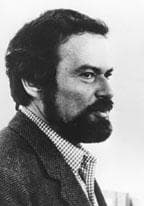
Maurice Sendak was an American author and illustrator known for his contributions to children's literature. He is best known for his picture book "Where the Wild Things Are," but also wrote "In the Night Kitchen," which explores themes of imagination and adventure. Sendak's work has received significant recognition, including the Caldecott Medal for his illustrations.
Similar books
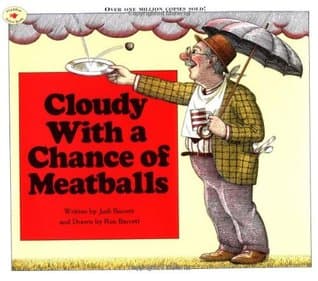
- Cloudy With a Chance of Meatballs
Judi Barrett
4.2 (130k) average on GoodreadsFantasyPresents a fantastical, food-centric world with a playful tone.
- Goodnight Moon
Margaret Wise Brown
4.3 (305k) average on GoodreadsChildren'sWhile both are bedtime stories, In the Night Kitchen offers a much more active and adventurous protagonist's journey, contrasting sharply with Goodnight Moon's focus on serene observation and a ritualistic winding down. Sendak's book encourages imaginative escapism, whereas Brown's cultivates calm and familiarity.
- The Very Hungry Caterpillar
Eric Carle
4.3 (396k) average on GoodreadsChildren'sSendak's book delves deeper into the subconscious and imaginative fantasy, whereas Carle's The Very Hungry Caterpillar, while visually distinct, often incorporates educational elements like counting, days of the week, and life cycles. Carle's narrative is more linear and didactic, while Sendak's is more dreamlike and symbolic.
- Harry Potter and the Sorcerer's Stone
J.K. Rowling
4.5 (7M) average on GoodreadsFantasyRescued from a miserable life under the stairs, an orphaned boy discovers he's a wizard destined for a magical school, where he uncovers a dangerous secret tied to the dark wizard who murdered his parents.
- The Hunger Games
Suzanne Collins
4.3 (6.4M) average on GoodreadsFantasyIn a future where children fight to the death on live television, Katniss Everdeen volunteers for the arena, turning a death sentence into a fight for survival and a spark of rebellion.
- 1984
George Orwell
4.2 (3.1M) average on GoodreadsPoliticsIn a future where surveillance and thought control are absolute, a man's search for truth clashes with the Party, showing that hope can be a form of rebellion.



Enjoyed the summary?
A summary gives you the shape of the book. The book itself has the detail, the examples and the voice.
Find In the Night Kitchen on AmazonAs an Amazon Associate, BookBrief earns from qualifying purchases. How we're funded