
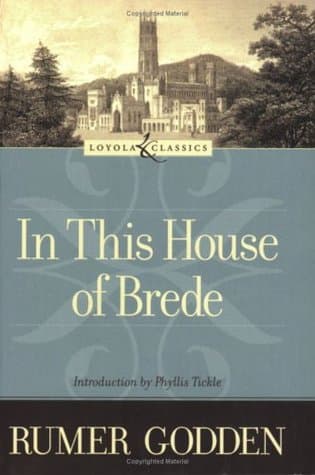
Synopsis
Covers the whole plot, including the ending.
- Difficulty
- Medium
- Pacing
- Slow
- Mood
- Contemplative, Serene, Reflective, Profound
- Read it if
- You are interested in an intimate, detailed portrayal of monastic life, spiritual journeys, and the complexities of faith within a cloistered community.
- Skip it if
- You prefer fast-paced plots, action, or stories with a strong external conflict, as this book is deeply internal and reflective.
In This House of Brede Plot Summary
Covers the whole plot, including the ending.
Philippa Talbot Enters Brede Abbey
The story opens with Philippa Talbot, a woman who held a senior position at the United Nations in London, arriving at Brede Abbey, a Benedictine convent in the English countryside. Dame Agnes, the Novice Mistress, welcomes her, and Philippa begins as a postulant, giving up her former life and possessions. The first days are filled with monastic routines, from the strict schedule of prayer and work to the silence and communal living. Philippa, despite her intelligence and worldly experience, struggles with the physical adjustments and mental discipline needed for such a change. She finds both peace and challenges in her new calling.
Adjusting to Monastic Discipline and Community Life
Philippa, now Sister Philippa, starts to settle into Brede's rhythms. She learns the Divine Office, the Latin chants, and various tasks, from gardening to working in the scriptorium. She observes the other nuns, some of whom have been at Brede for decades, and begins to understand the complex social dynamics in the cloister. She forms initial impressions of the Reverend Mother, Dame Veronica, a wise figure, and interacts with other novices and professed nuns like Sister Cecily, a kind young woman, and Dame Catherine, a more reserved and scholarly nun. Philippa's past life, especially her professional achievements, sometimes surfaces, creating an internal tension between who she was and who she is becoming.
The Arrival of Dame Perpetua and External Challenges
The peaceful routine of Brede is subtly disrupted by Dame Perpetua, a young and seemingly pious novice who quickly shows a manipulative nature. Her presence tests the community's patience and charity, especially the Novice Mistress, Dame Agnes. At the same time, Brede Abbey faces financial difficulties, leading to discussions about modernizing operations or taking drastic measures. The Reverend Mother, Dame Veronica, and the Bursar, Dame Imogen, work to find solutions, balancing financial stability with preserving their traditional monastic way of life. These external pressures and internal frictions add complexity to the nuns' lives.
Philippa's Past Revealed: Charles and the Lost Child
Through flashbacks and internal reflections, the depth of Philippa's past is gradually revealed. She had a deep love for Charles, a married man, and became pregnant. This relationship ended tragically with Charles's death in a car accident before their child could be born, and Philippa later lost the baby. The grief, guilt, and desire for spiritual reparation after these events were the main reasons she decided to enter Brede. This revelation helps explain her commitment to a life of penance and prayer, changing her from a successful woman seeking solace to a woman marked by loss and seeking redemption.
Conflicts and Community Dynamics: Dame Perpetua's Departure
Dame Perpetua's difficult and self-centered behavior continues to cause tension within the novitiate and the community. She often breaks rules, seeks attention, and shows a lack of humility or commitment to the monastic ideal. Her actions strain Dame Agnes, the Novice Mistress, and cause distress among the other novices and younger nuns. Despite attempts at guidance and correction from Dame Agnes and the Reverend Mother, Dame Perpetua cannot conform to the demands of cloistered life. Eventually, it becomes clear she is not suited for the life, and she is asked to leave Brede Abbey. This decision brings relief but also sadness to the community.
The Novitiate and Professed Life: Challenges and Growth
Philippa moves from postulant to novice, taking the name Sister Philippa. She continues to grow in her understanding and practice of Benedictine spirituality, deepening her prayer life and commitment to the community. She observes other nuns' struggles, such as Dame Catherine's intellectual pride or Sister Cecily's simple faith. The abbey faces a severe winter, testing the nuns' resilience. Philippa, now more integrated, quietly supports others and shows a growing capacity for humility and charity. She begins to see the beauty and meaning in the ordinary aspects of monastic life, realizing that holiness is in fidelity to the ordinary and the constant striving for God.
Dame Veronica's Illness and the Election of a New Abbess
The Reverend Mother, Dame Veronica, begins to show signs of failing health. Her illness casts a shadow over the abbey; she is a central and beloved figure, a wise and experienced leader who has guided Brede for many years. As her condition worsens, the community prepares for the election of a new abbess. This process is a significant event in monastic life, requiring discernment and prayer from all the professed nuns. The impending election creates apprehension and anticipation, as the choice of a new leader will impact Brede Abbey's spiritual and practical direction for years to come. Philippa, now a professed nun, participates in this important discernment.
The Election of Dame Catherine and Philippa's Role
After Dame Veronica's passing, the nuns gather for the solemn election of a new abbess. After deliberation and spiritual discernment, Dame Catherine, a scholarly and initially reserved nun, is elected to lead Brede Abbey. Her election surprises some, as she was not the most outwardly charismatic figure, but her intellectual rigor and deep spiritual life are recognized as valuable assets. Philippa, having recently made her solemn vows, observes this transition with a growing understanding of leadership responsibilities in the cloister. She continues her work, now with a renewed sense of purpose and commitment to supporting the new Abbess and the community.
The Modern World Intrudes: Visitors and Changes
As the years pass, Brede Abbey, like many religious communities, faces the pressures of the changing modern world. There are more visitors, some seeking spiritual guidance, others curious. The abbey considers new ways to sustain itself, such as expanding its agricultural output or engaging in new forms of outreach. Philippa, with her past experience, often helps bridge the gap between cloistered life and the secular world, offering practical advice or a sympathetic ear. These interactions show the tension between maintaining ancient traditions and adapting to contemporary realities, a challenge Dame Catherine, as the new Abbess, must navigate.
Sister Cecily's Death and Philippa's Steadfast Faith
Sister Cecily, the simple and good-hearted nun, falls ill and dies. Her death affects the community deeply, especially Philippa, who had grown fond of her gentle spirit. Cecily's passing reminds them of life's transient nature and the ultimate goal of monastic existence: union with God. Philippa, now established in her vocation, offers comfort and support to the grieving sisters. This event reinforces her conviction in the path she has chosen, solidifying her spiritual growth and showing her acceptance of the joys and sorrows in her cloistered life. She continues her daily duties, embodying the steadfast faith and quiet resilience that define her as a Benedictine nun.
In This House of Brede Characters
Philippa Talbot
Protagonist
A highly successful professional woman who leaves the world to become a cloistered Benedictine nun.
Philippa Talbot is a woman of immense intelligence, competence, and inner strength. Before entering Brede, she held a prestigious position at the United Nations in London, accustomed to influence and intellectual engagement. Her decision to join the cloister is driven by a profound spiritual calling, but also by a deep personal tragedy: the loss of her beloved Charles and their unborn child. She grapples with shedding her worldly identity and embracing the humility and obedience of monastic life, often reflecting on her past while striving for spiritual purity. Her journey is one of continuous self-surrender and growth in faith.
Relationships: Charles (Her deceased lover and father of her lost child); Dame Agnes (Her Novice Mistress and spiritual guide); Dame Veronica (The wise and revered Abbess who guides the community); Sister Cecily (A simple, kind-hearted fellow nun with whom she shares a gentle bond); Dame Catherine (A scholarly nun who later becomes Abbess)
Dame Veronica
Supporting
The wise and experienced Abbess of Brede Abbey, a spiritual matriarch.
Dame Veronica is the long-serving and deeply respected Abbess of Brede Abbey. She is a figure of immense wisdom, spiritual depth, and quiet authority. She possesses a keen understanding of human nature, guiding her nuns with a firm but compassionate hand. She embodies the Benedictine ideal of balancing prayer, work, and community life, and her leadership is characterized by prudence and foresight, especially in navigating the abbey's financial challenges and the personalities within her community. Her calm presence and spiritual insight are a bedrock for Brede.
Relationships: Philippa Talbot (Her postulant and novice, whom she guides); Dame Agnes (Her Novice Mistress and trusted confidante); The community of Brede Abbey (Their spiritual leader and mother)
Dame Agnes
Supporting
The Novice Mistress, responsible for the spiritual formation of new nuns.
Dame Agnes is the Novice Mistress at Brede, a crucial role in the spiritual formation of postulants and novices, including Philippa. She is a devout and dedicated nun, known for her patience, discernment, and steadfast adherence to the Rule of St. Benedict. She faces the challenging task of sifting genuine vocations from less suitable ones, as exemplified by her interactions with Dame Perpetua. She is a spiritual guide and mentor, helping the new sisters understand the intricacies of monastic life and fostering their growth in humility and obedience. She offers Philippa both support and necessary correction.
Relationships: Philippa Talbot (Her spiritual guide and formator); Dame Veronica (Her superior and fellow leader); Dame Perpetua (Her challenging and ultimately unsuccessful novice)
Dame Catherine
Supporting
A scholarly and initially reserved nun who later becomes Abbess.
Dame Catherine is one of the professed nuns at Brede, known for her intellectual capabilities and scholarly pursuits. Initially, she appears somewhat reserved and perhaps even a little aloof, more comfortable with books than with people. However, beneath her intellectual exterior lies a deep spirituality and a capacity for leadership. Her election as Abbess after Dame Veronica's death highlights her recognized wisdom and spiritual maturity, despite her less outwardly charismatic demeanor. She represents the intellectual tradition within Benedictine life and faces the challenge of leading the community into a new era.
Relationships: Philippa Talbot (Fellow nun and later her Abbess); Dame Veronica (Her predecessor as Abbess); The community of Brede Abbey (Later, their spiritual leader)
Sister Cecily
Supporting
A simple, kind-hearted nun, known for her childlike faith and goodness.
Sister Cecily is a gentle and uncomplicated nun at Brede Abbey. She embodies a simple, pure faith and a profound goodness that touches those around her. She may not possess Philippa's intellectual prowess or Dame Veronica's wisdom, but her humility, kindness, and unwavering devotion are a quiet testament to the monastic ideal. She often serves as a foil to more complex characters, reminding Philippa of the fundamental virtues of the religious life. Her presence brings a sense of innocence and spiritual purity to the community, and her eventual death is a poignant moment for the other nuns.
Relationships: Philippa Talbot (Fellow nun and friend); The community of Brede Abbey (A beloved member)
Dame Perpetua
Supporting
A manipulative and self-centered novice whose lack of genuine vocation causes friction.
Dame Perpetua is a young novice who enters Brede Abbey seemingly with piety but quickly reveals a deeply flawed character. She is manipulative, attention-seeking, and struggles with humility and obedience. Her presence introduces conflict and tests the patience and charity of the community, particularly Dame Agnes. Her inability to genuinely embrace the self-effacement and discipline required by monastic life ultimately leads to her departure. She serves as a stark contrast to Philippa, highlighting the true commitment and self-sacrifice demanded by a religious vocation.
Relationships: Dame Agnes (Her Novice Mistress, whom she challenges); Philippa Talbot (Fellow novice, whom she tries to manipulate); The community of Brede Abbey (A source of disruption)
Dame Imogen
Supporting
The Bursar of Brede Abbey, responsible for its financial affairs.
Dame Imogen is the Bursar of Brede Abbey, a practical and astute nun responsible for managing the abbey's finances and temporal affairs. She works closely with the Abbess to ensure the community's material well-being, often facing the challenges of limited resources and the need for modernization. Her role highlights the practical, earthly side of monastic life, demonstrating that even a cloistered community must attend to its financial stability. She is a pragmatic and grounded figure, providing a necessary balance to the more spiritual or intellectual pursuits of other nuns.
Relationships: Dame Veronica (Works closely with the Abbess on financial matters); Dame Catherine (Continues to serve as Bursar under the new Abbess); The community of Brede Abbey (Manages their material resources)
Charles
Mentioned
Philippa's deceased lover, whose memory profoundly influences her decision to enter the cloister.
Charles is Philippa Talbot's beloved from her past life. Though he never appears directly in the present narrative, his memory and their tragic relationship are central to understanding Philippa's motivation for entering Brede. He was a married man, and their affair resulted in a pregnancy. His sudden death in a car accident, followed by Philippa's miscarriage, leaves her with profound grief and a sense of spiritual debt. He represents the worldly love and loss that Philippa is attempting to transcend through her religious vocation, and his memory serves as a constant, if quiet, presence in her spiritual journey.
Relationships: Philippa Talbot (Her deceased lover)
In This House of Brede Themes
Vocation and Spiritual Calling
The central theme explores a religious vocation, especially for women in a cloistered Benedictine order. It looks at the commitment required, the sacrifices made, and the spiritual rewards found. Philippa's journey from a successful secular life to the demands of Brede Abbey shows that a true calling is not always easy but leads to deep fulfillment. The contrasting struggles of Dame Perpetua show the difference between a genuine vocation and a superficial attraction to religious life, emphasizing the need for humility, obedience, and self-surrender.
“The life of a Benedictine nun was not a flight from the world, but a deeper plunge into its heart, through prayer and sacrifice.”
Loss, Grief, and Redemption
Philippa's decision to enter Brede is rooted in personal tragedy: the loss of Charles and their unborn child. The novel explores how grief can lead to a spiritual search, and how monastic life offers a path for penance, healing, and redemption. Philippa's self-imposed discipline and prayer are acts of reparation, changing her past sorrows into spiritual strength and a deeper connection to God. The theme suggests that even deep human suffering can be sanctified and given meaning within a spiritual context.
“She had come to Brede not to escape the world, but to atone for her part in it, to offer her sorrow and her love.”
Community and Individuality
The novel portrays the dynamics of a cloistered community, where individuals must learn to live in harmony under the Rule of St. Benedict. It explores the challenges of communal living, the importance of charity, and the balance between personal spiritual growth and the collective's needs. Characters like Dame Perpetua test the community's patience, while the quiet support between Philippa and Sister Cecily shows the bonds formed. The election of a new Abbess further emphasizes how individual choices and contributions shape the abbey's collective spiritual journey.
“In Brede, one learned that solitude was not loneliness, but a way to be more fully present to God and to one's sisters.”
Tradition vs. Modernity
Brede Abbey, while rooted in ancient Benedictine traditions, faces the pressures of the modern world. The novel explores the tension between maintaining centuries-old customs, especially in liturgy and monastic practice, and adapting to contemporary societal changes, including financial realities and external influences. Dame Veronica and later Dame Catherine must navigate these challenges, seeking ways to preserve the cloister's spiritual integrity while ensuring its practical survival. This theme shows the ongoing struggle for religious institutions to remain relevant and viable without compromising their core identity.
“The world outside was a rushing river, but within these walls, time flowed with the steady rhythm of prayer, ancient and unchanging.”
The Nature of Faith and Doubt
The spiritual journey of Philippa and other nuns is not presented as one of unblemished certainty. The novel looks at the reality of faith, including moments of spiritual consolation alongside periods of dryness, doubt, and struggle. Philippa, with her intellectual background, often questions and reflects deeply on her beliefs and motivations. Monastic life is shown to be a continuous act of faith, requiring perseverance even when God feels distant. This theme offers a realistic exploration of what it means to live a life dedicated to God, acknowledging the human experience of both belief and spiritual wrestling.
“Faith was not a feeling, but a choice, a daily turning towards a God who often seemed hidden.”
Plot Devices & Literary Techniques
Flashbacks and Internal Monologue
Revealing Philippa's past and inner life through memory and reflection.
The novel frequently employs flashbacks and extensive internal monologues to gradually unveil Philippa Talbot's complex past and her motivations for entering the cloister. Rather than a linear exposition, details about her relationship with Charles and the loss of their child are interspersed throughout the narrative, enriching the reader's understanding of her present spiritual journey. This device allows for a deeper exploration of her psychological and spiritual landscape, showing the ongoing dialogue between her former self and her evolving monastic identity, and providing crucial context for her profound commitment to a life of penance and prayer.
The Rule of St. Benedict
The foundational text guiding the daily life and spiritual practice of Brede Abbey.
The Rule of St. Benedict serves not merely as a background detail but as a central organizing principle and a living 'character' in the novel. It dictates the daily schedule of prayer (the Divine Office), work (Ora et Labora), and communal living, shaping the spiritual formation of every nun. References to obedience, humility, stability, and conversion of manners are woven throughout the narrative, illustrating how this ancient text provides both the structure and the spiritual ethos for Brede Abbey. It is the constant benchmark against which the nuns' lives and vocations are measured.
The Cloister as a Microcosm
Brede Abbey as a self-contained world reflecting broader human and spiritual struggles.
Brede Abbey functions as a microcosm, a small, self-contained world that mirrors the complexities, joys, and struggles of human society at large, albeit within a spiritual framework. The community experiences internal conflicts (like Dame Perpetua's disruptive behavior), external pressures (financial difficulties, the changing modern world), and the full spectrum of human personalities and relationships. By focusing on this enclosed environment, the novel intensifies the exploration of universal themes such as faith, community, leadership, and personal transformation, demonstrating that profound spiritual and human dramas can unfold even within seemingly circumscribed settings.
Symbolism of Names
The significance of chosen religious names reflecting character or spiritual aspiration.
The changing of a name upon entering religious life is a significant symbolic act, and the novel uses this device to underscore the transformation of identity. Philippa Talbot becomes 'Sister Philippa,' signifying her new spiritual identity and renunciation of her former self. While not explicitly detailed for every character, the very act of choosing a new name (often after a saint or a virtue) symbolizes the 'new creation' in Christ and the commitment to a life dedicated to God. This reinforces the theme of shedding worldly identity for a spiritual one, even if the old self continues to inform the new.
In This House of Brede Quotes
“The cloister is not a place for the weak, but for those strong enough to bear the weight of God.”
“Obedience is not a surrender of will, but a redirection of it towards a higher purpose.”
“Every soul has its own unique path to God, and no two are exactly alike.”
“Silence is not an absence of sound, but a presence of God.”
“The world outside is a storm, but within these walls, there is a harbor.”
“God's love is not a comfort, but a challenge. It demands everything.”
“Even in the humblest of tasks, there is an opportunity for prayer.”
“Faith is not seeing, but trusting in what you cannot see.”
“The past is a part of us, but it does not define our future in God.”
“True humility is not thinking less of yourself, but thinking of yourself less.”
“To serve God is to serve His creation, in whatever form it takes.”
“The greatest struggle is often not against the world, but within one's own heart.”
“Loneliness is a part of the human condition, even in a community dedicated to God.”
“God's mercy is boundless, but it requires our willingness to accept it.”
Quiz
10 questions on the plot and the characters. Each answer comes with a short explanation.
Question 1
What was Philippa Talbot's profession before she entered Brede Abbey?
- A renowned concert pianist
- A successful architect
- A high-ranking executive in a London publishing house
- A prominent barrister
Show answer
C. A high-ranking executive in a London publishing house Before entering Brede, Philippa Talbot was a very successful professional woman, specifically a high-ranking executive in a London publishing house, known for her efficiency and intellect.
Question 2
Which historical event significantly impacts the community of Brede and leads to the arrival of new nuns?
- The dissolution of monasteries in England
- World War I, leading to refugee sisters
- The closing of French convents due to political unrest
- The Second Vatican Council's reforms
Show answer
C. The closing of French convents due to political unrest The community of Brede receives a group of French Benedictine nuns seeking refuge after their own convents in France are closed due to political and social unrest, significantly altering Brede's dynamics.
Question 3
What is Sister Philippa's primary struggle or internal conflict during her early years at Brede?
- Her inability to adapt to the manual labor required of the nuns
- Her difficulty in accepting the authority of the Abbess
- Her intellectual pride and the challenge of true humility and anonymity
- Her longing for her former social life and worldly pleasures
Show answer
C. Her intellectual pride and the challenge of true humility and anonymity Sister Philippa, being highly intelligent and capable, struggles with intellectual pride and the profound humility required by monastic life, finding it difficult to shed her former identity and embrace anonymity within the community.
Question 4
Which character serves as a foil to Philippa, representing a more traditional and sometimes rigid adherence to monastic rules?
- Dame Agnes
- Dame Veronica
- Dame Catherine
- Dame Perpetua
Show answer
B. Dame Veronica Dame Veronica often represents a more conservative and sometimes critical perspective within the community, often clashing with or observing Philippa's more independent spirit, thus serving as a foil.
Question 5
What is the significance of the 'house of Brede' itself as a setting?
- It is a newly constructed, modern convent designed for efficiency.
- It symbolizes the unchanging nature of faith and tradition through centuries.
- It is a temporary dwelling, soon to be relocated due to financial issues.
- It is a place of constant external conflict with the local village.
Show answer
B. It symbolizes the unchanging nature of faith and tradition through centuries. The ancient, enduring structure of Brede Abbey itself is a powerful symbol of the continuity of Benedictine life and faith through generations, providing a stable, timeless backdrop for the nuns' spiritual journeys.
Question 6
What specific act of service is Sister Philippa eventually entrusted with, utilizing her former professional skills?
- Managing the abbey's farm and livestock
- Reorganizing the abbey's library and archives
- Becoming the Novice Mistress
- Serving as the community's sacristan
Show answer
B. Reorganizing the abbey's library and archives Philippa's past experience in a publishing house makes her uniquely suited to the task of organizing and cataloging the abbey's extensive and somewhat neglected library and archives, a role she takes on later in her monastic life.
Question 7
What is a central theme explored through Philippa's journey from a worldly life to cloistered monasticism?
- The conflict between scientific progress and religious dogma
- The search for meaning and spiritual fulfillment beyond material success
- The political power dynamics within religious institutions
- The advantages of a solitary life over community living
Show answer
B. The search for meaning and spiritual fulfillment beyond material success The novel deeply explores Philippa's profound shift from a life of worldly achievement to one dedicated to God, highlighting the theme of finding deeper meaning and spiritual fulfillment that material success alone cannot provide.
Question 8
Why is the character of Dame Agnes particularly significant to Philippa's spiritual development?
- Dame Agnes is the Abbess who constantly tests Philippa's obedience.
- Dame Agnes represents the deep, contemplative, and sometimes challenging spiritual core of Brede.
- Dame Agnes is Philippa's biological sister who also joined the convent.
- Dame Agnes is a former rival from Philippa's professional life.
Show answer
B. Dame Agnes represents the deep, contemplative, and sometimes challenging spiritual core of Brede. Dame Agnes is a profound spiritual figure within the community, embodying deep prayer and a challenging, sometimes unsettling, spiritual wisdom. Her interactions and presence profoundly influence Philippa's own spiritual journey and understanding of monastic life.
Question 9
What is the ultimate 'test' or major crisis that Sister Philippa faces much later in her monastic life, forcing her to confront her past?
- A severe illness that threatens her life.
- The unexpected arrival of a person from her past who seeks her help.
- A crisis of faith that makes her question her vocation.
- A natural disaster that threatens the physical structure of the Abbey.
Show answer
B. The unexpected arrival of a person from her past who seeks her help. A significant crisis arises when a young woman, Liza, who is Philippa's illegitimate daughter, appears at the abbey, forcing Philippa to confront the worldly past she thought she had left behind and to reconcile her maternal feelings with her monastic vows.
Question 10
The novel emphasizes the Benedictine motto 'Ora et Labora'. How is this theme exemplified in the daily life of the nuns at Brede?
- By prioritizing only intellectual pursuits and theological study.
- Through a balanced rhythm of prayer, communal worship, and various forms of manual and intellectual work.
- By focusing solely on charitable work outside the abbey walls.
- By dedicating all their time to artistic creation and music.
Show answer
B. Through a balanced rhythm of prayer, communal worship, and various forms of manual and intellectual work. The Benedictine motto 'Ora et Labora' (Pray and Work) is central to the life at Brede. The nuns' days are structured around a strict horarium that includes communal prayer in the choir, personal contemplation, and various forms of work, from gardening and cooking to scholarly pursuits and administration, demonstrating the integration of spiritual and practical life.
In This House of Brede FAQ
What is 'In This House of Brede' about?
'In This House of Brede' follows Philippa Talbot, a brilliant and successful London executive, as she abruptly leaves her secular life to become a cloistered Benedictine nun at Brede Abbey. The novel explores her challenging adaptation to monastic life, the intricate dynamics within the community, and the profound reasons that led her to seek spiritual refuge and a life of devotion.
Why should I read 'In This House of Brede'?
You should read 'In This House of Brede' for its deeply immersive and authentic portrayal of cloistered monastic life, offering a rare glimpse into the daily routines, spiritual struggles, and quiet joys of nuns. Rumer Godden's exquisite prose and psychological insight create a compelling narrative about faith, community, and the search for meaning, appealing to both those interested in spirituality and literary fiction.
What is the background/setting of 'In This House of Brede'?
The novel is primarily set within the ancient, cloistered walls of Brede Abbey, a Benedictine monastery for women in England, during the mid-20th century. The setting meticulously details the daily rhythms of monastic life, from liturgical prayers and manual labor to the strict hierarchy and communal interactions, vividly bringing the contemplative world to life.
What are the most memorable quotes from 'In This House of Brede'?
One memorable quote is, 'The world outside was a different world, and Brede was a different world from the world outside.' Another is, 'God does not ask us to be successful, but to be faithful.' These quotes encapsulate the book's themes of spiritual separation and the quiet dedication required of the nuns.
What writing style does Rumer Godden use in 'In This House of Brede'?
Rumer Godden employs a rich, descriptive, and introspective writing style, characterized by its elegant prose and keen psychological observation. She meticulously details the sensory experiences of the abbey and the inner lives of her characters, creating an immersive atmosphere that is both contemplative and deeply human.
What minor details add significant meaning in 'In This House of Brede'?
The detailed descriptions of the nuns' habits, the specific roles within the abbey like the Novice Mistress or Cellarer, and the meticulous descriptions of the garden and chapel all contribute significantly. These details underscore the structured, disciplined, yet deeply spiritual nature of their existence, emphasizing how every aspect of life at Brede is imbued with purpose and tradition.
What are some subtle foreshadowing moments in the novel?
The initial hints of the strained relationship between Dame Philippa and Dame Agnes, and the subtle mentions of past personal histories among the older nuns, subtly foreshadow later revelations. These early cues suggest that despite the tranquil facade, the abbey holds complex human stories and unresolved tensions that will eventually surface.
What unexpected character connections exist in 'In This House of Brede'?
One unexpected connection is the shared past between Dame Philippa and Dame Agnes, who knew each other in their secular lives, adding layers of unresolved personal history to their monastic interactions. Another is the revelation of Dame Veronica's past, which surprisingly connects her to the external world Dame Philippa left behind, highlighting the diverse backgrounds of the nuns.
What are unspoken character motivations in 'In This House of Brede'?
Dame Philippa's profound guilt over a past personal tragedy, specifically the death of her godson, is a powerful unspoken motivation for her seeking penance and solace in the cloister. Similarly, the motivations of some other nuns, like Dame Agnes's underlying jealousy and desire for recognition, are often hinted at rather than explicitly stated.
What psychological complexities do characters exhibit in 'In This House of Brede'?
Dame Philippa grapples with deep-seated guilt and the challenge of relinquishing her formidable intellect and will to monastic obedience. Dame Agnes struggles with envy and the desire for control, masking her insecurities with an air of superiority. These internal conflicts reveal the ongoing human struggles even within a spiritual setting.
What are the major emotional turning points in 'In This House of Brede'?
A major emotional turning point is Dame Philippa's acceptance of her past and her eventual embrace of her role within the community, moving beyond personal penance to genuine communal love. Another is the resolution of the conflict with Dame Agnes, leading to a deeper understanding and reconciliation that strengthens the abbey's spiritual fabric.
How do relationship dynamics evolve in 'In This House of Brede'?
Relationship dynamics evolve from initial tensions and misunderstandings, particularly between Dame Philippa and Dame Agnes, to a more profound understanding and acceptance. The communal life forces the nuns to confront their individual flaws and work towards forgiveness and mutual support, fostering a unique sisterhood forged through shared vows and daily life.
Which parts of 'In This House of Brede' remain ambiguous or open-ended?
While the novel provides closure for many character arcs, the ultimate impact of the changing world outside the abbey's walls on its future remains somewhat open-ended. The enduring question of how Brede will adapt to modernity while preserving its ancient traditions is implied, leaving readers to ponder the long-term sustainability of such a cloistered life.
What are controversial scenes or decisions in 'In This House of Brede'?
One controversial element might be the strict adherence to traditional monastic rules and the seemingly harsh penances, which could be debated by modern readers. The decision to send a young nun, Dame Catherine, to establish a new foundation in Africa, despite her personal struggles, could also be seen as a difficult and potentially controversial choice within the community.
'In This House of Brede' ending explained: how it ends & what it means.
The novel concludes with Dame Philippa having fully integrated into the life of Brede, finding peace and purpose within her vocation. The abbey continues its daily rhythms, having navigated various internal conflicts and external challenges. The ending signifies the enduring strength of faith, community, and tradition, suggesting that despite individual struggles, the collective spiritual life of Brede will persevere.
About the author
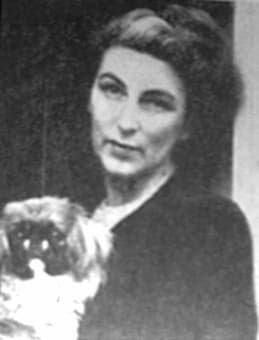
Rumer Godden was a British author known for her fiction, often exploring themes of spirituality and human experience. One of her notable works is "In This House of Brede," which delves into the lives of a group of nuns in a Benedictine monastery. Godden's writing is characterized by its rich detail and psychological depth.
Similar books
- Gilead (Oprah's Book Club)
Marilynne Robinson
3.9 (126k) average on GoodreadsFictionOffers deep, introspective reflections on faith, life, and spirituality from a religious perspective.
- The Power and the Glory
Graham Greene
4.0 (33k) average on GoodreadsLiterary FictionExamines themes of faith, doubt, and the human condition within a religious context.
- The Name of the Rose
Umberto Eco
4.1 (301k) average on GoodreadsHistorical FictionBoth novels are set in monastic environments and explore the intellectual and social dynamics within. However, Eco's The Name of the Rose is primarily a historical mystery novel, using the abbey as a setting for a complex philosophical and semiotic thriller, with a strong emphasis on external plot and intellectual puzzles. Godden's work, conversely, is a character-driven literary and spiritual fiction, focusing intensely on the inner lives and spiritual development of the nuns, with the abbey serving as a crucible for their faith and community, rather than a stage for crime. Eco's approach is more outwardly focused on historical context and intellectual debate, while Godden's is inwardly focused on personal and communal spiritual experience.
- The Old Man and the Sea
Ernest Hemingway
3.8 (831k) average on GoodreadsLiterary FictionA Cuban fisherman's long struggle with a giant marlin becomes a story of endurance and dignity, now retold for young adults with illustrations, phonetic guides, and writing prompts in Traditional Chinese.
- One Hundred Years of Solitude
Gabriel García Márquez
4.1 (753k) average on GoodreadsLiterary FictionThrough the multi-generational story of the Buendía family, a mythical town deals with the repeating patterns of time, love, and solitude, as the extraordinary mixes with the ordinary.
- The Goldfinch
Donna Tartt
3.9 (720k) average on GoodreadsLiterary FictionHaunted by a tragic explosion and clutching a stolen Dutch masterpiece, a young orphan navigates the opulent drawing rooms of New York and the gritty underbelly of the art world, desperately seeking connection and redemption amidst a life spiraling into crime and obsession.





Enjoyed the summary?
A summary gives you the shape of the book. The book itself has the detail, the examples and the voice.
Find In This House of Brede on AmazonAs an Amazon Associate, BookBrief earns from qualifying purchases. How we're funded