

Synopsis
Covers the whole plot, including the ending.
- Difficulty
- Medium
- Pacing
- Slow
- Mood
- Intense, Reflective, Somber, Spiritual
- Read it if
- You appreciate deep character studies, explore themes of faith, family trauma, and identity in a historical setting, and enjoy powerful, lyrical prose.
- Skip it if
- You prefer fast-paced plots, lighthearted themes, or are uncomfortable with intense explorations of religious hypocrisy and familial abuse.
Go Tell it on the Mountain Plot Summary
Covers the whole plot, including the ending.
Part One: The Seventh Day
On his fourteenth birthday, John Grimes, a sensitive boy in 1930s Harlem, feels the heavy atmosphere of his stepfather Gabriel's fundamentalist church, the Temple of the Fire Baptized. He feels separate from his family and aware of his own sinfulness, especially his sexual desires. At a Saturday night revival service, John is overwhelmed by the fervent preaching and the congregation's ecstatic spiritual experiences. He resists the call to the altar, fighting his stepfather's strict beliefs and his own growing identity. The service ends with a personal and terrifying spiritual struggle on the 'threshing-floor,' where John faces his fears and desires.
John's Conversion Experience
Driven by strong inner conflict and the church's overwhelming pressure, John collapses at the altar, entering a trance. He sees vivid visions and feels strong sensations, reliving his past, facing his perceived sins, and wrestling with the Devil. This spiritual battle is shown as a physical struggle, with John writhing and crying out. His mother, Elizabeth, watches with hope and fear, having had her own conversion. Eventually, John emerges, feeling cleansed and reborn, though still disoriented about what this means for his future. Church members embrace him as a new convert.
Part Two: Gabriel's Prayer
The story goes into the past of Gabriel Grimes, John's stepfather and a Deacon at the Temple. Born into a religious Southern family, Gabriel felt an early call to preach but struggled with his own desires. He had an affair with a woman named Esther, who became pregnant. Despite his guilt and attempts to balance his faith with his actions, Gabriel left Esther and their child. He feared exposure would ruin his spiritual reputation. This betrayal and his later marriage to Deborah, a woman scarred by rape, show the deep hypocrisy and unresolved guilt that defines much of Gabriel's character and his harsh treatment of his family.
Gabriel's Marriage to Deborah
Gabriel marries Deborah, a woman brutally raped in her youth. The rape left her unable to have children and deeply religious. Deborah, though loving and loyal, has a quiet strength and understands Gabriel's inner turmoil and hypocrisy. She knows about his past affair with Esther and their son, often acting as a moral guide and silent accuser. Their marriage is marked by Gabriel's struggles with his past sins and his public image as a righteous man. Deborah's strong faith and her own suffering contrast with Gabriel's self-righteousness, often forcing him to face his own failures, even if he doesn't want to.
Gabriel and Florence
Gabriel's older sister, Florence, also a church member, deeply resents him. She has seen his past sins, his abandonment of Esther, and his general hypocrisy. She often feels overlooked by her family. Florence's bitterness comes from her own unfulfilled life and her view of Gabriel's moral failures, which she believes he has never truly made up for. She often challenges Gabriel's authority and his claims of righteousness, hinting at his hidden past. Her presence reveals the flaws in Gabriel's careful image and hints at the eventual uncovering of his deepest secrets.
Part Three: Elizabeth's Prayer
The story shifts to Elizabeth, John's mother, telling her life. She grew up in the South, leaving its oppressive racial climate for Harlem with her beloved aunt. In New York, she fell in love with Richard, a kind and smart but disillusioned man. Richard, a secular intellectual, struggled with the systemic racism and poverty they faced. He eventually killed himself after being falsely accused of theft and beaten by the police. Elizabeth, pregnant with John, was left heartbroken and vulnerable. This tragedy led her to the church and later to Gabriel, seeking comfort and stability for herself and her unborn child.
Elizabeth and Richard
Elizabeth's relationship with Richard is shown as a deep and loving bond, a sharp contrast to her later marriage with Gabriel. Richard represented intellectual freedom and a shared understanding of the world's injustices. However, his inability to reconcile his ideals with the harsh realities of racism and poverty led to his despair. His false accusation and suicide left Elizabeth devastated, deeply affecting her trust and security. This past trauma explains Elizabeth's quiet strength and her desperate desire to protect John from the world's harshness and Gabriel's strict rules. It also shows the deep scars racial injustice leaves.
Elizabeth and Gabriel
After Richard's death, a pregnant Elizabeth, alone and vulnerable, married Gabriel. She sought the security and spiritual guidance the church and Gabriel offered, hoping to provide a stable home for John. However, Gabriel never truly accepted John as his son, seeing him as a constant reminder of Elizabeth's past and a symbol of sin. His resentment and harshness toward John create a dysfunctional family, fostering John's feelings of alienation and unworthiness. Elizabeth, caught between her love for John and her dependence on Gabriel, often struggles to protect her son from his stepfather's cruelty, leading to a life of quiet suffering.
The Morning After John's Conversion
The morning after John's powerful conversion, the family is still shaken. John feels a mix of peace and unease, grappling with his new spiritual commitment. Gabriel, while outwardly celebrating John's salvation, feels deep jealousy and resentment. He sees John's experience as a challenge to his own authority and a reminder of his own unresolved sins. Florence, still bitter, continues to make veiled remarks about Gabriel's past. Tension fills the household as the fragile image of piety begins to break under the weight of old secrets and conflicts. The stage is set for a confrontation.
Florence's Revelation
Florence, in a moment of bitter triumph, finally tells Elizabeth about Gabriel's past affair with Esther and the existence of his illegitimate son. She shows old letters and photographs as proof, shattering Elizabeth's illusions about her husband's righteousness. Elizabeth is devastated by the betrayal and the realization of Gabriel's deep hypocrisy. This revelation confirms Elizabeth's long-held suspicions about Gabriel's cruelty toward John, whom she now understands was likely resented for reasons connected to Gabriel's own illegitimate child. The truth unleashes years of suppressed anger and pain, leading to a major crisis in the family and the church.
Confrontation and Aftermath
Armed with Florence's revelations, Elizabeth confronts Gabriel, releasing years of suppressed anger and pain. The argument is fierce and emotional, exposing the deep resentments, betrayals, and hypocrisy that have defined their marriage and family life. Gabriel, trapped and exposed, is forced to face his past sins, though he struggles to truly repent. John, witnessing this explosive confrontation, gains a deeper understanding of his family's complex history and his stepfather's true nature. The family is fractured, the future uncertain, but the truth, however painful, has finally come to light, forcing them to deal with their past.
Principal Figures
John Grimes
Protagonist
A sensitive and introspective teenager grappling with his identity and faith.
John is a fourteen-year-old boy living in Harlem, deeply affected by the oppressive religious atmosphere of his stepfather Gabriel's church. He is intelligent, artistic, and highly sensitive, struggling with burgeoning sexuality and a profound sense of sinfulness. John feels alienated from his family, particularly Gabriel, and yearns for a life beyond the confines of the church. His internal life is rich with observation and introspection, and he questions the rigid doctrines he is taught, even as he is drawn into a powerful spiritual experience.
Relationships: Gabriel Grimes (stepson/stepfather, deeply antagonistic and resentful); Elizabeth Grimes (son/mother, loving but strained by circumstances); Roy Grimes (brother, distant and often at odds); Florence Grimes (aunt, a source of quiet observation and eventual revelation)
Gabriel Grimes
Antagonist/Supporting
John's rigid, hypocritical, and abusive stepfather, a Deacon in the church.
Gabriel is a Deacon at the Temple of the Fire Baptized, a powerful preacher whose public piety masks a history of deep sin and hypocrisy. He is a harsh, authoritarian figure, particularly towards John, whom he resents as a reminder of his wife's past and his own illegitimate son. Gabriel is driven by a desperate need to maintain his righteous image, constantly battling his own carnal desires and the guilt of his past actions. His fanaticism stems from his own unresolved struggles and fears of damnation, which he projects onto his family.
Relationships: John Grimes (stepfather/stepson, abusive and resentful); Elizabeth Grimes (husband/wife, strained by his past and hypocrisy); Deborah Grimes (first wife, a silent witness to his sins); Florence Grimes (brother/sister, adversarial due to her knowledge of his past); Esther (past lover, mother of his illegitimate son)
Elizabeth Grimes
Supporting
John's long-suffering and protective mother, burdened by her past.
Elizabeth is John's biological mother and Gabriel's wife. She is a quiet, resilient woman who endured a tragic past, including the suicide of John's biological father, Richard, and the subsequent racial injustices. She found solace in the church and married Gabriel for stability, but lives under the weight of his cruelty and her own unresolved grief. Elizabeth is fiercely protective of John, often mediating between him and Gabriel, and carries a deep understanding of suffering and the complexities of faith.
Relationships: John Grimes (mother/son, deeply loving and protective); Gabriel Grimes (wife/husband, strained by his abuse and hypocrisy); Richard (past lover, John's biological father); Florence Grimes (sister-in-law, initially antagonistic but later a source of truth)
Florence Grimes
Supporting
Gabriel's bitter and observant sister, holding family secrets.
Florence is Gabriel's older sister, a sharp-tongued and resentful woman who has lived a life of unfulfilled desires and perceived slights. She has always seen through Gabriel's pious facade and carries the weight of his past sins, particularly his abandonment of Esther and their child. Florence's bitterness stems from her own experiences and her keen observation of the hypocrisy within her family and the church. She eventually serves as the catalyst for exposing Gabriel's secrets, driven by a desire for justice and perhaps a touch of schadenfreude.
Relationships: Gabriel Grimes (sister/brother, deeply antagonistic); Elizabeth Grimes (sister-in-law, initially distant but later shares a moment of shared understanding); John Grimes (aunt/nephew, a distant but observant presence)
Deborah Grimes
Supporting
Gabriel's first wife, a devout woman scarred by past trauma.
Deborah was Gabriel's first wife, a deeply religious woman who married him despite having been brutally raped in her youth, leaving her unable to bear children. She knew about Gabriel's affair with Esther and his illegitimate son, carrying this secret with quiet dignity and suffering. Deborah embodies a profound sense of Christian forgiveness and enduring faith, serving as a moral anchor and a constant, silent reminder of Gabriel's failings. Her presence in the flashbacks highlights Gabriel's ongoing struggle with his own conscience.
Relationships: Gabriel Grimes (wife/husband, marked by his betrayal and her silent endurance)
Richard
Supporting
John's biological father, a secular intellectual driven to despair by racism.
Richard was Elizabeth's first love and John's biological father. He was an intelligent, sensitive, and secular man who struggled deeply with the pervasive racism and injustice faced by Black people in America. Despite his love for Elizabeth and his hopes for a better future, the systemic oppression and a false accusation of theft broke his spirit, leading him to suicide. Richard represents the alternative path that Elizabeth could have taken and the profound impact of racial prejudice on individual lives, leaving a lasting legacy on John's identity.
Relationships: Elizabeth Grimes (lover, John's biological parents)
Esther
Mentioned
Gabriel's past lover and the mother of his illegitimate son.
Esther was a young, 'sinful' woman with whom Gabriel had an affair in his youth, resulting in the birth of his illegitimate son. Her brief but impactful role in Gabriel's past highlights his hypocrisy and his struggle with carnal desires versus his spiritual calling. Gabriel abandoned her and their child to protect his reputation, a decision that haunts him and eventually comes to light, exposing his true character.
Relationships: Gabriel Grimes (past lover, mother of his illegitimate son)
Roy Grimes
Supporting
John's younger half-brother, favored by Gabriel.
Roy is John's younger half-brother, Gabriel's biological son with Elizabeth. He is more rebellious and street-smart than John, often getting into trouble. Gabriel openly favors Roy, seeing him as his true son, which exacerbates the tension and resentment between John and his stepfather. Roy's character highlights Gabriel's favoritism and the complex family dynamics, as he embodies a different path of youthful rebellion compared to John's internal struggles.
Relationships: John Grimes (half-brother, often at odds); Gabriel Grimes (son/father, favored by Gabriel); Elizabeth Grimes (son/mother, loved by Elizabeth)
Themes & Insights
The Hypocrisy of Religion
The novel looks at the hypocrisy in some religious communities, especially through Gabriel Grimes. Gabriel preaches damnation but secretly has a past full of adultery, abandonment, and unacknowledged guilt. His harshness toward John comes from his own unconfessed sins and his inability to balance his desires with his spiritual calling. The intense, ecstatic atmosphere of the Temple of the Fire Baptized offers comfort to some but also creates a place for judgment and repression. This stifles real spiritual growth and creates a culture of fear instead of true love. This theme is key to understanding the oppressive world John fights against.
“He was a man who had preached the Word for nearly thirty years, and had never been able to believe it. He had been a man who had been called to be a saint, and had been unable to be anything but a sinner.”
Search for Identity and Self-Acceptance
John Grimes's journey is about finding his own identity amidst the overwhelming expectations of his family and church. He struggles with his growing sexuality, his artistic interests, and his desire for a life beyond his stepfather's strict faith. His conversion, while deep, is also confusing. He grapples with what it means to be 'saved' and how that fits with his true self. The stories of Elizabeth and Gabriel also show their past searches for identity, shaped by racism, trauma, and spiritual calling. This shows how these unfulfilled searches affect the next generation.
“He wondered how he would ever be able to tell them who he was, or what he felt, or what he wanted.”
The Burden of the Past
The past heavily influences every character, shaping their current actions and relationships. Gabriel is haunted by leaving Esther and their illegitimate son; his guilt appears as cruelty toward John. Elizabeth carries the trauma of Richard's death and the racial injustices that caused it, which influences her protective nature and her choices. Florence is bitter from her own unfulfilled life and her knowledge of Gabriel's secrets. The cycle of sin, suffering, and unacknowledged truth passes down through generations. This shows how unresolved historical and personal traumas continue to affect individuals and families, making real freedom hard to achieve.
“The past is all around us, in the faces of the living, in the faces of the dead.”
Racial Injustice and its Impact
While not always central, racial injustice forms a constant background that shapes the characters' lives and choices. Elizabeth's move from the South to Harlem, Richard's disillusionment and suicide due to false accusations and police brutality, and the general struggles of the Black community in 1930s Harlem all highlight the systemic racism they face. This external oppression adds to the characters' inner conflicts and anxieties, influencing their search for comfort, whether in religion or other escapes. The pressure of living in a racist society makes personal struggles worse, making the search for dignity and meaning even harder.
“The world he lived in was an evil world, and he was not strong enough to change it.”
The Nature of Spirituality and Faith
The novel explores the complex and often conflicting nature of spirituality. It shows the intense, visceral experience of religious revival and conversion within the Temple of the Fire Baptized, showing its power to uplift and its potential for repression and emotional manipulation. John's conversion is a personal and physically demanding event, but its meaning remains unclear. It raises questions about whether it is true salvation or a surrender to group pressure. The different forms of faith—Deborah's quiet endurance, Gabriel's showy righteousness, Elizabeth's search for comfort—highlight the various ways people engage with their beliefs, often revealing human flaws and desires beneath religious appearances.
“The Holy Ghost was riding on the air, and it was the air that was riding on the Holy Ghost.”
Plot Devices & Literary Techniques
Stream of Consciousness
Inner thoughts and feelings are presented directly, often without conventional narrative filtering.
Baldwin frequently employs stream of consciousness, particularly in Part One during John's conversion experience and in the 'Prayers' sections for Gabriel and Elizabeth. This technique allows direct access to the characters' raw emotions, memories, and internal conflicts, making their spiritual and psychological struggles deeply intimate and immediate. For instance, John's intense battle on the 'threshing-floor' is rendered through fragmented thoughts, sensory details, and visions, immersing the reader in his subjective experience of spiritual torment and ecstasy. This device is crucial for conveying the profound internal lives of the characters.
Flashbacks / Non-linear Narrative
The story jumps back in time to reveal the pasts of key characters.
The novel's structure is non-linear, with the central event of John's conversion in Part One serving as a pivot. Parts Two and Three delve into the extensive flashbacks of Gabriel's and Elizabeth's lives, respectively. These flashbacks are not merely exposition; they are deeply woven into the present narrative, revealing the psychological and historical roots of the family's dysfunction and the characters' motivations. This device allows Baldwin to gradually unveil the complex web of secrets, betrayals, and traumas that define the Grimes family, making the eventual confrontations much more impactful and providing crucial context for John's predicament.
Religious Symbolism and Allusion
Biblical imagery and references infuse the narrative with spiritual meaning and critique.
Baldwin extensively uses religious symbolism and allusions, drawing heavily from the Bible and the practices of the Pentecostal church. Concepts like the 'threshing-floor,' the 'Holy Ghost,' and the language of sin and salvation are central. This device not only grounds the story in its specific cultural and religious context but also allows Baldwin to explore the dual nature of faith—its potential for both liberation and oppression. The symbolism often highlights the hypocrisy of characters like Gabriel, whose actions contradict the spiritual ideals he preaches, while also conveying the profound, almost mystical, experiences of characters like John during his conversion.
Third-Person Omniscient Narration
The narrator has full knowledge of all characters' thoughts and feelings.
The novel is told from a third-person omniscient perspective, but it often shifts its focus intimately to the internal lives of specific characters (John, Gabriel, Elizabeth). This allows the narrator to reveal the hidden thoughts, secret sins, and unspoken desires that characters keep from each other and the outside world. This device is particularly effective in exposing the deep-seated hypocrisy of Gabriel and the unspoken suffering of Elizabeth, providing the reader with a comprehensive understanding of the complex psychological landscape of the Grimes family and the motivations behind their actions, even when they are not explicitly stated.
Go Tell it on the Mountain Quotes
“Go tell it on the mountain, over the hills and everywhere; go tell it on the mountain, that Jesus Christ is born.”
“He knew that the Lord was not to be found in the heights of the mountain, but in the valley of humiliation.”
“Everyone had been born, it seemed to him, to suffer, and to make other people suffer.”
“Life, in his experience, was a fire, and the great thing was to walk through it.”
“For the wages of sin is death; but the gift of God is eternal life through Jesus Christ our Lord.”
“He knew that the hand of God was on him, and that it would never leave him.”
“The church was very beautiful to him, and very terrible.”
“He was a stranger in the house, an alien in the city, and a pilgrim on the earth.”
“But the Lord had touched him, had laid His hand on him, and had said, 'Arise, and shine; for thy light is come, and the glory of the Lord is risen upon thee.'”
“He hated the world, and he hated himself.”
“The world was a whore, and he, Gabriel, was a child of God.”
“He was not free, because he was afraid.”
“The light of God was darkness to him, and the darkness was light.”
“He felt that he was going to die, and he did not care.”
Quiz
10 questions on the plot and the characters. Each answer comes with a short explanation.
Question 1
What is the name of the church where Johnny Grimes's father, Gabriel, preaches?
- The Church of the Redeemed
- The Temple of the Fire Baptized
- The Sanctified Tabernacle
- The Holy Ghost Assembly
Show answer
B. The Temple of the Fire Baptized Gabriel Grimes preaches at the Temple of the Fire Baptized, a central setting for the novel's spiritual and familial conflicts.
Question 2
What is Johnny Grimes's relationship with his stepfather, Gabriel?
- He deeply admires Gabriel's piety and guidance.
- He feels a strong bond of love and respect for Gabriel.
- He feels scalding hatred for Gabriel due to his abuse and fanaticism.
- He is indifferent to Gabriel, focusing solely on his own future.
Show answer
C. He feels scalding hatred for Gabriel due to his abuse and fanaticism. The novel explicitly states that Johnny feels 'scalding hatred' for Gabriel due to his abusive and fanatical nature.
Question 3
In what decade is the story primarily set, reflecting James Baldwin's own boyhood experiences?
- 1920s
- 1930s
- 1940s
- 1950s
Show answer
B. 1930s The novel draws on Baldwin's boyhood in a religious community in 1930s Harlem.
Question 4
What is Johnny's internal struggle regarding his future and his stepfather's expectations?
- He eagerly embraces the path of becoming a preacher like Gabriel.
- He struggles with whether to pursue a career in music or follow Gabriel.
- He vows that his life will be different from Gabriel's and resists the preacher's path.
- He is undecided, waiting for a divine sign to guide his choice.
Show answer
C. He vows that his life will be different from Gabriel's and resists the preacher's path. Johnny 'vows that, for him, things will be different,' indicating his resistance to following in Gabriel's footsteps as a preacher.
Question 5
Which of the following themes is NOT explicitly mentioned in the provided description of 'Go Tell It on the Mountain'?
- Passion and guilt
- Secret sinners and prayers
- Racial discrimination in the workplace
- Abuse within the family
Show answer
C. Racial discrimination in the workplace While racial discrimination is a common theme in Baldwin's work, the description specifically highlights passion, guilt, secret sinners, prayers, and family abuse, but not workplace discrimination.
Question 6
What is the significance of the phrase 'the Holy Ghost were riding on the air' in the context of the church services?
- It describes the quiet, contemplative nature of the worship.
- It conveys the intense, emotional, and spiritual fervor of the church services.
- It refers to the literal presence of a spiritual entity visible to the congregants.
- It is a metaphor for the oppressive atmosphere created by Gabriel's preaching.
Show answer
B. It conveys the intense, emotional, and spiritual fervor of the church services. The phrase is used to describe the highly emotional and spiritually charged atmosphere within the Temple of the Fire Baptized, where 'the church swells with song.'
Question 7
The novel is described as having 'vivid imagery' and 'lavish attention to details.' How does this literary style contribute to the reader's experience?
- It makes the story difficult to follow due to excessive descriptions.
- It creates a rich, immersive, and emotionally resonant portrayal of the setting and characters.
- It primarily serves to slow down the plot, emphasizing philosophical contemplation.
- It distracts from the main themes by focusing on superficial aspects.
Show answer
B. It creates a rich, immersive, and emotionally resonant portrayal of the setting and characters. Vivid imagery and detailed attention typically enhance immersion and emotional connection, allowing readers to fully experience the 'feverish story' as noted by The New York Times.
Question 8
How does Gabriel's 'fear and fanaticism' directly impact his family, as described in the summary?
- It inspires his family to greater acts of faith and devotion.
- It leads him to neglect his family in favor of church duties.
- It causes him to abuse his family, leading to Johnny's hatred.
- It makes him overly protective, isolating his family from the community.
Show answer
C. It causes him to abuse his family, leading to Johnny's hatred. The summary states that Gabriel's 'fear and fanaticism lead him to abuse his family,' which is a direct cause of Johnny's hatred.
Question 9
The novel is described as 'a beautiful, enduring, spiritual song of a novel' by Andrew O'Hagan. What aspect of the book does this phrase most likely emphasize?
- Its lyrical prose and exploration of profound spiritual experiences.
- Its literal inclusion of gospel music lyrics throughout the text.
- Its focus on the historical development of spirituals in Harlem.
- Its didactic message about the importance of church attendance.
Show answer
A. Its lyrical prose and exploration of profound spiritual experiences. The phrase 'spiritual song of a novel' points to the book's deep engagement with spirituality, its enduring quality, and likely its lyrical or evocative writing style, rather than literal musical elements or a simple didactic message.
Question 10
Given the description, what is a likely central conflict that Johnny Grimes faces throughout the novel?
- His desire to leave Harlem for a new life in a different city.
- The internal struggle between his personal aspirations and the oppressive religious expectations of his family.
- A conflict with his peers over leadership within the church youth group.
- His efforts to expose the hypocrisy of the church community to outsiders.
Show answer
B. The internal struggle between his personal aspirations and the oppressive religious expectations of his family. Johnny's 'scalding hatred' for Gabriel and his vow that 'things will be different' strongly suggest a central conflict between his own desires and the path laid out for him by his stepfather and the church.
Go Tell it on the Mountain FAQ
What is the central conflict Johnny Grimes faces in 'Go Tell It on the Mountain'?
Johnny Grimes grapples with an intense internal struggle between his burgeoning sexuality and intellectual curiosity, and the oppressive, rigid religious dogma of the Temple of the Fire Baptized, presided over by his stepfather, Gabriel. This conflict is intensified by his deep-seated hatred for Gabriel and his desire to forge his own identity outside the church's prescribed path.
Who is Gabriel Grimes, and what is his relationship with Johnny?
Gabriel Grimes is Johnny's stepfather and a fervent, often tyrannical, preacher at the Temple of the Fire Baptized. Their relationship is characterized by intense animosity, as Gabriel frequently abuses Johnny and projects his own unresolved sins and fears onto the boy, seeing him as an embodiment of evil and a threat to his religious authority.
What role does Florence play in the Grimes family history?
Florence is Gabriel's older sister and a significant figure in the family's past. Her chapters reveal crucial details about Gabriel's early life, his first marriage, and his complex relationship with his mother, providing context for his present-day fanaticism and the deep-seated hypocrisy that underpins his religious fervor.
What is the significance of the 'threshing floor' experience for Johnny?
The 'threshing floor' is the climactic spiritual experience Johnny undergoes during a church service, where he seemingly surrenders to the Holy Ghost. This intense, almost violent, conversion experience is ambiguous; while it appears to be a spiritual awakening, it also represents a moment of profound psychological crisis and potential capitulation to the very forces he resents.
How does Harlem in the 1930s influence the characters and themes of the novel?
Harlem in the 1930s provides a vibrant yet challenging backdrop, marked by the Great Depression, racial discrimination, and the spiritual solace offered by storefront churches. This environment shapes the characters' struggles with poverty, identity, and the search for meaning, while the church often serves as both a refuge and a source of repression within the community.
What is the true paternity of Johnny Grimes, and how is it revealed?
Johnny Grimes is not Gabriel's biological son; his biological father was Richard, a man who had a relationship with Elizabeth before she met Gabriel. This crucial detail is gradually revealed through Elizabeth's painful memories, exposing Gabriel's hypocrisy and the deep secrets that permeate the family dynamics.
How does Baldwin use biblical allusions throughout the novel, particularly concerning Gabriel?
Baldwin masterfully weaves biblical allusions throughout the text, often ironically. Gabriel, despite his name evoking the archangel, frequently acts in ways contrary to his spiritual calling, his life paralleling Old Testament figures marked by sin and judgment rather than grace, highlighting his hypocrisy and self-deception.
What is the significance of Elisha's character and his relationship with Johnny?
Elisha is Johnny's friend and a devout young man within the church, representing a potential path of spiritual devotion for Johnny. His relationship with Johnny is complex, marked by a nascent homoerotic tension and a shared yearning for spiritual connection, even as Johnny struggles against the church's constraints.
How does the novel subtly hint at Johnny's burgeoning homosexuality?
The novel subtly explores Johnny's nascent homosexuality through his intense admiration for Elisha's physical form, his discomfort with traditional gender roles, and his deep-seated feelings of being an outsider. These hints are woven into his internal monologues and observations, contributing to his sense of alienation from the church's expectations.
How does Gabriel's past trauma and unconfessed sins manifest in his present behavior?
Gabriel's past, marked by the abandonment of his illegitimate son Royal and his troubled first marriage, fuels his present fanaticism and cruelty. His inability to truly repent and confront his own sins leads him to project his guilt onto Johnny and others, creating a cycle of abuse and self-deception.
Analyze Elizabeth's psychological state, particularly her resilience and despair.
Elizabeth endures immense psychological suffering, caught between her love for Johnny and her fear of Gabriel's wrath. Her resilience stems from her deep maternal instincts, yet she is also plagued by despair and regret over her past choices and her inability to protect Johnny fully from Gabriel's abuse.
What is the psychological impact of the 'threshing floor' experience on Johnny?
The 'threshing floor' leaves Johnny in a psychologically ambiguous state. While he experiences a profound emotional release and a sense of spiritual connection, it also represents a potential loss of self and a surrender to external forces, raising questions about the authenticity and lasting impact of such a conversion.
How does the novel explore the concept of inherited trauma within the Grimes family?
The novel meticulously portrays how trauma, particularly Gabriel's unaddressed sins and the societal pressures on the family, is inherited across generations. Johnny is burdened by Gabriel's past, Elizabeth's sorrows, and the collective struggles of their community, illustrating a cycle of pain passed down through time.
Is Johnny's conversion experience genuine, or is it a psychological breakdown/coping mechanism?
This is a central interpretive debate. Some argue it's a genuine spiritual awakening, while others view it as a psychological breakdown or a coping mechanism to escape the overwhelming pressures of his environment and his stepfather's tyranny. The ambiguity allows for multiple readings of his spiritual journey.
Does the novel ultimately condemn or validate the role of the Black church in the lives of its characters?
The novel offers a nuanced perspective on the Black church, neither fully condemning nor validating it. It exposes the hypocrisy and oppressive aspects embodied by figures like Gabriel, while also acknowledging the church's role as a source of community, solace, and spiritual expression for many, particularly through its music and communal worship.
How does Baldwin use the narrative structure, particularly the flashback chapters, to deepen the reader's understanding?
Baldwin employs a non-linear narrative, dedicating significant sections to the pasts of Florence, Gabriel, and Elizabeth. These extended flashbacks provide crucial historical context and psychological depth, revealing the origins of the characters' present-day struggles and the complex web of secrets that bind the family.
What is the significance of the title 'Go Tell It on the Mountain'?
The title, drawn from a spiritual hymn, carries multiple layers of meaning. It refers to the evangelistic imperative of spreading the gospel, but also ironically highlights the unconfessed truths and hidden sins within the Grimes family that are yet to be 'told' or revealed, particularly Gabriel's past transgressions.
How does the novel explore the tension between individual freedom and communal belonging?
The novel vividly portrays the tension between Johnny's yearning for individual freedom and self-discovery, and the powerful pull of communal belonging offered by the church. His struggle reflects the broader dilemma of individuals seeking to define themselves within a tightly-knit, yet often restrictive, community.
Does Johnny ultimately escape the destiny of becoming a preacher like Gabriel?
The ending leaves Johnny's future ambiguous. While he has undergone the 'threshing floor' experience, his earlier internal monologues suggest a deep resistance to his stepfather's path. The novel concludes with uncertainty, implying his struggle for self-definition and escape from Gabriel's shadow will continue beyond the final page.
About the author
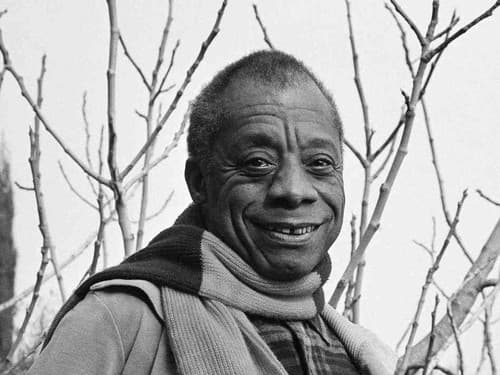
James Arthur Baldwin was an American writer. He garnered acclaim for his work across several forms, including essays, novels, plays, and poems. His first novel, Go Tell It on the Mountain, was published in 1953; decades later, Time magazine included the novel on its list of the 100 best English-language novels released from 1923 to 2005. His first essay collection, Notes of a Native Son, was published in 1955.
Similar books
- Invisible Man
Ralph Ellison
3.9 (157k) average on GoodreadsLiterary FictionExplores racial identity and the search for self in a complex, often hostile, American society with rich, introspective prose.
- The Color Purple
Alice Walker
4.2 (521k) average on GoodreadsHistorical FictionFeatures a powerful narrative of spiritual and personal awakening amidst abuse and religious themes, set in the American South.
- Beloved
Toni Morrison
3.9 (325k) average on GoodreadsLiterary FictionDelves into the traumatic past and its impact on the present, with a focus on family, memory, and the struggle for freedom and identity.
- Their Eyes Were Watching God
Zora Neale Hurston
3.9 (266k) average on GoodreadsReferenceHurston's Their Eyes Were Watching God (1937) also explores themes of spirituality, self-discovery, and the Black experience, but does so through the lens of a strong female protagonist, Janie Crawford, seeking love and independence. Hurston's narrative voice is often celebrated for its lyrical quality and use of Black vernacular, creating a sense of affirmation and resilience. Baldwin's Go Tell It on the Mountain, while equally lyrical, presents a much darker, more conflicted view of faith and family, emphasizing the destructive power of dogma and the psychological scars of inherited trauma. Where Hurston's Janie finds liberation and a voice, Baldwin's John struggles with a conversion experience that is as much about escaping damnation and societal expectations as it is about spiritual enlightenment, highlighting a more pessimistic outlook on the potential for individual freedom within rigid structures.
- The Old Man and the Sea
Ernest Hemingway
3.8 (831k) average on GoodreadsLiterary FictionA Cuban fisherman's long struggle with a giant marlin becomes a story of endurance and dignity, now retold for young adults with illustrations, phonetic guides, and writing prompts in Traditional Chinese.
- One Hundred Years of Solitude
Gabriel García Márquez
4.1 (753k) average on GoodreadsLiterary FictionThrough the multi-generational story of the Buendía family, a mythical town deals with the repeating patterns of time, love, and solitude, as the extraordinary mixes with the ordinary.






Enjoyed the summary?
A summary gives you the shape of the book. The book itself has the detail, the examples and the voice.
Find Go Tell it on the Mountain on AmazonAs an Amazon Associate, BookBrief earns from qualifying purchases. How we're funded