
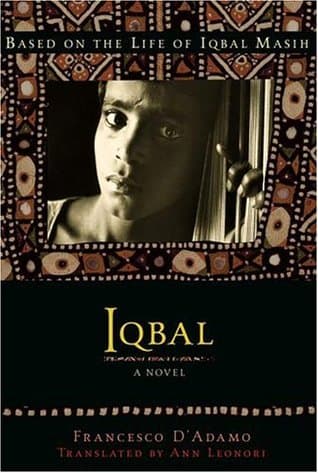
Synopsis
Covers the whole plot, including the ending.
- Difficulty
- Easy
- Pacing
- Moderate
- Mood
- Inspiring, Heartbreaking, Hopeful, Educational
- Read it if
- You want a powerful and inspiring story about courage, social justice, and the fight against child labor, told from a child's perspective.
- Skip it if
- You prefer light-hearted reads or are sensitive to themes of child abuse and exploitation.
Iqbal Plot Summary
Covers the whole plot, including the ending.
Fatima's Introduction and Iqbal's Arrival
Fatima, a young girl with a hunchback, introduces herself and her life as a bonded laborer in Hussain Khan's carpet factory in Pakistan. She describes the harsh conditions: long hours, little food, and constant fear of the Master's punishments. The children are trapped, believing they must work off their families' debts, which never decrease. One day, a new boy, Iqbal Masih, arrives, bought from his desperate family for a small sum. Unlike the other children, Iqbal is immediately defiant, refusing to accept the injustice and questioning the Master's authority. This makes the other children both afraid and interested.
Iqbal's Defiance and the Tomb
Iqbal’s rebellious spirit quickly shows. He ruins a carpet on purpose, a serious offense, to protest the conditions and the endless debt. For this act, Hussain Khan sends him to the 'Tomb' – a small, dark, suffocating cell used for punishment. Iqbal endures extreme discomfort and fear there but emerges unbroken. His time in the Tomb seems to strengthen his resolve to fight for their freedom. The other children, initially scared by his actions, begin to see hope and courage in his spirit, even if they do not fully understand it.
The First Escape Attempt
Driven by his desire for freedom, Iqbal makes his first escape attempt. He slips away from the factory and heads towards the city, hoping to find someone to help them. However, one of Hussain Khan's men quickly catches him and brings him back. His return results in a severe beating from Hussain Khan, meant to instill fear and stop any further rebellion among the children. Despite the brutal punishment, Iqbal’s spirit remains strong, and his determination to escape and expose their situation grows, inspiring fear and admiration among his fellow child laborers.
The Mosque and the Newspaper
During a supervised outing to the mosque for Eid celebrations, Iqbal notices a newspaper. Unable to read, he asks an old man to read it to him. The man reads an article that says child labor is illegal and that organizations exist to free bonded children. This discovery gives Iqbal fierce hope. He realizes their enslavement is not only unfair but also against the law. He returns to the factory energized, sharing this information with the other children, who are both skeptical and cautiously hopeful about legal help.
The Second Escape and the Front Against Child Slavery
With the knowledge from the newspaper, Iqbal makes a second, more determined escape. He reaches the city and finds the office of the Front Against Child Slavery, an organization run by Ehsan Khan. Iqbal bravely tells his story, detailing the conditions at Hussain Khan's factory and the children's illegal bondage. Ehsan Khan, impressed by Iqbal's courage, believes him and promises to help. This is a turning point, as Iqbal is no longer alone in his fight; he has found powerful allies committed to freeing him and his friends.
The Raid and Liberation
With Ehsan Khan and the Front Against Child Slavery, the police raid Hussain Khan's factory. The children, initially terrified, watch as Iqbal, now free, stands with the authorities. Hussain Khan is arrested, and the children are officially free from their bondage. The moment is overwhelming for them, as they have never known life outside the factory. Iqbal, though physically small, stands tall as their liberator, a sign of his courage and the power of fighting for justice. The children are taken to a shelter run by the Front.
Life at the Front's Shelter
At the shelter run by the Front Against Child Slavery, the children begin to experience a life they never imagined. They receive proper food, clean clothes, and medical care. Most importantly, they get to learn in a classroom, something none of them had ever done. Fatima describes the initial difficulties in adjusting to freedom and learning, but also the joy and hope that slowly appear. Iqbal, now a symbol of their freedom, continues to inspire them, though he is often busy working with Ehsan Khan, sharing his story with others.
Iqbal's Activism and Growing Fame
Iqbal quickly becomes a strong voice against child labor. He travels with Ehsan Khan, speaking at conferences, giving interviews, and sharing his personal story of enslavement and liberation. He speaks with passion, captivating audiences with his simple message about the injustice of child bondage. His fame grows, and he becomes a global symbol for the fight against child slavery, especially in the carpet industry. The other children at the shelter, including Fatima, follow his progress with pride and a renewed sense of purpose, knowing their own freedom started his powerful advocacy.
The Threat and Iqbal's Return
As Iqbal's activism gains international attention, he also makes enemies of those who profit from child labor, particularly the powerful carpet mafia. Threats against his life begin to surface, causing concern among his supporters. Despite the danger, Iqbal remains committed to his cause. However, for his safety, he decides to return to his home village for a visit. This decision is met with mixed feelings – relief for his temporary absence from the public eye, but also unease about the risks he continues to take.
The Tragic End and Lasting Legacy
Tragically, while visiting his village, Iqbal Masih is murdered. The news shocks the shelter and his supporters worldwide. Fatima and the other children are devastated, trying to understand the loss of their hero. However, even in their grief, they realize that Iqbal's message and courage have not died with him. His sacrifice inspires them and many others to continue the fight against child labor. Fatima, especially, feels a renewed commitment to education and to sharing Iqbal's story, ensuring his legacy of freedom and justice lives on through their own lives and future actions.
Principal Figures
Iqbal Masih
Protagonist
A courageous and defiant child laborer who becomes an international anti-slavery activist.
Iqbal is a young boy, initially bought into bonded labor by Hussain Khan, whose arrival at the carpet factory disrupts the oppressive status quo. He is characterized by his unwavering defiance, courage, and keen sense of justice. Unlike the other children, he refuses to accept his fate, questioning the Master's authority and eventually escaping to seek help. His intelligence allows him to grasp the illegality of their situation, and his bravery propels him into a global activist role, speaking out against child labor. He is a natural leader and an inspiring figure, even to adults.
Relationships: Fatima (Inspiration and friend); Hussain Khan (Oppressor and master); Ehsan Khan (Mentor and ally in the fight against child labor); Maria (Friend and fellow child laborer)
Fatima
Narrator and Supporting
A young girl with a hunchback, whose perspective guides the story and who is deeply inspired by Iqbal.
Fatima is the story's narrator, a quiet and observant girl with a hunchback, which makes her feel vulnerable and an outcast. She has spent most of her life in Hussain Khan's factory, resigned to her fate until Iqbal's arrival. Her internal monologue reveals her fears, hopes, and growing admiration for Iqbal. She represents the many silent victims of child labor, and her journey from passive acceptance to active hope mirrors the impact Iqbal has on all the children. Her disability often makes her a target for the Master's cruelty, but also gives her a unique perspective on the factory's dynamics.
Relationships: Iqbal Masih (Friend and inspiration); Maria (Close friend and fellow child laborer); Hussain Khan (Oppressor and master)
Hussain Khan
Antagonist
The cruel and exploitative owner of the carpet factory who enslaves children.
Hussain Khan is the primary antagonist, a ruthless and greedy man who owns the carpet factory. He exploits children through bonded labor, manipulating their families with false promises of debt repayment. He is a harsh master, quick to anger, and uses fear and physical punishment, including the dreaded 'Tomb,' to maintain control over the children. He represents the systemic corruption and cruelty inherent in the child labor industry. His only motivation is profit, and he views the children as disposable assets, showing no empathy or remorse for their suffering.
Relationships: Iqbal Masih (Oppressor of Iqbal); Fatima (Oppressor of Fatima); Ehsan Khan (Adversary and liberator of his child laborers)
Maria
Supporting
A quiet and artistic child laborer, close friend to Fatima, who learns to read and write.
Maria is one of the older children in the factory, known for her quiet nature and her exceptional skill at tying knots, making her one of the best carpet weavers. She is a close friend to Fatima and often comforts her. Maria initially seems resigned to her fate but is deeply affected by Iqbal's courage. After their liberation, she demonstrates a remarkable aptitude for learning, quickly grasping reading and writing. Her journey highlights the untapped potential of the children and the transformative power of education, especially after years of forced illiteracy.
Relationships: Fatima (Close friend); Iqbal Masih (Friend and inspiration); Ghulam (Fellow child laborer)
Ehsan Khan
Supporting
The compassionate head of the Front Against Child Slavery, who helps Iqbal and the other children.
Ehsan Khan is a benevolent and dedicated activist who runs the Front Against Child Slavery. He provides a stark contrast to Hussain Khan, representing hope and justice. When Iqbal escapes and seeks his help, Ehsan Khan believes him and acts decisively, leading the raid on the factory. He becomes Iqbal's mentor and guardian, guiding him in his activism and providing a safe haven for the liberated children. He is a symbol of organized resistance against injustice, demonstrating the power of collective action and legal intervention.
Relationships: Iqbal Masih (Mentor and ally); Hussain Khan (Adversary); Fatima (Guardian and protector)
Karim
Supporting
An older, initially cynical child laborer who is eventually swayed by Iqbal's hope.
Karim is one of the older boys in the factory, initially resigned and somewhat cynical about their situation. He often advises the younger children to keep their heads down and avoid trouble, having seen many attempts at defiance fail. He is initially skeptical of Iqbal's rebellious nature, fearing the repercussions. However, as Iqbal's actions bring about real change, Karim's cynicism slowly transforms into cautious hope and eventually support. He represents the ingrained fear and hopelessness that child laborers can develop, and the profound impact a catalyst like Iqbal can have.
Relationships: Iqbal Masih (Fellow child laborer, initially skeptical, later supportive); Fatima (Fellow child laborer)
Ghulam
Supporting
A loyal but fearful child laborer, often targeted by Hussain Khan.
Ghulam is one of the children enslaved in the factory. He is often depicted as fearful and timid, easily intimidated by Hussain Khan. He is one of the children who looks up to Iqbal but struggles with the courage to defy the Master himself. Ghulam's experiences highlight the daily terror and psychological impact of bonded labor, as he is frequently a target for the Master's frustration and punishments. His eventual liberation is particularly poignant, as he is one of the most vulnerable children.
Relationships: Iqbal Masih (Fellow child laborer and inspiration); Fatima (Fellow child laborer); Hussain Khan (Oppressor)
Jumman
Mentioned
Hussain Khan's supervisor, who enforces the rules and punishes the children.
Jumman is Hussain Khan's adult supervisor at the factory. He is a cruel and often violent man who enforces the Master's rules and administers punishments. He is responsible for monitoring the children's work, ensuring they meet their quotas, and preventing any defiance or escape attempts. Jumman embodies the immediate threat and physical oppression the children face daily, acting as Hussain Khan's brutal proxy.
Relationships: Hussain Khan (Employer and accomplice); Iqbal Masih (Enforcer of Iqbal's oppression); Fatima (Enforcer of Fatima's oppression)
Themes & Insights
Freedom vs. Enslavement
This theme explores the contrast between the children's brutal reality of bonded labor and the dream of liberation. The factory represents enslavement, where children are stripped of their rights, childhood, and future, bound by debts. Iqbal's arrival, fueled by his belief in freedom, inspires the other children, showing them that escape is possible. The story shows the psychological and physical toll of enslavement and the joy of achieving freedom, as seen when the children are freed and begin to learn and heal at the shelter.
“We were slaves, all of us, chained by invisible chains that were stronger than any iron.”
Courage and Defiance
Iqbal shows courage and defiance in the face of oppression. From his first act of ruining a carpet to his repeated escapes and public speaking, Iqbal challenges Hussain Khan and the child labor system. His bravery inspires the other children, who initially live in fear, to slowly find their own courage. Fatima, the narrator, explains how Iqbal's defiance, even with severe punishment, never changes. This leads to their liberation and starts a global movement. The book suggests that even a small act of defiance can lead to change.
“Iqbal was like a small, fierce flame that refused to be put out.”
The Power of Education and Knowledge
Education and knowledge are important, especially as a tool for liberation. The children in the factory are kept illiterate, a tactic to keep them ignorant of their rights and the outside world. Iqbal's discovery of the newspaper article, which says child labor is illegal, is a key moment; this knowledge empowers him to seek help. After their liberation, the chance for the children to attend school at the shelter is presented as a freedom, allowing them to reclaim their childhood and build a future. Maria's quick learning of reading and writing shows the potential that was suppressed.
“The words on the newspaper were like a key, unlocking a door I didn't even know existed.”
Hope and Despair
The story balances hope and despair. The children in Hussain Khan's factory live in despair, believing their debts are endless and escape is impossible. Iqbal's arrival introduces a fragile but persistent hope, challenging their hopelessness. His first escape, recapture, and brutal punishment temporarily bring them back to despair, but his spirit keeps hope alive. Their ultimate liberation and new life at the shelter show hope's triumph, even with Iqbal's tragic death, as his legacy inspires continued hope for a better future.
“Before Iqbal, there was no hope. Only the endless weaving and the endless debt.”
Social Justice and Activism
The novel advocates for social justice and the importance of activism. Iqbal's personal story becomes a broader fight against child labor, showing the systemic injustice that exploits vulnerable children. His journey from victim to activist shows how one person's courage can start a movement. The establishment of the Front Against Child Slavery and figures like Ehsan Khan emphasize the need for organized efforts and legal intervention to fight social problems. The book calls readers to action, reminding them of the ongoing struggle for human rights and the impact of collective advocacy.
“He wasn't just fighting for himself anymore. He was fighting for all of us, and for all the children still in chains.”
Plot Devices & Literary Techniques
First-Person Narration (Fatima)
Provides an intimate, child's-eye view of the factory and Iqbal's impact.
The story is told entirely through the eyes of Fatima, one of the child laborers. This narrative choice immerses the reader directly into the harsh realities of the carpet factory and the children's psychological states. Fatima's perspective, marked by her physical disability and initial resignation, makes Iqbal's courage even more striking. Her internal thoughts and observations provide emotional depth, allowing readers to experience the fear, despair, and eventual hope alongside the children. It also keeps Iqbal somewhat enigmatic, seen through the admiring lens of a friend, emphasizing his heroic status among the children.
The Tomb
A symbol of punishment, fear, and Iqbal's unbreakable spirit.
The 'Tomb' is a small, dark, suffocating cell used by Hussain Khan to punish disobedient children. It functions as both a physical plot device for punishment and a powerful symbol. Initially, it represents the ultimate fear and control of the Master, a place designed to break a child's spirit. However, for Iqbal, it becomes a crucible. His emergence from the Tomb unbroken and even more determined transforms its symbolic meaning from one of despair to one of resilience and an unyielding will for freedom. It highlights the psychological torture of the system but also the strength of the human spirit.
The Newspaper Article
A catalyst for Iqbal's understanding of the law and his path to freedom.
The discarded newspaper article, read to Iqbal by an old man, serves as a crucial plot device. It is the catalyst that transforms Iqbal's instinctive defiance into informed action. Before this, he knew his enslavement was wrong; afterward, he understood it was illegal and that there were people fighting against it. This piece of knowledge empowers him, providing a concrete path forward and demonstrating the power of information and literacy in combating injustice. It directly leads to his second, successful escape and finding the Front Against Child Slavery.
Iqbal's Kite
A symbol of freedom, hope, and the children's lost childhood.
While not explicitly detailed as a plot device in every chapter, the motif of kites and kite flying (a popular pastime in Pakistan) implicitly represents the children's lost childhood and the aspiration for freedom. Iqbal's eventual desire to fly a kite, or the children's observation of kites, symbolizes a yearning for open skies, play, and a life unburdened by labor. After their liberation, the ability to simply play and experience childhood joys, like flying a kite, becomes a tangible representation of the freedom Iqbal fought for, contrasting sharply with their previous confined existence.
Iqbal Quotes
“We are not slaves. We are children.”
“A boy like me can change the world.”
“The debt is a lie. It will never be paid.”
“We must tell the world what is happening here.”
“Freedom is not given. It is taken.”
“Every knot we tie is a cry for help.”
“They think we are nothing, but we are everything.”
“Our hands are small, but our dreams are big.”
“The world must hear our story.”
“We are not alone. There are others like us.”
“Courage is not the absence of fear, but the will to go on.”
“One voice can start a revolution.”
“Our lives are worth more than any carpet.”
“Hope is the thread that keeps us from unraveling.”
Quiz
10 questions on the plot and the characters. Each answer comes with a short explanation.
Question 1
Who is the narrator of 'Iqbal' by Francesco D'Adamo?
- Iqbal Masih
- Fatima
- Hussain Khan
- Maria
Show answer
B. Fatima The story is told through the perspective of Fatima, a young Pakistani girl who works alongside Iqbal at the carpet factory and whose life is transformed by his courage and actions.
Question 2
What type of factory does Iqbal work in after being sold into slavery?
- Brick kiln
- Carpet factory
- Shoe factory
- Textile mill
Show answer
B. Carpet factory Iqbal is forced to work in a carpet factory, where he and other children are exploited to weave intricate carpets under harsh conditions.
Question 3
What does Iqbal reveal to the other children about their master's promises?
- That they will be paid extra for overtime
- That they will be freed after a certain amount of work
- That he plans to keep them as slaves indefinitely
- That they will be given better food soon
Show answer
C. That he plans to keep them as slaves indefinitely Iqbal exposes the truth that Hussain Khan, their master, has no intention of releasing them, despite his false promises of eventual freedom, which motivates the children to seek change.
Question 4
How does Iqbal primarily inspire the other children in the factory?
- By teaching them to read and write
- By showing them how to escape and seek freedom
- By organizing a strike for better wages
- By bribing the guards to let them go
Show answer
B. By showing them how to escape and seek freedom Iqbal's bravery in planning and demonstrating escape routes gives the children hope and a practical way to envision a future free from slavery, as highlighted in the book's description.
Question 5
What is the real-life basis for the character of Iqbal in the book?
- A fictional hero created by the author
- A composite of multiple child laborers
- Iqbal Masih, a real Pakistani child activist
- A character from Pakistani folklore
Show answer
C. Iqbal Masih, a real Pakistani child activist The book is a fictionalized account of Iqbal Masih, a real-life Pakistani boy who was sold into child labor and became an activist against child slavery before his tragic death.
Question 6
Why is Fatima's perspective significant in telling Iqbal's story?
- She is Iqbal's sister and knows his family history
- She represents the collective voice of the enslaved children
- She is the factory owner's daughter
- She is a journalist documenting the events
Show answer
B. She represents the collective voice of the enslaved children As a fellow child laborer, Fatima provides an intimate, firsthand account of Iqbal's impact, symbolizing how his courage resonated with and empowered the other children in the factory.
Question 7
What key theme does 'Iqbal' explore through the children's experiences?
- The importance of education in overcoming poverty
- The resilience and hope in the face of oppression
- The benefits of industrialization in developing countries
- The role of family in supporting child laborers
Show answer
B. The resilience and hope in the face of oppression The book emphasizes themes of resilience, hope, and the fight for freedom, as Iqbal and the children endure abuse but learn to aspire for a better future through solidarity and courage.
Question 8
How does the book portray the master, Hussain Khan, in relation to the children?
- As a benevolent figure who cares for them
- As a manipulative and abusive slave owner
- As a victim of economic circumstances
- As a strict but fair employer
Show answer
B. As a manipulative and abusive slave owner Hussain Khan is depicted as cruel and exploitative, using false promises and threats to keep the children enslaved, highlighting the injustices of child labor.
Question 9
In what way does Iqbal's arrival 'change everything' for the other children, as described in the book?
- He improves the working conditions through negotiations
- He reveals the truth about their slavery and inspires them to seek freedom
- He teaches them advanced carpet-weaving techniques
- He brings in outside help to rescue them immediately
Show answer
B. He reveals the truth about their slavery and inspires them to seek freedom Iqbal's arrival disrupts the status quo by awakening the children to their reality of indefinite slavery and empowering them with the idea and means to escape, fundamentally altering their outlook and actions.
Question 10
What broader social issue does 'Iqbal' aim to highlight through its fictionalized story?
- The environmental impact of carpet manufacturing
- The prevalence and cruelty of child labor in some regions
- The economic benefits of child labor for families
- The cultural traditions of Pakistani craftsmanship
Show answer
B. The prevalence and cruelty of child labor in some regions Based on real events, the book sheds light on the global issue of child labor, particularly in industries like carpet weaving, and advocates for awareness and change through Iqbal's activist legacy.
Iqbal FAQ
What is 'Iqbal' by Francesco D'Adamo about?
'Iqbal' is a fictionalized account of the real-life Pakistani child activist Iqbal Masih, told through the perspective of Fatima, a young girl enslaved alongside him at a carpet factory. The story follows Iqbal's arrival at the factory, where he reveals to the other children that their master Hussain Khan plans to keep them enslaved indefinitely despite false promises of eventual freedom. Iqbal's courage and determination inspire the children to dream of escape and fight for their liberation.
Why should I read 'Iqbal'?
This book offers a powerful, accessible introduction to the harsh realities of child labor through the lens of a compelling true story. Francesco D'Adamo humanizes the issue by focusing on the emotional bonds between the children and Iqbal's transformative impact, making it both educational and deeply moving for readers of all ages. It highlights themes of resilience, solidarity, and the fight for justice in a way that resonates long after reading.
What is the background/setting of 'Iqbal'?
The story is set in a carpet factory in Pakistan during the 1990s, where children are forced into debt bondage under the cruel master Hussain Khan. The factory is a grim, oppressive environment where the children work long hours in dangerous conditions, with little food or rest, reflecting the real-world prevalence of child labor in certain industries at the time.
What are the most memorable quotes from 'Iqbal'?
One key quote is when Iqbal tells the children, 'We are not slaves; we are people,' which becomes a rallying cry for their resistance. Another is Fatima's reflection, 'Iqbal taught us that even the smallest thread can weave a tapestry of hope,' symbolizing how individual courage can inspire collective action against injustice.
What writing style does Francesco D'Adamo use in 'Iqbal'?
D'Adamo employs a simple, direct narrative style suited for young readers, with vivid imagery and emotional depth. The story is told from Fatima's first-person perspective, which personalizes the horrors of child labor and makes Iqbal's heroism feel immediate and relatable, blending historical facts with fictionalized dialogue and inner thoughts.
What minor details add significant meaning to 'Iqbal'?
Small details like the children's shared dreams of flying kites or eating sweets symbolize their stolen childhoods and longing for freedom. The recurring mention of the carpet patterns they weave—often intricate and beautiful—contrasts with their ugly lives, highlighting how their labor creates beauty for others while they suffer.
What are some subtle foreshadowing moments in 'Iqbal'?
Early on, Iqbal's quiet observation of the factory's layout and his questions about the outside world hint at his eventual escape plan. Fatima's initial fear of Hussain Khan's punishments foreshadows the risks they will take, and references to Iqbal's past resilience subtly suggest his tragic real-life fate, though the book focuses on hope.
What unexpected character connections exist in 'Iqbal'?
Fatima and Iqbal form a deep bond despite their different backgrounds—Fatima is resigned to her fate, while Iqbal is defiant from the start. Their friendship becomes the emotional core of the story, with Fatima's narration showing how Iqbal's influence helps her find her own voice and courage, transforming her from a passive observer to an active participant in their struggle.
What are unspoken character motivations in 'Iqbal'?
Hussain Khan's greed and desire for control drive his cruelty, but he also fears exposure and the loss of his livelihood if the children rebel. Fatima is motivated by a deep-seated fear of punishment and a longing for safety, which initially keeps her compliant, but her growing admiration for Iqbal slowly overrides this, pushing her toward bravery.
What psychological complexities do characters exhibit in 'Iqbal'?
Iqbal displays a mix of trauma from his past enslavement and unwavering hope, which fuels his leadership but also makes him vulnerable. Fatima grapples with internal conflict between her ingrained obedience and her emerging desire for freedom, representing the psychological toll of long-term abuse and the slow process of empowerment.
What are the major emotional turning points in 'Iqbal'?
Key emotional moments include Iqbal's speech revealing the truth about their indefinite slavery, which shatters the children's illusions and sparks their rebellion. Another is when Fatima decides to support Iqbal's escape plan, marking her transition from fear to courage, and the bittersweet ending where Iqbal's legacy inspires others, despite his absence.
How do relationship dynamics evolve in 'Iqbal'?
The children start isolated and fearful under Hussain Khan's tyranny, but Iqbal's arrival fosters a sense of community and solidarity. Fatima and Iqbal's relationship deepens from initial skepticism to mutual trust, and the group collectively shifts from passive acceptance to active resistance, showing how shared hardship can forge powerful bonds and collective action.
Which parts of 'Iqbal' remain ambiguous or open-ended?
The book leaves some details about Iqbal's ultimate fate ambiguous, focusing more on his impact than his specific end, which allows readers to reflect on his legacy without graphic details. It also doesn't fully resolve what happens to all the children after their rebellion, emphasizing the ongoing struggle against child labor rather than a neat conclusion.
What are controversial scenes or decisions in 'Iqbal'?
Some readers might debate the realism of the children's successful rebellion against Hussain Khan, given the real-world dangers they faced. Iqbal's decision to risk escape despite the severe consequences sparks discussion about the balance between hope and recklessness in oppressive situations, highlighting the ethical complexities of resistance.
'Iqbal' ending explained: how it ends & what it means
The book ends with Iqbal inspiring the children to plan an escape, though his own fate is left somewhat open, alluding to his real-life assassination. This conclusion emphasizes that his courage lives on through others like Fatima, who continues to fight for freedom. It symbolizes hope and the enduring impact of activism, even in the face of tragedy.
Similar books
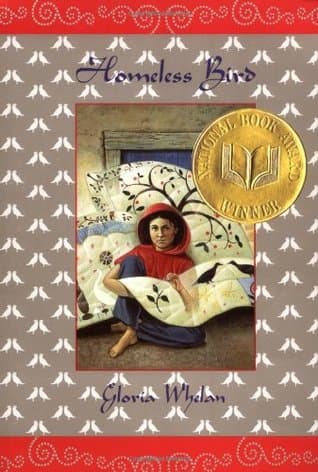
- Homeless Bird
Gloria Whelan
4.0 (12k) average on GoodreadsChildren'sExplores themes of poverty, social injustice, and the resilience of young girls in developing countries.
- Harry Potter and the Sorcerer's Stone
J.K. Rowling
4.5 (7M) average on GoodreadsFantasyRescued from a miserable life under the stairs, an orphaned boy discovers he's a wizard destined for a magical school, where he uncovers a dangerous secret tied to the dark wizard who murdered his parents.
- The Hobbit, or There and Back Again
J.R.R. Tolkien
4.3 (2.9M) average on GoodreadsFantasyA comfort-loving hobbit named Bilbo Baggins is whisked away by a mischievous wizard and a band of dwarves on an unexpected journey to reclaim stolen treasure from a fearsome dragon, discovering courage and a magical ring along the way.
- Harry Potter and the Goblet of Fire
J.K. Rowling
4.6 (2.6M) average on GoodreadsFantasyA bewildered Harry Potter, underage and thrust into a deadly Triwizard Tournament, must brave dragons, mermaids, and a resurgent dark magic to survive a year that will forever alter the wizarding world.
- Harry Potter and the Order of the Phoenix
J.K. Rowling
4.5 (2.5M) average on GoodreadsFantasyIn a year of oppressive secrets and the threat of Voldemort, Harry Potter and Dumbledore's Army secretly train for war, shown through Jim Kay and Neil Packer's dark illustrations.
- The Lightning Thief
Rick Riordan
4.3 (2M) average on GoodreadsFantasyThrust into a world of mythological monsters and divine treachery, an ordinary boy discovers he's the son of Poseidon and must embark on a perilous quest across modern America to prevent an Olympian war.





Enjoyed the summary?
A summary gives you the shape of the book. The book itself has the detail, the examples and the voice.
Find Iqbal on AmazonAs an Amazon Associate, BookBrief earns from qualifying purchases. How we're funded