

Synopsis
Covers the whole plot, including the ending.
- Difficulty
- Medium
- Pacing
- Moderate
- Mood
- Poignant, Humorous, Reflective, Dark
- Read it if
- You enjoy poignant coming-of-age stories with dark humor, cultural exploration, and themes of rebellion against oppressive environments.
- Skip it if
- You prefer fast-paced thrillers or are uncomfortable with themes of abuse and religious strictures.
Irma Voth Plot Summary
Covers the whole plot, including the ending.
A Life Apart
Nineteen-year-old Irma Voth lives a lonely life in a remote Mennonite community in Mexico. Her father, Johan, cast her out for marrying Jorge, a young Mexican man not of their faith. Despite this, Irma stays close with her younger sister, Aggie, who visits often. Her relationship with her mother, Maria, is tense and distant, though Irma wants her affection. Her husband, Jorge, is often away, leaving Irma to live alone in a small, run-down home. She feels very isolated and increasingly unhappy with her upbringing's strict rules, struggling with her faith and her difficult situation.
The Filmmakers Arrive
The quiet routine of the Mennonite community changes when a film crew from Mexico City arrives, led by director Diego. They plan to make a movie about the community's way of life. This immediately angers Irma's father, Johan, who sees the outsiders as a threat to their traditions. Irma is curious about the filmmakers' unfamiliar world and is drawn to their energy. Her ability to speak both Plautdietsch and Spanish makes her useful, and she is soon hired as a translator for the production.
A New Perspective
As Irma begins her work as a translator, she experiences a world very different from her own. She spends her days on set, watching the filming and talking with Diego, his assistant Marijke, and other crew members. This broadens her perspective, showing her different viewpoints, art, and a more liberal way of thinking. She questions her upbringing's rules even more, finding a new sense of freedom in her role. The film set becomes a safe place, where she can be herself, away from her community's judgment and her marriage's disappointments.
Father's Fury
Irma's father, Johan, becomes more and more angry about the film crew and Irma's involvement. He sees the movie as an insult to their religious beliefs and a bad influence on his family and community. His protests grow, becoming more aggressive and disruptive, leading to attempts to sabotage the film's production. Johan's actions create conflict with the filmmakers and also deepen the divide between him and Irma, strengthening her choice to follow this new path. His controlling nature and strict adherence to tradition push Irma further away, leading her to an irreversible break.
The Secret Unveiled
During the film production and her father's hostility, hints and fragmented memories surface about a disturbing family secret involving Irma's younger sister, Aggie. The truth, suggested through clues and Irma's thoughts, reveals that Aggie was sexually abused by their father, Johan. This discovery explains much of the family's problems, Irma's mother's withdrawn state, and Johan's oppressive behavior. The secret has quietly shaped Irma's life and her relationship with her family, adding to her feeling of alienation and her desire for escape.
Aggie's Awakening
Aggie, through her talks with Irma and the more open setting of the film set, starts to deal with her trauma. Her innocence, long burdened by the abuse, begins to break down. Realizing what happened to her, along with her father's ongoing oppression, pushes her to a breaking point. In a desperate attempt to escape her pain, Aggie tries to take her own life. This shocking event shatters the family's fragile peace and brings the dark secret into the open, demanding acknowledgment and action.
The Aftermath and Confrontation
Aggie's suicide attempt puts the Voth family in crisis. She is hospitalized, and her serious condition forces the family, especially Maria, to confront the long-hidden truth of Johan's abuse. Irma, having known or suspected the truth for years, feels her protective instincts for Aggie grow stronger. The incident acts as a turning point, breaking the silence and challenging Johan's control over them. The community is also indirectly affected, though their isolation makes direct intervention hard. This event makes continued denial impossible for those closest to Aggie.
Seeking Justice and Escape
After Aggie recovers, Irma makes the brave decision to remove her sister and their mother, Maria, from Johan's control and the oppressive Mennonite community. With help from Diego and Marijke, Irma arranges their escape, leaving their old life behind. This shows Irma's agency and a desperate move for her family's freedom and healing. They travel to Mexico City, a busy place that contrasts with their isolated rural life, symbolizing a new beginning and a chance to rebuild their lives away from trauma.
New Beginnings in the City
In Mexico City, Irma, Aggie, and Maria start a new life. Irma continues working with Diego and Marijke, translating and helping with the film's post-production, which gives her financial stability and purpose. Aggie, though still traumatized, slowly begins to heal and adapt to her new surroundings, finding comfort without her father. Maria, initially overwhelmed by the city, gradually sheds the emotional burdens of her past, finding quiet strength and a renewed connection with her daughters. The city, with its anonymity and opportunities, offers them a chance at genuine recovery and self-discovery.
Confronting the Past, Embracing the Future
As the film nears completion, Irma thinks about her difficult journey. She has moved from a life of isolation and oppression to one of independence and self-discovery. While the scars of her past, especially the trauma Aggie endured, remain, Irma has found a way to manage her pain and support her family. She recognizes her own resilience and the impact of her choices. The film, once just a job, has become a symbol of her liberation. Irma looks to the future with new hope and purpose, ready for the opportunities of her chosen path, free from her past's restrictions.
Irma Voth Characters
Irma Voth
Protagonist
A young Mennonite woman seeking freedom and healing for herself and her family.
Irma Voth is a nineteen-year-old Mennonite woman living in a strict community in Mexico. She is intelligent, observant, and possesses a quiet strength that belies her vulnerable position. Estranged from her family for marrying outside her faith, she endures a difficult marriage and a deep sense of isolation. She is fiercely protective of her younger sister, Aggie, and yearns for connection with her mother. Her experiences have made her questioning and resilient, pushing her to seek truth and a life beyond the confines of her upbringing.
Relationships: Aggie Voth (Protective older sister, confidante, and fellow victim of family trauma.); Johan Voth (Abusive, domineering father, source of her estrangement and trauma.); Maria Voth (Distant and traumatized mother, whom Irma longs to connect with and later protects.); Jorge (Absent and unreliable husband, a source of disappointment and further isolation.); Diego (Filmmaker and employer, who introduces her to a new world and provides support.); Marijke (Diego's assistant and Irma's friend, offering a different female perspective.)
Aggie Voth
Supporting
Irma's younger sister, innocent yet deeply scarred by family abuse.
Aggie is Irma's younger sister, characterized by her youthful innocence and vulnerability. She is deeply affected by the abuse inflicted by their father, Johan, though she struggles to articulate or fully comprehend her trauma. She maintains a close, loving bond with Irma, looking to her for comfort and protection. Her attempted suicide serves as the catalyst that forces the family's dark secret into the open and propels Irma to action. Despite her fragility, she possesses a quiet resilience and a capacity for healing.
Relationships: Irma Voth (Beloved older sister and protector.); Johan Voth (Abusive father, source of her profound trauma.); Maria Voth (Mother, with whom she has a distant but loving relationship.)
Johan Voth
Antagonist
Irma's domineering and abusive father, who represents the oppressive forces of the community.
Johan Voth is Irma's father, a rigid, patriarchal figure who wields absolute authority within his family and community. He is deeply entrenched in the conservative Mennonite faith, using it to justify his control and condemn those who deviate. His character embodies the oppressive aspects of the community and is revealed to be a perpetrator of child sexual abuse against his daughter, Aggie. His actions drive much of the plot's conflict, particularly his antagonism towards the film crew and his daughters' attempts at freedom.
Relationships: Irma Voth (Daughter, whom he has ostracized and seeks to control.); Aggie Voth (Daughter, whom he has sexually abused.); Maria Voth (Wife, whom he dominates and silences.)
Maria Voth
Supporting
Irma's mother, a quiet woman burdened by silent suffering and a traumatic past.
Maria Voth is Irma's mother, a woman who appears withdrawn and submissive, deeply affected by the abuse within her family. She is a silent observer of Johan's cruelty and Aggie's suffering, seemingly unable to intervene due to her own trauma and the patriarchal structure of their community. Her love for her daughters is palpable, though often expressed indirectly. Aggie's suicide attempt finally stirs her to action, allowing her to break free from Johan's control and seek healing alongside her daughters.
Relationships: Irma Voth (Daughter, with whom she has a strained but deeply loving bond.); Aggie Voth (Daughter, whose trauma she silently witnesses and eventually acts to protect.); Johan Voth (Abusive husband, from whom she eventually separates.)
Diego
Supporting
A Mexican filmmaker who offers Irma a path to the outside world.
Diego is a celebrated Mexican filmmaker who arrives in the Mennonite community to shoot a movie. He is worldly, educated, and represents a stark contrast to the insular world Irma knows. He is respectful but persistent in his artistic endeavors. Recognizing Irma's intelligence and linguistic skills, he hires her as a translator, inadvertently offering her a lifeline to freedom. He provides her with a different perspective on life, culture, and art, and later offers crucial support in her escape from the community.
Relationships: Irma Voth (Employer and mentor, who becomes a trusted friend and ally.); Marijke (Professional colleague and friend.)
Marijke
Supporting
Diego's assistant and Irma's friend, a vibrant and supportive presence.
Marijke is Diego's assistant, a lively, empathetic, and modern woman who quickly befriends Irma. She is a source of warmth and understanding for Irma, offering a female perspective that contrasts with the women in Irma's community. Marijke helps Irma navigate the complexities of the film set and the outside world, providing emotional support and a sense of camaraderie. Her presence highlights the stark differences between Irma's former life and the possibilities of a broader, more accepting world.
Relationships: Irma Voth (Friend and confidante.); Diego (Professional colleague and friend.)
Jorge
Supporting
Irma's estranged and often absent husband, a symbol of her early disillusionment.
Jorge is Irma's Mexican husband, whom she married against her family's wishes. He is largely absent throughout the story, proving to be unreliable and unsupportive. His marriage to Irma, while initially an act of rebellion, quickly becomes another source of her isolation and disappointment. He represents the failure of Irma's attempt to find happiness outside her community without truly understanding the world she was entering. His character highlights Irma's self-reliance and the eventual need to forge her own path.
Relationships: Irma Voth (Husband, but largely estranged and absent.)
Irma Voth Themes
Escape and Liberation
The novel explores the theme of escape, both physical and emotional, from oppressive situations. Irma's journey is a constant search for freedom from her Mennonite community's rules, her abusive father, and her unhappy marriage. Her work as a translator for the film crew is her first escape, a glimpse into a different world. The final freedom comes when she takes Aggie and Maria away from Johan's control, moving them to Mexico City. This theme is highlighted by the contrast between the isolated, strict community and the large, diverse city, showing the freedom Irma eventually finds.
“Maybe this is what freedom feels like, she thought, a vast, terrifying, beautiful emptiness.”
The Weight of Secrets and Trauma
A main theme is the damaging effect of unspoken family secrets and trauma. The Voth family is affected by Johan's sexual abuse of Aggie, a secret that has quietly shaped their lives, causing Maria's withdrawal, Irma's isolation, and Aggie's suffering. Not acknowledging this trauma continues a cycle of pain. The eventual revelation and Aggie's suicide attempt bring the truth into the open, showing how hiding such secrets can harm individuals and families. Healing begins only when these secrets are exposed and dealt with.
“The silence in our house was not a peaceful silence. It was a silence that weighed you down, that pressed on your chest.”
Faith and Doubt
The novel looks at the complexities of faith, especially within a fundamentalist religious community. Irma struggles with her Mennonite faith, finding it increasingly hard to reconcile with her experiences and her family's harsh realities. Her father, Johan, uses religion to control and judge, pushing Irma further away. Her doubt is not a lack of spirituality, but a questioning of strict rules and hypocrisy. As she finds freedom, her understanding of faith changes, moving away from organized religion toward a more personal spirituality, or a complete rejection of it.
“I had been taught that God was everywhere, but I couldn't find him in the emptiness of my own house.”
Identity and Self-Discovery
Irma's journey is one of self-discovery, as she deals with conflicting identities and searches for who she is outside her community and family expectations. Initially defined by her roles as a shunned daughter and an unhappily married wife, her work as a translator lets her explore new parts of herself. She learns to trust her instincts, speak up, and make choices that match her own values. Her move to Mexico City represents her embrace of a new, self-defined identity, free from the past's labels and limits.
“I was learning to translate not just words, but worlds.”
The Power of Art and Storytelling
The film crew and the making of a movie about Irma's community serve as a meta-narrative about art and storytelling. The film crew, through their camera, captures a version of reality, making the community see itself. For Irma, translation is a type of storytelling, connecting cultures and understanding. Making art becomes a catalyst for change, revealing hidden truths and offering new perspectives. It shows how stories, whether cinematic or personal, can illuminate, challenge, and ultimately liberate.
“Maybe that's what stories are for, to make sense of the things we can't quite grasp.”
Plot Devices & Literary Techniques
The Film Crew
A catalyst for change and a window to the outside world.
The arrival of Diego's film crew functions as a major plot device, disrupting the stagnant environment of the Mennonite community. They serve as a catalyst for Irma's personal growth, offering her a job as a translator that exposes her to new ideas, cultures, and a sense of purpose outside her oppressive home. The crew's presence also acts as a mirror, reflecting the community's insularity and triggering Johan's extreme reactions, thus escalating the conflict and pushing Irma towards her ultimate escape. They represent the modern, secular world crashing into a traditional, religious one.
Translation
A metaphor for bridging worlds and understanding.
Irma's role as a translator is more than just a job; it's a powerful plot device and a central metaphor. It literally allows her to bridge the linguistic gap between her community and the outside world. Symbolically, it represents her ability to navigate different cultural and emotional landscapes, to understand and interpret experiences that are foreign to her. This skill empowers her, giving her a voice and agency she previously lacked, and ultimately enables her to translate her own life into a new, more fulfilling narrative.
The Family Secret
The driving force behind much of the family's dysfunction and Irma's actions.
The secret of Johan's abuse of Aggie is the central plot device that underpins the entire narrative. It explains the family's deep-seated dysfunction, Maria's silence, Irma's protectiveness, and Aggie's trauma. This secret creates immense tension and foreshadows the eventual breakdown of the family unit. Its gradual unveiling, culminating in Aggie's suicide attempt, serves as the ultimate catalyst for Irma's decision to break free and protect her family, propelling the plot towards its resolution and the characters towards a path of healing.
The Journey to Mexico City
A symbolic and literal escape to a new beginning.
The physical journey of Irma, Aggie, and Maria from their rural Mennonite community to the bustling metropolis of Mexico City is a significant plot device. It represents a literal escape from oppression and a symbolic crossing into a new life. The stark contrast between the two environments emphasizes the liberation and new possibilities awaiting them. This journey marks the point of no return for the Voth women, signifying their definitive break from the past and their commitment to forging independent identities and a healthier future.
Irma Voth Quotes
“Irma, I don't know what you're doing, but I know it's not what you're supposed to be doing.”
“The world was a scary place, but it was also a place where you could make a movie about anything.”
“Sometimes you just have to do the thing that feels right, even if everyone else thinks it's wrong.”
“We were all just trying to figure out how to live, weren't we?”
“The camera sees everything, even the things you don't want it to see.”
“There's a story in everyone, even the ones who don't think they have one.”
“Maybe happiness wasn't something you found, but something you made.”
“It was hard to be good when you didn't even know what good was anymore.”
“All I wanted was to capture something real, something true.”
“The world outside our window was so big and full of things we didn't understand.”
“Sometimes the only way to find out who you are is to leave everything you know behind.”
“Making a movie was like trying to catch smoke. It was always slipping through your fingers.”
“You can't live your life according to someone else's script.”
“Even in the darkest places, there was always a flicker of light.”
Quiz
10 questions on the plot and the characters. Each answer comes with a short explanation.
Question 1
Why was Irma Voth initially cast out of her family?
- She refused to attend church services.
- She married a young Mexican man not approved by her family.
- She left the Mennonite community to live in Mexico City.
- She publicly denounced her father's authority.
Show answer
B. She married a young Mexican man not approved by her family. Irma was cast out of her family for marrying a young Mexican ne'er-do-well, which was against the community's strict norms.
Question 2
What is Irma's role when the Mexican filmmaker and his crew arrive in her community?
- She is hired as an actress in the film.
- She works as a cook for the film crew.
- She becomes a translator on the set.
- She serves as a liaison between her father and the crew.
Show answer
C. She becomes a translator on the set. Irma is immediately drawn to the outsiders and is soon hired as a translator on the set, a role that connects her to the outside world.
Question 3
What is the primary motivation behind Irma's father's actions against the film crew?
- He wants to join the film crew himself.
- He fears the film will expose a personal secret.
- He is determined to destroy the film and get rid of the interlopers.
- He wants to negotiate a higher payment for their presence.
Show answer
C. He is determined to destroy the film and get rid of the interlopers. Her father, described as intractable and domineering, is determined to destroy the film and get rid of the interlopers, viewing them as a threat to his community's way of life.
Question 4
What is the state of Irma's relationship with her husband?
- They have a loving and supportive marriage.
- He is often elusive and absent, leaving Irma in a difficult situation.
- He is a strong advocate for her independence.
- They are planning to leave the community together.
Show answer
B. He is often elusive and absent, leaving Irma in a difficult situation. The description states Irma has a husband who proves elusive and often absent, contributing to her untenable and desperate situation.
Question 5
What is the core theme of Irma's journey after her father's actions against the film crew?
- Reconciliation with her father and community.
- An irrevocable path toward something that feels like freedom.
- A renewed commitment to her traditional faith.
- Establishing a new film industry in her community.
Show answer
B. An irrevocable path toward something that feels like freedom. His action sets Irma on an irrevocable path toward something that feels like freedom, signifying her breaking away from her restrictive past.
Question 6
Despite being cast out, which family member does Irma remain close to?
- Her mother, with whom she shares a secret.
- Her rebellious younger sister.
- An estranged uncle living in Mexico City.
- Her grandmother, who supports her marriage.
Show answer
B. Her rebellious younger sister. The text states that 'she remains close to her rebellious younger sister and yearns for the lost intimacy with her mother,' indicating closeness with her sister.
Question 7
What is indicated about Irma's faith in God at the beginning of the story?
- It is strengthened by her hardships.
- It is unwavering despite her circumstances.
- It is damaged beyond repair.
- It is something she is actively trying to restore.
Show answer
C. It is damaged beyond repair. The text explicitly states that with her difficult circumstances, Irma has 'a faith in God damaged beyond repair,' highlighting her spiritual struggle.
Question 8
The novel is described as blending 'the dark with the uplifting.' What element primarily contributes to the 'dark' aspect of Irma's initial situation?
- The vibrant culture of Mexico City.
- Her father's punishing nature and a terrible family secret.
- The challenges of learning a new language.
- The strict dietary restrictions of her community.
Show answer
B. Her father's punishing nature and a terrible family secret. The synopsis mentions Irma 'carries a terrible family secret' and has a 'punishing father,' which are key elements contributing to the dark, oppressive aspects of her life.
Question 9
The description highlights Irma's 'quest to discover all that she may become.' This quest is primarily driven by her desire to find what?
- A way to restore her family's honor within the community.
- Financial stability and a comfortable life in Mexico City.
- Her own identity and potential beyond her stifling community.
- A new husband who is more supportive and present.
Show answer
C. Her own identity and potential beyond her stifling community. The ending states the novel is 'the powerful story of a young woman's quest to discover all that she may become in the unexpectedly rich and confounding world that lies beyond the stifling, observant community she knows,' focusing on self-discovery and growth.
Question 10
How does the arrival of the filmmaker and his crew primarily impact Irma's life?
- It leads to her immediate return to her family's good graces.
- It deepens her isolation within the community.
- It introduces her to the outside world and sets her on a path to freedom.
- It causes her to lose her job and become further impoverished.
Show answer
C. It introduces her to the outside world and sets her on a path to freedom. The narrative states that Irma is 'immediately drawn to the outsiders' and her father's opposition to them 'sets Irma on an irrevocable path toward something that feels like freedom,' indicating this encounter is a catalyst for her journey to the outside world.
Irma Voth FAQ
What is the central conflict Irma Voth faces at the beginning of the novel?
Irma Voth, a nineteen-year-old Mennonite woman, is initially caught between her traditional, strict family and her impulsive marriage to a 'ne'er-do-well' Mexican man. This has resulted in her being cast out of her family, creating deep emotional isolation despite her proximity to her younger sister, Nomi.
How does the arrival of the film crew disrupt Irma's life and offer new possibilities?
The film crew, led by a celebrated Mexican filmmaker, introduces Irma to an outside world vastly different from her insular Mennonite community. Her hiring as a translator not only provides her with a job but also exposes her to new perspectives and a sense of purpose beyond her domestic struggles, planting the seeds for her eventual departure.
Describe Irma's relationship with her father and how it impacts her decisions.
Irma's father is a domineering and intractable figure whose rigid adherence to tradition and attempts to destroy the film directly oppose Irma's nascent desire for freedom. His actions, particularly his efforts to sabotage the film and control his daughters, ultimately push Irma to make the irrevocable decision to leave her community.
What is the 'terrible family secret' mentioned in the synopsis, and how does it affect Irma?
The 'terrible family secret' is the sexual abuse Irma and her younger sister, Nomi, endured at the hands of their father. This trauma deeply impacts Irma's sense of self-worth, her view of faith, and her ability to form healthy relationships, manifesting as a pervasive sense of brokenness and a damaged faith in God.
How does Irma's role as a translator for the film crew symbolize her personal journey?
Irma's translation work symbolizes her role as an intermediary between two worlds: her traditional Mennonite upbringing and the modern, secular world of the film crew. This position forces her to articulate and bridge cultural gaps, mirroring her own internal struggle to reconcile her past with her burgeoning future and voice her own truth.
What is the significance of Irma's husband, Jorge, being 'elusive and often absent'?
Jorge's elusiveness signifies Irma's initial attempt at escaping her family through an ill-advised marriage, which proves to be another form of entrapment or disappointment. His absence forces Irma to rely on herself and confront her circumstances independently, rather than finding external salvation.
How does the novel portray the concept of 'faith' beyond traditional religious dogma?
The novel portrays faith as something that can be profoundly damaged by human actions, particularly within a religious community. Irma's journey suggests that true faith might be found not in rigid adherence to rules, but in resilience, self-discovery, and the ability to hope for a better future despite past trauma.
What role does Irma's younger sister, Nomi, play in her emotional development?
Nomi serves as Irma's confidante and a crucial link to her past, representing both their shared trauma and a source of rebellious solidarity. Their bond highlights Irma's protective instincts and her yearning for genuine connection, ultimately motivating some of Irma's decisions to seek a safer life for them both.
How does Irma's 'dry wit' and 'edgy humor' contribute to the novel's tone despite its dark themes?
Irma's wit and humor act as a coping mechanism, providing moments of levity and demonstrating her resilience in the face of immense adversity. This blend prevents the narrative from becoming solely bleak, highlighting Irma's inner strength and her ability to find humanity and even absurdity in difficult situations.
What kind of 'redemption' does Irma achieve by the end of her journey?
Irma's redemption is not necessarily a return to a former state of grace, but rather a liberation from the silence and shame of her past, and the oppressive control of her family. She achieves a form of self-acceptance and the freedom to define her own future, moving towards healing and self-determination.
How does the setting of a rural Mennonite community in Mexico influence the narrative?
The setting emphasizes Irma's isolation and the stark contrast between her traditional world and the modern one. The insular nature of the community heightens the impact of the film crew's arrival and underscores the profound cultural and social barriers Irma must navigate to find her freedom.
What specific details hint at the abuse Irma and Nomi suffered before the full reveal?
Early hints include Irma's damaged faith, her strained relationship with her father, her quick and somewhat desperate marriage, and her fierce protectiveness of Nomi. There's an underlying sense of unease and unspoken pain that pervades her internal monologues and interactions with her family.
How does the filmmaker's project, a movie about the Mennonite community, parallel Irma's own story?
The filmmaker's attempt to capture and understand the insular community through his art mirrors Irma's own journey of observing, translating, and ultimately interpreting her world. Both are engaged in a process of revelation, bringing hidden realities to light, though with vastly different personal stakes.
Discuss the 'unexpectedly rich and confounding world' Irma discovers beyond her community.
This refers to the complexities and opportunities of the wider world, which, while challenging, also offers genuine connection, autonomy, and the possibility of healing. It's 'rich' in experiences and freedoms, and 'confounding' because it lacks the clear, albeit oppressive, structures of her past life.
What is the psychological impact of Irma feeling 'cast out' by her family?
Being 'cast out' creates a profound sense of abandonment and reinforces Irma's feelings of being an outsider, even within her own family. This rejection, however, also serves as a catalyst, loosening her ties to the community and ironically paving the way for her to seek belonging and acceptance elsewhere.
How does Irma's ability to speak multiple languages (Plautdietsch, Spanish, English) contribute to her agency?
Her linguistic abilities are a key tool for her survival and a metaphor for her adaptability. They allow her to navigate different cultural spheres, gain employment, and articulate her experiences, giving her a voice and agency that she otherwise lacked within her restrictive community.
In what ways does Irma's journey challenge traditional notions of 'coming-of-age' narratives?
Irma's story deviates from typical coming-of-age tales by starting with profound trauma and a damaged worldview rather than youthful innocence. Her 'coming-of-age' involves not just self-discovery but also active reclamation of agency and healing from deep-seated abuse, making it a darker yet ultimately more empowering journey.
About the author

Miriam Toews is a Canadian author known for her fiction that often explores themes of family, mental health, and community. Her notable works include "A Complicated Kindness," which reflects on Mennonite life, "All My Puny Sorrows," a poignant examination of sisterhood and suicide, and "Irma Voth," a story about a young woman's struggle for autonomy.
Similar books
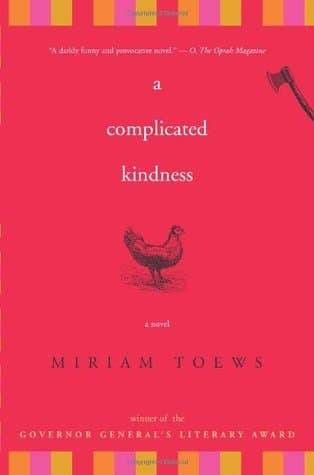
- A Complicated Kindness
Miriam Toews
3.7 (21k) average on GoodreadsLiterary FictionExplores similar themes of Mennonite community, family dysfunction, and a young woman's coming-of-age with dark humor.
- Educated
Tara Westover
4.5 (796k) average on GoodreadsBiographyFeatures a young woman breaking free from an isolated, fundamentalist upbringing to seek education and a new life.
- The Secret Life of Bees
Sue Monk Kidd
4.1 (1.1M) average on GoodreadsHistorical FictionInvolves a young woman escaping a difficult home life and finding a new, unconventional family and sense of self.
- The Old Man and the Sea
Ernest Hemingway
3.8 (831k) average on GoodreadsLiterary FictionA Cuban fisherman's long struggle with a giant marlin becomes a story of endurance and dignity, now retold for young adults with illustrations, phonetic guides, and writing prompts in Traditional Chinese.
- One Hundred Years of Solitude
Gabriel García Márquez
4.1 (753k) average on GoodreadsLiterary FictionThrough the multi-generational story of the Buendía family, a mythical town deals with the repeating patterns of time, love, and solitude, as the extraordinary mixes with the ordinary.
- The Goldfinch
Donna Tartt
3.9 (720k) average on GoodreadsLiterary FictionHaunted by a tragic explosion and clutching a stolen Dutch masterpiece, a young orphan navigates the opulent drawing rooms of New York and the gritty underbelly of the art world, desperately seeking connection and redemption amidst a life spiraling into crime and obsession.




Enjoyed the summary?
A summary gives you the shape of the book. The book itself has the detail, the examples and the voice.
Find Irma Voth on AmazonAs an Amazon Associate, BookBrief earns from qualifying purchases. How we're funded