
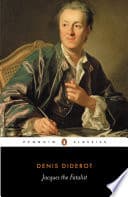
Synopsis
Covers the whole plot, including the ending.
- Difficulty
- Medium
- Pacing
- Moderate
- Mood
- Philosophical, Witty, Playful, Reflective, Picaresque
- Read it if
- you enjoy philosophical novels, meta-fiction, picaresque adventures, or stories that playfully subvert traditional narrative forms. If you're interested in Enlightenment thought and a precursor to postmodern literature.
- Skip it if
- you prefer straightforward plots, linear narratives, or stories with a clear resolution. If you dislike frequent digressions, philosophical debates, or an author who directly addresses the reader.
Jacques the Fatalist Plot Summary
Covers the whole plot, including the ending.
The Journey Begins: An Introduction to Fatalism
The novel begins with Jacques and his Master riding horses, their destination unclear and mostly unimportant. Jacques immediately starts telling how he met his Master, but their conversations and the Master's impatience constantly interrupt him. Their main philosophical disagreement quickly becomes clear: Jacques believes everything, good or bad, is 'written up above' and set in stone. The Master, often amused or annoyed by Jacques's philosophy, sometimes doubts it or holds a more traditional view of free will. Their journey is less about getting somewhere and more about their discussions and the stories they tell, which show their different views.
Jacques's Love Story and the Interruption of the Innkeeper
Jacques starts telling the long, complex story of his love affairs, especially with Denise. This story is central to his character and shows his fatalistic view many times, as he blames every turn of events on predetermination. However, his storytelling is always interrupted. An innkeeper, at one point, tells her own detailed and often scandalous life story, with many lovers, betrayals, and misfortunes. These interruptions are not just side notes; they are key to Diderot's storytelling, showing how lives connect and how arbitrary storytelling itself can be. The Master often encourages these detours, showing his interest in people, even while pretending to be impatient with Jacques's main story.
The Marquis des Arcis and Madame de La Pommeraye's Revenge
One important story inserted into the main narrative is about Madame de La Pommeraye. After her lover, the Marquis des Arcis, leaves her, she carefully plans a cruel revenge. She manipulates a former courtesan and her daughter into seducing the Marquis, only to expose their past and publicly humiliate him. This detailed plan explores love, betrayal, social standing, and how far people will go for revenge. The Master and Jacques discuss whether Madame de La Pommeraye's actions were right, with Jacques often saying her success was due to the 'great scroll' of fate. This story is a complex moral problem, leading to talks about justice, forgiveness, and human will versus predetermined events.
The Story of Father Hudson and the Monastery Intrigue
Another long side story involves Father Hudson, a seemingly devout but secretly immoral monk. This tale, full of intrigue, hypocrisy, and forbidden love within a monastery, is told by various characters they meet. It pokes fun at the corruption and moral failures in religious institutions of the time. Jacques and the Master, along with the narrator, often add their own comments and philosophical thoughts, frequently linking the characters' actions to the pervasive idea of fate. The story highlights the difference between outward appearance and inner reality, and the often-unpredictable results of human desires, even within a supposedly strict system.
Jacques's Military Past and the Duel
Jacques finally tells parts of his military service, including a duel he fought. He describes what led to the duel, his feelings during it, and the outcome, all through his fatalistic philosophy. He believes the duel, its cause, and its resolution were all predetermined. This section lets Jacques explain his personal history and how his experiences strengthened his belief in fate. The Master listens, sometimes amused, sometimes genuinely interested, offering his own interpretations of events, often contrasting them with Jacques's strict fatalism. The episode also touches on honor, courage, and the arbitrary nature of life and death in war.
The Narrator's Constant Interventions and Self-Awareness
Throughout the novel, the narrator is a noticeable character, constantly stopping the story to speak directly to the reader. These interruptions include explaining why a story is paused, sharing philosophical thoughts on writing and reading, and playfully challenging the reader's expectations. The narrator often questions how novels are usually written, deliberately frustrating the reader's wish for a straightforward plot and clear endings. This self-awareness of the storytelling process is a key part of the novel's experimental nature, showing Diderot's meta-fictional approach. The narrator's presence emphasizes that the 'great scroll' of fate might also include the act of telling stories.
Meetings with Other Travelers and Their Tales
As Jacques and his Master travel, they meet many different people: soldiers, peasants, noblemen, and various rogues. Each meeting often leads to another story being told, further delaying Jacques's own narrative. These secondary characters and their anecdotes provide a broad view of 18th-century French society, showing different social classes, regional customs, and human flaws. The stories often concern love, money, honor, and bad luck, giving more material for Jacques's fatalistic statements and the Master's more practical observations. These interactions show how unpredictable travel is and the richness of human experience, all of which Jacques attributes to fate's grand plan.
The Master's Own Stories and Philosophical Musings
While often listening, the Master also tells his own stories and shares philosophical ideas. He recounts episodes from his past, often involving romantic problems or social observations, which he interprets with a less rigid, though still thoughtful, perspective than Jacques. He often challenges Jacques's fatalism, not always by outright rejecting it, but by questioning its implications or suggesting other viewpoints. The Master's contributions add another layer to the philosophical debate, providing a contrast to Jacques's firm belief. His stories are often shorter and more direct, serving to move the conversation along or introduce a new topic, showing a more active engagement with free will.
The Recurring Motif of the 'Great Scroll'
The idea of the 'great scroll' on which all events are written appears repeatedly in the novel, consistently used by Jacques to explain everything that happens. This metaphorical scroll represents how existence is predetermined, from major historical events to minor personal choices. The characters, especially Jacques, often refer to it when trying to understand or justify their actions and the outcomes of various situations. This idea strengthens the central philosophical theme of fatalism and constantly reminds us of Jacques's firm belief system. The narrator also occasionally hints at it, blurring the lines between a character's belief and the author's thoughts on destiny.
The Incomplete Nature of Stories and Life
A defining feature of the novel is how often stories are interrupted and left unfinished. Jacques's own love story never truly concludes in a traditional way, and many of the inserted tales are left hanging or end suddenly. This narrative choice reflects Diderot's philosophical view that life itself is not a neat, linear story with clear beginnings and endings. The constant side stories and unfinished plots challenge the reader's wish for closure and emphasize the arbitrary and fragmented nature of human experience. This deliberate incompleteness shows that life, much like the novel, is a continuous flow of events, often without a definite resolution, much like fate's unpredictable 'scroll.'
The Philosophical Debates on Free Will vs. Determinism
The main philosophical tension in the novel is the debate between free will and determinism, mostly shown through Jacques's fatalism and the Master's more complex, though often inconsistent, views. Their conversations always return to whether people truly make choices or if all actions are predetermined. Jacques argues that even the most whimsical decisions are 'written up above,' while the Master often deals with what such a belief means in practice. These debates are not academic discussions but arise naturally from the stories they tell and the situations they encounter, making philosophy a part of their daily lives. The novel explores what it means to live with such a belief system.
The Ending: Ambiguity and Continuation
The novel famously ends abruptly, without resolving many of the stories or giving Jacques and his Master a clear destination. In some versions, bandits capture Jacques; in others, he marries a woman from his past. Diderot deliberately plays with how stories usually end, leaving the reader with a sense of continuation rather than a definite conclusion. This open ending reinforces the novel's themes of life's unpredictable nature, the arbitrary flow of events, and the idea that stories, like life, rarely have neat, satisfying resolutions. It supports the narrator's earlier comments about how artificial conventional plot structures are and how endless the 'scroll' of existence is.
Principal Figures
Jacques
Protagonist
The fatalistic servant, storyteller, and philosopher.
Jacques is the titular character, a servant to his Master, and the primary storyteller (though frequently interrupted). He is a staunch fatalist, believing that every event, from his birth to his death, and every action he takes, is 'written up above' on a great scroll. Despite this belief, he often acts with remarkable agency, humor, and a spirited engagement with life. He is observant, witty, and possesses a vast repertoire of personal anecdotes, particularly concerning his military service and love life. His fatalism is not passive resignation but an active philosophical stance through which he interprets the world, often with a mischievous glint in his eye.
Relationships: The Master (servant-master, philosophical sparring partners, companions); Denise (lover, subject of his love story); The Narrator (subject of meta-commentary, source of his story)
The Master
Supporting
Jacques's employer, a patient and often amused listener.
The Master is Jacques's employer and traveling companion. He serves as a foil to Jacques's unwavering fatalism, often questioning, challenging, or simply expressing impatience with his servant's philosophical pronouncements. While he doesn't fully subscribe to Jacques's determinism, he is a keen listener and often encourages Jacques to continue his stories, even when feigning boredom. He is generally good-natured, curious about human nature, and enjoys the philosophical banter. He occasionally recounts his own stories, which tend to be more conventional and less philosophically charged than Jacques's, providing a contrast in narrative style and worldview.
Relationships: Jacques (master-servant, philosophical sparring partners, companions); The Narrator (character within the narrator's story)
The Narrator
Supporting
The self-aware, intrusive, and philosophical voice guiding the novel.
The Narrator is a distinct character within the novel, constantly breaking the fourth wall to address the reader directly. This meta-fictional figure comments on the act of storytelling, the conventions of the novel, and the philosophical themes at play. The Narrator often expresses frustration with the reader's desire for a linear plot or clear resolutions, deliberately frustrating expectations. They introduce new characters, interrupt stories, and offer their own philosophical insights, blurring the lines between author, storyteller, and philosopher. The Narrator's presence is crucial to the novel's experimental nature and its exploration of meta-fiction and the arbitrary nature of narrative.
Relationships: Jacques (creator of his story, commentator on his life); The Master (creator of his story, commentator on his life); The Reader (direct interlocutor, object of playful manipulation)
Madame de La Pommeraye
Supporting
A noblewoman who plots elaborate revenge.
Madame de La Pommeraye is a character in one of the lengthy interpolated stories. After being jilted by her lover, the Marquis des Arcis, she meticulously plans and executes a sophisticated and cruel revenge. She manipulates a former courtesan and her innocent daughter into seducing the Marquis, only to expose their past and his folly, causing him immense public humiliation. Her story is a complex exploration of love, betrayal, social honor, and the darker aspects of human nature. She represents a powerful, calculating figure driven by a profound sense of injury and a desire for justice, or perhaps, pure vengeance.
Relationships: Marquis des Arcis (former lover, victim of her revenge); Mme. d'Aisnon (the Courtesan) (accomplice in her revenge)
Marquis des Arcis
Supporting
A nobleman who falls victim to a vengeful plot.
The Marquis des Arcis is the object of Madame de La Pommeraye's elaborate revenge. He is initially portrayed as a charming but fickle nobleman who tires of his relationship with Madame de La Pommeraye. He later falls deeply in love with a young woman, only to discover that she and her mother were part of a scheme to humiliate him. His character arc within the story is one of falling from a position of power and charm into a state of profound shame and regret. He is a representation of aristocratic privilege and vulnerability to the machinations of others, and his fate becomes a central point of philosophical discussion between Jacques and the Master.
Relationships: Madame de La Pommeraye (former lover, orchestrator of his downfall); Mme. d'Aisnon's Daughter (unwitting tool in the revenge plot, his supposed new love)
Father Hudson
Supporting
A corrupt and hypocritical monk.
Father Hudson is a character from another extended interpolated story. He is a monk who outwardly maintains an image of piety and virtue but secretly engages in a life of debauchery, manipulation, and illicit affairs within the monastery walls. His story is a satirical critique of religious hypocrisy and corruption during the Enlightenment era. He uses his position and influence to satisfy his desires, often at the expense of others. His tale is filled with scandalous details, and his actions provide ample material for Jacques and the Master to discuss the nature of human morality, free will, and the role of fate in even the most carefully concealed transgressions.
Relationships: Various women (lovers, victims of his manipulation); Other monks (colleagues, often unaware or complicit in his schemes)
The Innkeeper
Supporting
A garrulous woman who recounts her own eventful life story.
The Innkeeper is one of the many characters Jacques and his Master encounter on their journey. She is a lively and talkative woman who, upon their arrival, immediately launches into a detailed and often scandalous account of her own life. Her story is filled with romantic entanglements, misfortunes, and various adventures, serving as a further digression from Jacques's main narrative. She represents the common people and their rich, often dramatic, personal histories. Her narrative style is direct and unpretentious, offering another perspective on life's unpredictable twists and turns, which Jacques, of course, attributes to the dictates of fate.
Relationships: Jacques and the Master (temporary hosts, audience for her story)
Mme. d'Aisnon (the Courtesan)
Supporting
A former courtesan manipulated into a revenge plot.
Mme. d'Aisnon is a character in Madame de La Pommeraye's revenge story. She is a former courtesan who has fallen on hard times and is trying to raise her innocent daughter respectably. Madame de La Pommeraye exploits her desperation, offering financial aid in exchange for her and her daughter's participation in the elaborate scheme against the Marquis des Arcis. Mme. d'Aisnon is a complex character, torn between protecting her daughter and her own survival, and ultimately succumbs to the manipulation. Her role highlights the social vulnerabilities of women and the moral compromises people make under duress.
Relationships: Madame de La Pommeraye (manipulator, benefactor); Her Daughter (her child, used in the plot); Marquis des Arcis (victim of the plot she assists in)
Themes & Insights
Fatalism vs. Free Will
This is the novel's main philosophical theme, shown mostly by Jacques's firm belief that all events are predetermined and 'written up above.' Despite this, characters, including Jacques, often act as if they have free will, making choices, feeling emotions, and working toward goals. The novel constantly explores the tension between these two ideas, using the characters' stories and debates to show their complexities. Diderot does not give a final answer but instead explores how people live with or against the idea of destiny, and how their beliefs shape their view of life's arbitrary nature.
“Every event here below, good or bad, is written up above.”
The Nature of Storytelling and Narrative
Diderot's novel explores how stories are told and received. The constant interruptions, side stories, and the narrator's direct talks with the reader highlight how artificial narrative conventions are. The novel questions the reader's desire for straightforward plots, consistent characters, and clear endings, deliberately frustrating expectations. It suggests that life itself is not a neat story but a fragmented, unpredictable series of events, much like the 'great scroll' Jacques mentions. This theme shows Diderot's innovative approach to fiction, anticipating many later literary techniques and challenging traditional novel structures.
“How many times will I have to tell you, reader, that the true story is not to be found in books?”
The Arbitrariness of Life and Fortune
Throughout the various tales, a recurring theme is the unpredictable and often arbitrary nature of human life. Characters experience sudden shifts in fortune, both good and bad, that seem to defy logic or fairness. Lovers separate, fortunes are lost and gained, and lives change dramatically due to chance meetings or unforeseen events. This arbitrariness supports Jacques's fatalistic view, as he interprets these random events as simply manifestations of the predetermined 'great scroll.' The novel suggests that while humans try for control and reason, much of life remains subject to forces beyond their understanding, leading to both wonder and resignation.
“Who knows what is written up above? We are but puppets on a string, and the strings are held by an invisible hand.”
Social Critique and Morality
Through its diverse characters and their stories, the novel offers a broad, often satirical, look at 18th-century French society. Diderot reveals hypocrisy, corruption, and moral failings across different social levels, from the aristocracy to the clergy and common people. The tales of Madame de La Pommeraye's revenge and Father Hudson's misbehavior raise questions of justice, honor, and the nature of good and evil. The philosophical debates between Jacques and the Master often concern the moral implications of actions, further examining the complexities of human ethics in a world where free will and predetermination are constantly at odds. The novel implicitly questions social norms and how arbitrary moral judgments can be.
“Do you think that the great scroll cares about your petty distinctions of vice and virtue?”
Love and Betrayal
Love, in its many forms—romantic, passionate, forbidden, and unrequited—is a common theme throughout the novel. Jacques's own long love story, Madame de La Pommeraye's complex revenge plot, and Father Hudson's scandalous affairs all explore the powerful, often destructive, nature of human relationships. Betrayal often accompanies love, leading to heartbreak, revenge, and deep moral problems. These stories look into the complexities of desire, jealousy, faithfulness, and the emotional distress that arises when love is tested or broken. The characters' experiences show how deeply intertwined fate and human emotion can be.
“Love is a strange thing, Master, and often leads us to do things that were surely written up above.”
Plot Devices & Literary Techniques
Meta-fiction
The narrator constantly comments on the act of writing and reading.
Diderot extensively employs meta-fiction, where the narrative self-consciously draws attention to its own status as a fictional construct. The narrator frequently interrupts the story to address the reader directly, discuss the conventions of novel-writing, and even question the reader's expectations for plot and character development. This device challenges the traditional illusion of reality in fiction, highlighting the artificiality of storytelling and blurring the lines between author, narrator, and reader. It serves to reinforce Diderot's philosophical exploration of truth and fiction, and the arbitrary nature of narrative structure, making the novel a precursor to post-modern literature.
Frame Narrative and Interpolated Stories
A main story that constantly branches into numerous other tales.
The journey of Jacques and his Master serves as a loose frame narrative, within which a multitude of other stories are embedded. Jacques's own love story is frequently interrupted by the Master's questions, the narrator's interventions, or the introduction of entirely new characters who then tell their own lengthy tales (e.g., Madame de La Pommeraye, Father Hudson, the Innkeeper). This structure is deliberately digressive and non-linear, mirroring the unpredictable flow of life and challenging the reader's desire for a straightforward plot. It allows Diderot to present a panoramic view of society and explore diverse philosophical and moral dilemmas without being constrained by a single, linear storyline.
Philosophical Dialogue
The core ideas are explored through conversations between characters.
The central philosophical themes, particularly fatalism versus free will, are primarily explored through the ongoing dialogues and debates between Jacques and his Master. Their conversations are not merely exposition but an integral part of the plot, as the stories they tell often serve as illustrations or counter-arguments to their respective viewpoints. This device allows Diderot to present complex philosophical ideas in an engaging, accessible, and often humorous manner, integrating them seamlessly into the characters' everyday interactions and experiences. The dialogues reflect the Enlightenment emphasis on reason and discussion as tools for understanding the world.
The 'Great Scroll' Motif
A recurring metaphor for predetermined destiny.
The 'great scroll' is a significant recurring motif that Jacques frequently invokes to explain and justify all events, both major and minor. This metaphorical scroll represents the idea that everything that happens is already written and predetermined, reinforcing his fatalistic philosophy. The motif serves as a constant reminder of the novel's central theme and provides a consistent framework through which Jacques interprets the world. Its repeated use imbues the narrative with a sense of cosmic design, even amidst the seemingly arbitrary nature of events, and allows Diderot to explore the psychological and philosophical implications of believing in an unchangeable destiny.
Abrupt Endings and Lack of Resolution
Stories, and the novel itself, often conclude without clear closure.
Diderot deliberately employs abrupt endings and a general lack of resolution for many of the interpolated stories, and most notably, for the novel itself. Jacques's love story is never fully concluded, and the journey of Jacques and his Master ends suddenly, often without a definitive outcome. This device challenges conventional narrative expectations for closure and satisfaction. It reinforces the novel's meta-fictional commentary on the artificiality of neat plots, suggesting that life itself is often messy, unfinished, and without definitive conclusions. It underscores the theme of the arbitrariness of existence and the ongoing, unpredictable nature of human experience.
Jacques the Fatalist Quotes
“It is only by being a libertine that one can be a philosopher.”
“What does it matter to us, my friend, what happened before we were born? We shall not be there to see what happens after we die.”
“The rope that fastens us to life is very fragile, and it is of our own free will that we cut it.”
“The heart has its reasons, which reason does not know.”
“To be a philosopher is to be a libertine.”
“We are all of us more or less mad.”
“There is only one passion, which is love.”
“Man is born free, and everywhere he is in chains.”
“The greatest of all follies is to be preoccupied with what one is not.”
“We are never so happy as when we are not thinking about it.”
“If you want to be happy, be.”
“What is the use of this? What is the use of that? I have never asked myself that question about anything.”
“The soul is not a thing that can be created or destroyed; it is a thing that can be changed.”
“There are two kinds of fools: those who are not wise enough to be mad, and those who are mad enough to be wise.”
Quiz
10 questions on the plot and the characters. Each answer comes with a short explanation.
Question 1
What is the central philosophical belief of Jacques in the novel?
- Free will dictates all actions.
- Every decision is wholly predetermined.
- Fate is a construct of the weak.
- Choice is an illusion created by society.
Show answer
B. Every decision is wholly predetermined. Jacques is convinced that every decision he makes, no matter how seemingly random, is predetermined.
Question 2
Who is the author of 'Jacques the Fatalist'?
- Jean-Jacques Rousseau
- Voltaire
- Denis Diderot
- Marquis de Sade
Show answer
C. Denis Diderot The provided text explicitly states that Denis Diderot is the author of 'Jacques the Fatalist'.
Question 3
What literary movement is Denis Diderot associated with?
- Romanticism
- The Enlightenment
- Realism
- Modernism
Show answer
B. The Enlightenment The text identifies Denis Diderot as 'among the greatest writers of the Enlightenment'.
Question 4
What is a characteristic of the narrative style of 'Jacques the Fatalist' mentioned in the description?
- Linear and predictable plot progression.
- Focus on internal monologues of characters.
- Characters and tales emerge and disappear, with stories submerging into greater ones.
- Strict adherence to classical dramatic structure.
Show answer
C. Characters and tales emerge and disappear, with stories submerging into greater ones. The description highlights the novel's structure where 'Characters emerge and disappear as the pair travel across the country, and tales begin and are submerged by greater stories'.
Question 5
The novel is described as a 'panoramic view of eighteenth-century society'. What does 'panoramic' suggest in this context?
- A narrow and focused depiction of a single event.
- A broad and comprehensive overview of society.
- A distorted and exaggerated portrayal of society.
- A subjective and personal account of society.
Show answer
B. A broad and comprehensive overview of society. A panoramic view implies a wide, sweeping perspective, suggesting a broad and comprehensive depiction of society.
Question 6
How does Diderot challenge conventional French fiction of his age in this novel?
- By adhering strictly to traditional plot structures.
- By focusing solely on the aristocracy.
- By employing a playful, picaresque style with a non-linear narrative.
- By avoiding any philosophical discussions.
Show answer
C. By employing a playful, picaresque style with a non-linear narrative. The text states that Diderot 'brilliantly challenged the artificialities of conventional French fiction of his age' and describes the novel as 'Playful, picaresque and comic' with an 'original style'.
Question 7
What does the description imply about Jacques's perception of his own freedom?
- He believes he is completely unfree.
- He acts as though he is free despite his underlying fatalistic belief.
- He is unaware of any philosophical implications of his actions.
- His freedom is limited only by external societal constraints.
Show answer
B. He acts as though he is free despite his underlying fatalistic belief. The text states, 'Jacques appears to act as though he is truly free... But while Jacques seems to choose his own path, he remains convinced of one philosophical belief: that every decision he makes... is wholly predetermined.'
Question 8
The novel is described as one of the 'greatest precursors to post-modern literature'. What might this suggest about its stylistic innovations?
- It employs straightforward, realistic prose.
- It experiments with narrative structure and self-awareness, common in postmodernism.
- It strictly follows established literary conventions.
- It prioritizes moral lessons over stylistic experimentation.
Show answer
B. It experiments with narrative structure and self-awareness, common in postmodernism. Postmodern literature is known for its experimentation with narrative, metafiction, and challenging traditional structures. Being a precursor suggests Diderot's novel incorporated similar innovative elements.
Question 9
The interaction between Jacques and his master, and the way tales unfold, contributes to the novel's exploration of what?
- The rigidity of social hierarchies.
- The nature of storytelling and the construction of reality.
- The dangers of unchecked ambition.
- The limitations of scientific inquiry.
Show answer
B. The nature of storytelling and the construction of reality. The way characters and stories appear and disappear, and the interplay between Jacques's fatalism and his actions, suggest a commentary on how narratives shape our understanding of events and reality.
Question 10
Considering Jacques's belief in predestination and his seemingly free actions, what philosophical tension does the novel likely explore?
- The conflict between faith and reason.
- The dichotomy between appearance and reality.
- The age-old debate between free will and determinism.
- The struggle between individual desire and societal norms.
Show answer
C. The age-old debate between free will and determinism. Jacques's conviction that all his actions are predetermined, despite his behavior suggesting otherwise, directly engages with the philosophical problem of reconciling free will with determinism.
Jacques the Fatalist FAQ
What is the main philosophical theme of Jacques the Fatalist?
The central philosophical theme is determinism versus free will. Jacques, the protagonist, believes that all his actions are predetermined, even as he seemingly makes choices throughout his journey.
Who wrote Jacques the Fatalist?
Jacques the Fatalist was written by Denis Diderot, a prominent figure of the Enlightenment.
What is the narrative style of Jacques the Fatalist?
The novel employs a playful, picaresque, and comic narrative style. It is known for its originality and is considered a precursor to postmodern literature.
What does the relationship between Jacques and his master represent?
The relationship between Jacques and his master explores the dynamics of master-servant relationships and societal structures of the 18th century, often blurring the lines of authority and convention.
How does Jacques the Fatalist portray 18th-century French society?
The novel offers a panoramic view of 18th-century French society through the episodic encounters and stories that emerge as Jacques and his master travel across the country.
Is Jacques the Fatalist a typical novel for its time?
No, Jacques the Fatalist brilliantly challenged the artificialities of conventional French fiction of the Enlightenment. Its experimental structure and philosophical depth set it apart.
What is a 'picaresque' novel?
A picaresque novel is a genre of fiction that follows the adventures of a roguish hero of low social class who lives by his wits in a corrupt society. Jacques the Fatalist incorporates elements of this style.
What is the significance of the unpredictable nature of the story?
The unpredictable and fragmented nature of the narrative, with characters and stories appearing and disappearing, mirrors the dizzying variety and unpredictability of life itself and reinforces the philosophical questions raised.
Why is Jacques the Fatalist considered a precursor to postmodern literature?
Its metafictional elements, self-reflexivity, fragmentation, and questioning of narrative authority are all hallmarks that anticipate postmodern literary techniques.
What is the role of the narrator in Jacques the Fatalist?
The narrator plays an active and often intrusive role, directly addressing the reader, interrupting the narrative, and engaging in dialogues that further explore the novel's philosophical themes and its own construction.
About the author
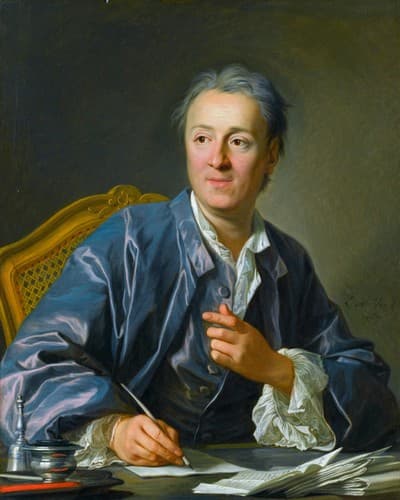
Denis Diderot was a French philosopher, art critic, and writer, best known for serving as co-founder, chief editor, and contributor to the Encyclopédie along with Jean le Rond d'Alembert. He was a prominent figure during the Age of Enlightenment.
Similar books
- Brave New World
Aldous Huxley
4.0 (1.4M) average on GoodreadsFantasyIn a future where happiness comes from chemicals and individuality is gone, one man's desire for real experience threatens the calm, controlled society.
- Life of Pi
Yann Martel
3.9 (1.3M) average on GoodreadsFantasyStranded in the vast Pacific, a young Indian boy forms an unlikely bond with a Bengal tiger, questioning belief and survival.
- The Picture of Dorian Gray
Oscar Wilde
4.1 (966k) average on GoodreadsFantasyA beautiful young man's soul decays within a cursed portrait, mirroring the grotesque cost of his hedonistic pursuit of eternal youth and illicit pleasure.
- Tuesdays with Morrie
Mitch Albom
4.1 (782k) average on GoodreadsBiographyA dying professor's weekly lessons from his bedside change a former student, giving him ideas on life, love, and letting go.
- The Tipping Point: How Little Things Can Make a Big Difference
Malcolm Gladwell
4.0 (690k) average on GoodreadsBusinessMalcolm Gladwell explains how small, targeted actions can start widespread changes in trends, behaviors, and ideas.
- The Metamorphosis
Franz Kafka
3.8 (643k) average on GoodreadsFantasyAwakening as a monstrous insect, Gregor Samsa struggles with family disappointment and his own growing isolation, not with the horror of his new form.




Enjoyed the summary?
A summary gives you the shape of the book. The book itself has the detail, the examples and the voice.
Find Jacques the Fatalist on AmazonAs an Amazon Associate, BookBrief earns from qualifying purchases. How we're funded