
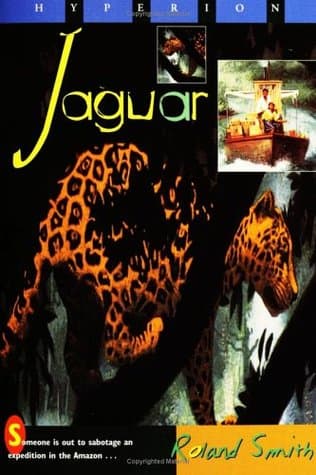
Synopsis
Covers the whole plot, including the ending.
- Difficulty
- Easy
- Pacing
- Fast
- Mood
- Adventurous, Suspenseful, Educational, Hopeful
- Read it if
- You enjoy jungle adventures, coming-of-age stories, and tales of wildlife conservation.
- Skip it if
- You prefer complex character studies or stories without a clear good vs. evil dynamic.
Jaguar Plot Summary
Covers the whole plot, including the ending.
Arrival in Manaus
Thirteen-year-old Jacob Lansa and his father, Dr. Alex Lansa, travel to Manaus, Brazil, a city on the Amazon River. Jacob is still recovering from his mother's recent death and his adventures in the Kenyan savanna. Dr. Lansa, a wildlife biologist, has a grant to study jaguars in the Amazon rainforest. Their mission is to locate and track a specific group of jaguars using new satellite tracking technology. Upon arrival, they meet Dr. Lansa's old colleague, Dr. Susan Meyers, and her assistant, Miguel. Jacob is hesitant about the new environment and its dangers, contrasting with his father's scientific enthusiasm.
Journey Upriver and Camp Setup
The team, consisting of Dr. Alex Lansa, Jacob, Dr. Susan Meyers, and Miguel, travels up an Amazon tributary on a research boat. The dense, green canopy of the rainforest surrounds them, a stark difference from the open plains Jacob remembers. They navigate through waterways, encountering wildlife. Eventually, they reach a secluded clearing where they establish their base camp. Jacob helps set up, but his mind often drifts to potential dangers, from snakes to the jaguars they are there to study. Dr. Lansa stresses safety protocols and the importance of respecting the jungle.
First Encounters and Tracking Challenges
The work begins as the team ventures into the rainforest to find signs of jaguar activity. They set up camera traps and search for tracks. Jacob, despite his initial apprehension, is a keen observer, often spotting things others miss. They learn that tracking jaguars in the dense undergrowth is far more difficult than tracking lions. The jaguars are stealthy and elusive. Dr. Lansa explains the importance of their research in understanding jaguar behavior and conservation needs. Jacob also starts to bond with Miguel, who knows about the local plants and animals, and learns about indigenous tribes in the region.
The Threat of Poachers
While tracking, Jacob and Dr. Lansa find crude traps and discarded cartridges, signs of poachers. Dr. Lansa is angry, knowing that illegal hunting threatens the endangered jaguar population. He reports their findings to local authorities via satellite phone, but help is slow to arrive. The poachers add danger and urgency to their mission. Jacob becomes more aware of human impact on the rainforest and its creatures, realizing their scientific work is part of a fight against exploitation.
Capturing and Collaring a Jaguar
After days of tracking, the team tranquilizes a male jaguar. Jacob is amazed by the animal's power and beauty even while sedated. Dr. Lansa, Dr. Meyers, and Miguel work quickly to take measurements, collect samples, and fit the jaguar with a satellite tracking collar. Jacob assists by holding equipment and observing the process. The experience is exciting and a scientific achievement. This collaring allows them to monitor the jaguar's movements and behavior, providing data for their research. It also deepens Jacob's connection to the rainforest and its wildlife.
Encounter with the Poachers
While Dr. Lansa and Dr. Meyers are away on another research trip, Jacob and Miguel stay at camp. During a routine check of camera traps, poachers ambush them. The poachers, led by a man named Scarface, demand to know the collared jaguar's location. They suspect the research team is interfering with their operations. Jacob and Miguel escape through quick thinking and jungle knowledge, but after a terrifying chase. This confrontation escalates the danger, showing that the poachers are a serious threat to both the jaguars and the research team.
Jacob's Plan and Miguel's Disappearance
After their escape, Jacob, fearing for their safety and the jaguars, plans to lead the poachers away from the collared jaguar and potentially trap them. He uses his jungle knowledge and tracking equipment. Miguel, initially hesitant, agrees to help. However, during their attempt to lure the poachers, Scarface and his men catch Miguel. Jacob sees Miguel's capture, feeling guilt and determination. He realizes he must act quickly to rescue his friend and protect the jaguars, even if it means putting himself in danger. He is now alone, facing a formidable adversary.
Tracking the Poachers and Miguel
Alone in the rainforest, Jacob relies on the tracking skills he learned from his father and his experiences in Africa to follow the poachers. He uses subtle signs — broken twigs, footprints, discarded items — to stay on their trail. The jungle, once a place of apprehension, now becomes a landscape he must master for survival. He is driven by his loyalty to Miguel and his commitment to protecting the jaguars. Jacob also uses the satellite tracking device from the collared jaguar to understand movements in the area, hoping it might lead him closer to Miguel or give him an advantage against the poachers.
Confrontation and Rescue
Jacob finds the poachers' hidden camp. He finds Miguel tied up and guarded. Using his wits and surprise, Jacob creates a diversion, causing chaos in the poachers' camp. He frees Miguel, and together they run, with Scarface and his men close behind. The chase through the dense jungle is dangerous, with close calls. Jacob and Miguel use their knowledge of the terrain, employing traps and diversions to slow their pursuers. The collared jaguar also helps their escape by drawing the poachers' attention away at a crucial moment.
Return of the Research Team and Resolution
Just as Jacob and Miguel are nearing exhaustion and almost cornered, Dr. Lansa and Dr. Meyers return, alerted by the satellite communicator. They arrive with park rangers and local authorities, who had finally responded to Dr. Lansa's calls. A coordinated effort leads to the capture of Scarface and his poaching gang. Jacob and Miguel are safe, though shaken. The collared jaguar is also secure. The authorities dismantle the poaching operation, ensuring the immediate safety of the wildlife. Jacob, having faced dangerous criminals and survived the jungle, feels a sense of accomplishment and a deeper connection to the rainforest and its inhabitants.
Reflections and Future
With the poachers apprehended and the research continuing, Jacob reflects on his journey. He has contributed to scientific research and proven his courage, resourcefulness, and loyalty. His bond with his father has strengthened, and he has a new friendship with Miguel. The Amazon rainforest, once daunting, has become a place he understands and respects. He realizes the importance of conservation and his role in it. As the book concludes, Jacob looks forward to future adventures, eager to continue learning about the natural world and facing new challenges alongside his father, his grief for his mother now tempered by new purpose and experience.
Principal Figures
Jacob Lansa
Protagonist
A thirteen-year-old boy who finds courage and purpose in the Amazon.
Jacob is a thirteen-year-old boy grappling with the recent death of his mother and adjusting to a new life of adventure with his wildlife biologist father. Initially apprehensive about the dense, dangerous Amazon rainforest, he gradually sheds his fears, drawing on his past experiences in Africa. He is observant, resourceful, and possesses a strong moral compass. His journey through the Amazon forces him to confront his grief and embrace his growing capabilities.
Relationships: Dr. Alex Lansa (Son, research assistant, mentee); Miguel (Friend, fellow adventurer, jungle guide); Dr. Susan Meyers (Father's colleague, mentor figure)
Dr. Alex Lansa
Supporting
Jacob's father, a dedicated wildlife biologist.
Dr. Alex Lansa is a renowned wildlife biologist and Jacob's father. He is passionate about his work in conservation and dedicated to understanding and protecting endangered species. While deeply focused on his research, he is also attentive to Jacob's well-being and growth, serving as a mentor and guide. He is intelligent, determined, and possesses a strong sense of responsibility towards both his son and the natural world. He often struggles to balance his scientific drive with his paternal duties.
Relationships: Jacob Lansa (Father, research leader, mentor); Dr. Susan Meyers (Colleague, old friend); Miguel (Team member, local expert)
Miguel
Supporting
A knowledgeable local assistant and Jacob's friend.
Miguel is Dr. Lansa's local assistant, a young man with extensive knowledge of the Amazon rainforest. He is an experienced guide, tracker, and survivor, deeply connected to the jungle and its indigenous cultures. Miguel quickly forms a bond with Jacob, becoming a trusted friend and companion. He is calm, pragmatic, and brave, often providing Jacob with practical advice and support during their adventures. His local expertise is invaluable to the research team.
Relationships: Jacob Lansa (Friend, fellow adventurer); Dr. Alex Lansa (Team member, local expert); Dr. Susan Meyers (Team member)
Dr. Susan Meyers
Supporting
Dr. Lansa's colleague and fellow wildlife biologist.
Dr. Susan Meyers is an experienced wildlife biologist and a former colleague of Dr. Alex Lansa. She joins the team in the Amazon, bringing her expertise in rainforest ecology and animal behavior. Susan is intelligent, practical, and dedicated to her scientific work. She provides a calm and professional presence, offering support and guidance to both Dr. Lansa and Jacob. She is a strong, independent woman committed to conservation.
Relationships: Dr. Alex Lansa (Colleague, old friend); Jacob Lansa (Mentor figure, team member); Miguel (Team member)
Scarface
Antagonist
A ruthless and dangerous poacher leader.
Scarface is the primary antagonist of the story, the menacing leader of a poaching gang operating in the Amazon. He is characterized by a distinctive scar on his face, symbolizing his brutal and unforgiving nature. Scarface is driven by greed and has no regard for wildlife or human life, posing a direct threat to the jaguars and the research team. He is cunning, aggressive, and relentless in his pursuit of illegal profits.
Relationships: Jacob Lansa (Adversary, target); Miguel (Captor, adversary)
The Collared Jaguar
Mentioned
A male jaguar vital to the research and a symbol of the rainforest's wildness.
This specific male jaguar is central to the research team's mission. After being tranquilized and fitted with a satellite tracking collar, its movements and behavior provide crucial data for understanding jaguar ecology and conservation needs. It represents the larger jaguar population and the wild, untamed spirit of the Amazon. Though an animal, its presence and movements are instrumental in several plot points, including Jacob's escape from the poachers.
Relationships: Jacob Lansa (Object of study, indirectly helps Jacob); Dr. Alex Lansa (Object of study)
Themes & Insights
Conservation and Environmental Protection
The novel emphasizes wildlife conservation, especially protecting endangered species like the jaguar, and preserving ecosystems like the Amazon rainforest. Dr. Lansa's research is an effort to understand and save these animals. The threat of poachers, like Scarface, highlights destructive forces against conservation. Jacob's journey makes him witness to both the beauty and fragility of nature, inspiring him to advocate for its protection. The successful collaring of the jaguar and the apprehension of the poachers show the positive impact of dedicated conservation work.
“The jaguars are more than just magnificent creatures, Jacob. They're a keystone species. Their survival means the health of the entire rainforest.”
Coming of Age and Personal Growth
Jacob's journey in the Amazon is a part of his coming-of-age. Still grieving his mother, he is initially hesitant and overwhelmed by the new environment. However, by facing challenges like the dense jungle, dangerous animals, and poachers, he develops courage, resourcefulness, and self-reliance. His experiences force him to mature quickly, taking on responsibilities and making difficult decisions. The transformation from a boy who fears the jungle to one who navigates it expertly and stands up to criminals shows his personal growth and identity formation.
“He wasn't just Jacob Lansa anymore, the kid who missed his mom. He was Jacob Lansa, jungle survivor, protector of jaguars, and friend.”
The Dangers and Wonders of the Amazon
The Amazon rainforest is a character itself, a place of immense beauty and danger. The narrative describes its lush plants, diverse animals, and waterways, highlighting its ecological significance. Simultaneously, it exposes its perils: venomous snakes, powerful predators, and the jungle's vastness. This dual portrayal stresses the respect and caution needed to survive in such an environment. Jacob's initial fear and eventual mastery of the jungle show how one can appreciate its wonders while acknowledging its threats.
“The jungle breathed around them, a symphony of unseen life and unspoken threats.”
Friendship and Loyalty
The bond between Jacob and Miguel is a central theme, showing the power of friendship and loyalty. Despite different backgrounds, they form a deep connection based on shared experiences and mutual respect. Miguel's local knowledge and support are important for Jacob, while Jacob's courage and determination drive him to rescue Miguel. Their loyalty is tested during the confrontation with the poachers, where they rely on each other for survival. This friendship highlights the importance of human connection and solidarity in adversity.
“You don't leave a friend behind, especially not in the middle of the Amazon.”
Plot Devices & Literary Techniques
Satellite Tracking Collars
Technological tools used to monitor jaguars and advance research.
The satellite tracking collars are a crucial plot device. They represent the cutting-edge technology used in modern wildlife conservation, allowing the research team to gather vital data on jaguar movements and behavior. Scientifically, they drive the mission. Narratively, the collared jaguar's movements sometimes inadvertently aid Jacob and Miguel by drawing the poachers' attention away or providing a sense of direction. The collars also symbolize the human effort to understand and protect nature, contrasting with the destructive actions of the poachers.
The Poachers (Scarface's Gang)
External antagonists who provide direct conflict and raise the stakes.
Scarface and his poaching gang serve as the primary antagonists, introducing a clear external threat to both the jaguars and the research team. They embody the destructive forces of greed and exploitation against nature. Their presence creates immediate danger, driving much of the plot's action and suspense, particularly when they ambush Jacob and Miguel. This device elevates the stakes from a purely scientific mission to a fight for survival and justice, forcing Jacob to develop courage and resourcefulness beyond his initial expectations.
Jacob's Past Experiences (Africa)
Foreshadowing and a source of acquired skills and resilience.
Jacob's previous adventures in Africa (from 'Thunder Cave') serve as a crucial plot device, providing him with a foundation of survival skills, tracking knowledge, and resilience. These past experiences are frequently referenced, not only to explain his capabilities but also to highlight his emotional journey, as he compares the Amazon to the African savanna. This device allows Jacob to quickly adapt to the new challenges, making his heroic actions more plausible and demonstrating his continuous growth as an adventurer and a person. It connects the sequel to the previous book, providing continuity for the character's development.
Jaguar Quotes
“The rainforest was like a giant, living puzzle, and he was just one small piece trying to fit in.”
“Sometimes the most dangerous things are the most beautiful.”
“Fear was a powerful thing, but so was curiosity.”
“Every creature had its place, a role to play in the grand scheme of things.”
“You don't just see the jungle; you feel it, smell it, hear it.”
“The jungle always had secrets, and it didn't give them up easily.”
“A person could learn a lot just by watching, if they knew what to look for.”
“Sometimes you had to be brave, even when you didn't feel brave at all.”
“The silence of the jungle wasn't empty; it was full of life waiting to be heard.”
“Conservation wasn't just about animals; it was about people too.”
“He was learning that strength wasn't always about muscle, but about knowing when to be still, when to listen.”
“The jaguar was a ghost, a shadow, a whisper in the trees.”
“Every footprint told a story, if you knew how to read it.”
“Some things you just had to experience to understand.”
Quiz
10 questions on the plot and the characters. Each answer comes with a short explanation.
Question 1
What country does Jake and his father travel to at the beginning of 'Jaguar'?
- Peru
- Ecuador
- Brazil
- Colombia
Show answer
C. Brazil Jake and his father travel to Brazil to find Jake's mother, Dr. Lily McGowen, who is working on a jaguar research project.
Question 2
What is Dr. Lily McGowen's profession and primary focus in the Amazon?
- Botanist studying rare orchids
- Zoologist researching jaguars
- Anthropologist studying indigenous tribes
- Geologist mapping the Amazon basin
Show answer
B. Zoologist researching jaguars Jake's mother, Dr. Lily McGowen, is a zoologist who specializes in studying jaguars in the Amazon rainforest.
Question 3
What type of animal does Jake encounter and form a bond with early in the story, which helps him navigate the jungle?
- A capybara
- A spider monkey
- A jaguar cub
- A macaw
Show answer
C. A jaguar cub Jake finds and bonds with a jaguar cub, which he names 'Pounce,' and it becomes a crucial companion in his journey.
Question 4
Who is the main antagonist in 'Jaguar' who is involved in illegal activities?
- Dr. Abernathy
- Mr. Clay
- Sergeant Ramirez
- Professor Dubois
Show answer
B. Mr. Clay Mr. Clay is the primary antagonist, a dangerous poacher and illegal animal trader operating in the Amazon.
Question 5
What specific illegal activity is Mr. Clay primarily engaged in that puts him in conflict with Jake and his family?
- Illegal logging
- Gold mining
- Poaching and illegal animal trade, especially jaguars
- Drug trafficking
Show answer
C. Poaching and illegal animal trade, especially jaguars Mr. Clay is a notorious poacher and smuggler of exotic animals, with a particular interest in jaguars, which directly threatens Dr. McGowen's research and the local wildlife.
Question 6
What natural disaster poses a significant threat to Jake and his companions while they are searching for his mother?
- A volcanic eruption
- A severe earthquake
- A major flood due to heavy rains
- A widespread wildfire
Show answer
C. A major flood due to heavy rains Heavy rains cause the Amazon River to flood, creating dangerous conditions and making travel extremely difficult for Jake and his allies.
Question 7
What is the primary theme explored through Dr. Lily McGowen's work and Jake's experiences in the Amazon?
- The pursuit of ancient treasures
- The importance of wildlife conservation and protecting endangered species
- The challenges of space exploration
- The history of Brazilian colonialism
Show answer
B. The importance of wildlife conservation and protecting endangered species A central theme of 'Jaguar' is the critical importance of wildlife conservation, particularly the protection of endangered species like jaguars, and the broader Amazon ecosystem.
Question 8
How does Jake primarily communicate with the local indigenous people he encounters in the rainforest?
- Through a satellite phone
- He already knows their language
- With the help of his father and a translator named Ben
- Using a universal sign language
Show answer
C. With the help of his father and a translator named Ben Jake's father, Ben, acts as a crucial translator and guide, facilitating communication between Jake and the indigenous communities they meet.
Question 9
What specific survival skill, learned from his previous adventures or his father, proves vital for Jake in the Amazon?
- Building complex traps for large game
- Navigating by the stars and recognizing animal tracks
- Constructing elaborate shelters from scratch
- Identifying and preparing poisonous plants for medicine
Show answer
B. Navigating by the stars and recognizing animal tracks Jake's experiences and his father's teachings have equipped him with valuable wilderness skills, including navigating by natural indicators and understanding animal behavior through tracks and signs, which are essential in the dense Amazon.
Question 10
What is the ultimate fate of the jaguar cub, Pounce, by the end of the story?
- It is captured by poachers and sold illegally.
- It remains with Jake as a domestic pet.
- It is successfully reunited with its mother and released back into the wild.
- It dies from an injury sustained during a flood.
Show answer
C. It is successfully reunited with its mother and released back into the wild. After many trials, Pounce is successfully reunited with its mother, symbolizing the success of the conservation efforts and the natural order being restored.
Jaguar FAQ
What is the main premise of 'Jaguar' and where does it pick up after 'Thunder Cave'?
Jaguar follows Jake Lonergan as he travels to Brazil to reunite with his father, Dr. Lonergan, who is now working to protect jaguars and their habitat in the Amazon rainforest. The story picks up shortly after Jake's adventures in Nepal, with him leaving the familiar world to join his father in a new and challenging environment.
Who are the primary new characters Jake encounters in Brazil?
In Brazil, Jake meets Dr. Susan Marlow, a fellow scientist working with his father, and Maria, a local girl who becomes a close friend and guide to the intricacies of the rainforest and Brazilian culture. He also encounters various indigenous people and the menacing poachers who threaten the jaguars.
What is the central conflict or challenge Jake and his father face in the story?
The central conflict revolves around the illegal poaching of jaguars for their skins and the destruction of their rainforest habitat by loggers and cattle ranchers. Jake and Dr. Lonergan, along with their allies, must protect the jaguars and expose the criminals responsible, often putting themselves in great danger.
How does the setting of the Amazon rainforest influence the plot and themes?
The Amazon rainforest is more than just a backdrop; it's a character itself, presenting both breathtaking beauty and extreme dangers like venomous snakes, piranhas, and difficult terrain. Its fragile ecosystem highlights themes of conservation, the balance of nature, and the impact of human activity on the environment.
What role does the 'jaguar' itself play beyond being the titular animal?
The jaguars in the story symbolize the wildness and majesty of the Amazon, but also its vulnerability. They represent the species that Dr. Lonergan and Jake are fighting to protect, embodying the broader struggle against environmental destruction and the importance of preserving endangered wildlife.
Are there any subtle nods or connections to Jake's previous adventure in 'Thunder Cave'?
While 'Jaguar' is a distinct adventure, Jake's experiences in Nepal, particularly his growing independence and understanding of different cultures, inform his adaptability in Brazil. His previous encounter with poachers and his developing survival skills are subtly referenced through his confidence in challenging situations.
What is the significance of the specific jaguar that Jake forms a bond with?
Jake forms a special connection with a specific jaguar, which helps to humanize the plight of the animals and makes their protection more personal for him and the reader. This bond underscores the idea that individual animals are valuable and worthy of protection, not just the species as a whole.
Are there any foreshadowing elements regarding the true identity or motivations of the poachers?
Initially, the poachers are presented as a faceless threat, but subtle clues about their organization and resources, such as their advanced equipment or knowledge of the terrain, hint at a more significant operation than just local hunters. This foreshadows the reveal of a larger, more organized criminal enterprise.
What cultural details of Brazil are woven into the narrative, and how do they enhance the story?
The book incorporates details about Brazilian food, music, language, and the customs of indigenous communities. Maria's character, in particular, is a conduit for sharing these cultural insights, enriching the setting and providing Jake with a deeper understanding of the local way of life beyond just the scientific mission.
How does Jake's relationship with his father evolve during their time in Brazil?
Jake's relationship with Dr. Lonergan deepens significantly as they face dangers together and work towards a common goal. Jake gains a greater appreciation for his father's dedication to conservation, and Dr. Lonergan sees Jake's growing maturity and resourcefulness, fostering a stronger bond of mutual respect and understanding.
What psychological impact does living in the harsh and unpredictable rainforest environment have on Jake?
The rainforest challenges Jake both physically and mentally, forcing him to confront his fears and develop resilience. He learns to trust his instincts, adapt to constant danger, and appreciate the delicate balance of life and death, leading to a profound personal transformation and increased self-reliance.
How does Maria's character provide a psychological counterpoint to Jake's perspective?
Maria, having grown up in the Amazon, possesses an innate understanding and comfort with the rainforest that contrasts with Jake's initial outsider's perspective. Her practicality, knowledge of local customs, and deep connection to the land help Jake to see the environment not just as a scientific project, but as a living, breathing home.
What internal conflicts does Jake face regarding his role in the conservation efforts?
Jake grapples with the immense scale of the problem and the personal risks involved in fighting poachers. He questions his own capabilities and whether a single individual can make a difference, but ultimately finds strength in his conviction and the support of his father and friends.
Is 'Jaguar' primarily an adventure story, or does it carry a deeper message about environmentalism?
While 'Jaguar' is undeniably an exciting adventure story, it carries a profound message about environmentalism and conservation. The thrilling plot serves as a vehicle to educate readers about the importance of protecting endangered species and their habitats, emphasizing the real-world consequences of human actions.
How does the book balance moments of danger and excitement with educational content about the Amazon?
The book skillfully integrates educational details about the Amazon's flora, fauna, and indigenous cultures within the fast-paced narrative. Information about jaguars, other wildlife, and ecological threats is often delivered naturally through character dialogue or Jake's observations during his adventures, making learning an organic part of the story.
What is the author's potential commentary on the clash between modern development and traditional ways of life in the Amazon?
Roland Smith subtly comments on the destructive impact of unchecked modern development, such as logging and ranching, on the Amazon and its indigenous communities. The story highlights the value of traditional knowledge and the importance of finding sustainable solutions that respect both nature and local cultures.
Could the ending of 'Jaguar' be interpreted as a complete victory, or are there lingering challenges?
While Jake and his father achieve a significant victory against the immediate threat of poachers, the ending suggests that the broader fight for conservation is ongoing. It implies that environmental protection is a continuous effort, and while battles can be won, the war to save the rainforest and its inhabitants will always present new challenges.
How does the book encourage young readers to engage with environmental issues?
By placing a relatable young protagonist like Jake at the center of an impactful conservation effort, the book inspires young readers to consider their own roles in protecting the environment. It shows that even individuals can make a difference and fosters an appreciation for wildlife and natural ecosystems.
About the author

Roland Smith is an American author known for his works of fiction, particularly in the adventure and young adult genres. His notable books include "Peak," which follows a young climber's journey, "Elephant Run," set in World War II Burma, and "Cryptid Hunters," which explores the search for mythical creatures. Other works in his catalog include "The White House," "Storm Runners," and "Jaguar."
Similar books
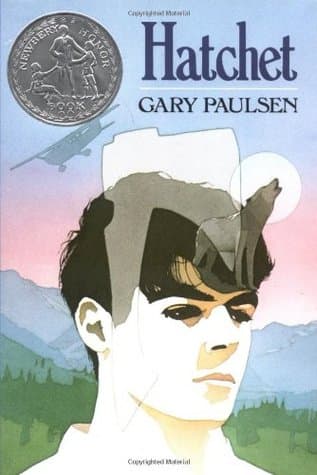
- Hatchet
Gary Paulsen
3.7 (309k) average on GoodreadsChildren'sFeatures a young protagonist surviving in the wilderness and developing self-reliance.
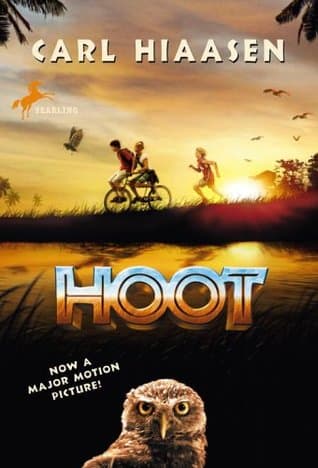
- Hoot
Carl Hiaasen
3.8 (97k) average on GoodreadsChildren's"Jaguar" shares thematic similarities with Hiaasen's Hoot in its focus on young protagonists fighting for environmental causes. However, Hoot often presents a more nuanced cast of characters, including flawed adults and complex motivations, and integrates humor more effectively. While both are excellent for YA audiences, Hoot offers a slightly more sophisticated exploration of environmental activism and its societal impacts, whereas "Jaguar" prioritizes direct adventure and a clearer good-vs-evil dynamic.
- Harry Potter and the Sorcerer's Stone
J.K. Rowling
4.5 (7M) average on GoodreadsFantasyRescued from a miserable life under the stairs, an orphaned boy discovers he's a wizard destined for a magical school, where he uncovers a dangerous secret tied to the dark wizard who murdered his parents.
- The Hobbit, or There and Back Again
J.R.R. Tolkien
4.3 (2.9M) average on GoodreadsFantasyA comfort-loving hobbit named Bilbo Baggins is whisked away by a mischievous wizard and a band of dwarves on an unexpected journey to reclaim stolen treasure from a fearsome dragon, discovering courage and a magical ring along the way.
- Harry Potter and the Goblet of Fire
J.K. Rowling
4.6 (2.6M) average on GoodreadsFantasyA bewildered Harry Potter, underage and thrust into a deadly Triwizard Tournament, must brave dragons, mermaids, and a resurgent dark magic to survive a year that will forever alter the wizarding world.
- Harry Potter and the Order of the Phoenix
J.K. Rowling
4.5 (2.5M) average on GoodreadsFantasyIn a year of oppressive secrets and the threat of Voldemort, Harry Potter and Dumbledore's Army secretly train for war, shown through Jim Kay and Neil Packer's dark illustrations.




Enjoyed the summary?
A summary gives you the shape of the book. The book itself has the detail, the examples and the voice.
Find Jaguar on AmazonAs an Amazon Associate, BookBrief earns from qualifying purchases. How we're funded