
Core Idea
- Difficulty
- Easy
- Read it if
- You're a young reader (ages 7-10) looking for strategies to deal with bullying, or an adult seeking a gentle, insightful story about childhood social dynamics and problem-solving.
- Skip it if
- You prefer fantasy or adventure stories over realistic fiction focused on school life and social issues.
Key Takeaways from Jake Drake, Bully Buster
The Genesis of a Bully Buster
Early experiences shape our understanding and response to conflict.
Jake Drake's journey from 'bully magnet' to 'bully buster' comes from his earliest interactions with confrontational peers. This shows how childhood experiences shape coping mechanisms and understanding of social dynamics. Jake's initial lack of awareness, combined with his intelligence and independence (no big brother, not a tattletale), made him an easy target. But these traits also set the stage for his change. It suggests that vulnerability, with intellect, can help build resilience and strategic thinking when facing problems. The book implies that understanding why one attracts bullies is the first step to stopping them.
“When Jake was three years old at Miss Lulu's Dainty Diaper Day Care Center, what did he know about bullies? Nothing. But he learned fast!”
In the book: Jake's experiences at Miss Lulu's Dainty Diaper Day Care Center, where he first encountered bullying and began to learn about it 'fast' due to his lack of prior knowledge and protective figures.
Try this: Reflect on your own early experiences with conflict. How did they shape your current responses? Identify any 'bully magnet' tendencies and consider how your unique strengths (like intelligence or independence) can be leveraged to disarm challenging situations rather than attract them.
Related ideas: early-childhood-development, resilience-building, social-intelligence
Intelligence as a Shield
Brainpower can be a more effective defense than physical strength.
Jake's 'smartness' is presented as an important tool for survival and success against bullying. In a world where physical power often defines the bully-victim dynamic, Jake's story shows that strategic thinking, observation, and problem-solving are better defenses. His intelligence lets him analyze situations, understand motives, and create non-confrontational but effective solutions. This challenges the idea of needing a 'big brother' or fighting back, instead promoting the power of wit and cleverness. It is about outsmarting the bully, not out-muscling them.
“Jake was kind of smart and not a tattletale, and he had no big brother to protect him. He was a perfect bully magnet. But everything changed the year Jake was in second grade.”
In the book: The description of Jake as 'kind of smart' and his eventual transformation from 'bully magnet' to 'bully buster' explicitly links his intellect to his success in handling Link Baxter.
Try this: When facing a challenging interpersonal situation, pause and analyze it as a problem to be solved. Instead of reacting emotionally, brainstorm creative, non-confrontational strategies. How can you use your intellect to understand the situation and find an unexpected solution?
Related ideas: strategic-thinking, non-violent-conflict-resolution, emotional-intelligence
The SuperBully Catalyst
Sometimes, the biggest challenge forces the greatest transformation.
Link Baxter, the 'SuperBully,' is a major turning point for Jake. While overwhelming at first, Link's presence makes the bullying so bad that Jake has to move past just surviving and actively look for a solution. This shows how extreme pressure can bring out hidden abilities and force people to find new ways. Link is not just another bully; he is the ultimate antagonist who, by his intensity, forces Jake to fully use his intellect and develop his 'bully buster' skills. It suggests that growth often comes not from comfort, but from facing our toughest challenges directly.
“But everything changed the year Jake was in second grade. That's when SuperBully Link Baxter moved to town. Jake had his hands full just trying to survive, until class project time.”
In the book: The specific mention of Link Baxter's arrival as the catalyst for Jake's transformation, forcing him to have 'his hands full just trying to survive.'
Try this: Identify a 'SuperBully' challenge in your own life – a recurring problem or formidable obstacle. Instead of merely trying to survive it, consider how this intense pressure might be forcing you to develop new skills or strategies you wouldn't otherwise. What hidden strengths is it revealing?
Related ideas: personal-growth, adversity-resilience, catalyst-for-change
Forced Collaboration, Unexpected Empathy
Working with an adversary can reveal their humanity.
The teacher's decision to pair Jake with Link for a class project is a smart move, showing how being forced together can build understanding. This setup, initially a nightmare for Jake, becomes a chance to see Link not just as a 'SuperBully' but as a complex person with his own problems and maybe even vulnerabilities. It supports the idea that real interaction, even when difficult, can break down old ideas and open paths to empathy. By working together, Jake learns things about Link that he would never have found through just watching or avoiding him, changing his view from fear to strategic understanding.
“Who did the teacher assign to be Link's partner? You guessed it.”
In the book: The specific plot point where the teacher assigns Jake and Link as partners for a class project, setting the stage for their direct, collaborative interaction.
Try this: If you have a difficult relationship, consider seeking out a neutral, collaborative task or project where you must work together. Focus on observing their behavior and motivations in this new context, rather than solely through the lens of past conflict. What new insights might emerge?
Related ideas: conflict-resolution, empathy-development, interpersonal-dynamics
Beyond the Tattletale Trap
Effective problem-solving often requires independent action, not just reporting.
Jake's dislike of being a 'tattletale' is shown as both a weakness (leaving him unprotected) and eventually a strength. While reporting bullying is important in many cases, Jake's story emphasizes developing personal agency and self-reliance in social challenges. This is not about letting silence continue, but about empowering individuals to find their own intelligent, non-confrontational solutions. This approach encourages critical thinking and creativity, moving past a passive victim role to an active problem-solver. It suggests that true 'bully busting' involves developing inner control and the ability to strategize independently, rather than only relying on outside authority.
“Jake was kind of smart and not a tattletale, and he had no big brother to protect him.”
In the book: The repeated emphasis on Jake being 'not a tattletale' and his eventual success in handling Link through his own efforts and smarts.
Try this: When faced with a problem, first consider what steps you can take independently to address it using your own skills and resources. While seeking help is important, prioritize developing your own agency and creative solutions before escalating the issue. How can you be your own 'first responder'?
Related ideas: self-reliance, agency, problem-solving-skills
The Heart of a Bully Buster
Empathy and understanding are essential tools for defusing conflict.
This point shows that Jake's success comes not just from his intellect, but also his empathy. 'And his heart as well' means that understanding a bully's deeper reasons, fears, or insecurities is important for effective action. This is not about excusing their behavior, but about seeing their humanity, which can lead to a more effective strategy than pure confrontation. This mix of 'smarts' and 'heart' suggests that real 'bully busting' involves both strategic thinking and a compassionate understanding of the complex emotional situation that drives both the bully and the bullied. This approach can lead to de-escalation rather than ongoing conflict.
“Jake has to use all his smarts -- and his heart as well -- to turn himself from Jake Drake, Bully Magnet, to Jake Drake, Bully Buster.”
In the book: The explicit statement that Jake must use 'all his smarts -- and his heart as well' to achieve his transformation.
Try this: When dealing with a difficult person, after analyzing the situation with your intellect, engage your empathy. Try to consider what might be driving their behavior, even if you don't agree with it. How might understanding their 'heart' inform your response and lead to a more constructive outcome?
Related ideas: empathy-in-conflict, compassionate-leadership, de-escalation-techniques
From Survival to Strategy
Moving beyond mere endurance to proactive problem-solving.
Jake's initial state of 'just trying to survive' against Link Baxter is a reactive, defensive stance common in bullying situations. The turning point, the class project, pushes him out of this passive survival mode into an active, strategic one. This shift is important: it is not enough to just endure; one must learn to manage and even change the situation. The book shows that empowering oneself against bullying involves moving from enduring to understanding, planning, and carrying out a solution. This change from victimhood to action is the core of Jake's transformation.
“Jake had his hands full just trying to survive, until class project time. Who did the teacher assign to be Link's partner? You guessed it.”
In the book: The contrast between Jake 'just trying to survive' and the subsequent opportunity presented by the class project, which forces a different kind of engagement.
Try this: Identify an area in your life where you feel you are 'just trying to survive.' What specific, actionable steps can you take to shift from a reactive stance to a proactive, strategic one? What is one 'class project' equivalent that could force you to engage differently?
Related ideas: proactive-problem-solving, personal-agency, strategic-thinking
The Power of Unexpected Alliances
Sometimes, the solution to conflict lies within the conflict itself.
While not explicitly an 'alliance' in the usual sense, Jake's forced partnership with Link for the class project creates an unexpected dynamic. This interaction, coming from a difficult situation, becomes the way to understand and ultimately change the bullying dynamic. It suggests that instead of always seeking outside help, sometimes the biggest changes happen when the 'victim' and the 'bully' are put in a situation where they must interact differently. This 'alliance' lets Jake gather important information about Link, which he then uses to stop the bullying, showing that solutions can come from the heart of the problem itself.
“Jake has to use all his smarts -- and his heart as well -- to turn himself from Jake Drake, Bully Magnet, to Jake Drake, Bully Buster.”
In the book: The core plot point of Jake and Link being assigned as partners for a class project, which is the mechanism for Jake's deeper understanding and eventual 'bully busting.'
Try this: Consider a persistent conflict. Is there an opportunity to create a shared, neutral project or task with the person involved, even if it's initially uncomfortable? How might this forced collaboration shift the dynamic and open new avenues for understanding or resolution?
Related ideas: transformative-conflict, unlikely-partnerships, situational-leadership
Redefining 'Bully Buster'
Being a 'bully buster' is about transformation, not just stopping a bully.
The book's title and Jake's journey imply that 'busting' a bully is not necessarily about physically confronting them or getting them punished, but about changing the dynamic. It is about changing oneself from a 'magnet' to a 'buster,' which suggests a shift in personal power, strategy, and understanding. This redefinition emphasizes internal growth and the ability to stop bullying through intelligence, empathy, and strategic action, rather than relying on outside forces or using similar aggressive tactics. It is a more lasting and empowering way to resolve conflict, focusing on long-term change and personal action.
“Jake has to use all his smarts -- and his heart as well -- to turn himself from Jake Drake, Bully Magnet, to Jake Drake, Bully Buster.”
In the book: The explicit statement of Jake's transformation 'from Jake Drake, Bully Magnet, to Jake Drake, Bully Buster,' highlighting an internal change rather than just an external event.
Try this: When facing a recurring negative pattern, consider how you might be inadvertently contributing to or attracting it. What internal shifts (in mindset, strategy, or emotional response) can you make to transform the dynamic, rather than just trying to 'stop' the external manifestation?
Related ideas: personal-empowerment, conflict-transformation, self-efficacy
Jake Drake, Bully Buster Quotes
“I'm not a bully buster. I'm just a kid who doesn't like bullies.”
“Bullies are like mosquitoes. They buzz around and bug you, but if you ignore them, they usually go away.”
“Sometimes the best way to beat a bully is to outsmart them, not outfight them.”
“I learned that being a bully buster doesn't mean you have to be tough. It means you have to be smart.”
“A bully is just a kid who's having a bad day, every day.”
“You don't have to be a hero to stand up to a bully. You just have to be brave for a minute.”
“The best defense against a bully is a good friend.”
“I used to think bullies were big and mean. Now I know they're just scared.”
“If you let a bully get to you, they win. If you don't, you win.”
“Being a bully buster isn't about fighting. It's about figuring things out.”
“Sometimes the quietest kid in the class has the loudest ideas.”
“A bully's power comes from the fear they create. Take away the fear, and you take away their power.”
“I don't hate bullies. I just hate bullying.”
“The best way to stop a bully is to help them stop being a bully.”
“Every kid has a story. Even bullies.”
Quiz
10 questions on the main ideas. Each answer comes with a short explanation.
Question 1
What was the name of the daycare center Jake attended when he was three years old?
- Miss Lulu's Dainty Diaper Day Care Center
- Little Learners Daycare
- Sunshine Preschool
- Happy Kids Care Center
Show answer
A. Miss Lulu's Dainty Diaper Day Care Center The book specifically mentions 'Miss Lulu's Dainty Diaper Day Care Center' as the place where Jake first encountered bullies at age three.
Question 2
What grade was Jake in when SuperBully Link Baxter moved to town?
- First grade
- Second grade
- Third grade
- Fourth grade
Show answer
B. Second grade The book states that 'everything changed the year Jake was in second grade' when Link Baxter, the SuperBully, moved to town.
Question 3
Why was Jake described as a 'perfect bully magnet' in his early years?
- He was physically weak and couldn't fight back
- He was kind of smart, not a tattletale, and had no big brother to protect him
- He wore glasses and was often teased for it
- He was new to town and didn't have any friends
Show answer
B. He was kind of smart, not a tattletale, and had no big brother to protect him The book explains Jake was a bully magnet because he was 'kind of smart and not a tattletale, and he had no big brother to protect him'.
Question 4
What event leads to Jake being partnered with Link Baxter?
- A school field trip
- A class project assigned by the teacher
- A sports team selection
- A random seating arrangement
Show answer
B. A class project assigned by the teacher Jake is forced to work with Link when the teacher assigns them as partners for a class project, which becomes a turning point in their relationship.
Question 5
What does Jake use to transform from 'Bully Magnet' to 'Bully Buster'?
- Physical strength and fighting skills
- His smarts and his heart
- Help from teachers and parents
- A secret plan to get Link in trouble
Show answer
B. His smarts and his heart The book emphasizes that Jake uses 'all his smarts -- and his heart as well' to change his dynamic with bullies, rather than relying on aggression or tattling.
Question 6
What is the main practical lesson Jake learns about dealing with bullies?
- Always tell a teacher immediately
- Fight back to show you're not weak
- Use intelligence and empathy to understand and defuse situations
- Avoid bullies at all costs
Show answer
C. Use intelligence and empathy to understand and defuse situations Jake's journey shows that becoming a 'Bully Buster' involves using smarts and heart to address bullying constructively, rather than through avoidance, tattling, or retaliation.
Question 7
How does the book characterize Jake's approach to tattling?
- He believes tattling is always the best first step
- He sees himself as 'not a tattletale', preferring to handle things himself
- He tattles frequently but learns to stop
- He only tattles as a last resort after trying everything else
Show answer
B. He sees himself as 'not a tattletale', preferring to handle things himself From the beginning, Jake is described as 'not a tattletale', which contributes to him being a bully magnet but also shapes his independent problem-solving approach.
Question 8
What does the nickname 'SuperBully' imply about Link Baxter?
- He is a superhero who fights bullies
- He is an exceptionally skilled and intimidating bully
- He is a bully who only targets superhero fans
- He pretends to be a bully but is actually kind
Show answer
B. He is an exceptionally skilled and intimidating bully The term 'SuperBully' is used ironically to emphasize Link's extreme bullying behavior, making him a formidable challenge for Jake.
Question 9
In what way does the class project serve as a catalyst in the story?
- It forces Jake and Link to compete against each other
- It requires Jake to tattle on Link to complete it
- It creates a situation where Jake must interact with Link closely, leading to new insights
- It makes Link realize he should stop bullying to get a good grade
Show answer
C. It creates a situation where Jake must interact with Link closely, leading to new insights The forced partnership during the class project provides Jake with an opportunity to understand Link better and apply his 'smarts and heart' to change their dynamic, driving the plot's resolution.
Question 10
What broader theme does Jake's transformation from 'Bully Magnet' to 'Bully Buster' primarily illustrate?
- The importance of physical self-defense in schools
- How children can develop resilience and proactive strategies to handle social challenges
- The necessity of adult intervention in all bullying cases
- The inevitability of bullying in childhood
Show answer
B. How children can develop resilience and proactive strategies to handle social challenges Jake's journey highlights empowerment and personal growth, showing how kids can use intelligence and empathy to navigate bullying, rather than passively accepting it or relying solely on adults.
Jake Drake, Bully Buster FAQ
What is 'Jake Drake, Bully Buster' about?
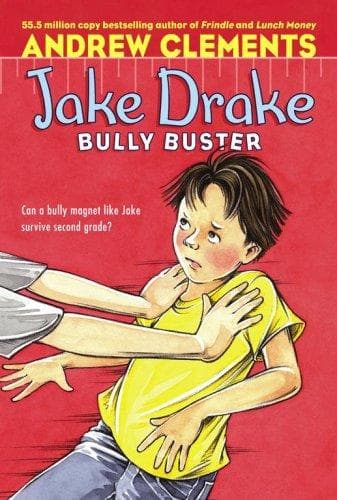
The book follows Jake Drake, a boy who has been a target for bullies since preschool, as he faces his biggest challenge yet: SuperBully Link Baxter. Through a school project partnership, Jake learns to use intelligence and empathy to transform from a 'bully magnet' into a 'bully buster'.
Does the book provide practical advice for dealing with bullies?
Yes, through Jake's journey, the book demonstrates non-violent strategies like using intelligence, understanding the bully's perspective, and finding common ground during collaborative projects. It emphasizes emotional intelligence over confrontation.
What age group is 'Jake Drake, Bully Buster' appropriate for?
The book is ideal for elementary school readers, particularly ages 7-10 (grades 2-4), who are navigating early social dynamics. The relatable school scenarios and accessible writing make it suitable for both independent reading and classroom discussions.
How is this different from other anti-bullying books?
Unlike didactic guides, it presents bullying through a relatable narrative where the protagonist grows organically. Jake's transformation comes through partnership rather than avoidance or tattling, offering a nuanced approach to conflict resolution.
What is a 'bully magnet'?
In the book, 'bully magnet' describes Jake's early role as someone who consistently attracts bullying due to his kindness, intelligence, and lack of protection. It reflects how certain traits can make children vulnerable in social hierarchies.
Does the story work for classroom discussions?
Absolutely. Teachers often use it to spark conversations about empathy, conflict resolution, and cooperation. The school project element provides a concrete example of turning adversarial relationships into collaborative ones.
What is the role of Link Baxter in the story?
Link Baxter, dubbed 'SuperBully,' represents Jake's ultimate challenge. As Jake's forced project partner, Link becomes more than a stereotype—his character development highlights how understanding bullies' backgrounds can change dynamics.
How does Jake's 'no tattletale' policy affect the story?
This trait forces Jake to develop internal resilience and problem-solving skills instead of relying on adults. It drives the plot toward self-reliance and creative solutions, making his eventual success more empowering for young readers.
Is this book part of a series?
Yes, it's part of Andrew Clements' 'Jake Drake' series, where each book addresses a different school-life challenge. Other titles include 'Jake Drake, Know-It-All' and 'Jake Drake, Teacher's Pet,' all focusing on relatable childhood dilemmas.
What lessons does the book teach about friendship?
It shows that friendship can emerge from unlikely places, like Jake and Link's partnership. The story emphasizes looking beyond labels, finding common interests, and how mutual respect can transform hostile relationships.
About the author

Andrew Clements was a prolific author of children's literature, celebrated for his engaging and relatable stories. His notable works include the beloved "Frindle," "A Week in the Woods," and the "Jake Drake" series, which often explored themes of school, friendship, and growing up. Clements' accessible writing style and keen understanding of young readers earned him widespread critical acclaim and a dedicated fanbase.
Similar books
- Wonder
R.J. Palacio
4.4 (733k) average on GoodreadsChildren'sExplores themes of empathy, kindness, and navigating social challenges in school.
- Stargirl
Jerry Spinelli
3.8 (296k) average on GoodreadsChildren'sFeatures a unique protagonist who challenges social norms and faces ostracization.
- The Diary of a Young Girl
Anne Frank
4.2 (2.7M) average on GoodreadsBiographyDuring the Nazi occupation, a teenage girl's diary, written from a secret annex, shares observations on humanity, hope, and the wait for freedom.
- Twisted 1. Twisted love
Ana Huang
3.7 (1.7M) average on GoodreadsA quiet billionaire with a difficult past finds his guarded heart opening to the woman he must protect, but their growing passion uncovers dangerous secrets and a shared, traumatic history.
- Eat, Pray, Love
Elizabeth Gilbert
3.6 (1.5M) average on GoodreadsLifestyleA heartbroken writer leaves her conventional life for a year-long global search for pleasure in Italy, spiritual devotion in India, and unexpected love and balance in Bali.
- Night
Elie Wiesel
4.3 (970k) average on GoodreadsBiographyIn the darkness of Auschwitz and Buchenwald, a teenage Elie Wiesel faces the extermination of his family, the loss of his faith, and the lasting scars of humanity's deepest cruelty.






Enjoyed the summary?
A summary gives you the shape of the book. The book itself has the detail, the examples and the voice.
Find Jake Drake, Bully Buster on AmazonAs an Amazon Associate, BookBrief earns from qualifying purchases. How we're funded