
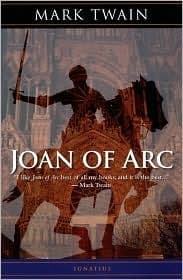
Synopsis
Covers the whole plot, including the ending.
- Difficulty
- Medium
- Pacing
- Moderate
- Mood
- Inspiring, Tragic, Reverent, Epic
- Read it if
- You are fascinated by historical accounts of extraordinary figures, appreciate a deeply researched narrative, and enjoy stories of faith, courage, and ultimate sacrifice.
- Skip it if
- You prefer fast-paced thrillers or are not interested in detailed historical narratives and the complexities of medieval warfare and politics.
Joan of Arc Plot Summary
Covers the whole plot, including the ending.
A Childhood in Domremy and the Voices
The story begins in the small village of Domremy, France, in 1429, told by Sieur Louis de Conte, Joan's page and secretary. He talks about Joan's childhood, showing her as a very pious, kind, and smart girl, loved by her community. From a young age, Joan has divine visions and hears heavenly 'Voices' – specifically those of Saint Michael, Saint Catherine, and Saint Margaret – which tell her to save France from English occupation and to crown the Dauphin, Charles VII, as king. Despite her youth and humble background, Joan believes firmly in these divine messages, even as she initially keeps them secret from most people, only telling a few close friends and family, including Louis de Conte himself.
Journey to Vaucouleurs and Meeting Baudricourt
Led by her Voices, Joan travels to Vaucouleurs to meet with Robert de Baudricourt, the local commander, to ask for an escort to Chinon to see the Dauphin. Baudricourt at first dismisses her as a crazy peasant girl, making fun of her claims of a divine mission. Joan, however, shows great persistence and an unusual ability to predict future events, such as the French defeat at the Battle of Rouvray (the 'Battle of the Herrings'). Her strong faith and the growing support of local villagers, including Jean de Metz and Bertrand de Poulengy, eventually influence Baudricourt, who, though still doubtful, provides her with a small escort and a letter of introduction to Charles VII, convinced there might be something unusual about her.
The Recognition at Chinon
Arriving at Chinon, Joan faces another challenge: getting to see the Dauphin, Charles VII, who is weak and surrounded by doubtful courtiers. To test her, Charles hides among his nobles. However, Joan, guided by her Voices, immediately identifies him, despite never having seen him before. She then reveals a secret prayer Charles had made, convincing him of her divine role. She promises to lift the Siege of Orléans and lead him to Reims for his coronation. Despite ongoing doubt from some of his advisors, Charles is deeply impressed and gives her command of the French army, ordering her to be equipped with armor and a standard.
The Relief of Orléans
Joan takes command of the French forces, bringing discipline, courage, and a new sense of divine purpose to the discouraged soldiers. She famously sends a letter to the English commanders, demanding they surrender. Against usual military strategy, she leads a series of bold and quick attacks on the English fortifications around Orléans. Her presence on the battlefield, carrying her banner and often leading the charge, inspires the troops. Despite being wounded by an arrow, she quickly returns to battle, leading the final, successful attack on Les Tourelles. The English are defeated, and the Siege of Orléans, which had lasted for months, is lifted in days, marking a turning point in the Hundred Years' War and fulfilling Joan's first major prediction.
The Loire Campaign and Path to Reims
After the victory at Orléans, Joan continues her military campaign along the Loire River. She leads the French army to a series of swift and decisive victories against the English, including battles at Jargeau, Meung-sur-Loire, Beaugency, and most notably, the Battle of Patay, where the English army suffers a great defeat. These victories remove the English threat in the region and clear a safe path to Reims, the traditional place for the coronation of French kings. Joan continually urges the hesitant Charles to go to Reims, stressing the importance of his anointing as God's chosen king for France, despite the dangers and the advice of his cautious advisors.
The Coronation of Charles VII at Reims
Against the advice of many of his nobles, Charles VII, persuaded by Joan's conviction and the series of victories, begins the march to Reims. The journey meets little resistance, as towns along the way open their gates to the advancing French army, inspired by Joan's reputation. On July 17, 1429, Charles VII is formally crowned King of France in Reims Cathedral, with Joan standing clearly beside him, holding her banner. This moment is the completion of her most important mission, fulfilling the prophecy of her Voices. Joan considers her work mostly done, saying she wants to return home, but the King and his advisors convince her to stay with the army.
The Siege of Paris and Growing Opposition
After the coronation, Joan argues for an immediate march on Paris, which is under Burgundian and English control, to free France fully. However, King Charles and his advisors, especially La Trémoille, are hesitant and prefer talks over direct military fighting. They deliberately delay the attack on Paris, giving the city time to strengthen its defenses. When Joan finally leads an attack, the royal army's lack of full commitment and support, combined with Joan suffering a painful leg wound, leads to a failed attack. This time marks a decrease in Joan's influence and the start of her being pushed aside by the court, who increasingly see her as a threat to their power.
Capture at Compiègne
Joan continues to fight for France, taking part in various small battles and sieges, but without the full support she once had. Her Voices warn her she will be captured. In May 1430, while trying to help the besieged town of Compiègne, Joan leads a sortie against the Burgundian forces. During the fierce fighting, the drawbridge of the town is raised too early, cutting her off from her retreating troops. She is surrounded and captured by the Burgundians, who are allied with the English. The French king, Charles VII, makes no significant effort to ransom or rescue her, leaving her to her fate.
The English Purchase and Ecclesiastical Trial
The Burgundians sell Joan to the English for a large sum. She is then moved to Rouen, a city under English control, to face trial. Her trial is arranged by Pierre Cauchon, the Bishop of Beauvais, a strong English supporter, with the clear goal of condemning her as a heretic and witch. The trial is a political sham, meant to discredit Joan and, by extension, Charles VII's claim to the throne, as his coronation was achieved through her 'sorcery.' Despite being a layperson, Joan is denied legal counsel and questioned constantly by a group of hostile clergymen and university doctors, who try to trick her with theological questions.
Imprisonment and Abjuration
During her imprisonment, Joan is held in a secular prison, guarded by English soldiers, a violation of church law. She endures harsh conditions, constant threats, and attempts on her life. The English and the court try to break her spirit with psychological torment and threats of torture. Tired and alone, and fearing the fire, Joan is eventually forced to sign an abjuration document, retracting her Voices and admitting to heresy. However, she quickly regrets this forced confession, feeling she has betrayed God. She is later accused of returning to heresy when she puts on male clothes again, which she does for protection against sexual assault.
Execution at Rouen
Having gone back on her word, Joan is condemned to death. On May 30, 1431, at 19 years old, Joan of Arc is led to the Old Market Place in Rouen. She asks for a cross, which is held before her as she is tied to the stake. She repeatedly calls upon Jesus and maintains that her Voices were from God and had not deceived her. As the flames consume her, she dies a martyr, her last word being 'Jesus!' The English soldiers and many spectators are clearly moved by her courage and piety, with some reportedly saying they have burned a saint. The English take steps to ensure her ashes are scattered in the Seine to prevent relics, but her spirit remains, inspiring France.
The Retrial and Legacy
Years after Joan's death, with the English finally pushed out of France, King Charles VII orders a retrial (or Nullification Trial) to clear her name, driven by his conscience and the need to make his own reign legitimate, which was based on her divine mission. This process, which begins in 1450 and ends in 1456, carefully gathers testimonies from hundreds of witnesses, including many who knew Joan personally and served with her. The trial ultimately cancels her conviction, declaring her innocent of heresy and a martyr. Sieur Louis de Conte concludes his story by stressing Joan's lasting legacy as a symbol of faith, courage, and national pride, a figure of historical and spiritual importance.
Principal Figures
Joan of Arc (Jeanne d'Arc)
Protagonist
The divinely inspired peasant girl who leads France to victory.
Joan is presented as an almost impossibly pure, courageous, and wise young woman, guided by divine Voices. She possesses unwavering faith, profound compassion, and an innate understanding of military strategy, despite her lack of formal education. Her humility and selflessness are central to her character; she consistently attributes her successes to God and seeks no personal glory. Twain portrays her as a Christ-like figure, embodying the noblest aspects of humanity. Her conviction in her mission is absolute, even in the face of skepticism, betrayal, and eventually, martyrdom.
Relationships: Sieur Louis de Conte (Devoted page and lifelong friend); King Charles VII (Sovereign she serves and crowns, though he later abandons her); Jean de Metz (Early supporter and loyal soldier); Bertrand de Poulengy (Early supporter and loyal soldier); Pierre Cauchon (Her primary persecutor and judge at her trial)
Sieur Louis de Conte
Narrator and Supporting Character
Joan's devoted page, secretary, and lifelong chronicler.
Louis de Conte is the fictional narrator and Joan's childhood friend from Domremy. He serves as her page and secretary throughout her campaigns, witnessing firsthand her triumphs and tragedies. His perspective is deeply biased in Joan's favor, portraying her with reverence and unwavering admiration. He is a loyal, intelligent, and observant companion, whose detailed recollections form the basis of the entire narrative. Through his eyes, the reader experiences Joan's journey, making him the emotional core of the story and a conduit for Twain's own admiration of Joan.
Relationships: Joan of Arc (Devoted page, secretary, and lifelong friend); Paladin (Fellow soldier and friend); Noël Rainguesson (Fellow soldier and friend)
King Charles VII (the Dauphin)
Supporting Character
The weak and indecisive French king whom Joan crowns.
Initially presented as a timid, irresolute, and pleasure-loving Dauphin, Charles VII is deeply demoralized by the state of France. He is easily swayed by his self-serving advisors, particularly La Trémoille. Joan's arrival revitalizes his spirit and legitimizes his claim to the throne through his coronation at Reims. However, his inherent weakness and political caution resurface after the coronation, leading him to abandon Joan when she is captured. While he benefits immensely from her efforts, he is ultimately unable to match her courage or vision, representing the flawed human authority she seeks to serve.
Relationships: Joan of Arc (His king, whom Joan serves and crowns); La Trémoille (His influential, self-serving advisor)
La Trémoille
Antagonist/Supporting Character
The King's powerful, self-serving, and skeptical chief advisor.
Georges de La Trémoille is the King's chief minister and a major obstacle to Joan's plans. He is portrayed as cunning, self-interested, and deeply skeptical of Joan's divine mission, fearing her influence over the King and the potential disruption to his own power. He consistently advocates for cautious, diplomatic approaches over Joan's aggressive military strategies, and actively works to undermine her authority and delay her campaigns, particularly the march on Paris. His machinations contribute significantly to Joan's eventual abandonment and capture.
Relationships: King Charles VII (His chief minister and influential advisor); Joan of Arc (Her political adversary)
Jean de Metz
Supporting Character
One of Joan's first and most loyal supporters.
Jean de Metz is a nobleman from Vaucouleurs who becomes one of Joan's earliest and most steadfast companions. He is among the first to believe in her divine mission and pledges his loyalty, accompanying her on her perilous journey to Chinon. He serves as one of her captains and is a constant presence in her inner circle, demonstrating unwavering faith and courage. His character represents the loyal and brave French soldiers who were inspired by Joan and fought alongside her.
Relationships: Joan of Arc (Loyal supporter and captain); Bertrand de Poulengy (Fellow early supporter)
Bertrand de Poulengy
Supporting Character
Another early and devoted follower of Joan.
Bertrand de Poulengy is another nobleman from Vaucouleurs who, alongside Jean de Metz, becomes convinced of Joan's divine calling. He, too, accompanies her on her initial journey to Chinon and serves in her military retinue. Poulengy is depicted as a brave and honorable knight, deeply committed to Joan and her cause. His presence reinforces the idea that Joan's charisma and conviction were powerful enough to sway hardened soldiers and noblemen, earning their respect and loyalty.
Relationships: Joan of Arc (Loyal supporter and captain); Jean de Metz (Fellow early supporter)
Paladin (Jacques d'Arc)
Supporting Character
A boastful but good-hearted soldier in Joan's retinue.
Paladin is a fictional character, a veteran soldier in Joan's company, known for his exaggerated boasts and humorous self-importance. Despite his often-comical demeanor, he is a brave and loyal fighter, devoted to Joan. He provides comic relief and a grounded, soldier's perspective within Joan's divine narrative. His character serves to highlight the diverse personalities drawn to Joan and to illustrate the human element of her army.
Relationships: Joan of Arc (Loyal soldier); Sieur Louis de Conte (Fellow soldier and friend)
Noël Rainguesson
Supporting Character
A simple, good-natured soldier and friend in Joan's company.
Noël Rainguesson is another fictional character in Joan's retinue, known for his kind heart and simple honesty. He often serves as a foil to the more boastful Paladin, representing a more humble and earnest type of soldier. He is deeply devoted to Joan and participates in her campaigns, providing a sense of camaraderie and humanity among the soldiers. His character emphasizes the widespread affection and loyalty Joan inspired among those who served with her.
Relationships: Joan of Arc (Loyal soldier); Sieur Louis de Conte (Fellow soldier and friend)
Robert de Baudricourt
Supporting Character
The initially skeptical commander who eventually aids Joan.
Baudricourt is the commander of Vaucouleurs, whom Joan first approaches for an escort to the Dauphin. He is initially dismissive and cynical, viewing Joan as a mad peasant. However, Joan's persistence, her uncanny ability to predict events, and the growing public support for her eventually wear down his skepticism. He grudgingly provides her with an escort and a letter, a pivotal moment that allows Joan to begin her mission. He represents the initial human resistance to the divine and the power of Joan's conviction to overcome it.
Relationships: Joan of Arc (Initial skeptical authority figure she must convince)
Pierre Cauchon
Antagonist
The Bishop of Beauvais and orchestrator of Joan's trial.
Pierre Cauchon is the English-sympathizing Bishop of Beauvais and the primary antagonist during Joan's trial. He is portrayed as a cunning, ruthless, and politically motivated cleric, determined to condemn Joan as a heretic and witch to serve English interests. He manipulates the trial proceedings, denies Joan fair counsel, and relentlessly interrogates her with the aim of breaking her spirit and discrediting her. He embodies the corrupt ecclesiastical and political power that ultimately leads to Joan's martyrdom, driven by ambition and loyalty to the English cause.
Relationships: Joan of Arc (Her primary persecutor and judge)
Themes & Insights
Faith and Divine Inspiration
Central to the novel is Joan's faith in her divine Voices and God's mission for her. Twain says her strength, courage, and military skill come directly from this spiritual connection, not from earthly training or ambition. Her faith inspires discouraged soldiers, convinces doubters like Baudricourt and Charles VII, and sustains her through betrayal, imprisonment, and execution. The book shows her as a vessel of divine will, suggesting that true power comes from spiritual conviction rather than worldly might, and that faith can achieve the seemingly impossible.
“What is faith? It is to believe what you do not see; the reward of this faith is to see what you believe.”
Courage and Perseverance
Joan shows great courage, not only on the battlefield, where she leads charges and endures wounds, but also in facing doubt, political plots, and her unjust trial. She persists against great odds, from convincing a hesitant Dauphin to enduring the psychological torment of her questioners. Her courage is shown to be contagious, inspiring the French army to great victories. Even in death, she keeps her beliefs, showing a moral and spiritual strength that goes beyond physical bravery.
“Courage is resistance to fear, mastery of fear – not absence of fear.”
Betrayal and Injustice
The novel highlights the betrayal Joan experiences, especially from King Charles VII and his court, who abandon her to her enemies after she has secured his crown. Her trial is shown as a great injustice, a politically motivated sham arranged by English sympathizers like Bishop Cauchon, meant to discredit her and her divine mission. This theme contrasts Joan's purity with the corrupt, self-serving nature of human institutions and power. Her martyrdom is a direct result of this betrayal and injustice, making her a tragic figure.
“I was abandoned by my King and the Church, but not by God.”
The Nature of True Leadership
Twain contrasts Joan's selfless, divinely inspired leadership with the weak, self-serving, and politically motivated leadership of figures like Charles VII and La Trémoille. Joan leads by example, through absolute conviction, moral purity, and a genuine love for her country and its people. She inspires loyalty and courage, changing a discouraged army into a victorious force. Her leadership is not about personal power but about fulfilling a divine purpose, showing that true leadership comes from integrity, vision, and a willingness to sacrifice for the greater good.
“The test of a man's courage and self-sacrifice is not the time when he is strong, but when he is weak.”
Nationalism and Patriotism
The story has a strong sense of French nationalism and patriotism, as Joan's mission is to free France from English occupation and unite the nation under its rightful king. Her love for France and her desire for its freedom drive her actions. She embodies the spirit of a nation fighting for independence, gathering the French people and soldiers to a common cause. Twain presents her as the ultimate national hero, whose sacrifice ultimately secures France's future.
“I am come from God to deliver France.”
Plot Devices & Literary Techniques
First-Person Retrospective Narration
An aged page recounts Joan's life from a devoted perspective.
The entire story is narrated by Sieur Louis de Conte, Joan's fictional page, writing his memoirs many years after her death. This device allows for a deeply personal and reverent portrayal of Joan, filtered through the eyes of someone who loved and admired her unconditionally. It lends an air of authenticity to the historical fiction, while also permitting Twain to express his profound admiration for Joan without directly inserting himself. The retrospective nature allows the narrator to reflect on events with wisdom and sorrow, emphasizing Joan's tragic fate and ultimate vindication.
The Voices
Joan's divine guidance and source of her authority.
The Voices of Saint Michael, Saint Catherine, and Saint Margaret are the primary supernatural plot device. They serve as Joan's direct link to God, providing her with guidance, prophecies, and the divine mandate for her mission. The unquestioning belief in these Voices by Joan, and by extension, the narrator, underpins her entire character and the narrative's central conflict. They are both the source of her miraculous successes and the primary point of contention during her heresy trial, highlighting the clash between divine inspiration and worldly skepticism/authority.
Foil Characters
Characters who highlight Joan's virtues through contrast.
Twain uses several characters as foils to emphasize Joan's extraordinary qualities. King Charles VII's weakness and indecision highlight Joan's strength and unwavering conviction. La Trémoille's self-serving political maneuvering contrasts sharply with Joan's selflessness and purity of purpose. Even characters like the boastful Paladin, while loyal, serve to emphasize Joan's humility and genuine heroism. These contrasts elevate Joan's character, making her virtues shine brighter against the backdrop of human frailty and corruption.
Prophecy and Fulfillment
Joan's predictions that validate her divine mission.
Throughout the narrative, Joan makes several specific prophecies, such as the French defeat at the Battle of the Herrings, the lifting of the Siege of Orléans, and the coronation of Charles VII at Reims. The consistent fulfillment of these prophecies serves as irrefutable proof within the story of her divine inspiration and legitimacy. This device builds suspense, validates Joan's authority, and strengthens the reader's belief in her mission, making her eventual betrayal and condemnation even more tragic and unjust.
Joan of Arc Quotes
“I am not afraid... I was born to do this.”
“Every man gives his life for what he believes. Every woman gives her life for what she believes. Sometimes people believe in little or nothing, and so they give their lives to little or nothing.”
“One life is all we have and we live it as we believe in living it. But to sacrifice what you are and to live without belief, that is a fate more terrible than dying.”
“I know now that the voices were right and it was you who were wrong.”
“The sun does not shine for a few trees and flowers, but for the wide world's joy.”
“I would rather die than do a thing which I know to be a sin, or to be against God's will.”
“It is better to be alone with God. His friendship will not fail me, nor His counsel, nor His love. In His strength I will dare and dare and dare until I die.”
“You say you are my judge; I do not know if you are; but take good heed not to judge me ill, because you would put yourself in great peril.”
“I am a soldier; I do not fear the field of battle.”
“If I am not in a state of grace, I pray God may put me in it; if I am, I pray He may keep me so.”
“The world is full of kings and queens who blind your eyes and steal your dreams. It's God who says who you are.”
“I have never done anything against God or the faith.”
“My voices have told me I shall be delivered, but I do not know the day or the hour.”
“It is true that I wore men's clothing; I did it by command of Our Lord and of the angels.”
Quiz
10 questions on the plot and the characters. Each answer comes with a short explanation.
Question 1
What is the primary literary genre of Mark Twain's 'Joan of Arc'?
- Biography
- Historical Fiction
- Fantasy
- Satire
Show answer
B. Historical Fiction Mark Twain described 'Joan of Arc' as historical fiction, blending factual events about Joan's life with fictionalized elements and narrative techniques, despite his deep research into historical sources.
Question 2
How long did Mark Twain spend preparing and writing 'Joan of Arc' according to his quote?
- 5 years total
- 12 years preparation and 2 years writing
- 2 years preparation and 12 years writing
- 10 years total
Show answer
B. 12 years preparation and 2 years writing In the provided quote, Twain states he spent 'twelve years of preparation, and two years of writing' on 'Joan of Arc', totaling 14 years, which he contrasted with his other books that 'needed no preparation and got none'.
Question 3
What did Mark Twain claim about 'Joan of Arc' compared to his other books?
- It was his least favorite work
- It was the best and gave him seven times more pleasure
- It was the shortest book he wrote
- It was the most commercially successful
Show answer
B. It was the best and gave him seven times more pleasure Twain explicitly said, 'I like Joan of Arc best of all my books; and it is the best; I know it perfectly well. And besides, it furnished me seven times the pleasure afforded me by any of the others,' highlighting his personal esteem for this work.
Question 4
In Twain's portrayal, what is a central theme associated with Joan of Arc's character?
- Political corruption
- Spirituality and divine guidance
- Romantic love
- Scientific discovery
Show answer
B. Spirituality and divine guidance The book's themes include spirituality, as Joan is depicted receiving visions and voices from saints, which guide her actions in the Hundred Years' War, reflecting Twain's focus on her faith and mystical experiences.
Question 5
Why might Twain's 'Joan of Arc' be considered different from his typical works?
- It is a comedy
- It lacks historical accuracy
- It is serious and reverent, unlike his satirical style
- It is written in verse
Show answer
C. It is serious and reverent, unlike his satirical style Unlike Twain's famous satirical novels like 'The Adventures of Huckleberry Finn', 'Joan of Arc' is noted for its serious, admiring tone toward its subject, showing his versatility and deep personal investment in the story.
Question 6
What historical period does 'Joan of Arc' by Mark Twain primarily cover?
- The American Revolution
- The Hundred Years' War
- The Renaissance
- The French Revolution
Show answer
B. The Hundred Years' War The book is set during the Hundred Years' War (1337-1453), focusing on Joan of Arc's role in leading French forces against English occupation, culminating in her trial and execution.
Question 7
How does Twain's extensive preparation for 'Joan of Arc' influence the book?
- It makes the book overly fictionalized
- It results in a detailed, historically grounded narrative
- It shortens the book's length
- It focuses only on Joan's childhood
Show answer
B. It results in a detailed, historically grounded narrative Twain's 12 years of preparation involved thorough research into historical records, allowing him to create a rich, authentic depiction of 15th-century France and Joan's life, blending fact with fiction effectively.
Question 8
What aspect of Joan of Arc's story does Twain likely emphasize to convey her spirituality?
- Her political alliances
- Her visions of saints like Michael and Catherine
- Her skills in agriculture
- Her travels to England
Show answer
B. Her visions of saints like Michael and Catherine Twain highlights Joan's reported visions and voices from saints such as Michael, Margaret, and Catherine, which she claimed directed her to support Charles VII and fight for France, central to the book's spiritual theme.
Question 9
In Twain's view, why might 'Joan of Arc' have required more preparation than his other books?
- Because it was his first novel
- Due to the need for accurate historical and cultural context
- Because he wrote it in a foreign language
- Due to its complex plot twists
Show answer
B. Due to the need for accurate historical and cultural context As historical fiction set in medieval France, Twain needed extensive research to accurately portray events, settings, and figures, unlike his contemporary American settings that drew from personal experience.
Question 10
How does Twain's personal admiration for Joan of Arc manifest in the book?
- By making her a comic character
- Through a critical, unbiased portrayal
- By depicting her as a flawless, heroic figure
- By focusing only on her military tactics
Show answer
C. By depicting her as a flawless, heroic figure Twain's quote shows his high regard for Joan, and in the book, this translates into a sympathetic, idealized portrayal that emphasizes her courage, piety, and martyrdom, often glossing over historical controversies.
Joan of Arc FAQ
What is 'Joan of Arc' by Mark Twain about?
The book is a historical fiction novel that chronicles the life of Joan of Arc, a 15th-century French peasant girl who claims divine visions instructing her to lead France against English occupation during the Hundred Years' War. It follows her journey from her humble origins in Domrémy to her military leadership, capture, trial for heresy, and eventual execution, blending historical events with Twain's narrative flair.
Why should I read 'Joan of Arc' by Mark Twain?
Twain considered this his finest work, dedicating 14 years to its creation, and it offers a unique blend of historical accuracy, spiritual exploration, and Twain's signature wit. The novel delves deeply into Joan's character, portraying her as a complex figure of faith, courage, and innocence amidst political and religious turmoil, making it a compelling read for fans of history, spirituality, and literary classics.
What is the background/setting of 'Joan of Arc'?
Set in 15th-century France during the Hundred Years' War, the novel spans rural villages like Domrémy, the royal court at Chinon, battlefields such as Orléans, and the ecclesiastical court in Rouen. This backdrop highlights the conflict between France and England, the role of the Catholic Church, and the societal tensions that shape Joan's rise and fall.
What are the most memorable quotes from 'Joan of Arc'?
Notable quotes include Joan's declaration, 'I am not afraid... I was born to do this,' reflecting her divine conviction, and Twain's narration, 'She was the genius of the age, the wonder of the time,' emphasizing her historical impact. Another poignant line from her trial, 'My voices have not deceived me,' underscores her unwavering faith amidst persecution.
What writing style does Mark Twain use in 'Joan of Arc'?
Twain employs a detailed, reverent narrative style, distinct from his usual satire, blending historical documentation with vivid storytelling. He uses first-person perspectives, such as the fictional Sieur Louis de Conte as narrator, to provide intimate insights into Joan's life, while maintaining a tone that balances admiration with critical examination of the era's politics and religion.
What minor details add significant meaning to 'Joan of Arc'?
Details like Joan's simple peasant dress, which she refuses to abandon even at court, symbolize her humility and connection to her divine mission. The recurring motif of her 'voices'—identified as saints Michael, Catherine, and Margaret—subtly reinforces her spiritual authenticity, while descriptions of the French countryside contrast with the grim realities of war and betrayal.
What are some subtle foreshadowing moments in 'Joan of Arc'?
Early scenes where Joan is mocked in Domrémy foreshadow the skepticism and opposition she faces later from nobles and clergy. Her initial reluctance to take up arms, tempered by divine insistence, hints at the personal sacrifices ahead, and references to 'treachery' among French allies subtly anticipate her capture by Burgundian forces and betrayal during her trial.
What unexpected character connections exist in 'Joan of Arc'?
Twain highlights connections like the bond between Joan and the Dauphin Charles VII, who initially doubts her but comes to rely on her for legitimacy, and her complex relationship with ecclesiastical figures like Bishop Cauchon, who prosecutes her trial. The narrator, Sieur Louis de Conte, serves as a lifelong friend and observer, providing a personal lens that deepens the historical account.
What are unspoken character motivations in 'Joan of Arc'?
Joan's motivation stems from an unwavering faith in her divine calling, but Twain also implies a deep-seated patriotism and desire to restore France's glory. Characters like Charles VII are driven by political ambition, using Joan to secure his throne, while clerics like Cauchon may be motivated by institutional power and fear of heresy, rather than pure religious conviction.
What psychological complexities do characters exhibit in 'Joan of Arc'?
Joan displays a blend of childlike innocence and steely resolve, grappling with doubt yet remaining steadfast under pressure. Supporting characters, such as her loyal soldiers who idolize her, show conflicted loyalty, while her accusers exhibit cognitive dissonance, condemning her as a heretic while acknowledging her piety, revealing the era's moral ambiguities.
What are the major emotional turning points in 'Joan of Arc'?
Key emotional moments include Joan's vision at Domrémy, which ignites her mission; her triumphant entry into Orléans, boosting French morale; her capture at Compiègne, marking a descent into despair; and her trial and execution, where her courage in facing death evokes profound tragedy and spiritual transcendence, leaving a lasting impact on characters and readers alike.
How do relationship dynamics evolve in 'Joan of Arc'?
Joan's relationships shift from initial skepticism to deep reverence among soldiers and peasants, while her ties with the French court grow strained due to political maneuvering. Her interactions with ecclesiastical authorities deteriorate from cautious respect to outright hostility during her trial, culminating in betrayal, yet her bond with narrator Sieur Louis de Conte remains a constant source of loyalty and reflection.
Which parts of 'Joan of Arc' remain ambiguous or open-ended?
The nature of Joan's 'voices' is left ambiguous—whether they are divine interventions, psychological phenomena, or a mix of both—allowing readers to interpret her faith. The novel also leaves open the moral culpability of her accusers and the long-term impact of her death on France's soul, inviting debate on spirituality versus political expediency.
What are controversial scenes or decisions in 'Joan of Arc'?
Controversial elements include Joan's decision to wear men's armor, which challenges gender norms and becomes a point of condemnation at her trial. The trial itself, portrayed as a biased inquisition driven by political and religious interests, sparks debate on justice and faith, while her execution scene raises questions about martyrdom and societal betrayal.
'Joan of Arc' ending explained: how it ends & what it means
The novel ends with Joan's execution by burning at the stake in Rouen, after she recants and then reaffirms her faith, leading to her martyrdom. This conclusion symbolizes the triumph of spiritual conviction over worldly persecution, with Twain suggesting her legacy transcends death, inspiring future generations and highlighting themes of innocence, sacrifice, and the corrupting influence of power.
About the author
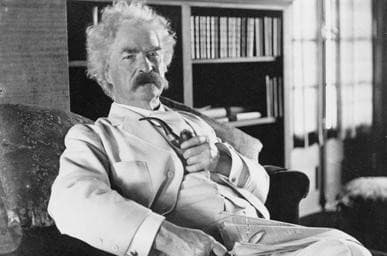
Samuel Langhorne Clemens, best known by his pen name Mark Twain, was an American writer, humorist, entrepreneur, publisher, and lecturer. He was praised as the "greatest humorist the United States has produced", and William Faulkner called him "the father of American literature". His novels include The Adventures of Tom Sawyer (1876) and its sequel, Adventures of Huckleberry Finn (1884), the latter of which has often been called the "Great American Novel". Twain also wrote A Connecticut Yankee in King Arthur's Court (1889) and Pudd'nhead Wilson (1894), and co-wrote The Gilded Age: A Tale of Today (1873) with Charles Dudley Warner.
Similar books
- The Name of the Rose
Umberto Eco
4.1 (301k) average on GoodreadsHistorical FictionExplores medieval religious fervor and ecclesiastical power structures, echoing themes in Joan's trial.
- To Kill a Mockingbird
Harper Lee
4.3 (4.5M) average on GoodreadsHistorical FictionIn the 1930s Jim Crow South, Harper Lee writes about racial injustice, moral growth, and the quiet courage of a lawyer father, Atticus Finch, as seen through his young daughter's eyes.
- The Great Gatsby
F. Scott Fitzgerald
3.9 (3.8M) average on GoodreadsHistorical FictionIn the opulent Roaring Twenties, a mysterious millionaire's lavish parties hide his desperate, tragic pursuit of a lost love, exposing the emptiness within the American Dream.
- Pride and Prejudice
Jane Austen
4.3 (3M) average on GoodreadsHistorical FictionIn a society focused on status and money, Elizabeth Bennet navigates love and pride, challenging Mr. Darcy and social expectations to find true affection.
- Angels & Demons
Dan Brown
3.9 (2.7M) average on GoodreadsThrillerA Harvard symbologist races through Rome's ancient sites, deciphering cryptic clues to unmask the Illuminati and stop a vengeful plot to destroy the Vatican with a stolen antimatter weapon.
- The Kite Runner
Khaled Hosseini
4.3 (2.4M) average on GoodreadsHistorical FictionIn pre-Taliban Afghanistan, a wealthy boy's betrayal of his servant's son during a kite-running tournament starts a lifelong journey for amends as his country collapses.






Enjoyed the summary?
A summary gives you the shape of the book. The book itself has the detail, the examples and the voice.
Find Joan of Arc on AmazonAs an Amazon Associate, BookBrief earns from qualifying purchases. How we're funded