
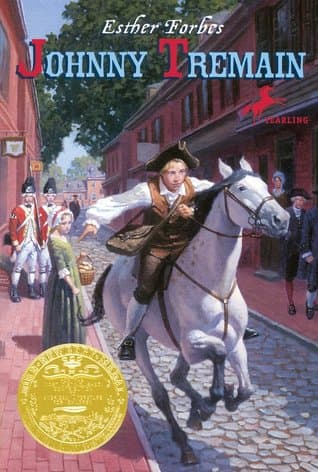
Synopsis
Covers the whole plot, including the ending.
- Difficulty
- Medium
- Pacing
- Moderate
- Mood
- Historical, Patriotic, Coming-of-age, Reflective
- Read it if
- You enjoy historical fiction set during the American Revolution, with a focus on character development and the daily lives of ordinary people caught in extraordinary times.
- Skip it if
- You prefer fast-paced action or are not interested in detailed historical context and political discussions.
Johnny Tremain Plot Summary
Covers the whole plot, including the ending.
The Crippling Accident
Fourteen-year-old Johnny Tremain is a skilled but arrogant apprentice silversmith in colonial Boston, working for Master Lapham. He secretly owns a valuable silver cup, part of a set made by Paul Revere, given to him by his deceased mother as proof of his link to the wealthy Lyte family. While making a sugar basin for John Hancock, Johnny ignores Sabbath rules and his master's warnings, working late. His fellow apprentice, Dove, maliciously gives him a cracked crucible, causing molten silver to spill and severely burn Johnny's hand, fusing his thumb and palm. This injury makes him unable to continue his trade and shatters his dreams of becoming a master silversmith.
Seeking Justice and Employment
With his hand crippled, Johnny is no longer useful to the Lapham shop. Mrs. Lapham, though sympathetic, tells him to find other work. Johnny tries to find employment elsewhere, but his injured hand and proud nature make it hard. Desperate, he seeks out the wealthy merchant Jonathan Lyte, showing the silver cup as proof of their kinship and hoping for help. Lyte, known for being dishonest, dismisses Johnny's claim and accuses him of stealing the cup, having him arrested. This public humiliation further isolates Johnny and increases his anger towards the established order.
Trial and Deliverance
Johnny is put on trial for theft, facing Jonathan Lyte and his lawyer. He is defended by the young, idealistic lawyer Josiah Quincy, who takes an interest in his case. During the trial, Cilla Lapham, who has always liked Johnny despite his difficult personality, bravely testifies for him. She explains that Johnny's mother gave him the cup and that he has had it since childhood, providing key evidence that discredits Lyte's accusation. With Quincy's defense and Cilla's testimony, Johnny is acquitted, but the experience leaves him deeply distrustful of authority and the upper class.
Meeting Rab and Finding a Home
After his trial, Johnny is homeless and jobless. He wanders Boston, eventually meeting Rab Silsbee, a quiet, principled printer's apprentice at the *Boston Observer*. Rab, seeing Johnny's situation and potential, offers him a job delivering newspapers and riding for the secret Sons of Liberty. Johnny, at first unsure, accepts. He moves in with Rab and his uncle, Mr. Lorne, at the print shop. This new environment gives Johnny a sense of belonging and purpose, and he quickly forms a strong friendship and admiration for the calm, brave Rab, who becomes an important mentor.
Entering the World of Revolution
Working for the *Boston Observer* puts Johnny in the political atmosphere of pre-Revolutionary Boston. He delivers papers with Whig ideas and becomes an important messenger for the Sons of Liberty, led by figures like Samuel Adams, John Hancock, and Paul Revere. Johnny attends secret meetings, hears important discussions, and sees the growing tension between the colonists and the British soldiers, called 'lobsterbacks.' His duties show him how the resistance movement works, and he begins to understand the ideas of liberty and independence that Rab and the other patriots support, changing his earlier self-centeredness into a new political awareness.
The Boston Tea Party
As the Sons of Liberty plan their protest against the British Tea Act, Johnny is deeply involved. He helps Rab and other patriots gather disguises and prepare for the secret operation. On the night of December 16, 1773, Johnny, dressed as an Indian with hundreds of other colonists, participates in the Boston Tea Party. He helps smash and dump 342 chests of tea into Boston Harbor. This act of defiance, a direct response to British taxation without representation, is a turning point in the conflict and strengthens Johnny's commitment to the cause, making him an active participant.
Growing Tensions and Personal Connections
After the Boston Tea Party, British troops occupy Boston, and tensions grow. Johnny observes the daily lives of British soldiers, sometimes befriending a few, such as Lieutenant Stranger, a young, polite officer. He continues to deliver messages for the Sons of Liberty, often seeing Cilla Lapham and her younger sister, Isannah, who now work for the wealthy Lyte family. Johnny struggles with his feelings for Cilla, who remains loyal to him, and his dislike for Isannah, who is increasingly spoiled by the Lytes. His connection to the Lytes through Cilla allows him to gather information, as he overhears conversations and observes their Loyalist activities.
The Lyte's Treachery and Family Revelations
Johnny learns that Jonathan Lyte and his daughter, Lavinia, plan to flee Boston for England, taking their wealth. He also discovers that the Lytes are giving information to the British. In a key moment, Lavinia Lyte tells Johnny the truth about his heritage: he is related to the Lytes, and his mother was a Lyte who ran off with a French prisoner of war, leading to her disinheritance. Lavinia gives Johnny documents proving his lineage, including his birth record. This revelation gives Johnny a sense of identity and belonging he lacked, even as it confirms the Lytes' manipulative nature.
The Eve of War
As April 1775 nears, Boston feels ready for war. Johnny is crucial in gathering information for the Sons of Liberty, observing British troop movements and relaying messages. He sees Paul Revere's preparations for his famous ride and helps the patriots get ready for the coming conflict. Rab, wanting to fight, gets a rifle but cannot get a bayonet. Johnny struggles with the coming separation from his best friend and mentor, understanding that the war will demand sacrifices from everyone. The camaraderie among the patriots strengthens as they face the unknown.
Lexington and Concord
On April 19, 1775, Johnny sees the British troops march out of Boston. He follows them, eager to see the conflict. The skirmishes at Lexington and Concord mark the start of the Revolutionary War. Johnny finds Rab, who has joined the minutemen. Tragically, Rab is mortally wounded during the fighting. Johnny rushes to his side, heartbroken. In his final moments, Rab gives Johnny his rifle, telling him to use it to fight for the cause. This loss deeply affects Johnny, strengthening his commitment to the ideals Rab represented and making him a true patriot.
Dr. Warren's Offer and a New Beginning
After Rab's death, Johnny returns to a besieged Boston, carrying Rab's rifle and a deep sense of loss. He meets Dr. Joseph Warren, a patriot leader and skilled physician. Dr. Warren examines Johnny's crippled hand and says he can perform surgery to separate his thumb and palm, possibly restoring much of its function. Warren explains that the surgery will be painful but necessary if Johnny is to effectively use a rifle and fight for liberty. Johnny, now mature and dedicated, accepts the offer, ready to face the pain and embrace his role in the American Revolution. He has found his purpose beyond silversmithing.
Principal Figures
Johnny Tremain
Protagonist
A talented but arrogant apprentice silversmith whose life is transformed by injury and revolution.
At the beginning, Johnny is a proud, hot-tempered, and somewhat conceited fourteen-year-old apprentice, obsessed with his craft and his future as a master silversmith. He is initially self-centered, quick to anger, and looks down on others, particularly Dove. His crippling hand injury shatters his dreams and forces him into a period of despair and homelessness. Through his friendship with Rab and his involvement with the Sons of Liberty, Johnny matures significantly, developing courage, empathy, and a deep commitment to the ideals of liberty and justice. He learns to value community over individual ambition.
Relationships: Rab Silsbee (Best friend and mentor); Cilla Lapham (Childhood friend, unrequited love interest, loyal confidante); Master Lapham (Apprenticeship master, father figure (initially)); Jonathan Lyte (Great-uncle, antagonist, accuser); Dr. Joseph Warren (Patriot leader, offers to heal Johnny's hand)
Rab Silsbee
Supporting
Johnny's calm, principled, and courageous best friend and mentor.
Rab is a printer's apprentice at the *Boston Observer* and a dedicated member of the Sons of Liberty. He is quiet, intelligent, and possesses an unwavering sense of integrity and justice. Unlike Johnny, Rab is naturally humble and self-assured, never boasting or seeking personal gain. He is a natural leader and a source of moral strength for Johnny, teaching him about patriotism, selflessness, and the importance of a cause greater than oneself. Rab's calm demeanor and unwavering commitment to liberty inspire Johnny deeply.
Relationships: Johnny Tremain (Best friend and mentee); Mr. Lorne (Uncle and employer); Samuel Adams (Fellow Son of Liberty)
Cilla Lapham
Supporting
A loyal and kind apprentice who cares deeply for Johnny.
Cilla is one of Master Lapham's granddaughters and an apprentice in the silversmith shop. She is kind, loyal, and possesses a quiet strength. Despite Johnny's initial arrogance and difficult personality, Cilla remains steadfastly fond of him, offering him comfort and support, especially after his accident. She bravely testifies on his behalf during his trial and continues to visit him even when he is no longer part of the Lapham household. Cilla represents unwavering loyalty and genuine affection, serving as a grounding force in Johnny's life.
Relationships: Johnny Tremain (Childhood friend, unrequited love interest, loyal confidante); Isannah Lapham (Younger sister); Mrs. Lapham (Grandmother)
Jonathan Lyte
Antagonist
A wealthy, unscrupulous Loyalist merchant and Johnny's great-uncle.
Jonathan Lyte is a rich, powerful, and utterly corrupt merchant in Boston. He is a staunch Loyalist, more concerned with his wealth and social standing than with justice or the rights of the colonists. Lyte is opportunistic and cruel, readily accusing Johnny of theft to avoid acknowledging kinship. He embodies the worst aspects of the privileged elite, using his power to exploit others and maintain the status quo. His character represents the oppressive authority against which the Sons of Liberty are fighting.
Relationships: Johnny Tremain (Great-uncle, accuser, antagonist); Lavinia Lyte (Daughter)
Samuel Adams
Supporting
A prominent leader of the Sons of Liberty and a key figure in the American Revolution.
Samuel Adams is depicted as a shrewd, charismatic, and highly effective organizer of the resistance movement. He is a master of propaganda and political strategy, constantly working to unite the colonists against British rule. Adams is a symbol of the intellectual and political force behind the Revolution, inspiring others with his unwavering commitment to liberty. He is a mentor figure to Rab and, by extension, to Johnny, embodying the ideals that drive the patriotic cause.
Relationships: Rab Silsbee (Fellow Son of Liberty, political associate); John Hancock (Political ally); Paul Revere (Political ally)
Paul Revere
Supporting
A skilled silversmith and a vital messenger for the Sons of Liberty.
Paul Revere is presented as a master craftsman, a respected community member, and a dedicated patriot. He is one of the key figures in the Sons of Liberty, known for his bravery and his crucial role as a messenger and organizer. Revere is practical, intelligent, and committed to the cause of liberty. He is initially Johnny's idol as a silversmith and later becomes a figure of admiration for his revolutionary efforts. His famous ride is a pivotal moment in the story, symbolizing the coming war.
Relationships: Johnny Tremain (Initial idol, later a fellow patriot); Samuel Adams (Political ally); Dr. Joseph Warren (Political ally)
Dr. Joseph Warren
Supporting
A respected physician and a brave leader of the Sons of Liberty.
Dr. Joseph Warren is a highly respected physician and a courageous, intelligent leader of the Sons of Liberty. He embodies both compassion and revolutionary zeal. Warren is depicted as a man of action and intellect, deeply committed to the cause of American independence. He offers Johnny not only medical hope for his hand but also a deeper understanding of the sacrifices required for liberty, becoming a final, crucial mentor figure who helps Johnny fully embrace his new identity as a patriot.
Relationships: Johnny Tremain (Healer, mentor); Samuel Adams (Political ally); Paul Revere (Political ally)
Lavinia Lyte
Supporting
Jonathan Lyte's beautiful, manipulative daughter who reveals Johnny's lineage.
Lavinia Lyte is the elegant, sophisticated, and somewhat manipulative daughter of Jonathan Lyte. She is a Loyalist, sharing her father's concern for wealth and social standing. Despite her initial disdain for Johnny, she is the one who ultimately reveals his true family history, albeit for her own reasons. Lavinia represents the allure and moral ambiguity of the aristocratic Loyalist class, capable of both cruelty and a surprising moment of honesty, driven by a complex mix of self-interest and a peculiar sense of family duty.
Relationships: Johnny Tremain (Cousin, antagonist); Jonathan Lyte (Father)
Dove
Supporting
A lazy, clumsy, and malicious apprentice who causes Johnny's injury.
Dove is a fellow apprentice in the Lapham shop. He is lazy, incompetent, and resentful of Johnny's superior skill. It is his malicious act of giving Johnny a cracked crucible that leads to Johnny's crippling hand injury. Dove embodies the petty jealousy and carelessness that can have devastating consequences. Later, he briefly works for the British, highlighting his opportunistic and unprincipled nature. He serves as a contrast to Johnny's eventual growth and Rab's integrity.
Relationships: Johnny Tremain (Fellow apprentice, accidental cause of injury)
Themes & Insights
The Maturation of a Boy into a Man
The novel shows Johnny's journey from an arrogant, self-centered boy to a mature, selfless patriot. His injury is the turning point, forcing him to face his pride and find a new purpose. His friendship with Rab and involvement with the Sons of Liberty teach him humility, loyalty, and the importance of a cause greater than himself. For example, his initial despair after the accident turns into courage as he embraces the revolutionary cause, ending with his willingness to fight for liberty, even if it means painful surgery to fix his hand, not for silversmithing, but for holding a rifle.
“And Johnny knew Rab was right. He wanted to be a part of the future, not merely a spectator.”
The Meaning of Liberty and Sacrifice
The novel's main theme is the fight for liberty and the sacrifices needed to get it. Through Johnny's experiences, the reader sees a nation's growing desire for freedom and the personal costs. The Sons of Liberty, especially Rab, represent the ideals of self-governance and human rights. The Boston Tea Party and the battles of Lexington and Concord show the colonists' determination. Rab's sacrifice for the cause highlights the personal cost of liberty, making it a deeply felt reality for Johnny and the new nation.
“There would be no more going to England for Rab. Only fighting for America. And for Johnny too.”
Identity and Belonging
Johnny's search for identity is central to the story. At first, his identity is linked to his skill as a silversmith and his secret Lyte lineage. Losing his craft causes an identity crisis. His friendship with Rab and his involvement with the Sons of Liberty give him a new sense of belonging and purpose, as he becomes part of a collective struggle. The revelation of his Lyte heritage gives him a sense of personal history, but he ultimately chooses to create his own identity as an American patriot, showing that true belonging comes from shared ideals and action, not just birthright.
“He was not just a Tremain, nor just a Lyte. He was a man of Boston, a Son of Liberty.”
The Power of Friendship and Mentorship
The power of friendship and mentorship is an important theme. Rab Silsbee is Johnny's main mentor, teaching him about integrity, courage, and the revolutionary cause. Rab's calm manner and steady principles temper Johnny's hotheadedness and guide him towards maturity. Their bond gives Johnny a sense of family and purpose he lacked after his injury. Cilla Lapham's loyalty also offers Johnny emotional support and a feeling of being cared for, showing how positive relationships can shape a person's character and provide strength during hard times.
“Rab was not just his friend, but the conscience of his soul.”
Plot Devices & Literary Techniques
The Crippled Hand
A physical injury that acts as a catalyst for Johnny's personal transformation.
Johnny's burned and fused hand serves as the primary inciting incident and a powerful symbol. It immediately ends his cherished career as a silversmith, forcing him to confront his pride and seek a new path. It symbolizes his initial brokenness and vulnerability. Throughout the story, the hand is a constant reminder of his past and a physical manifestation of his limitations, yet it also pushes him towards growth. Dr. Warren's offer to fix it at the end signifies Johnny's acceptance of a new identity and purpose, not as a craftsman, but as a fighter for liberty.
The Silver Cup
A tangible link to Johnny's past and a symbol of his identity crisis.
The silver cup, one of a set made by Paul Revere, is Johnny's only tangible link to his aristocratic Lyte family and his deceased mother. It represents his initial, shallow desire for wealth and status. It becomes a source of conflict when Jonathan Lyte falsely accuses him of theft. Later, its authenticity, confirmed by Paul Revere, helps clear Johnny's name. The cup symbolizes Johnny's search for his identity and heritage, but ultimately, he understands that true belonging comes from his actions and principles rather than inherited status or objects.
The *Boston Observer* Print Shop
A hub for revolutionary ideas and a surrogate family for Johnny.
The *Boston Observer* print shop, run by Mr. Lorne and Rab, functions as more than just a workplace; it becomes a sanctuary and a surrogate family for Johnny after his accident. It is a central hub for the Sons of Liberty, where revolutionary ideas are printed and disseminated, and where secret meetings are held. This setting immerses Johnny in the political ferment of Boston, exposing him to the ideals of liberty and giving him a sense of purpose and belonging. It is where he truly begins his transformation from a self-absorbed apprentice to a committed patriot.
Historical Figures as Characters
Real historical figures interact directly with the fictional protagonist.
The novel seamlessly integrates real historical figures like Samuel Adams, John Hancock, Paul Revere, and Dr. Joseph Warren into the narrative, allowing them to interact directly with the fictional Johnny Tremain. This device grounds the story in historical reality and makes the revolutionary period feel immediate and personal. It provides Johnny with mentors and direct exposure to the key players and events of the American Revolution, enhancing the educational aspect of the historical fiction genre and giving the reader a tangible connection to the past.
Johnny Tremain Quotes
“A man can stand up.”
“It is by the grace of God that we are free and can speak our minds.”
“There shall be no more of this taxation without representation. There shall be no more oppression.”
“For the first time Johnny understood that poverty was not necessarily a disgrace.”
“You can do anything, Johnny, if you only try.”
“He was not Rab's boy. He was Rab's friend, and as such, an equal.”
“A boy can do more than just carry messages. A boy can be a spy.”
“It was not a question of courage but of something deeper, a willingness to die for what you believed in.”
“He knew he was no longer a boy, but a man, with a man's responsibilities, and a man's heart.”
“This was the spark that would set the world on fire.”
“God grant that I may never live to see the day when I shall be ashamed of my country.”
“The British were not monsters. They were just men, doing their duty.”
“It was a time of great fear and great hope, and no man knew which would prevail.”
“We fight for more than just independence. We fight for the right to be free men, in a free land.”
Quiz
10 questions on the plot and the characters. Each answer comes with a short explanation.
Question 1
What tragic accident befalls Johnny's hand early in the story, ending his silversmithing career?
- He cuts it on a piece of glass.
- He burns it with molten silver.
- He smashes it with a hammer.
- He pierces it with a sharp tool.
Show answer
B. He burns it with molten silver. Johnny's hand is severely burned when Dove deliberately gives him a cracked crucible, causing molten silver to spill.
Question 2
What is Johnny's connection to the wealthy merchant, Jonathan Lyte?
- Lyte is his estranged uncle.
- Lyte is his former master.
- Lyte is a rival silversmith.
- Lyte is a family friend.
Show answer
A. Lyte is his estranged uncle. Johnny discovers through his mother's Bible that Jonathan Lyte is his maternal uncle, a fact he tries to use to claim family and assistance.
Question 3
Which historical figure becomes a mentor and friend to Johnny, teaching him about the Patriot cause?
- Paul Revere
- Samuel Adams
- James Otis
- Rab Silsbee
Show answer
D. Rab Silsbee Rab Silsbee, the printer's apprentice, takes Johnny in and introduces him to the ideals and members of the Sons of Liberty.
Question 4
What specific item does Johnny try to sell to Mr. Lyte as proof of his lineage, leading to his arrest?
- A silver locket
- A silver porringer
- A silver sugar bowl
- A silver button
Show answer
B. A silver porringer Johnny attempts to sell a silver porringer, a family heirloom, to Mr. Lyte, claiming it as proof of their relation. Lyte, however, accuses him of theft.
Question 5
What role does Cilla Lapham play in Johnny's life after his accident and before he joins the Lornes?
- She becomes his new master's apprentice.
- She is the only one who consistently shows him kindness and concern.
- She testifies against him in court.
- She helps him find new work as a stable boy.
Show answer
B. She is the only one who consistently shows him kindness and concern. After his injury, Cilla is the only Lapham daughter who remains loyal and caring towards Johnny, even bringing him food.
Question 6
What significant event does Johnny participate in, disguised as an Indian, alongside Rab and other Patriots?
- The Boston Massacre
- The Battle of Lexington
- The Boston Tea Party
- The Battle of Bunker Hill
Show answer
C. The Boston Tea Party Johnny, Rab, and other Sons of Liberty disguise themselves as Mohawks to dump tea into Boston Harbor in protest of the Tea Act.
Question 7
What is the primary theme explored through Johnny's journey from a proud, arrogant apprentice to a humble, dedicated Patriot?
- The importance of wealth and social status.
- The corrupting influence of power.
- The transformation from self-centeredness to commitment to a cause.
- The inevitable nature of war and conflict.
Show answer
C. The transformation from self-centeredness to commitment to a cause. Johnny's character arc highlights his growth from an arrogant boy focused on his own advancement to a selfless young man dedicated to the cause of American liberty.
Question 8
What is the significance of the signal 'one if by land, and two if by sea' in the context of the story?
- It's a secret code for the Boston Tea Party.
- It's the signal for Paul Revere's ride to warn of British troop movements.
- It indicates the start of a secret meeting of the Sons of Liberty.
- It's a code for escaping Boston during the siege.
Show answer
B. It's the signal for Paul Revere's ride to warn of British troop movements. This famous line refers to the lanterns placed in the Old North Church steeple to signal to Paul Revere and others how the British troops were leaving Boston.
Question 9
What ultimate sacrifice does Rab make during the Battle of Lexington, profoundly affecting Johnny?
- He is captured by the British.
- He is severely wounded and dies.
- He betrays the Patriot cause.
- He flees the battle, showing cowardice.
Show answer
B. He is severely wounded and dies. Rab is mortally wounded during the fighting at Lexington, and his death is a significant turning point for Johnny, solidifying his commitment to the cause.
Question 10
How is Johnny's injured hand ultimately addressed at the end of the novel?
- It miraculously heals on its own.
- He undergoes surgery by Dr. Warren to partially correct it.
- He learns to live with it, but it never improves.
- He has it amputated to prevent further infection.
Show answer
B. He undergoes surgery by Dr. Warren to partially correct it. Towards the end, Dr. Warren examines Johnny's hand and suggests a surgical procedure that could at least partially restore its function, symbolizing Johnny's hope for the future.
Johnny Tremain FAQ
What is the central conflict Johnny faces at the beginning of the story?
Johnny Tremain, a talented but arrogant silversmith apprentice, severely burns his hand due to a careless accident orchestrated by Dove. This injury cripples his dominant hand, making him unable to continue his trade and forcing him to seek new employment and a different path in life, which is a major blow to his pride and future prospects.
How does Johnny's relationship with the Lapham family change after his injury?
After his injury, Johnny's status within the Lapham household diminishes significantly. He is no longer seen as a valuable apprentice but rather a burden, particularly by Mrs. Lapham and Dove. Cilla, however, remains loyal and supportive, often bringing him food and comfort despite her family's disapproval.
Who is Rab Silsbee and what role does he play in Johnny's life?
Rab Silsbee is a printer's apprentice for the Boston Observer and a quiet, principled Patriot. He offers Johnny a job delivering papers and, more importantly, provides him with a sense of belonging, friendship, and a new direction. Rab becomes a mentor figure, teaching Johnny humility, self-control, and the ideals of liberty.
What significant historical events does Johnny witness or participate in?
Johnny Tremain is a firsthand witness and participant in several pivotal events leading up to the American Revolution. He observes the Boston Tea Party, rides as a messenger for the Sons of Liberty, and is present during the skirmishes at Lexington and Concord, bringing him into direct contact with the burgeoning conflict.
What is the 'important discovery' Johnny makes about his own life?
Johnny discovers that he is related to a wealthy Loyalist, Jonathan Lyte, through his deceased mother. This lineage initially tempts him with a life of ease but ultimately leads to a rejection of that past and an embrace of his identity as an independent, self-made Patriot, aligning with Rab's ideals rather than Lyte's.
What is the significance of the silver cup Johnny possesses?
The silver cup is a crucial heirloom, one of eight made by Paul Revere, that serves as proof of Johnny's lineage to the wealthy Loyalist merchant Jonathan Lyte. It was given to his mother by Lyte and is the key piece of evidence he tries to use to claim his inheritance, though it ultimately leads to his arrest for theft.
How does Esther Forbes subtly foreshadow Rab's eventual fate?
Forbes foreshadows Rab's fate through his quiet bravery and his willingness to sacrifice for the cause, often without fanfare. His stoic nature and his calm acceptance of danger, coupled with Johnny's admiration for his fearlessness, hint that Rab will embody the ultimate sacrifice for the ideals he champions, which he does at Lexington.
What is the deeper meaning behind Johnny's relationship with Goblin, the horse?
Johnny's relationship with Goblin, initially a skittish and difficult horse, mirrors his own personal growth. As Johnny learns patience and understanding, he is able to tame and ride Goblin effectively. This bond symbolizes Johnny's journey from arrogance to humility and his ability to master challenges through perseverance and empathy.
How does the character of Jonathan Lyte serve as a foil to Rab Silsbee?
Jonathan Lyte, a wealthy and corrupt Loyalist, represents the old aristocratic order and self-serving ambition, valuing status and material possessions above all else. Rab Silsbee, a humble and principled Patriot, embodies the new ideals of liberty, equality, and self-sacrifice for a greater cause, highlighting the stark ideological divide of the era.
How does Johnny's burned hand impact his psychological development?
Johnny's burned hand is a profound psychological catalyst. It shatters his identity as a skilled craftsman and forces him to confront his pride and arrogance. The injury leads to a period of despair and self-pity, but ultimately propels him towards resilience, adaptability, and a newfound sense of purpose beyond his physical abilities.
Analyze the psychological motivations behind Dove's actions, particularly his role in Johnny's accident.
Dove's actions stem from a deep-seated jealousy and resentment towards Johnny's talent and favored status. His laziness, incompetence, and desire to see Johnny humbled, rather than malicious intent to permanently injure, drove him to give Johnny the cracked crucible. This reflects a petty, envious personality rather than outright evil.
How does Johnny's initial arrogance contribute to his early struggles?
Johnny's initial arrogance, fueled by his exceptional talent and Mr. Lapham's leniency, makes him dismissive of others and unwilling to listen to advice. This pride directly contributes to his accident, as he ignores warnings and pushes himself too hard, leading to the devastating injury that changes his life's trajectory.
In what ways does Johnny's relationship with Cilla evolve, and what does it reveal about his emotional maturity?
Johnny's relationship with Cilla evolves from a somewhat dismissive, brotherly dynamic to one of deep affection and mutual respect. Initially, he takes her for granted, but her unwavering loyalty and kindness during his struggles teach him the value of true friendship and emotional support, showcasing his growth in empathy and maturity.
Is Johnny Tremain primarily a story about personal growth or historical events?
While deeply embedded in the historical context of Revolutionary Boston, 'Johnny Tremain' is arguably more a story about personal growth. The historical events serve as a dramatic backdrop against which Johnny's transformation from an arrogant apprentice to a mature, principled young man, finding his identity and purpose, unfolds.
What is the thematic significance of Johnny's decision not to have his hand fixed by Dr. Warren?
Johnny's decision not to have his hand fixed, despite Dr. Warren's ability, signifies his acceptance of his new identity and the sacrifices required for the Patriot cause. It represents his understanding that his value lies beyond physical perfection and that true strength comes from within, aligning him with Rab's ideals of self-reliance and commitment.
How does the book explore the moral complexities of the American Revolution, beyond simple good vs. evil?
The book explores moral complexities by showcasing the diverse perspectives of Loyalists and Patriots, acknowledging that both sides have valid reasons for their beliefs. Characters like the Lytes, while antagonists, are not simply evil, and even among Patriots, there are debates and sacrifices, illustrating the profound divisions and human cost of the conflict.
What message does the ending convey about the future of the new American nation?
The ending, with Rab's death and Johnny's decision to embrace his new path and the fight for liberty, conveys a message of both sacrifice and hope for the new American nation. It suggests that the birth of the nation will come at a great cost but will be founded on the resilience, courage, and shared ideals of young people like Johnny, committed to a future of freedom.
How does the novel portray the role of women in Revolutionary Boston?
The novel portrays women as essential, albeit often behind-the-scenes, contributors to society and the Patriot cause. Cilla and Isannah manage the household, while women like Mrs. Lapham and Mrs. Bessie provide domestic stability. However, they also play direct roles, like sewing cartridges or providing intelligence, demonstrating their quiet strength and involvement in the nascent rebellion.
What is the lasting impact of Rab's character on Johnny, even after his death?
Rab's lasting impact on Johnny is profound; he serves as Johnny's moral compass and embodies the ideals Johnny strives for. Even after his death, Rab's quiet courage, selflessness, and commitment to liberty continue to guide Johnny's decisions, inspiring him to embrace the Patriot cause fully and live up to the noble example Rab set.
About the author
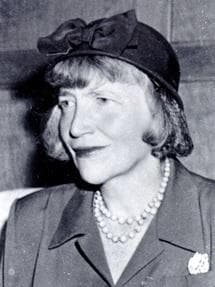
Esther Forbes was an American author known for her historical fiction. Her notable work, "Johnny Tremain," is set during the American Revolution and explores themes of youth and independence. Forbes received the Newbery Medal for this book, highlighting her contributions to children's literature.
Similar books
- Chains
Laurie Halse Anderson
4.1 (47k) average on GoodreadsChildren'sFeatures a young protagonist navigating the complexities of the Revolutionary War in New York City, grappling with personal freedom amidst political turmoil.
- The Witch of Blackbird Pond
Elizabeth George Speare
4.0 (135k) average on GoodreadsChildren'sA historical coming-of-age story set in colonial New England, focusing on a young woman's struggle for identity and belonging.
- Little House on the Prairie
Laura Ingalls Wilder
4.2 (256k) average on GoodreadsChildren'sBoth Johnny Tremain and Little House on the Prairie focus on personal growth amidst historical change, but Wilder's series is more grounded in the everyday struggles of survival, homesteading, and community building in a specific frontier setting. Forbes's work, conversely, leans more heavily into grand political movements and the direct involvement of its protagonist in a pivotal historical event, making the political landscape more central than the domestic one.
- Harry Potter and the Sorcerer's Stone
J.K. Rowling
4.5 (7M) average on GoodreadsFantasyRescued from a miserable life under the stairs, an orphaned boy discovers he's a wizard destined for a magical school, where he uncovers a dangerous secret tied to the dark wizard who murdered his parents.
- The Hobbit, or There and Back Again
J.R.R. Tolkien
4.3 (2.9M) average on GoodreadsFantasyA comfort-loving hobbit named Bilbo Baggins is whisked away by a mischievous wizard and a band of dwarves on an unexpected journey to reclaim stolen treasure from a fearsome dragon, discovering courage and a magical ring along the way.
- Harry Potter and the Goblet of Fire
J.K. Rowling
4.6 (2.6M) average on GoodreadsFantasyA bewildered Harry Potter, underage and thrust into a deadly Triwizard Tournament, must brave dragons, mermaids, and a resurgent dark magic to survive a year that will forever alter the wizarding world.



Enjoyed the summary?
A summary gives you the shape of the book. The book itself has the detail, the examples and the voice.
Find Johnny Tremain on AmazonAs an Amazon Associate, BookBrief earns from qualifying purchases. How we're funded