
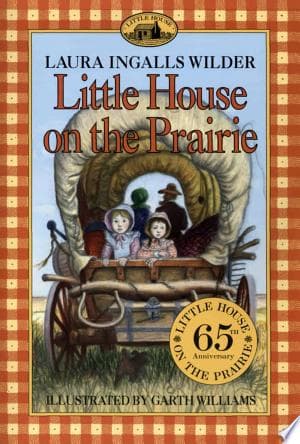
Synopsis
Covers the whole plot, including the ending.
- Difficulty
- Easy
- Pacing
- Moderate
- Mood
- Nostalgic, Adventurous, Simple, Heartwarming
- Read it if
- You enjoy classic pioneer stories, historical fiction for young readers, or tales of family resilience and adventure on the American frontier.
- Skip it if
- You prefer fast-paced plots, complex character arcs, or stories without potentially uncomfortable historical perspectives on indigenous peoples.
Little House on the Prairie Plot Summary
Covers the whole plot, including the ending.
Leaving the Big Woods for the Prairie
The story begins with the Ingalls family—Pa, Ma, Mary, Laura, and baby Carrie—leaving their log cabin in Wisconsin's Big Woods. Pa decides they must move west to the Kansas Territory, where land and game are plentiful. They pack their belongings into their covered wagon, which is their home during the journey. Laura is excited; Mary is more reserved. They say goodbye to their neighbors and set out, their dog Jack with them. The vast, open prairie is a big change from the woods they left.
The Journey West and Crossing the Creek
The journey is long and new for Laura. They travel through different places, meet various people, and overcome problems. Crossing a swollen creek is one challenge. Pa carefully raises the wagon box on blocks to keep water out. The current is strong, and the wagon almost flips, scaring Ma and the girls. They cross safely, but their dog Jack is swept away. Laura is sad, thinking Jack is gone, but he reappears later, to her relief and joy. This event shows the dangers of frontier travel.
Finding a Home on the Kansas Prairie
After weeks of travel, Pa finds a good spot on the Kansas prairie, near a creek and tall grass, offering water and grazing for their animals. It is a beautiful, wild place, seemingly empty of other settlers. They unload the wagon and begin building a new log cabin. Pa fells trees, and Ma and the girls help with smaller tasks, like clearing land and cooking over an open fire. Laura and Mary explore, enjoying the prairie's vastness and wildlife. The covered wagon is their temporary home while they build.
Building the Log Cabin and Meeting Mr. Edwards
Building the cabin is hard work, needing all of Pa's strength and skill. He fells trees, notches logs, and raises the walls. One day, Mr. Edwards, a rough but kind neighbor, arrives and helps Pa with the heavy work of raising the cabin's ridge-pole. Mr. Edwards shares stories and brings some cheer to their isolated lives. His presence shows the start of a small community, even in this vast wilderness. The cabin slowly takes shape, becoming a sturdy, simple dwelling with a fireplace and a door, providing needed shelter.
Settling In and Encounters with Wildlife
Life in the new cabin quickly settles into a routine. Pa hunts deer, turkeys, and even a buffalo, providing food. Ma and the girls manage the house, cooking, cleaning, and making butter and cheese. Laura and Mary explore, watching prairie dogs and large herds of wild horses. They also see a prairie fire, a scary but harmless event since it burns far from their home. The family learns to live with nature, enjoying its beauty while respecting its dangers. These experiences deepen Laura's connection to the wild land.
The Arrival of Other Settlers and the Osage Indians
As time passes, more settlers arrive, building homes down the creek. This brings a sense of community but also hints at increasing encroachment on the land. More importantly, the Ingalls family learns about the Osage Indians, the land's original inhabitants. Pa explains that the land belongs to the Indians, and the settlers are there illegally. Laura watches the Osage from afar, fascinated and a little scared. They see Indian hunting parties, hear drums, and witness a large gathering, making the family aware of the complex frontier situation.
The Indian Council and Growing Tensions
The Osage Indians hold a large council nearby, filling the prairie with their lodges and drumming. This creates a tense atmosphere for the settlers. Pa watches closely, ensuring his family's safety. He tells Ma and the girls that the Indians are discussing whether to let the white settlers stay or drive them out. Laura is curious and frightened by the nearby Indian camp. The settlers, including the Ingalls, are living on land that is, by treaty, Indian territory, making their presence uncertain and showing the conflicts of westward expansion. The family feels this uncertainty.
Ma's Illness and Pa's Determination
Ma gets seriously ill with fever and chills, likely malaria, a common frontier sickness. Pa worries deeply and works hard to care for her, giving her quinine and trying to keep her comfortable. Laura and Mary help as much as they can, but the situation is bad. Pa's resourcefulness and determination are tested as he tries to nurse Ma back to health in their isolated cabin, far from any doctor. This time is a severe test for the family, showing the hardships and dangers of frontier life and the strength of their family bonds.
The Retreat of the Osage and the Coming Winter
After the Indian council's tension, the Osage begin to move west, leaving the area near the Ingalls' cabin. This brings temporary relief to the settlers. With the threat of conflict seemingly gone, the family prepares for winter. They stock food, gather firewood, and secure the cabin against the cold. The vast prairie, once a symbol of freedom, now hints at the isolation and severity of the coming months. The family looks forward to winter's quiet, hoping for peace.
The Government's Decision and Leaving the Prairie
Just as the family settles into their routine, news arrives that the government is removing all white settlers from the Kansas Territory, as it is officially Indian land. Despite Pa's hard work building their home and working the land, they are squatters. The dream of a permanent home on the prairie ends. With heavy hearts, the Ingalls family packs their belongings back into the covered wagon. They say goodbye to their little house on the prairie and the land they loved, again setting out for an unknown future, heading further west to find a place they can truly call their own.
Principal Figures
Laura Ingalls
Protagonist
A spirited and observant young girl, eager for adventure on the frontier.
Laura is the second eldest daughter of Charles and Caroline Ingalls and the primary perspective through which the story is told. She is lively, curious, and often impulsive, contrasting with her older sister Mary's more demure nature. Laura loves exploring the outdoors, observing wildlife, and listening to her Pa's stories and fiddle playing. She finds joy in the simple wonders of the prairie and often questions the world around her, embodying the adventurous spirit of a pioneer child. Her experiences on the prairie shape her understanding of nature, family, and the challenges of frontier life.
Relationships: Charles Ingalls (Pa) (deeply loving and admiring daughter-father bond); Caroline Ingalls (Ma) (obedient and loving daughter-mother bond, though sometimes chafing at rules); Mary Ingalls (close sisterly bond, often playful rivalry); Carrie Ingalls (protective older sister); Jack (devoted pet dog)
Charles Ingalls (Pa)
Supporting
The resourceful and adventurous patriarch, seeking a better life for his family.
Pa is the loving and courageous father of the Ingalls family. He is a skilled frontiersman, hunter, farmer, and carpenter, capable of building a home from scratch and providing for his family in the wilderness. He is driven by a pioneering spirit and a desire for land and independence, always seeking a better future for his daughters. Pa is also a gifted storyteller and musician, using his fiddle to entertain and comfort his family. He instills in his children a love for nature and a strong work ethic, while also grappling with the moral complexities of settling on Indian land.
Relationships: Caroline Ingalls (Ma) (loving and respectful husband-wife partnership); Laura Ingalls (cherished daughter, shares his adventurous spirit); Mary Ingalls (cherished daughter, appreciates her gentle nature); Carrie Ingalls (loving father)
Caroline Ingalls (Ma)
Supporting
The steadfast and nurturing matriarch, providing stability and comfort.
Ma is the calm, practical, and resilient mother of the Ingalls children. She is the anchor of the family, providing a sense of order and refinement amidst the rugged frontier life. Ma is a skilled homemaker, cook, and seamstress, capable of making a comfortable home in any circumstances. She is deeply religious and emphasizes proper behavior and education for her daughters. While she supports Pa's pioneering spirit, she is also keenly aware of the dangers and hardships of their lifestyle, often voicing concerns but ultimately trusting Pa's judgment. Her strength and quiet determination are essential to the family's survival.
Relationships: Charles Ingalls (Pa) (loving and respectful wife-husband partnership); Laura Ingalls (loving mother, tries to guide her spirited daughter); Mary Ingalls (loving mother, appreciates her obedience); Carrie Ingalls (loving mother)
Mary Ingalls
Supporting
The gentle and obedient older sister, a foil to Laura's adventurous spirit.
Mary is the eldest of the Ingalls children, characterized by her blonde hair, blue eyes, and generally calm, obedient demeanor. She is often depicted as more reserved and proper than Laura, preferring indoor activities and always striving to be a 'good girl.' While she shares in the family's adventures, she sometimes expresses fear or discomfort more readily than Laura. Mary represents a more traditional feminine ideal of the era, contrasting with Laura's wilder nature, but she is a loving and supportive sister, sharing a close bond with Laura through their shared experiences.
Relationships: Laura Ingalls (close sisterly bond, sometimes with gentle rivalry); Charles Ingalls (Pa) (loving daughter); Caroline Ingalls (Ma) (obedient and loving daughter)
Carrie Ingalls
Supporting
The baby of the family, often observed and cared for by her older sisters.
Carrie is the youngest Ingalls child, a baby throughout most of the book. Her presence adds to the family dynamic, requiring constant care and protection from her parents and older sisters. Laura and Mary often take turns watching over her, and her simple needs and reactions serve as a reminder of the preciousness of life and the responsibilities of family. She represents the future and the reason for the family's constant search for a safe and prosperous home.
Relationships: Charles Ingalls (Pa) (loving father); Caroline Ingalls (Ma) (loving mother); Laura Ingalls (younger sister, often cared for); Mary Ingalls (younger sister, often cared for)
Jack
Supporting
The loyal bulldog, guardian and companion to the Ingalls family.
Jack is the Ingalls family's faithful bulldog. He is a strong, protective, and loyal companion who travels with them from the Big Woods to the Kansas prairie. Jack is particularly devoted to Laura, and his temporary loss during the creek crossing is a moment of great distress for her. His unwavering presence, whether trotting alongside the wagon or guarding the cabin, symbolizes security and companionship in the often-lonely frontier. He is more than just a pet; he is a part of the family and a silent protector.
Relationships: Laura Ingalls (devoted pet-owner bond); Ingalls Family (loyal family pet and guardian)
Mr. Edwards
Supporting
A rough but kind-hearted neighbor who aids Pa in building their home.
Mr. Edwards is one of the few other white settlers the Ingalls family encounters on the prairie. He is a 'bachelor' and a frontiersman, described as rough around the edges but possessing a good heart. He helps Pa raise the heavy ridge-pole for their cabin, a task too difficult for one man. Mr. Edwards's visit provides a sense of camaraderie and human connection in the isolated wilderness. His character highlights the spirit of mutual aid among pioneers and adds a touch of frontier humor and adventure to the narrative.
Relationships: Charles Ingalls (Pa) (friendly neighbor, cooperative fellow settler); Ingalls Family (friendly acquaintance)
The Osage Indians
Mentioned
The native inhabitants of the Kansas Territory, whose land the Ingalls family settles on.
The Osage Indians are the indigenous people who rightfully inhabit the Kansas Territory, according to treaties. While they are not individual characters with dialogue, their presence is a powerful and constant force in the narrative. They are observed by Laura and the family from a distance, through their camps, hunting parties, and especially their large council. Their presence creates tension and fear among the settlers, but Pa also acknowledges their claim to the land. They represent the moral dilemma of westward expansion and the inevitable conflict between settlers and native peoples.
Relationships: Ingalls Family (source of both fascination and apprehension)
Themes & Insights
The Spirit of Frontier Life and Self-Reliance
The book shows the challenges and rewards of pioneering. The Ingalls family embodies self-reliance, with Pa building their home, hunting food, and Ma managing the household with few resources. Building the log cabin from scratch, Pa's hunting trips for deer and buffalo, and Ma's skill in cooking and making household items all show the ingenuity and hard work needed to survive on the prairie. The family's ability to adapt and provide for themselves, far from towns, is central to their identity and survival.
“Here was a new house, all their own, in a new land. Pa was building it for them, with his own hands.”
Family Bonds and Resilience
The Ingalls family's strong bond is central to the story. Their love, support, and shared goals help them face great hardships, from dangerous river crossings to Ma's illness and forced relocation. The family works together, comforts each other, and finds joy in simple moments, like Pa's fiddle playing or Laura and Mary's games. Ma's quiet strength, Pa's protective nature, and the sisters' companionship help them survive emotionally and physically in the isolated, often dangerous prairie environment. Their resilience shows their deep family ties.
“We must all do our share, and that's the way we'll get along.”
Humanity's Relationship with Nature
The book explores the complex relationship between humans and nature on the prairie. Nature is beautiful and abundant, offering vast plains, much wildlife, and stunning sunsets. It is also a source of danger and hardship, through swollen creeks, possible prairie fires, and harsh weather. The family learns to live with nature, respecting its power while using its resources. Laura's deep connection to the land, her observations of animals, and her awe at the landscape show a deep appreciation for nature, even as they try to settle a part of it.
“The vast, empty land stretched away to the sky, and there was no house anywhere, only the grass and the sky.”
The Morality of Westward Expansion and Indigenous Rights
A main theme is the ethical problem of white settlers moving onto Native American land. Pa directly states that the land belongs to the Osage Indians, and the family knows they are 'squatters.' The presence of the Osage and their eventual removal by the government show the injustice of westward expansion. While the book is told from the settler's view, it acknowledges the displacement of indigenous peoples, adding moral complexity to the family's dream of a new home and questioning the simple idea of 'empty' land.
“This is Indian country, isn't it? What are we doing here?" "We're not doing anything, Laura. We're just living here. The government will take care of it.”
Plot Devices & Literary Techniques
First-Person Limited Perspective (Laura)
Narrative told through the eyes and experiences of young Laura Ingalls.
The entire story is filtered through Laura's observations, thoughts, and feelings. This allows readers to experience the prairie frontier with the fresh wonder, curiosity, and occasional fears of a child. It limits the reader's knowledge to what Laura perceives, making events like the Indian council or the government's decision more mysterious and impactful as they unfold through her understanding. This perspective also emphasizes the innocence and adventure of childhood amidst the harsh realities of pioneer life.
Journey as a Metaphor
The physical journey westward symbolizes life's challenges and the pursuit of dreams.
The Ingalls family's physical journey in their covered wagon from Wisconsin to Kansas, and then their subsequent relocation, serves as a powerful metaphor for the broader journey of life, full of uncertainty, hardship, and the constant search for a better future. Each stop and departure represents a new phase, a new challenge, and a renewed hope for a permanent home. The journey isn't just about covering distance; it's about personal growth, resilience, and the evolving dream of the American frontier.
The Log Cabin
A symbol of home, security, and human endeavor against the wilderness.
The log cabin, which Pa builds with his own hands, is a central symbol in the book. It represents the family's attempt to establish roots, create security, and impose order upon the vast, untamed prairie. Its construction signifies their hard work and self-reliance, while its eventual abandonment underscores the impermanence of their settlement and the larger forces at play (government treaties, indigenous rights). It is both a physical shelter and a symbol of their hopes and dreams for a permanent home.
The Fiddle
A symbol of comfort, culture, and resilience in the face of hardship.
Pa's fiddle is a recurring motif and a potent symbol throughout the book. In the isolation of the prairie, the fiddle provides entertainment, comfort, and a connection to civilization and culture. Its music lifts spirits, calms fears, and strengthens family bonds during difficult times. When Pa plays, it brings joy and a sense of normalcy, reminding the family of beauty and hope amidst the wilderness. It represents the enduring human spirit and the importance of art and music in maintaining morale.
Little House on the Prairie Quotes
“There's no great loss without some small gain.”
“Home is the nicest word there is.”
“The only thing that is never wasted is education.”
“We'd never get anything fixed to suit us if we waited for things to suit us before we started.”
“A long time ago, when all the grandfathers and grandmothers of today were little boys and little girls or very small babies, or perhaps not even born, Pa and Ma and Mary and Laura and Baby Carrie left their little house in the Big Woods of Wisconsin.”
“The sky was full of light, and the prairie was like a great bowl of sunshine.”
“It is best to be honest and truthful.”
“The wind sang a low, rustling song in the grass.”
“We are all here, safe and sound.”
“Laura felt a warmth inside her. It was very small, but it was strong. It was steady, like a tiny light in the dark, and it burned very low but no winds could make it flicker because it would not give up.”
“The land was level, and there were no trees. The sky was big, and there was so much wind.”
“Do the best you can, and don't worry about the rest.”
“They had nothing but the courage in their hearts and the strength in their hands.”
“The stars hung low and bright over the prairie.”
Quiz
10 questions on the plot and the characters. Each answer comes with a short explanation.
Question 1
Why does the Ingalls family leave their home in the Big Woods of Wisconsin?
- Because their house burned down in a fire
- Because they want to find better hunting grounds
- Because they are seeking new land and opportunities in the Kansas Territory
- Because they were forced to leave by the government
Show answer
C. Because they are seeking new land and opportunities in the Kansas Territory The Ingalls family voluntarily leaves Wisconsin to seek new opportunities and land in the Kansas Territory, driven by Pa's desire for a better life on the frontier, as described early in the book.
Question 2
What mode of transportation do the Ingalls use to travel to Kansas?
- A train
- Horses without a wagon
- A covered wagon
- A boat down the river
Show answer
C. A covered wagon The family travels in a covered wagon, which was common for pioneers moving west, allowing them to carry their belongings and providing shelter during the journey.
Question 3
What dangerous conflict do the Ingalls face after settling in Kansas?
- A conflict with outlaws trying to steal their crops
- A conflict with Native Americans over land rights
- A conflict with a neighboring family over water access
- A conflict with wild animals attacking their livestock
Show answer
B. A conflict with Native Americans over land rights The Ingalls become caught in tensions between settlers and Native Americans, as they have built their house on land that is part of Native American territory, leading to a tense and dangerous situation.
Question 4
What is the name of the family's dog that accompanies them on their journey?
- Jack
- Spot
- Rover
- Buddy
Show answer
A. Jack Jack is the family's loyal bulldog who travels with them and plays a key role in protecting and comforting the family throughout their adventures.
Question 5
How does the family primarily obtain food while settling in Kansas?
- By trading with nearby towns
- By hunting wild game and gathering natural resources
- By receiving supplies from the government
- By growing all their food in a large garden
Show answer
B. By hunting wild game and gathering natural resources The family relies on hunting (e.g., wild ducks and turkeys) and gathering (e.g., grass for cows) as they establish their homestead, reflecting the self-sufficient lifestyle of pioneers.
Question 6
What theme is prominently explored through the family's interactions with Native Americans in the book?
- The importance of technological advancement
- The clash of cultures and misunderstandings between settlers and Native Americans
- The benefits of urbanization over rural life
- The role of education in frontier communities
Show answer
B. The clash of cultures and misunderstandings between settlers and Native Americans The book depicts the cultural tensions and misunderstandings between the Ingalls family and Native Americans, highlighting the complexities of westward expansion and frontier life.
Question 7
What does Pa use to build their house on the prairie?
- Bricks brought from Wisconsin
- Logs cut from nearby trees
- Pre-fabricated materials ordered from a catalog
- Mud and straw for adobe construction
Show answer
B. Logs cut from nearby trees Pa builds a log cabin using trees from the area, a common method for pioneers to construct sturdy homes quickly with available resources.
Question 8
Why does the family eventually leave their home on the prairie?
- Because their crops fail due to drought
- Because the government forces them off the land as it is Indian Territory
- Because Ma becomes ill and needs medical care in a city
- Because they want to join relatives in Oregon
Show answer
B. Because the government forces them off the land as it is Indian Territory The family learns that their homestead is on land designated as Indian Territory by the government, and they are required to leave to avoid legal conflicts, leading to their departure.
Question 9
How does Laura's perspective as a child narrator influence the portrayal of events in the book?
- It provides a highly political analysis of frontier policies
- It offers a simplified, adventure-focused view that downplays hardships
- It presents events through innocent eyes, blending wonder with the realities of pioneer life
- It criticizes her parents' decisions throughout the journey
Show answer
C. It presents events through innocent eyes, blending wonder with the realities of pioneer life Laura's childhood viewpoint allows readers to experience the journey with a sense of curiosity and excitement, while still conveying the challenges and dangers the family faces, making the story accessible and engaging.
Question 10
What role does the natural environment play in the family's daily life on the prairie?
- It is mostly irrelevant as they rely on manufactured goods
- It provides resources for survival but also poses constant threats and challenges
- It is primarily a backdrop for leisure activities like picnics
- It is controlled through advanced farming techniques
Show answer
B. It provides resources for survival but also poses constant threats and challenges The prairie environment is central to the story, supplying food, materials, and beauty, but also presenting dangers such as wild animals, storms, and conflicts, highlighting the family's dependence on and resilience in nature.
Little House on the Prairie FAQ
What is 'Little House on the Prairie' about?
The book follows the Ingalls family—Pa, Ma, Mary, Laura, and baby Carrie—as they leave Wisconsin in a covered wagon to settle in the Kansas Territory. They build a house, plant crops, hunt for food, and face challenges like prairie fires and conflicts with Native Americans, ultimately leaving when the government declares they must vacate the land.
Why should I read 'Little House on the Prairie'?
It offers a vivid, firsthand perspective on 19th-century pioneer life through the eyes of a child, blending adventure, historical detail, and family warmth. The story highlights resilience, self-sufficiency, and the complexities of westward expansion, making it both educational and emotionally engaging.
What is the background/setting of 'Little House on the Prairie'?
Set in the early 1870s, the story takes place primarily in the Kansas Territory, where the Ingalls family homesteads on the open prairie. The setting features vast grasslands, unpredictable weather, and interactions with Osage Native Americans, reflecting the challenges and isolation of frontier settlement.
What are the most memorable quotes?
Notable quotes include Pa's 'There's no great loss without some small gain,' reflecting pioneer optimism, and Laura's observation 'The prairie was beautiful, but it was a lonely beauty,' capturing the mix of awe and isolation. Ma's 'All's well that ends well' often closes tense scenes, emphasizing family resilience.
What writing style does the author use?
Wilder writes in a simple, descriptive first-person narrative from Laura's perspective, using clear language suited for children but rich with sensory details—like the sounds of wolves or the smell of prairie grass. The tone is nostalgic yet factual, blending personal memoir with historical fiction.
What minor details add significant meaning?
Small details like Ma carefully unpacking her china shepherdess symbolize clinging to civilization amid wilderness, while Pa's fiddle-playing represents comfort and cultural continuity. The family's daily chores, such as churning butter or gathering fuel, underscore their self-reliance and connection to the land.
What are some subtle foreshadowing moments?
Early mentions of Native American trails and abandoned camps hint at later tensions, and Pa's repeated assurances that 'the government will make it right' foreshadow their forced departure. Laura's fear during the prairie fire scene subtly prefigures the family's vulnerability to external threats.
What unexpected character connections exist?
Mr. Edwards, a lonely neighbor, forms a bond with the Ingalls by helping build their house and later delivering Christmas gifts, showing how frontier communities relied on mutual aid. The Osage leader who spares the family despite conflicts reveals a complex, respectful dynamic often overlooked in pioneer narratives.
What are unspoken character motivations?
Pa's desire for independence and land drives the move west, but his restlessness hints at a deeper need for adventure beyond providing for his family. Ma's quiet disapproval of the journey stems from her preference for stability and safety, though she suppresses it to support Pa's dreams.
What psychological complexities do characters exhibit?
Laura grapples with curiosity and fear, especially toward Native Americans, mirroring the era's conflicted attitudes. Pa balances optimism with practicality, as seen when he prepares to defend the house but also seeks peaceful resolutions, showing the stress of protector and provider roles.
What are the major emotional turning points?
Key moments include the family's joyful Christmas with Mr. Edwards' gifts, the terror of the prairie fire and wolf packs, and the bittersweet departure from their home after building it from scratch. Laura's mixed feelings upon leaving—relief and loss—mark her growing awareness of life's uncertainties.
How do relationship dynamics evolve?
Laura and Mary's sibling rivalry softens as they share hardships, while Pa and Ma's partnership deepens through shared labor and danger. The family's bond strengthens with each challenge, such as nursing through malaria, illustrating how frontier life tested and reinforced their unity.
Which parts remain ambiguous or open-ended?
The fate of the Osage people after the family leaves is unresolved, leaving questions about displacement and justice. Laura's final reflections on the move—whether it was a failure or valuable experience—are nuanced, inviting readers to ponder the costs and gains of pioneer life.
What are controversial scenes or decisions?
Pa's decision to settle on land that may belong to Native Americans sparks debate about manifest destiny versus indigenous rights. The portrayal of Native Americans, while reflective of its time, is often criticized for stereotypes, though scenes like the Osage leader's mercy add complexity.
'Little House on the Prairie' ending explained: how it ends & what it means
The family leaves Kansas after soldiers order them off the land, as it's legally reserved for Native Americans. The ending underscores the unpredictability of frontier life and the impact of government policies on settlers, with the Ingalls reflecting on their hard work and the impermanence of home.
About the author
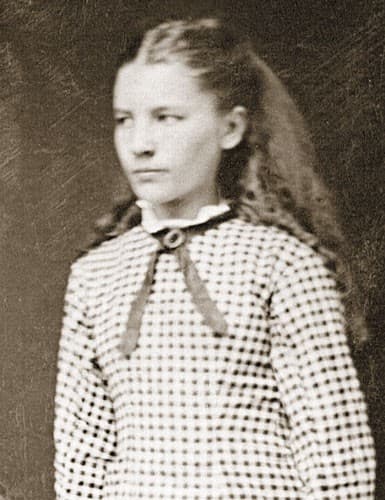
Laura Elizabeth Ingalls Wilder was an American writer. The Little House on the Prairie series of children's books, published between 1932 and 1943, were based on her childhood in a settler and pioneer family.
Similar books
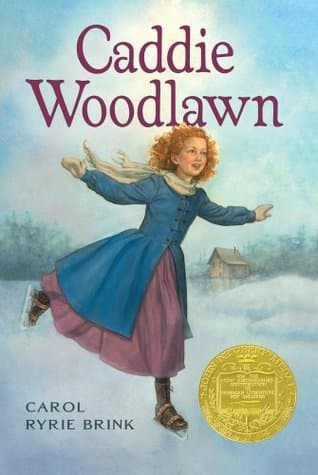
- Caddie Woodlawn
Carol Ryrie Brink
4.0 (48k) average on GoodreadsChildren'sExplores the adventures of a spirited girl growing up on the Wisconsin frontier.
- Island of the Blue Dolphins
Scott O'Dell
3.8 (292k) average on GoodreadsChildren'sWhile set in a different context (survival on an island), O'Dell's book offers a powerful counterpoint by centering an Indigenous protagonist's experience of resilience and survival. It provides a more complex and respectful portrayal of human-nature relationships and indigenous knowledge, highlighting the Eurocentric bias and lack of Indigenous voice in Little House on the Prairie.
- Harry Potter and the Sorcerer's Stone
J.K. Rowling
4.5 (7M) average on GoodreadsFantasyRescued from a miserable life under the stairs, an orphaned boy discovers he's a wizard destined for a magical school, where he uncovers a dangerous secret tied to the dark wizard who murdered his parents.
- The Hobbit, or There and Back Again
J.R.R. Tolkien
4.3 (2.9M) average on GoodreadsFantasyA comfort-loving hobbit named Bilbo Baggins is whisked away by a mischievous wizard and a band of dwarves on an unexpected journey to reclaim stolen treasure from a fearsome dragon, discovering courage and a magical ring along the way.
- Harry Potter and the Goblet of Fire
J.K. Rowling
4.6 (2.6M) average on GoodreadsFantasyA bewildered Harry Potter, underage and thrust into a deadly Triwizard Tournament, must brave dragons, mermaids, and a resurgent dark magic to survive a year that will forever alter the wizarding world.
- Harry Potter and the Order of the Phoenix
J.K. Rowling
4.5 (2.5M) average on GoodreadsFantasyIn a year of oppressive secrets and the threat of Voldemort, Harry Potter and Dumbledore's Army secretly train for war, shown through Jim Kay and Neil Packer's dark illustrations.





Enjoyed the summary?
A summary gives you the shape of the book. The book itself has the detail, the examples and the voice.
Find Little House on the Prairie on AmazonAs an Amazon Associate, BookBrief earns from qualifying purchases. How we're funded