
Core Idea
- Difficulty
- Medium
- Read it if
- You are navigating the aftermath of a difficult divorce or significant life transition, seeking spiritual insight into overcoming personal adversity, or looking for a raw, honest account of finding strength amidst profound sorrow and betrayal.
- Skip it if
- You prefer lighthearted self-help, are looking for a prescriptive guide with easy solutions, or are sensitive to discussions involving spiritual warfare and intense personal struggle.
Key Takeaways from Joy
Unraveling the Marital Chains
Victoria's struggle for liberation from a loveless and oppressive marriage.
The main problem in "Joy" is Victoria's deep feeling of being trapped in a marriage without love or respect. This is not just about not getting along; it is a stifling situation where her husband, Harlan, actively denies her independence and happiness. The book gives Victoria a clear path to divorce, highlighting the common challenges women face when trying to leave controlling relationships. Her inner struggle is clear, as she weighs social pressures and personal fears against her natural desire for freedom and real connection. This takeaway emphasizes the mental and emotional cost of staying in a harmful relationship, setting the stage for Victoria's journey toward self-empowerment and breaking free from what feels like a generational curse.
“Will Victoria succumb to the pain of her sorrow and stay in a loveless marriage, or has she finally found the confidence and courage to 'break the line'?”
In the book: Victoria is 'still trapped in a loveless marriage' and 'Harlan refuses to let her go' despite her having 'ammunition that she needs for a divorce.'
Try this: Reflect on relationships that might be holding you back. Identify the 'ammunition' you might have for change, whether it's evidence of disrespect, a clear path to independence, or simply the realization of your own worth. Develop a strategy to address or exit such situations, prioritizing your mental and emotional well-being.
Related ideas: marital-entrapment, autonomy, liberation
The Double-Edged Sword of Family
While a new addition brings joy, existing familial bonds are tested by darkness.
Family, usually a source of strength, becomes a mix of comfort and sadness for Victoria in "Joy." A new family member brings much-needed hope and happiness, giving a temporary break from her marriage troubles. However, this joy is set against the alarming decline into darkness experienced by two of her other children. This shows the complex web of family relationships, where one source of happiness can exist alongside deep pain and worry. It suggests that personal struggles, especially within a marriage, can spread, affecting the emotional and spiritual well-being of children, creating new challenges for Victoria.
“Victoria finds comfort and joy in the special new addition to her family; however, she pays the price in the growing darkness of two of her children.”
In the book: Victoria 'finds comfort and joy in the special new addition to her family; however, she pays the price in the growing darkness of two of her children.'
Try this: Recognize that family dynamics are rarely monolithic. Appreciate sources of joy and support while actively addressing emerging challenges within your family unit. Be vigilant for signs of distress in loved ones, understanding that external pressures can manifest internally, particularly in children.
Related ideas: family-dynamics, parental-burden, intergenerational-impact
Spiritual Battle for the Soul
Victoria's enduring fight to strengthen her faith and break Betts' evil hold.
Beyond the obvious struggles of marriage and family, "Joy" explores a deeper, spiritual conflict. Victoria is not just fighting a difficult husband; she is actively fighting an outside, evil force shown as 'Betts.' This element adds a significant spiritual side to her journey, framing her search for personal freedom as part of a larger battle for her soul. Her faith in God is shown as her main weapon and source of hope in this spiritual war. This takeaway highlights the idea that some battles go beyond the physical world, needing spiritual strength and a deep connection to one's beliefs to overcome ingrained evil or negative influences.
“Victoria's enduring hope in her search to strengthen her faith in God and finally break Betts' evil hold on her soul.”
In the book: The book explicitly states Victoria's 'enduring hope in her search to strengthen her faith in God and finally break Betts' evil hold on her soul.'
Try this: Identify the 'Betts' in your own life – whether external negative influences or internal destructive patterns. Cultivate a strong spiritual or ethical foundation to draw strength from. Engage in practices that reinforce your beliefs and help you resist pressures that compromise your integrity or well-being.
Related ideas: spiritual-warfare, faith-resilience, inner-strength
The Echoes of Past Loves and New Evils
Confronting old wounds and fresh threats simultaneously complicates Victoria's path.
Victoria's journey is not a straight line but a complex mix of past and present problems. The discovery of Harlan's affairs directly attacks her marriage stability, yet it is made worse by the appearance of a 'new evil'—suggesting a growing threat that goes beyond personal betrayal. At the same time, the return of a 'lost love' adds an emotional complication, forcing Victoria to face unresolved feelings and possible different paths. This coming together of inner and outer pressures, past and present, demands great strength. It shows how life often throws many problems at once, making the path to freedom and joy even harder.
“When confronted by Harlan's affairs, a new evil, and a lost love, Victoria looks to her family for strength and support but finds the family that she's always leaned on shaken by heartbreaking losses.”
In the book: Victoria is 'confronted by Harlan's affairs, a new evil, and a lost love.'
Try this: Acknowledge that life's challenges often arrive in clusters. Instead of being overwhelmed, try to compartmentalize and address each issue systematically, or seek support to manage the emotional load. Recognize that past relationships can resurface and require processing, even amidst new crises.
Related ideas: emotional-complexity, past-trauma, concurrent-challenges
Shaken Foundations of Support
The very family Victoria depends on for strength faces its own devastating losses.
A key turning point in Victoria's story is the weakening of her main support system. Usually, family is seen as a strong foundation during tough times. However, just when Victoria needs them most, her family experiences 'heartbreaking losses,' making them unable to give the steady support she expects. This twist increases Victoria's isolation and forces her to rethink where she gets her strength. It is a moving reminder that even our strongest supports can be vulnerable, and real strength often means finding inner courage when outside help crumbles. It speaks to the universal feeling of being truly alone, even among loved ones, when they are dealing with their own pain.
“Victoria looks to her family for strength and support but finds the family that she's always leaned on shaken by heartbreaking losses.”
In the book: Victoria 'looks to her family for strength and support but finds the family that she's always leaned on shaken by heartbreaking losses.'
Try this: Build diverse support networks beyond a single family unit. Develop self-reliance and coping mechanisms so you're not solely dependent on others during crises. Offer support to your support system when they are struggling, recognizing that help flows both ways.
Related ideas: support-systems, isolation, resilience-testing
The Quest for Self-Confidence and Courage
Victoria's ultimate journey towards finding her inner strength to 'break the line'.
The main question in "Joy" is whether Victoria can get past her pain and find the inner resources to truly change her life's direction. 'Breaking the line' means not just leaving her marriage, but breaking free from a cycle of unhappiness, possibly even family patterns of giving in or difficult relationships. This is not just about opportunity (the 'ammunition for divorce') but about the inner change needed to take it. It stresses that real change requires deep confidence in one's worth and the courage to face the unknown, to go against expectations, and to create a new path. This inner shift is the highest point of her journey.
“Will Victoria succumb to the pain of her sorrow and stay in a loveless marriage, or has she finally found the confidence and courage to 'break the line'?”
In the book: The concluding question of the summary directly asks if Victoria has 'finally found the confidence and courage to 'break the line'.'
Try this: Reflect on areas where you feel 'trapped' or bound by an invisible 'line.' Identify what confidence and courage you need to develop to break free. Practice small acts of self-assertion and decision-making to build this inner strength gradually, preparing for bigger leaps.
Related ideas: self-empowerment, courage, personal-transformation
The Cost of Unresolved Conflict
Harlan's refusal to release Victoria perpetuates suffering for all involved.
Harlan's firm refusal to give Victoria a divorce, despite her clear wish and 'ammunition,' highlights the destructive nature of control and unresolved conflict. His actions are not just about keeping a marriage; they represent a power dynamic where one person controls another's fate, prolonging suffering for both sides and their children. This resistance to separation, even in an unloving union, points to deeper issues of ego, control, and perhaps a fear of losing face or property. It shows that sometimes, the biggest obstacles to freedom are not outside situations but the stubbornness of those who benefit from things staying the same, even if that situation is terrible for everyone.
“Harlan refuses to let her go.”
In the book: Despite Victoria having 'ammunition that she needs for a divorce,' 'Harlan refuses to let her go.'
Try this: Recognize when someone's refusal to compromise or release is perpetuating harm. Understand that you cannot control others' actions, but you can control your response and your own path towards liberation. Seek external mediation or legal counsel when personal attempts at resolution are blocked by stubborn resistance.
Related ideas: toxic-relationships, control-dynamics, conflict-resolution
Finding Joy Amidst Sorrow
The capacity for happiness to emerge even in the darkest of personal circumstances.
Despite the great pain of an unloving marriage, the growing problems with her children, and the sad losses within her family, Victoria finds moments of real 'comfort and joy.' This specific detail, the 'special new addition to her family,' is important. It shows the human ability to find light and hope even when surrounded by deep sadness and hardship. This is not about ignoring the pain, but about the resilience of the human spirit to embrace small bits of happiness and new beginnings. It suggests that joy can be a choice, or a gift, that helps one through the hardest times, preventing complete despair and fueling the desire to keep fighting for a better future.
“Victoria finds comfort and joy in the special new addition to her family.”
In the book: Victoria 'finds comfort and joy in the special new addition to her family' even while facing numerous other hardships.
Try this: Actively seek out and cherish small moments of joy, gratitude, or connection, especially during difficult times. Allow yourself to experience happiness without guilt, understanding it can be a vital source of strength. Cultivate new hobbies, relationships, or experiences that can bring fresh perspectives and comfort.
Related ideas: resilience, optimism, coping-mechanisms
Joy Quotes
“The greatest joy is not found in the absence of sorrow, but in the courage to embrace both.”
“To truly live is to feel everything, the sting of loss and the warmth of belonging.”
“Hope is not a fragile thing; it is the stubborn pulse beneath the weight of despair.”
“We build our own heavens and hells with the choices we make, brick by mindful brick.”
“The quiet whisper of gratitude can drown out the loudest roar of complaint.”
“Love is not a static state, but a river, constantly flowing, sometimes turbulent, always moving.”
“Our deepest scars are often the maps to our greatest strengths.”
“Authenticity is the soil in which true joy takes root and flourishes.”
“The universe doesn't owe us happiness, but it offers us endless opportunities to find it.”
“Even in the darkest night, a single star can remind us of the vastness of light.”
“To forgive is not to forget, but to release the burden of remembrance.”
“The truest wealth lies not in what we accumulate, but in what we share.”
“Every sunrise is an invitation to begin anew, to rewrite the narrative of yesterday.”
“Silence is not an empty space, but a canvas for the soul to paint its truths.”
Quiz
10 questions on the main ideas. Each answer comes with a short explanation.
Question 1
What is Victoria primarily searching for in 'Joy'?
- A new romantic relationship
- Financial independence
- To strengthen her faith in God and break Betts' hold
- To reconcile with Harlan
Show answer
C. To strengthen her faith in God and break Betts' hold The book description explicitly states Victoria's enduring hope is in her search to strengthen her faith in God and finally break Betts' evil hold on her soul.
Question 2
What significant event provides Victoria with the 'ammunition' for a divorce?
- Harlan's decision to leave her
- A new job opportunity out of town
- Harlan's affairs
- Support from her children
Show answer
C. Harlan's affairs The summary mentions that Victoria is confronted by Harlan's affairs, which provides her with the ammunition she needs for a divorce.
Question 3
Despite finding comfort in a new family addition, what negative consequence does Victoria face?
- Increased financial strain
- Growing darkness in two of her children
- Betts' hold becoming stronger
- Loss of her home
Show answer
B. Growing darkness in two of her children The text states, 'Victoria finds comfort and joy in the special new addition to her family; however, she pays the price in the growing darkness of two of her children.'
Question 4
What is Harlan's reaction when Victoria gets the 'ammunition' for a divorce?
- He agrees to let her go peacefully
- He refuses to let her go
- He seeks counseling to save the marriage
- He confesses his wrongdoings
Show answer
B. He refuses to let her go The summary explicitly states, 'Victoria is presented with the ammunition that she needs for a divorce, but Harlan refuses to let her go.'
Question 5
Beyond Harlan's affairs, what other significant challenges does Victoria face?
- A new career opportunity and a family relocation
- A new evil and a lost love
- Financial bankruptcy and health issues
- Problems with her in-laws and a legal battle
Show answer
B. A new evil and a lost love The text mentions, 'When confronted by Harlan's affairs, a new evil, and a lost love, Victoria looks to her family for strength and support.'
Question 6
Who is 'Betts' in relation to Victoria's journey?
- Victoria's best friend
- The antagonist holding an 'evil hold' on Victoria's soul
- Victoria's estranged mother
- A spiritual guide assisting Victoria
Show answer
B. The antagonist holding an 'evil hold' on Victoria's soul The summary clearly states Victoria's goal is to 'finally break Betts' evil hold on her soul,' indicating Betts is an antagonistic force.
Question 7
What is the state of Victoria's primary support system, her family, when she looks to them for strength?
- They rally together to offer unwavering support
- They are shaken by heartbreaking losses
- They advise her to stay in her marriage
- They encourage her to move away and start fresh
Show answer
B. They are shaken by heartbreaking losses The text states, 'Victoria looks to her family for strength and support but finds the family that she's always leaned on shaken by heartbreaking losses.'
Question 8
What is the central dilemma Victoria faces at the end of the summary?
- Whether to pursue a new love interest or reconcile with Harlan
- Whether to succumb to sorrow and stay in a loveless marriage, or find confidence to 'break the line'
- Whether to move to a new city or stay for her children
- Whether to confront Betts directly or ignore her influence
Show answer
B. Whether to succumb to sorrow and stay in a loveless marriage, or find confidence to 'break the line' The concluding sentence poses this exact question: 'Will Victoria succumb to the pain of her sorrow and stay in a loveless marriage, or has she finally found the confidence and courage to "break the line"?'
Question 9
The phrase 'break the line' most likely refers to Victoria breaking free from what?
- A literal queue or waiting line
- The pattern of sorrow, her loveless marriage, and Betts' evil hold
- A family curse passed down through generations
- Her current professional career path
Show answer
B. The pattern of sorrow, her loveless marriage, and Betts' evil hold Given the context of her struggles with a loveless marriage, sorrow, and Betts' hold, 'breaking the line' symbolizes breaking free from these oppressive circumstances and patterns.
Question 10
How does 'Joy' fit into the larger 'Victoria's Journey' series?
- It is the first book, introducing Victoria's struggles.
- It is the final book, concluding all Victoria's storylines.
- It is the third installment, continuing Victoria's search for faith and freedom.
- It is a standalone prequel, focusing on Victoria's youth.
Show answer
C. It is the third installment, continuing Victoria's search for faith and freedom. The summary explicitly states: 'Joy, the third installment of the popular Victoria's Journey series, reveals Victoria's enduring hope in her search to strengthen her faith in God and finally break Betts' evil hold on her soul.'
Joy FAQ
What is 'Joy' about?
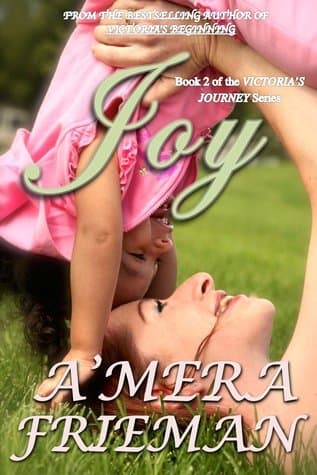
'Joy' is the third book in the Victoria's Journey series, continuing Victoria's struggle to strengthen her faith and break free from Betts' evil influence. It explores her journey through a loveless marriage, family challenges, and the search for personal strength amidst heartbreak.
Does Victoria finally get a divorce in 'Joy'?
Victoria is presented with grounds for divorce, but Harlan refuses to let her go, complicating her path to freedom. The book delves into the ongoing conflict surrounding her marriage and her efforts to 'break the line'.
Who is Betts and what is her hold on Victoria?
Betts represents an evil influence that has plagued Victoria throughout the series, impacting her soul and choices. 'Joy' continues Victoria's fight to overcome this spiritual and emotional bondage.
How does 'Joy' differ from previous books in the Victoria's Journey series?
'Joy' deepens the emotional stakes, presenting Victoria with new evils and heartbreaking family losses while she simultaneously finds comfort in a new family addition. It focuses more intensely on her internal struggle for faith and courage to leave her marriage.
What role does faith play in Victoria's journey in 'Joy'?
Faith is a central theme, as Victoria actively seeks to strengthen her faith in God to navigate her challenges, including her loveless marriage and the growing darkness affecting her children.
Are there new characters introduced in 'Joy'?
The book mentions a 'special new addition to her family' that brings Victoria comfort and joy, indicating the introduction of at least one new significant character or element in her life.
What does 'break the line' mean in the context of the book?
'Break the line' refers to Victoria finding the confidence and courage to finally end her loveless marriage and escape the cycle of pain and sorrow she has endured, signifying a major turning point in her life.
Does Victoria's family support her through her struggles?
Victoria looks to her family for strength and support, but she finds them shaken by heartbreaking losses, suggesting that their ability to provide unwavering support may be compromised.
Similar books
- The Diary of a Young Girl
Anne Frank
4.2 (2.7M) average on GoodreadsBiographyDuring the Nazi occupation, a teenage girl's diary, written from a secret annex, shares observations on humanity, hope, and the wait for freedom.
- Twisted 1. Twisted love
Ana Huang
3.7 (1.7M) average on GoodreadsA quiet billionaire with a difficult past finds his guarded heart opening to the woman he must protect, but their growing passion uncovers dangerous secrets and a shared, traumatic history.
- Eat, Pray, Love
Elizabeth Gilbert
3.6 (1.5M) average on GoodreadsLifestyleA heartbroken writer leaves her conventional life for a year-long global search for pleasure in Italy, spiritual devotion in India, and unexpected love and balance in Bali.
- Night
Elie Wiesel
4.3 (970k) average on GoodreadsBiographyIn the darkness of Auschwitz and Buchenwald, a teenage Elie Wiesel faces the extermination of his family, the loss of his faith, and the lasting scars of humanity's deepest cruelty.
- Steve Jobs
Walter Isaacson
4.1 (957k) average on GoodreadsBusinessSteve Jobs was a visionary who fused creativity and technology to revolutionize six industries and shape our digital world.
- The Glass Castle
Jeannette Walls
4.3 (903k) average on GoodreadsBiographyJeannette Walls's memoir describes her unusual childhood with brilliant, free-spirited parents whose poverty-stricken life shaped her independence and love despite family problems.






Enjoyed the summary?
A summary gives you the shape of the book. The book itself has the detail, the examples and the voice.
Find Joy on AmazonAs an Amazon Associate, BookBrief earns from qualifying purchases. How we're funded