

Core Idea
- Difficulty
- Medium
- Read it if
- You are interested in the psychological impact of political ambition, the ethics of assassination, the power of persuasive language, or the fragility of democratic institutions when confronted with charismatic leaders and mob mentality.
- Skip it if
- You prefer modern historical analyses over dramatic interpretations of historical events, or if you dislike classic Elizabethan tragic plays with their specific linguistic style and focus on moral dilemmas.
Key Takeaways from Julius Caesar
The Peril of Absolute Power
Unchecked ambition leads to inevitable downfall and societal chaos.
Shakespeare shows how power in one person, even someone capable like Caesar, threatens republican ideals. The play is not just about Caesar's death; it is about the psychological and political events before and after, driven by the fear that one man's uncontrolled ambition will enslave a free people. The conspirators, especially Cassius, voice a deep worry that Caesar's power lessens what it means to be a Roman citizen, turning proud individuals into mere subjects. This fear, whether fully justified or partly from envy, highlights a timeless warning about the corrupting nature of absolute power and the desperate actions people might take to prevent it.
“Why, man, he doth bestride the narrow world / Like a Colossus, and we petty men / Walk under his huge legs and peep about / To find ourselves dishonorable graves.”
In the book: Cassius's lengthy soliloquies and dialogues with Brutus, where he consistently paints Caesar as an overweening tyrant-in-waiting, reminding Brutus of their shared heritage of freedom.
Try this: Leaders should cultivate humility and actively seek counsel and accountability, establishing robust checks and balances to prevent the accumulation of power that could threaten democratic institutions. Citizens must remain vigilant against the rise of charismatic figures who seek to dismantle established norms.
Related ideas: tyranny, republicanism, political-ambition
The Burden of Moral Dilemma
Even noble intentions can lead to tragic and unforeseen consequences.
Brutus is a tragic hero caught between personal loyalty and civic duty. His choice to join the conspiracy comes not from malice or envy, but from a deep, though perhaps mistaken, belief that Caesar's death is necessary to save the Roman Republic. This internal conflict, his 'honorable' reason, is central to the play's tragedy. Shakespeare makes us face the uncomfortable truth that actions taken with good intentions can still lead to chaos and civil war. Brutus's moral purity, ironically, causes his downfall, as his idealism blinds him to the practical realities of political power and the unpredictable nature of the Roman people. His commitment to an abstract idea of freedom ultimately destroys the peace he wanted to protect.
“Not that I loved Caesar less, but that I loved Rome more.”
In the book: Brutus's soliloquies grappling with the decision to kill Caesar, his insistence on a 'noble' assassination without excessive cruelty, and his later lament over the civil war.
Try this: Before making significant decisions, especially those with far-reaching societal impact, thoroughly consider not just the immediate desired outcome but also the potential unintended consequences and the emotional and political fallout. Prioritize practical outcomes alongside moral purity.
Related ideas: tragic-hero, ethics, consequences
The Power of Rhetoric and Persuasion
Words can sway the masses, ignite revolutions, and rewrite history.
Antony's funeral speech is an example of demagoguery and the manipulative power of words. While Brutus appeals to reason and abstract ideas, Antony skillfully plays on the crowd's emotions. He uses irony, questions, and carefully chosen words to turn public opinion against the conspirators. He does not directly condemn them at first, but subtly undermines their story, highlighting Caesar's good qualities and the injustice of his death. This scene clearly shows how easily public feeling can be swayed by a charismatic speaker who understands the crowd's psychology. It is a reminder that facts alone often lose to emotional appeals, and that the story presented can be more powerful than the truth.
“Friends, Romans, countrymen, lend me your ears; / I come to bury Caesar, not to praise him.”
In the book: Antony's speech repeatedly calling the conspirators 'honorable men' while simultaneously presenting evidence of Caesar's benevolence and the conspirators' treachery, leading to the crowd's violent turn.
Try this: Be critically aware of how information is presented and the emotional appeals being made. When evaluating arguments, look beyond surface rhetoric to understand underlying motives and factual accuracy. Practice clear, persuasive communication, but always with ethical considerations.
Related ideas: demagoguery, persuasion, public-opinion
The Inevitability of Fate vs. Free Will
Characters grapple with destiny, yet their choices shape their tragic ends.
Shakespeare explores the tension between destiny and individual choice. While omens, prophecies, and supernatural events (like Caesar's ghost) suggest a predetermined fate, the characters' decisions are crucial to the tragedy. Cassius strongly argues for free will, urging Brutus to act rather than passively accept Caesar's power. Yet, Brutus's series of bad judgments, especially his decision to let Antony speak and his military errors, directly lead to his defeat. The play suggests that while there might be forces beyond human control, the choices, flaws, and actions of individuals ultimately guide history and determine their personal fates. This interplay makes the tragedy more poignant, as characters often feel trapped even as their own hands create their difficulties.
“Men at some time are masters of their fates: / The fault, dear Brutus, is not in our stars, / But in ourselves, that we are underlings.”
In the book: Caesar ignoring the soothsayer's warning, Calpurnia's dream, Brutus's tactical errors in battle, and the appearance of Caesar's ghost to Brutus.
Try this: While acknowledging external circumstances, take responsibility for your choices and actions, recognizing their significant impact on your life and the lives of others. Don't passively accept situations that can be changed through effort and strategic decision-making.
Related ideas: fate, free-will, destiny, human-agency
The Fragility of Political Order
Even the most established systems can descend into chaos with a single act of violence.
Caesar's assassination shatters Rome's fragile peace, pushing the republic into a devastating civil war. Shakespeare clearly shows how one politically motivated act of violence can break down an entire society, leading to widespread suffering and the rise of new, often more ruthless, powers. The conspirators, in their haste to restore the Republic, accidentally unleash forces they cannot control, ending with the Triumvirate and a new form of authoritarian rule. This acts as a powerful warning about the unexpected and often terrible results of political extremism and the dangerous idea that violence can be a simple solution to complex political problems. The play demonstrates that societal stability, once broken, is very hard to fix.
“O judgment, thou art fled to brutish beasts, / And men have lost their reason!”
In the book: The immediate aftermath of Caesar's death: the panic of the citizens, the rapid formation of the Triumvirate, and the subsequent battles of Philippi.
Try this: Advocate for peaceful and legal means of political change, understanding that violent overthrows often lead to greater instability and unintended consequences. Support institutions that promote dialogue and compromise over conflict.
Related ideas: political-instability, civil-war, violence, state-collapse
The Nature of Friendship and Betrayal
Loyalty is tested under pressure, revealing the depths of human connection and deceit.
Caesar's dying words to Brutus capture the deep pain of betrayal, suggesting that the physical wounds from the other conspirators were less painful than the emotional wound from his trusted friend. The play explores the complexities of loyalty, showing how personal bonds can be strained or broken by political beliefs and ambition. Brutus's betrayal of Caesar, while presented as a noble act for Rome, is still a deeply personal one that troubles him. Conversely, Antony's strong loyalty to Caesar drives his revenge. This dynamic highlights how personal relationships are tied to political actions, and how broken trust, especially among friends, can have devastating emotional and societal effects, making the political struggle intensely personal.
“Et tu, Brute? Then fall, Caesar!”
In the book: Caesar's shock at Brutus's involvement, Brutus's internal conflict over killing his friend, and Antony's passionate eulogy driven by his friendship with Caesar.
Try this: Value and cultivate genuine friendships, understanding that trust is a fragile bond. In situations where loyalty conflicts with ethical principles, carefully weigh the consequences of betrayal, even when justified by a 'greater good.'
Related ideas: betrayal, loyalty, friendship, trust
The Psychology of the Mob
Unreasoning crowds are easily manipulated and prone to sudden, violent shifts in allegiance.
Shakespeare portrays the Roman people's changeability and irrationality. Initially celebrating Caesar, they are quickly swayed by Brutus's logical, though somewhat dry, explanation of the assassination. However, Antony's emotional speech moments later completely reverses their loyalty, turning them into a vengeful mob. The brutal murder of Cinna the poet, simply because he shares a name with a conspirator, clearly shows the mob's capacity for senseless violence and its inability to tell individuals apart or use reason. This is a chilling reminder of how easily collective emotion can override individual reason, leading to dangerous and unpredictable social unrest, a phenomenon that remains sadly relevant.
“Tear him for his bad verses, tear him for his bad verses!”
In the book: The crowd's reaction to Brutus's speech, their subsequent shift after Antony's oration, and the murder of Cinna the poet.
Try this: Be wary of groupthink and emotional appeals, always striving to think critically and independently. Avoid participating in or enabling mob mentality, recognizing its potential for injustice and violence.
Related ideas: mob-mentality, crowd-psychology, irrationality, public-sentiment
The Cycle of Violence and Revenge
One act of violence inevitably begets another, perpetuating a destructive spiral.
The play clearly shows that violence, even when meant to restore order or prevent tyranny, often only starts a new, more destructive cycle. Caesar's assassination, meant to save Rome, instead causes a brutal civil war. Antony's immediate promise of revenge and his later actions ensure that the bloodshed continues, consuming not only the conspirators but countless innocent Romans. The deaths of Brutus and Cassius, though seen as a form of poetic justice, do not bring peace but merely mark the end of one phase of violence and the start of another under the Triumvirate. This endless chain of cause and effect highlights the pointlessness and tragic certainty of revenge-driven conflicts.
“Cry 'Havoc!' and let slip the dogs of war.”
In the book: Antony's soliloquy over Caesar's body, predicting widespread destruction and civil strife, and the subsequent battles of Philippi where the conspirators meet their end.
Try this: Seek peaceful resolutions to conflict and break cycles of revenge. Understand that retaliatory actions often escalate rather than resolve disputes, leading to greater suffering for all parties involved.
Related ideas: revenge, cycle-of-violence, conflict-resolution, war
The Corrupting Influence of Power
Even virtuous individuals can be tempted and changed by the allure of authority.
While Caesar is the main focus of this theme, Shakespeare also explores how the pursuit and use of power affect others. Brutus, driven by an abstract fear of Caesar's potential tyranny, commits regicide, an act that stains him and ultimately leads to his moral and physical ruin. The conspirators themselves become caught in deceit and violence, losing some of their initial 'honor' as the play goes on. Even the Triumvirate, formed by Antony, Octavius, and Lepidus, quickly falls into ruthless power struggles, with each member willing to sacrifice friends and family for political gain. The play suggests that power, once experienced, has an almost irresistible ability to corrupt, forcing even the noblest individuals to compromise their principles.
“And therefore think him as a serpent's egg / Which, hatched, would, as his kind, grow mischievous, / And kill him in the shell.”
In the book: Brutus's internal struggle and justification for killing Caesar based on what Caesar *might* become, and the Triumvirate's cold-blooded proscriptions of their enemies, including their own relatives.
Try this: Maintain strong ethical boundaries when in positions of authority. Regularly reflect on how power might be subtly influencing your decisions and character, and seek accountability from trusted advisors.
Related ideas: corruption, power-dynamics, ethics-in-power, moral-decay
The Illusion of Control
Human attempts to dictate events often yield unexpected and uncontrollable outcomes.
Despite careful planning and strategic moves, the characters in 'Julius Caesar' consistently find their plans falling apart. The conspirators believe they can control the story after Caesar's death, but Antony's speech shatters this idea. Brutus's military strategies are repeatedly undermined by unexpected events or better tactics from the opposition. This theme highlights the inherent unpredictability of human events and the limits of individual control in the face of larger historical forces or the whims of fortune. The play suggests that while humans try for control, the world often operates with its own chaotic logic, leaving even the most powerful individuals vulnerable to fate and the unintended results of their actions. The 'tide' Brutus speaks of is often missed or misjudged, leading to disaster.
“There is a tide in the affairs of men / Which, taken at the flood, leads on to fortune; / Omitted, all the voyage of their life / Is bound in shallows and in miseries.”
In the book: Brutus allowing Antony to speak at the funeral, the failure of the conspirators to consolidate power, and Brutus's and Cassius's eventual defeat at Philippi.
Try this: Develop adaptability and resilience, recognizing that not all outcomes can be controlled. Focus on influencing what is within your sphere of control, but be prepared to adjust plans and accept unforeseen developments with grace.
Related ideas: unpredictability, contingency, human-fallibility, chaos-theory
Julius Caesar Quotes
“Beware the ides of March.”
“Et tu, Brute?”
“Friends, Romans, countrymen, lend me your ears; I come to bury Caesar, not to praise him.”
“Not that I loved Caesar less, but that I loved Rome more.”
“Cowards die many times before their deaths; the valiant never taste of death but once.”
“The evil that men do lives after them; the good is oft interred with their bones.”
“There is a tide in the affairs of men which, taken at the flood, leads on to fortune.”
“Let me have men about me that are fat; Sleek-headed men and such as sleep o' nights: Yond Cassius has a lean and hungry look; He thinks too much: such men are dangerous.”
“O judgment, thou art fled to brutish beasts, And men have lost their reason!”
“Cry 'Havoc!' and let slip the dogs of war.”
“I am constant as the northern star, Of whose true-fixed and resting quality There is no fellow in the firmament.”
“When beggars die, there are no comets seen; The heavens themselves blaze forth the death of princes.”
“The fault, dear Brutus, is not in our stars, But in ourselves, that we are underlings.”
“Caesar, thou art revenged, Even with the sword that killed thee.”
Quiz
10 questions on the main ideas. Each answer comes with a short explanation.
Question 1
Which Roman leader is the central figure whose assassination drives the plot of Shakespeare's 'Julius Caesar'?
- Mark Antony
- Brutus
- Julius Caesar
- Octavius Caesar
Show answer
C. Julius Caesar The play is named after Julius Caesar, and his assassination is the pivotal event that sets the subsequent conflict in motion.
Question 2
What is the primary motivation Brutus gives for joining the conspiracy against Caesar?
- Personal jealousy of Caesar's power
- Fear that Caesar will become a tyrant and destroy the Roman Republic
- Desire for Caesar's wealth and possessions
- Revenge for a past wrong committed by Caesar
Show answer
B. Fear that Caesar will become a tyrant and destroy the Roman Republic Brutus consistently emphasizes his love for Rome and his fear that Caesar's ambition will lead to the end of the Republic, justifying his actions as for the good of the state.
Question 3
Who delivers the famous 'Friends, Romans, countrymen, lend me your ears' speech at Caesar's funeral?
- Brutus
- Cassius
- Mark Antony
- Cicero
Show answer
C. Mark Antony Mark Antony's eloquent and manipulative speech at Caesar's funeral turns the Roman populace against the conspirators, a critical turning point in the play.
Question 4
Before Caesar's assassination, what specific warning does the Soothsayer give him?
- 'Beware the Ides of March.'
- 'Your wife, Calpurnia, dreams of your murder.'
- 'There is a tide in the affairs of men.'
- 'Rome will fall if you become king.'
Show answer
A. 'Beware the Ides of March.' The Soothsayer's iconic warning, 'Beware the Ides of March,' is a direct and ominous prophecy of Caesar's impending death.
Question 5
What is the primary rhetorical device Mark Antony uses in his funeral oration to subtly undermine the conspirators' claims that Caesar was ambitious?
- Direct accusations and insults
- Repeated use of irony, calling Brutus 'an honorable man' while presenting evidence to the contrary
- Threats of military action against the conspirators
- Reading a will that disinherits the conspirators
Show answer
B. Repeated use of irony, calling Brutus 'an honorable man' while presenting evidence to the contrary Antony masterfully uses irony, repeatedly calling Brutus and the others 'honorable men' while simultaneously detailing Caesar's benevolent acts and generosity, leading the crowd to question the conspirators' honor and motives.
Question 6
What is the significance of the appearance of Caesar's ghost to Brutus?
- It warns Brutus that Cassius is planning to betray him.
- It signifies Caesar's divine approval of Brutus's actions.
- It foreshadows Brutus's defeat and impending death at Philippi.
- It provides Brutus with a new battle strategy.
Show answer
C. It foreshadows Brutus's defeat and impending death at Philippi. Caesar's ghost appears to Brutus saying, 'Thou shalt see me at Philippi,' a clear omen of Brutus's ultimate downfall and death in battle.
Question 7
Which of the following best describes the historical context surrounding the events depicted in 'Julius Caesar'?
- The establishment of the Roman Empire under Augustus.
- The transition period from the Roman Republic to the Roman Empire.
- The Punic Wars between Rome and Carthage.
- The height of the Pax Romana.
Show answer
B. The transition period from the Roman Republic to the Roman Empire. The play dramatizes the political turmoil and civil strife that marked the end of the Roman Republic and paved the way for the imperial rule of Octavius Caesar (Augustus).
Question 8
Cassius's character can be best described as primarily motivated by:
- Strict adherence to Stoic philosophy.
- Envy and resentment of Caesar's growing power and personal ambition.
- A genuine, selfless concern for the Roman Republic's welfare above all else.
- A desire to see Brutus become the sole leader of Rome.
Show answer
B. Envy and resentment of Caesar's growing power and personal ambition. Cassius explicitly expresses his personal jealousy and disdain for Caesar's ascendancy, often highlighting Caesar's perceived weaknesses and his own equal status, contrasting sharply with Brutus's more idealistic motivations.
Question 9
The play explores the complex theme of 'honor.' How does Brutus's perception of honor ultimately lead to his downfall?
- His honor prevents him from assassinating Caesar, leading to Caesar's tyranny.
- His honorable nature makes him too trusting of Antony, allowing Antony to turn the crowd against the conspirators.
- His rigid adherence to honor prevents him from accepting help from Cassius.
- His honor demands he flee Rome, leaving the city vulnerable.
Show answer
B. His honorable nature makes him too trusting of Antony, allowing Antony to turn the crowd against the conspirators. Brutus's 'honorable' decision to allow Antony to speak at Caesar's funeral, and his belief that Antony would adhere to the agreed-upon terms, is a critical misjudgment that directly leads to the conspirators' undoing.
Question 10
Which of the following is NOT a significant omen or supernatural event presented in the play before Caesar's death?
- Calpurnia's dream of Caesar's statue bleeding.
- The storm with strange sights like a lion in the Capitol and men on fire.
- A comet appearing in the sky, signaling a new emperor.
- The augurers finding no heart in the sacrificed beast.
Show answer
C. A comet appearing in the sky, signaling a new emperor. While there are many omens—Calpurnia's dream, the storm, and the augurers' findings—a comet signaling a new emperor is not explicitly mentioned as an omen before Caesar's assassination in Shakespeare's play.
Julius Caesar FAQ
What is the Oxford School Shakespeare edition of 'Julius Caesar'?
The Oxford School Shakespeare edition of 'Julius Caesar' is a specially designed introduction to Shakespeare's play for new readers. It presents the complete and unabridged text in large print, accompanied by extensive explanatory notes and supplementary materials to aid understanding.
Does this edition of 'Julius Caesar' include the full original text?
Yes, this edition of 'Julius Caesar' includes the complete and unabridged original text of William Shakespeare's play. It prioritizes clarity and accessibility without making any cuts to the literary work itself.
What kind of supplementary materials are included to help understand 'Julius Caesar'?
This edition includes a commentary, character summaries, scene synopses, and incisive essays exploring historical context and Shakespeare's sources. Detailed explanatory notes are also positioned directly next to the text for easy reference.
How does the Oxford School Shakespeare edition differ from other Shakespeare editions for students?
This edition stands out with its large print, clear layout, and explanatory notes placed directly alongside the text, eliminating the need for footnotes or endnotes. It also features updated illustrations and revised introductory material based on new research, ensuring unprecedented clarity without sacrificing content.
What is the historical context of 'Julius Caesar'?
The play 'Julius Caesar' is set in ancient Rome and dramatizes the conspiracy against the Roman dictator Julius Caesar, his assassination, and the subsequent power struggles. The included essays in this edition delve into this historical background and Shakespeare's sources for the play.
Are there illustrations in the Oxford School Shakespeare edition of 'Julius Caesar'?
Yes, the book is well illustrated with new drawings and photos from recent productions of Shakespeare's plays around the globe. These visual aids are intended to enhance the reader's understanding and engagement with the play.
Is this edition suitable for someone new to reading Shakespeare?
Absolutely. This exclusive collection has been specifically designed as the preferred introduction for readers new to Shakespeare's rich literary legacy. Its clear presentation, comprehensive notes, and supplementary materials make it highly accessible.
Does the book contain a chronology of Shakespeare's life?
Yes, each book in the series, including 'Julius Caesar,' concludes with a complete list of Shakespeare's plays and a brief chronology of the Bard's life, providing additional biographical context for the author.
About the author
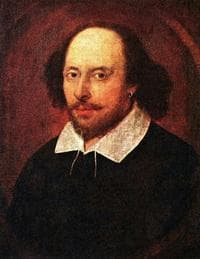
William Shakespeare was an English playwright, poet and actor. He is widely regarded as the greatest writer in the English language and the world's pre-eminent dramatist. He is often called England's national poet and the "Bard of Avon". His extant works, including collaborations, consist of some 39 plays, 154 sonnets, three long narrative poems, and a few other verses, some of uncertain authorship. His plays have been translated into every major living language and are performed more often than those of any other playwright. Shakespeare remains arguably the most influential writer in the English language, and his works continue to be studied and reinterpreted.
Similar books
- Antony and Cleopatra
William Shakespeare
4.0 (5k) average on GoodreadsHistoryContinues the historical narrative following Caesar's death, focusing on power struggles and personal relationships in the Roman world.
- Coriolanus
William Shakespeare
3.7 (13k) average on GoodreadsHistorical FictionCoriolanus also examines the relationship between a powerful individual and the Roman populace, but from a different angle. Coriolanus is an aristocratic warrior who despises the common people, leading to his exile and eventual demise. In contrast, Brutus in Julius Caesar genuinely believes in the Republic and the people's welfare, even if he misjudges their fickleness. Coriolanus is a more direct critique of class conflict and aristocratic pride, while Julius Caesar delves into the ethics of political assassination and the dangers of unchecked power from within the ruling elite.
- The Diary of a Young Girl
Anne Frank
4.2 (2.7M) average on GoodreadsBiographyDuring the Nazi occupation, a teenage girl's diary, written from a secret annex, shares observations on humanity, hope, and the wait for freedom.
- Eat, Pray, Love
Elizabeth Gilbert
3.6 (1.5M) average on GoodreadsLifestyleA heartbroken writer leaves her conventional life for a year-long global search for pleasure in Italy, spiritual devotion in India, and unexpected love and balance in Bali.
- Night
Elie Wiesel
4.3 (970k) average on GoodreadsBiographyIn the darkness of Auschwitz and Buchenwald, a teenage Elie Wiesel faces the extermination of his family, the loss of his faith, and the lasting scars of humanity's deepest cruelty.
- Steve Jobs
Walter Isaacson
4.1 (957k) average on GoodreadsBusinessSteve Jobs was a visionary who fused creativity and technology to revolutionize six industries and shape our digital world.





Enjoyed the summary?
A summary gives you the shape of the book. The book itself has the detail, the examples and the voice.
Find Julius Caesar on AmazonAs an Amazon Associate, BookBrief earns from qualifying purchases. How we're funded