
Core Idea
- Difficulty
- Medium
- Read it if
- You want a definitive, nuanced, and beautifully written biography of John Keats that delves into his intellectual, social, and emotional life, challenging common misconceptions and offering deep insights into his poetry and letters.
- Skip it if
- You are looking for a quick overview of Keats's life or a purely literary analysis of his poems without significant biographical context. This is a detailed, lengthy academic work.
Key Takeaways from Keats
A Poet 'Skinned Alive'
Keats's genius was deeply intertwined with his acute sensitivity to suffering and the harsh realities of his era.
Motion's biography redefines Keats, moving past the image of a delicate poet to show a man deeply affected by his era's social and political unrest, as well as by personal tragedy and illness. This 'skinned alive' quality was not just a weakness but a forge for his art. His empathy, his strong reactions to the world, and his constant confrontation with death fueled the intensity and emotional depth of his poetry. Motion argues that understanding Keats's suffering — from losing family to tuberculosis and the harsh medical practices of the time — is essential to appreciating the raw power and lasting relevance of his work. His poetry, especially in its concentrated bursts, shows a mind working under great pressure and heightened sensation.
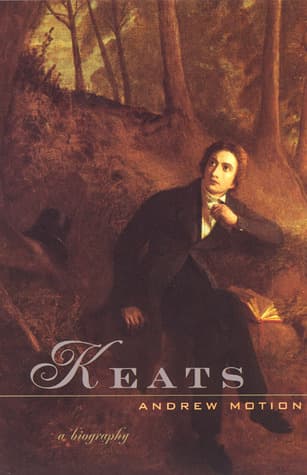
“This portrait, stripped of its layers of varnish and restored to glowing colours, should last us for another generation.”
In the book: Motion meticulously details Keats's personal losses (parents, brother Tom) and his own battle with consumption, alongside the often barbaric medical treatments he endured. The biographer emphasizes how these experiences shaped the dark undertones and existential questions within his odes and longer poems.
Try this: When engaging with art, particularly poetry, look beyond superficial beauty to understand the deeper biographical and historical contexts that shaped its creation. Recognize that profound sensitivity, though often painful, can be a wellspring of creative genius.
Related ideas: romanticism, biography-as-context, suffering-and-creativity
The Social and Political Keats
Motion re-situates Keats within the turbulent social and political landscape of early 19th-century England, challenging previous purely aesthetic interpretations.
A key part of Motion's work is its difference from earlier biographies that often put Keats in an artistic bubble. Motion firmly places Keats within the lively, often unstable, social and political currents of his time. This includes the worries of post-Napoleonic Britain, the growing radicalism, class differences, and literary feuds common in that period. Keats was not an isolated poet; he was aware of and, to varying degrees, involved in the intellectual and public discussions around him. Understanding these external pressures and influences provides a richer, more detailed understanding of his themes, his language choices, and even how his work was received by critics with different political views. His poetry, while often very personal, connects with the broader human experience shaped by these societal forces.
“Unlike previous biographers, Motion pays close attention to the social and political worlds Keats inhabited.”
In the book: Motion explores Keats's connections to figures like Leigh Hunt and the 'Cockney School' of poets, who were politically charged and often targets of conservative critics. He also discusses the impact of events like the Peterloo Massacre on the consciousness of writers of the era, even if Keats didn't directly pen political verse.
Try this: When analyzing historical figures, especially artists, avoid the temptation to view them in isolation. Actively seek to understand the broader societal, political, and cultural forces that shaped their lives and work. This adds depth and relevance to their contributions.
Related ideas: romantic-era-politics, literary-criticism, social-context
The Jazz-like Improvisation of Letters
Keats's inimitable letters offer a unique window into his 'headlong charge' of thought, revealing a mind in dynamic motion.
Motion, along with critics like Dickstein, points out the unique quality of Keats's letters, calling them 'jazz-like improvisations.' Unlike formal essays or carefully written poems, these letters capture the raw, unedited flow of Keats's mind and feelings. They are not just factual accounts but dynamic explorations of ideas, feelings, and philosophical concepts, often expressed with breathless energy and quick shifts in thought. This 'headlong charge' offers unmatched insight into the poet's inner world, his intellectual growth, his worries, and his deep capacity for empathy. They show a genius thinking, trying out language, and forming the theories that would support his greatest poetic works, such as Negative Capability. To ignore these letters is to miss a key part of Keats's creative and intellectual life.
“[Motion] listens for the 'freely associating inquiry and incomparable verve and dash,' the 'headlong charge,' of Keats's jazzlike improvisations, which give us, like no other writing in English, the actual rush of a man thinking, a mind hurtling forward unpredictably and sweeping us along.”
In the book: Motion frequently quotes from Keats's letters, demonstrating their 'freely associating inquiry' and how they often prefigure or elaborate on themes found in his poetry. The famous 'Negative Capability' letter is a prime example of this intellectual exploration.
Try this: For writers and thinkers, embrace informal writing (journals, letters, freewriting) as a vital space for experimentation and the unfiltered development of ideas. Recognize that the most profound insights often emerge from unconstrained mental exploration, not just formal composition.
Related ideas: negative-capability, epistolary-writing, creative-process
The Miracle of the 'Single Month'
Keats's most cherished poems emerged from an incredibly concentrated period of creative genius, defying his declining health.
One of the most surprising parts of Keats's career, detailed by Motion, is the very short time in which he wrote many of his most famous and lasting works. The spring of 1819, often called his 'great year,' saw the creation of the major odes ('Ode to a Nightingale,' 'Ode on a Grecian Urn,' 'To Autumn,' 'Ode on Melancholy,' 'Psyche,' 'Indolence') and parts of 'Lamia' and 'Hyperion.' This burst of creativity, happening while his health was already declining and his personal life was full of worry, is remarkable. Motion stresses that this intense period was not a sudden insight but the result of years of dedicated study, poetic experiments, and a deep engagement with life's complexities. It highlights the power of focused effort and the human spirit's ability to achieve greatness even under great stress, leaving a legacy that far outlasts his brief life.
“a genius who wrote in a single month all the poems we cherish”
In the book: Motion provides a detailed chronological account of Keats's poetic output in 1819, demonstrating how these masterpieces were composed in rapid succession, often during periods of significant personal stress and financial worry.
Try this: Recognize that creative breakthroughs can often occur in concentrated bursts after periods of sustained effort and preparation. Don't underestimate the power of focused, intense work, even when external circumstances are challenging.
Related ideas: poetic-output, creative-burst, romantic-odes
Love, Loss, and Fanny Brawne
Keats's passionate and often tormented relationship with Fanny Brawne was a central force in his later life and poetry.
Motion adds a touching depth to Keats's relationship with Fanny Brawne, moving past simple portrayals of her as either muse or obstacle. He shows their love as a complex, intense, and ultimately tragic affair, deeply tied to Keats's failing health and financial struggles. The letters to Fanny are some of his most raw and emotional, showing both his deep devotion and his agonizing fear of leaving her. This relationship was not just a romantic side story but a central drama of his final years, influencing his emotional state, his art, and his desperate longing for a future he knew he might not have. Motion carefully explores the social limits and expectations that complicated their union, making their bond even more compelling and heartbreaking.
“His love for Fanny Brawne was a deep, consuming fire, intensified by the knowledge of his impending death.”
In the book: Motion extensively quotes from Keats's letters to Fanny Brawne, which vividly convey his passionate love, his jealousy, his despair, and his longing. He also explores the societal pressures that prevented their immediate marriage.
Try this: Understand that intense personal relationships, with all their joys and sorrows, are often profound wellsprings of human creativity and motivation. Acknowledge the complexity and multi-faceted nature of love in biographical contexts.
Related ideas: romantic-love, biographical-influence, tragedy
The Torment of Early Medicine
Keats's suffering was exacerbated by the primitive and often harmful medical practices of the 19th century.
Motion clearly shows the harsh reality of 19th-century medicine, especially concerning tuberculosis, which Keats suffered from. Far from offering comfort, the available treatments often caused more pain. Bleeding, purging, mercury, and strict diets were common, yet ineffective, methods that further weakened the patient and caused great discomfort. Motion emphasizes that Keats's physical decline was due not only to the disease itself but also to the well-meaning but ultimately harmful attempts to cure him. This part of the biography highlights how fragile life was in that era and adds another layer to Keats's 'skinned alive' sensitivity, as he dealt with both internal suffering and external, medically induced pain. It shows the great physical challenges he faced while also writing some of the most beautiful poetry in English.
“a victim who was tormented by the best doctors of the age.”
In the book: Motion details the specific medical procedures and remedies prescribed to Keats by his various physicians, illustrating their ineffectiveness and the physical distress they caused, particularly during his final illness in Rome.
Try this: When studying historical periods, consider the practical limitations and challenges of daily life, such as healthcare, to fully appreciate the context in which individuals lived and created. This provides a more realistic and empathetic understanding of their struggles.
Related ideas: 19th-century-medicine, tuberculosis, historical-context
A Sense of Impending Doom
Keats lived with a pervasive awareness of his own mortality, which profoundly shaped his artistic output and philosophical inquiries.
Motion carefully tracks Keats's growing awareness of his own death, especially after seeing his brother Tom die from tuberculosis. This was not a vague fear but a real, often weakening, feeling that filled his later poetry with a unique urgency and sad beauty. The 'vale of soul-making' and the exploration of beauty, truth, and impermanence in his odes gain deep meaning when understood as the thoughts of a young man acutely aware of his limited time. This sense of coming doom was not just a personal tragedy but a spark for his deep philosophical questions about existence, suffering, and the legacy of art. It pushed him to put complex ideas into beautifully crafted verse, trying to capture eternal truths before his own inevitable end.
“I have been in such a state of health that I have not been able to write, and I am afraid to write. I have a firm conviction that I shall die.”
In the book: Motion cites numerous instances in Keats's letters where he expresses his fears of consumption and his conviction that he would die young, often linking these premonitions to his creative drive and his desire to leave a lasting poetic legacy.
Try this: Reflect on how an awareness of mortality can sharpen one's focus and urgency in pursuing creative or meaningful endeavors. Consider how confronting existential realities can lead to deeper artistic or philosophical insights.
Related ideas: mortality, existentialism, poetic-legacy
The Enduring Power of the 'New Keats'
Motion's biography offers a restored, vibrant portrait that will define Keats for a new generation of readers and scholars.
The main impact of Motion's biography is its success in presenting a 'new Keats,' one that is both more human and more profound than previous versions. By carefully combining his personal struggles, his social context, and the raw energy of his letters, Motion removes decades of romanticized layers to reveal a poet of immense intellect, passionate feeling, and deep resilience. This renewed portrait is not just a scholarly achievement but an invitation for today's readers to connect with Keats on a deeper, more empathetic level. The biography ensures that Keats remains a relevant and compelling figure, showing that his insights into beauty, suffering, and the human condition are as important today as they were two centuries ago. It confirms his place not just as a Romantic poet but as a timeless voice.
“This portrait, stripped of its layers of varnish and restored to glowing colours, should last us for another generation.”
In the book: The critical reception of Motion's book, as highlighted in the provided text, consistently praises its fresh perspective and its ability to make Keats feel immediate and alive, suggesting its long-lasting impact on Keats scholarship.
Try this: When evaluating historical figures, seek out contemporary scholarship that offers fresh perspectives and challenges long-held assumptions. Be open to re-evaluating established narratives to gain a richer, more accurate understanding.
Related ideas: biographical-revisionism, literary-relevance, enduring-legacy
The Verve and Dash of a Thinking Mind
Keats's writing, particularly his letters, offers an unparalleled glimpse into the dynamic, 'hustling' process of human thought.
Motion stresses that Keats's writing, especially in his letters, is not just a record of thoughts but a display of thinking itself. Dickstein's description of 'the actual rush of a man thinking, a mind hurtling forward unpredictably' perfectly captures this. Keats's prose often shows 'verve and dash,' a quick linking of ideas, and a willingness to explore side topics without losing sight of the main question. This dynamic quality makes his letters so compelling and so valuable for understanding his poetic process. It reveals a mind constantly engaged, questioning, feeling, and combining, showing that creativity is often a messy, non-linear, and energetic process. This 'jazz-like' improvisation shows his intellectual vitality and his unique ability to express the very act of thinking.
“give us, like no other writing in English, the actual rush of a man thinking, a mind hurtling forward unpredictably and sweeping us along.”
In the book: Motion's analysis of Keats's letter style, often quoting extended passages, demonstrates the 'freely associating inquiry' and conversational yet profound nature of his epistolary prose, particularly when discussing concepts like Negative Capability or his poetic theories.
Try this: Appreciate writing that captures the spontaneity and organic flow of thought, recognizing that such direct access to a mind in motion can be profoundly illuminating. For personal creative work, allow for spontaneity and 'jazz-like' improvisation in early drafts.
Related ideas: stream-of-consciousness, intellectual-biography, epistolary-style
Beyond the 'Cockney School' Stereotype
Motion challenges the reductive labels placed upon Keats, revealing a poet who transcended class and critical prejudice.
Keats, along with other writers like Leigh Hunt and William Hazlitt, was called part of the 'Cockney School' by conservative critics, a term meant to mock their perceived lack of classical education, their supposed lower-class origins, and their progressive political views. Motion carefully explains this critical bias, showing how it tried to lessen Keats's standing and hide his true talent. By focusing on Keats's intellectual rigor, his wide reading, and the sophistication of his poetry, Motion effectively breaks down this stereotype. He shows that Keats's genius went beyond the class-based attacks and political agendas of his critics, proving that true artistic merit cannot be limited by such narrow and biased labels. This re-evaluation highlights Keats's strength in the face of unfair criticism and his ultimate success through the lasting quality of his work.
“He was labeled, dismissed, and ridiculed, yet his genius ultimately defied these narrow categorizations.”
In the book: Motion details the specific critical attacks from publications like Blackwood's Magazine and The Quarterly Review, explaining the political and social motivations behind the 'Cockney School' label and how Keats responded, both personally and through his continued dedication to his art.
Try this: Be critical of labels and categorizations in art and literature, especially those rooted in social or political prejudice. Seek to understand the individual artist's work on its own merits, rather than through the lens of reductive stereotypes.
Related ideas: literary-feuds, class-prejudice, critical-reception
Keats Quotes
“I think I shall be among the English Poets after my death.”
“Beauty is truth, truth beauty,—that is all / Ye know on earth, and all ye need to know.”
“A thing of beauty is a joy for ever: / Its loveliness increases; it will never / Pass into nothingness.”
“I have been half in love with easeful Death, / Call'd him soft names in many a mused rhyme.”
“The only means of strengthening one's intellect is to make up one's mind about nothing—to let the mind be a thoroughfare for all thoughts.”
“O for a life of Sensations rather than of Thoughts!”
“Do you not see how necessary a World of Pains and troubles is to school an Intelligence and make it a Soul?”
“I am certain of nothing but of the holiness of the Heart's affections and the truth of Imagination—What the imagination seizes as Beauty must be truth.”
“Here lies One whose Name was writ in Water.”
“Season of mists and mellow fruitfulness, / Close bosom-friend of the maturing sun.”
“Fanatics have their dreams, wherewith they weave / A paradise for a sect.”
“Much have I travell'd in the realms of gold, / And many goodly states and kingdoms seen.”
“My heart aches, and a drowsy numbness pains / My sense, as though of hemlock I had drunk.”
“To think of my Endymion, and my other slight works, as not being immortal.”
Quiz
10 questions on the main ideas. Each answer comes with a short explanation.
Question 1
According to Andrew Motion's biography, what distinguishes his approach to Keats's life from previous biographers?
- He focuses solely on Keats's poetic output without considering his personal life.
- He pays close attention to the social and political worlds Keats inhabited.
- He primarily analyzes Keats's medical history as the central theme.
- He argues that Keats wrote all his cherished poems over several years, not a single month.
Show answer
B. He pays close attention to the social and political worlds Keats inhabited. The book description explicitly states that 'Unlike previous biographers, Motion pays close attention to the social and political worlds Keats inhabited,' marking a key difference in his biographical approach.
Question 2
What primary source does Andrew Motion make 'incisive use of' to present his account of Keats?
- Contemporary newspaper articles about Keats.
- Previously undiscovered poetic manuscripts.
- The poet's inimitable letters.
- Interviews with Keats's living descendants.
Show answer
C. The poet's inimitable letters. The description highlights Motion's 'incisive use of the poet's inimitable letters,' suggesting these are a crucial element in his biographical narrative.
Question 3
Edmund White's review describes Motion's portrait of Keats as 'stripped of its layers of varnish and restored to glowing colours.' What does this imply about Motion's interpretation?
- Motion's biography is visually appealing with many illustrations.
- Motion presents a more authentic and less idealized version of Keats.
- Motion focuses on Keats's use of color imagery in his poetry.
- Motion's biography is a direct translation of Keats's original writings.
Show answer
B. Motion presents a more authentic and less idealized version of Keats. The metaphor of 'stripped of its layers of varnish' suggests removing previous embellishments or misinterpretations to reveal a truer, more vibrant image of Keats, implying a more authentic portrayal.
Question 4
Morris Dickstein praises Keats's letters, as presented by Motion, for their 'jazzlike improvisations.' What quality does Dickstein attribute to these letters?
- Their strict adherence to formal poetic structures.
- Their musical rhythm and rhyming schemes.
- Their 'freely associating inquiry and incomparable verve and dash,' capturing the rush of a man thinking.
- Their careful, premeditated arguments and logical progression.
Show answer
C. Their 'freely associating inquiry and incomparable verve and dash,' capturing the rush of a man thinking. Dickstein's review directly quotes and elaborates on the 'jazzlike improvisations' by describing 'freely associating inquiry and incomparable verve and dash,' and 'the actual rush of a man thinking,' emphasizing spontaneity and intellectual dynamism.
Question 5
What specific claim is made by Edmund White regarding the speed of Keats's poetic output?
- Keats wrote all his cherished poems over a period of many years.
- Keats wrote only a few notable poems in his entire lifetime.
- Keats wrote all the poems we cherish in a single month.
- Keats's best poems were composed collaboratively with other Romantic poets.
Show answer
C. Keats wrote all the poems we cherish in a single month. Edmund White's review explicitly states that Motion presents Keats as 'a genius who wrote in a single month all the poems we cherish,' highlighting a remarkable period of creativity.
Question 6
The description implies that Motion's biography offers a 'dramatic narration.' How might this affect the reader's experience?
- It suggests a dry, academic, and purely factual presentation.
- It means the book is written in the style of a play or theatrical script.
- It indicates an engaging, vivid, and perhaps emotionally resonant storytelling approach.
- It implies a focus on dramatic irony and literary criticism over biographical facts.
Show answer
C. It indicates an engaging, vivid, and perhaps emotionally resonant storytelling approach. A 'dramatic narration' in a biography suggests an engaging and lively storytelling style, aiming to captivate the reader and convey the events and emotions of Keats's life with vigor, rather than a mere recitation of facts.
Question 7
The phrase 'skinned alive' used by Edmund White to describe Motion's Keats suggests what about the portrayal?
- Keats was literally subjected to torture.
- The biography reveals Keats's raw vulnerability and intense suffering.
- Motion's writing style is harsh and unfeeling.
- Keats was a hunter and sportsman.
Show answer
B. The biography reveals Keats's raw vulnerability and intense suffering. 'Skinned alive' is a powerful metaphor indicating extreme exposure, sensitivity, and pain. In the context of a biography, it suggests a portrayal of Keats that lays bare his deepest emotions, vulnerabilities, and suffering without reservation.
Question 8
According to Edmund White, Keats was 'tormented by the best doctors of the age.' What does this detail imply about Keats's circumstances?
- Keats had excellent medical care that ultimately cured his ailments.
- Despite receiving care from leading medical professionals, Keats's suffering was exacerbated or not alleviated.
- Keats was a medical student himself and tormented his professors.
- The doctors were intentionally cruel to Keats.
Show answer
B. Despite receiving care from leading medical professionals, Keats's suffering was exacerbated or not alleviated. The phrase 'tormented by the best doctors' implies a tragic irony: even with the most advanced medical knowledge of his time, Keats's condition was not helped, and perhaps even worsened, by their treatments. It highlights the limitations of 19th-century medicine and Keats's enduring suffering.
Question 9
Morris Dickstein notes that Keats's letters give us 'like no other writing in English, the actual rush of a man thinking, a mind hurtling forward unpredictably and sweeping us along.' What literary quality is Dickstein primarily praising here?
- The formal structure and precise grammar of Keats's prose.
- The clarity and simplicity of Keats's arguments.
- The raw, unmediated immediacy and dynamic intellectual process captured in his correspondence.
- Keats's deliberate use of poetic devices within his letters.
Show answer
C. The raw, unmediated immediacy and dynamic intellectual process captured in his correspondence. Dickstein's description emphasizes 'the actual rush of a man thinking' and a 'mind hurtling forward unpredictably,' which points to the unfiltered, immediate, and dynamic nature of Keats's thought process as captured in his letters, rather than a polished or structured presentation.
Question 10
Given the description of Motion's biography, what kind of reader would most likely find this book appealing?
- Readers seeking a purely academic, detached analysis of Romantic poetry.
- Readers interested in a vivid, authentic, and socially contextualized understanding of a major Romantic poet's life.
- Readers who prefer biographies that avoid personal details and focus solely on professional achievements.
- Readers looking for a light, fictionalized account of the Romantic era.
Show answer
B. Readers interested in a vivid, authentic, and socially contextualized understanding of a major Romantic poet's life. The description highlights 'dramatic narration,' 'fresh look,' 'close attention to the social and political worlds,' and 'masterful account' that is 'stripped of its layers of varnish,' all pointing to an engaging, comprehensive, and authentic portrayal that would appeal to readers seeking a deep, contextualized understanding.
Keats FAQ
What makes Andrew Motion's biography of Keats different from earlier accounts?
Motion's biography distinguishes itself by paying close attention to the social and political contexts of Keats's life, a dimension often less emphasized by previous biographers. He also makes incisive use of Keats's personal letters to offer a fresh perspective.
Does 'Keats' by Andrew Motion offer new insights into the poet's works?
While primarily a biography, Motion's detailed exploration of Keats's life and letters provides a richer understanding of the influences and experiences that shaped his poetry. Readers gain insight into the mind of the poet as he composed some of his most cherished works.
What is the significance of Keats's letters in this biography?
Keats's inimitable letters are central to Motion's account, allowing him to present the 'actual rush of a man thinking' and offer a vivid portrayal of Keats's 'freely associating inquiry and incomparable verve and dash.' They are key to understanding Keats's personality and creative process.
How does Motion's 'Keats' compare to other prominent Keats biographies?
Motion's biography is noted for its fresh perspective, particularly its focus on the socio-political environment Keats inhabited, which sets it apart from more traditional narratives. It aims to 'strip away layers of varnish' and present a 'new Keats' for a modern generation.
What historical period does Andrew Motion's 'Keats' cover?
The book covers the life of John Keats, an English Romantic poet, placing it within the historical context of the early 19th century. Motion delves into the social and political worlds that influenced Keats during this period.
Does Andrew Motion's biography shed light on Keats's health struggles?
Yes, the book portrays Keats as a 'victim who was tormented by the best doctors of the age,' indicating that it addresses his health issues and the medical practices of the time, contributing to the 'skinned alive' portrait of the poet.
Is 'Keats' suitable for readers new to the poet's work?
Yes, Motion's dramatic and masterful account makes Keats accessible to new readers while also offering fresh insights for those already familiar with his work. It provides a comprehensive introduction to the poet's life and times.
What is the primary focus of Andrew Motion's 'Keats'?
The primary focus is a re-evaluation of John Keats's life, emphasizing his genius, his personal struggles, and the significant impact of the social and political landscape on his existence. It aims to present a vibrant, restored portrait of the poet.
About the author

Andrew Motion is a distinguished British poet and critic, serving as Poet Laureate from 1999 to 2009. His critically acclaimed biography, 'Keats,' offers a profound exploration of the Romantic poet's life and work. Motion's own poetry is known for its lyrical quality and engagement with historical and personal themes.
Similar books
- The Diary of a Young Girl
Anne Frank
4.2 (2.7M) average on GoodreadsBiographyDuring the Nazi occupation, a teenage girl's diary, written from a secret annex, shares observations on humanity, hope, and the wait for freedom.
- Eat, Pray, Love
Elizabeth Gilbert
3.6 (1.5M) average on GoodreadsLifestyleA heartbroken writer leaves her conventional life for a year-long global search for pleasure in Italy, spiritual devotion in India, and unexpected love and balance in Bali.
- Night
Elie Wiesel
4.3 (970k) average on GoodreadsBiographyIn the darkness of Auschwitz and Buchenwald, a teenage Elie Wiesel faces the extermination of his family, the loss of his faith, and the lasting scars of humanity's deepest cruelty.
- Steve Jobs
Walter Isaacson
4.1 (957k) average on GoodreadsBusinessSteve Jobs was a visionary who fused creativity and technology to revolutionize six industries and shape our digital world.
- The Glass Castle
Jeannette Walls
4.3 (903k) average on GoodreadsBiographyJeannette Walls's memoir describes her unusual childhood with brilliant, free-spirited parents whose poverty-stricken life shaped her independence and love despite family problems.
- Bossypants
Tina Fey
4.0 (848k) average on GoodreadsBiographyFrom a 'vicious nerd' with stress dreams to the comedic force behind Liz Lemon and 'Weekend Update,' Tina Fey chronicles her journey to proving that 'you're no one until someone calls you bossy.'






Enjoyed the summary?
A summary gives you the shape of the book. The book itself has the detail, the examples and the voice.
Find Keats on AmazonAs an Amazon Associate, BookBrief earns from qualifying purchases. How we're funded