
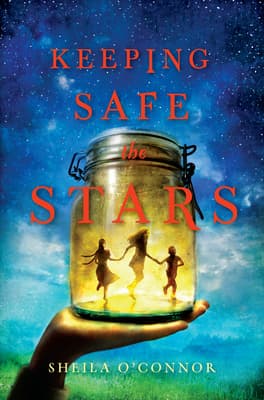
Synopsis
Covers the whole plot, including the ending.
- Difficulty
- Easy
- Pacing
- Moderate
- Mood
- Poignant, Hopeful, Resilient, Historical
- Read it if
- You enjoy heartwarming historical fiction about resilient children facing adversity, family bonds, and self-discovery.
- Skip it if
- You prefer fast-paced action or stories with less emotional depth.
Keeping Safe the Stars Plot Summary
Covers the whole plot, including the ending.
Life on the Farm
Pride, Nightingale, and Baby – known as the Stars – live a remote, independent life with their grandfather, Old Finn, on a rundown farm in rural Minnesota. Their days are filled with chores, learning survival skills from Old Finn, and avoiding the outside world, which their grandfather distrusts. Pride, the eldest, feels responsible for her younger siblings. Old Finn, a quiet but wise man, teaches them to be cautious of strangers and to rely only on themselves. They live a simple but independent life, mostly isolated, with the children homeschooled and interacting only with a few local people, like the postman.
Old Finn's Illness
One day, Old Finn has a stroke while working in the barn. Pride, Nightingale, and Baby find him unresponsive. Fearing social services and family separation, Pride decides to keep Old Finn's illness a secret. She tries to care for him herself, with Nightingale's help, but his condition quickly worsens. The children are overwhelmed by the sudden change and the reality of their grandfather's health, knowing their self-reliance is now pushed to its limit.
A Desperate Journey
Realizing they cannot care for Old Finn alone, Pride decides to seek help. She approaches Mr. Gunderson, a local farmer who sometimes helps them, and tells him about Old Finn's condition. Mr. Gunderson arranges for Old Finn to go to a hospital in Duluth, a distant city the children have never seen. The separation is difficult for the Stars, who have never been away from their grandfather. This is their first big interaction with the outside world beyond their farm, forcing them to face the limits of their isolated life.
Fending for Themselves
With Old Finn gone, Pride, Nightingale, and Baby are left alone on the farm. Pride, now fully responsible, works to keep them self-sufficient. They face daily challenges of food, warmth, and avoiding detection by social services. Pride plans to earn money by selling wild berries and other foraged goods in town, believing they need funds to eventually reach Old Finn. This time is marked by hardship, resourcefulness, and the constant fear of being discovered and separated. Nightingale helps a lot, and Baby's innocence provides moments of joy amidst their grim reality.
The Berry Business
Pride and Nightingale begin selling foraged berries and herbs in the nearby town. This exposes them to the outside world, where they meet various reactions. Some townspeople are kind, offering small help, while others are suspicious of the unkempt children without an adult. Pride learns to handle these interactions, improving her negotiation skills and her ability to protect her siblings. The money they earn, though small, fuels their hope of reuniting with Old Finn, and the experience slowly lessens their distrust of strangers, though cautiously.
A Near Discovery
A social worker, alerted by Mr. Gunderson or other townspeople, visits the Stars' farm. Pride, always watchful, manages to hide Nightingale and Baby and pretends Old Finn is just resting, making up a story about his temporary absence. The close call increases Pride's fear of being separated from her siblings and strengthens her resolve to keep their situation a secret. This encounter shows the constant threat of the outside world breaking apart their family, reinforcing the children's belief that they must rely only on themselves.
The Bus Trip to Duluth
After weeks of work and saving, Pride finally has enough money for bus tickets to Duluth. The children start their first major journey away from the farm, a challenging experience filled with anxiety about the unfamiliar city and hope of seeing Old Finn. The bus ride is a sensory overload for the sheltered children, a sharp contrast to their quiet rural life. Pride stays protective, making sure Nightingale and Baby stay close, as they navigate this new, overwhelming environment, driven by their desperate desire to reach their grandfather.
Reunion in the Hospital
At the Duluth hospital, the children find Old Finn. Their reunion is difficult. Old Finn is severely affected by his stroke, unable to speak, walk, or recognize them. This devastating reality shatters Pride's hope that he would simply recover and they could return to their old life. She realizes that her self-reliance and the children's efforts cannot fix their grandfather. The hospital, with its sterile coldness, further shows their vulnerability and the grim future they face.
A Glimmer of Hope
While at the hospital, Pride finds an old photograph and a hidden letter among Old Finn's few things. The photograph shows a younger Old Finn with a woman and a child, and the letter hints at a past connection to a wealthy family and a secret inheritance. This discovery sparks a new kind of hope in Pride, suggesting there might be a way for them to stay together, not through their own independence, but through a connection to their grandfather's forgotten past. This potential secret offers a lifeline in their desperate situation, shifting their focus from survival to uncovering truth.
Unraveling the Mystery
Driven by the need to understand the letter, Pride, with a kind nurse's help, seeks out a lawyer mentioned in the letter. She bravely navigates the legal system, explaining their situation and showing the evidence. The lawyer, at first doubtful, eventually helps Pride uncover the truth: Old Finn had a hidden past and a claim to an inheritance from a wealthy family, which could secure the children's future. This revelation is a turning point, offering a way for the Stars to remain a family, even if it means embracing the outside world they once feared.
The Inheritance and a New Beginning
The inheritance from Old Finn's past is claimed, providing financial security for Pride, Nightingale, and Baby. This allows them to stay together, avoiding the feared separation by social services. While Old Finn remains in the hospital, the children now have resources for his care and their own. This newfound stability is a big change for the Stars, who must now learn to live a life not solely dependent on their own labor and isolation. It is a bittersweet victory, as they gain security but lose the only life they have known with their grandfather.
Embracing the Future
With their future secure, Pride, Nightingale, and Baby begin to integrate into a more conventional life. They enroll in school, learn about the world beyond their farm, and start to form connections with others. Pride, still protective, gradually learns to trust some outsiders and accept help. The memory of Old Finn and his lessons of self-reliance remain, but they are balanced by the understanding that true safety and family can also come from connection and community. The Stars start a new chapter, changed but still bound by their love and shared history.
Principal Figures
Pride
Protagonist
The eldest Star, fiercely protective and resourceful.
Pride is the resilient and determined eldest sister, thrust into the role of caregiver and protector for her younger siblings, Nightingale and Baby. She embodies the self-reliance taught by Old Finn, exhibiting remarkable strength and resourcefulness in the face of adversity. Her primary motivation is to keep her family together at all costs, leading her to make difficult decisions and face the outside world she once feared. She is intelligent and quick-witted, often calculating risks and planning their next steps with a maturity beyond her years.
Relationships: Nightingale (Younger sister, her primary confidante and helper.); Baby (Youngest sister, her innocent charge and source of motivation.); Old Finn (Grandfather, her mentor and the anchor of her family.)
Nightingale
Supporting
The middle Star, observant and supportive.
Nightingale is the middle sister, quieter and more observant than Pride, but equally loyal and supportive. She often acts as Pride's confidante and helper, taking on significant responsibilities despite her young age. She possesses a sensitive nature and a keen awareness of their precarious situation, often internalizing the stress but always remaining devoted to her sisters and grandfather. Her artistic inclination, though subtle, provides a contrast to Pride's pragmatic approach.
Relationships: Pride (Older sister, her leader and protector.); Baby (Younger sister, whom she helps care for.); Old Finn (Grandfather, whom she deeply loves and misses.)
Baby
Supporting
The youngest Star, innocent and a source of hope.
Baby is the youngest of the Stars, a source of innocence and light amidst the family's struggles. She is largely unaware of the full extent of their difficulties, protected by her older sisters. Her simple needs and joyful moments provide a stark contrast to the harsh realities Pride and Nightingale face, often serving as a reminder of what they are fighting for. Her presence symbolizes the vulnerability and purity of childhood that the older sisters are desperately trying to preserve.
Relationships: Pride (Oldest sister and primary caregiver.); Nightingale (Middle sister, also cares for her.); Old Finn (Grandfather, whom she loves simply and unconditionally.)
Old Finn
Supporting
The Stars' grandfather, a wise and fiercely independent figure.
Old Finn is the patriarch of the Stars family, a stoic and fiercely independent man who raised his granddaughters in isolation, instilling in them a deep sense of self-reliance and a distrust of outsiders. He is a man of the land, skilled in survival and traditional ways, and his lessons form the foundation of the children's lives. His sudden illness is the catalyst for the entire plot, forcing the children to confront the world he tried to shield them from. Despite his incapacitation, his past actions and hidden secrets continue to influence the family's future.
Relationships: Pride (Granddaughter, his most attentive student and inheritor of his spirit.); Nightingale (Granddaughter, whom he cares for.); Baby (Granddaughter, whom he cares for.)
Mr. Gunderson
Supporting
A local farmer who offers reluctant assistance.
Mr. Gunderson is a gruff but ultimately kind-hearted local farmer who has occasional dealings with Old Finn. He is initially hesitant to get involved in the Stars' affairs, reflecting the rural community's tendency towards non-interference, but his conscience eventually leads him to help Pride get Old Finn to the hospital. He represents the limited, cautious connection the Stars have to the outside world before their journey to Duluth, and his actions, though minimal, are crucial in advancing the plot.
Relationships: Old Finn (Neighbor, with whom he has a transactional relationship.); Pride (Young girl he reluctantly helps in a crisis.)
The Social Worker
Mentioned
An official representing the outside world's authority.
The social worker represents the institutional authority of the outside world, specifically the system that could separate the Stars children. Her visit to the farm, though thwarted by Pride's quick thinking, highlights the constant threat hanging over the children's heads. She is not portrayed as malicious, but rather as an embodiment of the rules and regulations that clash with the Stars' independent, isolated existence. Her presence serves to intensify the tension and Pride's determination to keep her family together.
Nurse Helen
Supporting
A compassionate hospital nurse who helps Pride.
Nurse Helen is a kind and empathetic nurse at the Duluth hospital who takes an interest in Pride and her siblings. She provides much-needed emotional support and practical assistance, helping Pride navigate the complexities of the hospital system and the legal implications of Old Finn's past. She represents the compassionate side of the 'outside world' that Old Finn had taught the children to distrust, demonstrating that not all strangers are dangerous. Her kindness is instrumental in helping Pride uncover the truth about Old Finn's inheritance.
Relationships: Pride (Young girl she helps and supports in the hospital.); Old Finn (Patient she cares for.)
Mr. Peterson
Supporting
The lawyer who helps uncover Old Finn's secret.
Mr. Peterson is the lawyer Pride seeks out based on the hidden letter. Initially wary and professional, he becomes instrumental in unraveling the mystery of Old Finn's past and securing the children's inheritance. He represents the legal system, which, though complex, ultimately provides a pathway for the Stars to secure their future. His character highlights the importance of documentation and legal processes in resolving the family's crisis, contrasting sharply with their previous reliance on self-sufficiency.
Relationships: Pride (Client he represents in the inheritance case.); Old Finn (The subject of the inheritance case.)
Themes & Insights
Self-Reliance vs. Community
The novel explores the tension between extreme self-reliance and the need for community. Old Finn teaches the Stars to distrust outsiders and to fend for themselves. This theme is clear in Pride's initial decision to hide Old Finn's illness and her efforts to earn money through foraging. However, the limits of this isolation become clear as the children face overwhelming challenges, forcing Pride to gradually accept help from Mr. Gunderson, Nurse Helen, and the lawyer. The story suggests that while self-reliance is valuable, a balanced life needs connection and support from others.
“We are the Stars,” Old Finn had said, “and we keep safe our own.”
The Definition of Family
The book examines what truly makes a family, especially without traditional structures. The Stars are an unconventional family, bound by shared hardship and deep love. Their strong loyalty to each other, especially Pride's commitment to keeping her siblings together, drives the story. The threat of separation by social services constantly challenges their idea of family, pushing them to extreme measures. The discovery of Old Finn's past and the inheritance provides a way for them to keep their unique family bond, even as their circumstances change. This reinforces that family is about connection, not just blood or location.
“Family was not just blood, but the people who chose to stay, who fought for you, who held you safe.”
Loss of Innocence and Growing Up
The Stars' journey shows the loss of childhood innocence and accelerated growing up under pressure. Pride, especially, must leave her childhood behind, taking on adult responsibilities for survival and decisions. Nightingale also carries burdens, while Baby's innocence is protected by her sisters. The children's exposure to illness, poverty, and the adult world strips away their naiveté. Their experiences on the farm, selling berries, and navigating the city all contribute to their rapid maturity, showing the impact of crisis on childhood.
“Childhood was a luxury they couldn't afford, not with Old Finn gone and the world pressing in.”
The Power of Secrets and the Past
Secrets, both personal and family, shape the Stars' present and future. Old Finn's isolation and his reluctance to share his past create the initial mystery around their family. The discovery of his hidden letter and photograph is the moment that shifts the children's desperate struggle for survival toward a potential solution. This theme explores how past events can affect future generations, and how uncovering long-held secrets can either break or save a family. It shows that understanding where you come from can be important for knowing where you are going.
“Old Finn had kept his past locked away, a treasure or a burden, Pride wasn't sure which.”
Plot Devices & Literary Techniques
The Hidden Letter and Photograph
A crucial plot device that reveals Old Finn's secret past and provides a solution.
The discovery of the hidden letter and photograph is a classic example of a MacGuffin that drives the latter half of the plot. It serves as the tangible clue that unravels Old Finn's mysterious past, revealing his connection to a wealthy family and an inheritance. This device shifts the narrative from the children's desperate struggle for self-sufficiency to a quest for information and legal resolution. Without this discovery, the Stars would likely face separation by social services, making it the linchpin for their eventual salvation and a new beginning.
The Isolated Farm
A setting that symbolizes the family's self-reliance and vulnerability.
The isolated farm functions as both a sanctuary and a prison for the Stars. It symbolizes their self-reliant lifestyle and Old Finn's philosophy of avoiding the outside world. Its remoteness initially protects them from societal interference but also leaves them incredibly vulnerable when Old Finn falls ill. The farm is a constant reminder of their independence and the values instilled in them, but also highlights the limitations of extreme isolation when facing a crisis that requires external help. It is the crucible in which Pride's leadership is forged.
The Journey to Duluth
A symbolic and literal journey into the unknown and the wider world.
The children's bus trip to Duluth is a significant journey, both literally and symbolically. It represents their first major foray into the outside world, a stark contrast to their sheltered rural life. This journey forces them to confront the complexities and overwhelming nature of society, challenging their ingrained distrust of strangers. Symbolically, it is a journey from innocence to experience, from isolation to potential integration, and from a life of pure self-reliance to one where external systems and people become necessary for survival and future security.
Keeping Safe the Stars Quotes
“Mam said I was a good girl, and I knew I was, but sometimes being good was the hardest thing in the world.”
“The war was like a big dark cloud, always there, even when the sun shone.”
“Secrets were like heavy stones, always pressing down, making it hard to breathe.”
“You had to be brave, even when your knees were knocking and your heart was thumping like a drum.”
“Home wasn't just a place, it was a feeling, and sometimes that feeling was lost.”
“Stars were just pinpricks of light, but they made the darkness seem a little less scary.”
“Grown-ups had their own worries, big ones that children couldn't always understand.”
“Sometimes the quietest people had the loudest thoughts.”
“A promise was like a thread, delicate but strong, and once broken, it was hard to mend.”
“Even in the darkest times, there was always a little bit of magic if you knew where to look.”
“History wasn't just in books; it was in the streets, in the houses, in the very air you breathed.”
“The wind carried whispers, stories from faraway places, if you listened carefully enough.”
“Love was a funny thing; it could make you sad, but it could also make you strong.”
“You couldn't change the past, but you could always choose what you did next.”
Quiz
10 questions on the plot and the characters. Each answer comes with a short explanation.
Question 1
What are the names of the three 'Stars' children?
- Pride, Nightingale, and Baby
- Star, Moon, and Sun
- Dawn, Dusk, and Midnight
- Hope, Faith, and Charity
Show answer
A. Pride, Nightingale, and Baby The three children are named Pride, Nightingale, and Baby, and are collectively referred to as 'the Stars'.
Question 2
Where do the Stars children live with their grandfather, Old Finn?
- Duluth, Minnesota
- Rural Minnesota
- Minneapolis, Minnesota
- A remote cabin in Wisconsin
Show answer
B. Rural Minnesota The children live with Old Finn in rural Minnesota, far from the city of Duluth where he is later taken.
Question 3
What event causes the children to be left alone to fend for themselves?
- Their grandfather goes on a long trip.
- Their grandfather falls seriously ill and is hospitalized.
- A severe winter storm isolates their home.
- They decide to run away from home.
Show answer
B. Their grandfather falls seriously ill and is hospitalized. Old Finn's serious illness and subsequent hospitalization in Duluth is the catalyst for the children being left alone.
Question 4
What core value, taught by Old Finn, do the children initially believe in strongly?
- Community support
- Self-reliance
- Seeking help from authorities
- The importance of education
Show answer
B. Self-reliance Old Finn taught the children to be wary of outsiders and to believe in self-reliance, a theme that is challenged as the story progresses.
Question 5
What is Pride's role among the Stars children after Old Finn's illness?
- She becomes withdrawn and unable to cope.
- She assumes the lead and takes responsibility for her siblings.
- She immediately seeks help from neighbors.
- She focuses on earning money by herself, ignoring her siblings.
Show answer
B. She assumes the lead and takes responsibility for her siblings. As the oldest, Pride steps up to lead and care for her younger siblings, making mistakes but ultimately keeping them afloat.
Question 6
How do the children manage to travel to Duluth to see Old Finn?
- A kind neighbor drives them.
- They walk the entire distance.
- They earn money for a bus trip.
- They sneak onto a train.
Show answer
C. They earn money for a bus trip. The children work and earn money specifically to pay for the bus fare to Duluth to visit their grandfather.
Question 7
What is Pride's realization about 'self-reliance' after seeing Old Finn in the hospital?
- Self-reliance is always the best solution for every problem.
- Self-reliance cannot make Old Finn well again, implying its limits.
- She needs to teach her siblings to be more self-reliant.
- They should have been more self-reliant from the beginning.
Show answer
B. Self-reliance cannot make Old Finn well again, implying its limits. Pride realizes that her beloved self-reliance cannot fix Old Finn's serious condition, indicating a shift in her understanding of the concept.
Question 8
What is the condition of Old Finn when the children finally see him in Duluth?
- He is almost fully recovered and ready to go home.
- He is able to walk and talk, but still weak.
- He can't walk or even say his own name, indicating severe impairment.
- He is in good spirits and planning their future.
Show answer
C. He can't walk or even say his own name, indicating severe impairment. The description states Old Finn 'can't walk or even say his own name,' highlighting the severity of his illness and the children's difficult situation.
Question 9
What is suggested as a potential way for the children to stay together after Old Finn's illness?
- Pride getting a full-time job in Duluth.
- A secret from Old Finn's past.
- Being adopted by a wealthy family.
- Moving to a different state with distant relatives.
Show answer
B. A secret from Old Finn's past. The synopsis mentions 'a secret from Old Finn's past might make a way for them to stay together after all,' hinting at a resolution beyond self-reliance.
Question 10
The children, like their grandfather, are described as 'wary of outsiders.' This attitude contributes to which central conflict in the story?
- Their struggle to earn money for the bus trip.
- Their initial reluctance to seek help when Old Finn becomes ill.
- Their difficulty in navigating the city of Duluth.
- Their internal disagreements about who should be in charge.
Show answer
B. Their initial reluctance to seek help when Old Finn becomes ill. Their wariness of outsiders and belief in self-reliance directly contributes to their initial hesitation in seeking external help when Old Finn falls ill, exacerbating their crisis.
Keeping Safe the Stars FAQ
What is the central conflict in 'Keeping Safe the Stars'?
The central conflict arises when the children's grandfather, Old Finn, falls gravely ill and is hospitalized in Duluth, leaving Pride, Nightingale, and Baby to care for themselves in their isolated home. Pride, as the eldest, struggles to maintain their self-sufficiency while facing the daunting reality of Old Finn's deteriorating health and the potential separation of the 'Stars' children.
Who are the 'Stars' and what is their family dynamic like before Old Finn's illness?
The 'Stars' are Pride, Nightingale, and Baby, three orphaned siblings living with their grandfather, Old Finn. Their family dynamic is characterized by fierce self-reliance and a deep distrust of outsiders, values instilled in them by Old Finn through his stories and their isolated rural Minnesota life. Pride, as the oldest, already feels a strong sense of responsibility for her younger sisters.
How does Pride manage to keep her siblings fed and safe after Old Finn is hospitalized?
Pride employs various strategies, including foraging, maintaining their garden, and resourcefully earning money through tasks like selling berries and doing odd jobs for the few neighbors they encounter. She often makes difficult decisions, prioritizing the immediate needs of Nightingale and Baby while trying to uphold Old Finn's lessons of independence.
What prompts the children's journey to Duluth, and what do they discover there?
The children embark on the bus trip to Duluth after Pride saves enough money, driven by their desire to see Old Finn and understand his condition. Upon arrival, they are devastated to find Old Finn gravely incapacitated, unable to walk or speak his own name, which shatters Pride's belief that their self-reliance alone can fix their problems.
How does the 'secret from Old Finn's past' ultimately offer a solution for the children?
The secret from Old Finn's past, which is gradually revealed, connects the family to someone who is able and willing to step in and provide a stable home for the children. This discovery provides a pathway for the 'Stars' to stay together, offering a resolution that their own self-reliance could not achieve in the face of Old Finn's illness.
What is the significance of the children's names – Pride, Nightingale, and Baby?
Their names are symbolic: Pride embodies her role as the eldest, taking immense responsibility and feeling a strong sense of family honor. Nightingale likely represents their connection to nature and perhaps a more sensitive, observant personality. Baby signifies the youngest and her vulnerability, emphasizing the protective instincts of her older sisters and the need for their care.
How do Old Finn's stories and teachings about self-reliance shape the children's initial responses to crisis?
Old Finn's teachings instill a deep-seated belief in independence and a distrust of external help, which initially empowers Pride to take charge and resist seeking assistance from others. These lessons provide a framework for their survival, but also create internal conflict for Pride when she realizes their limitations in the face of Old Finn's severe illness.
Are there any subtle clues about Old Finn's past or the 'secret' before it's fully revealed?
Yes, there are subtle hints, often in Old Finn's avoidance of certain topics or his specific reactions to outsiders, which suggest a history that led to his isolation and his strong emphasis on self-reliance. The children's awareness of their orphaned status and their grandfather's singular care for them also subtly points to an untold story.
How does Pride's understanding of 'keeping safe the Stars' evolve throughout the narrative?
Initially, Pride believes 'keeping safe' means providing for their physical needs and maintaining their independence, as taught by Old Finn. However, after seeing Old Finn in Duluth, her understanding shifts to recognizing that true safety might require accepting help and acknowledging that self-reliance has its limits, especially when faced with profound loss and change.
Analyze Pride's psychological burden as the oldest sibling. How does it manifest?
Pride carries a immense psychological burden, manifesting as intense anxiety, guilt when she makes mistakes, and a relentless drive to protect her younger sisters. She often suppresses her own fears and needs to present a strong front, constantly weighing decisions and internalizing the pressure to be the sole provider and protector in Old Finn's absence.
How does the isolated setting of rural Minnesota contribute to the children's psychological state and their choices?
The isolated setting amplifies their sense of self-reliance and makes them wary of outsiders, reinforcing Old Finn's teachings. Psychologically, it fosters a strong bond among the siblings but also limits their access to help and information, intensifying their fear of separation and making their struggle feel more solitary and desperate.
Discuss the theme of grief and loss as experienced by the children, particularly Pride.
The children experience anticipatory grief for Old Finn, coupled with the ongoing grief of being orphaned. Pride, in particular, grapples with the loss of their previous life and the innocence of childhood, while also confronting the painful reality of Old Finn's decline, which represents the potential loss of their last remaining guardian and their way of life.
How do Nightingale and Baby cope with the crisis, and what role do they play in Pride's emotional journey?
Nightingale and Baby cope with varying degrees of understanding and resilience, often looking to Pride for reassurance and guidance. Their needs and innocence serve as a constant motivation for Pride, but also add to her stress. Their presence reminds her of the stakes and grounds her efforts, even as their vulnerability highlights the enormity of her task.
Is the novel ultimately an endorsement of self-reliance, or a critique of its limitations?
The novel presents a nuanced view. While it initially celebrates the strength and resourcefulness born from self-reliance, it ultimately critiques its limitations, demonstrating that some challenges are too great for individuals to overcome alone. The resolution, which involves accepting help and revealing a past connection, suggests that true strength sometimes lies in interdependence and community.
What message does the ending convey about the definition of 'family'?
The ending expands the definition of 'family' beyond immediate blood relatives or a singular guardian. It suggests that family can be found through unexpected connections, historical ties, and the willingness of others to offer care and support. It reinforces that love and belonging are not solely dependent on genetic links but on shared responsibility and compassion.
How does the historical setting (unspecified but implied early-mid 20th century) influence the story's themes?
The historical setting, likely Depression-era or similar, emphasizes the scarcity of resources and the limited social safety nets, making the children's isolation and self-reliance more plausible and necessary. It also highlights a time when communities might have been more spread out and informal support systems less formalized, intensifying the family's plight.
Could Pride have made different choices earlier to alleviate their situation, and if so, what stopped her?
Pride's choices were heavily influenced by Old Finn's deep-seated distrust of outsiders and her own strong sense of responsibility to uphold his teachings. While she might have sought help sooner, her ingrained belief in self-reliance and fear of separation, coupled with their remote location, likely prevented her from considering or pursuing other options until Old Finn's condition became undeniable.
Similar books
- Bridge to Terabithia
Katherine Paterson
4.0 (445k) average on GoodreadsFantasyDeals with childhood struggles, strong sibling/friend bonds, and emotional depth in a rural setting.
- A Summer to Die
Lois Lowry
4.0 (7k) average on GoodreadsChildren'sWhile both books explore illness and family dynamics in a rural setting, Lowry's focuses more on grief, artistic expression, and coming-of-age within a more stable family unit. O'Connor's delves more into the precarity of child welfare and the physical challenges of survival without adequate adult supervision.
- Walk Two Moons
Sharon Creech
4.0 (151k) average on GoodreadsChildren'sBoth books feature a journey and a quest for family understanding. However, Creech's narrative is arguably more focused on self-discovery, storytelling, and internal emotional processing, while O'Connor's is grittier, emphasizing the immediate, tangible challenges of poverty, neglect, and survival with minimal adult support.
- Harry Potter and the Sorcerer's Stone
J.K. Rowling
4.5 (7M) average on GoodreadsFantasyRescued from a miserable life under the stairs, an orphaned boy discovers he's a wizard destined for a magical school, where he uncovers a dangerous secret tied to the dark wizard who murdered his parents.
- The Hobbit, or There and Back Again
J.R.R. Tolkien
4.3 (2.9M) average on GoodreadsFantasyA comfort-loving hobbit named Bilbo Baggins is whisked away by a mischievous wizard and a band of dwarves on an unexpected journey to reclaim stolen treasure from a fearsome dragon, discovering courage and a magical ring along the way.
- Harry Potter and the Goblet of Fire
J.K. Rowling
4.6 (2.6M) average on GoodreadsFantasyA bewildered Harry Potter, underage and thrust into a deadly Triwizard Tournament, must brave dragons, mermaids, and a resurgent dark magic to survive a year that will forever alter the wizarding world.




Enjoyed the summary?
A summary gives you the shape of the book. The book itself has the detail, the examples and the voice.
Find Keeping Safe the Stars on AmazonAs an Amazon Associate, BookBrief earns from qualifying purchases. How we're funded