
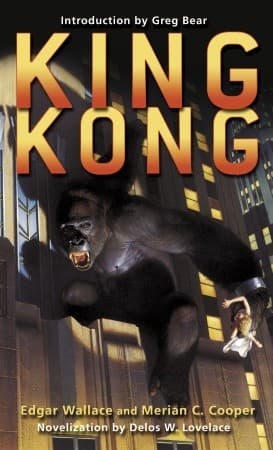
Synopsis
Covers the whole plot, including the ending.
- Difficulty
- Easy
- Pacing
- Fast
- Mood
- Adventurous, Tragic, Thrilling, Primitive, Spectacular
- Read it if
- You love classic adventure stories, monster movies, and tales of beauty and the beast with a tragic ending.
- Skip it if
- You prefer modern, complex character development or are sensitive to themes of animal exploitation and colonialist perspectives.
King Kong Plot Summary
Covers the whole plot, including the ending.
The Mysterious Expedition to Skull Island
Carl Denham, a filmmaker, needs a lead actress for his secret project. He finds Ann Darrow, an actress down on her luck, in New York. Ann is hesitant but joins Denham for adventure and a chance at fame. With his crew, including first mate Jack Driscoll, Denham sails on the Venture, a tramp steamer, to an uncharted island. The crew does not know their true destination or the dangers ahead, thinking it is just another film shoot.
Arrival at Skull Island and First Encounters
After weeks at sea, the Venture arrives at a fog-covered island not on any modern map. As they get closer, they hear drumming and chanting from a native tribe. They see a large, old stone wall built by humans, stretching across a valley and protecting an unknown interior. During their scouting, the crew sees a native ritual where a young woman is prepared as a sacrifice. Denham, interested, decides to film the natives, but they discover his presence, leading to a tense encounter. The natives see Ann Darrow and are taken by her beauty, which they connect to their 'golden woman' prophecy.
Ann's Abduction and the Beast's Appearance
That night, after the first meeting, the natives board the Venture and take Ann Darrow from her cabin. They carry her to their village, through the wall's gate, and prepare her for a sacrifice. Ann is tied to two pillars on an altar outside the wall. The gate opens, showing Kong, a huge gorilla of immense size and power, emerging from the jungle. The natives run in fear as Kong approaches Ann, picks her up, and carries her into the dense jungle. The Venture crew, led by Denham and a frantic Jack Driscoll, realizes what happened and starts a rescue mission.
The Jungle's Terrors and Kong's Affection
Jack Driscoll, driven by his love for Ann, leads the chase through the dangerous jungle, with Denham and the remaining crew. The island is a lost world, full of prehistoric creatures like Stegosauruses, Apatosauruses, and a Tyrannosaurus Rex. Kong carries Ann through his territory, at first treating her as a curiosity. He places her on a high ledge and begins to fight off dinosaurs that threaten her. Ann, despite her fear, starts to notice a strange protectiveness in the beast. She watches Kong battle and defeat a T-Rex and other predators to keep her safe, a horrifying yet captivating sight.
The Log Bridge and the Pit
The rescue party, having barely escaped several dinosaur attacks, crosses a log bridge over a deep chasm. Kong, sensing their chase and becoming possessive of Ann, confronts them on the bridge. In anger, he shakes the log, causing most of the crew to fall into the abyss, where giant spiders and other insects devour them. Only Denham, Jack Driscoll, and a few others manage to hold on or retreat. Jack hides in a cave below the log, watching Kong try to reach him, before making his way further into Kong's lair, determined to save Ann.
Ann's Rescue and Kong's Capture
Jack Driscoll, after a difficult journey, reaches Kong's mountain lair. He finds Ann, who is less scared and more resigned to Kong's presence, though still wanting to escape. While Kong is busy fighting a Pterodactyl that tried to grab Ann, Jack takes his chance. He grabs Ann, and they run back toward the great wall. Denham, having gathered the remaining crew, plans to capture Kong. They prepare gas bombs to subdue the ape. As Kong chases Jack and Ann back to the wall, he is lured into a trap. The crew uses gas, eventually knocking the giant beast unconscious.
Kong in Chains: The Eighth Wonder of the World
With Kong subdued, Denham sees an even bigger opportunity than filmmaking. He decides to take the ape back to New York City, believing he can make a fortune by showing the creature as "Kong, the Eighth Wonder of the World." Moving Kong from Skull Island to the Venture, and then across the ocean, is a huge and difficult task. When they arrive in New York, Kong is chained and put on display in a Broadway theater. The event draws huge crowds eager to see the captured monster. Ann Darrow and Jack Driscoll, now in love, are there, but feel uneasy about Kong's fate.
Kong's Rampage in New York
During the opening night of Kong's exhibition, the camera flashes and crowd noise agitate the ape. He mistakes a photographer's flash for an attack and, in a fit of rage and fear, breaks free from his chains. Kong smashes through the theater walls and escapes into the streets of New York City. His first thought is to find Ann. He rampages through the city, causing panic and destruction, overturning cars, tearing down elevated train tracks, and grabbing people from windows, all while looking for the 'golden woman' who had captivated him on the island. The city is in chaos as authorities try to stop the beast.
The Empire State Building Showdown
Kong finds Ann in her hotel room, gently takes her, and climbs the Empire State Building, the tallest structure in New York. He seeks refuge at its top, thinking it a safe place, a high perch like his mountain home on Skull Island. The military, using biplanes, launches an aerial attack on the building. Kong, with Ann in his hand, defends himself against the planes, swatting them from the sky. Ann is scared but also sees a tragic bravery in his last stand, as he tries to protect her even as he dies.
The Fall of the Eighth Wonder
Despite Kong's strength, the machine-gun fire from the biplanes is too much. Wounded and weak, Kong lets out one last roar before dying. He gently places Ann on the observation deck before losing his grip and falling from the top of the Empire State Building. His body drops hundreds of feet, crashing onto the streets below. A crowd gathers around the fallen giant. Carl Denham, watching the tragic scene, says his famous line: "Oh, no, it wasn't the airplanes. It was Beauty killed the Beast." Ann Darrow and Jack Driscoll are reunited, safe but changed forever by their encounter with King Kong.
Principal Figures
Carl Denham
Antagonist/Supporting
Ruthless filmmaker driven by ambition and greed.
Carl Denham is an adventurous and ambitious filmmaker, always searching for the next big sensation. He is portrayed as a driven, almost obsessive figure, willing to risk lives and cross ethical boundaries for the sake of his films and personal glory. His ambition to capture and exploit Kong leads to the tragic downfall of the beast. While not purely evil, his actions are motivated by a profound lack of empathy for the natural world and a desire for fame and fortune. He views Kong not as a living creature, but as a spectacle to be monetized.
Relationships: Ann Darrow (Employer/Employee, later the 'star' of his spectacle); Jack Driscoll (Crew member, later a rival for Ann's affection and a moral counterpoint); King Kong (Captor/Exploiter of the beast)
Ann Darrow
Protagonist
Down-on-her-luck actress who becomes the object of Kong's affection.
Ann Darrow is a beautiful, resourceful, and initially desperate young woman struggling to survive in Depression-era New York. She is plucked from obscurity by Carl Denham, becoming the unwitting catalyst for Kong's capture and rampage. Her initial terror of Kong slowly evolves into a strange mix of fear, pity, and even a fleeting understanding of the beast's lonely existence and protective nature. She represents 'Beauty' in the 'Beauty and the Beast' archetype, and her presence is what drives Kong's actions, both on Skull Island and in New York.
Relationships: Carl Denham (Employer/rescuer); Jack Driscoll (Love interest, rescuer); King Kong (Object of his obsession and affection)
Jack Driscoll
Protagonist
First mate of the Venture and Ann's love interest.
Jack Driscoll is the rugged and capable first mate of the Venture. Initially a hardened sailor, he is skeptical of Denham's mysterious venture. He quickly falls in love with Ann Darrow, becoming her protector and rescuer. Jack is brave, resourceful, and determined, leading the dangerous pursuit into Skull Island's jungle to save Ann from Kong. He represents humanity's courage and capacity for love, acting as a direct foil to Kong's primal affections and Denham's mercenary ambitions. His heroism is a key driving force in the rescue plot.
Relationships: Ann Darrow (Love interest, eventually husband); Carl Denham (Crew member, colleague in the expedition); King Kong (Rival for Ann's affection, adversary)
King Kong
Antagonist/Tragic Figure
Colossal ape, worshipped as a god, whose obsession with Ann leads to his downfall.
King Kong is the titular 'King' of Skull Island, a gigantic prehistoric gorilla, revered and feared by the native inhabitants. He is a creature of immense power, primal instinct, and surprising tenderness. His capture of Ann Darrow sparks a possessive affection that drives his every action. Despite his monstrous size and destructive capabilities, Kong is portrayed as a tragic figure, an innocent creature taken from his natural habitat and exploited, whose only 'crime' is his devotion to Ann. His story is a poignant examination of the clash between nature and civilization.
Relationships: Ann Darrow (Object of his obsession and affection); Carl Denham (Captor and exploiter); Native Tribe (Worshipped and feared by them)
Captain Englehorn
Supporting
Experienced and cautious captain of the Venture.
Captain Englehorn is the seasoned and pragmatic captain of the Venture. He is initially skeptical of Carl Denham's vague plans and grows increasingly concerned as they approach the mysterious Skull Island. He is a voice of reason and caution, often clashing with Denham's reckless ambition. While he follows Denham's orders, he always prioritizes the safety of his crew and ship, though he is ultimately drawn into the perilous adventure and the capture of Kong.
Relationships: Carl Denham (Client/Employer); Jack Driscoll (First mate, trusted subordinate)
Charley
Supporting
The ship's cook, a loyal and often humorous member of the crew.
Charley is the ship's cook on the Venture, a minor but memorable character who provides moments of levity and humanity. He is a loyal member of the crew, and his interactions, particularly with Jack, offer a glimpse into the everyday lives of the sailors. He is present for many of the harrowing events on Skull Island and in New York, often reacting with a mix of fear and practical concern, representing the common man caught in extraordinary circumstances.
Relationships: Jack Driscoll (Friend and colleague); Carl Denham (Employer)
Lumpy
Supporting
The ship's unkempt but observant Chinese cook.
Lumpy, the Chinese cook, is a supporting character on the Venture. He is often depicted as a quiet, observant figure, sometimes providing a sense of foreboding or unease due to his superstitious nature and his understanding of ancient lore. He is one of the crew members who witnesses the strange rituals on Skull Island and the subsequent events, further emphasizing the clash between the known world and the ancient, mystical island.
Relationships: Carl Denham (Employer); Crew members (Colleague)
Native Chief
Supporting
Leader of the primitive tribe on Skull Island.
The Native Chief is the imposing and authoritative leader of the primitive tribe on Skull Island. He is responsible for the rituals and traditions of his people, including the offering of human sacrifices to Kong. He is initially hostile and suspicious of the Venture crew, viewing Ann Darrow as a 'golden woman' destined for Kong. His actions set in motion the abduction of Ann, directly leading to Kong's interaction with the humans.
Relationships: King Kong (Worshipper, provider of sacrifices); Ann Darrow (Sacrificial offering)
Themes & Insights
Man vs. Nature
The main conflict is humanity's attempt to conquer, control, and use nature's raw power, shown by King Kong. Carl Denham's search for the 'Eighth Wonder of the World' and his capture of Kong in New York show this theme. The tragic end shows how useless and destructive it is to try to force nature into submission. Kong's rampage through the city is nature's violent response to being violated, a fight it loses but with terrible results for the human world.
“'We'll make a show out of him, a giant spectacle! The whole world will pay to see the Eighth Wonder!”
Beauty and the Beast
This classic idea is central to the story, with Ann Darrow as 'Beauty' and King Kong as the 'Beast.' Kong's monstrous look hides a deep, protective affection for Ann, like the traditional tale. Ann's initial fear slowly changes into a mix of fear, pity, and even a strange understanding of Kong's lonely life. The story explores the idea that true affection can go beyond looks and species, and that sometimes the 'beast' can have more humanity than the 'civilized' man, leading to the tragic idea that 'Beauty killed the Beast.'
“Oh, no, it wasn't the airplanes. It was Beauty killed the Beast.”
Exploitation and Colonialism
The story criticizes the use of unknown lands and their people. Carl Denham's trip to Skull Island is driven by a colonial mindset, seeing the island and its creatures as resources to be taken for money and show. The natives are seen as primitive, and Kong is reduced from a god to a captive attraction. This theme shows the arrogance of Western civilization encountering the 'other,' demonstrating how a desire for wealth and fame can destroy unique cultures and natural wonders.
“He's always been king of his world. But we'll teach him a new one.”
The Perils of Ambition and Greed
Carl Denham's character shows the destructive nature of ambition and greed. His focus on capturing Kong for exhibition, without caring for the creature's well-being or the potential danger, starts the whole tragedy. His desire for fame and money blinds him to the moral parts of his actions. The chaos and destruction Kong causes in New York are a direct result of Denham's overconfidence, a warning about prioritizing personal gain over ethics and respect for life.
“We're going to make a picture, but it's going to be something more than a picture. It's going to be a document!”
The Lost World and Primal Instinct
Skull Island is a 'lost world,' a place where prehistoric creatures and old ways of life continue, untouched by modern civilization. This setting allows for a look at primal instincts—both animal and human. Kong's actions are driven by basic urges: protecting his territory, and a deep, possessive affection. The human characters, especially Jack, also use primal survival instincts when facing the island's dangers. The theme contrasts the raw, wild nature of the island with the artificiality and order of New York City, showing the lasting power of the wild.
“Some place where no white man has ever set foot.”
Plot Devices & Literary Techniques
The Uncharted Map
A mysterious map guiding the expedition to Skull Island.
The uncharted map is the initial catalyst for the entire plot. It represents the lure of the unknown and Carl Denham's adventurous spirit. Its existence fuels the mystery surrounding Skull Island, drawing the Venture crew into an encounter with a lost world. The map acts as a MacGuffin, driving the plot forward by leading the characters to the source of their adventure and danger, setting the stage for the discovery of Kong and the subsequent conflict between man and nature.
The Great Wall
An ancient stone barrier separating the native village from Kong's jungle.
The Great Wall on Skull Island is a powerful symbol of separation and protection. Built by the natives, it signifies their attempt to coexist with, yet protect themselves from, the formidable power of Kong and the other prehistoric creatures within the jungle. It serves as a physical barrier that is both breached by the natives for sacrifice and by Kong during his pursuit of Ann, highlighting the futility of human-made boundaries against overwhelming natural forces. It also creates a sense of foreboding, hinting at the immense danger lurking beyond its confines.
Ann Darrow's 'Golden Woman' Status
Ann's perceived divinity by the natives and her role as a sacrificial offering.
Ann Darrow's 'golden woman' status is a plot device that immediately places her in peril. Her blonde hair and fair skin make her stand out to the Skull Island natives, who associate her with a prophecy or a specific type of sacrifice for Kong. This belief system directly leads to her abduction and offering to Kong, making her the central figure in the beast's developing affection. It establishes her unique connection to Kong and sets the stage for the 'Beauty and the Beast' dynamic, making her the prize in the conflict between Kong and Jack.
The Empire State Building
The iconic New York landmark chosen for Kong's final stand.
The Empire State Building serves as a powerful symbol and a crucial setting for Kong's tragic climax. As the tallest man-made structure of its time, it represents the pinnacle of human achievement and civilization. Kong's ascent of the building is an act of defiance and a desperate attempt to reclaim a high perch reminiscent of his natural habitat, directly contrasting nature with human ingenuity. His fall from its summit visually represents the triumph of civilization over the wild, but also the tragic consequences of that victory, making the landmark an indelible part of Kong's legend.
The Prehistoric Jungle
Skull Island's interior, teeming with dinosaurs and ancient life.
The prehistoric jungle of Skull Island functions as a 'lost world' setting, a plot device that introduces an element of fantasy and extreme danger. It immediately establishes the extraordinary nature of the island and the challenges faced by the human characters. The various dinosaurs and monstrous creatures encountered by the rescue party elevate the stakes and showcase Kong's immense power and protective instincts as he battles them for Ann's safety. This environment is crucial for establishing Kong as a king in his own domain before his removal to the human world.
King Kong Quotes
“It was beauty killed the beast.”
“He was a king and a god in the world he knew, but now he comes to civilization merely a captive—a show to gratify your curiosity.”
“The whole world will pay to see this.”
“It wasn't the airplanes. It was beauty killed the beast.”
“He's always been king of his world, but we'll teach him fear.”
“On this island, the impossible is possible.”
“She was afraid, but she pitied him too.”
“We're not hunters. We're explorers in a land that time forgot.”
“The beast's roar was not of anger, but of loneliness.”
“In his eyes, she saw something more than a monster.”
“This is a nightmare from which we may never awaken.”
“He fought not for food or territory, but for her.”
“The city's lights were a poor substitute for the stars of his home.”
“We brought the jungle to the city, and the city could not contain it.”
Quiz
10 questions on the plot and the characters. Each answer comes with a short explanation.
Question 1
Who is the primary female character that King Kong develops an affection for in the novel?
- Fay Wray
- Ann Darrow
- Merian Cooper
- Delos Lovelace
Show answer
B. Ann Darrow Ann Darrow is the down-on-her-luck starlet who becomes the object of King Kong's ill-fated affection, as described in the book's summary. Fay Wray was the actress in the 1933 film, Merian Cooper was the producer, and Delos Lovelace was the author.
Question 2
What year was the original novelization of 'King Kong' by Delos W. Lovelace first published?
- 1933
- 1932
- 2005
- 1925
Show answer
B. 1932 The book summary states that this Modern Library edition is reprinted from the original 1932 novelization of the movie script. 1933 is when the classic film was released, 2005 is when a recent film adaptation came out, and 1925 is not relevant to this publication.
Question 3
According to the book's description, what is King Kong's story described as an update of?
- A modern fairy tale
- A science fiction epic
- The Beauty and the Beast legend
- A historical adventure
Show answer
C. The Beauty and the Beast legend The summary explicitly calls King Kong's story 'a fantastical update of the Beauty and the Beast legend,' highlighting the thematic connection between Kong's affection for Ann Darrow and the classic tale.
Question 4
What is the primary conflict described in the book's summary of King Kong's story?
- Man versus machine
- Man versus nature
- Beast versus beast
- Society versus technology
Show answer
B. Man versus nature The summary states that King Kong's story is 'a gripping yarn of man versus nature,' referring to the struggle between humans and the giant prehistoric gorilla Kong.
Question 5
Who wrote the preface for the Modern Library edition of the 'King Kong' novelization mentioned in the description?
- Greg Bear
- Merian C. Cooper
- Mark Cotta Vaz
- Delos W. Lovelace
Show answer
C. Mark Cotta Vaz The description specifies that this edition includes a Preface by Mark Cotta Vaz, who is noted as the preeminent biographer of Merian C. Cooper. Greg Bear wrote the introduction, not the preface.
Question 6
What emotion does the book's summary suggest readers might feel regarding King Kong's capture and exploitation?
- Joy
- Indifference
- Sadness
- Anger at Kong
Show answer
C. Sadness The summary says one cannot help but be 'saddened over the giant’s capture, mistreatment, and exploitation by venal showmen,' emphasizing the tragic aspects of Kong's story.
Question 7
Which of the following is NOT mentioned as a medium where King Kong has been referenced, according to the book's description?
- Books
- Prime-time sitcoms
- Video games
- Motion pictures
Show answer
C. Video games The description states King Kong has been referenced 'endlessly in every medium, from books to prime-time sitcoms,' and mentions motion picture adaptations, but video games are not specifically listed here.
Question 8
What role did Merian C. Cooper play in the original King Kong story, as indicated in the book's preface information?
- Author of the novelization
- Producer of the original 1933 film
- Writer of the introduction
- Director of the 2005 film
Show answer
B. Producer of the original 1933 film The summary notes that Mark Cotta Vaz is the preeminent biographer of Merian C. Cooper, who was the producer of the original 1933 classic film. Delos W. Lovelace authored the novelization, Greg Bear wrote the introduction, and Peter Jackson directed the 2005 film.
Question 9
Based on the book's description, what is the underlying tone of King Kong's story beneath its cultural significance?
- Purely comedic and lighthearted
- Tense and surprisingly tender
- Solely action-packed and thrilling
- Mysterious and supernatural
Show answer
B. Tense and surprisingly tender The description explicitly states, 'Beneath King Kong’s cultural significance, however, is a tense and surprisingly tender story,' highlighting the emotional depth and conflict in the narrative.
Question 10
What genre is NOT listed for the book 'King Kong' by Delos W. Lovelace in the provided description?
- Fantasy
- Mystery
- Science Fiction
- Romance
Show answer
D. Romance The description lists the genres as Fantasy, Mystery, and Science Fiction. While romantic elements are present in the Beauty and the Beast theme, Romance is not explicitly listed as a genre here.
King Kong FAQ
What is 'King Kong' by Delos W. Lovelace about?
The novel follows the story of a giant prehistoric gorilla, King Kong, who is discovered on Skull Island and captured by a film crew led by showman Carl Denham. Kong develops an ill-fated affection for actress Ann Darrow, leading to his transportation to New York City, where he escapes and climbs the Empire State Building before meeting his tragic end.
Why should I read 'King Kong' by Delos W. Lovelace?
This novelization of the 1933 film script offers a deeper exploration of the characters and themes than the movie, blending adventure, tragedy, and social commentary. It provides insight into the original vision of the story, with its tense action sequences and surprisingly tender moments between Kong and Ann Darrow.
What is the background/setting of 'King Kong'?
The story begins in New York City, where filmmaker Carl Denham recruits Ann Darrow for an expedition to the mysterious Skull Island. The island is a prehistoric jungle filled with dinosaurs and other dangers, contrasting sharply with the urban setting of New York where Kong is later displayed.
What are the most memorable quotes from 'King Kong'?
While the novelization includes dialogue from the film, notable lines include Carl Denham's cynical remark, 'It was beauty killed the beast,' reflecting on Kong's downfall. Kong's roar and the descriptions of his raw power, such as 'the eighth wonder of the world,' also stand out.
What writing style does Delos W. Lovelace use in 'King Kong'?
Lovelace employs a straightforward, adventure-driven prose style that mirrors the pacing of the film script, with vivid descriptions of action and emotion. The narrative balances suspenseful scenes, like Kong's rampages, with quieter moments exploring Ann Darrow's empathy for the creature.
What minor details add significant meaning to 'King Kong'?
Details such as Kong's gentle handling of Ann Darrow, contrasting with his violence toward others, highlight his capacity for affection. The use of chains and cages during his captivity symbolizes exploitation, while Skull Island's ancient ruins hint at a lost civilization, adding depth to the setting.
What are some subtle foreshadowing moments in 'King Kong'?
Early references to Kong as a 'beast' and discussions of his inevitable capture foreshadow his tragic fate. Ann Darrow's initial fear turning to pity subtly hints at her bond with Kong, while Carl Denham's obsession with fame foreshadows the disastrous consequences of his actions.
What unexpected character connections exist in 'King Kong'?
Beyond the obvious bond between Kong and Ann, there's a subtle connection between Kong and the prehistoric creatures of Skull Island, emphasizing his role as a natural force. Carl Denham's manipulation links him to the island's dangers, as both exploit Kong for different ends.
What are unspoken character motivations in 'King Kong'?
Carl Denham is driven by a desire for fame and profit, masking his greed as adventure. Ann Darrow's motivation shifts from survival to genuine empathy for Kong, unspoken but evident in her protective actions. Kong's actions are motivated by instinctual protection and loneliness.
What psychological complexities do characters exhibit in 'King Kong'?
Kong displays a mix of primal rage and tender affection, complicating his role as a monster. Ann Darrow grapples with fear and compassion, while Carl Denham shows ambition bordering on recklessness. These complexities challenge simple hero/villain dichotomies.
What are the major emotional turning points in 'King Kong'?
Key moments include Kong's capture on Skull Island, which evokes pity; his gentle interactions with Ann, building empathy; his escape in New York, creating tension; and his death on the Empire State Building, culminating in tragedy and reflection on exploitation.
How do relationship dynamics evolve in 'King Kong'?
Ann and Kong's relationship shifts from terror to a strange mutual understanding, with Ann eventually seeing Kong as more than a beast. Carl Denham's relationship with his crew deteriorates as his obsession grows, and Kong's isolation heightens as he is removed from his natural habitat.
Which parts of 'King Kong' remain ambiguous or open-ended?
The origin of Kong and the ancient civilization on Skull Island are left mysterious. The moral implications of Kong's capture and death are debated without clear resolution, leaving readers to ponder humanity's role in nature's destruction.
What are controversial scenes or decisions in 'King Kong'?
Kong's violent rampages and the decision to capture and exploit him for entertainment spark debate on ethics. Some readers criticize the portrayal of indigenous people on Skull Island, while others debate whether Kong's affection for Ann is romantic or paternal.
'King Kong' ending explained: how it ends & what it means
Kong is killed by biplanes after climbing the Empire State Building with Ann, culminating in Carl Denham's line, 'It was beauty killed the beast.' This ending symbolizes the tragic clash between nature and civilization, with Kong's death representing the cost of human exploitation and the loss of primal innocence.
About the author

Delos W. Lovelace was an American author primarily known for his 1932 novelization of the classic film 'King Kong'. Though his literary output was limited, his work on 'King Kong' has cemented his place in popular culture. Lovelace also contributed to other genres during his writing career.
Similar books
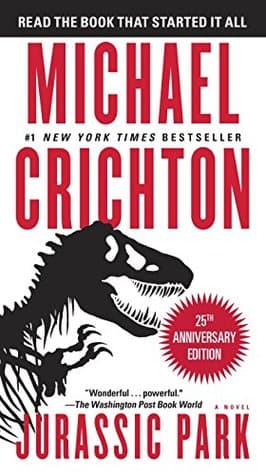
- Jurassic Park
Michael Crichton
4.0 (803k) average on GoodreadsThrillerFeatures a remote island with prehistoric creatures and a thrilling adventure to survive.
- Frankenstein: The 1818 Text
Mary Shelley
3.8 (1.2M) average on GoodreadsFantasyExplores the tragic consequences of creating and exploiting a powerful, misunderstood being.
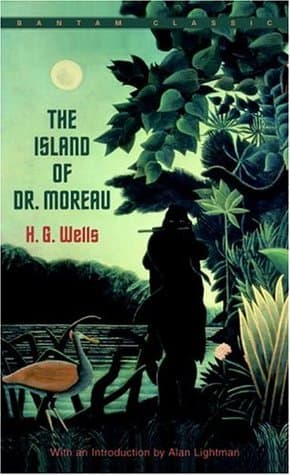
- The Island of Doctor Moreau
H.G. Wells
3.7 (96k) average on GoodreadsFantasyWells's novel, while also exploring scientific hubris and the nature of monstrosity, offers significantly greater philosophical depth and allegorical complexity regarding human intervention in nature and the definition of humanity, which Lovelace's King Kong largely eschews in favor of adventure.
- Harry Potter and the Sorcerer's Stone
J.K. Rowling
4.5 (7M) average on GoodreadsFantasyRescued from a miserable life under the stairs, an orphaned boy discovers he's a wizard destined for a magical school, where he uncovers a dangerous secret tied to the dark wizard who murdered his parents.
- The Hunger Games
Suzanne Collins
4.3 (6.4M) average on GoodreadsFantasyIn a future where children fight to the death on live television, Katniss Everdeen volunteers for the arena, turning a death sentence into a fight for survival and a spark of rebellion.
- 1984
George Orwell
4.2 (3.1M) average on GoodreadsPoliticsIn a future where surveillance and thought control are absolute, a man's search for truth clashes with the Party, showing that hope can be a form of rebellion.




Enjoyed the summary?
A summary gives you the shape of the book. The book itself has the detail, the examples and the voice.
Find King Kong on AmazonAs an Amazon Associate, BookBrief earns from qualifying purchases. How we're funded