
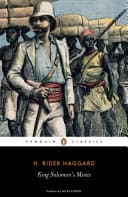
Synopsis
Covers the whole plot, including the ending.
- Difficulty
- Medium
- Pacing
- Fast
- Mood
- Adventurous, Exciting, Exotic, Heroic
- Read it if
- You enjoy classic adventure stories with exploration, lost civilizations, and treasure hunts.
- Skip it if
- You are sensitive to outdated colonial perspectives and depictions of indigenous cultures.
King Solomon's Mines Plot Summary
Covers the whole plot, including the ending.
The Quest Begins
Allan Quatermain, a seasoned white hunter in Natal, South Africa, is approached by two Englishmen: Sir Henry Curtis and Captain John Good. They show him a map, supposedly of King Solomon's Mines, found among the belongings of Sir Henry's missing younger brother, George Neville. Neville had disappeared in Africa two years earlier, last known to be seeking the legendary mines. Quatermain, initially doubtful about the map and the dangerous journey, is persuaded by the promise of a share of any treasure and a large sum for his son if he dies. He agrees to lead the expedition into the unexplored Zululand.
Journey to the Mountains
The expedition, made up of Quatermain, Sir Henry, Captain Good, and their new, mysterious Zulu servant named Umbopa, sets off. They face huge challenges crossing vast, dry deserts and dangerous mountains in Africa. Supplies run low, and the heat is constant. During their tough journey, Umbopa proves to be exceptionally strong, brave, and smart, often acting with a royal manner that contradicts his servant status. He frequently offers good advice and shows remarkable tracking and survival skills, earning the Englishmen's respect and growing suspicion, as they sense he is more than he appears.
Discovery of José Silvestre
After weeks of travel, following the ancient map, the group finds a hidden cave high in the mountains. Inside, they discover the perfectly preserved, frozen body of José Silvestre, a Portuguese explorer who, according to the map's writing, was one of the original discoverers of the mines centuries ago. Silvestre's body sits at a table, holding a last message and pointing towards the 'Road of Death' on another inscription. This discovery confirms the map's accuracy but also gives a more precise, though ominous, direction to the mines, highlighting the dangers ahead.
Arrival in Kukuanaland
Following the 'Road of Death' through a dangerous mountain pass, the group descends into a fertile, isolated valley, revealing Kukuanaland. This land is home to a fierce, warlike tribe, cut off from the rest of the world. Kukuana warriors soon capture them and bring them before the ruler, the ruthless, one-eyed King Twala, and his sinister witch-doctor, Gagool. The Englishmen, especially Captain Good with his artificial teeth and monocle, are seen as supernatural beings by the superstitious Kukuanas. Umbopa then reveals his true identity as Ignosi, the rightful heir to the Kukuana throne, exiled in his youth.
The Impis and the Eclipse
Ignosi boldly states his claim to the throne, accusing King Twala of taking power unjustly and being a tyrant. Twala, furious, prepares to execute the foreigners and Ignosi. However, Captain Good, checking an almanac, remembers a lunar eclipse is coming. Quatermain quickly uses this. They announce they will 'darken the moon' as a sign of Ignosi's divine right. When the eclipse happens as predicted, the superstitious Kukuanas are terrified, believing the white men have great magical power. This event causes many Kukuana regiments to side with Ignosi, splitting the kingdom and leading to civil war.
The Battle for Kukuanaland
A civil war breaks out in Kukuanaland between Ignosi's loyal forces and King Twala's army. The Englishmen, using their firearms, tactical knowledge, and courage, play a role in supporting Ignosi's rebellion. Sir Henry Curtis, a strong warrior, distinguishes himself in battle, leading charges and inspiring the Kukuana warriors. The battle is fierce and bloody, with many casualties on both sides. Eventually, Twala's forces begin to falter under the combined attack and the growing belief in Ignosi's legitimacy, fueled by the mysterious white 'wizards'.
Twala's Demise and Ignosi's Ascension
The civil war ends with a dramatic single combat between Sir Henry Curtis and the tyrannical King Twala. Sir Henry, driven by justice and the need to secure Ignosi's rule, accepts Twala's challenge. The duel is brutal and intense, with both men fighting fiercely. Ultimately, Sir Henry, showing superior skill and strength, defeats and kills Twala. With Twala dead, the remaining Kukuana forces surrender, and Ignosi is hailed as the new, rightful King of Kukuanaland. His first act as king is to offer the Englishmen safe passage and any help they need.
Gagool and the Mines
With Ignosi now on the throne, the Englishmen demand that Gagool, the ancient witch-doctor, lead them to King Solomon's Mines. Gagool, afraid of Ignosi but still clever, reluctantly leads them to the entrance of the legendary mines, hidden within caves. She takes them to a large chamber, filled with the preserved bodies of ancient kings and, most importantly, a vast hoard of diamonds and other jewels. The wealth is beyond their wildest dreams, and the adventurers are momentarily overwhelmed by the sheer amount of treasure.
The Trap and Escape
As the Englishmen marvel at the treasure, the treacherous Gagool, in a final act of malice, triggers a hidden mechanism, sealing the mine chamber and trapping them inside with the mummified kings. The ground shakes, and rocks fall, burying Gagool. Desperate, the trapped explorers search for another way out. During their frantic search, they find a hidden passage where they discover the skeletal remains of George Neville, Sir Henry's lost brother. He had found the mines but died there, leaving a message indicating a secret exit, which they manage to open, escaping with a small but significant portion of the diamonds.
Return Journey and Riches
Having escaped the collapsing mines with their lives and a large fortune in diamonds, the adventurers begin their long journey back to civilization. They carry George Neville's body, completing Sir Henry's original quest. Ignosi, now a strong and just king, provides them with escorts and supplies for their return. The journey is still dangerous, but the men are encouraged by their success and their immense wealth. Upon reaching Natal, they arrange for George Neville's proper burial and divide their diamond hoard, making each of them incredibly rich, though forever changed by their adventure.
King Solomon's Mines Characters
Allan Quatermain
Protagonist
The seasoned English white hunter and narrator of the story.
Allan Quatermain is an experienced, pragmatic, and somewhat cynical English hunter and adventurer. He is initially reluctant to embark on the quest for King Solomon's Mines, viewing it as a fool's errand, but is persuaded by the promise of wealth for his son. He is a skilled shot, an expert tracker, and possesses a deep knowledge of African cultures and survival. Despite his outward cynicism, he has a strong moral compass and develops a deep loyalty to his companions. He often reflects on the nature of life, death, and civilization versus the wild.
Relationships: Sir Henry Curtis (Comrade and friend); Captain Good (Comrade and friend); Umbopa (Ignosi) (Initially master-servant, evolving into mutual respect and friendship)
Sir Henry Curtis
Protagonist
A large, imposing English baronet searching for his lost brother.
Sir Henry Curtis is a man of immense physical strength, courage, and a noble demeanor. He is driven by an unshakeable determination to find his missing younger brother, George Neville, who disappeared searching for King Solomon's Mines. He is forthright, honorable, and possesses a strong sense of justice, earning the respect of both his companions and the Kukuana warriors. His imposing figure and fighting prowess make him a natural leader and a formidable force in battle, particularly in his duel with King Twala.
Relationships: Allan Quatermain (Comrade and friend); Captain Good (Comrade and friend); George Neville (Brother, for whom he is searching); King Twala (Mortal enemy, whom he defeats in single combat)
Captain John Good
Protagonist
A fastidious former naval officer, known for his monocle and artificial teeth.
Captain Good is a former Royal Navy officer, characterized by his meticulous nature, his ever-present monocle, and his artificial teeth. Despite his somewhat eccentric habits and concern for his appearance (even in the wilderness, he shaves half his beard), he is a brave and resourceful member of the expedition. His naval background provides valuable skills in navigation and discipline. His unusual appearance and the possession of an almanac (allowing him to predict the eclipse) play a crucial role in swaying the superstitious Kukuanas, making him appear magical.
Relationships: Allan Quatermain (Comrade and friend); Sir Henry Curtis (Comrade and friend)
Umbopa / Ignosi
Supporting / Protagonist
A mysterious, regal Zulu warrior who is the rightful heir to the Kukuana throne.
Umbopa initially presents himself as a humble Zulu servant, but his bearing, intelligence, and exceptional strength hint at a more significant identity. He quickly proves invaluable to the expedition with his tracking skills and knowledge of the land. His true identity is Ignosi, the rightful heir to the Kukuana throne, exiled in his youth by his tyrannical uncle, King Twala. He uses the white men's assistance to reclaim his birthright, displaying great courage and leadership, and ultimately becoming a just and powerful king.
Relationships: Allan Quatermain (Initially servant-master, evolving into mutual respect); Sir Henry Curtis (Initially servant-master, evolving into mutual respect); Captain Good (Initially servant-master, evolving into mutual respect); King Twala (Uncle and usurper, whom he overthrows)
King Twala
Antagonist
The tyrannical, one-eyed king of Kukuanaland.
King Twala is the ruthless and cruel ruler of Kukuanaland, a usurper who seized the throne from his brother and exiled his nephew, Ignosi. He is a formidable warrior, known for his ferocity and his missing eye, which adds to his menacing appearance. Twala rules through fear and superstition, relying on his formidable army and the insidious influence of his witch-doctor, Gagool. His tyranny makes him a hated figure among many of his own people, ultimately leading to his downfall at the hands of Sir Henry Curtis and Ignosi.
Relationships: Ignosi (Nephew and rival for the throne); Gagool (Trusted, but ultimately self-serving, witch-doctor); Sir Henry Curtis (His killer in single combat)
Gagool
Antagonist
An ancient, malevolent witch-doctor and guardian of the mines.
Gagool is an incredibly ancient and withered witch-doctor, a grotesque figure of pure malice and cunning. She has served generations of Kukuana kings, wielding immense power through her knowledge of ancient customs, prophecies, and her terrifying ability to identify those to be killed. She is the guardian of King Solomon's Mines and possesses an intimate, albeit treacherous, knowledge of its secrets. Her ultimate goal is self-preservation and the maintenance of her power, leading her to betray both Twala and the explorers. She represents the ancient, dark, and deadly aspects of the lost world.
Relationships: King Twala (Advisor and enabler of his tyranny); Allan Quatermain and party (Guide to the mines, then their betrayer)
George Neville
Mentioned / Supporting
Sir Henry Curtis's lost brother, whose disappearance sparks the expedition.
George Neville is Sir Henry Curtis's younger brother, whose disappearance two years prior is the catalyst for the entire adventure. He is a romantic figure, driven by the legend of King Solomon's Mines, and his last known whereabouts point towards the uncharted regions of Africa. Though he is only discovered as a skeleton in the mines, his presence (through his map and final message) guides and ultimately endangers the expedition, fulfilling his brother's quest for answers. His death serves as a stark reminder of the perils of the quest.
Relationships: Sir Henry Curtis (Brother, who searches for him)
José Silvestre
Mentioned
A long-dead Portuguese explorer whose frozen body confirms the map's authenticity.
José Silvestre is a Portuguese explorer who, centuries before the events of the novel, discovered King Solomon's Mines but died trapped within the mountain pass leading to Kukuanaland. His perfectly preserved, frozen corpse is discovered by Quatermain's party. He holds a final message and points towards the 'Road of Death' on the map, providing crucial, albeit grim, confirmation of the map's authenticity and the perilous nature of the journey. His fate serves as a warning to the adventurers.
King Solomon's Mines Themes
The Allure and Corruption of Wealth
The search for King Solomon's Mines is mainly driven by the promise of immense wealth, especially diamonds. While the heroes seek it for their futures, the vast treasure (seen in the mine chamber) almost overwhelms them, and it has corrupted others, like the ancient kings of Kukuanaland and possibly Gagool. The diamonds are a double-edged sword: they offer salvation but also bring great danger and the potential for greed. The ultimate prize is not just the diamonds, but the adventure itself and the bonds formed.
“For there before us, piled in white heaps, were what looked like hundreds of thousands of diamonds, some of them of the size of a pigeon's egg, and all of them of the purest water.”
Colonialism and the 'Lost World'
The novel is set in the Victorian era's colonial mindset, showing white explorers entering 'uncharted' African territory. The Kukuanas are depicted as a 'lost tribe' untouched by modern civilization, and the Englishmen, despite their initial vulnerability, ultimately impose their will and influence, even helping to install a new king. The story reflects the imperial fascination with discovering and 'civilizing' unknown lands, often simplifying the complexities of local cultures. However, it also offers a nuanced view, showing the bravery and wisdom of figures like Ignosi.
“We were but three white men, yet we had become the arbiters of a nation's destiny.”
Heroism and Brotherhood
At its core, the story is about adventure and the strong bonds that form between men facing extreme danger. Allan Quatermain, Sir Henry Curtis, and Captain Good, along with Ignosi, show great courage, loyalty, and self-sacrifice throughout their journey. They rely on each other's strengths and support each other through battles, dangerous landscapes, and moral choices. Sir Henry's duel with Twala, Quatermain's leadership, and Good's quick thinking all show different forms of heroism, strengthened by their shared experiences and mutual respect.
“A man who has been through what we had been through together, be he black or white, is a brother forever.”
The Conflict between Civilization and Wilderness
The story constantly contrasts the 'civilized' world of the protagonists with the wild, untamed African interior. The explorers bring symbols of their civilization (Good's monocle, firearms, almanac) into a brutal landscape where primal instincts and ancient customs prevail. The journey tests their 'civilized' ways, forcing them to adapt to the harsh realities of the wilderness, fight for survival, and confront less refined aspects of human nature. Kukuanaland itself represents a society preserved outside modern progress.
“Here we were, three men, whose lives had been passed in the midst of civilization, face to face with a state of society which in the nineteenth century of the Christian era was simply a survival of the Stone Age.”
Justice and Rightful Rule
A key part of the story involves Ignosi's quest to reclaim his rightful throne from the tyrannical King Twala. This theme explores legitimate authority, the results of taking power unjustly, and the need to overthrow an unfair ruler. The Englishmen's involvement in the Kukuana civil war is driven not only by their alliance with Ignosi but also by their sense of fairness and their dislike of Twala's cruelty. Ignosi becoming king represents the triumph of justice and the return of order to Kukuanaland.
“For years I have wandered in the wilderness, an outcast from my father's house, but my time has come at last.”
Plot Devices & Literary Techniques
The Ancient Map
A tattered, blood-stained map guiding the expedition to King Solomon's Mines.
The map, drawn by José Silvestre and found in George Neville's possessions, serves as the primary catalyst and guide for the entire adventure. It's a classic MacGuffin, initially of dubious authenticity, but its cryptic clues and references (like 'Solomon's Road' and the 'Road of Death') drive the plot forward. The discovery of Silvestre's frozen body, pointing to the map's inscription, validates its truth and increases the stakes, transforming a speculative journey into a confirmed quest for a tangible, albeit dangerous, destination.
The Eclipse
A natural celestial event used by the protagonists to appear as powerful sorcerers.
The lunar eclipse is a crucial plot device that allows the protagonists to turn the tide in their favor in Kukuanaland. Captain Good's almanac provides the knowledge of the impending eclipse, which Quatermain shrewdly uses to make the white men appear as powerful magicians capable of 'darkening the moon.' This manipulation of superstition instills fear in King Twala's forces and sways many Kukuana impis to Ignosi's side, directly leading to the civil war and Ignosi's eventual triumph. It highlights the power of perceived magic in an isolated, superstitious society.
The Hidden Kingdom of Kukuanaland
An isolated, technologically primitive society cut off from the outside world.
Kukuanaland functions as the archetypal 'Lost World,' a device that allows for the exploration of ancient customs, tribal warfare, and the clash of cultures. Its isolation means the Kukuanas have not encountered firearms or other aspects of modern civilization, making the protagonists' tools and knowledge seem magical. This isolation also preserves the political conflict between Ignosi and Twala, creating the backdrop for the civil war. The kingdom's hidden nature also protects the legendary mines and their vast treasures, making their discovery all the more impactful.
Single Combat
A climactic duel between Sir Henry Curtis and King Twala to decide the fate of the kingdom.
The single combat between Sir Henry Curtis and King Twala is a classic literary device used to resolve a major conflict. It distills the larger civil war into a personal, high-stakes confrontation, emphasizing individual bravery and prowess. This duel not only determines the rightful ruler of Kukuanaland but also provides a moment of intense heroism for Sir Henry, solidifying his role as a noble warrior. Its outcome directly leads to Ignosi's ascension and the explorers' ability to finally access the mines.
The Treacherous Guide
Gagool, the witch-doctor, who leads the heroes to the treasure but then attempts to trap them.
Gagool embodies the archetype of the treacherous guide. She possesses the vital knowledge needed to reach the ultimate goal (King Solomon's Mines) but harbors malevolent intentions. Her initial guidance is grudgingly given, and her ultimate act of sealing the adventurers inside the treasure chamber is a classic betrayal. This device adds a final layer of danger and suspense to the climax, forcing the heroes to rely on their own ingenuity to escape, and directly leading to the discovery of George Neville's body and the secret exit.
King Solomon's Mines Quotes
“I can only say that if ever you are in search of a wife, you could not do better than take a Kuku woman. They are strong, and they are faithful.”
“Ah, me, the world is a strange place, and man a stranger still!”
“There are some moments in a man's life when he is not afraid of anything.”
“He who seeks to do good may find evil in his path, and he who seeks for evil may stumble upon good.”
“We were in Africa, and in Africa, anything may happen, and generally does.”
“Money is a good servant but a bad master.”
“Man proposes, God disposes.”
“It is not always the strong who win, nor the swift who conquer, but to the brave belong the spoils.”
“The past is gone, the future is not yet, but the present is ours.”
“There is no end to the follies of men, especially when there is gold at stake.”
“Death is the end of all things, yet it is also a beginning.”
“The greatest treasures are not always those that glitter.”
“Courage, my friends, and we shall see this thing through!”
Quiz
10 questions on the plot and the characters. Each answer comes with a short explanation.
Question 1
Who initially approaches Allan Quatermain in Durban to propose the expedition to find Sir Henry Curtis's brother?
- Captain Good
- Sir Henry Curtis
- Umbopa
- Ignosi
Show answer
B. Sir Henry Curtis Sir Henry Curtis, along with Captain Good, approaches Allan Quatermain in Durban to enlist his help in finding his missing brother, George.
Question 2
What is the name of the 'witch-finder' who serves King Twala and poses a significant threat to the protagonists?
- Foulata
- Gagool
- Scragga
- Infadoos
Show answer
B. Gagool Gagool is the ancient, malevolent witch-finder of the Kukuanas, who possesses immense power and knowledge of the mines, and is a major antagonist.
Question 3
What object does Captain Good lose that causes a significant stir and fear among the Kukuanas due to its perceived magical properties?
- His rifle
- His spectacles
- His false teeth
- His compass
Show answer
C. His false teeth Captain Good's false teeth fall out during a moment of surprise, terrifying the Kukuanas who believe them to be a magical, living entity.
Question 4
What is the true identity of Umbopa, the mysterious servant who accompanies the expedition?
- A rival treasure hunter
- The rightful heir to the Kukuana throne, Ignosi
- A spy for King Twala
- A guide hired by George Curtis
Show answer
B. The rightful heir to the Kukuana throne, Ignosi Umbopa reveals himself to be Ignosi, the rightful king of the Kukuanas, who was exiled by his uncle, Twala.
Question 5
What natural phenomenon do the adventurers use to their advantage to convince the Kukuanas of their 'supernatural' power during a crucial moment?
- A volcanic eruption
- A solar eclipse
- A severe thunderstorm
- A meteor shower
Show answer
B. A solar eclipse The adventurers are aware of an upcoming solar eclipse and use this knowledge to predict its occurrence, convincing the superstitious Kukuanas that they possess divine power.
Question 6
What is the primary motivation for Allan Quatermain to join the dangerous expedition, beyond the monetary reward?
- To find a new species of animal for scientific study
- To escape a troubled past in England
- To provide for his son and secure his future after his own death
- To prove his hunting skills to the world
Show answer
C. To provide for his son and secure his future after his own death Allan Quatermain explicitly states that his primary motivation for taking on such a perilous journey is to earn enough money to ensure his son's financial security, as he anticipates his own death.
Question 7
What specific landmark, described on the ancient map, guides the adventurers towards the entrance of King Solomon's Mines?
- The Great Waterfall
- The Mountains of the Moon
- Sheba's Breasts
- The River of Death
Show answer
C. Sheba's Breasts The map directs them to 'Sheba's Breasts,' two prominent, conical mountains, which serve as a key landmark on their journey to the mines.
Question 8
How do the adventurers ultimately escape from the treasure chamber after Gagool's trap is sprung?
- They blast their way out with gunpowder.
- Foulata sacrifices herself to open a secret passage.
- They find a hidden escape route revealed by a dying Kukuana.
- They discover an ancient, forgotten door or passage.
Show answer
D. They discover an ancient, forgotten door or passage. After being trapped by Gagool, they find a hidden passage or door within the chamber, leading them to safety, though Foulata tragically dies during the escape.
Question 9
What is the fate of King Twala after Ignosi reveals his true identity and challenges him for the throne?
- He is exiled from the Kukuana land.
- He is killed in single combat by Sir Henry Curtis.
- He commits suicide out of shame.
- He is captured and imprisoned by Ignosi.
Show answer
B. He is killed in single combat by Sir Henry Curtis. King Twala is killed in a dramatic single combat duel with Sir Henry Curtis, who volunteers to fight on Ignosi's behalf, securing Ignosi's claim to the throne.
Question 10
What is the ultimate, personal discovery made by Sir Henry Curtis at the very end of the adventure, after escaping the mines?
- He finds a new love interest in Foulata.
- He locates his lost brother, George, alive.
- He decides to remain in Kukuana land as a chief.
- He uncovers a map to another hidden treasure.
Show answer
B. He locates his lost brother, George, alive. After their harrowing escape, Sir Henry Curtis finally finds his long-lost brother, George, living as a hermit in the wilderness, fulfilling the original quest.
King Solomon's Mines FAQ
What is the primary quest that drives the plot of 'King Solomon's Mines'?
The primary quest is twofold: to find Sir Henry Curtis's missing brother, George, who ventured into the African interior searching for the fabled mines of King Solomon, and to subsequently locate the legendary diamond mines themselves, guided by a mysterious map inherited by Captain Good.
Who are the main protagonists of the story?
The main protagonists are Allan Quatermain, the seasoned elephant hunter and narrator; Sir Henry Curtis, a powerful and noble English baronet seeking his lost brother; and Captain John Good, a fastidious former naval officer known for his monocle and meticulous habits.
What role does Umbopa play in the expedition?
Umbopa initially joins the expedition as a porter but is revealed to be Ignosi, the rightful heir to the throne of the Kukuanas. He guides the group and ultimately helps them overthrow the tyrannical King Twala, reclaiming his birthright with the aid of the adventurers.
Where does the story primarily take place?
The story primarily takes place in the uncharted interior of Southern Africa, specifically in the fictional land of Kukuanaland, a hidden kingdom isolated by formidable deserts and mountains, where the fabled mines of King Solomon are said to be located.
What is the significance of the 'White Men' prophecy among the Kukuanas?
The 'White Men' prophecy among the Kukuanas foretells the arrival of three white men who will aid Ignosi in reclaiming his throne. This prophecy grants Quatermain, Curtis, and Good a divine status, protecting them and legitimizing their involvement in the Kukuana civil war against King Twala.
How is the map to King Solomon's Mines discovered and what are its key features?
The map is a blood-stained parchment found on the frozen corpse of José Silvestre, an ancestor of Sir Henry's brother. It details a treacherous route through the mountains, marking landmarks like Sheba's Breasts and a specific cave where the treasure is hidden, alongside a chilling inscription in old Portuguese.
What is the true identity of Gagool and her role in the Kukuana kingdom?
Gagool is an ancient, grotesque witch-doctor, the oldest living person in Kukuanaland, who wields immense power and influence over King Twala. She is the keeper of the secrets of the mines and a malevolent force, orchestrating sacrifices and maintaining her power through fear and ancient knowledge.
How does Captain Good's appearance inadvertently save the group from immediate danger upon first meeting the Kukuanas?
Captain Good's monocle and false teeth, combined with his bare white legs, are mistaken for magical attributes by the Kukuanas. They are terrified and awestruck, believing him to be a supernatural being, which prevents them from attacking the expedition outright and grants the group an audience with King Twala.
Discuss Allan Quatermain's internal conflict regarding the pursuit of wealth versus the value of life.
Quatermain, though a fortune hunter, frequently expresses a weariness with the pursuit of wealth and the dangers it entails. He values friendship and survival above riches, often reflecting on the fleeting nature of life and the moral compromises made for gold, showing a deeper humanity than his adventurous exterior suggests.
How does Sir Henry Curtis embody the Victorian ideal of masculinity and heroism?
Sir Henry embodies Victorian masculinity through his immense physical strength, unwavering courage, and strong sense of honor and loyalty. His determination to find his brother and his noble bearing in battle against King Twala exemplify the chivalric and heroic ideals of the era, even in a 'savage' land.
Analyze the psychological impact of the 'Place of Death' on the protagonists.
The 'Place of Death,' filled with the mummified remains of past Kukuana kings, profoundly affects the protagonists by confronting them with the stark reality of mortality and the passage of time. It reinforces the ancient and unforgiving nature of the land, making them feel small and vulnerable despite their modern weaponry.
What psychological elements contribute to King Twala's tyrannical rule?
King Twala's tyrannical rule is driven by paranoia, a lust for power, and a deep-seated insecurity, fueled by Gagool's manipulation. His brutality, evidenced by his single eye and numerous executions, stems from a need to maintain absolute control and eliminate any perceived threats to his illegitimate reign.
Is 'King Solomon's Mines' primarily an adventure story, or does it contain deeper social commentary?
While primarily an adventure story, the novel contains deeper social commentary on colonialism, racial attitudes of the Victorian era, and the corrupting influence of power and greed. It implicitly explores themes of 'civilization' versus 'savagery' and the impact of European intervention on indigenous cultures.
How does the ending, with the limited treasure taken, challenge typical adventure tropes?
The ending, where the protagonists take only a small portion of the vast treasure, challenges typical adventure tropes by emphasizing that the true reward was the journey, the bonds formed, and the restoration of justice in Kukuanaland. It suggests that immense wealth can be a burden and that true riches lie in experience, not just material gain.
What is the symbolic significance of the three adventurers' individual choices regarding the diamonds?
The individual choices reflect their characters: Quatermain, having seen enough death for wealth, takes only what's practical; Sir Henry, noble and focused on his brother, uses his share for land; and Good, ever the gentleman, likely uses his for comfortable living. Their restraint symbolizes a triumph of character over pure avarice, distinguishing them from previous, greedier seekers of the mines.
Discuss the portrayal of women in the novel, particularly Foulata.
The portrayal of women is limited and reflects Victorian sensibilities. Foulata, a Kukuana woman, falls in love with Captain Good and sacrifices herself for the group. She is depicted as loyal and brave but ultimately serves as a tragic romantic figure, highlighting the impossibility of inter-racial relationships within the societal norms of the time.
How does the novel foreshadow future 'Lost World' and adventure narratives?
'King Solomon's Mines' sets many precedents for future 'Lost World' and adventure narratives. It introduces the trope of the hidden, technologically primitive but culturally rich civilization, the daring expedition into uncharted territory, the discovery of ancient maps, and the confrontation with both natural dangers and tyrannical rulers, directly influencing works like 'The Lost World' and 'Indiana Jones'.
About the author
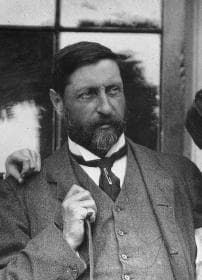
Sir Henry Rider Haggard was an English writer of adventure fiction romances set in exotic locations, predominantly Africa, and a pioneer of the lost world literary genre. He was also involved in land reform throughout the British Empire. His stories, situated at the lighter end of Victorian literature, continue to be popular and influential.
Similar books
- Journey to the Center of the Earth
Jules Verne
3.9 (154k) average on GoodreadsFantasyClassic adventure with exploration of unknown territories and hidden wonders.
- Treasure Island
Robert Louis Stevenson
A foundational treasure hunt adventure with memorable characters and perils.
- Heart of Darkness
Joseph Conrad
3.4 (415k) average on GoodreadsHistorical FictionWhile both novels explore journeys into the 'dark continent' and engage with themes of imperialism, Conrad's Heart of Darkness (1899) offers a far more critical and psychological critique of colonialism. Haggard's novel, though containing elements of danger and moral ambiguity, largely celebrates the adventurous spirit of empire. Conrad, conversely, delves into the moral decay and psychological toll of imperial exploitation, portraying the 'savagery' as residing within the colonizers themselves, a stark contrast to Haggard's more externalized 'othering' of African peoples. King Solomon's Mines maintains a sense of romantic adventure, whereas Heart of Darkness descends into a nihilistic and deeply disturbing examination of human nature under colonial rule.
- Tarzan of the Apes
Edgar Rice Burroughs
3.9 (39k) average on GoodreadsFantasyBoth King Solomon's Mines and Burroughs's Tarzan of the Apes (1912) are foundational adventure narratives set in Africa, featuring European protagonists interacting with indigenous populations and the wilderness. However, Burroughs's novel introduces the 'noble savage' trope more explicitly, with Tarzan, a white man, raised in the wild and superior to both the apes and the local Africans in many respects. While Haggard's characters, like Quatermain, are seasoned explorers, they remain outsiders in Kukuanaland. Tarzan, by contrast, becomes an integral, almost mythical, part of the African landscape, embodying a different fantasy of European dominion—not just over resources, but over nature itself. Both share problematic racial undertones, but Tarzan's narrative pushes the idea of a natural, inherent superiority of the white protagonist in the African setting further than Haggard's more grounded (though still biased) adventurers.
- Harry Potter and the Sorcerer's Stone
J.K. Rowling
4.5 (7M) average on GoodreadsFantasyRescued from a miserable life under the stairs, an orphaned boy discovers he's a wizard destined for a magical school, where he uncovers a dangerous secret tied to the dark wizard who murdered his parents.
- The Hunger Games
Suzanne Collins
4.3 (6.4M) average on GoodreadsFantasyIn a future where children fight to the death on live television, Katniss Everdeen volunteers for the arena, turning a death sentence into a fight for survival and a spark of rebellion.




Enjoyed the summary?
A summary gives you the shape of the book. The book itself has the detail, the examples and the voice.
Find King Solomon's Mines on AmazonAs an Amazon Associate, BookBrief earns from qualifying purchases. How we're funded