
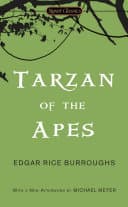
Synopsis
Covers the whole plot, including the ending.
- Difficulty
- Medium
- Pacing
- Moderate
- Mood
- Adventurous, Romantic, Exotic, Wild
- Read it if
- You love classic adventure stories, tales of 'noble savages,' and romances set against exotic backdrops.
- Skip it if
- You are sensitive to outdated cultural depictions or find colonial-era narratives problematic.
Tarzan of the Apes Plot Summary
Covers the whole plot, including the ending.
The Arrival and the Orphan
John Clayton, Lord Greystoke, and his pregnant wife, Alice, are marooned on the remote West African coast after a mutiny on their ship, the Fuwalda. They build a cabin and struggle to survive in the harsh jungle environment. Lady Greystoke gives birth to their son, John Clayton II. Lady Greystoke dies of jungle fever, and soon after, Lord Greystoke is killed by Kerchak, the leader of a tribe of great apes. The infant is left alone in the cabin, where he is discovered by Kala, a female ape who has recently lost her own baby. Kala, driven by maternal instinct, adopts the human child and raises him as her own.
Growing Up Among Apes
Kala names the human infant 'Tarzan,' which means 'White Skin' in the ape language. Tarzan grows up feeling different from his ape family because he lacks fur, strength, and natural climbing ability. He learns to hunt, gather food, and communicate with the apes. His intelligence helps him observe and learn quickly. He discovers his parents' cabin and, using their picture books, begins to teach himself to read English, though he doesn't understand the sounds of the words. He also finds his father's hunting knife, which becomes a tool for his survival and dominance in the jungle.
Challenging Kerchak's Rule
As Tarzan matures, his physical ability increases, and his intellect helps him devise strategies beyond the capabilities of the apes. He often clashes with Kerchak, the leader of the ape tribe, who views Tarzan as an outsider and a threat. Tarzan improves his fighting skills, using his knife and human cunning against the apes' brute strength. Eventually, Tarzan fights Kerchak in a battle, killing the old ape and becoming the new king of the ape tribe. This victory solidifies his place, though he still feels different.
First Encounters with Humanity
Tarzan's life changes when a tribe of cannibalistic native Africans, led by Mbonga, establishes a village near the ape territory. Tarzan observes them from a distance, interested in their appearance and customs, which are more similar to his own than those of the apes. He engages in a series of stealthy interactions, stealing their weapons and learning their ways. He rescues one of the native women, Teeka, from a lion, earning her respect but also becoming a mysterious, formidable presence in the jungle, known as the 'ghost' or 'demon' by the natives.
The Arrival of the White Party
Years later, a new group of white people arrives on the same stretch of coast. This party includes Professor Archimedes Q. Porter, his daughter Jane, their servant Esmeralda, and their rescuer, William Cecil Clayton (who is, unknown to them, Tarzan's cousin). They are marooned after their ship, the Arrow, is damaged. Tarzan, observing them from the trees, is captivated by Jane Porter, recognizing her as one of his own kind and feeling an intense, unfamiliar attraction. He secretly watches over them, protecting them from jungle dangers and the native tribe, often leaving behind signs of his presence.
Tarzan's Secret Admiration and Rescue
Tarzan's interest in Jane deepens. He saves her from a charging ape, Terkoz, and later from a lion attack. During these rescues, he carries her to safety, experiencing a physical and emotional connection. He brings her to his cabin, where he has carefully preserved his parents' belongings, including photographs and books. He leaves her there, safe, and returns to the jungle. Tarzan continues to secretly provide for the marooned party, leaving them food and supplies, all while struggling to reconcile his ape upbringing with his developing human instincts and feelings for Jane.
Encounter with D'Arnot
A French naval vessel arrives, searching for the lost American party. Lieutenant Paul D'Arnot lands and is soon captured by the native tribe. Tarzan rescues D'Arnot, taking him to his cabin. Using the picture books and D'Arnot's instruction, Tarzan rapidly learns to speak and write French, showing his intelligence. D'Arnot, impressed by Tarzan's noble manner despite his wild upbringing, recognizes him as a gentleman and begins to suspect his true identity as the lost Lord Greystoke. D'Arnot promises to help Tarzan find his place in human society and to reunite him with Jane.
Journey to Civilization and Revelation
Tarzan, accompanied by D'Arnot, travels to France and then to America, intending to find Jane Porter. He adapts quickly to civilization, though he finds many aspects of it confusing. He learns of his true identity as John Clayton, Lord Greystoke, and the heir to a fortune. He also learns that William Cecil Clayton, his cousin, has falsely claimed the title and is now engaged to Jane. Despite his heartbreak, Tarzan vows to protect Jane and ensure her happiness, even if it means sacrificing his own desires and allowing her to marry his cousin, whom she believes to be the rightful Lord Greystoke.
Confrontation and Self-Sacrifice
Tarzan encounters Jane and William Cecil Clayton in Wisconsin. He initially plans to reveal his identity and claim his birthright, but seeing Jane's apparent happiness with William, he hesitates. He intercepts a letter from Professor Porter to Jane, confirming that William is the impostor and that Tarzan is the true Lord Greystoke. However, fearing that revealing the truth would cause Jane pain and potentially ruin her reputation, Tarzan chooses to suppress the evidence. He allows Jane to believe she is marrying the rightful Lord Greystoke, sacrificing his own claim to the title and to Jane's love for her perceived happiness.
A Final Farewell and a Lingering Hope
Before Jane's wedding, Tarzan visits her one last time. He expresses his admiration and love for her in a way she doesn't fully comprehend, still unaware of his true identity. He gives her a locket containing a miniature portrait of his mother, Alice, which Jane recognizes as the face of the woman in the cabin. This gesture, along with his mysterious words, leaves Jane with a sense of wonder and confusion. Tarzan then departs, leaving her to marry William Cecil Clayton, but not before subtly hinting that he might return. The novel ends with Tarzan embracing his dual nature, a civilized man with the heart of a jungle lord, always watching over Jane from afar.
Tarzan of the Apes Characters
Tarzan (John Clayton II)
Protagonist
The orphaned son of English nobility, raised by great apes in the African jungle.
Tarzan is a complex character, a blend of primal instinct and innate human intelligence. Raised by Kala, he learns the ways of the jungle, developing incredible strength, agility, and a profound connection to nature. Despite his ape upbringing, he possesses an inherent nobility and a deep curiosity that drives him to discover his origins. He teaches himself to read, showcasing extraordinary intellect. His primary motivation is to find his place in the world, torn between his animalistic upbringing and his human heritage, especially after encountering Jane Porter. He is fiercely protective and capable of great self-sacrifice.
Relationships: Kala (Adoptive mother, deeply loved and mourned); Kerchak (Rival and eventual victim, leader of the ape tribe); Terk (Cousin and childhood companion among the apes); Jane Porter (Love interest, the catalyst for his embrace of humanity); Paul D'Arnot (Friend and mentor, teaches him French and helps him integrate into society); William Cecil Clayton (Cousin and romantic rival, unknowingly an impostor of Tarzan's title)
Jane Porter
Love Interest / Supporting
An intelligent and spirited American woman, stranded in the jungle and captivated by Tarzan.
Jane Porter is a beautiful, intelligent, and resourceful young American woman. She is the daughter of Professor Archimedes Q. Porter and is part of the marooned party. Despite her initial fear and unfamiliarity with the jungle, she exhibits courage and compassion. She is fascinated and intrigued by the mysterious 'ape-man' who repeatedly saves her life. Jane represents civilization, romance, and the human connection Tarzan yearns for. Her presence awakens a profound love and desire in Tarzan, compelling him to seek out human society and understand his own identity. She is initially unaware of Tarzan's true background.
Relationships: Tarzan (Love interest, mysterious protector); Professor Porter (Father); William Cecil Clayton (Fiancé, though she later questions her feelings)
Kala
Supporting
A female great ape who adopts and raises the orphaned infant Tarzan.
Kala is a compassionate and fiercely maternal great ape. After losing her own infant, she discovers the human baby Tarzan and, against the initial objections of her tribe, adopts him and raises him as her own. She is Tarzan's primary caregiver and protector, instilling in him a sense of belonging within the ape tribe, despite his physical differences. Her love for Tarzan is unconditional, and she defends him from Kerchak and other threats. Her death at the hands of a native warrior is a pivotal moment for Tarzan, fueling his vengeance and further isolating him from his ape family.
Relationships: Tarzan (Adoptive mother); Kerchak (Mate, though often at odds over Tarzan)
Kerchak
Antagonist / Supporting
The tyrannical and jealous leader of Tarzan's ape tribe.
Kerchak is the brutal and dominant leader of the ape tribe that adopts Tarzan. He is characterized by his immense strength, ferocity, and territorial nature. From the beginning, he views Tarzan as an unwelcome outsider and a threat to his authority, often tormenting the young Tarzan. His constant antagonism forces Tarzan to develop his cunning and fighting skills. Kerchak embodies the raw, untamed savagery of the jungle, and his eventual defeat and death at Tarzan's hands mark Tarzan's ascendancy as the dominant force in the tribe and signifies his transition from prey to predator.
Relationships: Tarzan (Antagonist, rival for dominance); Kala (Mate)
Paul D'Arnot
Supporting
A French naval lieutenant who befriends Tarzan and introduces him to human society.
Lieutenant Paul D'Arnot is a cultured and intelligent French naval officer. He is part of the search party looking for the marooned Americans. After being captured by natives and rescued by Tarzan, he quickly recognizes Tarzan's extraordinary intelligence and noble character despite his wild appearance. D'Arnot becomes Tarzan's first human friend and mentor, teaching him French and helping him understand the intricacies of human society and language. He is instrumental in Tarzan's journey to civilization and helps him piece together his true identity as Lord Greystoke, acting as a bridge between Tarzan's two worlds.
Relationships: Tarzan (Friend and mentor)
Professor Archimedes Q. Porter
Supporting
Jane's eccentric and often absent-minded father, a scholar marooned in the jungle.
Professor Porter is Jane's father, a kindly but often impractical and absent-minded scholar. He is more interested in his scientific pursuits and philosophical ponderings than in the immediate dangers of the jungle. His scholarly nature, however, is what indirectly leads Tarzan to discover his own literacy through the professor's books. He is a source of comic relief at times, but his deep love for his daughter is evident. He represents the intellectual, somewhat detached aspect of civilization, contrasting with Tarzan's primal connection to nature.
Relationships: Jane Porter (Daughter)
William Cecil Clayton
Supporting / Antagonist
Tarzan's cousin, who falsely claims the Greystoke title and vies for Jane's affection.
William Cecil Clayton is Tarzan's cousin and the man who, unknowingly, has inherited the Greystoke title and fortune in Tarzan's absence. He is part of the American party that becomes marooned. He is portrayed as a generally decent, if somewhat conventional, English gentleman. He falls in love with Jane Porter and becomes engaged to her, unknowingly becoming Tarzan's rival. His claim to the Greystoke title is legitimate in the eyes of the law, making him an unwitting antagonist, representing the societal structures that initially deny Tarzan his rightful place.
Relationships: Tarzan (Cousin and rival); Jane Porter (Fiancé)
Sabor
Mentioned / Supporting
The lioness, a frequent adversary and symbol of jungle danger.
Sabor is the generic name for the lioness in the ape language, and represents one of the major predatory threats of the jungle. Tarzan frequently encounters Sabor, honing his hunting and fighting skills against these formidable beasts. A specific lioness is responsible for the death of Kala's biological infant, and later, Tarzan saves Jane from a lioness attack. Sabor embodies the constant danger and struggle for survival in the wild, forcing Tarzan to prove his dominance over the jungle's most fearsome creatures.
Tantor
Mentioned / Supporting
The elephant, a powerful and sometimes dangerous inhabitant of the jungle.
Tantor is the generic name for elephant in the ape language. While not a singular character with a distinct personality, the elephants represent another powerful force of the jungle that Tarzan learns to respect and sometimes interact with. Tarzan occasionally rides on their backs, demonstrating his unique ability to command respect even from the largest creatures. They symbolize both the majesty and the potential danger of the wild, and Tarzan's relationship with them further highlights his mastery over his environment.
Terk
Supporting
Tarzan's ape cousin and childhood companion.
Terk is one of Tarzan's ape cousins and a frequent companion during his youth. He is often mischievous and, like the other apes, initially superior to Tarzan in physical strength and agility. However, as Tarzan grows, Terk witnesses Tarzan's developing intelligence and unique human abilities, often becoming a reluctant follower or partner in Tarzan's adventures. He represents Tarzan's closest bond within the ape tribe, aside from Kala, and showcases the complex social dynamics within the ape community.
Relationships: Tarzan (Cousin and companion)
Tarzan of the Apes Themes
Nature vs. Nurture
The novel explores whether a person's identity is determined by their genetics or their upbringing. Tarzan, born a British nobleman, is raised by apes. Despite his wild environment, his human intelligence and nobility continually assert themselves, as seen in his ability to learn to read independently and his compassion. Conversely, his ape upbringing gives him physical prowess and a deep understanding of the natural world, making him superior to most civilized men in the jungle. This theme questions what truly defines a 'man.'
“'He was a man in the full vigor of his early manhood, but a man with the training and environment of a wild beast.'”
Identity and Self-Discovery
Tarzan's central struggle is to understand who he is. He feels different from the apes, yet he is unfamiliar with humans. His discovery of his parents' cabin, the books, and the photographs provides the first clues to his true heritage. His encounters with Jane and D'Arnot further propel his quest for identity, forcing him to reconcile his 'ape-man' nature with his aristocratic birthright. The journey is not just physical but internal, as he navigates his dual existence and eventually chooses to embrace both aspects of himself.
“'He was Tarzan of the Apes, but he was also John Clayton, Lord Greystoke.'”
Civilization vs. Savagery
Burroughs contrasts the honesty of the natural world with the artificiality and often hypocrisy of human society. Tarzan embodies the 'noble savage' ideal, possessing a physical and moral superiority often lacking in the 'civilized' characters. While he eventually seeks to integrate into human society for Jane's sake, he frequently finds its customs illogical and its people weak or deceitful. The jungle, despite its dangers, offers a clear existence, while civilization presents complex social rules and hidden motives, showing the tension between instinct and societal convention.
“'He was a savage, but he was a gentleman.'”
Love and Sacrifice
Love, particularly Tarzan's love for Jane, is a transformative force. His attraction to Jane is the main reason for his desire to understand his human heritage and integrate into society. This love goes beyond physical attraction, leading to self-sacrifice. Tarzan's ultimate decision to conceal his true identity and allow Jane to marry William Cecil Clayton, believing it would secure her happiness, shows a selfless and noble form of love. This theme shows that true love involves prioritizing the beloved's well-being, even at great personal cost.
“'He loved her with all the power of his primitive, untamed heart, and he would have died for her a thousand times.'”
Colonialism and the 'Other'
The novel, set in colonial Africa, reflects contemporary attitudes towards indigenous populations and the wilderness. The native African tribes are often depicted as primitive and violent cannibals, serving as a dangerous 'other' against which both Tarzan and the white explorers define themselves. The arrival of white explorers and their attempts to impose their will or establish their presence in the jungle also touch upon themes of colonial expansion and the perceived right of Westerners to explore and exploit foreign lands. Tarzan, an 'other' to both apes and humans, navigates these cultural situations.
“'To Tarzan, the black men were as strange as the great apes, and almost as repulsive.'”
Plot Devices & Literary Techniques
The Hidden Cabin
A physical link to Tarzan's past and a repository of human knowledge.
The cabin built by Lord and Lady Greystoke serves as a crucial plot device. It is Tarzan's first connection to his human heritage, containing objects like books, a knife, and photographs. The books allow Tarzan to independently learn to read, demonstrating his extraordinary intellect and providing a foundation for his eventual understanding of spoken language. The cabin also serves as a sanctuary and a symbol of his dual identity, a place where he can be both the ape-man and the potential heir to a human legacy. It acts as a bridge between his two worlds.
Tarzan's Knife
A symbol of human ingenuity and a tool for dominance in the jungle.
Lord Greystoke's hunting knife, discovered by young Tarzan in the cabin, becomes an extension of his will and a symbol of human ingenuity. Unlike the apes' brute strength, the knife allows Tarzan to overcome physically superior opponents, including Kerchak, and assert his dominance in the jungle. It represents the technological advantage of humanity over nature and is a constant reminder of his human origins. The knife is essential for his survival, hunting, and ultimately, his rise to power among the apes.
Language Barrier
A central obstacle and a key to Tarzan's integration into human society.
The inability to communicate verbally initially isolates Tarzan from both the apes (who have their own complex language he understands) and later from humans. His self-taught literacy from his parents' books is an extraordinary feat, but he cannot speak. This barrier creates dramatic tension and highlights his 'otherness.' Lieutenant D'Arnot's patient teaching of French to Tarzan is a pivotal moment, as it unlocks Tarzan's ability to communicate with his own kind, allowing him to learn about his past and navigate the complexities of human civilization.
Mistaken Identity
A source of dramatic irony and conflict, driving the romantic subplot.
The mistaken identity of William Cecil Clayton as the rightful Lord Greystoke, and Jane's belief in this, creates significant dramatic irony and emotional conflict. The audience knows Tarzan's true lineage, but the characters do not. This device fuels Tarzan's internal struggle and ultimate self-sacrifice, as he chooses to protect Jane's happiness by allowing her to marry his impostor cousin. It highlights themes of nobility and selflessness, as Tarzan prioritizes Jane's perceived well-being over his own claim to title and love.
Tarzan of the Apes Quotes
“I am Tarzan of the Apes! I am a great killer. I am a mighty fighter. I am a brave hunter. I am a clever tracker. I am a fierce warrior. I am a terrible enemy. I am a staunch friend.”
“He was an enigma, a paradox, a creature of two worlds, and yet belonging to neither.”
“For the first time in his life Tarzan realized the full significance of the power of speech.”
“He knew nothing of the world beyond his jungle, yet he was a man, and a king in his own right.”
“And the ape, seeing the tiny babe, and noting that it was of her own kind, and yet so different, was filled with a strange, maternal longing.”
“He was a wild thing, but he was a gentleman by birth.”
“Love is not a thing of the mind, but of the heart.”
“The jungle is a cruel master, but a just one.”
“He saw that the things he had learned from his books were not always true in practice.”
“She was a woman, and he was a man, and the primeval law of nature drew them irresistibly together.”
“To him the jungle was an open book, whose every page was familiar.”
“For the first time in his life, he knew fear.”
“Civilization, he found, was often more savage than the jungle.”
Quiz
10 questions on the plot and the characters. Each answer comes with a short explanation.
Question 1
Who was the great ape that adopted and raised Tarzan after his parents' death?
- Kerchak
- Kala
- Tublat
- Sabor
Show answer
B. Kala Kala was the she-ape who found the infant Tarzan and, having recently lost her own child, adopted him and raised him as her own, protecting him fiercely.
Question 2
What skill did Tarzan develop that allowed him to communicate with many jungle animals?
- He learned to mimic their calls perfectly.
- He used a special sign language he invented.
- He had an innate telepathic ability with animals.
- He trained the animals to understand human speech.
Show answer
A. He learned to mimic their calls perfectly. Tarzan's unique upbringing allowed him to learn the 'language' of the jungle, primarily through mimicking the calls and sounds of various creatures, allowing him to communicate and understand them.
Question 3
What was the name of the ship on which Tarzan's parents were marooned?
- The Venture
- The Fuwalda
- The Sea Serpent
- The Wanderer
Show answer
B. The Fuwalda Tarzan's parents, Lord and Lady Greystoke, were marooned after a mutiny on the ship 'Fuwalda', leading to their eventual fate in the jungle.
Question 4
Who was Tarzan's primary antagonist among the apes, the leader of the ape tribe who often challenged him?
- Terk
- Tublat
- Kerchak
- Bolgani
Show answer
C. Kerchak Kerchak was the tyrannical leader of the ape tribe who frequently clashed with Tarzan due to his different appearance and intelligence, viewing him as an outsider and a threat.
Question 5
How did Tarzan learn to read and write despite being raised by apes?
- He was taught by a marooned sailor who survived the mutiny.
- He discovered his parents' cabin and taught himself using picture books and a primer.
- Jane Porter taught him the basics after they met.
- He observed the white men's expedition and mimicked their actions.
Show answer
B. He discovered his parents' cabin and taught himself using picture books and a primer. Tarzan stumbled upon his deceased parents' cabin, where he found children's books and a primer. Through sheer determination and intelligence, he deciphered the symbols and taught himself to read, though he couldn't speak English yet.
Question 6
What is Tarzan's true aristocratic title by birth?
- Lord Clayton
- Earl of Greystoke
- Duke of Greystoke
- Baron of Greystoke
Show answer
B. Earl of Greystoke Tarzan was born John Clayton, son of Lord John Clayton, an English nobleman who was the Earl of Greystoke. Thus, Tarzan is the true Earl of Greystoke.
Question 7
Which of these animals is NOT explicitly mentioned as a friend or associate of Tarzan in his early jungle life?
- Tantor, the elephant
- Numa, the lion
- Sabor, the lioness
- Sheeta, the panther
Show answer
D. Sheeta, the panther While Tarzan encounters many jungle creatures, the original book specifically names Tantor the elephant and Numa the lion as friends, and Sabor as the lioness (a common foe). Sheeta the panther is a name from later Tarzan stories, not prominently featured as a close associate or named in the initial book's description provided.
Question 8
What is the primary theme explored through Tarzan's character development in the book?
- The triumph of technology over nature.
- The inherent nobility of man despite savage upbringing.
- The corruption of civilization on natural instincts.
- The superiority of brute strength over intellect.
Show answer
B. The inherent nobility of man despite savage upbringing. A core theme of 'Tarzan of the Apes' is the idea that Tarzan's innate human nobility, intelligence, and even aristocratic instincts shine through, despite being raised in the savage wilderness by apes, suggesting a 'nature vs. nurture' aspect where nature ultimately prevails.
Question 9
What causes the arrival of the white men's expedition, including Jane Porter, into Tarzan's part of the jungle?
- They were searching for a lost treasure map.
- Their ship was wrecked, forcing them ashore.
- They were on a scientific expedition to study apes.
- They were missionaries attempting to convert native tribes.
Show answer
B. Their ship was wrecked, forcing them ashore. The party including Jane Porter, Professor Porter, and Mr. Philander was marooned on the African coast after their ship, the Arrow, was damaged, leading them to set up camp in the jungle near Tarzan's territory.
Question 10
How does Tarzan initially react to seeing Jane Porter and the other white people?
- He immediately tries to communicate with them using ape calls.
- He observes them from a distance, fascinated by their appearance and customs.
- He attacks them out of fear and territorial instinct.
- He attempts to capture Jane to bring her to his ape tribe.
Show answer
B. He observes them from a distance, fascinated by their appearance and customs. Tarzan, having never seen other humans like himself, is initially curious and observes the white people from the safety of the trees, studying their behavior, tools, and especially Jane, with a mix of wonder and fascination.
Tarzan of the Apes FAQ
What is Tarzan of the Apes about?
Tarzan of the Apes tells the origin story of John Clayton III, an orphaned English lord, who is raised by a tribe of great apes in the African jungle after his parents are marooned and die. He learns to survive in the wild, becoming the legendary Tarzan, and eventually encounters other humans, including the American beauty Jane Porter, leading to his first complex interactions with civilization and his own heritage.
Why should I read Tarzan of the Apes?
You should read Tarzan of the Apes for its captivating blend of adventure, romance, and exploration of human nature versus nurture. It offers a thrilling escape into a fantastical jungle world, filled with suspenseful encounters with wild animals, the discovery of a unique hero, and a compelling narrative about identity and belonging, as Tarzan navigates his dual existence between the animal kingdom and human society.
What is the background/setting of Tarzan of the Apes?
The book is primarily set in the lush, untamed jungles of equatorial West Africa during the late 19th and early 20th centuries. It begins with Tarzan's aristocratic English parents being marooned on the coast, before quickly moving into the deep jungle where Tarzan is raised by the great apes, creating a vivid backdrop for his wild upbringing and subsequent encounters with various human expeditions.
What are the most memorable quotes?
While the book is less known for direct quotes and more for its narrative drive, a memorable sentiment is Tarzan's struggle with his identity, often expressed through his thoughts about being 'a mighty hunter and a mighty fighter' among the apes, yet feeling a profound difference when he encounters humans. Another is his simple, powerful declaration of love for Jane, transcending language barriers.
What writing style does Edgar Rice Burroughs use?
Edgar Rice Burroughs employs a direct, action-oriented, and often sensationalist writing style that prioritizes plot progression and adventure. His prose is descriptive, particularly of the jungle environment and action sequences, and he uses a relatively straightforward narrative to propel the reader through Tarzan's extraordinary life, often with dramatic cliffhangers and romantic flourishes.
What minor details add significant meaning?
The presence of Tarzan's deceased parents' cabin, filled with books and a primer, is a crucial detail. This seemingly minor abandoned dwelling provides Tarzan with the tools for self-education, allowing him to learn to read and write English without ever hearing it spoken, which profoundly shapes his intellect and later ability to communicate with his own species, distinguishing him from a mere 'savage.'
What are some subtle foreshadowing moments?
One subtle foreshadowing moment is Tarzan's innate curiosity about the strange markings in his parents' books, long before he understands their meaning. This hints at his latent human intelligence and his eventual self-education. Another is his constant observation of human anatomy and behavior from a distance, which prepares him, in a rudimentary way, for his eventual integration into human society, even if imperfectly.
What unexpected character connections exist?
An unexpected connection is between Tarzan and the French naval officer, Lieutenant D'Arnot. After Tarzan rescues D'Arnot, the officer not only teaches Tarzan French but also helps him navigate the complexities of human society, becoming his first true confidante and a bridge to the civilized world, far beyond what their initial adversarial encounter might suggest.
What are unspoken character motivations?
Tarzan's unspoken motivation, beyond mere survival, is a deep-seated longing for belonging and understanding, particularly after he encounters Jane and recognizes his difference from the apes. He yearns to comprehend his true heritage and to find his place among his own kind, even as he struggles with the perceived superiority of his jungle life. Kala's motivation to protect Tarzan, despite his obvious differences, stems from her grief over losing her own child, leading to an unconditional maternal love.
What psychological complexities do characters exhibit?
Tarzan exhibits complex psychological traits, grappling with an identity crisis as he oscillates between his ape upbringing and his human intellect. He experiences profound loneliness, a sense of being 'other' among both apes and humans, and struggles with the artificiality and perceived weaknesses of civilization. Jane, too, shows complexity, torn between her love for Tarzan's primal strength and her societal expectations and loyalty to her fiancé, Clayton.
What are the major emotional turning points?
A major emotional turning point for Tarzan is the death of Kala, his ape mother, which solidifies his sense of loss and spurs his growth as a protector and avenger. Another is his first encounter with Jane Porter, which ignites a powerful, confusing mix of attraction and curiosity about his own species, profoundly altering his perception of himself and his future.
How do relationship dynamics evolve?
The relationship dynamics evolve significantly, particularly between Tarzan and Jane. Initially, Tarzan observes Jane with a primal curiosity, which transforms into protective affection and eventually profound love. Their dynamic is complicated by language barriers and cultural differences, as Jane initially views him as a savage but gradually recognizes his nobility. Tarzan's relationship with the apes also shifts from being one of a foster child to a respected, often feared, leader.
Which parts remain ambiguous or open-ended?
The exact future of Tarzan's claim to the Greystoke title and fortune remains open-ended at the book's conclusion, as he deliberately conceals his true identity from Jane and her fiancé, William Clayton. His personal choice to step aside for Jane's happiness, despite his love, leaves the question of his eventual reclamation of his birthright, and his ultimate place in society, unresolved within this first novel.
What are controversial scenes or decisions?
One controversial aspect, viewed through a modern lens, is Tarzan's initial treatment of Jane, where he observes and 'claims' her without her full consent or understanding, reflecting early 20th-century adventure tropes. Another is his decision at the end to sacrifice his own happiness and keep his identity a secret from Jane, allowing her to marry William Clayton, which some readers find noble while others find frustrating or unnecessarily self-sacrificing.
Tarzan of the Apes ending explained: how it ends & what it means
Tarzan of the Apes ends with Tarzan, having discovered his true identity as Lord Greystoke and inherited a vast fortune, choosing to conceal this from Jane Porter. He sacrifices his chance to be with her when he believes she loves his cousin, William Clayton, who is also Lord Greystoke (unbeknownst to him, a usurper). He tells Jane that he is 'Tarzan of the Apes' and that he has no claim to the title or wealth, allowing her to marry Clayton, signifying his profound selflessness and his complex relationship with his human heritage versus his jungle identity.
About the author
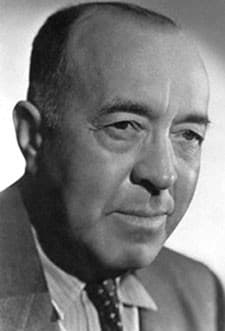
Edgar Rice Burroughs was an American writer, best known for his prolific output in the adventure, science fiction, and fantasy genres. Best-known for creating the characters Tarzan and John Carter, he also wrote the Pellucidar series, the Amtor series, and the Caspak trilogy.
Similar books
- The Jungle Book
Rudyard Kipling
3.9 (104k) average on GoodreadsFantasyFeatures a human child raised by animals in the wilderness.
- King Solomon's Mines
H. Rider Haggard
3.8 (43k) average on GoodreadsFantasyClassic adventure in unexplored African territories with a focus on discovery and peril.
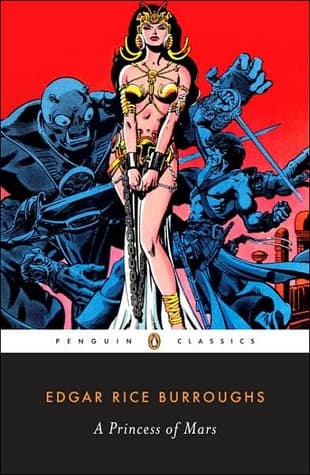
- A Princess of Mars
Edgar Rice Burroughs
3.8 (51k) average on GoodreadsFantasyAnother Burroughs classic featuring a hero adapting to a wild, new world and falling in love.
- The Call of the Wild
Jack London
3.9 (341k) average on GoodreadsChildren'sLondon's novel also explores primal instincts and survival in the wilderness but offers a more psychologically realistic and less racially problematic depiction of nature and 'savagery,' focusing on animal protagonists rather than human racial hierarchies. It lacks the overt colonialist gaze of 'Tarzan'.
- Harry Potter and the Sorcerer's Stone
J.K. Rowling
4.5 (7M) average on GoodreadsFantasyRescued from a miserable life under the stairs, an orphaned boy discovers he's a wizard destined for a magical school, where he uncovers a dangerous secret tied to the dark wizard who murdered his parents.
- The Hunger Games
Suzanne Collins
4.3 (6.4M) average on GoodreadsFantasyIn a future where children fight to the death on live television, Katniss Everdeen volunteers for the arena, turning a death sentence into a fight for survival and a spark of rebellion.



Enjoyed the summary?
A summary gives you the shape of the book. The book itself has the detail, the examples and the voice.
Find Tarzan of the Apes on AmazonAs an Amazon Associate, BookBrief earns from qualifying purchases. How we're funded