
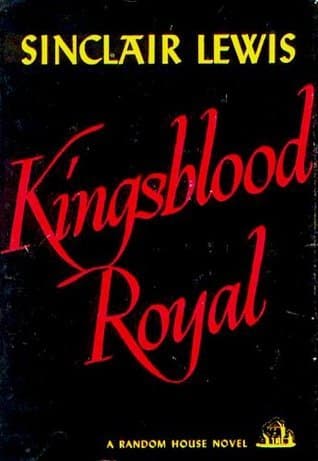
Synopsis
Covers the whole plot, including the ending.
- Difficulty
- Medium
- Pacing
- Moderate
- Mood
- Thought-provoking, Satirical, Reflective, Socially Conscious
- Read it if
- You are interested in classic American literature that tackles complex themes of race, identity, and social division with both humor and poignancy.
- Skip it if
- You prefer fast-paced thrillers or lighthearted reads without significant social commentary.
Kingsblood Royal Plot Summary
Covers the whole plot, including the ending.
The Genealogical Revelation
Neil Kingsblood, a white banker in Grand Republic, Minnesota, with his wife Vestal and daughter Peg, starts researching his family tree. What begins as a hobby to trace his Scotch-Irish roots changes when he finds a surprising entry: a Black ancestor, Xavier Pic, from the early 19th century. This discovery, confirmed by historical records, breaks apart Neil's comfortable identity. He struggles with what this means, at first keeping it secret from Vestal and his friends, feeling a shift in how he sees himself. The discovery is not just a historical fact but a deep personal crisis.
Confession and Initial Reactions
Overwhelmed by his discovery, Neil tells his wife, Vestal. He explains the lineage, the historical documents, and the fact of his small amount of Black ancestry. Vestal at first disbelieves and is confused, then wants to dismiss it as a mere historical detail, irrelevant to their lives. She struggles to understand Neil's deep internal struggle, seeing it as an academic problem rather than a fundamental change in their identity. Her practical nature keeps her from fully grasping the deep implications for Neil, causing an initial disconnect between them about the revelation's importance.
Seeking Connection
Driven by a growing need to understand his newly found heritage, Neil quietly explores the Black community in Grand Republic. He visits Black-owned businesses, attends a Black church service, and looks for chances to interact with people he now considers his relatives. These first steps are often awkward, as he is an outsider, yet he feels a strong pull. He is drawn to intellectual and activist figures in the community, such as Dr. Ashworth, a respected Black physician, and Reverend Boone, a minister, hoping to find guidance and acceptance. This exploration marks his first moves away from his previously segregated white life.
Embracing a New Identity
After thinking it over and feeling more certain, Neil decides to publicly acknowledge his Black ancestry. He starts to openly join the Black community, attending social events and speaking up for their rights. This public statement shocks his former white social and professional groups. His friends and colleagues, who knew him as a white man, react with confusion, discomfort, and hostility. His boss at the bank, Mr. Kimbro, disapproves of his actions, fearing the effect on the bank's reputation. This period marks Neil's conscious move away from the white race and his active acceptance of his new identity.
Social Ostracism and Professional Ramifications
As Neil commits more to his Black identity, white society's reactions grow stronger. He and Vestal are increasingly avoided by their former friends; invitations stop, and polite greetings turn cold. Vestal, who struggles to adjust to their new social isolation, resents Neil's choices. At work, Neil is targeted. His boss, Mr. Kimbro, pressured by conservative clients and the community, arranges Neil's dismissal from the bank, giving vague reasons but clearly influenced by Neil's racial identification. This loss of income and social standing strains the Kingsblood family, making them face the harsh realities of racial prejudice and the results of Neil's beliefs.
Vestal's Struggle and Peg's Innocence
Vestal Kingsblood finds it harder to cope with their changed situation. She misses their comfortable white social life, the ease of their former existence, and resents the sacrifices Neil's choices have forced on her. Her love for Neil is tested by her inability to fully accept his new identity or the challenges it brings. Their daughter, Peg, however, remains mostly unaware of the racial tensions. She interacts with her parents' Black friends with innocent curiosity and openness, untouched by adult prejudices. Peg's lack of understanding highlights how racial bias is learned and contrasts with the adults' struggles.
Deepening Engagement with the Black Community
Despite the difficulties, Neil finds new purpose and belonging in the Black community. He becomes deeply involved in local Black organizations, advocating for civil rights, economic opportunities, and social justice. He learns firsthand about the systemic discrimination, poverty, and resilience Black Americans face. He forms strong bonds with figures like Dr. Ashworth, who becomes a mentor, and various community leaders. Neil's experiences within this community strengthen his resolve and solidify his commitment to his chosen identity, even as it separates him further from his past. He finds a sense of authenticity and moral clarity he never had before.
The Housing Conflict
Wanting a better home for his family and to challenge racial segregation, Neil buys a house in a mostly white neighborhood. This act is a deliberate challenge, meant to assert his right to live wherever he chooses, regardless of his racial identity. The white residents of the neighborhood react with anger and hostility, organizing to stop the Kingsbloods from moving in. They use various tactics, from petitions and threats to vandalism and intimidation, determined to keep their community segregated. This conflict grows into a major battle, drawing public attention and bringing the issue of housing discrimination into the open.
The Siege and the Standoff
The situation around the Kingsblood's new home reaches a peak. An angry white mob gathers outside, protesting their presence and demanding they leave. The family, along with a few supportive Black friends and allies, finds themselves under attack. The mob's actions escalate from verbal threats to throwing objects and trying to force their way into the house. Neil, Vestal, and their friends prepare for a violent confrontation, defending their property and their right to live there. The standoff represents the larger racial conflict in America, with the Kingsbloods' house becoming a symbol for the deep prejudices and tensions of the era.
Resignation and a Future Unknown
The attack eventually ends, but the Kingsbloods' future in Grand Republic is still uncertain. They have made a strong statement and endured significant hardship, but the immediate outcome is not a clear win. Neil has lost his job, alienated most of his former white friends, and put his family through immense stress. Vestal has been forced to confront the harsh realities of racial prejudice, and her relationship with Neil is permanently changed. The novel ends with Neil and his family having paid a high price for his beliefs, yet they have also created a new, authentic identity. Their fight against racial injustice is far from over, but Neil has found his place in the struggle.
Principal Figures
Neil Kingsblood
Protagonist
A white-passing banker who discovers he has black ancestry and embraces his new identity.
Neil is initially a typical, comfortable middle-American white man, a banker with a respectable job and a pleasant suburban life. He is intelligent and somewhat introspective, but his life has been largely unexamined until his genealogical discovery. Driven by a strong sense of integrity and a need for authenticity, he cannot ignore the truth of his heritage. He is courageous and principled, willing to sacrifice his social standing and career for his beliefs, and deeply committed to understanding and advocating for the black community. His journey is one of radical self-discovery and moral awakening.
Relationships: Vestal Kingsblood (Husband, initially close but strained by his racial choices); Peg Kingsblood (Devoted father); Dr. Ashworth (Mentor and friend in the black community); Mr. Kimbro (Antagonistic boss who fires him)
Vestal Kingsblood
Supporting
Neil's wife, who struggles to accept and adapt to his new racial identity.
Vestal is initially depicted as a conventional middle-class wife, focused on social appearances, comfort, and maintaining a respectable life. She loves Neil but is deeply rooted in the segregated social norms of her time. Her reaction to Neil's discovery is one of confusion, denial, and eventually resentment, as their lives are upended. She struggles to understand the profound implications for Neil, viewing his choices as a disruptive, unnecessary burden. While she eventually stands by him during the siege, her journey is marked by a reluctant acceptance rather than enthusiastic embrace of his new identity, highlighting the societal pressures on white women of the era.
Relationships: Neil Kingsblood (Wife, relationship strained by his racial choices); Peg Kingsblood (Mother)
Peg Kingsblood
Supporting
Neil and Vestal's young daughter, innocent of racial prejudice.
Peg is a young, innocent child, largely unaware of the complex racial dynamics and prejudices that dominate the adult world. She is depicted as open-minded and curious, interacting with people of all races without the learned biases of her parents' generation. Her presence often serves as a poignant contrast to the adult struggles, highlighting the natural lack of prejudice in children. She represents the hope for a future free from racial division, as her interactions with black characters are genuine and unburdened by societal expectations. Her innocence underscores the absurdity and destructiveness of adult prejudice.
Relationships: Neil Kingsblood (Daughter); Vestal Kingsblood (Daughter)
Dr. Ashworth
Supporting
A respected black physician and intellectual in Grand Republic who becomes Neil's mentor.
Dr. Ashworth is a highly educated, dignified, and articulate black man who serves as a pillar of the black community in Grand Republic. He is a physician, an intellectual, and a civil rights advocate, embodying resilience and strength in the face of systemic racism. He becomes a crucial mentor and friend to Neil, guiding him through his journey of self-discovery and educating him about the realities of black life in America. He provides Neil with insight, support, and a sense of belonging, helping him navigate the complexities of his new identity and the challenges he faces.
Relationships: Neil Kingsblood (Mentor and friend)
Mr. Kimbro
Antagonist
Neil's conservative boss at the bank, representing institutional racism.
Mr. Kimbro is Neil's employer at the local bank, a representative of the established white power structure and conservative business interests. He is outwardly polite but fundamentally prejudiced, prioritizing the bank's reputation and his own social standing over fairness or individual rights. He views Neil's embrace of his black heritage as a scandalous and damaging act that threatens the bank's image. He orchestrates Neil's dismissal, embodying the institutional racism that punishes those who defy racial norms. Kimbro is not overtly malicious but rather a product of his time, driven by fear and the desire to maintain the status quo.
Relationships: Neil Kingsblood (Employer, then antagonist)
Reverend Boone
Supporting
A charismatic black minister who leads a prominent church in Grand Republic.
Reverend Boone is a dynamic and influential figure within the black community, known for his powerful sermons and his role as a spiritual and community leader. He is a source of inspiration and strength for his congregation, and Neil is drawn to his church as he explores his heritage. Boone represents the spiritual and communal resilience of black Americans, providing a space for solidarity and hope amidst adversity. He supports Neil's integration into the community and stands as a beacon of faith and activism.
Relationships: Neil Kingsblood (Community leader and spiritual guide)
Professor Max Gottschalk
Mentioned
The genealogist who helps Neil confirm his black ancestry.
Professor Gottschalk is the meticulous and somewhat eccentric genealogist who, through his diligent research, provides Neil with the irrefutable evidence of his black ancestry. Though not a major character in terms of direct interaction, his role is pivotal in triggering the entire plot. He represents the objective, historical truth that shakes Neil's foundation and sets him on his transformative journey. His expertise lends credibility to Neil's discovery, making it impossible for Neil (or the reader) to dismiss the revelation.
Relationships: Neil Kingsblood (Genealogical researcher who helps him)
Themes & Insights
The Construction of Racial Identity
The novel explores how racial identity is not just genetic but a complex social construct, shaped by self-perception, societal recognition, and personal experience. Neil's journey from a 'white' man to a 'black' man, despite his minimal African ancestry, shows that race is a fluid concept enforced by social norms. His decision to 'resign from the white race' is a deliberate act of choosing an identity based on a fractional truth, showing how deeply ingrained societal definitions of race are, and how hard it is to defy them. This theme is central to Neil's internal struggle and external conflict, especially when he explains his heritage to Vestal or faces exclusion from his former white friends.
“He was no longer a white man. He was a black man. Not by the drop of blood, but by the will to be.”
The Hypocrisy and Brutality of Prejudice
Lewis clearly shows the deep hypocrisy and brutal nature of racial prejudice in mid-20th century America. Through Neil's experiences, the novel illustrates how easily seemingly 'liberal' white individuals become hostile when their social order is challenged. The speed with which Neil is shunned, fired, and eventually besieged by a mob reveals the violent currents beneath polite society. The contrast between stated ideals of equality and the lived reality of segregation and discrimination is stark. This theme is especially clear in the hostile reactions of Mr. Kimbro and the white neighborhood during the housing conflict, ending in the violent attack on the Kingsblood home.
“It was not a matter of a man having a drop of Negro blood; it was a matter of a man daring to say he had it.”
The Search for Authenticity and Belonging
Neil's quest is a search for authenticity. His comfortable white life, though outwardly successful, lacks deeper meaning for him. Discovering his Black ancestry, though shocking at first, becomes a chance for him to live a more truthful and principled life. He actively seeks belonging within the Black community, finding a sense of purpose and genuine connection that was absent before. This theme explores the human need to align one's identity with one's values, even if it means sacrificing social acceptance. His growing involvement with Dr. Ashworth and the Black community, and his willingness to fight for their rights, shows his newfound sense of belonging and authentic self.
“He had never known how much he had longed for a people of his own, for a loyalty that demanded something more than convenience.”
The Destructive Power of Social Conformity
The novel criticizes the immense pressure of social conformity and its damaging effect on individual freedom and justice. Vestal's struggle to accept Neil's choices, and her distress over their lost social standing, show how powerful societal expectations can be. The white community's collective anger and coordinated efforts to exclude and punish Neil demonstrate the severe consequences for those who defy established norms, especially racial ones. This theme highlights how conformity perpetuates injustice by stifling disagreement and enforcing segregation, making it difficult for individuals to act on their conscience. The unanimous rejection by Neil's former friends and his dismissal from the bank are clear examples of this conformity.
“To be white, in Grand Republic, was not merely a color; it was a caste, a creed, a way of life that had to be defended at all costs.”
Plot Devices & Literary Techniques
The Genealogical Discovery
The revelation of Neil's black ancestry serves as the primary inciting incident.
The discovery of Xavier Pic, Neil's black ancestor, is the pivotal plot device that sets the entire narrative in motion. It acts as a catalyst, shattering Neil's preconceived notions of himself and his place in society. This single piece of information transforms an ordinary man's life into an extraordinary journey of self-discovery and social conflict. Without this genealogical revelation, Neil would have continued living his unexamined white life, and the novel's exploration of racial identity and prejudice would not have occurred. It's the engine of his transformation.
Symbolic House Purchase
Neil's purchase of a house in a white neighborhood as a deliberate act of defiance.
The act of Neil purchasing a house in a white neighborhood is a highly symbolic plot device. It is not merely a practical decision for better living conditions but a deliberate challenge to the deeply entrenched racial segregation of the era. The house becomes a physical manifestation of Neil's assertion of his rights and his defiance of racial barriers. The subsequent siege by the white mob elevates the conflict from personal to communal, transforming the house into a battleground for civil rights and exposing the raw prejudice within the community. It forces the abstract issue of race into a concrete, violent confrontation.
The 'One-Drop Rule' Inversion
The novel actively engages with and subverts the traditional 'one-drop rule'.
The 'one-drop rule' historically dictated that even a single drop of African blood made a person black, irrespective of appearance. Lewis inverts this by having Neil, who is physically white-passing, *choose* to identify as black based on a distant ancestor. This device challenges the biological determinism of race and highlights its social construction. Neil's decision to embrace his 'one-thirty-second' black heritage, despite the severe consequences, underscores that identity can be a conscious choice and a moral stance, rather than solely an imposed biological fact, thus complicating and critiquing the traditional application of the rule.
Kingsblood Royal Quotes
“The greatest joy of all is to be a stranger in a strange land, and to find yourself at home.”
“It was not a matter of color, but of the soul. Of the soul that could be free only when it had broken the chains of the past.”
“He knew now that he had always been a Negro, even when he had not known it.”
“The world was full of men who were proud of their ancestors, but he was proud of his future.”
“There are no races, only the human race.”
“He had sought for freedom and found a prison, but a prison with a door that led to the stars.”
“To deny one's blood is to deny one's self.”
“The only way to fight a prejudice is to live it down.”
“He was not merely a man who had discovered he was a Negro; he was a man who had discovered he was a human being.”
“The real tragedy is not in being different, but in pretending to be the same.”
“Love is not color-blind; it sees all colors and loves them all.”
“The world had always been divided, but he had never seen the lines so clearly drawn.”
“It was not enough to tolerate; one must understand.”
“He was a king, not by birth, but by the royalty of his spirit.”
Quiz
10 questions on the plot and the characters. Each answer comes with a short explanation.
Question 1
What shocking discovery does Neil Kingsblood make about his ancestry?
- He is descended from European royalty.
- He has Native American heritage.
- He has African blood.
- He is adopted and not biologically related to his family.
Show answer
C. He has African blood. Neil Kingsblood's central discovery is that he has African ancestry, which profoundly changes his life and perspective.
Question 2
Before his discovery, what was Neil Kingsblood's profession?
- A lawyer
- A doctor
- A banker
- A journalist
Show answer
C. A banker The book describes Neil Kingsblood as a 'typical middle-American banker' before his life-altering discovery.
Question 3
What is the primary theme explored in 'Kingsblood Royal' regarding American society?
- The conflict between urban and rural lifestyles.
- The disparity between the rich and the poor.
- The racial divide between black and white Americans.
- The impact of industrialization on traditional values.
Show answer
C. The racial divide between black and white Americans. The novel explicitly portrays 'two Americas, one black, one white,' focusing on the racial issues of its time.
Question 4
What is the initial reaction of Neil's wife, Vestal, to his discovery of African ancestry?
- She immediately embraces his new identity and joins him in activism.
- She is initially shocked and struggles to accept the implications, fearing social repercussions.
- She encourages him to keep it a secret to protect their family's status.
- She denies the validity of the discovery and urges him to forget it.
Show answer
B. She is initially shocked and struggles to accept the implications, fearing social repercussions. Vestal's reaction is complex and initially fraught with fear and confusion, reflecting the societal pressures of the time regarding racial identity.
Question 5
How does Neil's social standing and relationships in Grand Republic change after his heritage becomes known?
- He gains more respect from his white colleagues for his honesty.
- He is largely ostracized by his former white social circles and friends.
- His status remains largely unchanged as people don't care about ancestry.
- He becomes a celebrity and is sought after for interviews.
Show answer
B. He is largely ostracized by his former white social circles and friends. One of the key plot points is Neil's social alienation from his former white community once his African heritage is revealed, highlighting the prevalent racism.
Question 6
What is the name of the fictional city where most of the story takes place?
- Zenith
- Grand Republic
- Gopher Prairie
- Mankato
Show answer
B. Grand Republic The story is set in the fictional city of Grand Republic, a typical middle-American setting often used by Lewis.
Question 7
What significant action does Neil take to publicly declare his new identity and align with the black community?
- He runs for political office as a representative for the black community.
- He opens a business exclusively catering to African American patrons.
- He moves into the black neighborhood and actively participates in its social and political life.
- He writes a tell-all book about his experiences.
Show answer
C. He moves into the black neighborhood and actively participates in its social and political life. Neil's decision to move into the black neighborhood and integrate himself into that community is a crucial step in his 'resignation from the white race' and embracing his new identity.
Question 8
What is the ultimate consequence for Neil Kingsblood and his family at the novel's conclusion, as a result of his racial identification?
- They achieve widespread acceptance and become symbols of racial harmony.
- They are forced to leave Grand Republic and start a new life in a more racially tolerant city.
- They face legal challenges and are evicted from their home, symbolizing the harsh realities of racial discrimination.
- They successfully integrate both black and white social circles.
Show answer
C. They face legal challenges and are evicted from their home, symbolizing the harsh realities of racial discrimination. The novel concludes with Neil and his family facing severe consequences, including eviction, which underscores the enduring and harsh racial barriers of the period.
Question 9
How does Sinclair Lewis use satire and irony in 'Kingsblood Royal' to comment on American society?
- By portraying the black community as entirely free from internal conflicts and prejudice.
- By presenting the white characters' 'enlightened' views on race as genuinely progressive.
- By highlighting the absurdity and hypocrisy of racial classifications and prejudices through Neil's experiences.
- By creating a utopian vision of racial integration that is easily achieved.
Show answer
C. By highlighting the absurdity and hypocrisy of racial classifications and prejudices through Neil's experiences. Lewis employs satire and irony to expose the irrationality and hypocrisy of racial prejudice, particularly through the reactions of the white characters to Neil's discovery and his subsequent choices.
Question 10
What historical context is crucial for understanding the challenges Neil Kingsblood faces in the novel?
- The post-Civil War Reconstruction era and the rise of Jim Crow laws.
- The Roaring Twenties and the Jazz Age's cultural shifts.
- Mid-20th century America (1940s) with its deeply entrenched racial segregation and 'one-drop rule' mentality.
- The Civil Rights Movement of the 1960s and its push for equality.
Show answer
C. Mid-20th century America (1940s) with its deeply entrenched racial segregation and 'one-drop rule' mentality. Published in 1947, the novel directly reflects the racial climate of mid-20th century America, where strict segregation and the 'one-drop rule' heavily dictated racial identity and social standing.
Kingsblood Royal FAQ
What is the central premise of 'Kingsblood Royal'?
The novel centers on Neil Kingsblood, a seemingly typical white middle-American banker living in Grand Republic, Minnesota, who discovers he is of partial African American descent. This revelation upends his comfortable life and forces him to confront the stark realities of racial prejudice and segregation in 1940s America, leading him to identify with the Black community.
Who is Neil Kingsblood before his discovery, and what is his initial social standing?
Before his discovery, Neil Kingsblood is a respected, albeit somewhat complacent, white banker in Grand Republic. He enjoys a comfortable middle-class life with his wife, Vestal, and daughter, Peggy, living in a seemingly idyllic, segregated community, completely unaware of his mixed heritage.
What event triggers Neil's investigation into his ancestry?
Neil's investigation is sparked by a casual remark from his mother about a distant relative's 'dark' complexion and a subsequent genealogical inquiry into his family history. This leads him to uncover evidence, specifically through an old family Bible and records, that one of his ancestors, Xavier Pic, was a Black man who 'passed' for white.
How does Neil's relationship with his wife, Vestal, change after his racial discovery?
Vestal initially struggles significantly with Neil's revelation and his subsequent immersion into the Black community. While she tries to be supportive, her ingrained prejudices and fear of social ostracization create tension and distance between them, highlighting the profound societal pressures of the time.
What role does the fictional city of Grand Republic, Minnesota, play in the narrative?
Grand Republic serves as a microcosm of segregated America in the 1940s, with its clear racial lines, social clubs, and housing divisions. It represents the 'white' world Neil initially inhabits and the rigid societal structures he challenges, showcasing the hypocrisy and prejudice beneath its placid surface.
Are there any subtle hints about Neil's heritage before the explicit discovery?
Lewis subtly hints at Neil's ancestry through minor physical descriptions, such as his slightly darker complexion or hair texture compared to other 'white' characters, though these are easily overlooked by the reader until the truth is revealed. There are also oblique references to a mysterious branch of his family tree that his mother avoids discussing.
How does the character of Ragland, the Black journalist, influence Neil?
Ragland acts as a guide and mentor for Neil, introducing him to the realities and complexities of the Black community. He provides Neil with intellectual and emotional support, helping him navigate his new identity and understand the systemic racism he now faces, offering a crucial bridge between two worlds.
What is the significance of Neil's ancestor, Xavier Pic, in the overall narrative?
Xavier Pic's story of 'passing' for white highlights the historical fluidity and constructed nature of racial identity in America. His journey provides a direct lineage for Neil's discovery and underscores the long-standing, often hidden, connections between Black and white families, challenging the notion of 'pure' racial lines.
How does Neil's initial understanding of race evolve throughout the book?
Initially, Neil holds a superficial, prejudiced view of race, typical of his white upbringing. After his discovery, his understanding shifts dramatically from an abstract concept to a lived experience, forcing him to confront his own internalized biases and develop a profound empathy for the struggles of the Black community.
What psychological impact does 'resigning from the white race' have on Neil?
Resigning from the white race causes Neil immense psychological turmoil, including identity crisis, social alienation, and a re-evaluation of all his past assumptions. He experiences both liberation in embracing his true self and profound isolation as he loses his former social standing and faces new forms of discrimination.
How do the 'white' characters in the novel react to Neil's change, and what does this reveal about their psychology?
Many 'white' characters react with shock, disbelief, anger, and betrayal, quickly ostracizing Neil and his family. Their reactions reveal deep-seated prejudices, fear of miscegenation, and an unwillingness to challenge the established racial hierarchy, exposing the fragility of their own perceived social order.
What internal conflicts does Neil face regarding his daughter, Peggy, and her future?
Neil grapples with the difficult decision of how to raise Peggy and whether to reveal her own partial Black heritage, knowing it will subject her to the same discrimination he faces. He struggles between protecting her innocence and preparing her for a world that will judge her based on her ancestry, fearing for her social acceptance and happiness.
Is Neil's transformation purely altruistic, or are there elements of self-interest or a search for meaning?
While Neil develops genuine empathy and a desire for social justice, his transformation also stems from a personal search for meaning and authenticity. His previous life felt somewhat hollow, and embracing his Black identity provides him with a cause, a community, and a deeper sense of purpose that his former privileged existence lacked.
How does Sinclair Lewis use satire and humor in a novel with such a serious subject matter?
Lewis employs satire to expose the absurdities and hypocrisies of racial prejudice and the superficiality of white middle-class society. He uses humor, often through exaggerated characters and situations, to critique social conventions and highlight the irrationality of racism, making the serious themes more accessible and impactful.
In what ways is 'Kingsblood Royal' considered 'as timely as when it was first published in 1947'?
The novel remains timely because it addresses enduring issues of racial identity, systemic racism, social segregation, and the complexities of 'passing.' The discussions between Black and white characters about equality, prejudice, and justice resonate with contemporary debates, demonstrating how many fundamental racial tensions persist in society.
How does the ending of the novel reflect Lewis's overall message or outlook on racial progress?
The ending, where Neil faces persecution but remains defiant and committed to his identity, suggests a realistic, rather than overly optimistic, view of racial progress in 1940s America. It implies that change is hard-won, often met with resistance, but that individual integrity and the fight for justice are paramount, even if immediate triumph is not achieved.
What criticisms did 'Kingsblood Royal' face upon its initial publication?
The novel faced criticism from various quarters: some found its portrayal of Black characters stereotypical or inauthentic, while others, particularly in the white establishment, condemned its direct challenge to racial norms and its sympathetic depiction of a white man embracing Black identity. It was also sometimes criticized for its didactic tone.
What is the significance of Neil's financial background (a banker) in the context of his racial awakening?
Neil's background as a banker, a symbol of stability and conventional success, heightens the dramatic impact of his racial awakening. It underscores that race transcends class and challenges the notion that financial security can insulate one from racial prejudice, particularly when one's identity is revealed to be 'other.'
About the author
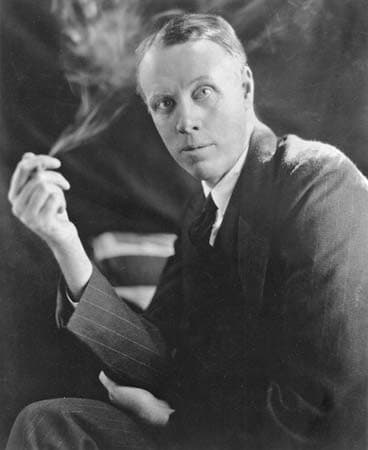
Harry Sinclair Lewis was an American writer and playwright. In 1930, he became the first author from the United States to receive the Nobel Prize in Literature, which was awarded "for his vigorous and graphic art of description and his ability to create, with wit and humor, new types of characters." Lewis wrote six popular novels: Main Street (1920), Babbitt (1922), Arrowsmith (1925), Elmer Gantry (1927), Dodsworth (1929), and It Can't Happen Here (1935).
Similar books
- Black Like Me
John Howard Griffin
4.1 (61k) average on GoodreadsBiographyExplores racial identity and prejudice through an individual's direct experience of 'passing' as another race.
- Invisible Man
Ralph Ellison
3.9 (157k) average on GoodreadsLiterary FictionA seminal work on race and identity in America, focusing on the experiences of an unnamed Black narrator.
- A Passage to India
E.M. Forster
3.7 (70k) average on GoodreadsHistorical FictionDeals with social and racial tensions between different communities within a colonial setting.
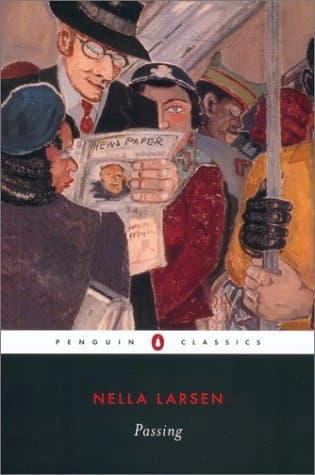
- Passing
Nella Larsen
3.9 (22k) average on GoodreadsHistorical FictionLarsen's novel explores the psychological complexities and dangers of light-skinned Black women actively passing as white, focusing on internal conflict and pressures within the Black community. Lewis's Kingsblood Royal, conversely, examines a white character discovering his Black heritage, emphasizing external societal structures of racism and the shock of forced re-identification.
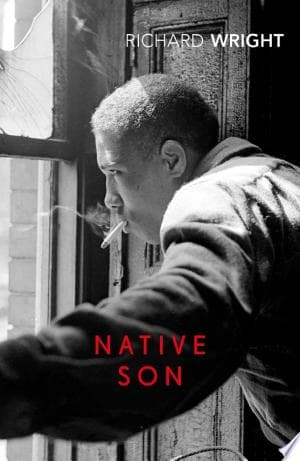
- Native Son
Richard Wright
4.0 (89k) average on GoodreadsHistorical FictionWright's novel offers a raw, visceral, and tragic depiction of the devastating effects of systemic racism, poverty, and prejudice on a young Black man, Bigger Thomas. Lewis's approach in Kingsblood Royal is more intellectual and satirical, focusing on the absurdity of racial classification and the societal mechanisms of prejudice, rather than the immediate, violent consequences of systemic oppression.
- The Old Man and the Sea
Ernest Hemingway
3.8 (831k) average on GoodreadsLiterary FictionA Cuban fisherman's long struggle with a giant marlin becomes a story of endurance and dignity, now retold for young adults with illustrations, phonetic guides, and writing prompts in Traditional Chinese.


Enjoyed the summary?
A summary gives you the shape of the book. The book itself has the detail, the examples and the voice.
Find Kingsblood Royal on AmazonAs an Amazon Associate, BookBrief earns from qualifying purchases. How we're funded