
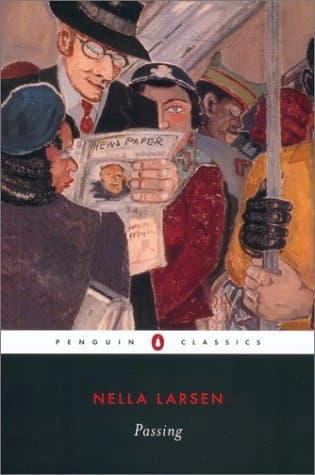
Synopsis
Covers the whole plot, including the ending.
- Difficulty
- Medium
- Pacing
- Slow
- Mood
- Atmospheric, Tense, Psychological, Melancholy
- Read it if
- You are interested in the psychological complexities of racial identity, the Harlem Renaissance, and tense, character-driven dramas.
- Skip it if
- You prefer fast-paced plots with clear resolutions and explicit action.
Passing Plot Summary
Covers the whole plot, including the ending.
A Chance Encounter in Chicago
Irene Redfield, a Black woman from Harlem, is visiting Chicago. Feeling faint from the heat, she goes into a hotel tearoom for white patrons, a place where she often passes without issue. There, she sees a beautiful woman staring at her. This woman, Clare Kendry, approaches Irene, recognizing her from their childhood in a poor St. Louis neighborhood. Clare, who is also light-skinned, says she has been passing for white for years, even marrying a wealthy white man named John Bellew who does not know her racial background. Irene is initially shocked and repulsed by Clare's deception but also fascinated by her friend's bold life.
John Bellew's Racist Remarks
While Irene and Clare talk, Clare's husband, John Bellew, arrives. He is a crude, wealthy white man who, upon meeting Irene, makes openly racist remarks about Black people, using a derogatory slur. He jokingly calls Clare his 'nig,' a term he thinks is a playful nickname, completely unaware that both Clare and Irene are Black. Irene is very uncomfortable and disgusted by his ignorance and racism, especially as Clare sits calmly, even amused by her husband's remarks. This encounter confirms Irene's worry about Clare's dangerous double life and the moral compromises it involves.
Clare's Re-entry into Harlem Society
After their Chicago meeting, Clare begins sending letters to Irene, saying she is lonely and wants to reconnect with her past and the Black community she left. Irene, despite her doubts, is drawn into Clare's persistent requests. Clare eventually moves to New York, gets an apartment, and, through Irene, begins to involve herself in Harlem's Black society. Her beauty, charm, and lively personality quickly make her popular, and she becomes a frequent guest at the Redfield's home and social events, much to Irene's mixed feelings of pride and growing anxiety.
Irene's Growing Unease
As Clare spends more time in Harlem, Irene becomes increasingly uneasy. She fears that Clare's presence and her dangerous secret could expose Irene's own occasional 'passing' incidents and threaten her respectable life. Irene worries about her family's stability and her social standing within the Black community. She sees Clare's flirtatious nature and magnetism as a threat, especially when Clare starts to charm Irene's husband, Brian. Irene's initial fascination with Clare turns into deep resentment and paranoia, as she feels Clare is intruding on every part of her life.
Brian's Discontent and Clare's Influence
Irene's husband, Brian, a doctor, has long wanted to move to Brazil, believing it would offer a better life for their sons, free from American racial prejudice. Irene strongly opposes this, fearing the disruption to her comfortable life. As Clare becomes a regular in their home, Brian seems drawn to her adventurous spirit and the freedom she shows, a stark contrast to Irene's more conservative nature. This perceived connection between Brian and Clare further fuels Irene's jealousy and suspicion, making her believe that Clare is intentionally trying to undermine her marriage and family.
Rumors and Escalating Paranoia
Irene's paranoia grows as she sees more interactions between Brian and Clare. She interprets their conversations and shared laughter as proof of an affair. Her imagination creates scenarios of betrayal and infidelity. She feels a growing sense of isolation and resentment towards Clare, seeing her as a malicious intruder. This psychological torment consumes Irene, affecting her ability to focus on her social work and stay composed, as she constantly watches Clare's every move, convinced of her bad intentions.
The Charity Ball and John Bellew's Appearance
Irene hosts a charity ball for Harlem's elite, an event she has carefully planned. Clare is there, impressing everyone with her beauty and charm. The evening takes a dramatic turn when John Bellew, Clare's white husband, suddenly appears. He has somehow discovered Clare's secret—that she is Black and has been passing—and is enraged. Bellew confronts Clare publicly, accusing her of deception and using racial slurs, causing a scene that shatters the elegant atmosphere of the gathering and exposes Clare's lie to everyone present.
Clare's Fall
Amidst the shock and confusion from John Bellew's outburst, a sudden, tragic event occurs. As Bellew tries to grab Clare, and Irene stands nearby, Clare falls from the third-story window of the apartment building. Whether it was an accident, a suicide, or if she was pushed, is unclear. The suddenness and violence of her death leave everyone stunned. Irene, who was standing very close to Clare at the moment of her fall, feels a complex mix of shock, relief, and guilt, as the woman who had so deeply disrupted her life is now gone.
The Aftermath and Ambiguity
After Clare's death, the police investigate, but no clear conclusion is reached about the cause of her fall. It is widely thought to be an accident or suicide, with no one able to provide clear evidence of foul play. Irene is questioned but offers no information that could incriminate anyone, nor does she give a clear account of what she saw. The ambiguity around Clare's death leaves Irene with a deep and unsettling sense of guilt and unresolved psychological conflict. Her life, though outwardly back to normal, is forever changed by Clare's dramatic presence and sudden, mysterious end.
Passing Characters
Irene Redfield
Protagonist
A respectable light-skinned Black woman living a comfortable life in Harlem, grappling with her identity and social anxieties.
Irene is the novel's central character, a light-skinned Black woman who meticulously maintains a respectable and seemingly perfect life in Harlem with her physician husband, Brian, and their two sons. She is a prominent figure in Harlem society, organizing charity events and valuing stability and security above all else. Beneath her composed exterior, Irene is deeply anxious and prone to psychological turmoil, especially when confronted with anything that threatens her carefully constructed world. She occasionally 'passes' for white, but only for convenience, never embracing the deception as a lifestyle.
Relationships: Clare Kendry (Childhood friend, object of fascination, jealousy, and fear); Brian Redfield (Husband, source of stability and marital tension); Hugh Wentworth (Friend, confidante, and observer of her anxieties)
Clare Kendry
Antagonist/Catalyst
A beautiful, daring light-skinned Black woman who has chosen to pass for white, leading a life of dangerous deception.
Clare is Irene's childhood friend who has successfully 'passed' for white for years, marrying a wealthy, racist white man. She is strikingly beautiful, charming, and charismatic, possessing an alluring magnetism that draws people to her. Clare is adventurous and restless, feeling a deep longing for the Black community she abandoned. Her decision to re-enter Harlem society, despite the immense risks, reveals her complex desires for both freedom and belonging. She is often seen as a foil to Irene, representing a path of danger and liberation that Irene both envies and fears.
Relationships: Irene Redfield (Childhood friend, portal back to Black society, object of both affection and manipulation); John Bellew (Husband, symbol of her deceptive life and eventual downfall); Brian Redfield (Object of flirtation and Irene's suspicion)
Brian Redfield
Supporting
Irene's husband, a physician who feels stifled by American racism and yearns for a life abroad.
Brian is Irene's handsome and intelligent husband, a respected physician in Harlem. Unlike Irene, he is deeply discontent with the racial prejudice prevalent in America and dreams of moving his family to Brazil, believing it would offer a more equitable future for their sons. He is often frustrated by Irene's resistance to his plans and her focus on social appearances. Brian is portrayed as somewhat aloof, yet he possesses a keen awareness of racial injustices. His interactions with Clare, though ambiguous, ignite Irene's deepest insecurities.
Relationships: Irene Redfield (Wife, source of domestic conflict over their future); Clare Kendry (Acquaintance, object of Irene's suspicion and potential romantic interest)
John Bellew
Minor Antagonist
Clare's wealthy white husband, an openly racist man completely unaware of his wife's racial identity.
John Bellew is Clare's white husband, a wealthy and boorish man from a prominent family. He is overtly racist, making derogatory comments about Black people with casual ease, blissfully unaware that his wife and Irene are both Black. He represents the ignorance and prejudice that Clare has to navigate and endure in her life of passing. His eventual discovery of Clare's secret triggers the novel's dramatic climax.
Relationships: Clare Kendry (Husband, unknowingly a victim of her deception); Irene Redfield (Acquaintance, subject of his racist remarks)
Hugh Wentworth
Supporting
A prominent white novelist and friend of Irene's, who offers an outsider's perspective on race and society.
Hugh Wentworth is a well-known white novelist and a friend of Irene's. He is perceptive and intelligent, often engaging Irene in discussions about race, identity, and social dynamics. He serves as a kind of detached observer, sometimes articulating the complexities of passing and racial identity in a way that Irene struggles to confront herself. His presence offers Irene a sounding board and a different perspective, though he remains largely outside the central conflict between Irene and Clare.
Relationships: Irene Redfield (Friend and intellectual conversationalist)
Junior Redfield
Mentioned
Irene and Brian's older son.
Junior is one of Irene and Brian Redfield's two sons. He is mentioned periodically, often in the context of Irene's desire to protect her children from the harsh realities of racial prejudice, which is a key reason for her resistance to Brian's Brazil plan. He represents the future and the innocent lives Irene is determined to shield.
Relationships: Irene Redfield (Son); Brian Redfield (Son)
Ted Redfield
Mentioned
Irene and Brian's younger son.
Ted is Irene and Brian Redfield's younger son. Like his brother, he primarily serves to highlight Irene's anxieties about raising Black children in a racially prejudiced society. His well-being and future are central to Irene's domestic concerns and her desire for stability.
Relationships: Irene Redfield (Son); Brian Redfield (Son)
Passing Themes
Racial Identity and Passing
The novel explores the complexities and psychological cost of racial identity, especially 'passing' for white. It looks at the reasons for passing, such as seeking social and economic advantages, as seen with Clare, and the deep sense of loss and isolation that can come with it. Irene's own occasional passing for convenience shows how fluid racial lines were in 1920s America and how arbitrary racial categorization could be. The theme questions what defines one's race and the societal pressures that lead individuals to deny their heritage, as well as the inherent dangers and moral compromises involved in such deception.
“It’s not so easy to just stop passing. You don’t know. You’ve never done it. It’s a habit. I’ve been doing it for twelve years.”
Jealousy, Obsession, and Psychological Repression
A main theme is Irene's growing jealousy and obsession with Clare, which drives much of the psychological drama. Irene's thoughts show a woman deeply bothered by Clare's presence, seeing her as a threat to her marriage, social standing, and carefully built life. Her paranoia and suspicions, especially about Clare and Brian, lead to deep psychological repression and denial. The novel looks at the destructive nature of unchecked emotions and how they can twist perception, blurring the lines between reality and Irene's anxieties. This psychological intensity suggests a deeper, perhaps unacknowledged, attraction or envy on Irene's part towards Clare's freedom.
“She was caught between two desires, Clare Kendry and her own security. And she knew in her heart that she was capable of sacrificing the one to the other.”
The Allure and Danger of Freedom
The novel contrasts Irene's wish for security and stability with Clare's pursuit of a more unrestricted, yet risky, freedom. Clare's passing for white gives her access to a world of privilege and a certain kind of liberation from racial limits, but it also requires constant deception and a separation from her true identity. Her desire to reconnect with Harlem shows a longing for the freedom of authentic self-expression and belonging within her own community, despite the dangers it poses to her 'white' life. Irene, while seemingly stable, feels confined by societal expectations and her own anxieties, secretly wanting some of Clare's uninhibited spirit, even as she criticizes its recklessness.
“Security. Was that it? Security. Was that what she wanted? Not that. Not exactly. But a way of life, a safe way of life, where she and Brian and the boys could live unmolested.”
The Performance of Self and Social Facades
Both Irene and Clare perform significant 'roles' of self. Clare's entire life is a performance of whiteness, a carefully made facade designed to deceive her husband and society. Irene, while not passing as a lifestyle, constantly plays the role of the respectable, composed Harlem socialite, carefully managing her image and her home. The novel shows the effort involved in maintaining these social facades and the psychological toll they take. The charity ball, with its focus on appearance and social graces, becomes a stage where these performances dramatically fall apart, showing how fragile identity is when built on pretense.
“It was the way she had of always seeming to be at ease, of never being ruffled, that so infuriated Irene.”
Plot Devices & Literary Techniques
Third-Person Limited Omniscient Narration (Irene's Perspective)
The story is told primarily through Irene Redfield's subjective viewpoint.
The novel is narrated in the third-person but is almost exclusively filtered through Irene Redfield's thoughts, feelings, and perceptions. This narrative choice immerses the reader in Irene's psychological state, allowing access to her anxieties, suspicions, and internal conflicts. It creates ambiguity around other characters' true intentions, particularly Clare's, as their actions are interpreted solely through Irene's often unreliable and paranoid lens. This device heightens the psychological tension and leaves the reader questioning the objective truth of events, especially Clare's death.
Foil Characters
Irene and Clare serve as contrasting characters, highlighting different aspects of racial identity and womanhood.
Irene and Clare are presented as foils to each other. Irene embodies stability, respectability, and a cautious engagement with her Black identity, while Clare represents risk, freedom, and a complete denial of her heritage for personal gain. Their contrasting choices and personalities illuminate the different paths available to light-skinned Black women in the 1920s and the moral complexities associated with each. Their dynamic allows the exploration of themes like security versus freedom, societal expectations versus individual desires, and the internal conflicts arising from racial identity.
Symbolism of Windows and Thresholds
Windows and doorways symbolize the boundaries between racial identities and social worlds.
Windows and thresholds frequently appear in the novel, often symbolizing the precarious boundaries between the white and Black worlds, and the act of 'passing.' Irene first sees Clare through a window in Chicago, and Clare ultimately falls from a window. These literal and metaphorical thresholds represent the ease with which one can 'cross over' but also the inherent dangers and irreversible consequences of doing so. They underscore the fragility of the social distinctions and the constant threat of exposure for those who pass.
Ambiguous Ending
The precise circumstances of Clare's death are left open to interpretation.
Clare Kendry's death at the end of the novel is deliberately ambiguous. It is unclear whether she falls accidentally, commits suicide, or is pushed (perhaps by Irene). This lack of a definitive explanation serves to heighten the psychological impact of the story and forces the reader to confront Irene's potential culpability without explicit confirmation. It reflects the murky moral landscape the characters inhabit and leaves a lasting sense of unease and unresolved guilt, emphasizing the destructive power of the hidden resentments and tensions that have built up throughout the narrative.
Passing Quotes
“It was like that, always. A thin veil between you and the rest of the world. And you could tear it if you wanted to, but you didn't, because it was too dangerous.”
“What a mad, crazy world.”
“She was caught between two worlds, and she didn't know which one she belonged to.”
“She had only to stand on the street corner to be sure of it, to be sure of that odd, but not unpleasant, sensation of excitement, of triumph almost, which came with the knowledge that she was fooling someone.”
“It isn't a new idea, this passing. It's as old as the hills.”
“The trouble with Clare was that she was a creature of impulse.”
“It was a dangerous game, this game of passing.”
“She was a woman of mystery, of secrets.”
“Was it not possible that, in her case, the racial barrier was not an impassable wall but a thin curtain that could be pushed aside?”
“The thing was, she had never had to think of herself as a Negro before.”
“She was a little afraid, too, of the power of her own emotions.”
“Security. Was that not what she wanted above all else?”
“There was in her something that was not to be tamed.”
“It was only by a trick of the light that she could be taken for white.”
Quiz
10 questions on the plot and the characters. Each answer comes with a short explanation.
Question 1
Where does Irene Redfield first encounter Clare Kendry after many years?
- At a charity ball in Harlem
- At a tea room in Chicago
- On a street corner in New York
- On the rooftop restaurant of the Drayton Hotel in Chicago
Show answer
D. On the rooftop restaurant of the Drayton Hotel in Chicago Irene first encounters Clare at the Drayton Hotel's rooftop restaurant in Chicago, where she herself is 'passing' for an afternoon to escape the heat.
Question 2
What is the primary reason Clare Kendry gives for initially reaching out to Irene Redfield after their chance encounter?
- She wants Irene to help her find a job in Harlem.
- She is lonely and misses her connection to the black community.
- She needs financial assistance from Irene's wealthy family.
- She wants to introduce Irene to her white husband, John.
Show answer
B. She is lonely and misses her connection to the black community. Clare expresses profound loneliness and a longing for her past life and connections to the black community, which prompts her to pursue a friendship with Irene.
Question 3
What is Brian Redfield's profession?
- A lawyer
- A prominent physician
- A real estate developer
- A jazz musician
Show answer
B. A prominent physician The synopsis explicitly states that Brian, Irene's husband, is 'a prominent physician'.
Question 4
What is Irene's initial reaction to Clare's desire to re-enter the black community and attend Harlem events?
- She is thrilled and encourages Clare's return.
- She is indifferent, seeing it as Clare's personal choice.
- She is terrified of the potential consequences and Clare's dangerous behavior.
- She sees it as an opportunity to expand her social circle.
Show answer
C. She is terrified of the potential consequences and Clare's dangerous behavior. Irene is described as being 'thrown into a panic, terrified of the consequences of Clare's dangerous behavior' as Clare begins inserting herself into Irene's life and the Harlem community.
Question 5
What term does Clare's husband, John Bellew, use to refer to black people, unaware of Clare's true racial identity?
- Colored folk
- Negroes
- Darkies
- Blacks
Show answer
C. Darkies John Bellew frequently uses the derogatory term 'darkies' in front of Clare and, unknowingly, Irene, highlighting his racism and the precariousness of Clare's deception.
Question 6
What is one of Irene's primary motivations for organizing charity balls in Harlem?
- To gain personal wealth and prestige.
- To create a sense of purpose and respectability for herself.
- To find a suitable spouse for her sons in the future.
- To secretly fund Clare's lifestyle.
Show answer
B. To create a sense of purpose and respectability for herself. The synopsis states that Irene's work 'arranging charity balls that gather Harlem's elite creates a sense of purpose and respectability for Irene.'
Question 7
What does Brian Redfield desire that causes tension in his marriage with Irene?
- To move their family to Europe.
- To move to Brazil, believing it offers a better life for their sons.
- To adopt more children.
- To pursue a career in politics.
Show answer
B. To move to Brazil, believing it offers a better life for their sons. Brian frequently expresses a desire to move to Brazil, believing it would be a better environment for their sons, away from American racial prejudices, a desire Irene strongly resists.
Question 8
Which of the following best describes the central theme explored through Clare Kendry's character?
- The pursuit of artistic expression.
- The psychological complexities and dangers of racial passing.
- The importance of financial independence for women.
- The challenges of interracial marriage.
Show answer
B. The psychological complexities and dangers of racial passing. Clare's character is the embodiment of 'passing for white,' and her story directly explores the profound psychological toll, social risks, and identity struggles associated with this act.
Question 9
What ultimately happens to Clare Kendry at the end of the novel?
- She successfully divorces John and moves to Harlem permanently.
- She is exposed by John and forced to leave New York.
- She falls from a window at a party, leading to her death.
- She reconciles with Irene and they become close friends again.
Show answer
C. She falls from a window at a party, leading to her death. In the climactic final scene, Clare falls from a high window at a party, an event shrouded in ambiguity regarding whether it was an accident, suicide, or murder, with Irene present.
Question 10
What is Irene's dominant emotional state regarding Clare throughout much of their renewed acquaintance?
- Unwavering admiration and affection.
- A complex mix of fascination, envy, and intense anxiety/resentment.
- Pity and a desire to protect her.
- Complete indifference.
Show answer
B. A complex mix of fascination, envy, and intense anxiety/resentment. Irene feels a strong, often disturbing, pull towards Clare, a blend of attraction to her beauty and charm, envy of her freedom, and deep-seated anxiety and resentment over Clare's intrusion into her life and perceived threat to her marriage.
Passing FAQ
What is the central conflict in 'Passing'?
The central conflict revolves around Irene Redfield's comfortable, respectable life in Harlem being disrupted by the re-entry of her childhood friend, Clare Kendry, who has been 'passing' as white. Irene fears Clare's dangerous deception will expose both their racial identities and destroy Irene's carefully constructed world.
Who are the two main characters, Irene Redfield and Clare Kendry, and how do their lives diverge?
Irene Redfield is a Black woman living in Harlem with her physician husband, Brian, and their sons, actively engaged in the Black elite's social scene. Clare Kendry is also Black but has been 'passing' as white since adolescence, marrying a racist white man and concealing her heritage. Their lives diverge dramatically in their choices of racial identity and social spheres.
Where and when does the story primarily take place?
The story is primarily set in 1920s New York City, specifically Harlem, where Irene Redfield resides, and also includes scenes in white-dominated spaces where Clare Kendry lives and socializes. This period is crucial as it reflects the social and racial dynamics of the Harlem Renaissance.
What is 'passing' in the context of the novel?
'Passing' refers to the act of a person of one racial background being accepted and living as a member of another, typically white, race. In the novel, Clare Kendry, who is Black, passes for white, hiding her true identity from her husband and society to gain social and economic advantages.
How does Clare Kendry re-enter Irene Redfield's life?
Irene first encounters Clare by chance in a whites-only hotel restaurant in Chicago, where both are 'passing' for the afternoon to escape the summer heat. This unexpected meeting reignites their childhood connection and Clare subsequently inserts herself into Irene's Harlem social circle.
What is the significance of the 'white' parties Irene and Clare attend in the early chapters?
These parties highlight the precarious nature of 'passing' for both women. While Clare lives this deception daily, Irene only 'passes' occasionally for convenience. The shared experience, despite their different motivations, underscores the fluidity and dangers of racial identity in their society.
What is implied about Brian Redfield's desire to move to Brazil?
Brian's desire to move to Brazil suggests a longing for a place where racial lines might be less rigid or where his sons might face less discrimination. It reflects his frustration with the racial limitations and prejudices in America, a frustration Irene actively resists due to her attachment to Harlem.
Is there any textual evidence to suggest a romantic or sexual tension between Irene and Clare?
While not explicitly stated, the novel contains numerous subtle hints, such as Irene's intense preoccupation with Clare's beauty, her possessiveness, and her strong emotional reactions to Clare's presence. Irene's internal monologues often focus on Clare's physical allure, suggesting an underlying, perhaps unconscious, attraction or obsession.
What role does Clare's daughter, Margery, play in the narrative?
Margery is a minor character, but her existence underscores Clare's commitment to her white identity and the tragic consequence of her deception. Margery is unaware of her mother's true racial heritage, highlighting the generational impact and secrecy inherent in 'passing'.
How does Irene Redfield's 'respectability' function as a psychological defense mechanism?
Irene's deep investment in her respectable Harlem life and charity work provides her with a sense of control, purpose, and social standing. This 'respectability' acts as a psychological shield against the anxieties of racial identity and the moral ambiguities Clare's presence introduces, helping her maintain her carefully constructed self-image.
Discuss Irene's conflicted feelings towards Clare's beauty and charm.
Irene is simultaneously drawn to and repelled by Clare's beauty and charm. She finds Clare captivating and alluring, almost obsessively so, yet she also resents Clare's disruptive influence, her recklessness, and the threat she poses to Irene's stable life. This dual attraction and repulsion reveal Irene's internal turmoil.
How does Irene's anxiety manifest throughout the novel?
Irene's anxiety manifests through her increasingly frantic internal monologues, her physical reactions like tremors and headaches, and her growing paranoia about Clare's intentions. She becomes obsessed with controlling her environment and protecting her family, viewing Clare as a constant, unpredictable threat to her peace of mind.
What psychological impact does 'passing' have on Clare Kendry?
Clare's 'passing' has left her emotionally isolated and constantly fearing exposure, yet it also granted her a certain freedom and access. Her return to Harlem reveals a deep longing for connection to her Black heritage and community, suggesting that despite its benefits, her deception has created a profound sense of loneliness and unfulfillment.
What is the most debated interpretation of Clare Kendry's death?
Clare's death is highly ambiguous, leading to debates about whether she fell, jumped, or was pushed from the window. Interpretations range from accidental fall, suicide driven by despair, or murder by Irene, either intentionally or in a moment of panic, reflecting Irene's intense jealousy and fear.
Does the novel condemn or celebrate 'passing'?
The novel doesn't offer a simple condemnation or celebration. It presents 'passing' as a complex, double-edged sword, offering both opportunities and profound psychological costs. Through Clare, it shows the allure and loneliness, while through Irene, it explores the anxieties and moral dilemmas it creates for those connected to it.
What is the significance of the ending, particularly Irene's reaction to Clare's death?
The ending is deeply ambiguous. Irene's immediate reaction is relief, suggesting she feels liberated from the threat Clare posed. However, the ambiguity of Clare's death and Irene's quick return to her 'normal' life leave readers questioning her complicity and the true extent of her psychological manipulation and emotional instability.
How does the novel explore themes of race and identity beyond the act of 'passing'?
Beyond 'passing,' the novel explores the complexities of Black identity within the Harlem Renaissance, the nuances of class distinctions among Black Americans, and the psychological burdens of racial prejudice. It delves into the internal struggles of characters navigating societal expectations and personal desires within a racially stratified world.
Could Irene be considered an unreliable narrator?
Yes, Irene can be considered an unreliable narrator. Her narrative is filtered through her intense anxieties, jealousies, and repressed desires. Her internal monologues often contradict her outward actions, and her perspective on events, especially Clare's actions and motivations, is heavily colored by her own subjective biases, leading to an ambiguous depiction of reality.
About the author
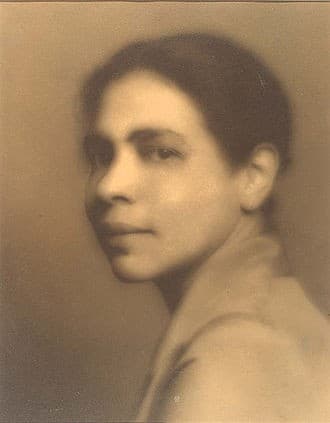
Nella Larsen was an American novelist and a key figure in the Harlem Renaissance. She is best known for her novel "Passing," which explores themes of racial identity and social class. Larsen's work often delves into the complexities of African American life in the early 20th century.
Similar books
- Americanah
Chimamanda Ngozi Adichie
4.3 (264k) average on GoodreadsLiterary FictionDeals with race and identity in a nuanced way, though in a contemporary setting.
- The Vanishing Half
Brit Bennett
4.3 (132k) average on GoodreadsLiterary FictionDirectly explores themes of racial passing and the long-term consequences of choosing different racial identities.
- Cane
Jean Toomer
3.9 (8k) average on GoodreadsFictionToomer's Cane is a more experimental and fragmented work, addressing racial identity through a broader communal experience and poetic prose. Larsen's Passing is a more traditional narrative focusing on intense interpersonal drama and psychological realism within a concentrated plot.
- To Kill a Mockingbird
Harper Lee
4.3 (4.5M) average on GoodreadsHistorical FictionIn the 1930s Jim Crow South, Harper Lee writes about racial injustice, moral growth, and the quiet courage of a lawyer father, Atticus Finch, as seen through his young daughter's eyes.
- The Great Gatsby
F. Scott Fitzgerald
3.9 (3.8M) average on GoodreadsHistorical FictionIn the opulent Roaring Twenties, a mysterious millionaire's lavish parties hide his desperate, tragic pursuit of a lost love, exposing the emptiness within the American Dream.
- Pride and Prejudice
Jane Austen
4.3 (3M) average on GoodreadsHistorical FictionIn a society focused on status and money, Elizabeth Bennet navigates love and pride, challenging Mr. Darcy and social expectations to find true affection.




Enjoyed the summary?
A summary gives you the shape of the book. The book itself has the detail, the examples and the voice.
Find Passing on AmazonAs an Amazon Associate, BookBrief earns from qualifying purchases. How we're funded