
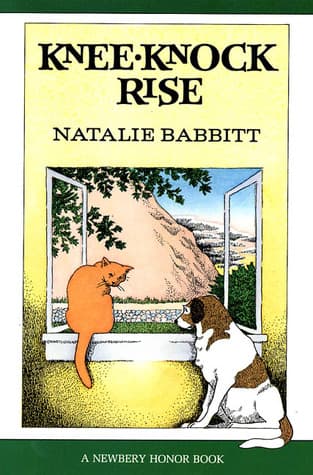
Synopsis
Covers the whole plot, including the ending.
- Difficulty
- Easy
- Pacing
- Moderate
- Mood
- Whimsical, Thought-provoking, Gentle, Mysterious
- Read it if
- You enjoy classic children's fantasy with a thoughtful message about truth vs. belief, or a gentle mystery.
- Skip it if
- You prefer fast-paced action, complex magic systems, or a story where all mysteries are definitively solved and accepted by everyone.
Kneeknock Rise Plot Summary
Covers the whole plot, including the ending.
Arrival in Instep
Young Egan travels to the remote village of Instep to visit his Aunt Myra and Uncle Anson. Upon his arrival, he immediately notices the villagers' strange behavior, especially their fear and fascination with the Megrimum, a mysterious creature or phenomenon said to live on the nearby, mist-shrouded mountain, Kneeknock Rise. The entire village seems united by this shared dread, shown in hushed conversations, rituals, and a general air of delicious terror whenever the Megrimum's wail is heard. Egan, a practical and curious boy, finds this collective hysteria perplexing and absurd, setting him apart from the other villagers.
The Megrimum's Influence
Egan quickly learns that the Megrimum is the main topic of discussion and the reason for many of Instep's customs. The creature's supposed wails, heard only at specific times, cause the villagers to shiver with a mix of fear and enjoyment. He notices that the Megrimum explains almost any misfortune or unexplained event, from bad harvests to strange noises. Even his Aunt Myra, usually sensible, participates in the village's rituals, such as leaving out offerings. Egan finds it frustrating that no one questions the Megrimum's existence or nature; they prefer to keep the mystery and their shared fear alive.
Aunt Myra's Explanation
Egan confronts his Aunt Myra about the Megrimum, expressing his disbelief and confusion over the villagers' behavior. Aunt Myra, while influenced by the village's traditions, tries to explain that the Megrimum is not just a monster, but a part of their identity. She describes it as something that gives their lives meaning and excitement, a shared experience that binds them together. She suggests that without the Megrimum, life in Instep would be dull. Her explanation, however, only strengthens Egan's resolve to find a rational explanation, as he struggles to understand why people would willingly embrace such a collective delusion.
The Goat Keeper's Tale
Seeking answers beyond the villagers' fearful statements, Egan meets Ott, the old goat keeper who lives on the outskirts of Instep. Ott is known for his eccentricity and knowledge of the mountain. Unlike the other villagers, Ott does not fear the Megrimum, but shows a quiet understanding. He shares a cryptic tale about a previous climber who sought the Megrimum, hinting that the creature might not be what everyone imagines. Ott's words suggest that the Megrimum's true nature is more complex than a simple monster, and that the villagers' perception of it is perhaps more important than the reality.
The Decision to Climb
Unable to accept the villagers' deep-seated fear alongside his own observations, Egan decides to climb Kneeknock Rise himself. He is determined to uncover the truth behind the Megrimum, believing there must be a logical, non-supernatural explanation for the wails and the myth. He prepares for the ascent secretly, knowing that the villagers would try to dissuade him, perhaps even prevent him. His decision comes from a desire to bring clarity to Instep and to challenge the fear that has held the community captive for so long.
The Ascent of Kneeknock Rise
Egan begins his climb of Kneeknock Rise, a journey with physical challenges and an eerie atmosphere. The mountain is steep and rocky, often covered in thick mist that disorients him. He encounters strange rock formations and the sounds of the mountain, which a fearful mind could easily interpret as the Megrimum's wails. Despite the growing sense of isolation and the unsettling environment, Egan presses onward, his determination strong. He relies on his wits and observation skills, looking for any natural phenomenon that could explain the mysterious sounds.
The Source of the Wail
After a challenging climb, Egan reaches the summit, or at least a high point where the wails seem to come from. To his surprise, he finds no monstrous creature. Instead, he discovers natural formations - a specific rock crevice and a large, hollow log - through which the wind whistles in a peculiar way. These elements, especially when the mist is thick and the wind is right, create the mournful, echoing sound the villagers attribute to the Megrimum. It is a natural, though unusual, acoustic phenomenon.
The Megrimum Revealed
As Egan investigates further, he finds the actual source of the 'wail' to be a small, harmless creature, a type of marmot or similar animal, that occasionally gets caught or makes its nest in the hollow log. Its cries, amplified and distorted by the natural acoustics of the mountain and the mist, are what the villagers hear. The 'Megrimum' is not a terrifying monster but a simple, frightened animal. Egan observes it closely, confirming his rational explanation and dismantling the myth that has terrorized Instep for generations. The realization is both anticlimactic and satisfying for Egan.
The Return to Instep
With the truth known, Egan begins his descent from Kneeknock Rise. He carries the knowledge that the Megrimum is merely natural phenomena and a small animal's cries. As he makes his way back to Instep, he considers how to present his findings to the villagers. He understands that their belief in the Megrimum is deeply ingrained, almost a part of their cultural identity, and that simply telling them the truth might not be enough to shatter their cherished illusion. He wonders if they will even believe him, or if they will resist the loss of their beloved monster.
The Village's Reaction
Upon his return, Egan tries to explain what he found on Kneeknock Rise. He describes the wind whistling through the rocks and the small animal. However, the villagers react with disbelief, discomfort, and even annoyance. They do not want their Megrimum to be reduced to something so mundane. They find his explanation boring and unsatisfying, preferring the thrill and shared experience of their monster. They dismiss his findings, suggesting he must have been mistaken or that the Megrimum simply chose not to reveal its true form to him. Their resistance shows the power of collective belief over empirical evidence.
Aunt Myra's Wisdom
Frustrated by the villagers' refusal to accept the truth, Egan confides in Aunt Myra. She listens patiently and then explains that the Megrimum is not just about a monster; it is about what it means to the people of Instep. It gives them something to talk about, something to fear, something that makes their otherwise ordinary lives feel significant. She suggests that removing the Megrimum would remove a vital part of their community, leaving a void. Her words help Egan understand that sometimes, people prefer a comforting myth to an inconvenient truth, especially when that myth provides purpose and cohesion.
Acceptance and Departure
Egan, having gained a new understanding from Aunt Myra, realizes that his truth, while factual, is not what the villagers need or want. He accepts that the Megrimum, in its mythical form, serves a social function for Instep. He chooses not to press the issue further, recognizing that some beliefs, even if unfounded, hold great value for those who hold them. As his visit ends, Egan prepares to leave Instep, having experienced a unique lesson in human nature and the power of shared imagination, even if it meant leaving the 'truth' behind.
Principal Figures
Egan
Protagonist
A curious and rational young boy who seeks to uncover the truth behind the Megrimum.
Egan is a thoughtful, logical, and somewhat skeptical boy who arrives in Instep for a visit. He is characterized by his strong sense of reason and his inability to accept superstitious explanations. Unlike the villagers, he is not easily swayed by fear or collective hysteria. He possesses an innate curiosity and a determination to find practical answers to mysteries, which drives him to climb Kneeknock Rise. He is observant and intelligent, always questioning what others take for granted. His primary motivation is to understand and demystify the world around him.
Relationships: Aunt Myra (Caring aunt, offers guidance and wisdom); Uncle Anson (Host, part of the Megrimum-fearing community); Ott (Mysterious and wise mentor figure)
Aunt Myra
Supporting
Egan's kind and understanding aunt, who embodies the villagers' complex relationship with the Megrimum.
Aunt Myra is Egan's host in Instep. She is a kind and sensible woman who, despite being part of the community that fears the Megrimum, possesses a deeper understanding of its social and psychological role. She participates in the village's rituals but also serves as a bridge between Egan's rational world and the villagers' mystical one. Her wisdom helps Egan comprehend why people cling to beliefs, even when presented with evidence to the contrary. She is a voice of gentle reason and acceptance.
Relationships: Egan (Nephew, recipient of her wisdom); Uncle Anson (Husband)
Uncle Anson
Supporting
Egan's uncle, a typical Instep villager who fully embraces the Megrimum myth.
Uncle Anson is Egan's uncle and Aunt Myra's husband. He represents the average Instep villager, fully immersed in the fear and fascination of the Megrimum. He is not malicious but simply unquestioning, finding comfort and excitement in the shared terror. He embodies the collective mindset that Egan initially struggles to understand. His reactions to the Megrimum's wails and Egan's skepticism highlight the deep-seated nature of the village's belief system.
Relationships: Egan (Nephew, recipient of his traditional views); Aunt Myra (Wife)
Ott
Supporting
The eccentric goat keeper who offers cryptic insights into the Megrimum's true nature.
Ott is an old, wise, and somewhat mysterious goat keeper who lives on the fringes of Instep. He is an outsider to the villagers' collective hysteria, viewing the Megrimum with a nuanced, almost philosophical perspective. He doesn't fear the creature but understands its importance to the community. Ott provides Egan with subtle clues and a different perspective, hinting that the Megrimum's reality might be less important than its perceived meaning. He acts as a mentor figure, prompting Egan to think beyond simple facts.
Relationships: Egan (Confidant and source of guidance)
The Megrimum
Antagonist/Plot Device
The mysterious entity on Kneeknock Rise, a source of both terror and community for Instep.
The Megrimum is the central mystery of the story, initially presented as a terrifying, unseen creature whose wails strike fear into the hearts of Instep's villagers. It functions as a powerful symbol, uniting the community through shared fear and providing a focal point for their lives and conversations. Its true nature is gradually revealed to be a combination of natural acoustic phenomena (wind through rocks and logs) and the amplified cries of a small, harmless animal. The Megrimum is less a physical antagonist and more a psychological and social phenomenon.
Relationships: Instep Villagers (Object of their fear, fascination, and community identity); Egan (Object of his quest for truth)
The Instep Villagers
Supporting/Collective Character
The superstitious inhabitants of Instep, bound together by their shared belief in the Megrimum.
The villagers of Instep act as a collective character, defined by their pervasive fear and simultaneous enjoyment of the Megrimum. They are deeply traditional, resistant to change, and prefer the comfort of their established myth to the disruption of truth. Their interactions with Egan highlight the power of collective belief and the social function of shared narratives, even when those narratives are based on superstition. They are not malicious but simply human in their need for meaning and connection.
Relationships: Egan (Recipient of his skepticism and attempts to enlighten); The Megrimum (Central to their communal identity)
Themes & Insights
The Power of Belief vs. Rationality
This theme explores the conflict between objective truth and the power of belief. Egan, representing rationality, seeks to find the scientific explanation for the Megrimum. The villagers, however, cling to their belief, finding comfort, excitement, and community in the myth, even when presented with evidence. The story suggests that sometimes, a collective belief, even if unfounded, serves a social and psychological function, as seen when the villagers dismiss Egan's mundane findings and prefer their thrilling monster. Aunt Myra's explanation to Egan about the Megrimum giving the villagers 'something to talk about' shows this dynamic.
“Perhaps it isn't what it is, but what it does, that counts.”
The Nature of Fear
The book looks at how fear can be both terrifying and strangely comforting or even 'delicious.' The villagers of Instep actively cultivate their fear of the Megrimum, finding identity and shared experience in it. This fear is not paralyzing but a source of excitement that breaks the monotony of their lives. Egan observes their 'delicious horror,' highlighting the paradox of enjoying something that is ostensibly dreadful. The fear of the unknown, embodied by the Megrimum, gives their community a focal point and their lives a sense of drama and importance they might otherwise lack.
“They liked their fear, Egan realized. It bound them together and made their lives more exciting.”
Community and Identity
The Megrimum is the cornerstone of Instep's community and identity. The shared belief in the creature, the rituals around it, and the collective experience of its wails bind the villagers together. It provides a common topic of conversation, a shared source of excitement, and a sense of belonging. Egan's attempt to demystify the Megrimum is met with resistance because it threatens to dismantle their communal life. The story shows how shared narratives, even fictional ones, can be essential for social cohesion and giving a group a unique identity.
“Without the Megrimum, what would they talk about? What would they dread? What would make their lives interesting?”
The Quest for Truth
Egan's journey up Kneeknock Rise shows the human drive to seek truth and understanding. He is a young explorer, driven by curiosity and a refusal to accept unquestioned superstitions. His physical climb up the mountain mirrors his intellectual quest to penetrate myth and find a rational explanation. While he successfully uncovers the factual truth about the Megrimum, the story broadens his understanding of truth itself, showing him that factual accuracy is not always the most important or desired form of truth for all people. His quest transforms from a simple debunking to a deeper lesson in human nature.
“He had to know. He had to see it for himself.”
Plot Devices & Literary Techniques
The Megrimum
A mysterious creature functioning as a MacGuffin and symbolic antagonist.
The Megrimum serves as the central MacGuffin of the story, driving Egan's quest and providing the primary conflict. Initially presented as a terrifying, unseen entity, it is the object of everyone's fear and fascination. However, its true function evolves from a simple monster to a powerful symbol of collective belief, the unknown, and a catalyst for community identity. Egan's journey to uncover its true nature reveals it to be a mundane natural phenomenon, transforming the Megrimum from a literal antagonist into a symbolic representation of the villagers' psychological needs.
Kneeknock Rise
The mist-shrouded mountain, representing the unknown and the source of mystery.
Kneeknock Rise is more than just a setting; it acts as a symbolic barrier and a source of the unknown. Its mist-wreathed peak physically separates the village from the perceived source of their fear, enhancing the mystery of the Megrimum. The mountain's treacherous path and eerie atmosphere contribute to the suspense and challenge Egan's determination. Symbolically, it represents the unexplored territories of belief and the human mind, a place where reality and imagination blend, and where Egan must journey to confront the core of Instep's collective delusion.
Foreshadowing (through Ott's tales)
Cryptic stories from the goat keeper hinting at the Megrimum's true nature.
Ott, the goat keeper, uses subtle foreshadowing through his enigmatic tales and philosophical observations. He doesn't directly reveal the Megrimum's secret but offers hints that it might not be a monstrous creature, but rather something misunderstood or symbolic. His stories about past climbers and the nature of perception subtly prepare Egan and the reader for the eventual, less dramatic reveal of the Megrimum's true identity. This technique builds anticipation while also guiding the reader towards a deeper, less literal interpretation of the mystery.
Dramatic Irony
The audience knows the Megrimum's nature before some characters, or understands its true significance.
Dramatic irony is present throughout the story, particularly as Egan begins his ascent and makes his discovery. The reader is privy to Egan's rational observations and eventual uncovering of the Megrimum's mundane source, while the villagers remain steadfast in their fearful, superstitious belief. This creates tension and highlights the disconnect between objective truth and subjective perception. The irony deepens when Egan tries to share his findings, and the villagers' rejection reveals that their 'ignorance' is, in fact, a chosen and cherished state, serving a vital social function.
Kneeknock Rise Quotes
“The world is full of things that have not been counted.”
“It was not a comfortable feeling, being a stranger among people who ought to have been familiar.”
“Perhaps it was only that he had never looked at things very closely before.”
“A good many things were not what they seemed to be, and never had been.”
“The truth was always a little bit surprising, no matter how much you thought you knew it.”
“People always believed what they wanted to believe, no matter what evidence was put before them.”
“Some things, once seen, can never be unseen.”
“The sound of the grumble was an old, old sound, a sound of the earth itself, not of any creature.”
“It was very hard to be brave when you didn't know what you were being brave about.”
“The most important thing was to keep your eyes open and your mind ready for anything.”
“Sometimes the simplest explanation was the one that was hardest to accept.”
“There were no monsters, only misunderstandings.”
“He had gone up the mountain a boy, and he came down a little bit more than that.”
“The grumble was just the grumble, and it always had been. But now he knew it.”
Quiz
10 questions on the plot and the characters. Each answer comes with a short explanation.
Question 1
Upon arriving in Instep, what is the first thing Egan senses about the villagers?
- Their intense fear of strangers.
- A spell cast over them by the Megrimum.
- Their welcoming nature towards visitors.
- Their preoccupation with the village market.
Show answer
B. A spell cast over them by the Megrimum. From the very beginning, Egan senses that the villagers are under the influence of something mysterious, referred to as a 'spell cast over the villagers by the Megrimum'.
Question 2
What is the primary characteristic of the Megrimum's presence that affects the villagers?
- Its silent, watchful gaze.
- Its occasional visits to the village.
- Its unearthly wail floating down from Kneeknock Rise.
- The mysterious lights it projects at night.
Show answer
C. Its unearthly wail floating down from Kneeknock Rise. The book explicitly states that 'the Megrimum's unearthly wail floats down to the village', causing the villagers to shudder with 'delicious horror'.
Question 3
What is Egan's main motivation for climbing Kneeknock Rise?
- To prove his bravery to the villagers.
- To find a practical explanation for the Megrimum's wails.
- To seek out the Megrimum and confront it.
- To collect rare herbs growing on the peak.
Show answer
B. To find a practical explanation for the Megrimum's wails. The text states that 'Before long, Egan is climbing the Rise to find a practical explanation for those wails,' highlighting his rational and curious nature.
Question 4
How do the villagers generally react to the Megrimum's wails?
- With genuine terror and panic.
- With indifference, as they are used to it.
- With a mix of horror and a strange enjoyment.
- With a desire to investigate the source.
Show answer
C. With a mix of horror and a strange enjoyment. The description mentions that 'Everyone shudders in horror--delicious horror--whenever the Megrimum's unearthly wail floats down to the village,' indicating a complex, almost enjoyable fear.
Question 5
What distinguishes Egan from the other villagers regarding the Megrimum?
- He is more fearful than they are.
- He accepts the Megrimum as a supernatural entity.
- He seeks a rational explanation rather than accepting the mystery.
- He tries to convince them the Megrimum is harmless.
Show answer
C. He seeks a rational explanation rather than accepting the mystery. Egan's decision to climb the Rise 'to find a practical explanation' for the wails demonstrates his unique rational approach, contrasting with the villagers' acceptance of the 'spell'.
Question 6
What is the physical description of Kneeknock Rise provided in the summary?
- A barren, rocky outcrop.
- A peak wreathed in mist.
- A heavily forested mountain.
- A gently sloping hill.
Show answer
B. A peak wreathed in mist. The summary describes Kneeknock Rise as 'the mist-wreathed peak', indicating its distinctive atmospheric quality.
Question 7
What type of 'horror' do the villagers experience in relation to the Megrimum?
- A paralyzing, debilitating fear.
- A 'delicious' horror, implying a strange enjoyment.
- A distant, almost forgotten dread.
- A moral horror at the Megrimum's actions.
Show answer
B. A 'delicious' horror, implying a strange enjoyment. The phrase 'delicious horror' suggests that the villagers derive a peculiar, almost pleasurable thrill from their fear of the Megrimum, highlighting a key thematic element.
Question 8
Which of these literary genres is NOT explicitly mentioned in the book's description?
- Fantasy
- Romance
- Mystery
- Children's
Show answer
B. Romance The provided genre list includes Fantasy, Children's, Mystery, and Young Adult. Romance is not listed.
Question 9
The villagers' reaction to the Megrimum's wail suggests a theme of:
- The triumph of reason over superstition.
- The human need for mystery and excitement, even if fearful.
- The dangers of isolation and close-mindedness.
- The importance of community and shared experiences.
Show answer
B. The human need for mystery and excitement, even if fearful. The 'delicious horror' the villagers feel indicates that they find a certain allure in the mystery and fear surrounding the Megrimum, suggesting a thematic exploration of humanity's relationship with the unknown.
Question 10
What does the phrase 'delicious horror' imply about the villagers' relationship with the Megrimum?
- They secretly admire the Megrimum's power.
- Their fear is not entirely unpleasant; it provides a form of entertainment or thrill.
- They are in denial about the true danger the Megrimum poses.
- They believe the Megrimum is a benevolent but misunderstood entity.
Show answer
B. Their fear is not entirely unpleasant; it provides a form of entertainment or thrill. The oxymoronic phrase 'delicious horror' suggests that the villagers' fear is not purely negative but carries a degree of fascination or even enjoyment, indicating a complex psychological dynamic with the mysterious entity.
Kneeknock Rise FAQ
What is the central mystery Egan seeks to solve in Instep?
Egan is determined to uncover the true nature of the Megrimum, the mysterious entity or phenomenon that is said to dwell on Kneeknock Rise and emits an eerie wail, captivating and terrifying the villagers of Instep.
Who are some of the key villagers Egan encounters in Instep?
Egan meets his Aunt Dew and Uncle Anson, who are his hosts in Instep. He also interacts with the eccentric and superstitious villagers, many of whom are deeply entrenched in the folklore surrounding the Megrimum.
What is the general atmosphere and mood of the village of Instep?
Instep is characterized by a pervasive sense of superstitious dread mixed with a strange, almost enjoyable fascination with the Megrimum. The village is isolated and its inhabitants are deeply set in their traditions, making them resistant to outside logic.
What motivates Egan to climb Kneeknock Rise despite the villagers' warnings?
Egan is driven by a practical, rational curiosity and a desire to debunk the superstitions surrounding the Megrimum. He believes there must be a logical, scientific explanation for the sounds and phenomena attributed to the creature.
How does Egan's perspective differ from that of the Instep villagers?
Egan represents rational inquiry and skepticism, always seeking a logical explanation for events. The villagers, conversely, embrace the fantastical and the mysterious, finding comfort and identity in their shared fear and folklore of the Megrimum.
What specific sound does the Megrimum make, and how do villagers react to it?
The Megrimum emits an unearthly, mournful wail that drifts down from Kneeknock Rise. The villagers react with a peculiar mix of terror and a kind of 'delicious horror,' finding a strange enjoyment and communal bonding in their shared fear.
What is the true nature of the Megrimum that Egan discovers?
Egan discovers that the 'Megrimum' is not a monster, but a donkey trapped in a cave, whose mournful brays echo and amplify through the natural acoustics of the mountain, creating the terrifying wail heard in the village.
How does Egan's discovery impact his relationship with Aunt Dew and Uncle Anson?
While Egan's discovery is a logical triumph, it creates a subtle tension. His practical explanation clashes with their deeply held beliefs, and they, like the other villagers, choose to cling to the comforting mystery rather than embrace his truth.
Is there any symbolic significance to the isolation of Instep and its inhabitants?
The isolation of Instep symbolizes how communities can become insular and resistant to change or outside perspectives when their identity is deeply tied to a shared myth or belief system, even if that belief is based on fear.
What role does imagination play in the villagers' experience of the Megrimum?
Imagination plays a crucial role, transforming a simple sound into a terrifying, supernatural entity. The villagers actively participate in constructing the myth, finding a sense of purpose and excitement in the shared narrative of the Megrimum.
How does the book explore the theme of belief versus reality?
The book starkly contrasts Egan's pursuit of empirical reality with the villagers' preference for comforting belief. It suggests that sometimes, the illusion, even if built on fear, can be more appealing and functionally useful to a community than a stark, mundane truth.
Why do the villagers choose to ignore Egan's explanation of the Megrimum?
The villagers choose to ignore Egan's explanation because the Megrimum provides a unifying myth, a source of communal identity, and a thrilling, if fearful, diversion in their otherwise quiet lives. Debunking it would strip away a significant part of their shared culture.
What is the significance of the book's ending, where Egan leaves Instep?
Egan's departure signifies the irreconcilability of his rational worldview with the villagers' embrace of fantasy. It highlights that some truths, even when revealed, may not be accepted if they challenge deeply ingrained cultural narratives, leaving the 'mystery' intact for the community.
Are there any subtle clues throughout the story that hint at the Megrimum's true identity?
The clues are subtle, often masked by the villagers' interpretations. The consistent nature of the wail, its regular occurrence, and the lack of any physical evidence of a monster could be interpreted as hints, though the villagers' strong belief overshadows them.
How does the book comment on the nature of fear and comfort?
The book suggests that fear, when shared and ritualized, can paradoxically become a source of comfort and communal bonding. The 'delicious horror' of the Megrimum offers an exciting, predictable thrill that brings the villagers together, making it preferable to a dull reality.
Could the Megrimum be seen as a metaphor for something else in the story?
The Megrimum can be seen as a metaphor for the human need for mystery, the power of collective belief, or even the ways in which communities create their own meaning and identity, regardless of objective truth.
How does Egan's experience on Kneeknock Rise change him?
Egan's experience solidifies his rational worldview, but also exposes him to the powerful, enduring nature of human belief and superstition. He learns that not everyone desires or accepts truth, especially when it dismantles a cherished fantasy.
What is the role of the mist on Kneeknock Rise in maintaining the illusion?
The mist on Kneeknock Rise plays a crucial role in obscuring visibility and enhancing the sense of mystery and foreboding. It literally and figuratively clouds the truth, making it easier for the villagers' imaginations to run wild and sustain the Megrimum myth.
About the author
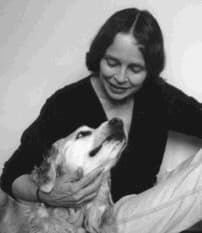
Natalie Babbitt was an American author known for her contributions to children's literature. Her notable works include "Tuck Everlasting," a story exploring themes of immortality, "The Search for Delicious," which follows a quest for the perfect flavor, and "Kneeknock Rise," a tale of adventure and mystery. Babbitt's writing often combines fantasy elements with thought-provoking questions about life and existence.
Similar books
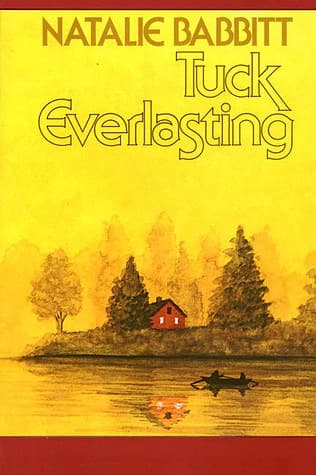
- Tuck Everlasting
Natalie Babbitt
3.9 (232k) average on GoodreadsFantasyExplores philosophical themes in a fantastical setting with beautiful prose.
- The Phantom Tollbooth
Norton Juster
4.2 (242k) average on GoodreadsFantasyA young protagonist goes on a journey of discovery, encountering quirky characters and challenging perceptions.
- Harry Potter and the Sorcerer's Stone
J.K. Rowling
4.5 (7M) average on GoodreadsFantasyRescued from a miserable life under the stairs, an orphaned boy discovers he's a wizard destined for a magical school, where he uncovers a dangerous secret tied to the dark wizard who murdered his parents.
- The Hunger Games
Suzanne Collins
4.3 (6.4M) average on GoodreadsFantasyIn a future where children fight to the death on live television, Katniss Everdeen volunteers for the arena, turning a death sentence into a fight for survival and a spark of rebellion.
- 1984
George Orwell
4.2 (3.1M) average on GoodreadsPoliticsIn a future where surveillance and thought control are absolute, a man's search for truth clashes with the Party, showing that hope can be a form of rebellion.
- Divergent
Veronica Roth
4.2 (2.9M) average on GoodreadsFantasyIn a society divided by virtues, a sixteen-year-old's difference from the norm starts a rebellion that threatens her world.




Enjoyed the summary?
A summary gives you the shape of the book. The book itself has the detail, the examples and the voice.
Find Kneeknock Rise on AmazonAs an Amazon Associate, BookBrief earns from qualifying purchases. How we're funded