
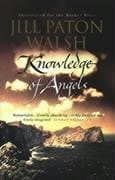
Synopsis
Covers the whole plot, including the ending.
- Difficulty
- Hard
- Pacing
- Slow
- Mood
- Philosophical, Contemplative, Intellectual, Dark, Thought-provoking
- Read it if
- You enjoy philosophical fiction, thought experiments, or historical settings that explore the clash between faith and reason.
- Skip it if
- You prefer fast-paced plots or shy away from dense philosophical discussions and bleak endings.
Knowledge of Angels Plot Summary
Covers the whole plot, including the ending.
The Castaway and the Island
The story opens on an isolated, devoutly Christian Mediterranean island, seemingly in the late medieval period. Fishermen find a man, later identified as Palinor, clinging to a spar, shipwrecked and near death. He is brought before the island's authorities, primarily the Prince and the Cardinal. Palinor, a brilliant and charismatic scholar from a distant, pagan land, states that he is an atheist and believes all knowledge comes from sensory experience and reason, not divine revelation. His presence immediately challenges the island's rigid, God-centered worldview, which holds that all truth is revealed by God. The Cardinal, a man of intellect but also deep faith, is particularly disturbed by Palinor's claims, seeing them as a direct threat to the island's spiritual and political order. The Prince, more practical, is wary of potential disruption.
The Wild Child
At the same time, a young girl, later named Angel, is found living wild in the island's mountains. She has been raised by wolves and has no language, no understanding of human society, and no concept of God. Her existence offers an opportunity for the island's thinkers to test the nature of innate knowledge. The Cardinal proposes an experiment: if God's existence is clear, then Angel, untouched by human teaching, should eventually come to believe in God on her own. If Palinor's claims are true, she will not. The experiment is seen as a way to definitively prove or disprove Palinor's atheism without execution, which the Cardinal is initially reluctant to do.
The Experiment Begins
Angel is brought to the monastery, where a gentle, devout nun, Sister Agnes, cares for her. The experiment's rules are strict: Angel is to receive no direct religious instruction. She is taught basic language, hygiene, and social customs, but all references to God, angels, or the afterlife are carefully avoided. The Cardinal, Father Julian (a younger, more rigid priest), and other scholars observe her progress with intense interest. Palinor, though imprisoned, is also informed of the experiment, his fate linked to its outcome. The island community discusses the news of the wild child and the controversial experiment, which divides opinions between those who see it as a path to truth and those who fear it as blasphemous.
Palinor's Confinement and Influence
Palinor is held in relatively comfortable confinement, initially treated more as a guest than a prisoner due to his noble bearing and intellectual skill. He engages in long philosophical debates with the Cardinal, Father Julian, and other scholars. He explains his empiricist philosophy, arguing that all knowledge comes from sensory experience and that abstract concepts, including God, are human creations. He is a formidable debater, often outwitting his opponents with his logical arguments. Despite his atheism, he shows a deep appreciation for the beauty and order of the natural world, which further complicates the islanders' simple view of him. His ideas begin to subtly influence some of the younger, more open-minded scholars.
Angel's Slow Awakening
Under Sister Agnes's patient teaching, Angel slowly begins to shed her feral ways. She learns to speak, though her vocabulary is limited and her understanding of abstract concepts is basic. Her initial interactions are purely sensory and instinctive. She forms a strong bond with Sister Agnes, who treats her with compassion and love. The observers carefully record her every word and action, looking for any sign of inherent spirituality or, conversely, a purely material understanding of existence. Her development is very slow, frustrating some of the more impatient observers, but Sister Agnes remains steadfast, believing in the child's potential for human connection and understanding.
The Arrival of the Inquisition
News of the heretical Palinor and the unorthodox experiment eventually reaches the mainland. The feared Inquisition, represented by the Grand Inquisitor, arrives on the island. The Inquisitor is a cold, unyielding figure, without the Cardinal's intellectual curiosity or the Prince's practicality. He views Palinor's atheism as an absolute evil requiring immediate and severe punishment, and the experiment with Angel as a dangerous, impious act that tempts God. His arrival changes the tone from philosophical debate to existential threat. The Cardinal's authority is undermined, and the lives of Palinor and possibly even Angel and those involved in her care are now in grave danger.
The Pressure Mounts
The Grand Inquisitor immediately asserts his authority, demanding Palinor's confession and execution. He dismisses the philosophical details of the case and views the experiment with Angel as a direct challenge to Church dogma. He threatens the Cardinal and the Prince with excommunication and worse if they do not comply. The island's leaders are caught between their desire to see the experiment through and the terrifying power of the Inquisition. The atmosphere on the island becomes one of fear and suspicion. Palinor, aware of his impending doom, remains defiant, refusing to recant his beliefs, even when tortured.
Angel's Breakthrough
As the Inquisitor's pressure increases, Angel finally experiences a breakthrough. She begins to use words like 'greatness' and 'wonder' to describe the natural world — the sky, the sea, the mountains. She asks Sister Agnes about the source of these things. Crucially, she eventually coins her own word for a higher power, a word that is not 'God' but signifies a vast, unseen force. This development is interpreted differently by the observers: the Cardinal sees it as proof of innate knowledge of God, while Palinor, hearing about it, suggests it's merely a generalization from experience, a human attempt to categorize the incomprehensible. The ambiguity of her 'discovery' fuels the ongoing debate.
The Trial and Torture of Palinor
Despite the Cardinal's attempts to delay, Palinor is subjected to a formal trial by the Inquisition. He steadfastly refuses to recant his atheism, even under torture. His physical suffering is profound, yet his intellectual resolve remains unbroken. He sees his suffering as a consequence of his commitment to truth and reason. The Inquisitor's methods are cruel and unyielding, designed to break the spirit as well as the body. The islanders are horrified by the brutality, and even some of the more devout begin to question the righteousness of the Inquisition's actions, contrasting Palinor's calm defiance with the Inquisitor's mercilessness.
The Cardinal's Desperate Plan
Realizing Palinor is doomed if he continues to defy the Inquisitor, the Cardinal devises a desperate plan. He visits Palinor in his cell and offers him a way out: if Palinor will publicly recant, even if he doesn't believe it, his life might be spared, and the experiment with Angel could continue. The Cardinal, despite his faith, has grown to respect Palinor's intellect and fears the loss of knowledge. Palinor, however, refuses to compromise his integrity, believing that a false recantation would be a greater betrayal of truth than death itself. He sees the Cardinal's offer as a temptation to intellectual dishonesty, which he cannot accept.
Palinor's Execution
Palinor is condemned and burned at the stake in the town square. He faces his death with stoic dignity, proclaiming his truth until the very end. His execution is a public spectacle, meant to reinforce the Church's authority and suppress dissent. However, his defiance in the face of death leaves a deep impression on many islanders, including the Cardinal, who is deeply troubled by the events. Palinor's death is not a triumph for the Inquisitor, but a tragic silencing of a unique voice and a sign of the power of intellectual conviction. The experiment with Angel is effectively cut short, its original purpose now tragically intertwined with Palinor's fate.
Angel's Future and the Legacy
After Palinor's death, the Inquisition's grip loosens somewhat, but the original intent of the experiment is lost. Angel continues to live under Sister Agnes's care, her understanding of the world still growing. She never explicitly states a belief in the Christian God, nor does she fully embrace Palinor's empiricist view. Her unique journey leaves the fundamental question of innate knowledge unanswered, or rather, answered only ambiguously. The island community is left to deal with the aftermath of Palinor's execution and the profound philosophical challenges he presented. The novel concludes with the understanding that the questions raised by Palinor and Angel persist, echoing beyond the island.
Knowledge of Angels Characters
Palinor
Protagonist/Antagonist (to the established order)
A shipwrecked atheist philosopher who challenges the island's religious dogma.
Palinor is a brilliant, charismatic, and unyielding scholar from a pagan land. He is an empiricist and an atheist, believing that all knowledge comes from sensory experience and reason. He is deeply committed to intellectual honesty and truth, refusing to recant his beliefs even under torture. Despite his radical views, he is not malicious but rather a man of profound conviction and logical thought. His presence forces the islanders to confront ideas alien to their worldview, sparking a dangerous philosophical and theological crisis.
Relationships: Cardinal (Intellectual adversary and reluctant admirer); Prince (Political challenge; a source of both protection and peril); Grand Inquisitor (Mortal enemy; symbol of dogmatic repression)
Angel
Protagonist/Subject of Experiment
A feral child raised by wolves, whose innocence becomes the focus of a philosophical debate.
Angel is a young girl discovered living wild, completely devoid of human language, culture, or religious concepts. She is initially more animal than human, driven by instinct. She is the 'tabula rasa' (blank slate) upon which the experiment to determine the source of knowledge is conducted. Her journey is one of slow, painstaking humanization, guided by Sister Agnes. Her ultimate understanding of a 'higher power' is ambiguous, leaving the central philosophical question open-ended and underscoring the complexity of human understanding and belief.
Relationships: Sister Agnes (Caretaker, mother figure, and teacher); Cardinal (Primary observer and proponent of her experiment); Palinor (Unseen intellectual counterpoint to her development)
The Cardinal
Supporting/Antagonist (to Palinor's ideas)
The island's leading religious authority, a man of intellect and faith torn by conflicting duties.
The Cardinal is a complex figure, deeply devout but also intellectually curious. He is responsible for the spiritual well-being of the island and initially views Palinor as a dangerous heretic. However, he is also intrigued by Palinor's arguments and the potential for the experiment with Angel to definitively prove God's existence. He is a man of learning who genuinely seeks truth, but his faith ultimately binds him. He is caught between his intellectual leanings, his loyalty to the Church, and the encroaching power of the Inquisition, making him a tragic figure.
Relationships: Palinor (Intellectual sparring partner and philosophical opponent); Angel (Subject of his theological experiment); Grand Inquisitor (Superior authority who undermines his power and conscience); Prince (Political ally and co-ruler of the island)
Sister Agnes
Supporting
A compassionate nun who patiently cares for and teaches Angel.
Sister Agnes is a gentle, devout nun entrusted with Angel's care. She approaches Angel with love, patience, and unwavering compassion, seeing the child's humanity beneath her feral exterior. She is not a philosopher but embodies practical kindness and nurturing. Her role is crucial in Angel's development, as she provides the emotional and physical security necessary for Angel to learn. She is a foil to the more abstract, intellectual pursuits of the male scholars, representing the human element of care and connection.
Relationships: Angel (Caretaker and mother figure); Cardinal (Superior who directs her duties)
The Prince
Supporting
The pragmatic secular ruler of the island, concerned with order and stability.
The Prince is the island's secular ruler, concerned primarily with maintaining political stability and the well-being of his people. He is less interested in theological debate than in practical governance. He initially tolerates Palinor's presence and the experiment, seeing potential for intellectual prestige or even a definitive answer to a crucial question. However, he is ultimately a pragmatist who bows to the superior power of the Inquisition when it threatens the island's peace and his own authority. He represents the worldly power that often clashes with spiritual authority.
Relationships: Cardinal (Co-ruler and political ally); Palinor (A political problem and a source of potential unrest); Grand Inquisitor (Overpowering external authority)
The Grand Inquisitor
Antagonist
The unyielding representative of the Inquisition, embodying dogmatic authority and repression.
The Grand Inquisitor is the embodiment of rigid, dogmatic authority and intolerance. He is cold, merciless, and utterly convinced of the absolute truth of his faith, viewing any deviation as heresy deserving of the most severe punishment. He has no interest in philosophical debate or intellectual inquiry, seeing them as dangerous temptations. His arrival transforms the intellectual chess game into a matter of life and death, representing the brutal enforcement of power over thought. He is a force of destruction, silencing dissent and crushing intellectual freedom.
Relationships: Palinor (Target of persecution and executioner); Cardinal (Subordinate who he overrides and intimidates); Prince (Secular ruler he forces into submission)
Father Julian
Supporting
A younger, more dogmatic priest who is fiercely loyal to Church doctrine.
Father Julian is a younger priest, zealous in his faith and less open-minded than the Cardinal. He views Palinor's ideas with unmitigated hostility and is eager to see him punished. He represents the more rigid, less intellectual faction within the Church hierarchy, quick to condemn and slow to question. He supports the experiment with Angel primarily because he believes it will unequivocally prove God's existence, thus crushing Palinor's arguments. He is a foil to the Cardinal's more nuanced approach, highlighting the different shades of religious conviction.
Relationships: Cardinal (Superior, whose more lenient views he sometimes questions); Palinor (Hated heretic)
Knowledge of Angels Themes
Faith vs. Reason
This is the central theme, explored through the conflict between Palinor's empiricism and the island's Christian dogma. Palinor argues that knowledge comes solely from sensory experience and reason, while the Cardinal and the Church assert that ultimate truth is revealed by God. The experiment with Angel attempts to resolve this conflict empirically. However, Angel's ambiguous 'discovery' of a higher power and Palinor's martyrdom suggest that neither side fully 'wins,' showing the enduring tension and often irreconcilable nature of these two ways of understanding the world. The Inquisitor represents faith overriding all reason.
“'Knowledge of angels' means knowledge of things not known by the senses, knowledge by pure intellection, knowledge by revelation.”
The Nature of Knowledge and Innate Ideas
The novel directly tackles whether humans are born with innate knowledge (like the idea of God) or if all knowledge is acquired through experience (tabula rasa). Angel is the living example of the 'blank slate' theory, her development observed to see if she spontaneously develops a concept of the divine without external teaching. Palinor represents the empiricist view, while the Cardinal believes in innate ideas. The ambiguity of Angel's eventual 'spiritual' understanding leaves this question open, suggesting that the human mind may seek meaning and order, but the specific form of that meaning is shaped by experience and interpretation.
“Let us see, then, what Angel will find. Let us see if she will discover God for herself, if the knowledge of angels is innate.”
Intellectual Freedom vs. Dogmatic Authority
This theme is most powerful in the conflict between Palinor and the Grand Inquisitor. Palinor champions the freedom to question, to reason, and to hold beliefs based on evidence, even if those beliefs challenge established power. The Inquisitor, conversely, represents the crushing weight of dogmatic authority, which demands unquestioning obedience and brutally suppresses any form of dissent or independent thought. Palinor's torture and execution show the consequences of challenging such authority, highlighting the historical struggle between intellectual inquiry and institutional control.
“The truth is not a thing to be chosen or rejected, but that which is found to be so.”
The Price of Truth and Integrity
Palinor's character shows the theme of the price of truth and personal integrity. He is offered chances to recant and save his life, but he steadfastly refuses, choosing death over intellectual dishonesty. His unwavering commitment to what he believes is true, even when suffering greatly, makes him a martyr. The novel explores the personal cost of holding unpopular or dangerous truths, and the moral strength required to maintain one's integrity against overwhelming pressure. His death is tragic, but his integrity remains, leaving a powerful legacy.
“I cannot say what I do not believe, for that would be a lie, and a lie is a greater evil than death.”
Humanity and Empathy
Through Sister Agnes's interactions with Angel, the novel explores humanity and empathy. Sister Agnes treats Angel with unconditional love and patience, helping her develop from a wild creature into a human being capable of connection and language. Her approach contrasts sharply with the detached, intellectual observation of the scholars and the brutal indifference of the Inquisitor. This highlights the human need for connection and care, suggesting that true understanding and development are not only intellectual but also deeply emotional and relational. Sister Agnes's compassion provides a moral anchor amidst the philosophical and theological debates.
“She is a child of God, no less than any other, and she deserves our love.”
Plot Devices & Literary Techniques
Tabula Rasa (Blank Slate)
Angel's mind is presented as an unwritten slate to test innate knowledge.
The character of Angel serves as the ultimate 'tabula rasa' or blank slate. Having been raised by wolves, she possesses no pre-existing language, culture, or religious concepts. This device allows the novel to directly explore the philosophical question of whether humans are born with innate ideas (like the concept of God) or if all knowledge is acquired through sensory experience. Her slow development and ambiguous 'discovery' of a higher power are central to the novel's philosophical inquiry, preventing a simple answer to the innate vs. acquired knowledge debate.
Philosophical Dialogue and Debate
The core ideas are explored through extensive intellectual discussions between characters.
Much of the novel's exposition and thematic exploration occurs through direct philosophical debates, primarily between Palinor and the Cardinal, and other scholars. These dialogues are not merely conversations but structured arguments where characters articulate and defend their worldviews (empiricism vs. divine revelation, reason vs. faith). This device allows the author to present complex philosophical concepts clearly and to show the intellectual clash between different modes of thought, making the abstract ideas accessible and engaging for the reader.
The Inquisition as External Threat
The arrival of the Inquisition transforms a philosophical debate into a life-or-death struggle.
The Inquisition, embodied by the Grand Inquisitor, functions as an external, escalating threat. Its arrival dramatically shifts the narrative from an intellectual, albeit tense, philosophical debate to a brutal struggle for survival and intellectual freedom. It introduces the element of coercive power and dogmatic repression, highlighting the real-world dangers of challenging established authority. This device raises the stakes significantly, demonstrating that abstract ideas can have deadly consequences when confronted by rigid, institutionalized power, and it forces characters like the Cardinal to confront their moral limits.
The Isolated Island Setting
The remote setting creates a contained environment for the experiment and philosophical clash.
The isolated Mediterranean island serves as a carefully controlled environment, almost like a laboratory, for the novel's central experiment and philosophical conflict. Its remoteness means that its Christian worldview has remained largely unchallenged, making Palinor's arrival particularly impactful. The island's self-contained nature allows for an intense focus on the intellectual and moral dilemmas without excessive external distractions, until the arrival of the Inquisition breaks this isolation. This setting highlights the fragility of isolated belief systems when confronted with external, challenging ideas.
Knowledge of Angels Quotes
“The island was small, but large enough for a world. It was an island for a purpose, an island of experiment, a stage for a drama of the mind.”
“Man is a rational animal, and therefore capable of knowing God. If he does not know God, he is not fully man.”
“Ignorance is not the same as innocence. Ignorance is merely the absence of knowledge. Innocence is the absence of sin.”
“The world is full of signs, if only we knew how to read them.”
“To be human is to question, to doubt, to seek understanding.”
“Language is not merely a tool for communication; it is a structure for thought.”
“Belief is not a matter of proof, but of will.”
“The absence of evil does not necessarily imply the presence of good.”
“Truth is not always comfortable, nor is it always simple.”
“We seek to know God, but perhaps God seeks to know us.”
“Every man carries his own world within him.”
“The greatest prison is a mind that refuses to open.”
“Sometimes, the most profound answers are found not in grand revelations, but in the quiet observation of the ordinary.”
“To live without stories is to live without a soul.”
Quiz
10 questions on the plot and the characters. Each answer comes with a short explanation.
Question 1
What is the primary philosophical question the Cardinal and his scholars aim to investigate using the two 'outsiders'?
- Whether humans can communicate with angels.
- Whether knowledge of God is innate or acquired through revelation and reason.
- The existence of free will versus predestination.
- The nature of good and evil.
Show answer
B. Whether knowledge of God is innate or acquired through revelation and reason. The central experiment of the book revolves around proving or disproving the innate knowledge of God, using Palinor (who has no prior Christian teaching) and the feral child (who has no language or human teaching).
Question 2
What is the name of the castaway who is central to one half of the Cardinal's experiment?
- Lucian
- Palinor
- Benedict
- Anselm
Show answer
B. Palinor Palinor is the name given to the castaway, who identifies as a pagan and whose beliefs challenge the established Christian order.
Question 3
How is the feral child, who is eventually named Angelica, discovered on the island?
- She is found wandering in the marketplace.
- Fishermen pull her from the sea in their nets.
- Hunters find her living with a pack of wolves in the mountains.
- She is delivered to the monastery by her distraught mother.
Show answer
C. Hunters find her living with a pack of wolves in the mountains. Angelica is discovered living wild with wolves, having been abandoned as an infant, making her the perfect subject for the experiment on innate knowledge without any human influence.
Question 4
What is Palinor's primary objection to the Christian doctrine presented to him?
- He finds the concept of the Trinity illogical.
- He argues that God cannot be both all-powerful and all-good given the existence of evil.
- He rejects the idea of an afterlife.
- He believes in a pantheon of gods rather than a single deity.
Show answer
B. He argues that God cannot be both all-powerful and all-good given the existence of evil. Palinor's intellectual challenge primarily centers on the problem of evil and how it reconciles with an omnipotent and benevolent God, a classic philosophical dilemma.
Question 5
Who is the main figure of the Inquisition who arrives on the island and eventually takes control of the situation?
- Brother Anselm
- Father Benedict
- Inquisitor-General Valerius
- Bishop Julian
Show answer
C. Inquisitor-General Valerius Inquisitor-General Valerius arrives and quickly asserts the authority of the Inquisition, transforming the philosophical debate into a matter of heresy and control.
Question 6
What is the ultimate fate of Palinor under the Inquisition?
- He is converted to Christianity and released.
- He is sent to Rome for further theological debate.
- He is executed as a heretic.
- He escapes the island with the help of sympathetic scholars.
Show answer
C. He is executed as a heretic. Despite the Cardinal's initial intent for a philosophical inquiry, the arrival of the Inquisition leads to Palinor's condemnation and execution for his unyielding pagan beliefs.
Question 7
What specific method does the Cardinal's team use to try and teach Angelica language and human concepts?
- They use sign language and visual aids exclusively.
- They expose her to religious texts and hymns from birth.
- They place her in a controlled environment, teaching her words for objects and actions without religious instruction.
- They immerse her in a family setting with young children.
Show answer
C. They place her in a controlled environment, teaching her words for objects and actions without religious instruction. The scholars meticulously control Angelica's environment, introducing words for physical objects and actions, carefully avoiding any religious or abstract concepts to see if she would spontaneously acquire knowledge of God.
Question 8
What is the primary role of the Cardinal in the initial stages of the novel?
- To govern the island's political affairs.
- To conduct a philosophical experiment into the nature of knowledge and faith.
- To lead the island's military defense.
- To write a comprehensive history of the Church.
Show answer
B. To conduct a philosophical experiment into the nature of knowledge and faith. The Cardinal initiates and oversees the 'experiment' involving Palinor and Angelica, driven by intellectual curiosity about innate knowledge and the foundations of faith.
Question 9
What is the ultimate, ambiguous result of the experiment with Angelica regarding 'knowledge of angels' or innate knowledge of God?
- Angelica explicitly states her belief in God and angels, proving innate knowledge.
- Angelica never develops language, making the experiment inconclusive.
- Angelica demonstrates an intuitive understanding of beauty and order but no explicit concept of God, leaving the question open to interpretation.
- Angelica rejects all human concepts, confirming the absence of innate knowledge.
Show answer
C. Angelica demonstrates an intuitive understanding of beauty and order but no explicit concept of God, leaving the question open to interpretation. Angelica, through her developing understanding, perceives patterns, beauty, and order in the world, suggesting a potential for higher thought, but she does not explicitly articulate a concept of God or angels, leaving the experiment's results complex and open-ended.
Question 10
How does the arrival of the Inquisition fundamentally change the nature of the Cardinal's philosophical project?
- It provides more resources and scholars to assist in the experiment.
- It shifts from an academic inquiry to a struggle for doctrinal purity and power, with life-or-death consequences.
- It forces the Cardinal to abandon the experiment and focus on political stability.
- It introduces new philosophical questions for the scholars to consider.
Show answer
B. It shifts from an academic inquiry to a struggle for doctrinal purity and power, with life-or-death consequences. The Inquisition's arrival transforms the intellectual 'game of chess' into a deadly serious matter of heresy, punishing dissenting views rather than merely examining them, and stripping the Cardinal of his control.
Knowledge of Angels FAQ
What is the central premise of 'Knowledge of Angels'?
The novel explores a thought experiment concerning natural law and divine revelation through two outsiders on a remote, pre-Reformation island: one, a philosophical pagan named Palinor, challenges the Church's doctrines, while the other, a 'wolf-child' named Oenone, is used to test whether knowledge of God is innate or learned.
Who is Palinor and what is his significance to the plot?
Palinor is an educated pagan philosopher, a castaway rescued by islanders. His rational, non-Christian worldview and ethical framework, based on reason and observation rather than scripture, directly challenges the established Catholic Church's authority and belief system, leading to his trial for heresy.
Who is Oenone and what role does she play in the story?
Oenone is a feral child, abandoned and raised by wolves, who is discovered and brought to the monastery. She becomes the subject of a dangerous experiment by the Cardinal and the Abbot to determine if a human, isolated from all religious teaching, will spontaneously demonstrate knowledge of God.
How does the arrival of the Inquisition change the island's atmosphere?
The Inquisition's arrival, embodied by the chillingly pragmatic Inquisitor, transforms the island's relatively tolerant intellectual debates into a brutal struggle for survival. It introduces a darker, more rigid authority, turning philosophical inquiries into matters of life and death, and demanding conformity under threat of torture and execution.
What is the primary philosophical question the book attempts to answer?
The book primarily grapples with the question of whether knowledge of God, morality, and natural law is inherent in humanity (innate or discoverable through reason alone) or if it is solely derived from divine revelation and religious instruction. It pits rational paganism against Christian dogma.
Are there any subtle clues about the specific historical period or location, despite its deliberate ambiguity?
While the setting is intentionally vague, the mention of the Inquisition and the dominant Catholic Church, prior to the Reformation, strongly suggests a Mediterranean island in the late 15th or early 16th century. The intellectual debates also echo medieval scholasticism transitioning into early Renaissance humanism.
How does the author use the character of the Cardinal to explore institutional power?
The Cardinal, while a man of intellect, represents the institutional Church's need to maintain its authority and dogma. He orchestrates Oenone's experiment not purely for philosophical truth, but also to secure a definitive proof that will bolster the Church's claims against any challenges, even resorting to manipulation.
What is the significance of the Abbot's internal conflict and his relationship with the Cardinal?
The Abbot struggles between his genuine intellectual curiosity and the pragmatic demands of the Church, particularly under the Cardinal's influence. He initially supports the experiment but becomes increasingly uneasy with its cruelty and the Inquisitor's methods, representing a more humane, yet ultimately subservient, aspect of the institution.
How does Palinor's understanding of 'virtue' differ from the Church's concept of 'sin'?
Palinor's virtue is rooted in classical pagan philosophy, emphasizing reason, balance, and living in harmony with nature and human potential, with no concept of original sin or divine punishment. The Church's concept of sin is tied to transgressions against God's law and requires repentance and divine grace for salvation, a framework Palinor does not recognize.
How does Oenone's 'innocence' psychologically impact the characters around her?
Oenone's feral innocence both fascinates and repels the islanders. For some, like the Cardinal, she is a blank slate for an experiment; for others, she evokes pity, fear, or a sense of the untamed. Her lack of human social constructs forces others to confront their own assumptions about humanity and divinity.
Analyze the psychological motivations behind the Inquisitor's actions.
The Inquisitor is driven by an unyielding, almost pathological, commitment to doctrinal purity and the eradication of heresy. His actions are not personal but systematic, reflecting a cold, logical adherence to the Inquisition's mandate, believing that any suffering inflicted serves a greater spiritual good by preserving the Church's truth.
How does the fear of heresy psychologically affect the common people and the clergy on the island?
The fear of heresy creates an atmosphere of suspicion and self-censorship. The common people become wary of expressing independent thoughts, while even members of the clergy, like the Abbot, are pressured to conform and participate in actions they might morally question, lest they too fall under suspicion.
What is the psychological toll on Palinor as he faces the Inquisition?
Palinor endures immense psychological pressure, facing isolation, physical torture, and the constant demand to recant beliefs he holds as rational truth. Despite the torment, his resolve is tested but not entirely broken, reflecting a profound commitment to intellectual integrity and personal conviction in the face of overwhelming power.
Does the novel ultimately favor one philosophical viewpoint over another?
The novel does not explicitly endorse one viewpoint, but rather exposes the strengths and weaknesses of both. It highlights the beauty and reason in Palinor's pagan philosophy while critiquing the Church's rigidity and cruelty, yet also acknowledges the human need for meaning and order that religion provides. It encourages readers to ponder the questions themselves.
What is the significance of Oenone's eventual 'knowledge' or lack thereof?
Oenone's 'knowledge' is ambiguous. She learns human language and some concepts, but her direct comprehension of abstract religious ideas remains elusive. Her ultimate understanding challenges the premise of the experiment, suggesting that innate knowledge of God is not easily proven or disproven, and that human experience shapes belief more profoundly.
How does the ending of the book reflect the overall themes?
The ending is often seen as tragic and ambiguous, reflecting the brutal reality of power dynamics and the suppression of intellectual freedom. It leaves the central philosophical questions unresolved in a definitive sense, emphasizing the enduring conflict between faith and reason, and the heavy cost of ideological purity.
Could Palinor have avoided his fate, or was it inevitable given his character and the historical context?
Given Palinor's unwavering commitment to his rational beliefs and the historical reality of the Inquisition's intolerance for heresy, his fate was largely inevitable. His character, valuing truth above self-preservation, made recantation impossible, sealing his doom in a society where intellectual deviation was a capital offense.
What broader message might the author be conveying about the nature of truth?
The author seems to suggest that 'truth' is complex and often contested, influenced by culture, power, and individual experience. The novel implies that dogmatic assertions of absolute truth, especially when enforced through violence, can be deeply destructive, and that open inquiry, even if uncomfortable, is vital for genuine understanding.
Similar books
- The Name of the Rose
Umberto Eco
4.1 (301k) average on GoodreadsHistorical FictionExplores philosophical and theological debates within a historical, ecclesiastical setting.
- Sophie's World
Jostein Gaarder
3.9 (200k) average on GoodreadsFantasyA narrative designed to teach and explore philosophical concepts through a compelling story.
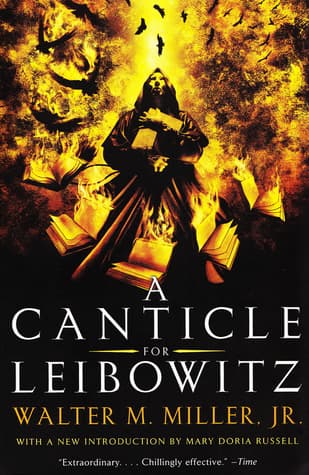
- A Canticle for Leibowitz
Walter M. Miller Jr.
4.0 (93k) average on GoodreadsFantasyWhile Knowledge of Angels focuses on a philosophical experiment within a contained historical setting, Miller's A Canticle for Leibowitz also explores the preservation of knowledge and faith in a post-apocalyptic future. Both novels grapple with the cyclical nature of human progress and decline, and the tension between scientific inquiry and religious dogma. However, Miller's scope is far grander, spanning millennia, whereas Walsh's is more intimately focused on a single, albeit profound, intellectual crucible.
- The Old Man and the Sea
Ernest Hemingway
3.8 (831k) average on GoodreadsLiterary FictionA Cuban fisherman's long struggle with a giant marlin becomes a story of endurance and dignity, now retold for young adults with illustrations, phonetic guides, and writing prompts in Traditional Chinese.
- One Hundred Years of Solitude
Gabriel García Márquez
4.1 (753k) average on GoodreadsLiterary FictionThrough the multi-generational story of the Buendía family, a mythical town deals with the repeating patterns of time, love, and solitude, as the extraordinary mixes with the ordinary.
- The Goldfinch
Donna Tartt
3.9 (720k) average on GoodreadsLiterary FictionHaunted by a tragic explosion and clutching a stolen Dutch masterpiece, a young orphan navigates the opulent drawing rooms of New York and the gritty underbelly of the art world, desperately seeking connection and redemption amidst a life spiraling into crime and obsession.





Enjoyed the summary?
A summary gives you the shape of the book. The book itself has the detail, the examples and the voice.
Find Knowledge of Angels on AmazonAs an Amazon Associate, BookBrief earns from qualifying purchases. How we're funded