
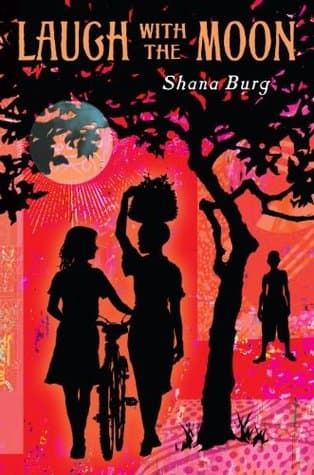
Synopsis
Covers the whole plot, including the ending.
- Difficulty
- Easy
- Pacing
- Moderate
- Mood
- Heartwarming, Emotional, Hopeful, Cultural
- Read it if
- You enjoy heartwarming stories about cultural immersion, grief, and healing through friendship.
- Skip it if
- You prefer fast-paced plots with minimal emotional depth or are sensitive to stories involving child death.
Laugh with the Moon Plot Summary
Covers the whole plot, including the ending.
Arrival in Mzanga
Thirteen-year-old Clare Silver arrives in the remote Malawian village of Mzanga with her father, Dr. Silver, who is setting up a medical clinic. Clare is deeply grieving her mother's recent death from cancer and feels displaced and resentful of their new surroundings. She struggles to connect with her father, who seems consumed by his work, and resents being pulled away from her familiar life in America. The stark differences in culture, the lack of modern amenities, and constant reminders of her loss make her feel isolated and angry. She initially resists attempts to integrate, viewing everything through a lens of homesickness and sorrow.
Starting Mzanga Full Primary School
Clare reluctantly starts attending Mzanga Full Primary School. She feels like an outsider, unable to understand the Chichewa language spoken by her peers and teachers. The school environment is different from anything she's known: crowded classrooms, students working on the floor, and the presence of animals like roosters and centipedes. Her initial attempts to make friends are awkward, and she often retreats into her own thoughts, still consumed by her grief. She finds the academic pace challenging due to the language barrier, further isolating her from her classmates.
Meeting Memory and Tiya
Despite her initial resistance, Clare slowly begins to form connections, particularly with Memory and Tiya. Memory, an orphan who lives with her grandmother, is perceptive and strong, having experienced her own share of loss. Tiya is a friendly girl who helps Clare navigate the school and local customs. Through their patience and kindness, Clare starts to feel less like an alien. They teach her basic Chichewa phrases and explain cultural nuances, beginning to chip away at Clare's emotional defenses and her sense of isolation.
The First Outing and a Near Miss
Memory and Tiya invite Clare on an outing to explore the surrounding area. The girls are excited to show Clare the beauty of their country. During their adventure, they encounter a dangerous situation involving a venomous snake, a mamba. Clare is terrified, but Memory and Tiya react with a calm resourcefulness born of living in their environment. This incident, while frightening, is a bonding experience. It forces Clare to rely on her new friends and gives her a glimpse into the harsh realities and quiet strengths of their lives, challenging her preconceived notions.
Learning Chichewa and Cultural Immersion
Motivated by her growing friendships and a desire to understand her surroundings, Clare dedicates herself to learning Chichewa. Memory and Tiya become her informal tutors, patiently helping her with pronunciation and vocabulary. As her language skills improve, Clare becomes more engaged in school and village life. She starts to appreciate the community spirit, the simple joys, and the strength of the people in Mzanga. This immersion helps her shift her focus from her own sorrow, even if temporarily. She begins to find small moments of connection and belonging.
The Trip to the Lake and the Accident
The school organizes a much-anticipated trip to Lake Malawi. Clare is excited to experience this new adventure with Memory and Tiya, feeling a genuine sense of happiness for the first time in a long while. However, tragedy strikes when the bus carrying the students is involved in a severe accident. The bus overturns, causing chaos and injuries. Clare, Memory, and Tiya are caught in the wreckage, and the joyous outing quickly transforms into a scene of fear and despair, bringing back Clare's trauma of loss.
Loss and Grief Revisited
In the aftermath of the bus accident, Clare discovers that Tiya has died. This new, sudden loss devastates Clare, reopening the raw wounds of her mother's death. She struggles to process the grief, feeling a renewed sense of anger and despair. The tragedy makes her question why she is in Mzanga and reinforces her belief that pain follows her everywhere. Her father, Dr. Silver, is overwhelmed with treating the injured, and Clare feels isolated in her grief, despite Memory's quiet presence.
Memory's Wisdom and Healing
Memory, having experienced profound loss herself, is Clare's anchor. She doesn't try to diminish Clare's pain but shares her own experiences of losing her family, offering empathy and understanding. Memory teaches Clare about the Malawian tradition of 'laughing with the moon' — finding moments of joy and connection even in the darkest times, and honoring the memories of those lost. Through Memory's quiet strength and wisdom, Clare begins to understand that grief is a part of life, but it doesn't have to consume it entirely.
Reconciliation with Father
The shared trauma of the accident and Tiya's death, coupled with Memory's influence, prompts a breakthrough between Clare and her father. They finally sit down and talk openly about their grief for Clare's mother. Dr. Silver expresses his own pain and his struggle to cope, while Clare articulates her feelings of abandonment and anger. This honest conversation allows them to acknowledge their shared sorrow and begin the process of healing their strained relationship. They realize they have been grieving separately, and now can grieve together.
Embracing Mzanga and Moving Forward
By the end of her 64 days in Mzanga, Clare has transformed. She still misses her mother and Tiya, but she has learned to carry her grief differently. She finds comfort in the community, in her friendship with Memory, and in the beauty of Malawi. She understands that love endures through memories and that it's possible to find joy and laughter again, even after loss. Clare learns to 'laugh with the moon,' accepting both the pain and the beauty of life. She begins to look towards the future with a newfound sense of hope and strength.
Principal Figures
Clare Silver
Protagonist
A grieving American teenager finding her way in a new culture.
Thirteen-year-old Clare is the novel's protagonist, initially presented as a resentful and grief-stricken girl. She is deeply affected by her mother's death and feels uprooted and isolated in Malawi. Clare is intelligent but struggles with cultural differences and a language barrier, often retreating into herself. Her initial anger and sadness stem from her inability to process her loss and her feeling of abandonment by her work-obsessed father. She represents the universal experience of adolescent grief and the challenge of adapting to drastic change.
Relationships: Dr. Silver (Distant and strained due to shared, unprocessed grief; later reconciles.); Memory (Deep, supportive friendship; Memory acts as a mentor and emotional guide.); Tiya (Developing friendship, cut short by tragedy, but significant in Clare's integration.)
Dr. Silver
Supporting
Clare's father, a doctor who struggles with his own grief while trying to help others.
Dr. Silver is Clare's father, a dedicated doctor who moved to Malawi to set up a clinic after his wife's death. He is well-meaning but emotionally distant, often burying himself in his work as a coping mechanism for his own grief. He struggles to connect with Clare, unsure how to help her or himself. His focus on healing others inadvertently makes Clare feel neglected, but his actions are driven by a deep, unspoken pain. He embodies the difficulty of grieving while maintaining responsibilities.
Relationships: Clare Silver (Strained and distant due to shared, unprocessed grief; later reconciles.); Clare's Mother (Deceased wife, whose memory is a source of shared grief with Clare.)
Memory
Supporting
A wise Malawian orphan who teaches Clare about resilience and healing.
Memory is a Malawian girl, an orphan who lives with her grandmother. She is quiet, observant, and possesses a profound wisdom beyond her years, shaped by her own experiences of loss. Memory becomes Clare's closest friend and emotional guide, patiently helping her understand Malawian culture and cope with grief. She embodies resilience, empathy, and the Malawian spirit of finding joy amidst hardship. Her name itself is symbolic of the theme of remembering and honoring those who are gone.
Relationships: Clare Silver (Deep, supportive friendship; Memory acts as a mentor and emotional guide.); Tiya (Friend.)
Tiya
Supporting
Clare's first Malawian friend, vibrant and welcoming.
Tiya is one of Clare's first friends in Mzanga. She is lively, friendly, and enthusiastic, embodying the welcoming spirit of the Malawian people. Tiya helps Clare navigate the challenges of school and local customs, making her feel less like an outsider. Her vibrant personality and eagerness to share her culture are instrumental in Clare's initial integration into the community. Her tragic death serves as a pivotal moment, plunging Clare into renewed grief but ultimately paving the way for deeper healing.
Relationships: Clare Silver (Developing friendship, cut short by tragedy, but significant in Clare's integration.); Memory (Friend.)
Clare's Mother
Mentioned
The deceased mother whose memory drives Clare's initial grief.
Clare's mother is a significant presence in the story despite being deceased. Her recent death from cancer is the catalyst for Clare's grief, anger, and the family's move to Malawi. Her memory is a constant source of pain for Clare, and her absence shapes Clare's emotional state throughout much of the novel. The process of remembering and honoring her mother is central to Clare's journey of healing. She represents the deep, enduring impact of love and loss.
Relationships: Clare Silver (Mother-daughter bond, now a source of deep grief and longing.); Dr. Silver (Wife, whose memory is a source of shared grief with Clare.)
Memory's Grandmother
Supporting
A kind and wise elder who provides stability and traditional wisdom.
Memory's grandmother is a figure of quiet strength and traditional wisdom in the Mzanga village. She provides a stable home for Memory and offers a glimpse into the resilient spirit of the community. Her presence reinforces the cultural values of family, community, and enduring through hardship. While not a central character, her gentle nature and the wisdom she imparts to Memory, which Memory then shares with Clare, contribute to the novel's overarching themes of healing and acceptance.
Relationships: Memory (Caretaker and loving grandmother.)
Mr. Banda
Supporting
Clare's teacher at Mzanga Full Primary School.
Mr. Banda is Clare's dedicated teacher at Mzanga Full Primary School. He represents the educational system in Malawi and the efforts of local teachers to educate their students despite limited resources. He is patient and understanding, recognizing Clare's struggles with the language and cultural differences. His presence helps Clare feel more accepted in the school environment and contributes to her eventual integration into the classroom and the community.
Relationships: Clare Silver (Teacher-student relationship; supportive and understanding.)
Themes & Insights
Grief and Healing
The central theme is Clare's journey through grief following her mother's death. Initially, she is stuck in denial and anger, unable to process her loss. The novel explores how grief is not a linear process and can be triggered by new losses, such as Tiya's death. Through her experiences in Malawi, particularly with Memory, Clare learns that healing involves acknowledging pain, finding connections, and discovering ways to honor memories while continuing to live. The concept of 'laughing with the moon' symbolizes this acceptance of both joy and sorrow.
“Grief is like a big, ugly monster that follows you everywhere. But sometimes, even the monster needs to rest, and then you can laugh with the moon.”
Cultural Immersion and Adaptation
Clare's forced relocation to Malawi puts her into a completely new culture, highlighting themes of cultural shock and adaptation. She initially resists the unfamiliar environment, struggling with language barriers, different social norms, and the lack of modern conveniences. As she forms friendships and learns Chichewa, she gradually moves from an outsider's perspective to an appreciative understanding of Malawian life. The novel celebrates the strength, community spirit, and simple joys found in Mzanga, showing how embracing a new culture can broaden one's perspective and lead to personal growth.
“The dust, the heat, the endless blue sky—it was all so different, and yet, little by little, it was becoming a part of me.”
The Power of Friendship
Friendship is important in Clare's transformation. Her initial isolation begins to break down through her connections with Memory and Tiya. These friendships provide companionship, emotional support, cultural guidance, and a sense of belonging. Memory, in particular, acts as a mentor, sharing her own experiences of loss and teaching Clare valuable coping mechanisms. The bond between the girls shows how shared experiences and empathetic understanding can help individuals navigate personal challenges and find comfort in human connection.
“Memory knew. She didn't have to say anything, but I knew she understood what it felt like to have a hole in your heart.”
Resilience and Hope
Despite facing multiple hardships—the death of her mother, cultural displacement, and the tragic loss of a friend—Clare, and the Malawian characters, show remarkable strength. The book illustrates the human capacity to endure suffering and find hope amidst adversity. Memory, an orphan, embodies this theme, showing Clare how to move forward and find moments of joy even after immense loss. The village itself, facing poverty and challenges, thrives on community and a lasting spirit, inspiring Clare to embrace life and the future with courage.
“Even when the moon is thin and faraway, it still shines. And we can still laugh.”
Plot Devices & Literary Techniques
The 64-Day Count
A ticking clock that frames Clare's time in Malawi.
The novel is structured around a 64-day countdown, explicitly mentioned as the duration of Clare's stay in Malawi. This device creates a sense of urgency and progression, marking Clare's temporary displacement. Initially, the countdown highlights her longing to return home, but as she adapts and heals, it transforms into a measure of her personal growth and the profound experiences she undergoes. The finite nature of her stay emphasizes the intensity of her journey and the lessons she must learn within that specific timeframe.
The 'Laugh with the Moon' Metaphor
A cultural tradition symbolizing resilience and finding joy amidst sorrow.
The phrase 'laugh with the moon' is a central metaphor, introduced by Memory as a Malawian tradition. It represents the ability to find moments of happiness, connection, and peace even when facing grief, hardship, or darkness. The moon, with its cyclical phases, symbolizes the enduring nature of life and the possibility of light even in the night. This metaphor provides Clare with a tangible way to process her grief, teaching her that sadness doesn't mean the absence of joy, and that honoring memories can involve embracing life fully.
The Language Barrier
A physical and emotional barrier that Clare must overcome for connection.
The language barrier, specifically Clare's inability to speak Chichewa, serves as a significant plot device. Initially, it isolates her from her peers and exacerbates her feelings of being an outsider. Her struggle to communicate highlights her vulnerability and reinforces her grief. As she makes an effort to learn the language, it becomes a symbol of her growing openness, her desire to connect, and her adaptation to the Malawian culture. Overcoming this barrier is crucial for her to form meaningful friendships and understand her new surroundings.
Laugh with the Moon Quotes
“The moon, she thought, was like a promise. Always there, even when you couldn't see it.”
“Sometimes you have to leave one home to find another.”
“A story is like a seed. You plant it, and it grows, and sometimes it changes the whole garden.”
“Even the smallest light can chase away the biggest darkness.”
“When you laugh with the moon, you remember you're not alone.”
“Books were like windows to other worlds, and Jesa wanted to see them all.”
“It’s not just about what you learn, but how you use what you learn to help others.”
“Fear is a big shadow, but it has no power if you stand in the light.”
“Sometimes, the hardest thing to do is to forgive yourself.”
“The wind carries whispers, and if you listen closely, you can hear the stories of the past.”
“A true friend is like a sturdy tree, offering shade and shelter even in the storm.”
“You can plant a seed anywhere, but it needs good soil and care to truly blossom.”
“The future is not a path already laid out, but a garden we grow with our choices.”
“Even when things seem broken, there's always a way to mend them, if you try.”
Quiz
10 questions on the plot and the characters. Each answer comes with a short explanation.
Question 1
What is the primary reason Clare Silver is 'stuck' in the African jungle at the beginning of the story?
- She is on a long family vacation.
- Her father is a doctor working there, and she is accompanying him.
- She is there for a school exchange program.
- She ran away from home after her mother's death.
Show answer
B. Her father is a doctor working there, and she is accompanying him. Clare is in the African jungle because her father, a doctor, is working there, and she is with him for sixty-four days.
Question 2
How long is Clare initially stuck in the African jungle without phone reception?
- 30 days
- 64 days
- 90 days
- An entire year
Show answer
B. 64 days The synopsis states Clare is 'stuck in the African jungle for sixty-four days without phone reception.'
Question 3
What significant personal loss is Clare in denial about at the beginning of the book?
- Her pet's death
- Her best friend moving away
- Her mother's recent death
- Losing a sports competition
Show answer
C. Her mother's recent death The first sentence of the synopsis states Clare is 'Stuck in denial about her mother’s recent death.'
Question 4
What specific challenges does Clare face when attending Mzanga Full Primary School?
- She struggles with advanced mathematics and science.
- She must learn a new language and adapt to crowded conditions with animals.
- She is bullied by the other students for being American.
- The teachers are unhelpful and ignore her questions.
Show answer
B. She must learn a new language and adapt to crowded conditions with animals. The synopsis mentions she 'must learn a new language' and that students 'are crowded into a tiny space, working on the floor among roosters and centipedes.'
Question 5
Who is the character described as an 'orphan named Memory'?
- Clare's teacher at Mzanga Full Primary School.
- A new friend who helps Clare learn to cope with loss.
- A local elder who teaches Clare about African culture.
- A character Clare only interacts with in her dreams.
Show answer
B. A new friend who helps Clare learn to cope with loss. Memory is described as 'an orphan named Memory, who knows about love and loss, can teach Clare how to laugh with the moon.'
Question 6
What happens during the outing Clare takes with her new friends that leads to 'another heartbreak'?
- They get lost in the jungle and are unable to find their way back.
- The trip 'goes horribly wrong,' resulting in a new emotional challenge for Clare.
- Clare accidentally damages a sacred local artifact.
- Her father forbids her from seeing her new friends again.
Show answer
B. The trip 'goes horribly wrong,' resulting in a new emotional challenge for Clare. The synopsis explicitly states, 'When Clare’s new friends take her on an outing to see the country, the trip goes horribly wrong, and Clare must face another heartbreak head-on.'
Question 7
What is the central theme that Memory helps Clare understand?
- The importance of academic achievement in a new school.
- How to laugh with the moon, symbolizing coping with love and loss.
- Survival skills for living in the African jungle.
- The nuances of the local language Clare is learning.
Show answer
B. How to laugh with the moon, symbolizing coping with love and loss. Memory 'can teach Clare how to laugh with the moon,' which is directly linked to understanding 'love and loss' and is the core emotional journey for Clare.
Question 8
The description highlights a contrast between Clare's father and Clare regarding healing. What is it?
- Her father heals physical ailments, while Clare heals emotional ones.
- Her father can heal everyone else, but seems unable to heal Clare's grief.
- Clare believes her father is a bad doctor, unlike her.
- Her father is sick, and Clare must heal him.
Show answer
B. Her father can heal everyone else, but seems unable to heal Clare's grief. The text states Clare is 'Stuck with her father, a doctor who seems able to heal everyone but Clare,' referring to her emotional state.
Question 9
What does the phrase 'laugh with the moon' most likely symbolize in the context of the story?
- Finding joy in nightlife and parties.
- Learning to find happiness and acceptance amidst sadness and loss.
- A specific cultural ritual performed under moonlight.
- Overcoming fear of the dark or unknown.
Show answer
B. Learning to find happiness and acceptance amidst sadness and loss. The phrase is introduced in the context of Memory, 'who knows about love and loss,' teaching Clare 'how to laugh with the moon,' directly linking it to coping with grief and finding joy again.
Question 10
The story is told from whose perspective?
- Memory's perspective, an African orphan.
- Clare's father, an American doctor.
- An American girl's perspective, specifically Clare Silver's.
- A third-person omniscient narrator.
Show answer
C. An American girl's perspective, specifically Clare Silver's. The synopsis explicitly states, 'Told from an American girl’s perspective,' referring to Clare Silver, the main protagonist.
Laugh with the Moon FAQ
What is the central conflict Clare Silver faces at the beginning of 'Laugh with the Moon'?
Clare Silver is grappling with profound grief and denial over her mother's recent death. This internal struggle is exacerbated by her relocation to rural Malawi with her father, a doctor, where she feels isolated and disconnected, both emotionally and geographically, from her previous life.
Where does the story primarily take place and what is its significance?
The story is set in a remote village in Malawi, Africa, where Clare's father works as a doctor. This setting is crucial as it forces Clare out of her comfort zone, exposing her to a vastly different culture and way of life that ultimately helps her process her grief and find new perspectives.
Who is Memory and what role does she play in Clare's journey?
Memory is an orphan Clare meets in Malawi who has experienced significant loss and hardship. She serves as a guide and mentor for Clare, teaching her about resilience, the enduring nature of love through memories, and how to find joy even amidst sorrow, symbolized by 'laughing with the moon'.
How does Clare's experience at Mzanga Full Primary School challenge her?
At Mzanga Full Primary School, Clare faces a stark contrast to her American education, having to learn a new language, work in crowded conditions, and adapt to a resource-scarce environment. This immersion helps her develop empathy and respect for her Malawian peers, breaking down her initial cultural barriers.
What 'horribly wrong' event occurs during the outing with Clare's new friends?
During an outing to see the country, a tragic accident occurs, resulting in the death of one of Clare's new friends. This event forces Clare to confront another significant loss, mirroring her mother's death and deepening her understanding of grief and resilience.
What specific detail highlights Clare's initial discomfort and feeling of being an 'outsider' in Malawi?
Clare's initial discomfort is vividly portrayed by her feeling like a 'fish out of water' and her struggle with the lack of phone reception, which isolates her from her familiar world. Her initial difficulty learning the local language at school further emphasizes her feeling of being an outsider.
How does the symbolism of 'laughing with the moon' evolve for Clare throughout the book?
Initially, 'laughing with the moon' might seem like an alien concept to Clare, lost in her grief. However, through Memory's guidance and her own experiences, it transforms into a symbol of finding joy, acceptance, and peace with loss, recognizing that even in darkness, there can be light and enduring love.
What does the author imply about the 'tiny space' and 'roosters and centipedes' at Mzanga Full Primary School?
The description of the 'tiny space' and the presence of 'roosters and centipedes' in the classroom subtly highlights the challenging and often unsanitary conditions of rural Malawian schools. It serves to contrast with Clare's prior educational environment and underscores the resilience and dedication of her Malawian peers.
How does Clare's father's profession as a doctor ironically reflect his relationship with Clare?
Clare's father, a doctor, is skilled at healing physical ailments in others, yet he struggles to 'heal' Clare's emotional pain and denial about her mother's death. This irony highlights the difference between physical and emotional healing, and his own grief likely contributes to his difficulty connecting with Clare.
What psychological stages of grief does Clare primarily experience in the story?
Clare initially experiences strong denial and isolation regarding her mother's death. As the story progresses and she faces new losses and connections, she moves through anger and bargaining, eventually reaching acceptance and finding ways to integrate her grief into her life, particularly through Memory's influence.
How does the book explore the psychological impact of cultural displacement on a young person?
The book vividly portrays Clare's initial disorientation, loneliness, and frustration due to cultural displacement. Her struggles with language, unfamiliar customs, and lack of familiar comforts contribute to her feeling of being 'stuck,' but ultimately, adapting to this new environment forces her personal growth and resilience.
What psychological shift occurs in Clare when she becomes 'immersed in her new surroundings'?
When Clare becomes immersed, her focus shifts from her internal grief and self-pity to external observation and engagement. This immersion fosters empathy, broadens her perspective beyond her own pain, and allows her to form genuine connections, which are crucial for her emotional healing and growth.
Is the 'another heartbreak' Clare faces meant to directly parallel her mother's death, or does it serve a different purpose?
While it parallels the experience of loss, the 'another heartbreak' serves to deepen Clare's understanding of grief and resilience. It's not just a repeat, but an opportunity for her to process loss with a different perspective, informed by her new environment and friends, and to apply lessons learned about love and memory.
How does the book challenge typical Western perceptions of happiness and success?
The book challenges Western perceptions by showing that happiness and resilience can be found in communities with limited material resources, as exemplified by Memory and Clare's Malawian friends. It suggests that deep connections, cultural traditions, and an acceptance of life's hardships are significant components of a fulfilling life.
What is the significance of the book being told from 'an American girl's perspective'?
Telling the story from an American girl's perspective allows readers to experience Malawi through a relatable, initially ethnocentric lens, highlighting cultural contrasts and Clare's personal transformation. This perspective makes the lessons about grief, resilience, and cultural understanding more accessible and impactful for a Western audience.
Could Clare's initial 'denial' about her mother's death also be interpreted as a form of self-preservation?
Yes, Clare's denial can certainly be interpreted as a psychological self-preservation mechanism. Confronting such profound loss immediately after it occurs, especially as a young teenager, can be overwhelming, and denial offers a temporary emotional shield until she is better equipped to process the grief.
How does the author use the Malawian setting to comment on the universal themes of love and loss?
The Malawian setting provides a unique cultural lens through which universal themes of love and loss are explored. It demonstrates that while customs and expressions of grief may differ, the core human experience of love, the pain of loss, and the capacity for resilience are shared across all cultures, making the story resonate broadly.
Similar books
- Home of the Brave
Katherine Applegate
4.3 (10k) average on GoodreadsChildren'sFocuses on a young refugee adapting to a new culture and dealing with past trauma.
- Harry Potter and the Sorcerer's Stone
J.K. Rowling
4.5 (7M) average on GoodreadsFantasyRescued from a miserable life under the stairs, an orphaned boy discovers he's a wizard destined for a magical school, where he uncovers a dangerous secret tied to the dark wizard who murdered his parents.
- The Hobbit, or There and Back Again
J.R.R. Tolkien
4.3 (2.9M) average on GoodreadsFantasyA comfort-loving hobbit named Bilbo Baggins is whisked away by a mischievous wizard and a band of dwarves on an unexpected journey to reclaim stolen treasure from a fearsome dragon, discovering courage and a magical ring along the way.
- Harry Potter and the Goblet of Fire
J.K. Rowling
4.6 (2.6M) average on GoodreadsFantasyA bewildered Harry Potter, underage and thrust into a deadly Triwizard Tournament, must brave dragons, mermaids, and a resurgent dark magic to survive a year that will forever alter the wizarding world.
- Harry Potter and the Order of the Phoenix
J.K. Rowling
4.5 (2.5M) average on GoodreadsFantasyIn a year of oppressive secrets and the threat of Voldemort, Harry Potter and Dumbledore's Army secretly train for war, shown through Jim Kay and Neil Packer's dark illustrations.
- The Lightning Thief
Rick Riordan
4.3 (2M) average on GoodreadsFantasyThrust into a world of mythological monsters and divine treachery, an ordinary boy discovers he's the son of Poseidon and must embark on a perilous quest across modern America to prevent an Olympian war.





Enjoyed the summary?
A summary gives you the shape of the book. The book itself has the detail, the examples and the voice.
Find Laugh with the Moon on AmazonAs an Amazon Associate, BookBrief earns from qualifying purchases. How we're funded