
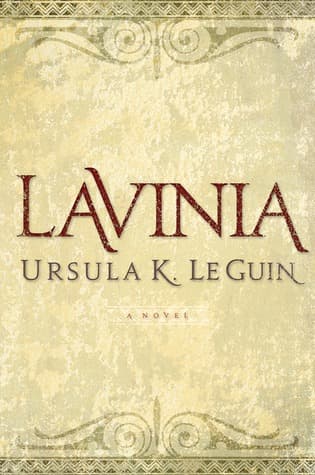
Synopsis
Covers the whole plot, including the ending.
- Difficulty
- Medium
- Pacing
- Moderate
- Mood
- Reflective, Poignant, Mythic, Serene
- Read it if
- You enjoy classical retellings, appreciate strong female voices in historical fiction, or are fascinated by the untold stories within epic myths.
- Skip it if
- You prefer fast-paced action over character-driven introspection, or dislike stories with predetermined tragic elements.
Lavinia Plot Summary
Covers the whole plot, including the ending.
A Life Unwritten: Lavinia's Awakenings
Lavinia, King Latinus's daughter, introduces herself as a character from Virgil's Aeneid. She knows that in that poem, she says nothing. She feels a deep bond with the land around Laurentum, her father's city. She spends her youth exploring the woods and fields, learning much about nature and the sacred springs. She feels different, separate from her family's everyday life, and understands that her destiny is not fully her own. She thinks about her kind father, her passionate mother, and her cousin Turnus, who is her likely suitor, though she has no romantic feelings for him. Her story begins to fill in the gaps left by Virgil.
Omens and Oracles: A Looming Destiny
As Lavinia nears marriage age, a swarm of bees lands on the laurel tree in the palace courtyard, and her hair catches fire without burning. Priests, especially the old priest Faunus, interpret these as signs that Lavinia will marry a foreigner who will bring war but also fame. Queen Amata strongly opposes these ideas, wanting Lavinia to marry Turnus. King Latinus, though worried, respects the omens. Lavinia feels a strange sense of waiting, seeing these events as the start of the fate Virgil set out for her, even as she experiences them in her own life.
Turnus's Claim and Amata's Fury
Turnus, the Rutulian king, arrives in Laurentum, sure he will marry Lavinia, encouraged by Queen Amata. He is handsome and a good warrior, but Lavinia finds him arrogant and unappealing. Amata, focused on Turnus and against foreign involvement, tries to get around the prophecies. She pressures Latinus and tries to convince Lavinia, but Lavinia quietly holds firm, guided by the omens and her own growing will. The tension between Amata's wishes and the predictions, as Latinus and Faunus understand them, grows, setting the stage for conflict.
The Arrival of the Trojans: Aeneas's Fleet
One day, foreign ships sail up the Tiber River and land near Laurentum. These are the Trojans, led by Aeneas, who have traveled from Troy after its fall, meant to build a new city. King Latinus, remembering the prophecy, immediately sees Aeneas as Lavinia's destined foreign husband. He welcomes the Trojans, offering them hospitality and suggesting marriage as an alliance. Lavinia watches Aeneas from a distance, noticing his calm manner and tiredness. She feels a deep, almost fated, connection to him, a sense of knowing him that goes beyond simple attraction. She understands this is the man for whom she is destined, and with whom she will play her quiet part in the epic.
Betrothal and Amata's Resistance
King Latinus formally offers Lavinia to Aeneas, sealing the betrothal with rituals and gifts. Aeneas, though focused on his destiny to found a new Troy, accepts the marriage, seeing it as part of his divine task. Queen Amata, however, becomes frantic with sadness and anger. She believes Latinus has betrayed his people and his daughter, and her loyalty to Turnus becomes an obsession. She calls on the Latin women, turning them against the Trojans and the proposed marriage. This makes her a cause for the war that follows, fulfilling another part of the prophecy: that Lavinia would cause a bitter conflict.
The Outbreak of War: Turnus's Fury
Moved by Queen Amata's desperate pleas and the actions of the Fury Allecto (though Lavinia sees this as Amata's madness), Turnus is furious that Aeneas will take his intended bride. He gathers his Rutulian forces and forms alliances with other Italian tribes, preparing for war against the Trojans. The peace of Latium ends. Lavinia sees the war preparations with growing fear, understanding that the conflict is directly about her, yet feeling unable to stop it, merely an object in the story unfolding around her.
Lavinia's Solitude and Self-Discovery
As the war continues, Lavinia stays mostly in the palace, though she sometimes goes to the woods she knows well. This time alone lets her think deeply about her situation. She continues talking with Virgil's 'voice,' dealing with her existence as both a living woman and a character in an old text. She realizes that while her fate is set by the epic, her inner life, thoughts, and feelings are her own. She finds strength in her link to the land and old spirits, gaining a quiet toughness and a stronger sense of herself, even as war takes over her world.
Aeneas and Lavinia: A Quiet Love
During short breaks from battle, Aeneas visits the palace, and he and Lavinia spend time together. Their connection is not one of strong romance, but of quiet understanding, mutual respect, and a shared sense of destiny. Lavinia understands Aeneas's responsibility as Rome's founder, and he, in turn, sees her quiet strength and intelligence, valuing her beyond her role as a prize. Their love is a deep, almost spiritual, bond that goes beyond the war's chaos, solidifying their roles as the founding couple of a new empire, even as the prophecy of Aeneas's short life approaches.
Amata's Despair and Suicide
As the war turns in favor of the Trojans, and Turnus faces defeat, Queen Amata's mind breaks. Unable to accept Turnus's loss and her daughter's marriage to Aeneas, she falls into deep sadness. In a tragic act, she hangs herself, fulfilling the dark parts of earlier prophecies and adding more sorrow to the war. Lavinia deeply mourns her mother, understanding her strong feelings, even as she sees how destructive Amata's resistance to fate was. This event affects Lavinia deeply, strengthening her resolve to accept her destiny.
The Final Duel and Aeneas's Death
The final battle happens, ending with Aeneas and Turnus fighting alone. Aeneas, though at first not wanting to kill Turnus, eventually does, avenging Pallas and securing the Trojan victory. However, as predicted, Aeneas himself dies shortly after the war ends, not from an enemy, but from an infection from an old wound or a fever—a quiet end rather than a hero's death. Lavinia is with him in his last days, caring for him, and their quiet love deepens in his final moments. His death fulfills the prophecy that her husband would not live long, leaving her a young widow and the mother of his heir.
Founding Rome: Ascanius and Lavinia's Legacy
After Aeneas's death, Lavinia, now Queen, helps guide Aeneas's son, Ascanius (also called Iulus), in the early days of their new settlement. They move from Laurentum and establish a new city, Alba Longa, which will lead to Rome. Lavinia, despite being young, shows great wisdom and leadership, using her knowledge of the land and its people. She raises her own son with Aeneas, Silvius, ensuring their family line continues. She quietly influences Ascanius, making sure Trojan traditions mix with Latin ones, setting the stage for the future Roman Empire.
The End of the Story: Lavinia's Enduring Voice
Lavinia lives a long and good life, ruling wisely alongside Ascanius and then through her son, Silvius. She becomes a respected figure, the mother of the Roman line, though her story is mostly untold in the traditional epic. She continues her quiet talks with Virgil, eventually forgiving him for not including her more. She claims her own reality, feelings, and purpose, even within his poem. Her story ends with a sense of peace and achievement, having fulfilled her destiny not as a quiet object, but as a aware, loving, and important figure in Rome's founding, her voice finally heard.
Principal Figures
Lavinia
Protagonist
The silent princess of Latium, who narrates her own story and becomes the mother of Rome.
Lavinia is the daughter of King Latinus and Queen Amata. In Virgil's Aeneid, she is a silent, passive figure, but Le Guin gives her a powerful, introspective voice. She is deeply connected to the natural world of ancient Latium, finding solace and understanding in its sacred springs and forests. She is observant, intelligent, and possesses a quiet strength and resilience. Though destined for a foreign husband and war, she embraces her fate with a growing sense of agency, choosing her path rather than merely enduring it. She develops a profound, intellectual love for Aeneas.
Relationships: Aeneas (Husband, profound love and partnership); King Latinus (Father, understanding and supportive); Queen Amata (Mother, fiercely loving but ultimately destructive in her opposition); Turnus (Cousin, rejected suitor, antagonist); Virgil (The 'voice' of the poet, an abstract interlocutor)
Aeneas
Supporting
The Trojan hero, destined to found Rome, who marries Lavinia.
Aeneas is the weary but resolute Trojan hero, fated by the gods to lead his people to Italy and found a new city. He is a man of duty, piety, and leadership, carrying the burden of his people's future. He is mature and experienced, having endured the fall of Troy and a long, arduous journey. He accepts his destiny, including his marriage to Lavinia, with a sense of solemn purpose. His love for Lavinia is quiet and respectful, appreciating her inner strength and wisdom, rather than her beauty alone. His early death, as prophesied, leaves Lavinia to continue their legacy.
Relationships: Lavinia (Wife, deep and respectful love); Ascanius (Son, heir to his legacy)
King Latinus
Supporting
Lavinia's gentle father, who respects omens and welcomes the Trojans.
King Latinus is the elderly, wise, and peace-loving king of Latium. He is a man of tradition and piety, deeply respectful of the gods and their omens. Despite his wife's fierce opposition, he adheres to the prophecies concerning Lavinia's marriage to a foreigner, welcoming Aeneas and his Trojans. He acts as a voice of reason and calm amidst the escalating tensions, though his decisions ultimately lead to war. He loves his daughter and wishes for her happiness, but places the fate of his people and the will of the gods above personal desires.
Relationships: Lavinia (Daughter, loving and supportive); Queen Amata (Wife, often at odds over Lavinia's marriage); Aeneas (Son-in-law, welcomed as a destined ally)
Queen Amata
Antagonist
Lavinia's passionate mother, whose fierce love for Turnus drives her to madness and war.
Queen Amata is Lavinia's mother, a proud and passionate woman. She is fiercely devoted to her nephew, Turnus, and vehemently opposes the prophecies that dictate Lavinia marry a foreigner. Her love for Turnus borders on obsession, and her resistance to Aeneas becomes a driving force behind the war. She is portrayed as a tragic figure, driven to madness by her inability to control destiny and her intense grief. Her actions, though rooted in love for her family and homeland, ultimately lead to her own demise and contribute significantly to the tragic conflict.
Relationships: Lavinia (Daughter, whom she fiercely loves but misunderstands); King Latinus (Husband, whose decisions she bitterly opposes); Turnus (Nephew, whom she desires as her daughter's husband)
Turnus
Antagonist
The Rutulian king, Lavinia's spurned suitor, who wages war against Aeneas.
Turnus is the king of the Rutulians and Lavinia's cousin. He is a strong, brave, and charismatic warrior, considered the most eligible suitor for Lavinia before the arrival of the Trojans. He is proud and ambitious, easily incited to rage when his claim to Lavinia is denied by King Latinus. His fury and sense of betrayal drive him to rally the Italian tribes against Aeneas, becoming the primary antagonist in the war. He represents the established order and native claims, clashing with the foreign destiny of Aeneas, ultimately leading to his death at Aeneas's hands.
Relationships: Lavinia (Intended bride, whom he feels entitled to); Queen Amata (Aunt, who fiercely supports his claim); Aeneas (Rival, primary antagonist)
Ascanius (Iulus)
Supporting
Aeneas's son, who, with Lavinia's guidance, helps found Alba Longa.
Ascanius is Aeneas's young son from his first wife, Creusa. He is the direct heir to the Trojan lineage and is destined to found Alba Longa, the precursor to Rome. After Aeneas's death, he looks to Lavinia for guidance and wisdom in establishing their new kingdom. He is depicted as a capable and respectful young man, willing to learn and lead. Lavinia's subtle influence helps him blend Trojan and Latin traditions, ensuring the successful future of their people.
Relationships: Aeneas (Father); Lavinia (Stepmother, mentor, and co-ruler)
Faunus
Supporting
An aged priest who interprets the omens and advises King Latinus.
Faunus is an old and revered priest in Latium, who serves as an interpreter of omens and a voice of ancient wisdom. He is the one who interprets the various signs, such as the bees and Lavinia's burning hair, correctly predicting her marriage to a foreigner and the ensuing war. He advises King Latinus to heed the divine will, providing a counterbalance to Queen Amata's emotional resistance. He represents the ancient, spiritual connection to the land and its prophecies.
Relationships: King Latinus (Advisor); Lavinia (Observer of her destiny)
Virgil
Mentioned
The author of 'The Aeneid,' whom Lavinia addresses directly.
Virgil is not a physical character in the novel, but rather an omnipresent, abstract figure whom Lavinia addresses throughout her narration. He represents the author of 'The Aeneid' and, by extension, the concept of a predetermined narrative. Lavinia 'speaks' to him, questioning his choices, filling in the gaps he left, and asserting her own reality and inner life beyond his poetic silence. He is both her creator and her audience, allowing her to explore themes of fate, free will, and the power of storytelling.
Relationships: Lavinia (Her 'creator' and silent interlocutor)
Themes & Insights
Identity and Self-Discovery
The main idea is Lavinia's search to define herself not just as a character in a poem, but as a living woman with feelings. She deals with the conflict between her set fate and her inner life, showing her own thoughts, desires, and purpose. Her journey is about understanding herself, as she finds her voice and goal beyond the silence Virgil gave her. She learns to accept her destiny while creating her own identity.
“What do I know of 'destiny'? I only know what I know. What my eyes see, my hands touch. What my heart feels. That is enough.”
The Power of Narrative and Voice
Le Guin's novel explores who gets to tell a story and whose voices are heard (or not heard) in history. By giving Lavinia a voice, the book questions the traditional epic story, showing the importance of untold views, especially those of women. Lavinia's internal talks with Virgil directly address the limits and biases of historical accounts, stating that even a 'silent' character has a rich inner world and a story worth telling.
“You left me speechless, Virgil. But I am not voiceless. I have my own story to tell.”
Fate vs. Free Will
Lavinia constantly handles the conflict between the set events of her life, as told in 'The Aeneid,' and her own choices and feelings. While she accepts the main parts of her destiny (marrying Aeneas, causing a war, his early death), she finds freedom within those limits. She chooses to love Aeneas, to be wise in her leadership, and to claim her own reality. The novel suggests that even within a fated life, there is room for personal choice and for shaping one's inner world.
“I was to be the prize, the cause of war, the mother of a line. All that was given. But how I was these things, that was mine.”
Connection to Nature and the Sacred
Lavinia has a deep, almost spiritual, connection to the natural world of ancient Latium — its forests, springs, and spirits. This connection gives her comfort, wisdom, and a sense of belonging, keeping her grounded amidst the war's chaos and her literary existence. The sacred springs bring omens and old knowledge, showing that the land itself holds deep truths and affects destiny.
“The springs spoke to me. Not in words, but in the deep language of the earth, the way water tells its own story.”
Love, Duty, and Sacrifice
The novel looks at different kinds of love — Queen Amata's strong but harmful love for Turnus, Aeneas's dutiful love for his people, and Lavinia's quiet, respectful, and deep love for Aeneas. Each character deals with the sacrifices their duties and relationships require. Lavinia and Aeneas's love, while not openly romantic, is a deep partnership born from shared destiny and mutual respect, needing personal sacrifice for the greater good of founding Rome.
“Our love was not a fire, but a deep river. It flowed under the ground, hidden, nourishing everything.”
Plot Devices & Literary Techniques
First-Person Retrospective Narration
Lavinia narrates her entire life story from a point in the distant future, after all events have transpired.
The entire novel is told from Lavinia's perspective, looking back on her life. This retrospective viewpoint allows her to reflect on events with wisdom and understanding, knowing their ultimate outcomes. It also enables her to address the reader and Virgil directly, commenting on her own narrative and the choices made by the epic poet. This device is crucial for her to assert her voice and provide context and emotional depth that was absent in the original source material.
Metafiction/Breaking the Fourth Wall
Lavinia is aware she is a character in Virgil's 'Aeneid' and directly addresses him and the reader.
Lavinia frequently acknowledges her existence as a literary character, referring to 'Virgil' as the author who left her silent. She questions his choices, fills in the gaps of his narrative, and asserts her own reality beyond the confines of his poem. This metafictional element challenges the reader to consider the nature of storytelling, historical accounts, and the agency of characters within a narrative, blurring the lines between fiction and reality within the book's world.
Omens and Prophecies
Supernatural signs and predictions guide the characters and foreshadow major plot points.
Throughout the story, various omens (e.g., bees, Lavinia's burning hair) and prophecies (from Faunus and the sacred springs) signal upcoming events, particularly Lavinia's marriage to a foreigner, the ensuing war, and Aeneas's early death. These devices reinforce the theme of fate, showing how characters are guided or constrained by divine will. They also build suspense and provide a framework for Lavinia's understanding of her predetermined role in history.
The Sacred Springs
A symbolic location representing ancient wisdom, prophecy, and Lavinia's connection to the land.
The sacred springs near Laurentum are more than just a physical location; they are a powerful symbol of ancient, intuitive knowledge and the deep connection between humanity and the natural world. Lavinia frequently visits them, finding solace and receiving subtle guidance or prophecies. They represent a source of truth that transcends human politics and desires, embodying the deep-seated wisdom of the land and the ancestors, and reinforcing Lavinia's unique spiritual sensitivity.
Lavinia Quotes
“I am a ghost. I have been a ghost for two thousand eight hundred years.”
“It is not for me to choose. It is for me to be chosen.”
“There are two kinds of war, the war of the strong and the war of the weak. The strong fight to win. The weak fight not to lose.”
“Love does not make you soft, Aeneas. It makes you strong.”
“The gods do not care what we do. They only care that we do it with proper respect.”
“To be a queen, you must learn to be alone. To be a king, you must learn to be alone.”
“I was not a prize. I was a person. And I was not to be given.”
“The future is always a ghost, even when it becomes the past.”
“There is no end to the telling, if you tell it right.”
“A man's greatness is measured not by how many he conquers, but by how many he protects.”
“Peace is not the absence of war, but the presence of justice.”
“The greatest journey is not across land or sea, but into the heart of another.”
“I lived. I loved. I bore children. I ruled. I died. And I told my story.”
Quiz
10 questions on the plot and the characters. Each answer comes with a short explanation.
Question 1
What is Lavinia's primary motivation for choosing Aeneas over Turnus, despite her mother's preference?
- She is deeply in love with Aeneas at first sight.
- She is following the omens and prophecies that dictate she marry a foreigner.
- She wants to spite her mother, Amata, who favors Turnus.
- She believes Turnus is too weak to protect her kingdom.
Show answer
B. She is following the omens and prophecies that dictate she marry a foreigner. Lavinia's decision is heavily influenced by the prophecies from the sacred springs and the voice of Virgil, which tell her she must marry a foreigner and that this marriage will lead to war and her husband's short life. She understands this is her destiny.
Question 2
Who is the 'voice' that Lavinia frequently hears and interacts with throughout the novel, providing her with knowledge of the future and the larger narrative?
- Her deceased grandmother, informing her of family history.
- The god Apollo, guiding her towards her destiny.
- Virgil, the author of The Aeneid, who is her source of knowledge.
- A prophetic spirit inhabiting the sacred springs.
Show answer
C. Virgil, the author of The Aeneid, who is her source of knowledge. Lavinia frequently converses with the spirit of Virgil, the original author of The Aeneid. He provides her with insights into the future and the larger epic story, allowing her to understand her role within his narrative.
Question 3
What is the name of Lavinia's mother, who strongly opposes her marriage to Aeneas?
- Sylvia
- Amata
- Camilla
- Dido
Show answer
B. Amata Lavinia's mother is Queen Amata, who is deeply attached to Turnus and strongly resists the idea of Lavinia marrying the Trojan foreigner, Aeneas, leading to significant conflict.
Question 4
How does Lavinia primarily feel about her predetermined role as the cause of a bitter war and her husband's short life?
- She is terrified and tries to escape her fate.
- She resents it but accepts it with a sense of duty.
- She is excited by the prospect of being central to an epic story.
- She feels indifferent, as she has no agency in the matter.
Show answer
B. She resents it but accepts it with a sense of duty. While Lavinia doesn't relish the suffering, she accepts her fate with a quiet strength and a deep sense of duty to her people and the future of Rome, understanding that this is her necessary part in a larger design.
Question 5
What is the significance of the sacred springs in the novel?
- They are where Lavinia often meets her secret lovers.
- They are the source of prophetic omens and divine messages.
- They are where the Trojan ships first land on the Tiber.
- They provide the water for the daily rituals of the Vestal Virgins.
Show answer
B. They are the source of prophetic omens and divine messages. The sacred springs are crucial as they are the primary source of the prophecies and omens that guide Lavinia's destiny, particularly regarding her marriage to a foreigner and the ensuing war.
Question 6
How does Le Guin's novel challenge or expand upon Virgil's original portrayal of Lavinia in The Aeneid?
- Le Guin makes Lavinia a powerful warrior who fights alongside Aeneas.
- Le Guin gives Lavinia a voice, inner thoughts, and agency, allowing her to narrate her own story.
- Le Guin portrays Lavinia as actively trying to prevent the war, unlike her passive role in Virgil's epic.
- Le Guin reimagines Lavinia as a sorceress with magical abilities.
Show answer
B. Le Guin gives Lavinia a voice, inner thoughts, and agency, allowing her to narrate her own story. The core premise of Le Guin's novel is to give voice to Lavinia, who is famously silent in Virgil's Aeneid. Le Guin explores Lavinia's inner life, her perspectives, and her quiet agency in shaping her own destiny within the confines of prophecy.
Question 7
What is Lavinia's relationship with her father, King Latinus, like?
- He is distant and rarely interacts with her.
- He is loving and protective, often seeking her counsel.
- He is stern and frequently disapproves of her choices.
- He is easily manipulated by his wife, Amata, regarding Lavinia's future.
Show answer
B. He is loving and protective, often seeking her counsel. Lavinia has a deep and affectionate relationship with her father, King Latinus. He values her opinions and respects the omens, often siding with them over his wife's desires, particularly concerning Lavinia's marriage.
Question 8
After the death of Aeneas, what is Lavinia's primary focus or responsibility?
- To mourn Aeneas and retreat from public life.
- To ensure the survival and future of the new city founded by Aeneas and her son.
- To seek revenge on those who caused Aeneas's death.
- To return to her ancestral home and abandon the Trojans.
Show answer
B. To ensure the survival and future of the new city founded by Aeneas and her son. Following Aeneas's death, Lavinia dedicates herself to the upbringing of her son, Silvius, and the establishment and prosperity of the city they are building. She becomes a wise and respected leader, ensuring the legacy of Aeneas and the future of Rome.
Question 9
How does Le Guin depict the 'half-wild world of ancient Italy' in contrast to the more formalized Roman empire that will eventually emerge?
- Through grand descriptions of monumental architecture already present.
- By emphasizing the close connection to nature, the rustic lifestyle, and the strong presence of local gods and spirits.
- By focusing on advanced military strategies and organized legions.
- Through detailed accounts of a highly centralized government.
Show answer
B. By emphasizing the close connection to nature, the rustic lifestyle, and the strong presence of local gods and spirits. Le Guin vividly portrays ancient Latium as a place deeply connected to the land, with simple, rustic living, and a strong belief in local spirits, sacred groves, and springs. This contrasts with the later, more urbanized and structured Roman Empire, highlighting the transition period.
Question 10
What is the ultimate 'love of her life' that Lavinia speaks of in the novel's description?
- Her passionate romance with Aeneas, which is central to her happiness.
- Her enduring love for her son, Silvius, and his future.
- Her deep connection to her land, her people, and the destiny she helps to forge for Rome.
- Her unrequited love for Turnus, which she suppresses for duty.
Show answer
C. Her deep connection to her land, her people, and the destiny she helps to forge for Rome. While she respects and comes to love Aeneas, and deeply loves her son, Lavinia's ultimate 'love' encompasses a broader devotion to her homeland, her people, and the future of the city and empire she helps to found. It's a love of purpose and legacy, extending beyond individual romance.
Lavinia FAQ
What is 'Lavinia' about?
'Lavinia' is a reimagining of Virgil's 'Aeneid' from the perspective of Lavinia, the silent princess of Latium. It gives voice to the woman Aeneas is destined to marry, detailing her life, her struggles with destiny and prophecy, and her eventual love for the Trojan hero, ultimately exploring the founding of Rome through her eyes and experiences.
Why should I read 'Lavinia'?
You should read 'Lavinia' to experience a profound feminist retelling of a classical epic, offering a rich internal life to a previously voiceless character. It's a beautifully written exploration of destiny, free will, love, and war, grounded in historical detail and Le Guin's signature lyrical prose, making ancient Italy feel vibrant and immediate.
What is the background/setting of 'Lavinia'?
The novel is set in ancient Latium, a region of central Italy, around the 12th century BCE, during the mythical period of Rome's founding. It depicts a world where small city-states like Laurentum are governed by kings, where gods and omens are integral to daily life, and where the arrival of theas from Troy disrupts the established order.
What are the most memorable quotes?
Some memorable quotes include Lavinia's reflection, 'I am a voice. I tell what I know,' encapsulating her reclaiming of narrative. Another is, 'To make an empire, you have to break a world,' highlighting the cost of destiny. Also, 'Love, I found, is a country you visit, not a house you live in,' reflecting her nuanced understanding of affection.
What writing style does the author use?
Ursula K. Le Guin employs a contemplative, elegant, and often lyrical prose style. The narrative is first-person, intimate, and reflective, allowing Lavinia's inner thoughts and observations to shape the story. It balances historical detail with poetic language, making the ancient world feel both authentic and deeply personal.
What minor details add significant meaning?
The detail of Lavinia's deep connection to the sacred spring and its omens isn't just plot device; it underscores her unique spiritual sensitivity and her role as a conduit for divine will, distinguishing her from other characters who rely more on traditional political maneuvering. Her quiet observations of nature also reveal her grounded wisdom.
What are some subtle foreshadowing moments?
The omen of the bees swarming in the laurel tree and the burning of Lavinia's hair, interpreted by the oracle as portending a great war and a foreign husband, subtly foreshadows Aeneas's arrival and the conflict with Turnus. Even Lavinia's early, almost prophetic dreams hint at the tumultuous future awaiting her.
What unexpected character connections exist?
While not 'unexpected' in a twist sense, the novel deeply explores Lavinia's unique connection to Virgil himself, as she recounts her story 'to him.' This meta-narrative connection allows her to comment on his omissions and interpretations, creating a profound dialogue between author, character, and text.
What are unspoken character motivations?
Queen Amata's fierce opposition to Aeneas and her desperate desire for Lavinia to marry Turnus isn't solely political or maternal; it's deeply rooted in her fear of the unknown, her attachment to the established order, and perhaps a subconscious desire to protect her daughter from the painful destiny the omens portend, even if it means defying fate.
What psychological complexities do characters exhibit?
Lavinia herself exhibits a complex interplay of fatalism and agency. She accepts her destiny as foretold by the omens but actively chooses how she will meet it, particularly in her decision to embrace Aeneas. Turnus, too, is complex, driven by pride and love, but also by a deep-seated fear of losing his perceived status and the woman he believes is his by right.
What are the major emotional turning points?
A major emotional turning point is Lavinia's decision to accept the prophecy of marrying a foreigner, solidifying her path away from Turnus. Another is her first genuine, unspoken connection with Aeneas, which transforms her acceptance of destiny into a personal choice and a profound love. The death of Turnus also marks a somber turning point, signifying the end of the old world.
How do relationship dynamics evolve?
Lavinia's relationship with her mother, Amata, evolves from a loving but somewhat distant bond to one of tragic opposition due to Amata's refusal to accept Aeneas. Her relationship with Aeneas, initially one of destined strangers, deepens into a profound, quiet, and deeply respectful love, built on shared understanding and mutual purpose rather than conventional romance.
Which parts remain ambiguous or open-ended?
The ultimate future of Rome, beyond Aeneas's death and Lavinia's regency, remains open-ended. While Lavinia knows the destiny of her descendants, the specific trajectory of their rule and the precise nature of the empire they will build are left to the reader's imagination, echoing the vastness of history yet to unfold.
What are controversial scenes or decisions?
A 'controversial' decision, within the narrative's context, is Lavinia's unwavering commitment to the prophecy, even when it causes immense suffering to her family and her people, particularly her mother and Turnus. Her quiet resolve to follow divine will, despite the human cost, could be seen as both admirable and tragically inflexible.
'Lavinia' ending explained: how it ends & what it means
The novel ends shortly after Aeneas's death in battle, leaving Lavinia a young widow and pregnant with their son, Silvius. She takes on the mantle of regent, guiding her son and the fledgling Roman state. The ending signifies her complete embrace of her destiny, not just as Aeneas's wife but as a foundational matriarch of Rome, giving voice to the silent strength and wisdom behind the epic's heroes and emphasizing that true power often lies in quiet, enduring resolve.
About the author
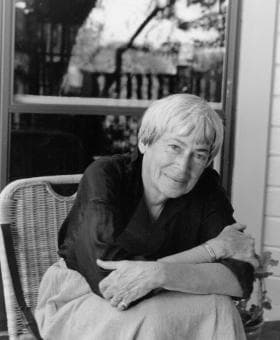
Ursula Kroeber Le Guin was an American author best known for her works of speculative fiction, including science fiction works set in her Hainish universe, and the Earthsea fantasy series. She was first published in 1959, and her literary career spanned nearly sixty years, producing more than twenty novels and over a hundred short stories, in addition to poetry, literary criticism, translations, and children's books. Frequently described as an author of science fiction, Le Guin has also been called a "major voice in American Letters". Le Guin said she would prefer to be known as an "American novelist".
Similar books
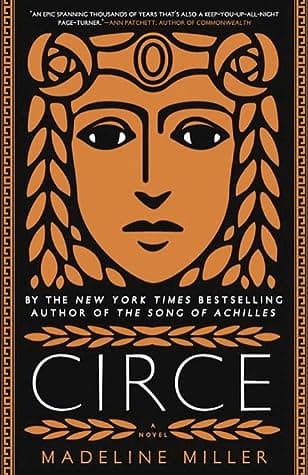
- Circe
Madeline Miller
4.3 (343k) average on GoodreadsFantasyRetells a classical myth from a powerful female perspective, focusing on character depth and emotional resonance.
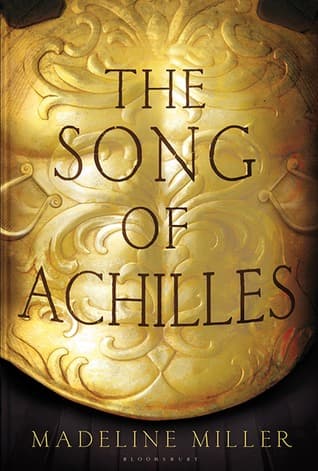
- The Song of Achilles
Madeline Miller
4.3 (228k) average on GoodreadsFantasyExplores a well-known epic through an intimate, character-focused lens, giving voice to a previously secondary figure.
- Harry Potter and the Sorcerer's Stone
J.K. Rowling
4.5 (7M) average on GoodreadsFantasyRescued from a miserable life under the stairs, an orphaned boy discovers he's a wizard destined for a magical school, where he uncovers a dangerous secret tied to the dark wizard who murdered his parents.
- The Hunger Games
Suzanne Collins
4.3 (6.4M) average on GoodreadsFantasyIn a future where children fight to the death on live television, Katniss Everdeen volunteers for the arena, turning a death sentence into a fight for survival and a spark of rebellion.
- 1984
George Orwell
4.2 (3.1M) average on GoodreadsPoliticsIn a future where surveillance and thought control are absolute, a man's search for truth clashes with the Party, showing that hope can be a form of rebellion.
- Divergent
Veronica Roth
4.2 (2.9M) average on GoodreadsFantasyIn a society divided by virtues, a sixteen-year-old's difference from the norm starts a rebellion that threatens her world.




Enjoyed the summary?
A summary gives you the shape of the book. The book itself has the detail, the examples and the voice.
Find Lavinia on AmazonAs an Amazon Associate, BookBrief earns from qualifying purchases. How we're funded