

Core Idea
- Difficulty
- Easy
Key Takeaways from Let's Explore Diabetes with Owls
The Absurdity of Everyday Life
Sedaris masterfully extracts humor from the mundane and the bizarre, revealing the inherent absurdity in human behavior.
Sedaris excels at finding humor in everyday life, turning common events into comedy. He recounts his father's quirks, his own awkward social moments, and strange interactions with strangers. His stories consistently show the illogical and funny parts of daily existence. This is more than just observing; it's a look into human nature, revealing our shared peculiarities and weaknesses with wit and understanding. This insight is strong because it's universal; readers see parts of their own lives and relationships in his exaggerated but relatable situations, making the humor deeply felt.
“I've often thought that if I were a cat, I'd rather be a housecat than a wildcat. The former gets to live in a house, eat tuna, and have its poop scooped. The latter has to hunt for its food, live outside, and poop wherever it wants, which sounds good until you realize that you're probably going to poop in front of a bear.”
In the book: His description of his father's dinnertime attire (shirtsleeves and underpants) or his detailed recounting of interactions with peculiar individuals encountered during his travels.
Try this: Cultivating a perspective that seeks out the humor in everyday frustrations and oddities can lead to a more resilient and enjoyable outlook on life. Instead of being annoyed, try to find the comedic angle.
Family as a Wellspring of Peculiarity
Sedaris's family serves as a rich, unending source of material, revealing the profound impact of upbringing and the enduring strangeness of familial bonds.
The memoir often explores the Sedaris family's unique traits, especially his father's habits and his siblings' personalities. This isn't just for laughs; it examines the complex nature of family relationships, how people form their identities within a shared history, and the unwritten rules of home life. Sedaris shows his family with annoyance, affection, and confusion. He suggests that while families can be very irritating, they are also central to who we become. This is the book's best insight, showing how our early environments shape what we think and provide endless story material.
“My father's idea of a good time was to eat dinner in his underpants while watching '60 Minutes.'”
In the book: Recollections of his father's bizarre dinnertime attire and the various anecdotes involving his siblings, such as the time he considered buying the skeleton of a murdered Pygmy.
Try this: Reflect on your own family's unique quirks and how they have influenced your personality and worldview. Recognizing these influences can foster self-awareness and a deeper understanding of personal history.
The Unflinching Gaze at Mortality and Bodily Functions
Sedaris approaches uncomfortable topics like aging, illness, and bodily processes with a disarming blend of humor and candidness.
One of Sedaris's key traits is his willingness to discuss topics most people avoid, especially those about the human body and aging. His story about his first colonoscopy is a good example, turning a potentially embarrassing or scary medical procedure into something mildly amusing and genuinely curious. This direct honesty extends to thoughts on aging, health scares, and the general indignities of being a physical person. By making these experiences normal through humor, Sedaris entertains and subtly encourages readers to be less anxious and more accepting of their own mortality and physical realities. Some readers might find certain descriptions too graphic, but for many, it is freeing.
“My first colonoscopy was remarkably pleasant. I mean, it wasn't a trip to Disney World, but it certainly wasn't the horror show I'd been led to believe.”
In the book: His detailed, almost cheerful description of undergoing a colonoscopy, contrasting with common anxieties about the procedure.
Try this: Approach personal health matters or the topic of aging with a greater sense of humor and acceptance. Share your own experiences candidly to destigmatize common bodily processes.
The Art of Self-Deprecation
Sedaris frequently positions himself as the bewildered, slightly inept protagonist, making his observations more relatable and his humor more potent.
Much of Sedaris's comedic appeal comes from his excellent use of self-deprecation. He rarely acts as an all-knowing observer. Instead, he is often a confused, sometimes socially awkward participant in life's absurdities. This modesty makes his sharp critiques of others' behavior less judgmental and more broadly applicable. By showing his own flaws, worries, and embarrassing moments, he connects immediately with the reader, creating a sense of shared human experience. This approach disarms potential criticism and allows his more pointed observations to land with greater impact, as he does not exclude himself from the follies he describes.
“I often wonder if I'm the only person in the world who thinks this, or if everyone else is just better at pretending they don't.”
In the book: His accounts of personal awkwardness, misunderstandings with foreign customs, or moments where he feels out of place, such as navigating a different culture.
Try this: Embrace self-deprecating humor as a tool for connecting with others and defusing tense situations. Acknowledging your own imperfections can make you more approachable and relatable.
Culture Clash as Comedy Gold
Living abroad provides Sedaris with endless material, highlighting the hilarious misunderstandings and differences between cultures.
Sedaris's experiences living in France and other countries provide rich material for his comedic observations. He skillfully describes the frustrations and confusion that come from language barriers, different social customs, and unfamiliar cultural norms. These stories are not just travel accounts; they are sharp analyses of human behavior seen through an outsider's eyes. The humor often comes from his attempts to navigate these differences, frequently leading to amusing misunderstandings or social blunders. This idea highlights that much of what we consider 'normal' is cultural, and stepping outside our comfort zone can reveal both the universal and unique aspects of human interaction.
“It's a strange thing, living in a country where you don't speak the language. You're always a little bit on edge, a little bit stupid, and always, always, observing.”
In the book: His stories about struggling with the French language, misunderstanding local customs, or his observations of distinct cultural habits compared to American ones.
Try this: When encountering new cultures or unfamiliar situations, approach them with curiosity and a sense of humor rather than frustration. Embrace the learning opportunities that arise from cultural differences.
The Power of Observation and Detail
Sedaris's writing thrives on his keen eye for minute details and his ability to elevate them to significant narrative points.
A defining feature of Sedaris's style is his remarkable attention to detail. He does not just describe events; he breaks them down, pulling out the specific gestures, tones, and environmental clues that make his stories vivid. Whether it is the exact words of a strange conversation, the specific clothes of an unusual person, or the precise feeling of a medical procedure, these small observations are vital to his humor and emotional impact. This carefulness allows him to create clear scenes and characters, making even the most outlandish situations feel real and believable. This is a key stylistic strength, showing how specific details can turn a simple story into a memorable one.
“It's the little things that get you, the tiny, insignificant details that somehow manage to lodge themselves in your brain and refuse to leave.”
In the book: His precise descriptions of his father's specific habits, the reactions of strangers, or the nuanced feelings associated with his first colonoscopy.
Try this: Practice mindful observation in your daily life. Pay attention to the small details in conversations, environments, and interactions, as they often hold surprising insights or comedic potential for storytelling.
Finding Humanity in the Grotesque
Sedaris often explores the darker, stranger aspects of human nature, yet always imbues his characters with a surprising degree of humanity.
From considering buying a Pygmy skeleton to meeting truly odd people, Sedaris does not shy away from the strange or even unsettling parts of human experience. However, his approach is never purely cynical. Even when describing the most bizarre characters or situations, there is an underlying sense of curiosity and a search for understanding. He often highlights the basic humanity or vulnerability beneath the surface strangeness, keeping his humor from becoming mean-spirited. This balanced view allows readers to laugh at the absurdities while still feeling a connection to the individuals involved, showing his capacity for both wit and empathy.
“You meet all sorts of people in life, and some of them are just plain weird. But even the weirdest ones usually have a story, a reason for being the way they are.”
In the book: His contemplation of buying a Pygmy skeleton, or his encounters with various eccentric individuals he meets during his travels and daily life.
Try this: When encountering individuals who seem strange or off-putting, challenge yourself to look beyond the surface and consider the underlying human story or motivation. Practice empathy even in the face of the unusual.
The Interplay of Memory and Narrative
Sedaris's memoirs demonstrate how personal memories are shaped, embellished, and transformed into compelling stories.
Though presented as non-fiction, Sedaris's work often blurs the lines between strict factual recall and narrative art. He openly acknowledges that memory is subjective, suggesting that events are often reinterpreted or slightly exaggerated for comedic or dramatic effect. This does not lessen the truth of his emotional experiences but rather shows the skill involved in memoir writing. His stories are not just recounts; they are carefully crafted performances of memory, showing how personal history can be shaped into universally resonant tales. This reminds readers that memoirs offer a personal truth, not necessarily a journalistic one, which is an important distinction in the genre.
“Memory is a funny thing. It plays tricks on you. But sometimes, those tricks make for better stories.”
In the book: The inherent comedic exaggeration in many of his anecdotes, which while rooted in truth, are clearly polished for maximum narrative impact.
Try this: Reflect on how you tell your own personal stories. Consider how you might select details, emphasize certain aspects, or even playfully exaggerate to make your narratives more engaging and impactful for your audience.
The Enduring Power of the Essay Form
Sedaris exemplifies how a collection of seemingly disparate essays can form a cohesive, emotionally resonant portrait of a life.
This collection, like many of Sedaris's works, is made up of standalone essays. Yet, together, they create a rich and varied picture of the author's life, his family, his travels, and his unique view of the world. Each essay, while complete, adds to a larger whole, revealing repeated themes, changing perspectives, and the subtle growth of his personality over time. This shows the lasting strength and adaptability of the essay form, proving that a linear narrative is not always needed to convey depth and consistency. It allows for exploring diverse topics while keeping a single, recognizable voice.
“Each story is a small window, and when you look through enough of them, you start to see the whole house.”
In the book: The way individual essays about his family, travel, or personal experiences, while distinct, collectively contribute to a comprehensive understanding of Sedaris's life and persona.
Try this: Consider how individual experiences or observations in your own life, even if seemingly unrelated, can be connected to form a larger narrative about who you are or what you believe.
The Art of the Unexpected Turn
Sedaris frequently employs unexpected twists and non-sequiturs, creating a dynamic and unpredictable reading experience.
A key part of Sedaris's comedic skill is his ability to surprise the reader. His stories often start in one place and then go in unexpected directions, including side observations or seemingly unrelated anecdotes that eventually connect in a satisfying, often funny, way. This unpredictability keeps the reader engaged and highlights the winding, associative nature of human thought and conversation. It is a deliberate stylistic choice that prevents his writing from becoming predictable and ensures that even the most ordinary setup can lead to a truly memorable payoff. This makes his writing consistently fresh and entertaining, a masterclass in comedic timing and narrative misdirection.
“Just when you think you know where a story is going, it takes a sharp left turn into a neighborhood you never even knew existed.”
In the book: The way a seemingly simple anecdote about his family might suddenly transition to a bizarre interaction with a stranger, or a profound reflection on human nature.
Try this: In your own storytelling or communication, experiment with introducing unexpected elements or tangents to keep your audience engaged. Don't be afraid to let your thoughts wander if you can skillfully bring them back to your main point.
Quiz
10 questions on the main ideas. Each answer comes with a short explanation.
Question 1
What is the genre of the book "Let's Explore Diabetes with Owls"?
- Science Fiction
- Mystery
- Biography, Memoir
- Fantasy
Show answer
C. Biography, Memoir The provided text explicitly states the genre as "Biography, Memoir".
Question 2
Who is the author of "Let's Explore Diabetes with Owls"?
- David Sedaris
- Jane Austen
- George Orwell
- Mark Twain
Show answer
A. David Sedaris The author's name, David Sedaris, is mentioned multiple times in the description.
Question 3
According to the description, what kind of attire did David Sedaris remember his father wearing at dinnertime?
- A suit and tie
- Shirtsleeves and underpants
- A tuxedo
- Pajamas
Show answer
B. Shirtsleeves and underpants The text states, "Sedaris remembers his father's dinnertime attire (shirtsleeves and underpants)".
Question 4
What is one of the specific anecdotes mentioned from the book concerning David Sedaris's experiences?
- His trip to the moon
- His first colonoscopy
- Learning to fly a plane
- Discovering a hidden treasure
Show answer
B. His first colonoscopy The description includes the detail: "his first colonoscopy (remarkably pleasant)".
Question 5
What unusual item did David Sedaris consider buying?
- A vintage car
- A haunted house
- The skeleton of a murdered Pygmy
- A private island
Show answer
C. The skeleton of a murdered Pygmy The text mentions, "the time he considered buying the skeleton of a murdered Pygmy."
Question 6
How is David Sedaris's work described by the Washington Post, according to the text?
- "Depressing and thought-provoking"
- "Hilarious, elegant, and surprisingly moving"
- "Complex and challenging"
- "Simple and lighthearted"
Show answer
B. "Hilarious, elegant, and surprisingly moving" The description quotes the Washington Post saying Sedaris's work has been called "hilarious, elegant, and surprisingly moving".
Question 7
What emotional impact does David Sedaris's writing have on readers, according to the description?
- Only amusement
- Only sadness
- Both delight and deep emotion
- Indifference
Show answer
C. Both delight and deep emotion The text states that Sedaris will "both delight you with twists of humor and intelligence and leave you deeply moved."
Question 8
The opening line, "A guy walks into a bar car and...", sets up a narrative where the reader anticipates a certain type of story. What does the description suggest about David Sedaris's writing in relation to this setup?
- He follows traditional narrative structures.
- He subverts expectations with unexpected and humorous turns.
- He focuses exclusively on serious and somber themes.
- He rarely uses anecdotes in his writing.
Show answer
B. He subverts expectations with unexpected and humorous turns. The description implies that when Sedaris is the author, the story takes "many turns" and the "possibilities are endless," suggesting a departure from predictable narratives and an embrace of unique, often humorous, directions.
Question 9
The description uses the phrase "remarkably pleasant" to describe which of David Sedaris's experiences?
- His first attempt at cooking a complex meal
- His childhood summer vacation
- His first colonoscopy
- His experience learning a new language
Show answer
C. His first colonoscopy The text explicitly states, "his first colonoscopy (remarkably pleasant)". This is an example of Sedaris finding humor or an unusual perspective in a typically unpleasant experience.
Question 10
Considering the description's emphasis on "humor and intelligence" and being "deeply moved," what can be inferred about David Sedaris's writing style and thematic approach?
- He exclusively writes lighthearted comedies with no deeper meaning.
- His work balances comedic observations with profound emotional insights.
- He focuses solely on dark and tragic events without any humor.
- His writing is primarily academic and lacks personal anecdotes.
Show answer
B. His work balances comedic observations with profound emotional insights. The description highlights a duality in Sedaris's writing: the ability to "delight you with twists of humor and intelligence" while also leaving the reader "deeply moved." This suggests a skillful blend of comedy and emotional depth, rather than an exclusive focus on one extreme.
Let's Explore Diabetes with Owls FAQ
What is 'Let's Explore Diabetes with Owls' about?
'Let's Explore Diabetes with Owls' is a collection of humorous and poignant essays by David Sedaris. The book covers a wide range of personal anecdotes, observations, and reflections on life, family, and the absurdities of everyday experiences.
Who is the author of 'Let's Explore Diabetes with Owls'?
The author is David Sedaris, a celebrated humorist known for his autobiographical essays and collections of short stories.
What kind of humor can I expect in this book?
David Sedaris's humor is often self-deprecating, observational, and can take unexpected, sometimes dark, turns. He finds comedy in the mundane and the bizarre, often with a sharp wit and intelligence.
Is 'Let's Explore Diabetes with Owls' a novel or a memoir?
It's a collection of personal essays, making it a form of memoir. Each essay is a standalone piece, drawing from Sedaris's own life experiences.
What are some of the topics David Sedaris writes about in this book?
Topics range widely and include his family, his father's habits, personal medical experiences like a colonoscopy, and even unusual thoughts like considering the purchase of a murdered Pygmy's skeleton.
Is the book funny and serious at the same time?
Yes, a hallmark of David Sedaris's writing is its ability to be both hilarious and deeply moving. He often balances laugh-out-loud moments with surprisingly touching or thought-provoking insights.
Who would enjoy reading 'Let's Explore Diabetes with Owls'?
Readers who enjoy witty, personal essays, observational humor, and memoirs that offer both laughter and reflection will likely appreciate this book.
How does Sedaris's writing style compare to other humorists?
Sedaris is known for his unique voice, blending sharp intelligence with a keen eye for the absurd and a deeply personal, often vulnerable, perspective that sets him apart.
Are there any practical takeaways from 'Let's Explore Diabetes with Owls'?
While not a self-help book, the essays offer a unique perspective on navigating life's absurdities and finding humor in difficult situations, which can be practically inspiring for readers.
About the author
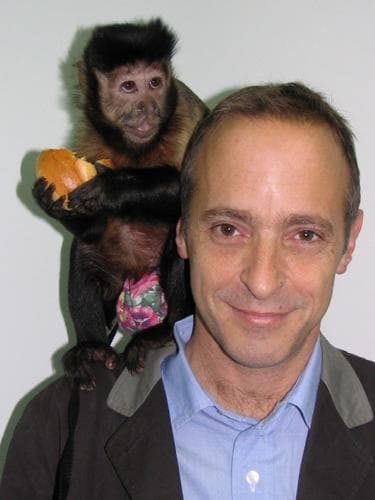
David Sedaris is a celebrated humorist and New York Times bestselling author known for his witty and poignant essays. His most popular works include "Me Talk Pretty One Day," "When You Are Engulfed in Flames," and "Dress Your Family in Corduroy and Denim." Sedaris's sharp observations on everyday life, family, and cultural differences have earned him a devoted following and numerous accolades.
Similar books
- Me Talk Pretty One Day
David Sedaris
4.0 (618k) average on GoodreadsBiographyWhile both books showcase Sedaris's signature humor and observational wit, "Let's Explore Diabetes with Owls" feels slightly more mature and reflective. "Me Talk Pretty One Day" often focuses on his younger, more chaotic experiences, particularly his struggles with learning French and adapting to Parisian life, resulting in a more overtly slapstick and boisterous humor. "Owls" delves deeper into themes of aging, health, and the complexities of family relationships, presenting a more nuanced and sometimes melancholic perspective alongside the laughs. The humor in "Owls" is often more subtle and derived from the absurdities of the everyday rather than the culture shock prominent in "Me Talk Pretty One Day".
- Born a Crime: Stories From a South African Childhood
Trevor Noah
4.5 (389k) average on GoodreadsBiographyBoth "Let's Explore Diabetes with Owls" and "Born a Crime" are memoirs that use humor to navigate difficult personal experiences and cultural observations. However, their scope and tone differ significantly. Sedaris's work is primarily a collection of vignettes focusing on personal anxieties, family dynamics, and the oddities of Western life, employing a dry, often cynical wit. Noah's memoir, in contrast, offers a more linear and politically charged narrative about growing up under apartheid in South Africa. While Noah also uses humor to illuminate injustice and hardship, his humor serves to make profound socio-political commentary accessible, whereas Sedaris's humor is often an end in itself, exploring the inherent ridiculousness of human existence. Noah's stakes feel higher, dealing with issues of race and identity on a societal level, while Sedaris's focus remains more intimately personal.
- The Diary of a Young Girl
Anne Frank
4.2 (2.7M) average on GoodreadsBiographyDuring the Nazi occupation, a teenage girl's diary, written from a secret annex, shares observations on humanity, hope, and the wait for freedom.
- Eat, Pray, Love
Elizabeth Gilbert
3.6 (1.5M) average on GoodreadsLifestyleA heartbroken writer leaves her conventional life for a year-long global search for pleasure in Italy, spiritual devotion in India, and unexpected love and balance in Bali.
- Night
Elie Wiesel
4.3 (970k) average on GoodreadsBiographyIn the darkness of Auschwitz and Buchenwald, a teenage Elie Wiesel faces the extermination of his family, the loss of his faith, and the lasting scars of humanity's deepest cruelty.
- Steve Jobs
Walter Isaacson
4.1 (957k) average on GoodreadsBusinessSteve Jobs was a visionary who fused creativity and technology to revolutionize six industries and shape our digital world.





Enjoyed the summary?
A summary gives you the shape of the book. The book itself has the detail, the examples and the voice.
Find Let's Explore Diabetes with Owls on AmazonAs an Amazon Associate, BookBrief earns from qualifying purchases. How we're funded