
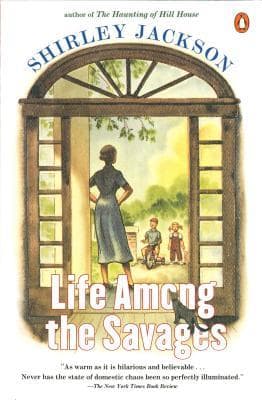
Core Idea
- Difficulty
- Easy
- Read it if
- You appreciate dry wit and humor in the face of domestic chaos, or if you're looking for a refreshing, unsentimental take on family life and motherhood.
- Skip it if
- You prefer highly structured narratives or are looking for a prescriptive guide to parenting/home life rather than observational memoir.
Key Takeaways from Life Among the Savages
Domesticity as a Grand Adventure
Embrace the chaos of family life as an endless source of material and joy.
Jackson redefines the struggles of household management and child-rearing not as burdens, but as a series of comedic and often absurd adventures. She finds humor and story potential in every broken furnace, misbehaving child, and quirky neighbor. This view changes the ordinary into something extraordinary, suggesting that the most fertile ground for storytelling, and for a full life, is within the home. It counters the idea that 'real' adventure must be external, showing that deep experiences and endless amusement can be found right at home, amidst the noise and clutter.
“Our house is old, noisy, and full. When we moved into it we had two children and about five thousand books; I expect that when we finally overflow and move out again we will have perhaps twenty children and easily half a million books.”
In the book: Jackson's anecdotes about her children's elaborate, often destructive games, the endless parade of incompetent household help, and the constant mechanical failures of their cars and home appliances.
Try this: Instead of viewing household chores or family squabbles as tedious, try to observe them through a storyteller's lens. Jot down funny or absurd moments. This shift in perspective can transform daily frustrations into entertaining narratives and foster a deeper appreciation for the unique dynamics of your own family.
Related ideas: domestic-bliss, finding-humor, memoir-writing
The Art of Observational Wit
Sharpen your perception to find humor in the everyday absurdities of life.
Jackson's skill comes from her keen observational abilities, which let her draw sharp, unsentimental wit from common situations. She does not just describe events; she analyzes them with dry, ironic humor that highlights the absurdity of human behavior, especially that of her children and the people she meets. This humor is not cruel, but a loving, yet honest, look at life's imperfections. Her ability to find the comedy in domestic chaos makes the memoir entertaining and relatable, showing how to see beyond the surface.
“I often wonder what it is about my children that makes them so utterly unable to perform the simplest tasks without turning them into a major production.”
In the book: Her descriptions of the 'pugnacious corner bully,' the various inept babysitters, and the children's elaborate excuses for not doing their chores.
Try this: Practice 'active observation' in your daily life. Pay close attention to dialogue, mannerisms, and unexpected outcomes in mundane situations. Try to identify the underlying humor or irony. Keeping a journal of these observations can help hone your wit and appreciation for life's quirks.
Related ideas: observational-humor, satire, everyday-absurdity
Unsentimental Love
Deep affection can coexist with a clear-eyed view of imperfections.
Despite her sharp, unsentimental wit, Jackson's memoir is filled with love and happiness. This is not a sugary, idealized picture of family life, but a strong, realistic affection that acknowledges and even embraces flaws and frustrations. She loves her noisy, demanding children and her patient, sometimes oblivious husband because of, not despite, their quirks. This unsentimental love is more powerful and relatable than any sugar-coated version, showing that true connection grows from accepting reality, not from manufactured perfection.
“There is no mistaking the happiness and love in these pages, which are crowded with the raucous voices of an extraordinary family living a wonderfully ordinary life.”
In the book: While she often describes her children's antics with exasperation, the overall tone of the book is one of warm affection and pride in her family's unique character.
Try this: Reflect on your own relationships. Can you acknowledge the challenging aspects of loved ones without diminishing your affection for them? Practice expressing appreciation for their unique qualities, even the ones that sometimes frustrate you. This fosters a more authentic and resilient connection.
Related ideas: authentic-relationships, family-dynamics, unconditional-love
The Writer's Resourcefulness
Every experience, no matter how trivial, is potential literary fodder.
Shirley Jackson, known for her darker fiction, shows in this memoir that a writer's mind is always working, turning lived experience into compelling stories. Her domestic life, far from being a distraction from her serious writing, becomes a rich source of material. This highlights that creativity is not limited to grand, dramatic events but grows from careful observation and humorous recounting of daily life. For a writer, nothing is truly wasted; every conversation, mishap, and fleeting thought holds story potential.
“Jackson's literary talents are in evidence everywhere...”
In the book: The entire memoir serves as evidence, as it is composed of meticulously crafted anecdotes drawn directly from her daily interactions and household events.
Try this: Cultivate a 'writer's notebook' mentality. Whether you aspire to write or not, try to capture interesting details, funny quotes, or peculiar incidents from your day. This practice not only sharpens your memory and observation but also helps you appreciate the narrative unfolding around you.
Related ideas: creative-inspiration, memoir-writing, observational-skills
The Enduring Mother Archetype
Mothers navigate a unique blend of love, labor, and often unacknowledged accomplishments.
Jackson's portrayal of motherhood feels very true, showing the immense, often invisible, work involved in running a household and raising children. Her husband, though loving and capable, is shown as 'lovingly oblivious' to the sheer volume of tasks she handles daily. This speaks to a universal truth about the maternal role: it is a relentless, multifaceted job that often goes unacknowledged. Jackson's humor in recounting these efforts is not bitter, but a wry acknowledgment of a shared experience among mothers, highlighting their resilience and essential contributions.
“...a patient, capable husband who remains lovingly oblivious to the many thousands of things mothers and wives accomplish every single day.”
In the book: Her detailed accounts of managing children's schedules, household repairs, meal preparation, and dealing with various domestic crises, often while her husband is engaged in his own pursuits.
Try this: If you are a mother, acknowledge your own immense efforts and allow yourself grace. If you are not, make a conscious effort to recognize and appreciate the often unseen labor of mothers and caregivers in your life. Offer specific help or words of affirmation beyond generic thanks.
Related ideas: motherhood, invisible-labor, gender-roles
Finding Wonder in the Ordinary
The most extraordinary lives are often built from wonderfully ordinary moments.
Jackson's memoir illustrates that an 'extraordinary' life is not necessarily one filled with grand adventures or celebrity, but one where the ordinary is deeply lived and appreciated. Her family's life in rural Vermont, with all its challenges and simple pleasures, becomes extraordinary through her humor, love, and keen observation. It reminds us to find wonder and richness not in what is missing, but in the everyday fabric of our own lives – the noisy homes, the messy children, the persistent small joys and frustrations that make up a real existence.
“...an extraordinary family living a wonderfully ordinary life.”
In the book: The cumulative effect of her detailed, affectionate descriptions of everyday family routines, holidays, and local interactions.
Try this: Take time each day to notice and appreciate small, ordinary details: the sound of rain, a child's laughter, the taste of your morning coffee. Practice gratitude for these simple elements. Consider starting a 'daily delights' journal to capture these moments.
Related ideas: mindfulness, gratitude, simple-living
The Charm of Imperfection
Embrace flaws and eccentricities as the true sources of character and charm.
The charm of 'Life Among the Savages' comes directly from its acceptance of imperfection. Jackson does not hesitate to show unruly children, unreliable appliances, or quirky neighbors. In fact, these very flaws give her family and their life its distinct character and humor. This view suggests that trying for a perfect, sanitized existence would strip life of its richness and comedic potential. It is a liberating idea, encouraging readers to find beauty and joy in the messy, unpredictable reality of their own lives.
“children who won't behave, cars that won't start, furnaces that break down...”
In the book: The vivid characterizations of her children's distinct personalities and their various mischievous acts, as well as the recurring struggles with household maintenance.
Try this: Instead of striving for unattainable perfection, identify one 'imperfection' in your home or routine that you can choose to embrace or even find humor in. Share stories of your own minor mishaps with others to build connection through shared human experience.
Related ideas: self-acceptance, authenticity, resilience
The Power of Narrative Voice
A distinctive voice can transform even the most mundane into engaging literature.
Shirley Jackson's memoir is a great example of the power of a strong, unique narrative voice. Her characteristic mix of terse observation and dry wit, usually found in her darker fiction, here makes the ordinary extraordinary. It is her particular way of seeing and describing the world that turns simple family anecdotes into delightful, universally relatable stories. This shows that how something is told is often as important, if not more important, than what is being told, proving that a compelling voice can captivate an audience regardless of the subject.
“Jackson's literary talents are in evidence everywhere, as is her trenchant, unsentimental wit.”
In the book: The consistent tone and style throughout the book, which is instantly recognizable as Jackson's, even when the subject matter is lighthearted.
Try this: When communicating, consciously think about your own 'voice.' Are you clear, engaging, humorous? Experiment with different ways of telling a story or explaining an idea, focusing on clarity and personality. Reading aloud can help you refine your narrative flow.
Related ideas: literary-style, authorial-voice, storytelling
Humor as a Coping Mechanism
Laughter is an essential tool for navigating life's inevitable frustrations and chaos.
Jackson's memoir, like other beloved domestic humorists, shows how useful humor is as a coping mechanism. Faced with never-ending chores, misbehaving children, and life's general unpredictability, Jackson consistently chooses to find the humor in the situation. This is not about denial, but about reframing challenges in a way that makes them manageable and even enjoyable. Her ability to laugh at the chaos turns potential despair into delightful anecdotes, suggesting that a good sense of humor is one of the most valuable tools for navigating the 'savages' of daily life.
“Fans of Please Don't Eat the Daisies, Cheaper by the Dozen, and anything Erma Bombeck ever wrote will find much to recognize...”
In the book: Her consistently lighthearted and humorous recounting of frustrating events, such as the children's elaborate schemes to avoid bedtime or the repeated failures of their car.
Try this: When faced with a frustrating situation, consciously try to identify one humorous aspect, no matter how small. Share a funny anecdote about a recent challenge with a friend or family member. Cultivate a mindset that seeks out the absurd and amusing in everyday life.
Related ideas: stress-management, positive-psychology, resilience
Life Among the Savages Quotes
“No one had ever told me that I would be a failure at this, too, and all the things I had ever tried to do were suddenly there in my mind to mock me.”
“I was born to a world of women, and the world of women is not the world of men.”
“The most important thing for any woman is to be married, and have children, and keep house.”
“The children were a great joy, of course, but they were also a great deal of trouble.”
“I am a writer, and I write, and that is all I do.”
“It is always a shock to be reminded that the world is not waiting for your wisdom.”
“The only thing I ever really wanted to do was to sit in a comfortable chair and read a book.”
“Children, like all primitives, are without mercy.”
“There is nothing in the world so much like a man as a woman who wants to be a man.”
“I could never understand why anyone would want to leave a house that was perfectly good.”
“My husband, like all husbands, was a creature of habit.”
“The whole point of marriage, it seemed to me, was to have someone to complain to.”
“One of the things I learned very early was that a mother never really gets to do anything she wants to do.”
“The house was a living thing, changing and growing and demanding.”
“It is a peculiar and wonderful thing to be a writer, and to be able to make things up.”
Quiz
10 questions on the main ideas. Each answer comes with a short explanation.
Question 1
Which of the following best describes the general tone of Shirley Jackson's memoir, 'Life Among the Savages'?
- Terse and haunting, similar to 'The Lottery'
- Hilariously charming and unsentimental, focusing on everyday family life
- A somber reflection on the difficulties of rural living
- A critical examination of societal expectations for mothers
Show answer
B. Hilariously charming and unsentimental, focusing on everyday family life The book description explicitly states that the memoir exposes another side of Jackson, one that is 'delightfully exposed in this hilariously charming memoir'. It highlights her 'trenchant, unsentimental wit' while still conveying happiness and love.
Question 2
According to the book description, what is one recurring domestic challenge Shirley Jackson faces in her home?
- A constant struggle with pest infestations
- Children who won't behave and cars that won't start
- Neighbors who are constantly borrowing household items
- A lack of access to basic groceries in rural Vermont
Show answer
B. Children who won't behave and cars that won't start The description lists several recognizable challenges, including 'children who won't behave, cars that won't start, furnaces that break down, a pugnacious corner bully, household help that never stays'.
Question 3
Shirley Jackson famously wrote 'The Lottery.' How does the prose style of 'Life Among the Savages' compare to her more famous, darker work?
- It maintains the same terse, haunting prose as 'The Lottery'.
- It is a deliberate parody of her earlier, more serious style.
- It showcases a 'delightfully exposed' side, characterized by hilarious charm.
- It is more experimental and stream-of-consciousness than her previous work.
Show answer
C. It showcases a 'delightfully exposed' side, characterized by hilarious charm. The description highlights that 'the writer possessed another side, one which is delightfully exposed in this hilariously charming memoir,' contrasting it with her 'terse, haunting prose' from works like 'The Lottery'.
Question 4
Shirley Jackson makes a humorous prediction about the future state of her house. What does she anticipate will increase significantly?
- The number of household appliances and gadgets
- The number of children and books
- The amount of garden produce and livestock
- The collection of antique furniture and artwork
Show answer
B. The number of children and books Jackson directly quotes, 'I expect that when we finally overflow and move out again we will have perhaps twenty children and easily half a million books.'
Question 5
How does the memoir characterize Shirley Jackson's husband in relation to the domestic chaos?
- He is an active participant, often creating more problems.
- He is patient and capable but 'lovingly oblivious' to the daily tasks of wives and mothers.
- He is overwhelmed and frequently absent, leaving Jackson to manage alone.
- He is critical of Jackson's parenting style and household management.
Show answer
B. He is patient and capable but 'lovingly oblivious' to the daily tasks of wives and mothers. The description states he is 'a patient, capable husband who remains lovingly oblivious to the many thousands of things mothers and wives accomplish every single day.'
Question 6
The memoir is compared to works by Erma Bombeck and 'Please Don't Eat the Daisies.' What does this comparison suggest about the book's thematic content?
- It focuses on satirical critiques of suburban conformity.
- It explores the humorous and relatable challenges of family life and domesticity.
- It delves into the psychological complexities of marriage and parenthood.
- It offers practical advice for managing a large household.
Show answer
B. It explores the humorous and relatable challenges of family life and domesticity. Erma Bombeck and 'Please Don't Eat the Daisies' are known for their humorous takes on everyday family life and domestic struggles, indicating 'Life Among the Savages' shares this thematic focus.
Question 7
Despite the 'trenchant, unsentimental wit,' what underlying sentiment is evident throughout 'Life Among the Savages'?
- A sense of resignation and weariness from endless domestic tasks.
- A deep longing for a simpler, less chaotic existence.
- Happiness and love for her extraordinary family and their ordinary life.
- A subtle critique of gender roles within the family structure.
Show answer
C. Happiness and love for her extraordinary family and their ordinary life. The description explicitly states, 'Yet there is no mistaking the happiness and love in these pages, which are crowded with the raucous voices of an extraordinary family living a wonderfully ordinary life.'
Question 8
The title 'Life Among the Savages' is likely intended to be ironic. What specific aspect of her family life does it most directly satirize?
- The untamed nature of the rural Vermont landscape.
- The uncivilized and boisterous behavior of her children.
- The primitive living conditions in their old, noisy house.
- The wild and unpredictable nature of her husband's hobbies.
Show answer
B. The uncivilized and boisterous behavior of her children. Given the context of children who won't behave and a generally chaotic but loving household, 'savages' is an affectionate, ironic term for her boisterous offspring.
Question 9
Shirley Jackson's 'literary talents are in evidence everywhere' in this memoir. How does this manifest, according to the description?
- Through complex narrative structures and experimental writing techniques.
- Through her trenchant, unsentimental wit and engaging prose.
- Through the creation of suspense and psychological tension in everyday events.
- Through detailed sociological observations of rural community life.
Show answer
B. Through her trenchant, unsentimental wit and engaging prose. The description links her literary talents directly to 'her trenchant, unsentimental wit,' implying her skill in crafting humorous and insightful observations.
Question 10
The memoir describes the family living an 'extraordinary family living a wonderfully ordinary life.' What does this paradox suggest about Jackson's perspective?
- She believes her family is unique and stands out from all others in their town.
- She finds profound joy and humor in the universal, everyday experiences of family life.
- She secretly wishes for a more exciting and less predictable existence.
- She uses the ordinary as a facade to conceal deeper, more unsettling family secrets.
Show answer
B. She finds profound joy and humor in the universal, everyday experiences of family life. The phrase suggests that while the individual experiences are common ('ordinary'), Jackson's distinctive wit and loving perspective make them remarkable and full of character ('extraordinary'). She finds the wonder in the everyday.
Life Among the Savages FAQ
What is 'Life Among the Savages' about?
'Life Among the Savages' is a humorous memoir by Shirley Jackson, chronicling her family's chaotic yet loving life in rural Vermont with her four children and husband. It offers a delightful look into the everyday challenges and joys of domesticity.
Does Shirley Jackson's dark literary style appear in this book?
While Jackson's characteristic wit and keen observation are present, 'Life Among the Savages' showcases a lighter, more humorous side of her writing, focusing on the comedic aspects of family life rather than her usual haunting prose.
How is 'Life Among the Savages' different from 'Please Don't Eat the Daisies'?
Both are humorous memoirs about family life, but 'Life Among the Savages' offers Shirley Jackson's unique voice and perspective on raising children in rural Vermont, contrasting with Jean Kerr's suburban experiences. Jackson's narrative often carries a slightly more unsentimental, yet loving, wit.
Is 'Life Among the Savages' suitable for fans of 'The Lottery'?
Fans of 'The Lottery' might be surprised by the stark contrast in tone, as 'Life Among the Savages' is a lighthearted memoir. However, those interested in Shirley Jackson's versatility and personal life will find it a charming and insightful read.
What kind of challenges does Shirley Jackson face in the book?
Jackson humorously details common domestic challenges like misbehaving children, broken-down cars, furnace failures, troublesome neighbors, and a revolving door of household help, all while managing her writing career and family life.
What role does Jackson's husband play in the memoir?
Her husband is depicted as patient and capable, often lovingly oblivious to the myriad tasks mothers and wives manage daily. His presence provides a grounding, if sometimes detached, counterpoint to the domestic chaos.
What themes are explored in 'Life Among the Savages'?
The book explores themes of motherhood, domestic life, the challenges and joys of raising a large family, community living in rural Vermont, and the humorous absurdity found in everyday situations.
Does the book offer a glimpse into Shirley Jackson's writing process?
While not directly focusing on her writing process, the memoir subtly reveals how Jackson integrates her observations of family life into her literary work, showcasing her ability to find humor and meaning in the mundane.
Is 'Life Among the Savages' a true story?
Yes, 'Life Among the Savages' is a non-fiction memoir, based on Shirley Jackson's real-life experiences and observations of her family and home in rural Vermont. It is a charmingly exaggerated, yet fundamentally true, account.
About the author
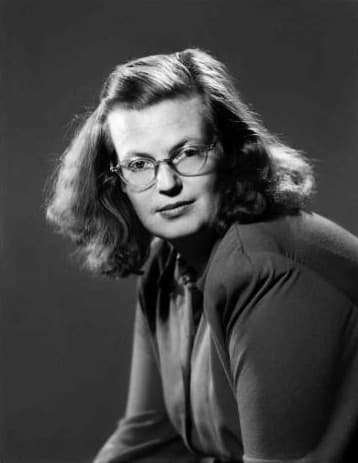
Shirley Hardie Jackson was an American writer known primarily for her works of horror and mystery. Over the duration of her writing career, which spanned over two decades, she composed six novels, two memoirs, and more than 200 short stories.
Similar books
- The Diary of a Young Girl
Anne Frank
4.2 (2.7M) average on GoodreadsBiographyDuring the Nazi occupation, a teenage girl's diary, written from a secret annex, shares observations on humanity, hope, and the wait for freedom.
- Eat, Pray, Love
Elizabeth Gilbert
3.6 (1.5M) average on GoodreadsLifestyleA heartbroken writer leaves her conventional life for a year-long global search for pleasure in Italy, spiritual devotion in India, and unexpected love and balance in Bali.
- Night
Elie Wiesel
4.3 (970k) average on GoodreadsBiographyIn the darkness of Auschwitz and Buchenwald, a teenage Elie Wiesel faces the extermination of his family, the loss of his faith, and the lasting scars of humanity's deepest cruelty.
- Steve Jobs
Walter Isaacson
4.1 (957k) average on GoodreadsBusinessSteve Jobs was a visionary who fused creativity and technology to revolutionize six industries and shape our digital world.
- The Glass Castle
Jeannette Walls
4.3 (903k) average on GoodreadsBiographyJeannette Walls's memoir describes her unusual childhood with brilliant, free-spirited parents whose poverty-stricken life shaped her independence and love despite family problems.
- Bossypants
Tina Fey
4.0 (848k) average on GoodreadsBiographyFrom a 'vicious nerd' with stress dreams to the comedic force behind Liz Lemon and 'Weekend Update,' Tina Fey chronicles her journey to proving that 'you're no one until someone calls you bossy.'






Enjoyed the summary?
A summary gives you the shape of the book. The book itself has the detail, the examples and the voice.
Find Life Among the Savages on AmazonAs an Amazon Associate, BookBrief earns from qualifying purchases. How we're funded